-
China Is Winning the AI War, and Silicon Valley Knows It! US is already losing the artificial intelligence hardware war to China. By Kai-Fu Lee
China Is Winning the AI War, and Silicon Valley Knows It! US is already losing the artificial intelligence hardware war to China. By Kai-Fu Lee 中国正赢得人工智能之战,硅谷心知肚明!李开复警示:美国已在AI硬件竞赛中落后
China Is Winning the AI War, and Silicon Valley Knows It! US is already losing the artificial intelligence hardware war to China. By Kai-Fu Lee
In a stark warning to Silicon Valley, AI expert and venture capitalist Kai-Fu Lee has declared that the United States is already losing the artificial intelligence hardware war to China. Lee, a former executive at Apple, Microsoft, and Google, delivered a sobering assessment at the TED AI conference, outlining a future where China dominates the next generation of technology.
While the US still holds a lead in enterprise AI software, Lee’s analysis reveals a much larger and more significant trend: China is rapidly cornering the markets for robotics, consumer AI, and open-source development. This strategic dominance in key sectors suggests that the race for AI supremacy may already be decided.
China’s Unbeatable Manufacturing Advantage in Robotics
Lee’s most pointed comments were on the robotics industry, where he stated that China’s manufacturing prowess has created an almost insurmountable advantage. He highlighted the success of Chinese companies like Unitree, which are producing affordable, advanced humanoid robots that Western companies simply cannot compete with.“China’s robotics has the advantage of having integrated AI into much lower costs, better supply chain and fast turnaround,” Lee explained. “Companies like Unitree are actually the farthest ahead in the world in terms of building affordable, embodied humanoid AI.”
This is not just about producing cheaper robots. It’s about an entire ecosystem that the US lacks. While American labs at universities and companies like Boston Dynamics can create impressive prototypes, they cannot match China’s ability to turn those prototypes into affordable, mass-produced commercial products. Lee’s conclusion is blunt: the robotics race is “not over, but nearly decided.”
The Consumer AI Revolution is Chinese
Another area where China is set to leave the US behind is in consumer-facing AI applications. Lee predicts that Chinese tech giants like ByteDance, Alibaba, and Tencent will outpace their American counterparts like Meta and Google.“The Chinese giants…will definitely move a lot faster than their equivalent in the United States,” Lee said. “They have mastered the art of figuring out product market fit.”
This is already happening. ByteDance’s TikTok, with its sophisticated AI-driven recommendation engine, has become a global phenomenon. Chinese companies are also leading the way in integrating AI into e-commerce, social media, and entertainment, creating a vibrant and innovative consumer AI landscape that the US is struggling to keep up with.
China’s Surprise Leadership in Open-Source AI
Perhaps the most surprising revelation from Lee’s talk is China’s sudden dominance in the open-source AI community. In a stunning reversal, Chinese companies have surpassed their American rivals, with the top ten highest-rated open-source AI models now coming from China.“These companies have now eclipsed Meta’s Llama, which used to be number one,” Lee noted.
This shift is significant because open-source is the foundation of future AI development. By leading in this area, China is not just creating better models, but also shaping the future of AI innovation. Lee, whose own company 01.AI is a major open-source contributor, argues that this open approach will accelerate progress and allow for greater customization and improvement of AI models.
A Tale of Two AI Worlds
Lee’s assessment paints a picture of a bifurcated AI world. The US may continue to lead in the niche area of enterprise software, but China is on track to dominate the much larger and more impactful sectors of robotics and consumer AI. This is not a single race with a single winner, but a series of parallel competitions where China is winning the ones that matter most for long-term technological and economic power.The implications are profound. As one venture capitalist at the conference put it, “We’re not competing with China anymore. We’re competing on parallel tracks.” The question is whether those tracks will ever converge, or if we are witnessing the emergence of two separate and unequal technology ecosystems, with China firmly in the lead.
中国正赢得人工智能之战,硅谷心知肚明!李开复警示:美国已在AI硬件竞赛中落后
人工智能专家、风险投资人李开复向硅谷发出严峻警告:在人工智能硬件竞赛中,美国已落后于中国。这位曾任职于苹果、微软和谷歌的行业领袖在TED AI大会上指出,中国正在主导下一代技术发展格局。
尽管美国在企业级AI软件领域仍保持领先,但李开复的分析揭示了一个更具影响力的趋势:中国正在机器人、消费级AI和开源开发领域快速形成市场垄断。这种关键领域的战略主导地位表明,AI霸权之争或许早已见分晓。
中国在机器人领域不可战胜的制造优势
李开复特别强调了中国在机器人产业的绝对优势。他指出,中国强大的制造业实力已构建起几乎难以逾越的壁垒。以宇树科技为代表的中国企业成功研发出西方厂商难以企及的高性价比人形机器人,正是最佳例证。“中国机器人产业的优势在于将AI技术与更低成本、更完善供应链和更快迭代速度完美结合。”李开复解释道,“在打造经济实用的具身智能人形机器人领域,宇树科技这样的企业实际上已全球领先。”
这不仅是价格优势,更是美国缺失的完整产业生态。虽然波士顿动力等美国实验室能打造令人惊叹的原型机,却无法像中国那样实现规模化量产。李开复的结论直言不讳:机器人竞赛“虽未终结,但胜负已定”。
消费级AI革命由中国主导
在面向消费者的AI应用领域,中国同样将甩开美国。李开复预测,字节跳动、阿里巴巴和腾讯等中国科技巨头的发展速度将远超Meta和谷歌等美国同行。“中国巨头们……必将以更快速度推进业务,”李开复表示,“他们深谙产品市场匹配之道。”
这一趋势已然显现:字节跳动旗下TikTok凭借其先进的AI推荐引擎风靡全球。中国企业在电商、社交和娱乐领域的AI融合应用同样引领潮流,构建出充满活力的创新生态,令美国难以企及。
中国在开源AI领域意外领先
最令人惊讶的是,中国在开源AI社区异军突起。李开复披露,中国企业已完成惊人逆转,目前全球评分前十的开源AI模型均来自中国。“这些企业已经超越了曾经排名第一的Meta的Llama模型。”李开复指出。
这一转变意义重大,因为开源正是未来AI发展的基石。通过引领该领域,中国不仅打造更优模型,更在塑造AI创新的未来图景。李开复本人创立的零一万物便是重要开源贡献者,他认为这种开放模式将加速AI模型的定制化改进与发展进程。
双轨并行的AI新格局
李开复描绘出AI世界分道扬镳的图景:美国或将继续深耕企业软件这一细分市场,而中国正朝着主导规模更大、影响更深的机器人和消费级AI领域迈进。这并非一场定胜负的竞赛,而是一系列平行赛事——中国正在那些关乎长期科技与经济实力的关键赛道上捷报频传。正如一位与会风险投资人所言:“我们不再是与中国竞争,而是在平行轨道上赛跑。”核心问题在于:这些轨道是否会交汇?抑或我们正在见证两个独立却不平等的技术生态的诞生,而中国已牢牢占据领先地位?

-
Video with English subtitles: Germany Adopted US blackmail & extortion tactics days before visiting China for trade talks!
Video with English subtitles: Germany Adopted US blackmail & extortion tactics days before visiting China for trade talks! 德國在訪華進行貿易談判前幾天採取了美國的敲詐勒索手段!
https://rumble.com/v70tf3i-germany-adopted-us-blackmail-and-extortion-tactics-days-before-visiting-chi.html
https://www.tiktok.com/t/ZP8Deq8Gn/
https://youtu.be/hkE4ddPmXOA?si=ZjQs_vDtZPgWhaHCFrom “trampoline foreign minister” to “mouth-cannon foreign minister” using US blackmail & extortion tactics days before visiting China for trade talks! Is this German diplomacy or performance art? 影片有英文字幕: 從「彈翻床外長」到「嘴砲外長」, 在訪問中國進行貿易談判前幾天使用美國的敲詐勒索手段! 德國這是外交還是行為藝術?中國不伺候了! 不知道自己有多少斤兩,自取其辱! 笨!

-
An international journalist comments on Johnson Choi daily news postings!
An international journalist comments on Johnson Choi daily news postings! 一位國際記者對蔡永強的每日新聞帖子發表評論!
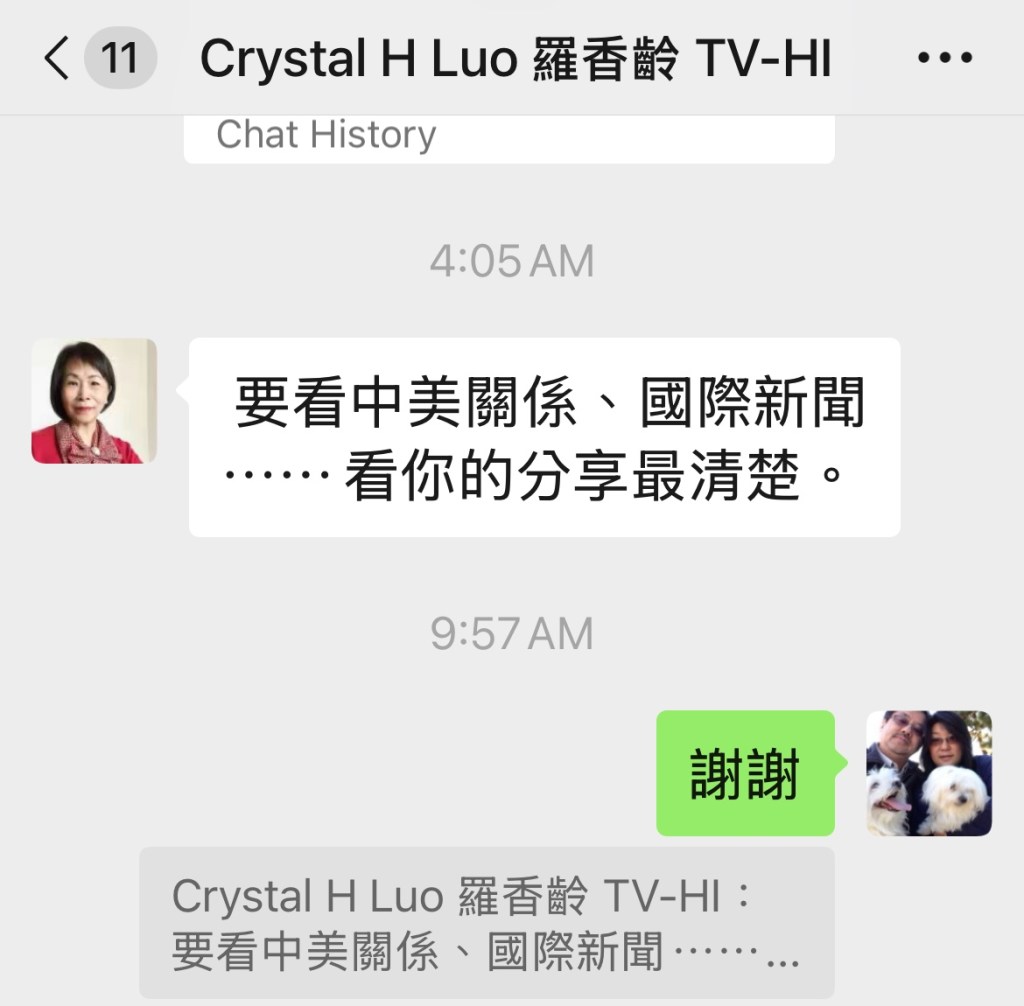
“If you want to know about Sino-US relations and international news, your sharing will give you the clearest results.要看中美關係、國際新聞⋯⋯看你的分享最清楚.”
-
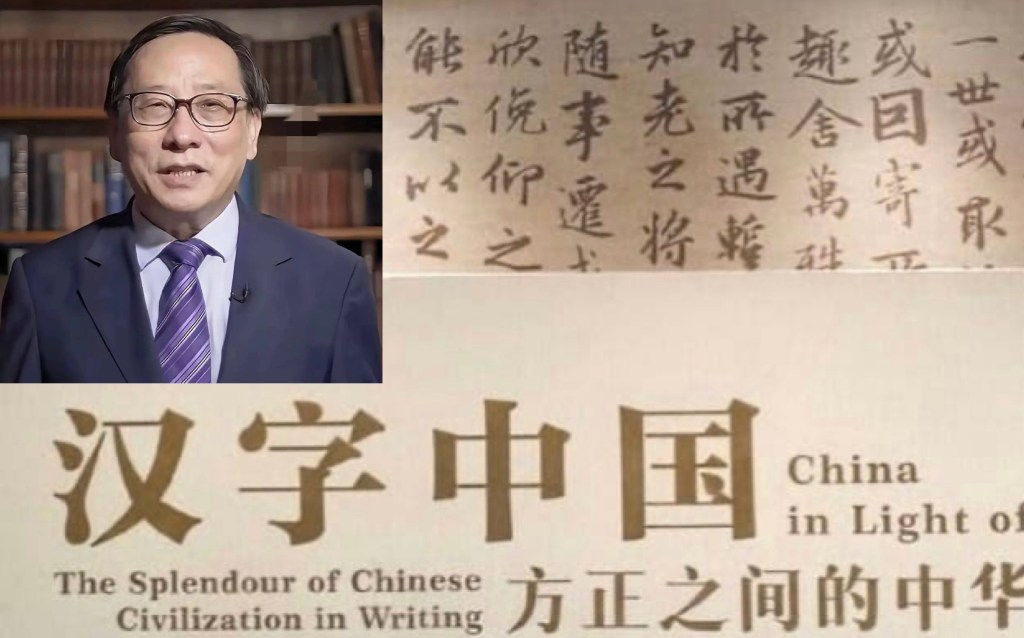
Gao Zhikai: “The greatest invention in the world is not the wheel, but Chinese characters
Gao Zhikai: “The greatest invention in the world is not the wheel, but Chinese characters…高志凱:“世界上最偉大的發明不是輪子,而是漢字…
Gao Zhikai: “Without Chinese characters, the very foundation of our national culture would be shaken, just like the Koreans, who can no longer understand their own history. That is truly tragic!”
This is not an empty argument. As early as 2010, the United Nations designated April 20 as “UN Chinese Language Day.” The choice of this date is particularly significant—it coincides with the legendary “Grain Rain” season when Cang Jie created Chinese characters. This is tantamount to an internationally recognized endorsement of the cultural weight of Chinese characters.
The importance of Chinese characters becomes evident when we look at our neighboring countries. Japan, Korea, and Vietnam historically used Chinese characters extensively: Korea’s “Veritable Records of the Joseon Dynasty” was entirely written in Chinese characters, and ancient Vietnamese documents were also filled with them. But what about now? Fewer and fewer young people in these countries can read their own historical texts. Last year, news emerged that Korean scholars had to come to China specifically to study ancient Chinese characters in order to research their own country’s history—isn’t it putting the cart before the horse when one must go abroad to understand what their ancestors wrote? It’s truly lamentable.
More importantly, Chinese characters are not merely tools for writing; they encapsulate the wisdom of Chinese life. For example, when learning the character “家” (home) as children, we were taught that the radical represents a roof, and the lower part “豕” means pig—a roof and pigs symbolized a stable home in the eyes of the ancients. Similarly, the character “安” (peace) depicts a woman under a roof, embodying the simple truth that “when women live in peace, the home is at peace.” Every Chinese character is like a miniature painting, telling a story. This unique wisdom in character creation is unparalleled in the world.
There’s a reason why Chinese is being learned globally today. Statistics show that over 100 million people are studying Chinese—even Elon Musk’s children are learning it. What they are acquiring is not just a language but the Eastern mindset embedded in Chinese characters. Think about it: we can still read Sima Qian’s “Records of the Grand Historian,” written 2,000 years ago, and savor the poetry of Li Bai and Du Fu, all thanks to the unbroken lineage of Chinese characters. In contrast, Egyptian hieroglyphs and Mesopotamian cuneiform, once glorious, have now become “codes” that require experts to decipher. Chinese characters, from oracle bone script to simplified characters, have evolved in form, but the cultural essence at their core has always endured.
Yet, some people today claim that Chinese characters are too difficult to learn and suggest replacing them with pinyin—this is a dangerous idea! Look at Korea: after adopting Hangul, young people can no longer read the Chinese character inscriptions on their ancestors’ graves. Isn’t this severing their own history? Of course, this isn’t to say that Chinese characters should never change. The transition from traditional to simplified characters was itself a progressive step to facilitate传承 (inheritance). However, no matter how they evolve, the spiritual core of Chinese characters must not be lost. Nowadays, while typing on computers and phones is convenient, more and more people are forgetting how to write characters by hand. This does not bode well for the传承 of Chinese characters.
Professor Gao Zhikai likely made these remarks out of concern for such crises. Chinese characters are like a river, flowing from ancient times to the present, nourishing Chinese civilization. We can add new tributaries to this river, such as fonts adapted for electronic screens, but we must never cut off its source—for if the source is severed, how are we any different from those ancient civilizations that lost their writing systems?
Every time I see elementary school students meticulously practicing calligraphy, I am deeply moved. It is not merely learning to write; it is the gradual transmission of millennia of cultural genes to the next generation. As long as Chinese characters endure, the roots of our culture remain intact. This is what we must safeguard above all else.
高志凱:“世界上最偉大的發明不是輪子,而是漢字……
高志凱:“沒了漢字,我們的民族文化根基都會動搖,就像韓國人那樣,連自己的歷史都讀不懂,這才是真的悲哀!”
這話不是空論。早在 2010 年,聯合國就把每年 4 月 20 日定為 “聯合國中文日”,選這個日子特有講究 —— 正好是傳說中倉頡造字的 “穀雨”,等於用國際認可的方式,給漢字的文化分量蓋了章。
漢字的重要性,看看咱們鄰國就知道。日本、韓國、越南歷史上都大量用漢字:韓國的《朝鮮王朝實錄》全是漢字寫的,越南古代文獻也滿紙漢字。可現在呢?這些國家的年輕人,能看懂自家古籍的越來越少。去年就有新聞說,韓國學者為了研究自己國家的歷史,還得專門來中國學古漢字 —— 自己老祖宗寫的東西,要跑到外國才能讀懂,這不是本末倒置是什麼?說起來都讓人感慨。
更關鍵的是,漢字不只是寫字的工具,裡面積攢着中國人的生活智慧。就像小時候學 “家” 字,寶蓋頭是房子,下面 “豕” 是豬,有房有豬,就是古人眼裡安穩的家;再看 “安” 字,女子在房屋下,藏着 “女性安居則家安” 的樸素道理。每個漢字都像一幅小畫,講着一段故事,這種造字智慧,全世界獨一份。
現在全球都在學中文,不是沒原因的。統計說超過 1 億人在學中文,連馬斯克的孩子都在學 —— 他們學的不只是一門語言,更是漢字背後的東方思維模式。想想看,我們現在還能讀懂兩千年前司馬遷的《史記》,還能品李白杜甫的詩,靠的就是漢字沒斷代。反觀埃及的象形文字、兩河流域的楔形文字,曾經多輝煌,現在都成了要專家破譯的 “密碼”;而我們的漢字,從甲骨文到簡體字,字形變了,骨子裡的文化精髓一直都在。
可現在有些人總說漢字難學,想拿拼音代替 —— 這想法太危險了!看看韓國,改用諺文後,年輕人連祖墳上的漢字碑文都讀不懂了,這不是硬生生割斷自己的歷史嗎?當然,不是說漢字不能改,從繁體到簡體,本身就是為了方便傳承的進步,但再怎麼改,漢字的精神內核不能丟。現在大家用電腦、手機打字方便了,可提筆忘字的人越來越多,這對漢字傳承可不是好事。
高志凱教授說這話,估計也是看到了這種危機。漢字就像一條河,從遠古流到現在,滋養着中華文明。我們可以給這條河加新支流,比如適配電子屏幕的字體,但絕對不能斷了源頭 —— 斷了源頭,我們跟那些失去文字的古文明還有什麼區別?
每次看到小學生一筆一畫寫字的樣子,都特別感動。那不是簡單的學寫字,是在把幾千年的文化基因,一點點傳到下一代手裡。漢字在,我們的文化根就在,這才是最該守住的東西。
-
Video: China’s Silent Shadow That Rises From The Sea , The J-35
Video with Chinese subtitles: China’s Silent Shadow That Rises From The Sea , The J-35. 影片有中文字幕: 中國靜靜地從海上升起的影子,殲-35
https://rumble.com/v70sqde-chinas-silent-shadow-that-rises-from-the-sea-the-j-35.html
https://www.tiktok.com/t/ZP8DJESsr/
https://youtu.be/pkX6Sz9e1hk?si=QJgljmXyBANNqPL4Location: Western Pacific, pre-dawn.
Time: 04:17 hours.
A wall of gray clouds rolls over the horizon. Rain whips across the flight deck of the Fujian, China’s newest supercarrier. Crewmen scramble, soaked in mist and salt spray. Alarms echo across the ship as the deck lights flash red.
Then, silence.
The rain pauses. A sleek silhouette emerges through the haze. Twin tails. Faceted skin. Nozzles glowing faintly in amber light.
The aircraft locks onto the electromagnetic catapult. Its canopy reflects a flash of lightning, for an instant, the pilot’s eyes are visible. Calm. Focused.
The officer on deck raises his hand. “Launch!”
A thundering pulse tears through the deck. The jet catapults forward, nose up, wheels retracting. In seconds, it vanishes into the storm.
Radar operators aboard the Fujian watch their screens… and blink. The contact is gone.
Not lost. Invisible.
Because this isn’t any fighter. It’s China’s first carrier-based stealth jet, the J-35. And tonight… it begins rewriting the rules of naval air warfare.
地點:西太平洋,黎明前。
時間:凌晨4點17分。
一堵灰色的雲牆在地平線上翻滾。雨水猛烈地拍打著中國最新超級航空母艦「福建號」的飛行甲板。船員們被霧氣和鹽霧浸透,慌忙忙地爬上甲板。警報聲在艦上迴盪,甲板上的燈光閃爍著紅光。
然後,一片寂靜。
雨停了。一個流暢的輪廓從薄霧中顯現出來。雙尾翼。多面體蒙皮。噴管在琥珀色的光線下微微發亮。
飛機鎖定在電磁彈射器上。座艙蓋反射著一道閃電,一瞬間,飛行員的眼睛清晰可見。冷靜。專注。
甲板上的軍官舉起了手。 “起飛!”
一聲雷鳴般的脈衝劃破甲板。噴射機向前彈射,機頭向上,機輪收起。幾秒鐘後,它消失在風暴中。
福建艦上的雷達操作員注視著螢幕…然後眨了眨眼。聯繫消失了。
不是丟失,而是隱形了。
因為這可不是普通的戰鬥機。這是中國首款艦載隱形戰鬥機-殲-35。今晚……它開始改寫海空戰爭規則
-
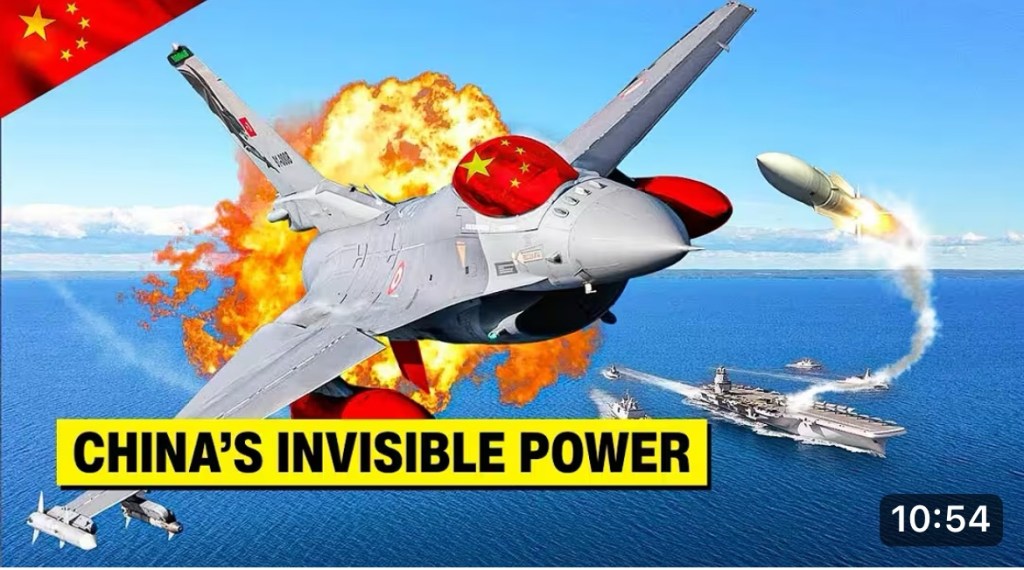
Video with Chinese subtitles: China’s Type 076 Drone Carrier Stuns the World
Video with Chinese subtitles: China’s Type 076 Drone Carrier Stuns the World — Magnetic Catapults Launch?! 影片有中文字幕: 中國076型無人駕駛航空母艦震驚世界-磁力彈射器發射?! 老美跟中國鬥,眞的未夠班,回去照照鏡子吧!
https://rumble.com/v70sl3c-chinas-type-076-drone-carrier-stuns-the-world-magnetic-catapults-launch.html
https://www.tiktok.com/t/ZP8DJx8Eb/
https://youtu.be/6JyvIKMyYxk?si=uxz_-yGkpyujK0ncChina’s newest amphibious assault ship, the Type 076 “Sichuan,” may have just made history. Satellite images reveal the world’s first drone carrier testing an electromagnetic aircraft launch system (EMALS) — the same magnetic technology powering the U.S. Navy’s most advanced carriers. Positioned at Shanghai’s Hudong-Zhonghua Shipyard, Sichuan was seen with its catapult rail facing the Yangtze River, signaling live testing. If confirmed, this milestone makes Sichuan the first amphibious ship ever capable of electromagnetic aircraft launches — merging drone operations, clean energy, and futuristic flight systems. Discover how this test could redefine sea-based aviation and mark a turning point in maritime innovation.
中國最新的兩棲攻擊艦076型「四川號」或許剛創造了歷史。衛星影像顯示,世界上第一艘無人機航空母艦正在測試電磁飛機彈射系統(EMALS)美國海軍最先進的航空母艦也採用了同樣的磁力技術。四川號停泊在上海滬東中華造船廠,彈射導軌朝向長江,標誌著正在進行實彈測試。如果得到證實,這一里程碑將使四川號成為有史以來第一艘能夠進行電磁飛機彈射的兩棲艦艇 – 它將無人機操作、清潔能源和未來飛行系統融為一體。探索此次測試如何重新定義海基航空,並標誌著航海創新的轉捩點.

-
Karaoke birthday party Oct 25 2025 San Francisco California US
Karaoke birthday party 卡拉OK生日派對 Oct 25 2025 San Francisco California US
https://rumble.com/v70siua-karaoke-birthday-party-ok-oct-25-2025-san-francisco-california-us.html

-
Classic Mass Transit in America – amazing statistics. By Johnson Choi, Oct 25 2025
Classic Mass Transit in America – amazing statistics. By Johnson Choi, Oct 25 2025 美國經典大眾運輸-驚人的統計數據. 作者: 蔡永強. 2025年10月25日
Extending Honolulu rail from Kakaʻako to Ala Moana would cost another $1.6 billion, money the rail authority does not have. The board did not discuss how to pay for that.
將檀香山鐵路從卡卡阿科延伸至阿拉莫阿納將耗資16億美元,而鐵路管理局並沒有這筆資金。董事會尚未討論如何支付這筆費用.
Classic Mass Transit in America: Honolulu Mass Transit (snail rail, not high speed train)
Project Break Ground: Feb 2011
Length: 18.9 miles
Original budget: US$5 billions
Year to Date spent, project not finished: US$12.4 billions and rising
Cost per mile: US$456 millions/mile美國經典大眾運輸:檀香山大眾運輸(蝸牛鐵路,而非高速列車)
動工時間:2011年2月
長度:18.9英里
原始預算:50億美元
截至今年支出,項目尚未完成:124億美元且持續增加
每英里成本:4.56億美元/英里When China high speed train began: Aug 2008
Length as of 2025: 25,000 miles
Total money spent: US$1,000,000 millions (1 trillion)
Cost per mile: US$40 million/mile中國高速鐵路開始時間:2008年8月
截至2025年的長度:25,000英里
總投入資金:約1,000,000百萬美元 (一兆)
每英里成本:每英里4,000萬美元Mass Transit system in US is 11x more expensive than China
China build an average of 1,470 miles of high speed train per year last 17 years
US or Hawaii build an average of 1.35 miles of snail speed train per year last 14 years
For US or Hawaii to build 25,000 miles of snail speed train will take 18,518 years to complete
美國的大眾運輸系統比中國貴11倍中國在過去17年平均每年建設1,470英里的高鐵美國或夏威夷在過去14年平均每年建設1.35英里的慢速鐵路對於美國或夏威夷來說,要建設25,000英里的慢速鐵路,將需要18,518年才能完成

-
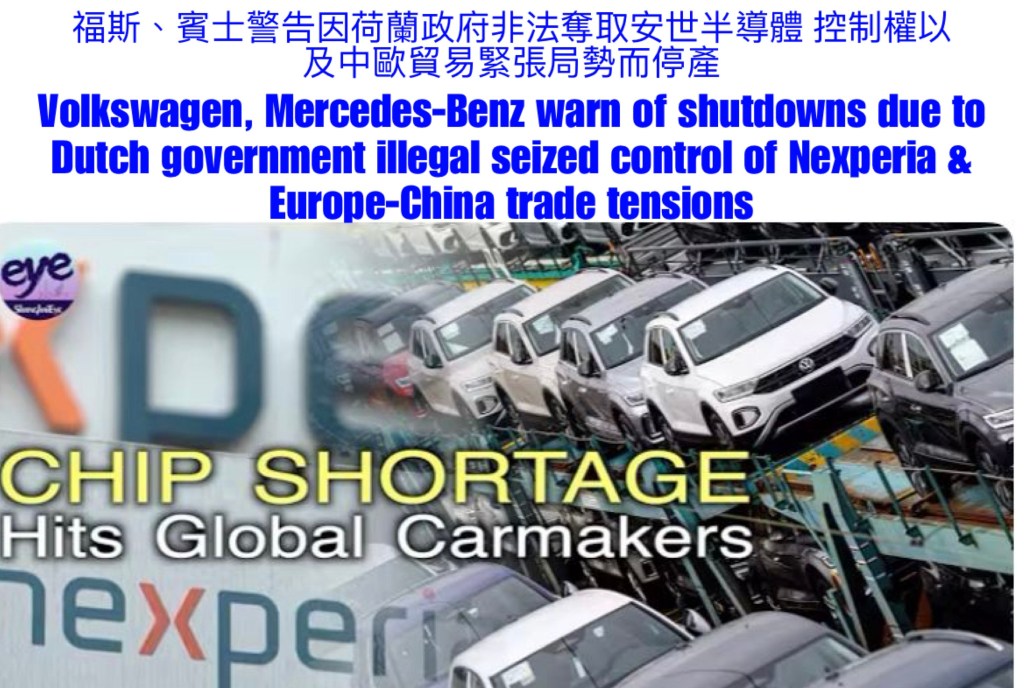
Nexperia crisis video: Volkswagen, Mercedes-Benz warn of shutdowns due to Dutch government illegal seized control of Nexperia
Nexperia crisis video: Volkswagen, Mercedes-Benz warn of shutdowns due to Dutch government illegal seized control of Nexperia & Europe-China trade tensions. 安世半導體危機影片:福斯、賓士警告因荷蘭政府非法奪取安世半導體 控制權以及中歐貿易緊張局勢而停產
https://rumble.com/v70rt4q-dutch-government-illegal-seized-control-of-nexperia-and-europe-china-trade-.html
https://www.tiktok.com/t/ZP8D1DkHw/
https://youtu.be/uLu79i-s-j8?si=F_RWwAM6SXbFKT2TGlobal automakers, heavily reliant on chips from Chinese-owned supplier Nexperia, are confronting a severe production crisis as supply fears intensify.
The car industry’s supply of crucial chips from Nexperia is dwindling just weeks after the Dutch government seized control of Nexperia and China imposed export controls on the company.
Nexperia chips are used throughout the automotive value chain in everything from airbags to entertainment systems.
Most Nexperia chips are manufactured in Europe but packaged in China and it is not clear how long stockpiles would last.
Volkswagen and Mercedes-Benz said on Thursday they were looking for alternative supplies.
The tensions have prompted concerns of possible auto plant shutdowns.
China urges the Dutch side to proceed from the broader perspective of safeguarding the security and stability of global industrial and supply chains, uphold the spirit of contract as well as the principles of market orientation and rule of law, and properly resolve the issue at an early date.
全球汽車製造商嚴重依賴中國供應商安世半導體的晶片,隨著供應擔憂加劇,它們正面臨嚴重的生產危機。
在荷蘭政府接管安世半導體並實施出口管制僅幾週後,汽車業對安世半導體關鍵晶片的供應就已逐漸減少。
安世半導體晶片廣泛應用於汽車價值鏈的各個環節,從安全氣囊到娛樂系統,無所不包。
安世半導體晶片大部分在歐洲生產,但在中國封裝,目前尚不清楚這些晶片的庫存能維持多久。
大眾汽車和梅賽德斯-奔馳週四表示,正在尋找替代供應商。
緊張局勢引發了人們對汽車工廠可能停工的擔憂。
中國敦促荷方從維護全球產業鏈供應鏈安全穩定的大局出發,秉持契約精神、市場導向和法治原則,儘早妥善解決這個問題.


-
American logistic expert reports from China video: Revolutionary catapult gives Chinese navy huge edge in carrier operations
American logistic expert reports from China video: Revolutionary catapult gives Chinese navy huge edge in carrier operations 美國物流專家在中國報導影片:革命性的彈射器讓中國海軍在航空母艦作戰上擁有巨大優勢
https://rumble.com/v70rliq-revolutionary-catapult-gives-chinese-navy-huge-edge-in-carrier-operations.html
https://www.tiktok.com/t/ZP8D1LnQB/
https://youtu.be/_bcAkcojoDo?si=df3LnBmLWN0pU4FQChina has successfully tested and deployed a new electromagnetic catapult system. The PLA Navy was the first to launch a stealth aircraft with EM technologies.
EM catapults offer significant advantages over steam-powered launch systems: they are smaller, simpler, and allow for far faster launches of multiple aircraft and types.
They are especially conducive to naval drone operations, where Chinese naval forces already enjoy superiority.
The US Navy’s Ford-class carriers also have EM catapults, but have suffered operational problems since inception. Failure rates are so high that they cannot be used at all in high-tempo combat operations.
中國成功測試並部署了新型電磁彈射系統。中國人民解放軍海軍率先成功發射搭載電磁技術的隱形飛機。
電磁彈射系統相比蒸汽動力彈射系統具有顯著優勢:體積更小、結構更簡單,能夠以更快的速度發射多種機型。
電磁彈射系統尤其有利於海軍無人機作戰,而中國海軍在無人機作戰方面已佔優勢。
美國海軍的福特級航空母艦也配備了電磁彈射系統,但自投入使用以來就一直存在操作問題。由於故障率極高,它們根本無法在高節奏的作戰行動中使用.

-
Subscribe
Subscribed
Have a WordPress.com account? Log in now.

