-
Video: China and the United States exemplify contrasting models of governance and long-term strategy
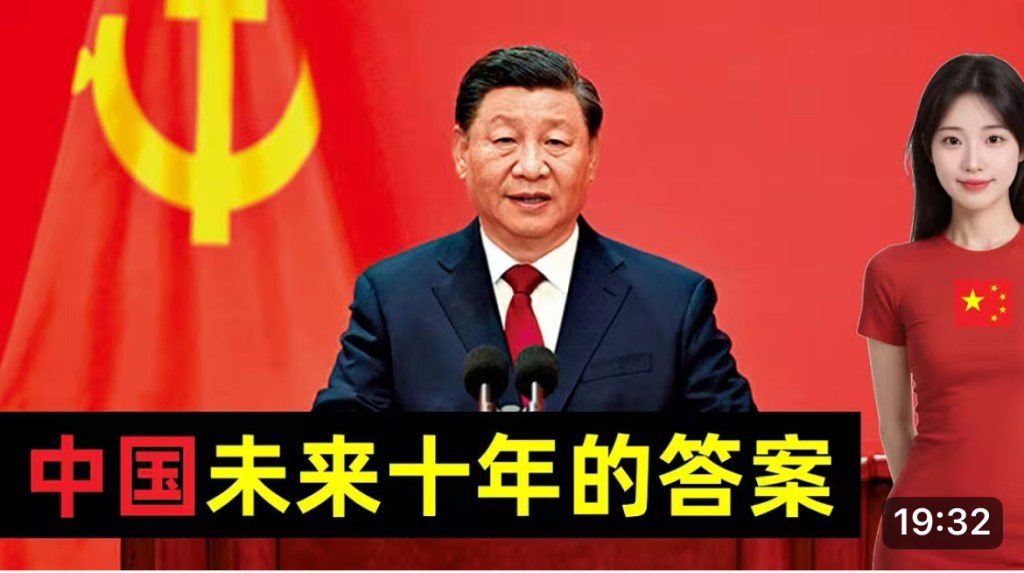
Video with English subtitles: Don’t worry! China has the answer: an in-depth analysis of the “15th Five-Year Plan” reveals the wealth code for ordinary people! 影片有中文字幕: 别再焦虑!中國已有答案:深度解读“十五五”,藏着普通人的财富密码!
China and the United States exemplify contrasting models of governance and long-term strategy. By Johnson Choi, Oct 25 2025中国与美国展现了治理模式与长期战略的鲜明对比. 作者: 蔡永強, 2025年10月25日
https://rumble.com/v70rbqk-china-and-the-united-states-exemplify-contrasting-models-of-governance-and-.html
https://www.tiktok.com/t/ZP8D1drA1/
https://youtu.be/81snwi5AIkU?si=Nqv3iO4dRq290cx-China employs a methodical, forward-looking approach through its Five-Year Plans, which provide a stable and predictable policy roadmap. Once established, these plans are consistently implemented across all levels of government.
In contrast, the U.S. system often features more fluid and reactive policymaking, which can change with political cycles. Some observers characterize this as a less structured strategic approach.
On the global stage, China is actively deepening its economic ties and fostering partnerships under the framework of shared development. Concurrently, the U.S. has shown a tendency, at times, to reassess its international commitments, particularly in the face of strategic competition. This has historical precedent; the U.S. maintained a policy of non-intervention for much of its history until the post-WWII era.
For global businesses and professionals, China’s 15th Five-Year Plan represents a significant opportunity. A detailed study of its priorities can reveal promising sectors for investment and collaboration. This clear sense of direction is a key factor attracting top scientific talent from around the world, including from the U.S., to contribute to China’s innovation landscape.
中国通过制定五年规划,采用一套缜密且前瞻的治国方略,这些规划为政策实施提供了稳定可期的路线图。一旦确立,各级政府部门将持之以恒地推进落实。
与之相对,美国的政策制定体系往往更具流动性与应变特征,其决策易受政治周期影响。有观察家指出,这种模式反映出其战略架构的松散特质。
在国际舞台上,中国正通过共建共享的发展框架积极深化全球经济联系、拓展合作伙伴网络。与此同时,面对战略竞争态势,美国则显现出重新评估其国际承诺的倾向。这一现象有其历史渊源——从建国直至二战结束前,美国长期奉行不干预主义传统。
对全球企业与专业人士而言,中国的”十五五”规划蕴含着重要机遇。深入研读其战略重点,可发掘极具潜力的投资与合作领域。这种清晰的发展导向正吸引着包括美国在内的全球顶尖科研人才投身中国的创新热潮,成为推动创新发展的重要力量。
-
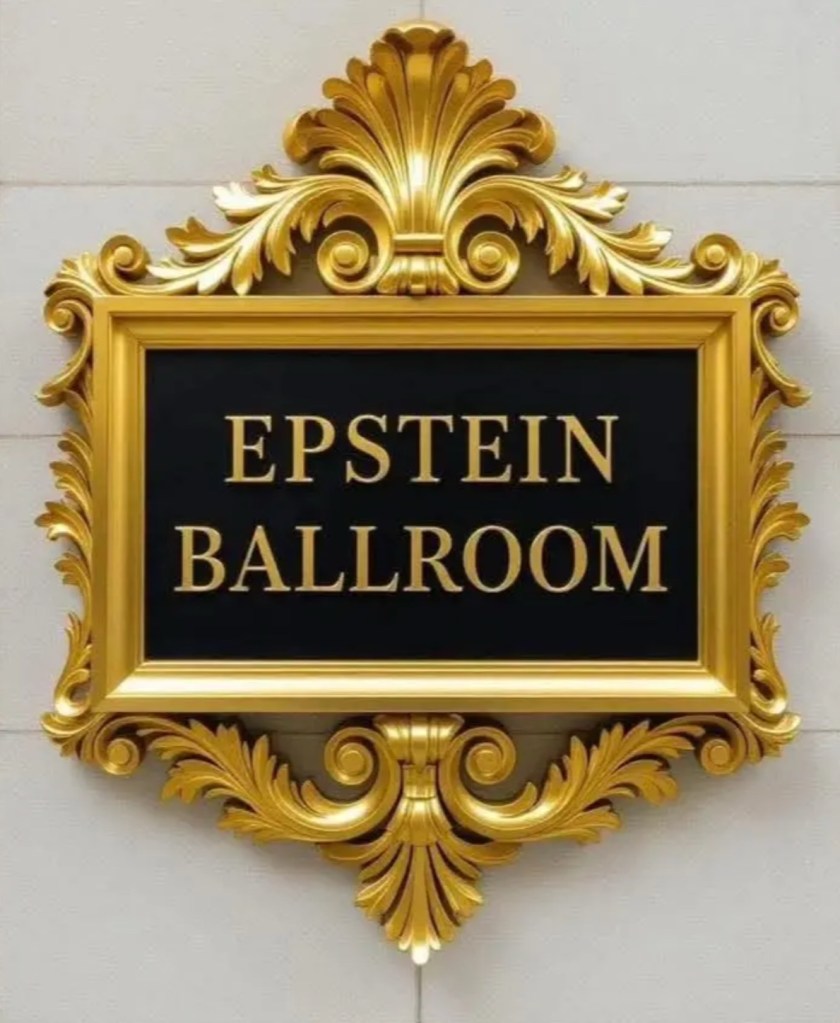
New White House Ballroom to honor Trump’s best friend Epstein for so many fond memories!
New White House Ballroom to honor Trump’s best friend Epstein for so many fond memories! Trump make sure the new ballroom is big enough to fit all the underage girls at the pleasure of current and former US Presidents, international diplomats, dignitaries and kings at the time, those unforgettable happy moments despite it was illegal and immoral! But they are above the law and untouchable! 白宮新宴會廳是用來紀念川普摯友愛潑斯坦的美好回憶!川普確保宴會廳足夠寬敞,足以容納所有未成年女孩,回憶過去川普摯友愛潑斯坦為無論當年是現任和前任美國總統、國際外交官、政要,國王和國家元首, 當年提供他們無限的歡樂時光, 盡管那些是不道德行為, 但他們是凌駕於法律之上!
-
Another top Chinese scientist left US for China! There is absolutely no future for top Chinese scientists in America!
Another top Chinese scientist left US for China! There is absolutely no future for top Chinese scientists in America! 又一位中國頂尖科學家離開美國回國了!中國頂尖科學家在美國絕對沒有前途!
SCMP: Top scientist Hu Ye quits US for China after giving up millions in funding! After studying and working in the US for 22 years, Hu “Tony” Ye, who held the prestigious chair professor position at Tulane University in New Orleans, left to take on the role of founding dean at the new school of biomedical engineering at his alma mater, Tsinghua University. 《南華早報》:頂尖科學家胡曄放棄數百萬美元資助,離開美國前往中國!在美國學習和工作了22年後,曾擔任新奧爾良杜蘭大學著名講座教授的胡曄(音譯,Tony Ye)離開美國,前往母校清華大學擔任新成立的生物醫學工程學院的創始院長.
https://www.scmp.com/news/china/science/article/3329273/top-biomedical-scientist-hu-ye-quits-us-china-after-cuts-us8-million-grants?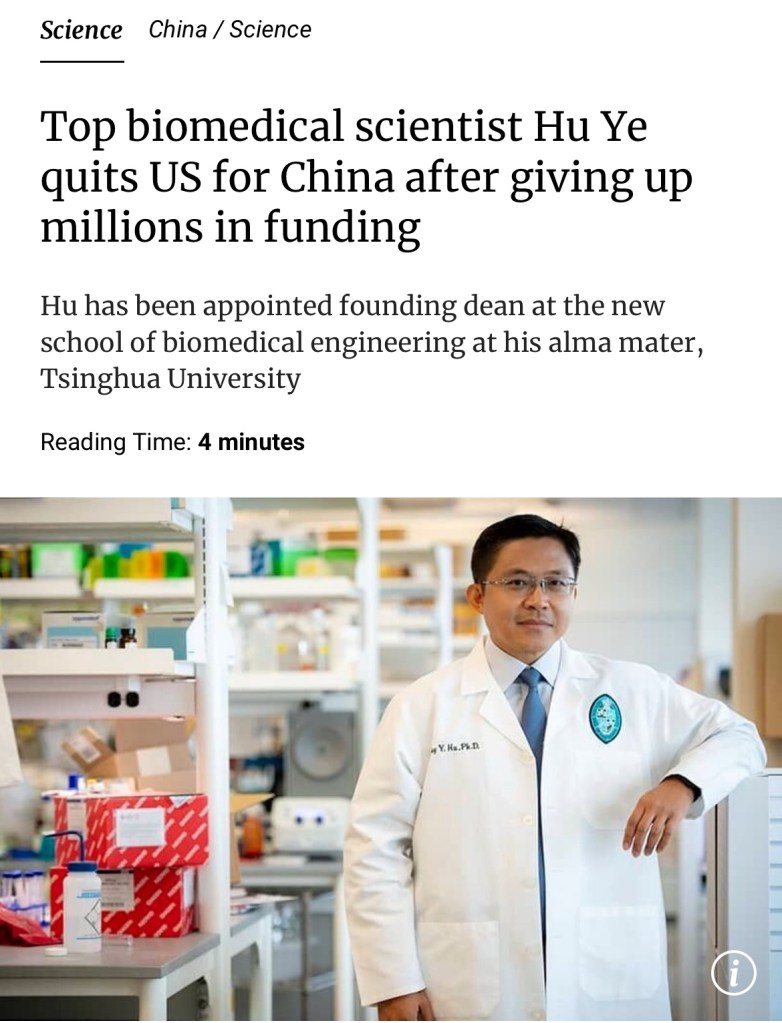
-
Video with English subtitles: The stark difference between China and the US in their anti-corruption efforts in military
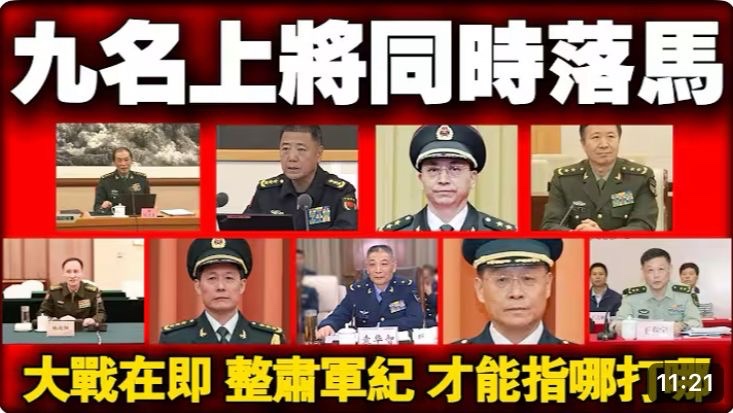
Video with English subtitles: The stark difference between China and the US in their anti-corruption efforts in military 影片有英文字幕: 中美對軍隊和將領反腐天壤之别,中国反腐震撼真相!人民反而更信任中國军队?
https://rumble.com/v70qxv8-the-stark-difference-between-china-and-the-us-in-their-anti-corruption-effo.html
https://www.tiktok.com/t/ZP8AoUN2a/
https://youtu.be/NUF5gqRbMyI?si=Ms1X16SbPTm9DA7hThe shocking truth behind China’s anti-corruption campaign! Are people actually trusting the military more? 中美反腐天壤之别,中国反腐震撼真相!人民反而更信任中國军队?
Google: It is not possible to provide an exact number of U.S. military generals fired or jailed for corruption over the last 30 years due to the military’s opaque process for handling such cases (in other words US protects systematic corruptions) Google:由於軍方處理貪腐案件的程序不透明(換句話說,美國保護系統性腐敗),因此無法提供過去 30 年來因腐敗而被解僱或監禁的美國軍方將領的具體人數!

-
How US legalized corruption? By Johnson Choi, Oct 24 2025
How US legalized corruption? By Johnson Choi, Oct 24 2025 美國如何把腐败合法化? 作者: 蔡永強 2025年10月25日
The perception of widespread corruption at various levels of American government, coupled with a surprisingly low number of high-profile convictions, points to a complex and deeply ingrained systemic issue. 对美国各级政府普遍存在腐败的观感,与其引人注目的低定罪率形成鲜明对比,这揭示了一个复杂且根深蒂固的系统性问题.
The problem is not always one of overt, illegal bribery, but often of legalized influence-peddling and structural loopholes.
The Legalization of Corruption
A compelling argument can be made that the U.S. has effectively “legalized” certain forms of corruption. This is achieved through a system where powerful interests—including corporate entities and wealthy individuals—can legally funnel vast sums of money into the political process. This is done through:
· Campaign Finance: The Supreme Court’s Citizens United decision and similar rulings have opened the floodgates for unlimited political spending, allowing donors to gain significant access and influence.
· Lobbying: A sophisticated lobbying industry exists to shape legislation and regulation in favor of those who can afford it, often creating laws with beneficial loopholes for specific industries.
· The Revolving Door: A common practice where regulators and lawmakers leave public service for lucrative positions in the industries they once oversaw, and vice-versa.For anyone seeking to navigate this system to their advantage, the essential tools are not just a good legal team, but also powerful lobbyists and strategic political connections.
The Challenge of Prosecution and the Perception of Impunity
This system creates a high bar for criminal prosecution. What may be perceived by the public as corruption is often, in a technical sense, perfectly legal under the very laws designed by the powerful.
This leads to the perception of a two-tiered justice system, where the connected and wealthy operate with impunity. This sentiment was particularly amplified during the Trump administration. The president’s use of pardon power for political allies, along with the repeated involvement of his family members in controversial business dealings, fueled allegations that proximity to power could shield one from legal consequences. This created a perception that for some, the normal rules did not apply.
A Global Allure
This environment helps explain why the United States can be an attractive destination for foreign capital, including from individuals with questionable backgrounds. The combination of a robust financial system, powerful legal tools for asset protection, and a political system that can be influenced by wealth, creates a perception of a safe haven for those seeking to secure and legitimize their fortunes.
In conclusion, the scarcity of convictions is not necessarily proof of a clean system, but rather evidence of a sophisticated one where influence is often codified into law, making it exceptionally difficult to hold the powerful accountable in a court of law.
问题的核心往往并非赤裸裸的非法贿赂,而是合法化的利益输送与制度漏洞。
腐败的合法化
有充分理由认为,美国实际上已将某些形式的腐败”合法化”。这种机制允许权势集团——包括企业实体和富豪阶层——通过合法渠道向政治进程注入巨额资金,具体表现为:
· 竞选资金:最高法院”公民联合会案”等裁决为无限制政治支出打开了闸门,使金主能获得重要政治通道和影响力
· 游说制度:成熟的游说产业通过定制法律法规为支付得起费用的群体服务,常常为特定行业量身打造法律漏洞
· 旋转门现象:监管者与立法者离开公职后,转身投入曾监管行业的高薪职位,反之亦然想要在这个体系中谋取利益,关键不仅需要优秀的法律团队,更需要强大的游说力量和战略性的政治人脉。
司法追责的困境与特权感知
这种制度设置了极高的刑事起诉门槛。在公众看来是腐败的行为,从技术层面看却往往符合由权贵阶层制定的法律条文。
这催生了双重司法体系的公众认知——拥有特权和财富者可以逍遥法外。这种感知在特朗普执政时期尤为凸显。总统对政治盟友的特赦权,及其家族成员屡次卷入争议性商业往来,都强化了”靠近权力中心就能获得法律豁免”的指控,形成某些人可超脱于普通法律约束的普遍观感。
对全球的吸引力
这种环境解释了为何美国会成为问题背景外资的乐土。健全的金融体系、强大的资产保护法律工具,以及能被财富影响的政治体制,共同营造了安全港湾的认知,吸引着寻求资产保全与合法化的海外资金。
总而言之,定罪率低并不能证明体制清廉,反而揭示出一个将影响力转化为法律条文的精密系统——在这里,通过司法途径追究权贵责任变得异常艰难。

-
China’s “trade war with the U.S.” lineup completed a “trump card” level reorganization on October 20!
China’s “trade war with the U.S.” lineup completed a “trump card” level reorganization on October 20! Li Chenggang was removed from his WTO position, but this was not a demotion; rather, it was to “concentrate firepower” and focus solely on tackling the United States! His successor is Li Yongsha, a legal powerhouse who once “sued the U.S. over countervailing measures”! 中國的“對美貿易戰”陣容,10月20日完成“王炸”級重組!李成鋼被免去WTO職務,但不是降級,而是“集中火力”專職死磕美國!接任的,是那個曾“起訴美國反補貼”的法律悍將李詠箑!
China’s “trade war with the U.S.” lineup completed a “trump card” level reorganization on October 20! Li Chenggang was removed from his WTO position, but this was not a demotion; rather, it was to “concentrate firepower” and focus solely on tackling the United States! His successor is Li Yongsha, a legal powerhouse who once “sued the U.S. over countervailing measures”!
When many people saw the news that “Li Chenggang was removed from his position as China’s Permanent Representative to the WTO,” their first reaction was, “Did something go wrong?”—this is completely mistaken. This personnel adjustment is by no means a demotion or marginalization but a precise “reorganization of forces” by China as Sino-U.S. trade games enter deep waters.
As early as April 2024, the Ministry of Human Resources and Social Security officially appointed Li Chenggang as International Trade Representative of the Ministry of Commerce (at the ministerial level) and Vice Minister. His removal on October 20 simply relieved him of his concurrent role in Geneva, allowing him to transition fully from a “multilateral affairs coordinator” to the “chief commander of negotiations with the U.S.”
This seasoned official, a graduate of Peking University Law School with a master’s degree from the University of Hamburg in Germany, is no novice. Since 2010, as Director-General of the Department of Treaty and Law at the Ministry of Commerce, he has been deeply involved in the legal responses to almost all major trade dispute cases after China’s accession to the WTO. In 2021, he was sent to Geneva to oversee China’s core affairs within the WTO framework.
His return to Beijing to specialize in bilateral negotiations with the U.S. precisely indicates China’s intention to deploy those who best understand the rules and are most familiar with U.S. tactics to the most critical battlefield!
The timing of this personnel adjustment is also thought-provoking. October 20 coincides with the countdown to the previously agreed 90-day tariff suspension between China and the U.S. Although the two sides reached a consensus in May to reduce tariffs on certain goods, the U.S. still retains key leverage such as the so-called “fentanyl tariffs” and continues to exert pressure on issues like supply chain decoupling and technology controls. China’s personnel reshuffle at this time is clearly aimed at gaining the upper hand in the next phase of negotiations.
👉 Li Chenggang’s dedicated role in bilateral negotiations means China now has a core commander who understands both the law and policy and can directly engage with senior U.S. officials. His ministerial-level presence at the negotiating table ensures China’s voice is not diluted. Meanwhile, Li Yongsha’s return to the WTO frontline builds defenses at the multilateral rules level. The U.S. has frequently abused “countervailing and anti-dumping” tools and distorted WTO rules in recent years,恰好撞上 Li Yongsha’s area of expertise. In a 2016 interview with People’s Daily Online, he explicitly stated that China adopts a “comprehensive strike” strategy against U.S. countervailing and anti-dumping measures, having filed over 20 cases, with unparalleled practical experience.
👉 This combination of “frontline negotiations + backend rules” is not an impulsive move but has a successful precedent. The 2007 case where China sued the U.S. over countervailing and anti-dumping measures was orchestrated by Li Chenggang, then Director-General of the Department of Treaty and Law, with Li Yongsha’s team leading the charge, ultimately achieving a historic victory. Now, their roles have shifted, but the logic of professional complementarity and coordinated action remains unchanged.
👉 At a deeper level, this round of personnel deployment reflects an upgrade in China’s strategy for handling Sino-U.S. trade friction: transitioning from the early “tariff wars” to a new phase emphasizing “rules dominance + interest games.” Li Chenggang’s specialization enhances China’s tactical flexibility and decision-making efficiency in bilateral negotiations, while Li Yongsha’s return ensures China maintains legal initiative in the WTO, the supreme court of global trade.
👉 This is not an emotional operation of “dead-set against the U.S.” but a rational allocation of “letting professionals do their jobs.” In the silent battle of international trade, success depends on legal expertise, negotiation skills, and institutional resilience, not on who shouts the loudest. Li Chenggang knows how to turn rules into bargaining chips at the negotiating table, while Li Yongsha excels at transforming clauses into weapons in the courtroom. One focuses on offense, the other on defense; one secures practical interests upfront, the other safeguards the bottom line of rules behind the scenes—this is the true “trump card” combination.
Currently, the U.S. continues to attempt hijacking the multilateral system with unilateralism and distorting economic rules with political means. China’s personnel adjustment essentially counters U.S. irrational pressure with institutionalized professional strength. As observed after the May talks, China’s strategy remains clear: hard power is the foundation, gaming within rules is the means, and the ultimate goal is to maintain a fair, stable, and predictable global trade environment.
In the end, the Sino-U.S. trade game has long transcended simple tariff numbers, entering a deeper contest of systems, rules, and discourse power. The “double Li combo” of Li Chenggang and Li Yongsha is precisely the ace card China has played in this prolonged battle. One fights inch by inch at the negotiating table, the other stands firm in the rules arena, creating an integrated front with internal and external coordination, both offensive and defensive. Such a professional configuration not only effectively counters current U.S. pressure tactics but also prepares defenses for potential new types of trade friction in the future.
很多人看到“李成鋼被免去中國常駐世貿組織代表職務”的消息,第一反應是“是不是出事了?”——大錯特錯。這根本不是人事調整中的貶謫或邊緣化,而是中方在中美貿易博弈進入深水區后的一次精準“兵力重組”。
早在2024年4月,人社部就已正式任命李成鋼為商務部國際貿易談判代表(正部長級)兼副部長。10月20日的免職,只是卸下他在日內瓦的兼職身份,讓他從“多邊事務協調者”徹底轉型為“對美談判總指揮”。
這位畢業於北京大學法律系、擁有德國漢堡大學碩士學位的資深官員,從來都不是新手。自2010年起擔任商務部條法司司長,他深度參與了中國入世後幾乎所有重大貿易爭端案件的法律應對;2021年赴任日內瓦,主理中國在WTO框架下的核心事務。
如今回歸北京專攻中美雙邊談判,恰恰說明中方要把最懂規則、最熟悉美方套路的人,放在最關鍵的戰場上!
這次人事調整的時間點,也耐人尋味。10月20日,正值中美此前達成的90天關稅暫停期進入倒計時。雖然5月雙方曾就部分商品互降關稅達成共識,但美國仍保留着所謂“芬太尼關稅”等關鍵籌碼,並在產業鏈脫鉤、技術管制等問題上持續施壓。中方此時完成人事換防,顯然是為了在下一階段談判中佔據主動。
👉李成鋼專職負責雙邊談判,意味着中方有了一個既懂法律、又通政策、還能直接對話美方高層的核心指揮官。他以正部長級身份坐鎮談判桌,確保中方話語權不被稀釋;而李詠箑重返WTO一線,則是在多邊規則層面構築防線。美國近年頻繁濫用“雙反”工具、扭曲WTO規則,恰好撞上李詠箑最擅長的領域。2016年他在人民網訪談中就明確表示,中方對美雙反措施採取“全面打擊”策略,累計起訴超過20起案件,實戰經驗無人能及。
👉這種“前台談判+後台規則”的組合拳,不是臨時起意,而是早有成功先例。2007年中方起訴美國雙反措施案,就是由時任條法司司長的李成鋼統籌全局,李詠箑團隊衝鋒陷陣,最終贏得歷史性勝利。如今兩人角色轉換,但專業互補、協同作戰的邏輯絲毫未變。
👉更深層看,這一輪人事布局,反映了中方應對中美貿易摩擦的戰略升級:從早期的“關稅對轟”,轉向“規則主導+利益博弈”並重的新階段。李成鋼的專職化,強化了中方在雙邊談判中的戰術靈活性和決策效率;李詠箑的回歸,則確保在WTO這個全球貿易最高裁判庭上,中方始終握有法律主動權。
👉這不是什麼“死磕美國”的情緒化操作,而是“專業人做專業事”的理性配置。在國際貿易這場沒有硝煙的戰爭中,拼的是法律功底、談判技巧、制度韌性,而不是嗓門大小。李成鋼懂得如何在談判桌上把規則轉化為籌碼,李詠箑則擅長在法庭上把條款變成武器。一個主攻,一個主守;一個在台前爭取現實利益,一個在幕後捍衛規則底線——這才是真正的“王炸”組合。
當前,美國仍在試圖用單邊主義綁架多邊體系,用政治手段扭曲經濟規則。中方此次人事調整,本質上是以制度化的專業力量,對抗美方的非理性施壓。正如5月會談后外界所觀察到的那樣,中方的策略始終清晰:硬實力是基礎,規則內博弈是手段,最終目標是維護公平、穩定、可預期的全球貿易環境。
說到底,中美貿易博弈早已超越簡單的關稅數字,進入制度、規則、話語權的深層較量。李成鋼與李詠箑的“雙李組合”,正是中方在這場持久戰中打出的一張王牌。他們一個在談判桌上寸土必爭,一個在規則場上寸步不讓,形成內外呼應、攻守兼備的立體戰線。這樣的專業配置,不僅能有效應對美方當前的施壓手段,更能為未來可能出現的新型貿易摩擦提前布防。

-
American logistic expert reports from China video: America’s farmers and first responders love Chinese drones
American logistic expert reports from China video: America’s farmers and first responders love Chinese drones. And that’s about to be a big problem. 美國物流專家從中國視訊報導有中文字幕: 美國農民和急救人員喜歡中國無人機。這即將成為一個大問題
https://rumble.com/v70qk20-americas-farmers-and-first-responders-love-chinese-drones.-and-thats-about-.html
https://www.tiktok.com/t/ZP8AEqdHx/
https://youtu.be/-C7I8dJ0rBI?si=Atv79EfJ0Ca4Qrr_Chinese companies dominate in the production of commercial drones, now in wide use across the world in agriculture, fire and rescue, engineering, and even in non-combat defense applications.
But the global supply chains for critical components also run through China, which poses a sourcing challenge for companies who custom-build their own.
Import bans are already in effect for Pentagon contractors and for first responders in some states. Now after a series of Trump Executive Orders and new bills at the Congressional level, Chinese drones and parts may be soon banned outright, nationally.
American farmers and ranchers are now dependent on Chinese-built drones in livestock management and harvesting. They, too, are now publicly stating that using non-Chinese drone equipment puts them at a deep disadvantage against farmers across the world.
中國企業在商用無人機生產領域佔據主導地位,目前,無人機已廣泛應用於全球農業、消防救援、工程建設,甚至非戰鬥防禦領域。
但關鍵零件的全球供應鏈也途經中國,這給那些自行客製化無人機的公司帶來了採購挑戰。
五角大廈承包商和一些州的急救人員已經受到進口禁令的約束。如今,在川普一系列行政命令和國會層級的新法案出台後,中國製造的無人機及其零件可能很快就會在全國範圍內被徹底禁用。
美國農民和牧場主現在依賴中國製造的無人機進行牲畜管理和收割。他們現在也公開表示,使用非中國製造的無人機設備使他們在與全球農民的競爭中處於極其不利的地位.

-
Historical Resilience: Why China is Positioned to Endure the Trade War
Historical Resilience: Why China is Positioned to Endure the Trade War. By Johnson Choi, Oct 24 2025
历史韧性:中国为何能在贸易战中屹立不倒. 作者:蔡永強2025年10月24日
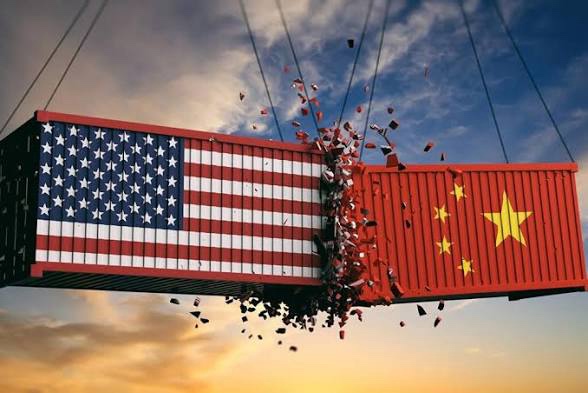
The current trade tensions are not a novel challenge for China, but rather a modern iteration of a historical pattern it has navigated for millennia. During the Warring States Period (476-221 BC) and the Three Kingdoms Era (220-280 AD), rival states engaged in protracted struggles for dominance and survival. While these were internal conflicts, the strategic principles of endurance, alliance-building, and long-term planning are deeply embedded in China’s strategic psyche.
This resilience was further tempered during the “Century of Humiliation” beginning in 1840. For over 150 years, China faced significant external pressures but lacked the economic and military strength to counter Western hegemony effectively. Today, that is no longer the case.
Recent analyses, including my own on the decline of empires and the end of the petrodollar system, highlight a critical shift. These studies of history, when applied to current events, suggest that the United States is facing an inflection point reminiscent of past declining powers. I do not say this to demonize the U.S., but to state an observable fact: its unipolar moment is concluding. If not a full collapse, the U.S. may retreat into a posture of isolationism, similar to its stance from 1776 until the post-WWII era.
However, such a retreat would be far more feasible for the United States—or Russia—than for China. Both are continental powers capable of economic self-containment. China’s destiny has always been, and will always be, intertwined with global engagement. For centuries, its prosperity has been built on making friends and expanding trade. This is not a new strategy; it is the reactivation of its historical role as a central node in the global network of commerce, a position it is now reclaiming.
当前贸易摩擦对中国而言并非新挑战,而是其跨越数千年历史模式的现代重演。从战国时期(公元前476-221年)到三国时代(公元220-280年),各政权曾为生存与霸权展开长期博弈。这些虽属内部冲突,但其中蕴含的持久耐力、结盟智慧与长远谋划等战略原则,早已深植于中国的战略基因。
始于1840年的”百年国耻”进一步淬炼了这种韧性。在长达150余年的岁月里,中国承受着巨大外部压力,却因缺乏足够的经济军事实力而难以有效抗衡西方霸权。如今,这样的时代已然终结。
近期关于帝国衰落与石油美元体系终结的研究(包括本人的分析)均指向一个重大转折。将历史经验投射现实可知,美国正面临与昔日衰败帝国相似的拐点。此言并非刻意妖魔化美国,而是陈述客观事实:美国的单极时代正在落幕。即便不至全面崩溃,美国也可能退守孤立主义立场,回归其1776年立国至二战后的传统态势。
然而,与中国相比,此类战略收缩对美国或俄罗斯更具实施基础——两国皆为具备经济自给能力的陆权国家。而中国的命运始终与全球参与紧密相连。数百年来,中国的繁荣正是建立在广交朋友与拓展贸易的基础之上。这并非全新策略,而是重启其作为全球商业网络核心节点的历史角色,此刻中国正在重新夺回这一地位。
-
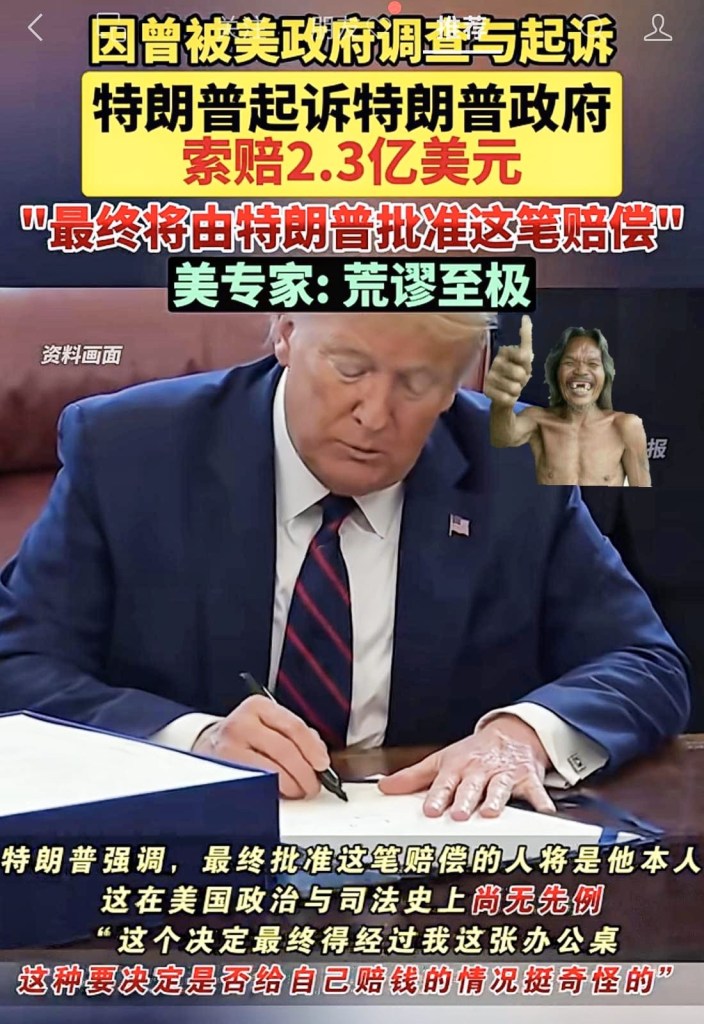
Trump sued Trump Government, Trump approved the settlement and write himself a US$230 millions check
Trump sued Trump Government, Trump approved the settlement and write himself a US$230 millions check! This could only happen in America! 川普起訴川普政府,川普批准和解,給自己開了一張2.30億美元的支票!這種事只有在美國才會發生!
-
Video with Chinese subtitles: The Petrodollar Just Died. US Dollar Is Next
Video with Chinese subtitles: The Petrodollar Just Died. US Dollar Is Next. 影片有中文字幕版: 石油美元已死,美元即將步其後塵
https://rumble.com/v70p874-the-petrodollar-just-died.-us-dollar-is-next.html
https://www.tiktok.com/t/ZP8Awoqk1/
https://youtu.be/Kp1ihWbBTbY?si=x2STQjeVj4II53C9The year is 2025, and the most important agreement in modern economic history just expired. For fifty years, every barrel of oil sold on Earth was priced in US dollars. That single fact made America the most powerful nation on the planet—even though we produce almost nothing and owe $36 trillion to everyone. That system just ended. And the media isn’t telling you.
In 1974, Henry Kissinger made a secret deal with Saudi Arabia. They would price all oil exclusively in dollars. In exchange, America would provide military protection. Through OPEC, this extended to every oil-producing nation. Suddenly, if you needed energy, you needed dollars first. This created artificial demand that let the United States print unlimited money, run massive trade deficits, accumulate crushing debt, and never face consequences. We exported inflation. We imported goods. And the world paid for it by holding our currency in reserves.
That agreement just expired in 2025. Saudi Arabia announced they won’t renew it. They joined BRICS. They’re accepting yuan from China, rupees from India. They’re diversifying out of dollars. And they’re not alone. In 2000, 73% of global reserves were dollars. Today, under 55%. China dumped $300 billion in Treasuries. Russia abandoned dollars entirely. Even allies like France are reducing exposure. The world is exiting the dollar system. Fast.
When those dollars flood back home—when central banks stop absorbing our inflation—your purchasing power collapses. Imports become unaffordable. Gas. Electronics. Medicine. Food. Everything made overseas, which is almost everything, explodes in price. Your savings evaporate. Your paycheck buys less every month. And the government can’t stop it. Raising rates crashes the economy and makes the debt unsustainable. Printing more accelerates the collapse. There’s no good option.
This has happened before. Every reserve currency fails. The Spanish dollar. The Dutch guilder. The British pound. All collapsed after overextension, war, debt, and money printing destroyed confidence. The dollar’s been reserve currency since 1944. Eighty years. That’s longer than most last. And the pattern is repeating. Endless wars. Crushing debt. Money printing. Loss of confidence. The script is written. We’re just watching it play out.
The petrodollar dies in 2025. The dollar’s dominance dies with it. Most people won’t see it coming. But the smart money already moved. They understand that paper money is worth only what others believe it’s worth. And that belief is breaking right now.
💬 Why Watch This
This isn’t theory. The petrodollar agreement expired. Dedollarization is accelerating. The same pattern that destroyed every previous reserve currency is repeating with the dollar. Your savings, your paycheck, your retirement—all denominated in a currency losing global dominance. Whether you understand what’s happening and prepare, or stay ignorant and get destroyed, is the only choice left. History has the answers. The pattern is clear. The timing is now.
📽️ 影片標題:石油美元已死,美元即將步其後塵
(中文字幕版)📅 時間是2025年。現代經濟史上最重要的一份協議,剛剛到期。過去五十年,地球上每一桶石油都以美元計價。這一個事實,使美國成為世界上最強大的國家 – 即使我們幾乎不生產任何東西,卻欠下36兆美元的債務。這個系統,現在結束了。
而媒體,卻隻字未提。🕵️♂️ 1974年,亨利·季辛吉(Henry Kissinger)與沙烏地阿拉伯秘密達成協議。沙國承諾:所有石油將只以美元定價。作為交換,美國提供軍事保護。透過OPEC,這項協議延伸至全球所有產油國。
從那一刻起,只要你需要能源,就必須先擁有美元。這創造出人為的需求,讓美國得以無限印鈔、長期貿易逆差、累積巨額債務,卻從不受懲罰。我們輸出通貨膨脹,輸入商品。全世界為此買單 – 因為他們都把美元當作外匯儲備。
⏰ 這份協議於2025年正式到期。沙烏地阿拉伯宣布不再續約。他們加入了金磚國家(BRICS)。他們開始接受中國的人民幣、印度的盧比。
他們在去美元化。而他們,並不孤單。2000年時,全球儲備資產中有73%是美元;今天,不到55%。中國拋售了3000億美元的美債;俄羅斯完全棄用美元;甚至連法國等盟友也在減少美元曝險。全世界正迅速退出美元體系。
💣 當這些美元回流美國,
當各國央行不再吸收美國輸出的通膨,你的購買力就會崩潰。進口品 – 汽油、電子產品、藥品、食物 – 幾乎所有「在海外生產」的東西,價格都將暴漲。你的儲蓄將蒸發;你的薪水每個月都更不值錢。而政府,無能為力。升息會拖垮經濟、讓債務無法維持;再印錢只會加速崩潰。已經沒有好辦法。
📉 這一切並非首次發生。
每一個儲備貨幣,最終都會崩潰。西班牙銀元、荷蘭盾、英鎊 – 無一倖免。過度擴張、戰爭、債務、濫發貨幣摧毀了信任。美元自1944年以來成為全球儲備貨幣,已經八十年 – 比多數都撐得久。但歷史正在重演:
無盡的戰爭、沉重的債務、瘋狂的印鈔、信任的喪失。
劇本早已寫好,我們只是看著它上演。🪙 石油美元在2025年正式死亡。
美元的霸權,也隨之終結。
大多數人還毫無察覺。但聰明的資金早已撤離。他們明白 – 紙幣的價值,只存在。人們對它的信任之中。而這種信任,正在崩潰。💬 為什麼要看這支影片?
這不是陰謀論,而是事實。
石油美元協議確實到期。去美元化正在加速。摧毀歷史上每一個儲備貨幣的模式,正在美元身上重演。你的儲蓄、薪水、退休金 –
全都以正在失去全球主導地位的貨幣計價。你只有兩種選擇:
看懂趨勢、提前準備;
或是無知地被碾碎。歷史早有答案。
模式清晰可見。
時機就在現在。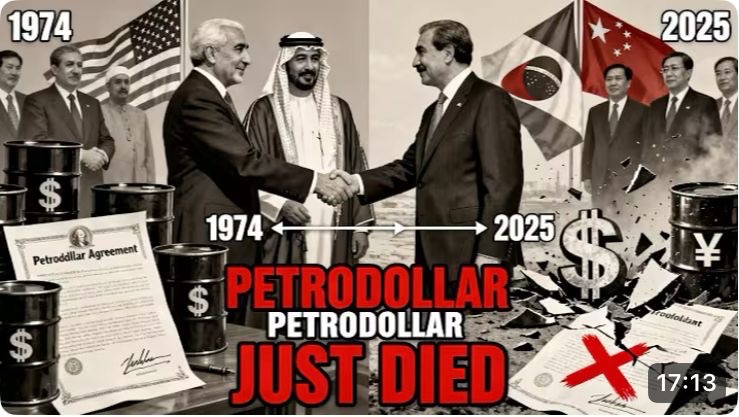
-
Subscribe
Subscribed
Already have a WordPress.com account? Log in now.
 Business Blog