-
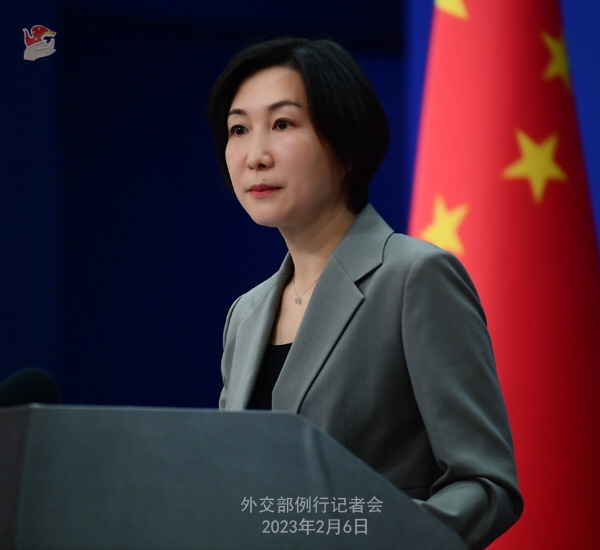
China Foreign Ministry Spokesperson Mao Ning’s Regular Press Conference on Chinese Weather Balloon and others
Foreign Ministry Spokesperson Mao Ning’s Regular Press Conference on Chinese Weather Balloon and others February 6, 2023
Reuters: I understand what you said just now about China reserving the right to take necessary actions in relation to the shooting down of the balloon by the US but what would be your position hypothetically before this balloon incident? Would China shoot down a US balloon or drone if it finds it above Chinese territory?
Mao Ning: I do not take hypothetical questions. What I can tell you is that the unintended entry of the airship is an entirely unexpected, isolated incident caused by force majeure. The US side needs to handle it in a calm, professional and proper manner.
New York Times: China has objected to the downing in shallow water of the balloon. Where did China want the balloon to go instead? Did it expect it to crash into the ocean? Did it expect it to land on a Chinese ship in the ocean? Did it expect it to fly back to China? What was the plan for the airship if it had not been downed?
Mao Ning: This is a hypothetical question, which I cannot answer.
We have repeatedly stressed to the US that it should act in a calm, professional and proper manner without the use of force.
Reuters: At what point, on which day did the foreign ministry find out about this balloon? Was it before or after the US said it has discovered this balloon?
Mao Ning: China is a responsible country. After the US side informed the Chinese side of the situation, we immediately verified it and communicated it to the US side, and we specifically asked the US side to properly handle the matter in a calm, professional and restrained manner.
Reuters: Does it concern or worry China that it doesn’t have an overall systematic way of tracking where its balloons are so that it needs to rely on the other countries to let it know that they have found a balloon in their airspace?
Mao Ning: I have stressed repeatedly that this is an unexpected, isolated incident caused by force majeure and should be handled in a calm, professional and proper manner.
Wall Street Journal: We saw this morning the statement that Vice Foreign Minister Xie Feng had met with or had conveyed his reaction to the US embassy. I’m curious, over the weekend, can you comment on whether there’s been any other direct communication between the US and China specifically about the downing of the aircraft? For example, has the Chinese Ministry of Defense communicated at all with the Pentagon about this issue?
Mao Ning: I can share with you that China has been in communication with the US and specifically asked the US side to properly handle the matter in a calm, professional and restrained manner. We made the result of our verification available to the US side in a timely way.
At the invitation of Premier of the State Council Li Keqiang, Prime Minister of the Kingdom of Cambodia Hun Sen will pay an official visit to China from February 9 to 11.
CCTV: You just announced that Cambodian Prime Minister Hun Sen will visit China. Can you share more about this visit? How does China view the current China-Cambodia relations? And what does China expect to achieve through this visit?
Mao Ning: Prime Minister Hun Sen is a good and old friend of the Chinese people. He is the first foreign leader to be received by China after the Spring Festival this year, which speaks to the high quality of China-Cambodia relations. During the visit, Chinese leaders will meet and hold talks with him respectively to have in-depth exchanges of views on bilateral relations and regional and international issues of common interest.
China and Cambodia have traditionally been close neighbors and iron-clad friends. The China-Cambodia friendship, forged by the older generation of the leaders of the two countries, has stood the test of time and grown from strength to strength. Under the strategic guidance of the leaders of the two countries, efforts to build the China-Cambodia community with a shared future has achieved fruitful outcomes in recent years, bringing tangible benefits to the peoples of our two countries and making positive contribution to the peace and prosperity in the region and beyond. This year marks the 65th anniversary of the establishment of China-Cambodia diplomatic relations and the “China-Cambodia Friendship Year”. China hopes to take this visit as an opportunity to push for even greater progress in the building of the China-Cambodia community with a shared future and carry forward the China-Cambodia friendship from generation to generation.
CNN: The Pentagon says another surveillance balloon from China has been spotted over Latin America and the US says there were three instances during the Trump administration of China flying surveillance balloons over the US. What’s the purpose of these balloons from China?
Mao Ning: With regard to the balloon over Latin America, it has been verified that the unmanned airship is from China, of civilian nature and used for flight test. Affected by the weather and with limited self-steering capability, the airship deviated far from its planned course and entered into the airspace of Latin America and the Caribbean. China is a responsible country and always acts in strict accordance with international law. We have informed relevant sides. It is being properly handled and will not pose any threat to any country. They have expressed their understanding.
As to the alleged three instances of China flying surveillance balloons over the US during the Trump administration, I noted that Mr. Trump has denied the claim.
CNN: The US is confident though that what they shot down is in fact a spy balloon. Can you help us understand how this could be a weather balloon?
Mao Ning: The Chinese side has provided relevant information to the US side on multiple occasions. The unmanned airship is found to be a civilian airship used for meteorological and other research purposes. Affected by the Westerlies and with limited self-steering capability, the airship deviated far from its planned course. This is entirely an unexpected, isolated incident caused by force majeure.
As a responsible country, China strictly adheres to international law and respects the sovereignty and territorial integrity of other countries. As history shows, it is the US that has repeatedly trampled on international law and violated the sovereignty and territorial integrity of other countries. The Chinese side has made it clear that this is entirely an unexpected, isolated incident caused by force majeure. The US side’s deliberate hyping up of the matter and even use of force are unacceptable and irresponsible.
Sky News: The eyes of the world are now on China as you know following the shooting down of that balloon. Does China recognize how dangerous this moment could be? And with that in mind, should it avoid tit-for-tat escalations, especially if the debris gathered shows that the balloon was spying?
Mao Ning: We have stated several times that this incident was totally unexpected and caused by force majeure. The US Department of Defense already stated that “the balloon does not present a military or physical threat to people on the ground”. China has time and again made that clear to the US, and yet the US side still went ahead with the use of force, which is a clear overreaction. The Chinese side is firmly opposed to that.
I wish to stress that in the face of this kind of unexpected, isolated incidents, both sides, the US in particular, should act in a calm, professional and proper manner without the use of force.
Beijing Youth Daily: Your colleague said that the 14th “Love Knows No Borders” international charity sale includes a livestreaming sale scheduled during the evening around February 8. Can you update us on the event?
Mao Ning: Thanks for your interest in the event. With the support and contribution from various quarters in China and abroad, the opening ceremony of the 14th “Love Knows No Borders” international charity sale was successfully held in an online format on January 17. A livestreaming sale has been scheduled for 7:30 p.m. on February 8. Some diplomatic envoys and senior diplomats in China and representatives from the two counties paired with our ministry in Yunnan Province and the two counties in Hebei Province which have support-driven and cooperative ties with our ministry will promote the products of the charity sale and showcase diverse culture on CCTV news app and the CCTV news channel at Taobao Live.
Donations collected at the event will be used for “projects of warmth”, which will install and upgrade shower facilities for elementary and middle schools in Malipo and Jinping, two counties in Yunnan, bringing warmth to nearly 20,000 children there to help them grow up healthily. We hope friends from home and abroad will join the upcoming events of the “Love Knows No Borders” international charity sale online, share your love and contribute to rural revitalization.
Xinhua News Agency: We noted that President of the 77th session of the UN General Assembly Csaba Kőrösi wrapped up his visit to China over the weekend. Could you share more information with us?
Mao Ning: President of the 77th session of the UN General Assembly Csaba Kőrösi paid a visit to China from February 1 to 4 upon invitation. Premier Li Keqiang and State Councilor Wang Yi met with him respectively. Foreign Minister Qin Gang held talks with him. The two sides exchanged in-depth views on the current international situation, the role of the United Nations and issues of common interest. During the visit, President Csaba Kőrösi also met with officials of relevant ministries and leading officials of the Henan Provincial Party Committee. He also went to Zhengzhou, Henan, where he visited the central route of the South-to-North Water Diversion Project that crosses the Yellow River.
Kőrösi is the first senior official of the UN system to have visited China this year. China always supports multilateralism, the work of the UN and the important role of the UN General Assembly. This visit has been a complete success and I’ve come up with three keywords to highlight the outcomes.
The first is unity. Both sides agreed that it’s important to uphold multilateralism, safeguard the authority of the UN, and firmly uphold the UN-centered international order and the basic norms governing international relations based on international law. We need to remain committed to making international relations more democratic and further increase the representation and say of developing countries in international affairs.
The second is development. Both sides agreed to put development at the center of the global agenda, host UN high-level forums on sustainable development this year, support developing countries in enhancing their capacity for self-driven development, and ensure that no country and no one is left behind on the path of common development. China is ready to strengthen the synergy between the Global Development Initiative and the implementation of the 2030 Agenda for Sustainable Development, and carry out more practical cooperation projects that deliver tangible results.
The third is challenge. Both sides agreed that in the face of multiple challenges and crises in today’s world, countries should attach importance to the application of science and technology, and strengthen the unique role of data in water conservation, climate response, biodiversity conservation and implementation of the 2030 Agenda for Sustainable Development. China supports the UN Water Conference to be held in March and appreciates the personal efforts made by President Csaba Kőrösi for the event.
Bloomberg: First, you’ve characterized both balloons as entering the US and Latin America accidentally and being blown off course, so I guess the question is, why is China having so much trouble controlling weather balloons? And is it gonna take steps to sort of remedy that problem?
Mao Ning: I’m not an expert on controlling the balloon, so I’m probably not the right person to answer this question. But to my knowledge, this is not the first time in the world that balloons for scientific research went out of control.
Dragon TV: Former President of Pakistan Pervez Musharraf passed away due to illness on February 5. Do you have any comment?
Mao Ning: Former President Musharraf was an old friend of the Chinese people. He made important contribution to China-Pakistan relations. We deeply mourn the passing of Mr Musharraf and extend our sincere sympathies to his family. China stands ready to work with Pakistan to carry forward our iron-clad friendship, deepen the China-Pakistan all-weather strategic cooperative partnership, and advance the building of an even closer China-Pakistan community with a shard future in the new era.
Wall Street Journal: To your knowledge, are there any other balloons in the world that currently the government or China has lost control of?? What information can you share with us about that?
Mao Ning: I’ve shared with you what I know. I don’t have other information.
AFP: The foreign ministry said this morning that Vice Foreign Minister Xie Feng has lodged stern representations to the US Embassy over the handling of the Chinese balloon. Could you give more details about this encounter? Did Vice Minister Xie meet personally with the US Ambassador? And China has said it reserves the right to further respond to the balloon being shot down. What responses does China plan to take?
Mao Ning: The Chinese side has put out a press release regarding Vice Foreign Minister Xie Feng’s démarche and you may refer to that. I want to stress that despite our repeated communication with the US, the US side still went ahead with the use of force. This is a clear overreaction. The Chinese side is firmly opposed to that. The US side needs to stop pushing the envelope and stop escalating or exacerbating the situation. The Chinese side will respond as necessary in light of the development of the situation.
New York Times: Is China taking the position that it reserves the right to shoot down unmanned aircraft that fly across its borders without permission or is China taking the position that it is wrong to shoot down unmanned aircraft that fly across borders without permission?
Mao Ning: I want to stress that the US made an overreaction by using force on a strayed unmanned civilian airship. This violates customary international practice.
TASS: How does China see the prospects of BRICS? How do you assess China’s influence and role in BRICS’ development? What is China’s position on BRICS’ expansion? If BRICS countries start to use more local currencies for settlement in international trade and other areas and reduce the use of the US dollar, how do you view this? Do BRICS countries need to create a common currency? A separate question. On February 1, Ukrainian law enforcement agencies expanded their fight against corruption and searched the homes of many incumbent and former high-ranking officials and rich businessmen. Do you have anything to comment on this?
Mao Ning: On your first question, BRICS came into being as the world was experiencing major transformation. After more than a decade of continuous hard work and nurture, BRICS cooperation has struck deep roots and come a long way. It has enjoyed robust momentum and become a key force in international affairs. China, as the BRICS chair last year, held a successful 14th BRICS Summit and achieved a series of pioneering, guiding and institutional outcomes. During the BRICS China Year, more than 160 meetings and events, covering more than 30 specific areas, were held, leaving a deep China imprint on BRICS cooperation.
The XIV BRICS Summit Beijing Declaration noted that “We support promoting discussions among BRICS members on BRICS expansion process.” China will continue to follow the BRICS spirit of openness, inclusiveness and win-win cooperation, work with BRICS partners, strengthen cooperation with other emerging markets and developing countries, and jointly advance the BRICS expansion process on the basis of full discussion and consensus through consultation.
In recent years, BRICS countries have made progress through exchange and cooperation in financial and monetary sectors. This is of great importance to facilitating trade among BRICS countries and jointly promoting economic recovery.
On your second question, what you mentioned is Ukraine’s domestic affair, and we will not comment on that.
Bloomberg: On Friday China dismissed the head of its weather department. This came just after the Pentagon said that the balloon was over Montana which houses US nuclear missile sites. Was this dismissal of the weather department official related to the balloon? Separately, Secretary of State Antony Blinken has said that he will postpone his trip to China. Are there any plans for that trip to be put back on the schedule?
Mao Ning: On your first question, there is an announcement on the website of the Ministry of Human Resources and Social Security of China. I have nothing more to share.
You mentioned Secretary Blinken’s visit to China in your second question. In fact, neither China nor the US has ever announced that there would be a visit. It is a matter for the US to make its latest announcement. It is the responsibility of the diplomatic teams on both sides to properly manage bilateral relations.
CNBC: I have two questions. The first question is, the US Senator Schumer said that once the balloon was exposed to the public, China attempted to maneuver the balloon to leave the US as soon as they could. Can the Chinese side confirm this? And how did it attempt to maneuver the balloon? The second question is, now that we don’t know exactly when Blinken would be coming to visit China, what sorts of actions is China planning in order to put further guard rails on the US-China relationship and prevent further economic fallout?
Mao Ning: On your first question, I can tell you that we have maintained communication with the US side and made a great effort to handle this matter in a responsible way.
On China-US relations, China views and grows its relations with the US in accordance with the three principles of mutual respect, peaceful coexistence and win-win cooperation proposed by President Xi Jinping. At the same time, we firmly uphold our sovereignty, security and development interests. The unintended entry of the airship into US airspace is totally unexpected and isolated. It is, however, a test for the US side’s sincerity about stabilizing and improving its relations with China and its approach to crisis management. The US side needs to work with China to properly manage differences and avoid misunderstanding and miscalculation and damaging mutual trust.
AFP: Australian Trade Minister Don Farrell has said that he has agreed to an in-person meeting with Chinese Minister of Commerce Wang Wentao. Can you confirm this and can you share any details of the recent talks between the two trade ministers?
Mao Ning: The Ministry of Commerce has put out a release, which you may refer to. I would refer you to the responsible department for the specifics.
Reuters: This is about the Australian Trade Minister Don Farrell’s upcoming meeting with his Chinese counterpart Wang Wentao. Just to confirm does this meeting replace the online meeting that the commerce ministry confirmed last week? Or has that meeting been postponed and replaced with this in-person meeting?
Mao Ning: I’m not aware of the specifics. I would refer you to the Ministry of Commerce.
AFP: A magnitude 7.8 earthquake today has killed hundreds of people in Türkiye and Syria. Have any Chinese citizens been hurt and is China planning to provide humanitarian assistance?
Mao Ning: We have been closely following the major earthquake that hit Türkiye and Syria. We mourn for the victims and express our sympathies to those who lost their loved ones and people who are injured. We sincerely hope that the Turkish and Syrian people will overcome the disaster and rebuild their home at an early date.
After the earthquake, Chinese embassies and consulates in the region, including in Türkiye and Syria, immediately activated emergency response mechanisms to verify the situation of Chinese citizens affected by the earthquake. So far, no Chinese casualties have been reported. Chinese diplomatic and consular missions in the affected region will continue to closely follow the situation on the ground and provide consular protection and assistance to Chinese citizens there.
We’d also like to take this opportunity to remind fellow Chinese compatriots in Türkiye and Syria to guard against post-earthquake secondary disasters.
-
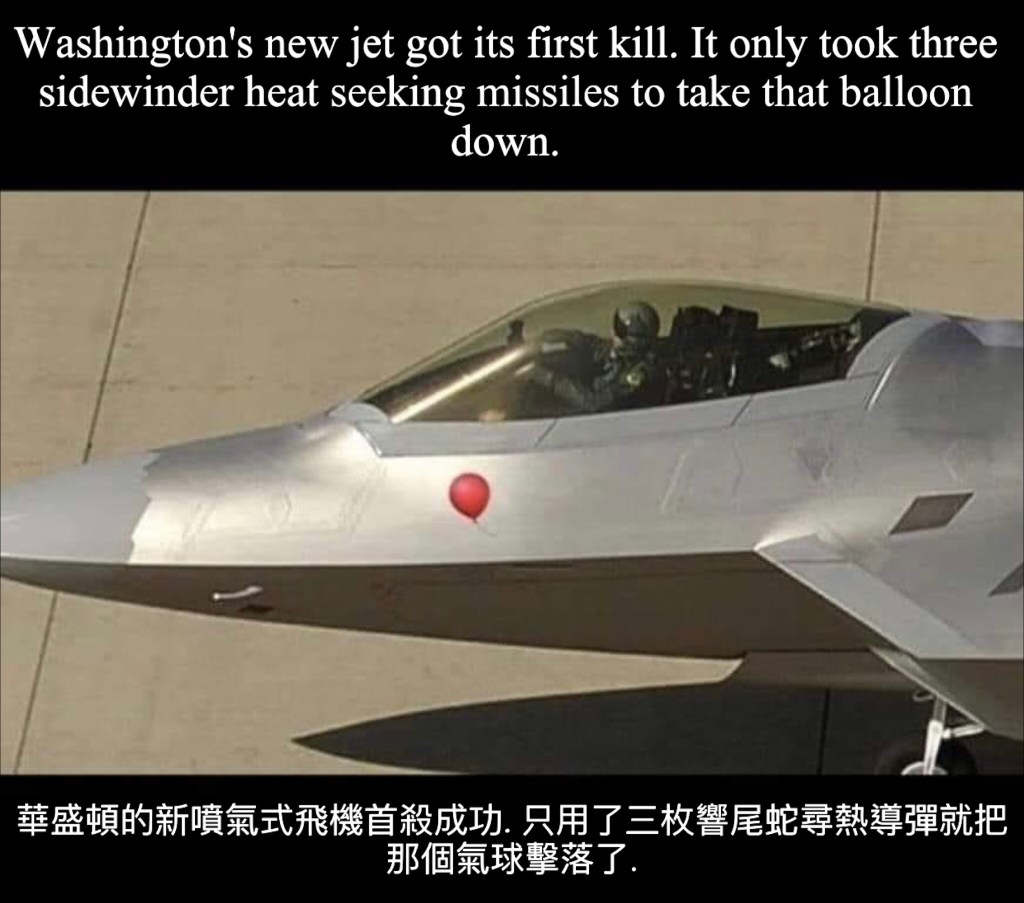
Washington’s new jet never in real combat killed a balloon
Washington’s new jet got its first kill. It only took three sidewinder heat seeking missiles to take that balloon down. 華盛頓的新噴氣式飛機首殺成功. 只用了三枚響尾蛇尋熱導彈就把那個氣球擊落了 (千億的美國戰機計劃原來不是用來打飛機是打氣球).
-
Video: The most beautiful night lantern performed by US’s F22
Video: The most beautiful night lantern performed by US’s F22 fired 3 missiles to shoot down China’s weather balloon, China to return the favor in the future 台灣美中尊家: 歷年最美元宵花燈, 美爆跳 中淡定
https://rumble.com/v28i2gz-uss-f22-fired-3-missiles-to-shoot-down-chinas-weather-balloon.html
https://m.facebook.com/story.php?story_fbid=889553912267935&id=100036400039778&mibextid=qC1gEa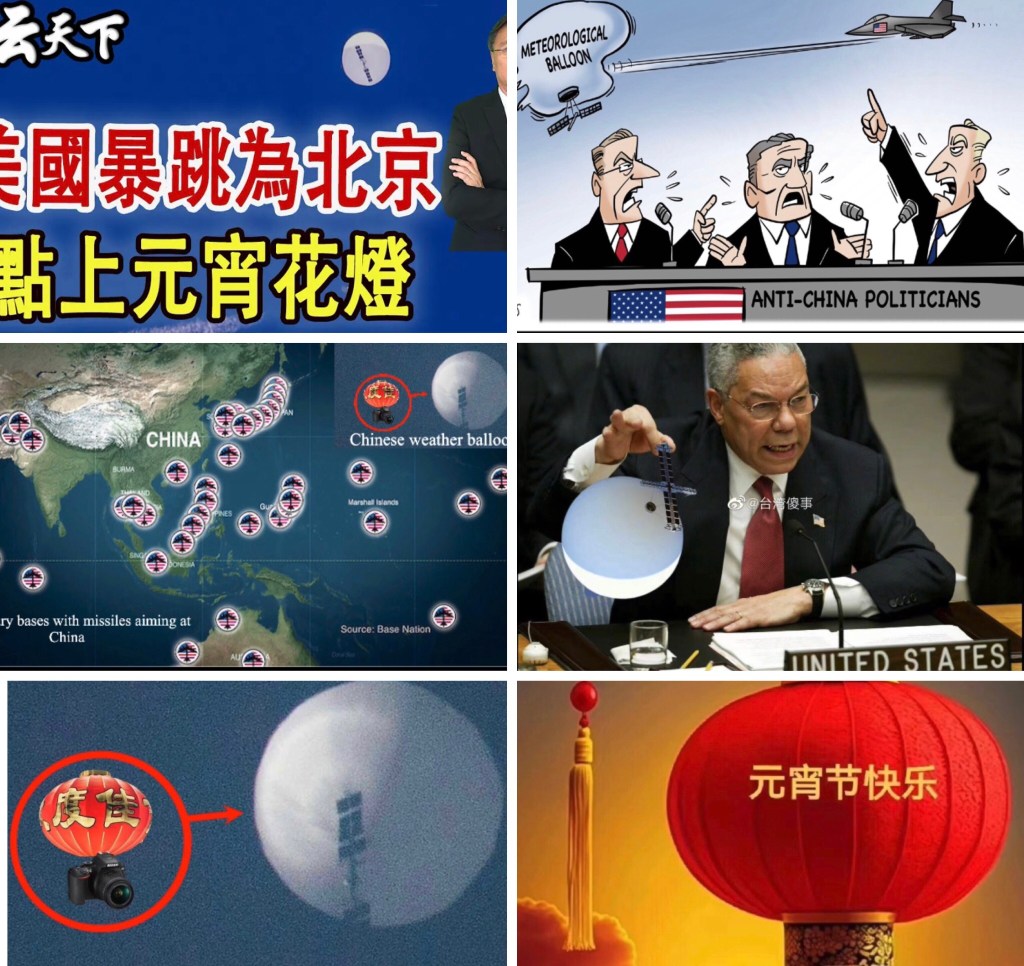
-
Video: China’s trade with ASEAN US$800b
Video: Year 2000: US trade with ASEAN US$135b; China’s trade with ASEAN US$40b
Year 2022: US trade with ASEAN US$300b; China’s trade with ASEAN US$800b
https://rumble.com/v28i3c4-chinas-trade-with-asean-us800b.html
https://m.facebook.com/story.php?story_fbid=889558485600811&id=100036400039778&mibextid=qC1gEa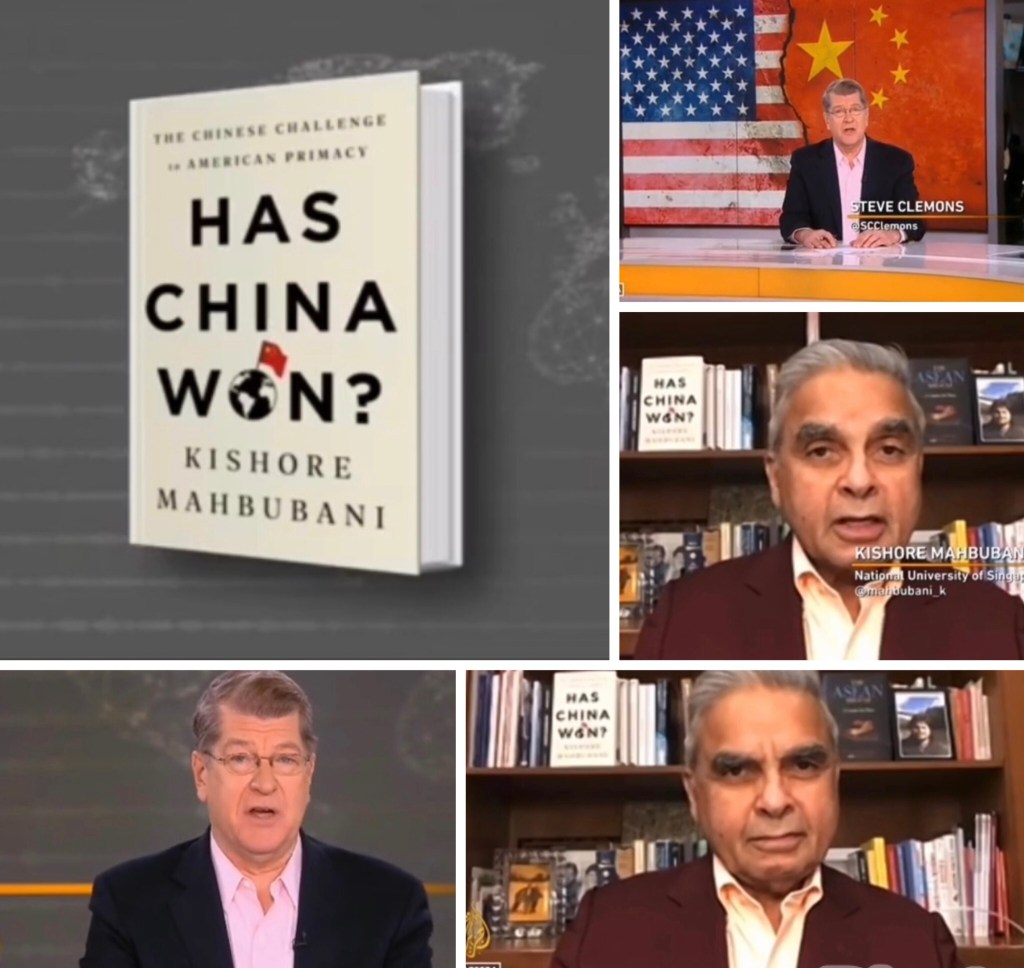
-
Asia Times: Much ado about a well-timed balloon
Asia Times: Much ado about a well-timed balloon. Aside from a propaganda boon for the US, the incident got Antony Blinken off the hook. 亞洲時報:關於適時氣球的事太多了。除了對美國的宣傳有利之外,這一事件還讓安東尼·布林肯擺脫了困境 By George Koo, Feb 6 2023
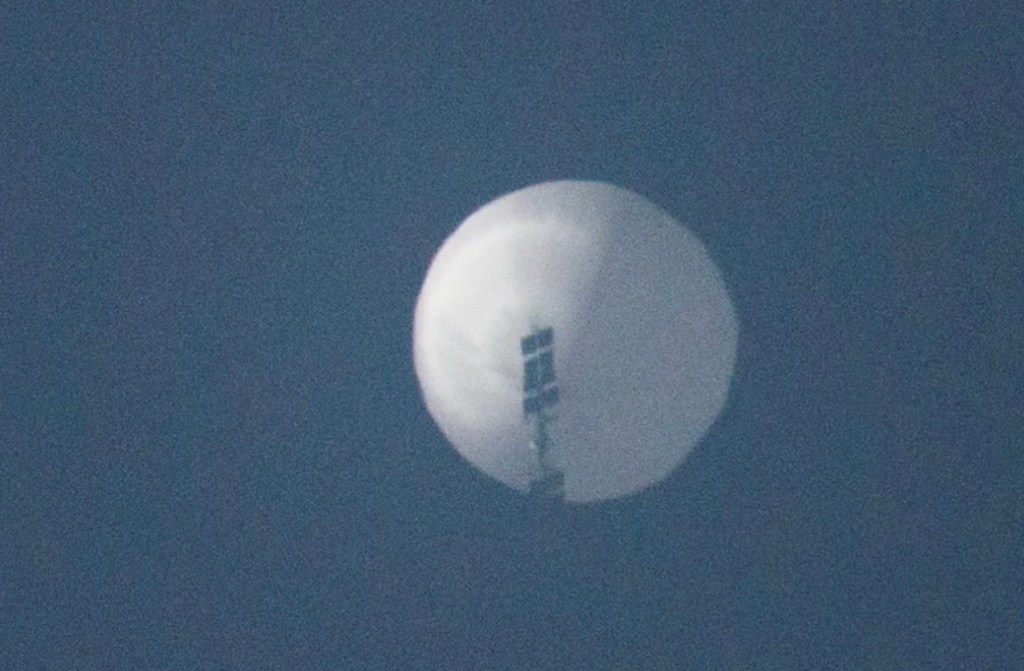
A huge white balloon equivalent in size to three buses drifted from China over Alaska and Canada, and then over Montana and across the US continent before reaching the Carolinas coast.
At that point, the Pentagon deemed it safe to send a couple of jet fighters supported by a fuel tanker to bring down the errant balloon and let the remnants fall into the Atlantic Ocean.
After firing missiles at the target, the mission was completed and deemed a triumphant success. And the brave pilots returned to home base safely.
The Biden White House first knew about the balloon on January 28 and shot it down a week later. In between, Washington expressed outrage, fear and anxiety over the “invasion” of a spy balloon from China.
Beijing’s official response was that it was a civilian balloon for weather surveillance that went off course and hardly warranted the extreme response of a missile attack.
Beijing did not feel it necessary to point out that high-flying balloons cannot gather intelligence as effectively as satellites or aircraft. The Pentagon certainly knows this better than anyone. It has been flying surveillance planes off the coast of China for years – though no balloons that we know of.
Needless to say, a highly visible white finish is hardly appropriate for a spy balloon that would logically want to be stealthy.
But it is, on the other hand, a well-known fact that thousands of weather balloons are released annually by many countries for the purpose of forecasting weather. Once in a while, a balloon will drift off course because of atmospheric conditions, which is not surprising and should not trigger any outpouring of emotional trauma.
Aside from the fact that the wandering balloon gave Washington the opportunity to make a mountain of propaganda against China’s “aggressiveness” molehill, otherwise known as xiaotidazhuo (小题大做), the incident also got Secretary of State Antony Blinken off the hook.
For weeks, Blinken has publicly announced his intention to visit Beijing. Then he got specific and set the dates of his visit as February 5 and 6. This presented China’s Foreign Ministry with a thorny problem.
Aside from not having extended a formal invitation, the Chinese didn’t know what to talk to Blinken about. China has experienced a litany of the US saying one thing and doing just the opposite. A trust deficit exists that can’t be papered over.
At the Group of Twenty Summit in Bali in November, US President Joe Biden promised to abide by the one-China principle, and then promptly enacted a bill to provide $10 billion worth of advanced weapons to Taiwan and celebrated the hijacking of a TSMC fab to Arizona.
Treasury Secretary Janet Yellen flew to Switzerland to meet with Vice-Premier Liu He, China’s economic czar, to ask for China’s support of American debt and not to divest US Treasury notes and bills that China was holding. Then she flew to Africa to badmouth China and warn Africans of Chinese “debt trap” diplomacy.
Since Blinken’s ill-fated first meeting with Chinese leaders in charge of foreign policy, in Anchorage, Alaska, in March 2021, he has not altered his style of diplomacy. It’s “here are my list of demands and expectations in advance and now let’s talk.”
China’s style of diplomacy is more nuanced, and telling Blinken to go hell or even to go Tianjin is just not its way. Instead, an innocently wandering balloon gives Blinken a face-saving way to postpone the self-invited visit to China.
Note, he didn’t say he is canceling the visit, just postponing the trip. Despite his harsh, blunt approach, he does understand that the US desperately needs China’s willing collaboration. With China, he needs to act like he understands it can’t be all take and no give.
George Koo retired from a global advisory services firm where he advised clients on their China strategies and business operations. Educated at MIT, Stevens Institute and Santa Clara University, he is the founder and former managing director of International Strategic Alliances. He is currently a board member of Freschfield’s, a novel green building platform.
-
Video: US shot down China’s weather balloon
Video: US shot down China’s weather balloon claimed by US for intelligence purposes afraid of China’s technological superiority over US? 台灣中美尊家: 美方擊落 陸“侵入”無人艇
https://rumble.com/v28f8ue-us-shot-down-chinas-weather-balloon.html
https://m.facebook.com/story.php?story_fbid=889148992308427&id=100036400039778&mibextid=qC1gEa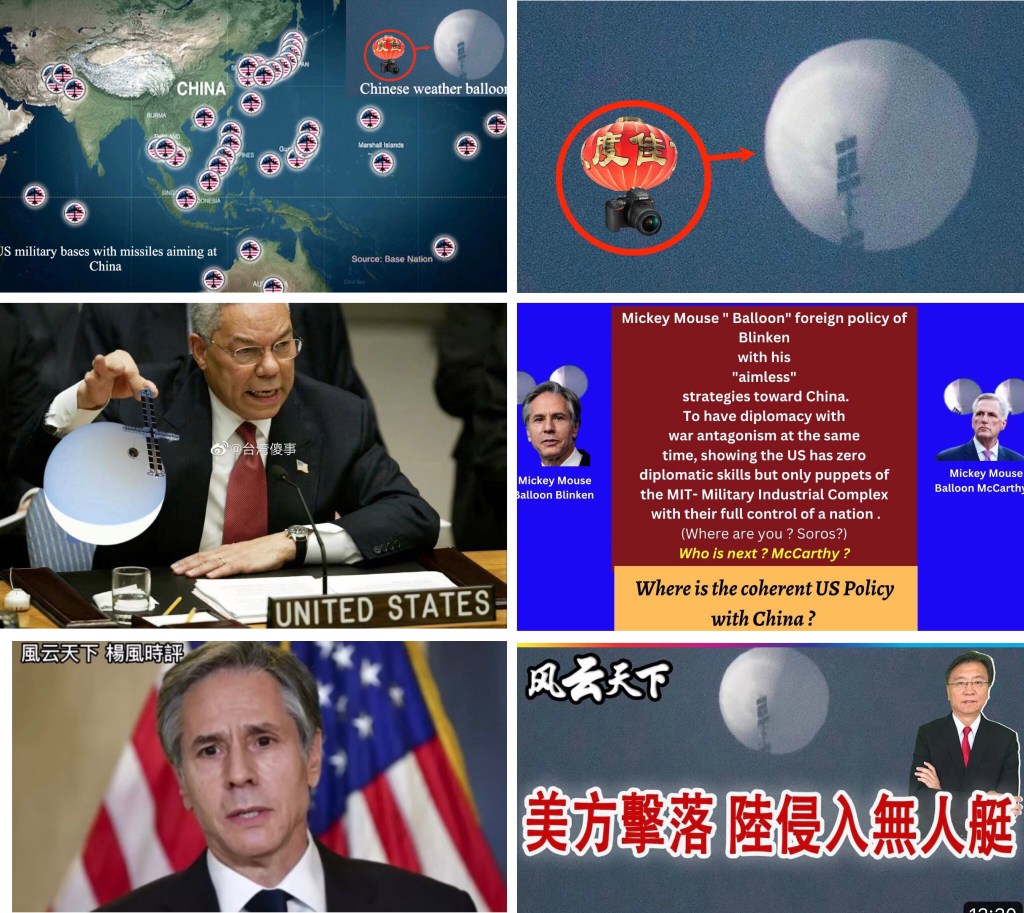
-
Sex trade at age 14, at age 15 manage a team of young girls
East Week Magazine HK: Beginning sex trade at age 14, at age 15 manage a team of young girls, young girls controlling the sex trade 14歲跑私鐘 15歲做雞頭 少女兵團攻陷淫業
未成年少女在淫業向來大有市場,但隨交友平台日趨蓬勃,愈來愈多少女自立門戶作個體化經營。在未成年朋輩之中,甚至開始有人充當「雞頭」或「馬伕」,操控或介紹朋輩接客,早前便爆出有十五歲女涉嫌做「雞頭」,指使十四歲少女跑私鐘,引起社會各界譁然。
本刊追蹤少女兵團攻陷淫業情況,以及她們入行後心路歷程。一對情同姊妹的少女,一個為養家,一個為有伴去玩,齊齊拍住上展開陪酒生涯,而介紹恩客給她們的「馬伕」同樣未成年;另有派對場所老闆,靠其仍讀中四的契仔帶女同學上門陪熟客玩樂,新年期間更大(扌豆)利是發新年財。網上多個社交群組向嫖客推介不同少女,不少聲稱只有十六、七歲;更有自稱學生妹公開接客的生活,同時販售肉照及性愛片作招徠。少女兵團攻陷淫業問題愈來愈嚴重,尤其是少女透過網絡個體化經營,行蹤變得隱蔽,社工更難介入輔導及作出支援,警方掃蕩難度亦提高,近年更揭發「衰十一」個案有上升趨勢。
「陪飲伏特加、威士忌都無問題,我們飲酒從來不會醉。」十六歲的嘉儀與其十七歲好姊妹阿婷,早前穿緊身超短裙的「戰鬥裝」,隨着馬伕到一間卡拉OK房,陪伴房內多名男客消遣。嘉儀甫坐下便熟練地開啤酒逐一為客人斟酒。
眾人數杯落肚後,嘉儀拿着骰盅興奮地說:「知道你們鍾意玩骰盅,可以一起玩呀。」未幾她便倚在其中一名男客人身上,揚言不介意與客人有身體接觸,「讓客人摸摸是必須的,攬攬錫錫都很正常,花數百元一小時,難道只是陪飲酒嗎?」阿婷則積極配合嘉儀搞氣氛,又點歌獻唱助興,二人一唱一和,落力逗客人開心。在公屋長大的嘉儀自稱,中三畢業後便出來工作,父母近年離婚,父親已搬走,遺下她和兄長跟隨母親生活。但當酒樓樓面的母親在疫情時經常開工不足,二十歲的哥哥當收數佬養家,自己也曾替人收數,「追到錢便分到數百元。」
當男客人似是想與嘉儀(右)前往時鐘酒店時,嘉儀即推說今次只是陪酒而婉拒。
收入對拆即場收現金
嘉儀不想做收數,一年多前在夜場玩時,認識當馬伕的阿傑,見對方只有十七歲,卻經常有錢請她飲飲食食,自此成為朋友,得知阿傑認識多名夜場老闆,可以介紹她陪客飲酒猜枚賺錢,更求阿傑帶她入行,「他要求客人最少消費三小時,每小時收五百元,一半分給我。一星期開工幾日有數千元收入。他幫我搵生意,有事又會幫我出頭。」
其好姊妹阿婷則是為了有伴玩樂,最近隨嘉儀下海,她說:「嘉儀不但給地方我睡,還帶我一起去賺錢。」原來阿婷讀中二時,正值一九年香港黑暴時期,便經常逃學去玩,被學校記多次大過,乾脆退學在家打機,「父母在我幾歲時已分開,後來阿媽找到男友,連我有沒有回家睡覺都不知。只要我不問她拿錢,做甚麼都可以,後來索性搬去與嘉儀孖鋪睡。」阿婷續說:「男人最喜歡找我們這種年齡的妹妹陪坐,覺得我們好玩。」席間有男客人笑言,出外交際應酬時都會找數名少女來助興,大家玩得開心,事後談生意時都容易些。眾人在卡拉OK房吃喝盡興後散場。在街上,馬伕阿傑接回嘉儀與阿婷,未幾有男客人掏出三千元現金,三人即場分錢,阿傑先取一半,餘下給嘉儀與阿婷對分。
嘉儀與阿婷更與男客人在街上拖手散步一會兒,途經時鐘酒店時,看到男客人似是有意入內,便推說今次只是陪酒,不開房了。阿傑事後則打圓場說,一般陪玩少女對着陌生客人只會陪唱、飲酒及猜枚,如果是熟客才會有「下場」,不會貿然開房。
阿傑續說,喜歡找學生妹或未成年少女陪坐的客人,大部分是四、五十歲的中年男人,估計貪這年紀的少女無「撈」味。至於他自己十五歲已輟學,平時都是蒲夜場識女仔,得悉對方想找快錢便介紹她們陪酒,從中抽佣,「有錢賺,她們就會做。」
警方去年底拘捕多人涉嫌利用援交少女設局搶劫嫖客

-
Video: US Gov’t playbook on China
Video: US Gov’t playbook on China: Xinjiang human rights violations,the weather balloon, BRI debt traps etc, US Gov’t mouthpiece medias doing such a good job. Americans are foolish to believe it. 美國政府對華劇本:新疆侵犯人權、氣象氣球、一帶一路債務陷阱等,美國政府的喉舌媒體做得很好。美國人愚蠢地相信它.
https://rumble.com/v28dy1y-us-govt-playbook-on-china.html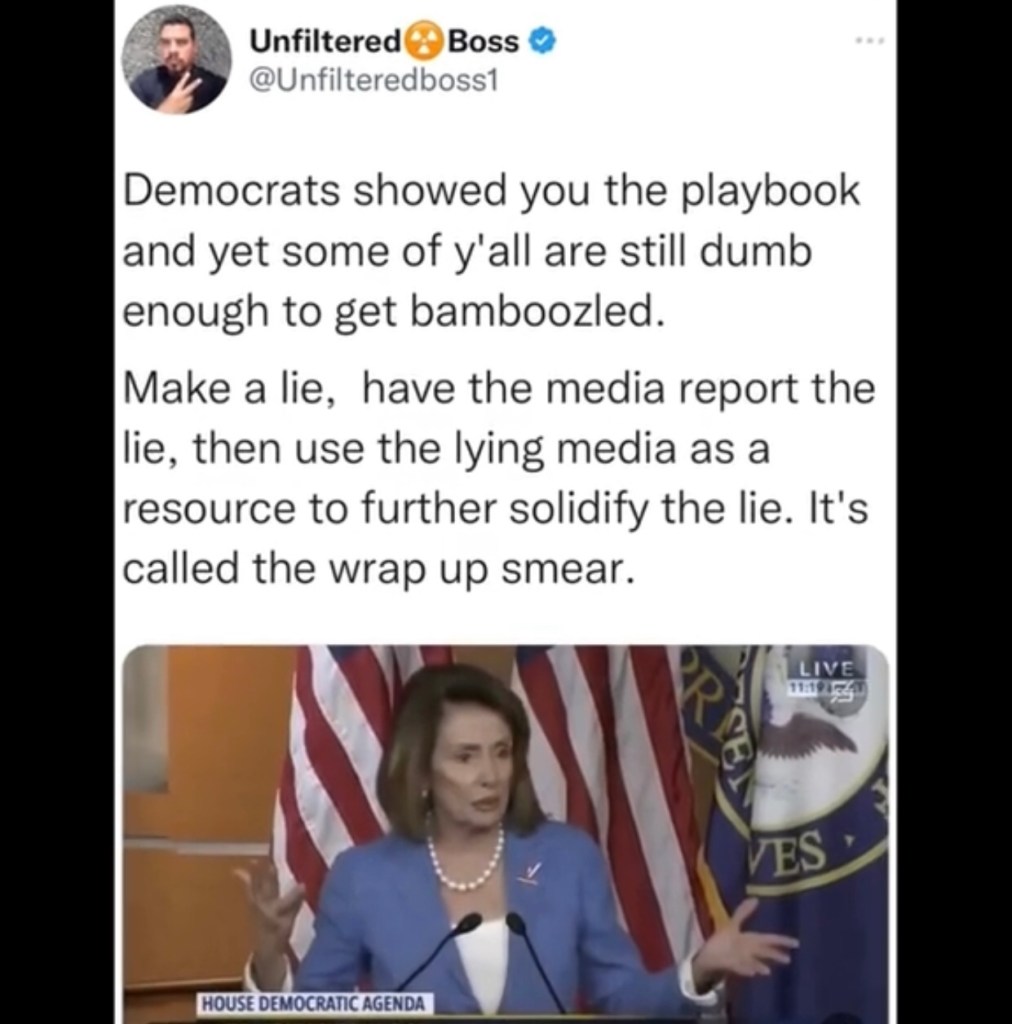
-
Will you marry me again?
Will you marry me again? Brought to you by American Broccoli Council 你會再嫁給我嗎?由美國西蘭花委員會提供 ©️Johnson Choi 2-4-2023 SF USA

-
US War Machine vs. China weather Balloons
Caitlin Johnstone: US War Machine vs. China weather Balloons 美國戰爭機器與中國氣象氣球 By Caitlin Johnstone Feb 4, 2023
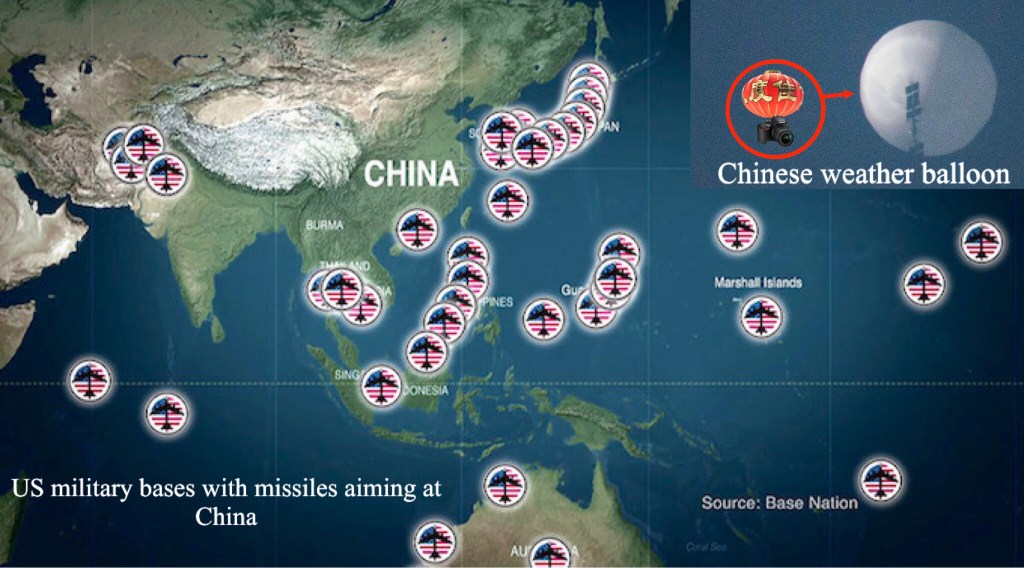
The U.S. empire has been surrounding China with military bases and war machinery for many years, in ways Washington would never tolerate China doing in the nations and waters surrounding the United States.
In what Austin journalist Christopher Hooks has called “one of the stupidest news cycles in living memory,” the entire American political/media class is having an existential meltdown over what the Pentagon claims is a Chinese spy balloon detected in U.S. airspace on Thursday.
Secretary of State Antony Blinken cancelled his scheduled diplomatic visit to China after the detection of the balloon. The mass media have been covering the story with breathless excitement. China hawk pundits have been pounding the war drums all day on any platform they can get to and accusing the Biden administration of not responding aggressively enough to the incident.
“The important thing that the American people need to understand, and what we are going to try to expose in a bipartisan fashion on this committee, is that the threat posed by the Chinese Communist Party is not just a distant threat in East Asia, or a threat to Taiwan,” House China Select Committee Chairman Mike Gallagher told Fox News on Friday. “It is a threat right here at home. It is a threat to American sovereignty, and it is a threat to the Midwest — in places like those that I live in.”
“A big Chinese balloon in the sky and millions of Chinese TikTok balloons on our phones,” tweeted Senator Mitt Romney. “Let’s shut them all down.”
China’s foreign ministry says the balloon is indeed from China but is “civilian in nature, used for meteorological and other scientific research,” and was simply blown far off course. This could of course be untrue — all major governments spy on each other constantly and China is no exception — but the Pentagon’s own assessment is that the balloon “does not create significant value added over and above what the PRC is likely able to collect through things like satellites in Low Earth Orbit.”
So everyone’s losing their minds over a balloon that in all probability would be mostly worthless for spying, even while everyone knows the U.S. spies on China at every possible opportunity. U.S. officials have complained to the press that American spies are having a much harder time conducting operations and recruiting assets in China than they used to because of measures the Chinese government has taken to thwart them, and in 2001 a U.S. spy plane caused a major international incident when it collided with a Chinese military jet on China’s coastline, killing the pilot.
The U.S. considers it its sovereign right to spy on any nation it chooses, and the average American tends more or less to see it the same way. This is highlighted in controversies around domestic versus foreign surveillance, for example; Americans were outraged over the Edward Snowden revelations not because spy agencies were conducting surveillance, but because they were conducting surveillance on American citizens. It’s just taken as a given that spying on foreigners is fine, so it’s a bit silly to react melodramatically when foreigners return the favor.
As Jake Werner explains for Responsible Statecraft:
“Foreign surveillance of sensitive U.S. sites is not a new phenomenon. ‘It’s been a fact of life since the dawn of the nuclear age, and with the advent of satellite surveillance systems, it long ago became an everyday occurrence,’ as my colleague and former CIA analyst George Beebe puts it.
U.S. surveillance of foreign countries is likewise quite common. Indeed, great powers gathering intelligence on each other is one of the more banal and universal facts of international relations. Major countries even spy on their own allies, as when U.S. intelligence bugged the cellphone of German Chancellor Angela Merkel.
Typically, even when such surveillance is directed against the United States by a rival power, it does not threaten the safety of Americans and it poses manageable risks to sites where secrecy is of the utmost importance. However — in the context of rapidly increasing U.S.–China tensions — foreseeable incidents like these can quickly balloon into dangerous confrontations.”
Now let’s contrast all this with another news story that’s getting a lot less attention.
In an article titled “U.S. secures deal on Philippines bases to complete arc around China,” the BBC reports that the empire will be adding even more installations to the already impressive military noose it has been constructing around the PRC.
“The U.S. has secured access to four additional military bases in the Philippines – a key bit of real estate which would offer a front seat to monitor the Chinese in the South China Sea and around Taiwan,” writes the BBC’s Rupert Wingfield-Hayes. “With the deal, Washington has stitched the gap in the arc of U.S. alliances stretching from South Korea and Japan in the north to Australia in the south. The missing link had been the Philippines, which borders two of the biggest potential flashpoints – Taiwan and the South China Sea.”
“The U.S. hasn’t said where the new bases are but three of them could be on Luzon, an island on the northern edge of the Philippines, the only large piece of land close to Taiwan – if you don’t count China,” writes Wingfield-Hayes.
The BBC provides a helpful illustration to show how the U.S. is completing its military encirclement, courtesy of the Armed Forces of the Philippines:
The U.S. empire has been surrounding China with military bases and war machinery for many years, in ways Washington would never tolerate China doing in the nations and waters surrounding the United States. There is no question that the U.S. is the aggressor in this increasingly hostile standoff between major powers. Yet we’re all meant to be freaking out about a balloon.
Ask me to show you how the U.S. has been aggressing against China I can show you all the well-documented ways in which the U.S. is encircling China with weapons of war. Ask an empire apologist to show you how China is aggressing against the U.S. and they’ll start babbling about TikTok and balloons.
These things are not equal. Maybe Americans should stop watching out for hostile foreign threats and start looking a little closer to home.
Caitlin Johnstone’s work is entirely reader-supported, so if you enjoyed this piece please consider sharing it around, following her on Facebook, Twitter, Soundcloud, YouTube, or throwing some money into her tip jar on Ko-fi, Patreon or Paypal. If you want to read more you can buy her books. The best way to make sure you see the stuff she publishes is to subscribe to the mailing list at her website or on Substack, which will get you an email notification for everything she publishes. For more info on who she is, where she stands and what she’s trying to do with her platform, click here. All works are co-authored with her American husband Tim Foley.
-
Subscribe
Subscribed
Have a WordPress.com account? Log in now.

