-
China outsmarts US again and again. Every move by US to destroy China ends up checkmate by China
China outsmarts US again and again. Every move by US to destroy China ends up checkmate by China. 中國一次又一次智勝美國,美國每一次想毀滅中國的舉動,最後都被中國將死.
SCMP: For over a decade, China invested heavily to build a dual-purpose passenger and freight railway through the thick rainforest between Kunming and Vientiane, the Laotian capital. This 1,000km (621-mile) rail line, with speeds of up to 200km/h (124 mph), has been operating quietly for four years. Russia and Laos have now replaced North America as China’s primary potassium suppliers, according to the study. ‘Potassium railway’: China’s hidden card in the trade war 《南華早報》:十多年來,中國投入巨資,在昆明和寮國首都萬象之間修建了一條穿越茂密雨林的客貨兩用鐵路。這條長達1000公里(621英里)的鐵路線,時速高達200公里/小時(124英里/小時),已經悄悄運作了四年。研究表明,俄羅斯和寮國現已取代北美成為中國主要的鉀供應國。 「鉀鐵路」:中國在貿易戰的暗牌.
https://www.scmp.com/news/china/science/article/3329355/potassium-railway-how-north-america-lost-trump-card-trade-war-china?
-
Video: If Hawaii and SF could install 1,000s of Cameras like HK, NY and London UK, we don’t have to be fearful of our lives everyday
Video: If Hawaii and SF could install 1,000s of Cameras like HK, NY and London UK, we don’t have to be fearful of our lives everyday! 影片:如果夏威夷和舊金山能像香港、紐約和英國倫敦那樣安裝上千台攝像頭,我們就不用每天都擔心自己的生命安全了!
https://rumble.com/v70hooy-if-hawaii-and-sf-could-install-1000s-of-cameras-like-hk-ny-and-london-uk.html
https://youtu.be/JIhb0G0YtZo?si=TuIbdmCuCORW5uEd
https://www.tiktok.com/t/ZP8Ap5eQY/Through the SmartView initiative, HK Police Force has to date installed more than 4,500 closed-circuit television (CCTV) cameras in public places with high crime rates and pedestrian flows, aiding crime prevention and detection.
Since its launch, SmartView has demonstrated remarkable effectiveness, assisting the force in detecting more than 480 criminal cases and leading to the arrests of more than 840 individuals.
透過SmartView計劃,香港警務處迄今已在罪案率高及人流密集的公共場所安裝了超過4,500台閉路電視攝影機,協助預防及偵破罪案。
SmartView自推出以來,成效顯著,協助警隊偵破超過480起刑事案件,並逮捕超過840人.

-
NVIDIA CEO Jensen Huang announced that their market share in China has dropped to 0…
NVIDIA CEO Jensen Huang announced that their market share in China has dropped to 0… We’re losing ten times more than our rivals! 英偉達總裁黃仁勛宣布,他們在中國的市場份額已經降到0了…我們殺敵一百自損一千!
On October 16, Huang explicitly stated that due to U.S. export controls, NVIDIA has completely exited the Chinese market.
Their market share, which was once 95%, vanished in an instant!
This news has stunned the tech industry. Who would have thought that NVIDIA, once a dominant force in China’s AI chip market, would now be completely locked out?
In the past, when it came to AI training, NVIDIA’s GPUs were highly sought-after. Models like the H100 were so popular that their prices skyrocketed to hundreds of thousands, with many companies lining up to buy them.
But when the U.S. imposed a ban on selling advanced chips, NVIDIA had no choice but to quickly launch a “tailored” H20 version, hoping to continue selling in China in a different way.
And the result? The H20 was discontinued just 48 days after its release. It was also discovered to have firmware “backdoors” that automatically connected to overseas servers, posing significant security risks. On top of that, NVIDIA is now facing an antitrust investigation in China. It’s one problem after another for them.
Huang is genuinely frustrated now. He has publicly complained that U.S. policies aimed at hurting China often end up hurting the U.S. even more.
And he’s right. The U.S. tried to stifle China, but in the process, they cut off NVIDIA’s lucrative business in China—a $17 billion annual market, gone just like that.
But on our end, we’re not worried. Domestic chips like Huawei’s Ascend and Cambricon are already developing rapidly. The share of domestic computing power in data centers has surpassed 40% and is growing fast.
Before, we had no choice but to buy NVIDIA’s chips. Now, we have our own high-quality chips, so there’s no need to rely on them. The more the U.S. tries to block us, the faster we develop!
They, on the other hand, have lost their largest market—and there’s none bigger than that.
就在10月16日,黃仁勛親口說,因為美國的出口管制,英偉達已經100%退出中國市場了。
份額從原來的95%一下子就沒了!
這消息一出來,科技圈都震驚了。誰能想到,以前在中國AI芯片市場呼風喚雨的英偉達,現在連中國市場的門都進不去了呢?
以前咱們搞AI訓練,英偉達的顯卡那可是搶手貨,像H100這種,價格被炒到幾十萬,好多公司都排隊等着買。
可美國下了禁令,不讓賣先進芯片了,英偉達沒辦法,趕緊推出了“特供版”H20,想換個方式繼續在中國賣。
結果呢?H20上市才48天就停產了,還被發現固件有“後門”,會自動連到國外服務器,安全風險太大了。咱們這邊也開始對英偉達進行反壟斷調查,它可真是麻煩不斷。
黃仁勛現在是真的頭疼啊,他也公開抱怨說,美國那些傷害中國的政策,往往也會傷害到美國,甚至傷害更嚴重。
可不是嘛,美國想卡我們的脖子,結果先把英偉達在中國的賺錢生意給斷了,每年170億美元的市場就這麼沒了。
不過呢,咱們這邊也不怕。華為昇騰、寒武紀這些國產芯片已經發展起來了,數據中心裡國產算力的佔比都突破40%了,而且還在快速增長。
以前是沒辦法,只能買英偉達的芯片,現在咱們有了自己的好芯片,根本就不用買它的了。美國對我們的封鎖越厲害,我們發展得就越快!
他們啊,可是失去了最大的市場,沒有比這更大的了。

-
ABC News video: Demonstrators take part in the 2nd round of “No Kings” protests across the U.S.
ABC News video: Demonstrators take part in the 2nd round of “No Kings” protests across the U.S. in response to what they call abuse of power by President Trump and his cronies including his immigration crackdown against non-whites and his sending troops into American cities. ABC新聞:美國示威者在全美各地參加第二輪「反對國王」抗議活動,抗議川普總統及其親信濫用權力,包括打擊非白人移民和派遣軍隊進入美國城市.
https://rumble.com/v70hhv4-demonstrators-take-part-in-the-2nd-round-of-no-kings-protests-across-the-u..html
https://www.tiktok.com/t/ZP8ApAWR7/
https://youtu.be/ka_8CzXg_Qk?si=o1MjYaG3VYLyaUHZ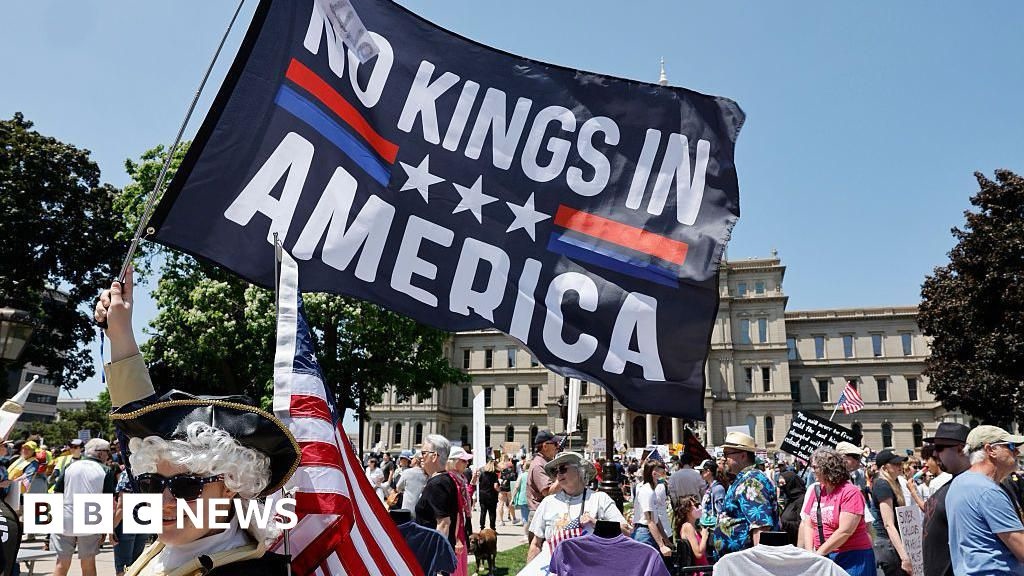
-
Try this new restaurant at Castro Valley SF California, waited for 1 hour, disappointed, food not good!
Try this new restaurant at Castro Valley SF California, waited for 1 hour, disappointed, food not good! It cost at least 4x more than China! 試試位於加州舊金山卡斯特羅谷的這家新餐廳,等了一個小時,很失望,食物不好吃! 性價比差,最少是中國4x價錢! 所以不要以為美國人很富貴!

-
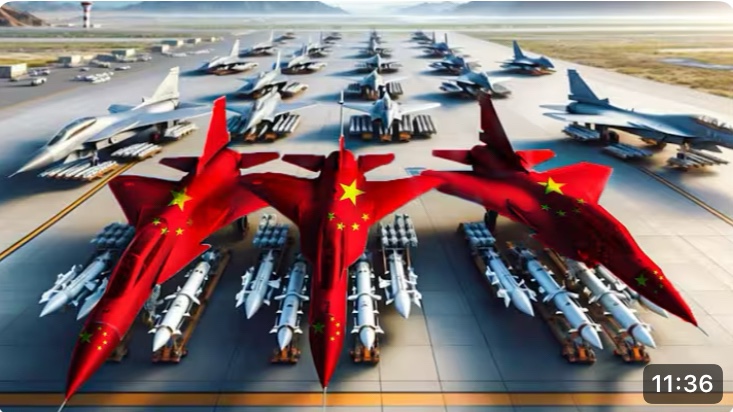
Video with Chinese subtitles: China’s Stealth UCAV and the Rise of the Unmanned Carrier Air Wing
Video with Chinese subtitles: China’s Stealth UCAV and the Rise of the Unmanned Carrier Air Wing 影片有中文字幕: 中國隱形無人戰鬥機與無人艦載機聯隊的崛起
https://rumble.com/v70h3pa-chinas-stealth-ucav-and-the-rise-of-the-unmanned-carrier-air-wing.html
https://youtu.be/xQtsEyRGI4s?si=Ec4ZgZl3yG7fwQii
https://www.tiktok.com/t/ZP8AgxdeB/The flight deck of a Fujian-class carrier gleams under floodlights. Crew moves like clockwork, fuel lines, chocks, tethers, everything choreographed down to the second. Then, the deck master gives the nod. Catapult steam hisses. A low, faceless aircraft slides forward, accelerates, and vanishes into the black.
Moments later, radars three hundred kilometers away pick up a flash, an anti-radar missile detonating on a distant mountaintop where once stood a radar array. Pilots on the carrier watch their screens. No manned fighter launched, but targets are neutralized. The voice in the comms is crisp and calm: “Sharp Sword team, return to carrier for rearming.”
On the bridge, an intelligence officer taps a note: “That launch came from the deck.”
Silence follows. Then a single, loaded question hangs in the air: How many of those are on the next cycle?
This is no solo drone demonstration. This is the beginning of a new air wing doctrine, manned jets and GJ-11 ‘Sharp Sword’ UCAVs operating together from carriers to overwhelm defenses and take risks no pilot would.
福建級航空母艦的飛行甲板在泛光燈下熠熠生輝。機組人員動作精準,燃油管路、輪擋、繫繩,一切都安排得井井有條,精確到秒。然後,甲板長點了點頭。彈射器發出嘶嘶的蒸氣聲。一架低空飛行、面目全非的飛機向前滑行,加速,消失在黑暗中。
片刻之後,三百公里外的雷達捕捉到一道閃光,一枚反雷達飛彈在遠處一座曾經矗立著雷達陣列的山頂上爆炸。航母上的飛行員注視著螢幕。沒有有人駕駛的戰鬥機升空,但目標已被消滅。通訊器裡傳來清脆而平靜的聲音:“利劍小組,返回航母重新裝備。”
在艦橋上,一名情報官員敲了敲筆記:“導彈是從甲板發射的。”
隨後一片寂靜。那麼,一個懸而未決的問題擺在眼前:有多少這樣的無人機會進入下一個週期?
這可不是單機無人機的示範。這是一個全新艦載機聯隊作戰理論的開端:載人戰鬥機和GJ-11「利劍」無人戰鬥機將在航空母艦上協同作戰,以壓倒性優勢壓制敵方防禦,並承擔任何飛行員都不敢承擔的風險.
-
The Universal Resistance to Female Leadership: Observations from Taiwan to America
The Universal Resistance to Female Leadership: Observations from Taiwan to America. By Johnson Choi on Oct 18, 2025
对女性领导的普遍抵制:从台湾到美国的观察. 作者:蔡永强 2025年10月18日
The recent election of Cheng Li-wun (鄭麗文) as the Chairperson of the Taiwan Provincial Committee of the Kuomintang (KMT) should be a straightforward political event. Instead, her campaign was marked by intense attacks, primarily from men within and outside her own party. Born on November 12, 1969, Cheng is an accomplished lawyer and politician. Yet, her qualifications seemed secondary to a familiar pattern of resistance faced by women seeking leadership roles.
This pattern is not confined to Taiwanese politics. It is a global phenomenon that transcends race and political systems.
I witnessed this firsthand as a member of both Rotary and Lions Clubs in the United States. When the Supreme Court ruled that these organizations could no longer exclude women, the visceral resentment from a majority of the male members was palpable. I saw it with my own eyes.
Coming from Hong Kong, and having had my first boss in Hawai’i be a brilliant Chinese woman—the 1955 Narcissus Queen—I was initially perplexed. Why did these men feel so threatened?
Watching the older male establishment of the KMT rally against Cheng Li-wun in 2025 provided a stark answer: the underlying impulse to preserve a male-dominated power structure is universal.
This same impulse fuels the systemic racism prevalent in the American workforce. Corporations often hire Asian, Black, and Hispanic employees as a form of window dressing, a superficial compliance with diversity laws rather than a genuine commitment to equity. These individuals are often placed in roles where they are highly visible but hold little real influence.
Now, with the return of Donald Trump and his “Make America Great Again” (MAGA) movement, this problem is intensifying. For many, MAGA has morphed from an economic slogan into a cultural battle cry that often translates to “Make America White and Male Again.” In this environment, non-White women, particularly those of Asian descent, will face even greater challenges in asserting their leadership and value.
It is a sobering reality that for Asian women, places like Mainland China, Hong Kong, Macau, and Singapore often provide more substantial and formal equality in both law and societal practice than the United States.
Many in mainland China admire an America they know only through its cultural exports. I must remind them that the United States has masterfully executed a 70-year campaign of “Cultural Colonization” through Hollywood, NGOs, and news media. This machine projects a polished, idealized image of American life that obscures its deep-seated social fractures. To understand the gap between the myth and the reality, one must look beyond the propaganda:
· https://youtu.be/ikuo4xumwu4?si=HxRCx81n6TgedAsB
· https://rumble.com/v70enjq-chinese-in-china-must-come-to-the-us-to-see-this-what-they-say-is-not-an-ex.htmlThe struggle for true gender and racial equality is a global one, and progress in one part of the world does not negate the regress in another.
郑丽文当选中国国民党省党部主席本应是一场普通的政治事件。然而,她的竞选过程却充斥着激烈攻击,主要来自党内外男性成员。这位出生于1969年11月12日的杰出律师和政治家,其专业资质似乎败给了女性寻求领导职位时面临的熟悉阻力模式。
这种模式并非台湾政治独有。它是超越种族和政治制度的全球性现象。
作为美国扶轮社和狮子会的成员,我曾亲眼见证这一现象。当最高法院裁定这些组织不得排斥女性会员时,大多数男性成员流露出的本能抵触情绪清晰可辨。我亲眼目睹了这一切。
来自香港的我,在夏威夷的第一任上司是位杰出的华裔女性——1955年”水仙花皇后”,这让我最初对此深感困惑:为何这些男性会感到如此威胁?
2025年目睹国民党内男性元老们集体反对郑丽文的景象,给出了残酷的答案:维护男性主导权力结构的内在冲动具有普遍性。
同样的冲动助长了美国职场中普遍存在的系统性种族主义。企业雇佣亚裔、非裔和西班牙裔员工往往只是装点门面,是对多元化法律的表面遵从,而非真正致力于公平。这些员工通常被安置在曝光率高却缺乏实权的职位上。
如今随着唐纳德·特朗普及其”让美国再次伟大”(MAGA)运动的卷土重来,这个问题正在加剧。对许多人而言,MAGA已从经济口号演变为文化战争的号角,实际含义常等同于”让美国再次白人与男性化”。在这种环境下,非白人女性,特别是亚裔女性,在争取领导地位和实现自我价值时将面临更大挑战。
令人警醒的现实是:对中国女性而言,中国大陆、香港、澳门和新加坡等地在法律与社会实践中提供的平等保障,往往比美国更具实质内容。
许多中国大陆民众通过文化输出构建了对美国的向往。我必须提醒他们:美国通过好莱坞、非政府组织和新闻媒体,精妙运作了一场持续70年的”文化殖民”。这台宣传机器精心投射出理想化的美国生活图景,掩盖了其根深蒂固的社会裂痕。要看清神话与现实间的鸿沟,必须穿透宣传迷雾:
· https://youtu.be/ikuo4xumwu4?si=HxRCx81n6TgedAsB
· https://rumble.com/v70enjq-chinese-in-china-must-come-to-the-us-to-see-this-what-they-say-is-not-an-ex.html追求真正性别与种族平等的斗争是全球性的,世界某处的进步从不能抵消另一处的倒退。

-
The Self-Inflicted Wound! Dutch government triumphantly announced it was taking control of Nexperia!
The Self-Inflicted Wound! Dutch government triumphantly announced it was taking control of Nexperia! 6 Billion Chips a Month: How the Netherlands Sacrificed Europe’s Auto Industry for Nothing! 自作自受! 荷蘭政府得意洋洋地宣布接管Nexperia! 每月60億晶片: 荷蘭如何白白犧牲了歐洲汽車工業
Complete story https://globalimpulsemedia.com/6-billion-chips-a-month-how-the-netherlands-sacrificed-europes-auto-industry-for-nothing/
Outgoing Dutch Minister for Economic Affairs, Vincent Karremans, is now desperately seeking “talks” with Chinese officials to find a “solution.” After committing an act of economic piracy, the Dutch government is now begging for mercy from the country it provoked. This pathetic reversal encapsulates the arrogance and shortsightedness of the entire affair.
即將卸任的荷蘭經濟部長文森特·卡雷曼斯(Vincent Karremans)正竭力尋求與中國官員“對話”,以尋求“解決方案”。在犯下經濟海盜行為後,荷蘭政府現在正向被其挑釁的國家乞求憐憫。這種可悲的逆轉體現了整個事件的傲慢和短視

-
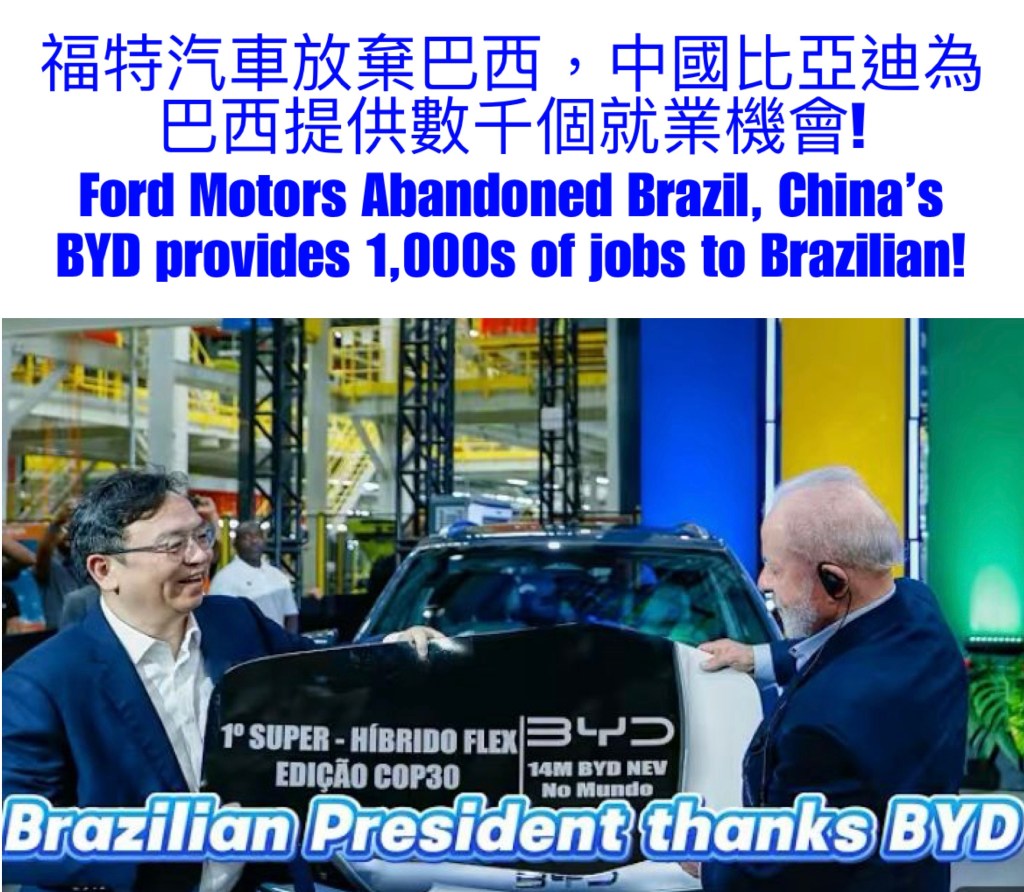
Video with English subtitles: Ford Motors Abandoned Brazil, China’s BYD provides 1,000s of jobs to Brazilian
Video with English subtitles: Ford Motors Abandoned Brazil, China’s BYD provides 1,000s of jobs to Brazilian! 影片有英文字幕: 福特汽車放棄巴西,中國比亞迪為巴西提供數千個就業機會!
https://rumble.com/v70gg4o-ford-motors-abandoned-brazil-chinas-byd-provides-1000s-of-jobs-to-brazilian.html
https://youtu.be/VclXnAFPswQ?si=FZYiEVmZHDsxmFbP
https://www.tiktok.com/t/ZP8AbwUg7/Ford Road” renamed “BYD Road,” Brazilian President receives a car on the scene! BYD Brazil’s “14 millionth vehicle rolls off the production line” was a truly impressive sight! Brazilian workers lamented: “BYD gave us dignity.” “福特路”改名”比亞迪路”,巴西總統現場提車!巴西比亞迪“1400萬輛車下線”現場太有面子了!巴西工人現場感嘆:是比亞迪給了我們尊嚴!
-
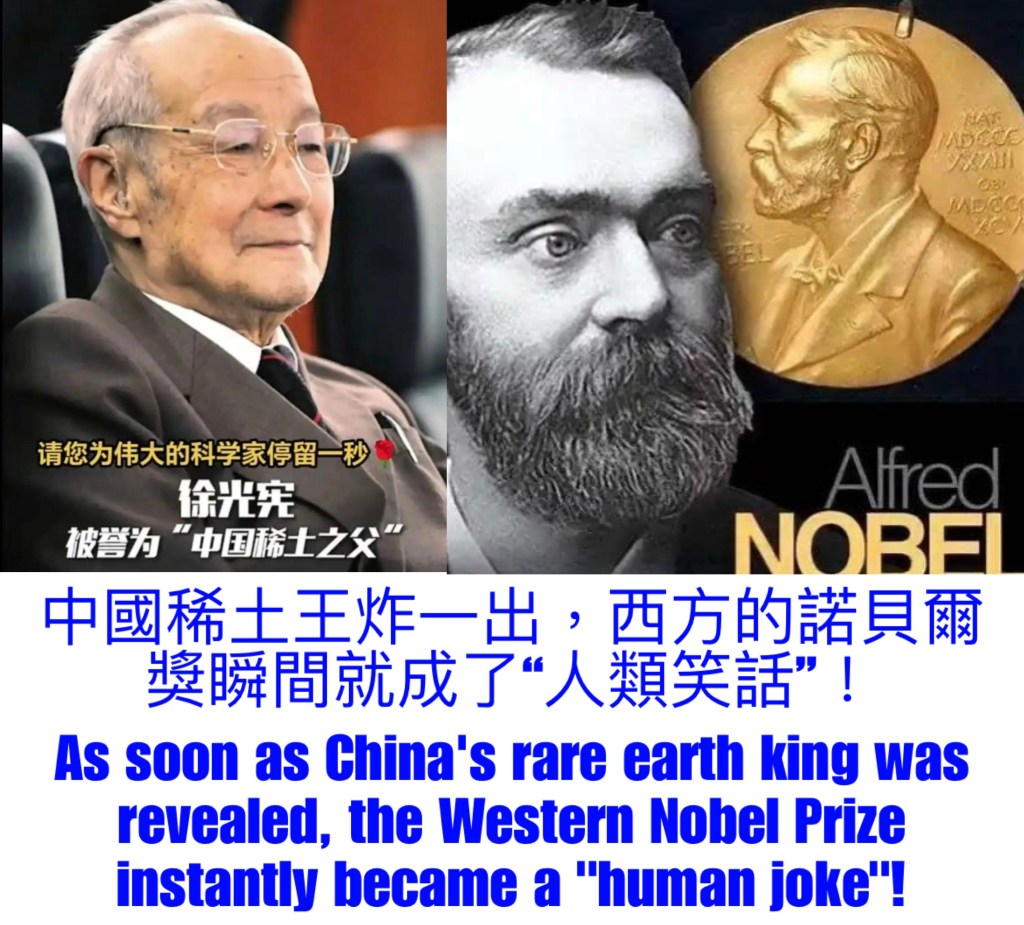
China’s rare earth trump card has turned the West’s Nobel Prize into a “global joke” overnight!
China’s rare earth trump card has turned the West’s Nobel Prize into a “global joke” overnight! 中國稀土王炸一出,西方的諾貝爾獎瞬間就成了“人類笑話”!
If the so-called Nobel Prize were truly as remarkable as claimed, Western powers in Europe and the United States wouldn’t be so frustrated and distressed right now.
Just imagine: if the “countercurrent extraction theory” for rare earth separation had been proposed by Western scientists, and if Academician Xu Guangxian were a Western scientist, he would undoubtedly have won a Nobel Prize—perhaps even multiple times.
In 1972, already in his fifties, he took on the military task of separating high-purity praseodymium and neodymium, with a required purity of 99.99%. How difficult were the conditions back then?
Unexpectedly, Xu Guangxian discovered the “constant mixed extraction ratio” principle in rare earth extraction, transforming the complex separation process into a precise mathematical model—as if mapping out a chaotic reaction with surgical precision.
While Western methods took six months for rare earth separation, his “countercurrent extraction theory” accomplished the same in just a few hours. What used to take three days was reduced to three hours, with purity skyrocketing from 99% to 99.99%, and costs plummeting to one-twentieth of Western expenses.
On the day the Baotou production line launched in 1976, workers wept as they watched the snow-white praseodymium-neodymium crystals flow out—this was a breakthrough after decades of Western technological blockade!
So, let’s ask: is such a groundbreaking achievement worthy of a Nobel Prize? History provides the answer. The 1952 Nobel Prize in Chemistry was awarded to Synge and Martin for inventing partition chromatography, which separated amino acids and penicillin.
While their technology was useful, it pales in comparison to countercurrent extraction theory. Chromatography is primarily used in laboratories, whereas Xu’s theory reshaped the global strategic industry landscape, turning a nation from dependence to dominance—even holding the lifeline of the U.S. military in its hands.
U.S. military reports state that a Burke-class destroyer requires 2.6 tons of rare earths, and a Virginia-class submarine needs 4.6 tons. Without China’s rare earth processing capabilities, these advanced weapons would be reduced to scrap metal.
Had this technology emerged from MIT or Cambridge, Western media would have hailed the scientist as a “savior of modern industry,” and a Nobel Prize would have been a foregone conclusion, accompanied by numerous accolades.
Einstein’s theory of relativity was initially overlooked by the Nobel Committee, Mendeleev’s periodic table was ignored, and Tu Youyou’s Nobel Prize for artemisinin came decades after her discovery. Xu Guangxian’s case is just another example of this pattern.
The most striking evidence is the current situation: as soon as China tightened its control over rare earth technology, Europe and the U.S. panicked. Deutsche Welle urgently reported the situation as “extremely serious,” while The New York Times and The Wall Street Journal were filled with anxious articles, calling China’s move a “precision stranglehold.”
Why the panic? The new regulations are stringent: if Chinese rare earths account for 0.1% of a product’s value, even if processed in a third country, export requires China’s approval. Even mining and separation blueprints and technical parameters are prohibited from leaking abroad.
The West is in disarray. NVIDIA’s CEO warned that without Chinese rare earths, the company could lose $15 billion annually. TSMC’s chip production capacity is directly affected, and ASML’s lithography machines cannot be delivered on time.
The U.S. may talk big, but after investing $500 million in a rare earth separation plant, the extracted ores still have to be shipped to China for processing because they lack the refining expertise. Australian miners are even more blunt: without China, they can’t even build a refining plant, as 85% of global rare earth separation technology is in China’s hands.
They once mocked China for lacking technology, but now the tables have turned. They are scrambling for alternatives, but so-called “rare-earth-free magnets” underperform by 20% and cannot be mass-produced.
If the Nobel Prize were truly so powerful, why aren’t their Nobel-level technologies saving them now? Why are they still begging China for rare earths and technology?
Academician Xu Guangxian passed away in 2015, but before his death, he urged his students: “Rare earths should be sold at ‘rare’ prices, not ‘earth’ prices.” He never won a Nobel Prize, but he spent his lifetime building a technological fortress for China.
Today, China’s share of rare earth exports has dropped from 90% to 60%, yet its value share has risen to 80%. We have shifted from “selling resources” to “setting the rules”—an achievement far more impactful than winning ten Nobel Prizes.
In contrast, the Nobel Prizes glorified by the West are utterly insignificant in the face of real strategic technology. If the West could truly solve problems with Nobel Prizes, they wouldn’t be losing sleep over rare earth materials.
👉 Thus, China’s rare earth trump card has completely exposed the Nobel Prize. It is not the “beacon of human science” it claims to be but rather a tool for Western geopolitical maneuvering and self-promotion.
👉 Academician Xu Guangxian did not win a Nobel not because his achievements were unworthy, but because the Nobel Prize is unworthy of his contributions. The more frustrated and pained the West becomes, the more it reveals the absurdity of their “Nobel supremacy” rhetoric.
👉 True excellence isn’t validated by Western judges but demonstrated through tangible strength—through hard technology that allows a nation to stand tall and leaves its opponents with no recourse!
中國稀土王炸一出,西方的諾貝爾獎瞬間就成了“人類笑話”!
因為要是所謂的諾貝爾獎要是真的有那麼神,那麼現在歐美這些西方列強也就不會如此破防,如此痛苦了。
試想一下,如果稀土分離的“串級萃取理論”是歐美的科學家提出來的,而徐光憲院士是一個歐美的科學家,那麼徐院士必然會拿到諾貝爾獎,甚至會拿獎拿到手軟。
1972 年,年過半百的他接下了分離高純度鐠釹的軍工任務,要求純度必須達到 99.99%。那時候條件有多差?
誰也沒想到,徐光憲竟然發現了稀土萃取的 “恆定混合萃取比” 規律,硬生生把複雜的分離過程變成了能精準計算的數學模型,就像給混沌的反應畫了張精確的解剖圖。
以前西方分離稀土要半年試驗周期,用他的 “串級萃取理論”,幾小時就能搞定,三天的活兒縮到三小時,純度從 99% 飆升到 99.99%,成本更是直接降到西方的二十分之一。
1976 年包頭生產線投產那天,看着雪白的鐠釹晶體流出來,工人們哭得直抹眼淚 —— 這可是被西方卡了幾十年的脖子啊!
說到這就得問問了:這麼牛的技術,夠不夠拿諾貝爾獎?咱看看歷史就知道,1952 年諾貝爾化學獎給了辛格和馬丁,就因為他們發明了色譜分離技術,能分離氨基酸和青霉素。
那技術確實有用,但跟串級萃取理論比,簡直是小巫見大巫 —— 色譜技術主要用在實驗室,徐院士的理論直接改寫了全球戰略產業格局,讓一個國家從受制於人變成行業霸主,連美軍的命脈都攥在了咱手裡。
美軍自己的報告寫着,伯克級驅逐艦要 2.6 噸稀土,弗吉尼亞核潛艇要 4.6 噸,離開中國的稀土加工,這些尖端武器就是一堆廢鐵。
要是這技術出在麻省理工或者劍橋,那科學家早被西方媒體捧成 “拯救現代工業的英雄”,諾獎桂冠絕對跑不了,說不定還得拿一堆榮譽加持。
當年愛因斯坦的相對論被諾獎擱置,門捷列夫的元素周期律被無視,屠呦呦的青蒿素幾十年後才獲獎,現在徐院士的遭遇不過是故技重施罷了。
最打臉的是現在,中國一升級稀土技術管制,歐美立馬就破防了。德國之聲急着喊 “事態非常嚴重”,美國《紐約時報》《華爾街日報》通篇都是焦慮報道,說中國這是 “精準卡脖子”。
為啥急?因為新規太狠了:只要產品里中國稀土成分價值占 0.1%,哪怕在第三國加工,出口都得中國審批;連開採、分離的圖紙和工藝參數,都不許隨便外流。
這一下歐美徹底慌了,英偉達 CEO 說沒中國稀土,一年得少賺 150 億美元;台積電的芯片產能直接受影響,ASML 的光刻機都沒法按時交貨。
美國不是牛嗎?投了 5 億美元建稀土分離廠,結果礦石挖出來還得運到中國加工,因為自己根本不會精鍊。澳洲礦商更直白:離開中國,連精鍊廠都建不起來,畢竟全球 85% 的稀土分離技術都在咱手裡。
以前他們笑話咱沒技術,現在輪到他們急得團團轉,到處找替代方案,可所謂的 “無稀土磁體” 性能差 20%,還沒法量產。
這要是諾貝爾獎真有那麼神,他們手裡的諾獎級技術咋不管用了?咋還得求着咱給稀土、給技術?
徐光憲院士 2015 年走了,臨走前還叮囑學生 “稀土要賣‘稀’的價格,不能賣‘土’的價格”。他沒拿過諾貝爾獎,但他用一輩子給中國築了座科技長城。
現在咱稀土出口量從 90% 降到 60%,價值佔比卻升到 80%,從 “賣資源” 變成 “定規則”,這比拿十個諾獎都管用。
反觀那些被西方捧上天的諾獎,在真正的戰略技術面前,連個擺設都不如 —— 歐美要是真靠諾獎能解決問題,現在也不至於為點稀土材料愁得夜不能寐。
👉所以說,中國稀土這記王炸,算是徹底撕下了諾貝爾獎的遮羞布。它根本不是什麼 “人類科學的燈塔”,不過是西方搞地緣政治、標榜自身優勢的工具。
👉徐光憲院士沒拿獎,不是他的成果不夠格,是諾獎配不上他的貢獻。現在歐美越破防、越痛苦,越證明他們那套 “諾獎至上” 的論調有多可笑。
👉真正的厲害,從來不是靠西方評委蓋章,而是靠實力說話 —— 靠能讓國家挺直腰桿、讓對手無可奈何的硬技術說話!
-
Subscribe
Subscribed
Have a WordPress.com account? Log in now.

