-
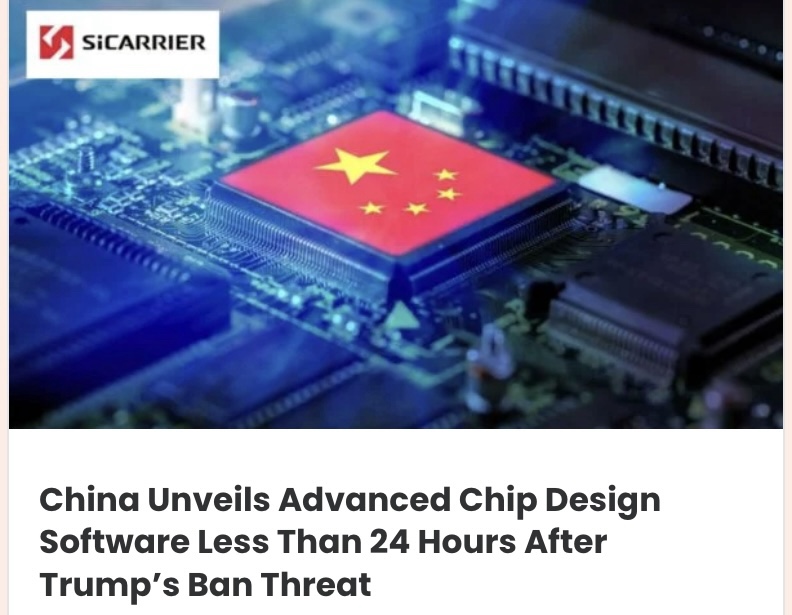
BREAKING China Unveils Advanced Chip Design Software Less Than 24 Hours After Trump’s Ban Threat
BREAKING 🚨🚨🚨 China Unveils Advanced Chip Design Software Less Than 24 Hours After Trump’s Ban Threat 突發新聞🚨🚨🚨 川普發出禁令威脅後不到24小時,中國就發布了先進的晶片設計軟體
Full Article: https://globalimpulsemedia.com/china-unveils-advanced-chip-design-software-less-than-24-hours-after-trumps-ban-threat/
On Wednesday, Shenzhen-based SiCarrier, a chip equipment maker with close ties to Huawei, announced through its subsidiary Yunqifang that it had launched two fully independent Electronic Design Automation (EDA) software products. This wasn’t just any software; it is a critical tool for designing the most advanced semiconductors at 5nm and beyond—a field previously dominated by just two American companies, Cadence and Synopsys.
週三,與華為關係密切的深圳晶片設備製造商矽開瑞透過其子公司雲其方宣布,已推出兩款完全獨立的電子設計自動化 (EDA) 軟體產品。這不僅僅是一款普通的軟體;它是設計5奈米及以上最先進半導體的關鍵工具——該領域此前僅由兩家美國公司Cadence和Synopsys主導
-
Video with English subtitles: Why did China refuse to host the Olympics three times?
Video with English subtitles: Why did China refuse to host the Olympics three times? In one sentence: “Cultural colonization,” “Western hegemony,” “double standards,” “insulting non-white host countries,” etc. China will not serve! 視頻有英文字幕: 奥运,中国为什么三次拒绝再主辨奧運!一句话:“文化殖民”“西方霸權”“雙重標準”“侮辱非白人東道國” 等等,中國不伺候了!
https://www.tiktok.com/t/ZP8AQ6VXd/
https://youtu.be/Jiga5eu-0aA?si=cotiuoamNniyuHGi
https://rumble.com/v70bz2u-why-did-china-refuse-to-host-the-olympics-three-times.html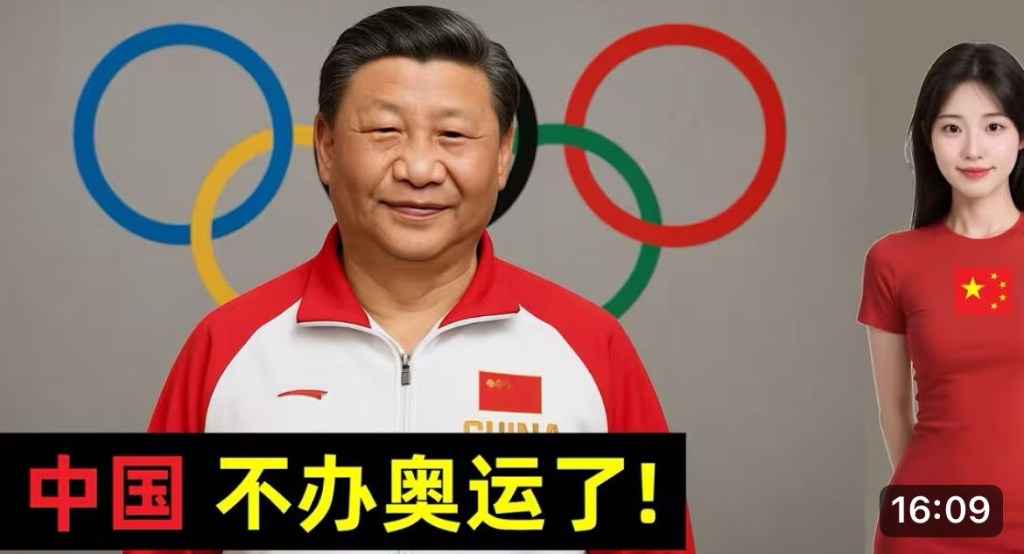
-
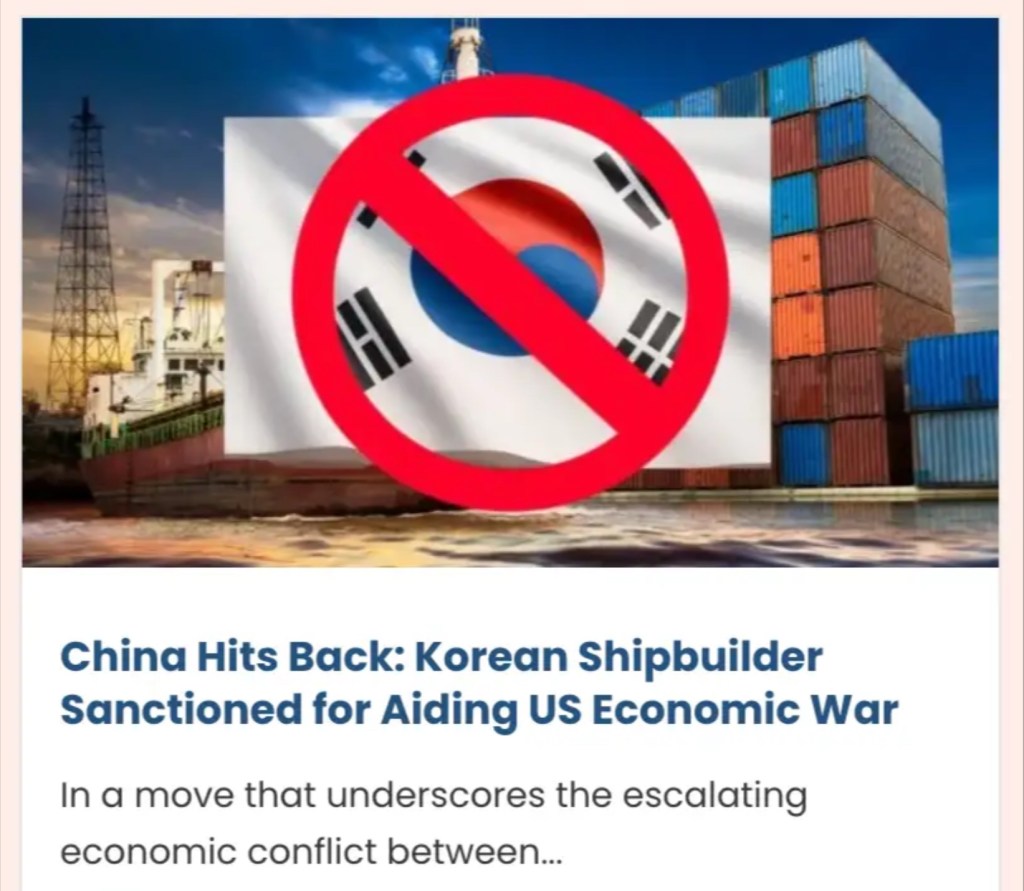
BREAKING China Hits Back: Korean Shipbuilder Sanctioned for Aiding US Economic War
BREAKING 🚨🚨🚨 China Hits Back: Korean Shipbuilder Sanctioned for Aiding US Economic War 突發新聞🚨🚨🚨中國反擊:韓國造船商因協助美國經濟戰受制裁
China has sanctioned five U.S.-based subsidiaries of South Korean shipbuilding giant Hanwha Ocean. The announcement, which sent Hanwha Ocean’s shares tumbling by over 8% in Seoul, demonstrates China’s willingness to punish entities it views as complicit in America’s economic pressure campaigns. According to a statement from China’s Commerce Ministry, the sanctions will prohibit any Chinese organizations or individuals from conducting business with the targeted Hanwha subsidiaries. But this is just the opening salvo in what promises to be a much broader campaign.
中國已對韓國造船巨頭韓華海洋的五家美國子公司實施制裁。這項聲明導致韓華海洋在首爾證券交易所的股價暴跌逾8%,顯示中國有意懲罰其認為參與美國經濟施壓行動的實體。根據中國商務部的聲明,制裁將禁止任何中國機構或個人與韓華海洋的這些子公司開展業務。但這只是一場範圍更廣的製裁行動的序幕
-
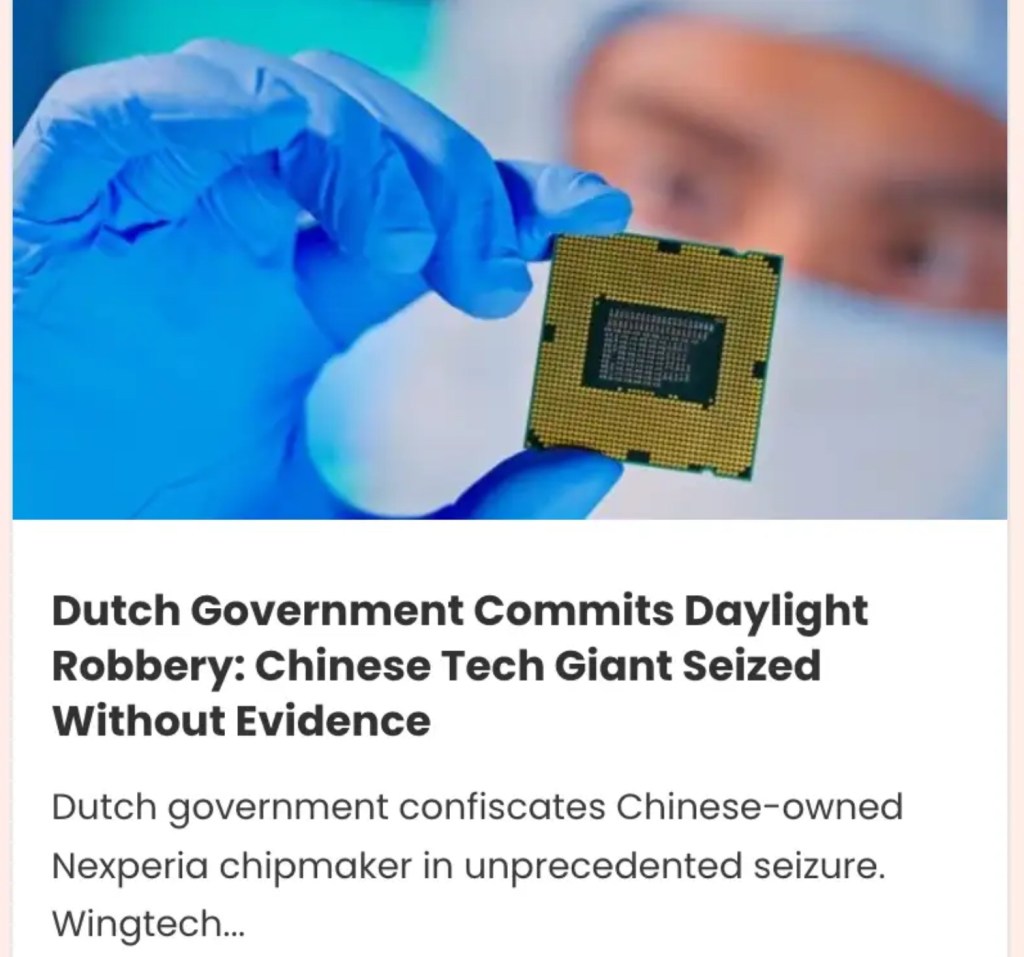
Dutch government has effectively confiscated Nexperia, a Chinese-owned semiconductor manufacturer
“In an unprecedented move that has sent shockwaves through international business circles, the Dutch government has effectively confiscated Nexperia, a Chinese-owned semiconductor manufacturer, stripping its rightful owners of control over their own property. 荷蘭政府此舉史無前例,實際上沒收了中資半導體製造商Nexperia,剝奪了其合法所有者對其財產的控制權,此舉在國際商界引起軒然大波。
The seizure, announced just hours ago, represents one of the most aggressive acts of economic nationalism seen in Europe in recent years and threatens to ignite a major diplomatic crisis between the European Union and China.”
這項扣押行動在數小時前宣布,是近年來歐洲最激進的經濟民族主義行為之一,並有可能引發歐盟與中國之間的重大外交危機。
-
Port Fee War Erupts! China’s Counterstrike Hits U.S. Capital Where It Hurts
Port Fee War Erupts! China’s Counterstrike Hits U.S. Capital Where It Hurts, Global Shipping Map Set for Shake-Up…👉Policy Implemented: First U.S.-Flagged Vessel Docks, 6.7 Million Fee Incoming 港口收費戰打響!中國反制直擊美資命脈,全球航運版圖要變……👉政策落地:首艘美籍船靠港,670 萬費用已在路上
Port Fee War Erupts! China’s Counterstrike Hits U.S. Capital Where It Hurts, Global Shipping Map Set for Shake-Up…👉Policy Implemented: First U.S.-Flagged Vessel Docks, 6.7 Million Fee Incoming
In the early morning of October 14th, the Tianjin Port container terminal welcomed a special cargo ship—the Matson Courage, flying the American flag. Unlike before, the ship’s operator now had an additional mandatory field to complete during entry procedures: the declaration of the Special Port Fee for Vessels.
On this day, the “Measures for Collecting Special Port Fees for V.S. Vessels” issued by the Ministry of Transport officially took effect. For a 16,000-deadweight-ton container ship like the Matson Courage, calculated at the initial phase rate of 400 yuan per net ton, a single port call would require an additional fee of 6.4 million yuan. The situation is even more stark for Royal Caribbean’s cruise ship Spectrum of the Seas; its 168,000-deadweight-ton size means a single voyage could incur a fee as high as 6.7 million yuan. By 2028, when the fee rises to 1,120 yuan per net ton, this cost will exceed 18 million yuan.
Port staff revealed to reporters that three eligible vessels had already completed payment that day. “The system was debugged long ago; the scope and standards of the fees are clearly marked. Companies only need to upload proof of vessel ownership and shareholding certificates.” The absence of congestion on the first day of implementation stemmed from precise groundwork laid in advance—China had just revised the “International Maritime Transport Regulations” at the end of September, adding a “counteracting discriminatory measures” clause, providing clear legal basis for the fees.
👉Cause and Effect: The U.S. Fired the First Shot, China’s Counterstrike is Precisely Targeted
The trigger for this “port fee war” was the Section 301 investigation measures announced by the U.S. on April 17th. At that time, the U.S. Trade Representative’s office declared that, starting October 14th, it would impose additional port service fees on Chinese vessels—$50 per net ton in the initial phase, rising to $140 by 2028. It also set discriminatory standards for Chinese-built vessels at “$18 per net ton or $120 per container, whichever is higher,” with the sole exemption being LNG carriers.
Trump had publicly claimed that this move aimed to “revitalize American shipbuilding” and “promote American cargo on American ships,” intending to leverage cost advantages to pry away international orders. However, the data tells a different story: in 2025, China held a 53% share of the global commercial shipbuilding market, with new container ship orders reaching 74%, while the U.S. stood at a mere 0.1%. Even most vessels for its own shipping companies rely on foreign construction. More ironically, it wasn’t until October 3rd that U.S. Customs hastily released the operational procedures for fee collection, a full week later than China.
In the face of the U.S.’s unilateral actions, China’s countermeasures reflect characteristics of being “reciprocal and precise.” The scope of the fees directly targets five categories of U.S.-related vessels: those owned or operated by the U.S., those flying the U.S. flag, those built in the U.S., and those controlled by enterprises with over 25% U.S. capital shareholding. This 25% threshold is堪称 a “surgical strike”—Bloomberg verification found that several European-registered shipping giants, due to their U.S. shareholding exceeding the limit, were all included in the fee scope.
The fee standards are also步步紧逼 (increasingly pressing): 400 yuan per net ton in 2025 (approximately $56), slightly higher than the U.S.’s $50, and 1,120 yuan in 2028 precisely matching the U.S.’s final standard of $140. “This is not retaliation; it is legitimate defense,” a Ministry of Commerce spokesperson emphasized at the policy press conference, stating that the U.S. actions violate the Sino-U.S. Maritime Agreement and China is merely “giving them a taste of their own medicine.”
港口收費戰打響!中國反制直擊美資命脈,全球航運版圖要變……👉政策落地:首艘美籍船靠港,670 萬費用已在路上
10 月 14 日清晨,天津港集裝箱碼頭迎來一艘特殊的貨輪 —— 懸挂美國國旗的 “美森勇敢號”。與以往不同的是,船方在辦理入境手續時,多了一項必填項:船舶特別港務費申報。
這一天,交通運輸部發布的《對美船舶收取船舶特別港務費實施辦法》正式生效。對 “美森勇敢號” 這樣的 1.6 萬噸級集裝箱船來說,按首階段每凈噸 400 元標準計算,單次靠港需額外繳納 640 萬元人民幣。而皇家加勒比旗下的 “海洋光譜號” 郵輪更慘,16.8 萬噸的噸位意味着單航次費用高達 670 萬元,到 2028 年費用升至每凈噸 1120 元時,這筆支出將突破 1800 萬元。
港口工作人員向記者透露,當天已有 3 艘符合條件的船舶完成繳費,“系統早就調試好了,收費範圍、標準都標得清清楚楚,企業只需要上傳船舶所有權和持股證明就行”。政策實施首日未出現擁堵,源於前期的精準鋪墊 ——9 月底中國剛修訂《國際海運條例》,新增 “反制歧視性措施” 條款,為收費提供了明確法律依據。
👉前因後果:美國先開第一槍,中方反制精準對標
這場 “港口收費戰” 的導火索,是美國 4 月 17 日拋出的 301 調查措施。當時美國貿易代表辦公室宣布,自 10 月 14 日起對中國船舶加收港口服務費,首階段每凈噸 50 美元,2028 年升至 140 美元,還對中國造船舶設置 “每凈噸 18 美元或每箱 120 美元取高值” 的歧視性標準,唯獨豁免液化天然氣運輸船。
特朗普當時高調宣稱,此舉要 “重振美國造船業”“推動美貨美運”,想用成本優勢撬走國際訂單。可數據狠狠打了臉:2025 年中國佔全球商業造船市場 53% 份額,新集裝箱船手持訂單達 74%,而美國僅 0.1%,連本國航運公司的船舶都大多依賴進口建造。更諷刺的是,直到 10 月 3 日,美國海關才匆忙發布收費操作流程,比中方晚了整整一周。
面對美方的單邊行動,中方的反制體現了 “對等且精準” 的特點。收費範圍直接鎖定五類涉美船舶:美國擁有或運營的、懸挂美旗的、美國建造的,以及美資持股 25% 以上企業掌控的船舶。這個 25% 的紅線堪稱 “手術刀式打擊”—— 彭博社查證發現,多家歐洲註冊的航運巨頭因美資持股超標,被悉數納入收費範圍。
收費標準更是步步緊逼:2025 年每凈噸 400 元(約 56 美元)略高於美方的 50 美元,2028 年 1120 元精準對標美方 140 美元的最終標準。“這不是報復,是正當防衛。” 商務部發言人在政策發布會上強調,美方做法違反中美海運協定,中方只是 “還以顏色”。

-
Is the US Obsessively Targeting China? The Truth Is, a Century-Old Hegemon Can’t Face the Rebirth of a 5,000-Year Civilization…
Is the US Obsessively Targeting China? The Truth Is, a Century-Old Hegemon Can’t Face the Rebirth of a 5,000-Year Civilization…美國死咬中國不放?真相是百年霸權不敢面對五千年文明的重生…
Is the US Obsessively Targeting China? The Truth Is, a Century-Old Hegemon Can’t Face the Rebirth of a 5,000-Year Civilization…
In 1993, British scholar Martin Jacques stood in front of the Beijing Forbidden City for the first time and was utterly stunned. He later recalled that the place was “like a mountain,” not because of its height, but because of its weight—a weight that made him, a Briton, instantly feel his own country’s history was as thin as a schoolchild’s diary. That very trip plunged him into the deep end of China studies, a field he would excavate for decades. And what puzzled him most was this: Why does the US always have it out for China? He says the reason is absurdly laughable: China’s biggest “mistake” is that it has existed for too long.
Martin Jacques is not the kind of scholar who theorizes behind closed doors. In 2009, he wrote the book When China Rules the World. It didn’t predict anyone’s decline; it simply laid out the facts: China isn’t a nation-state as understood by the West, but rather a “civilization-state.” This might sound abstract, but it’s actually simple. European nations like France and Britain have spent centuries changing systems, altering languages, and swapping regimes, in constant upheaval.
And China? When Yu the Great controlled the floods, he was engaged in water management. Today, high-speed trains race across the land. Countless dynasties have risen and fallen, but the thread of civilization has never been broken. The West constantly uses its own standards to measure China, and finds everything awkward—they can’t understand why the Chinese people don’t easily overthrow their government, why they can endure hardship and work hard, and why the concept of “the nation” weighs so heavily in the hearts of the Chinese people. This isn’t an issue of political systems; it’s embedded in the cultural DNA.
It took Martin over a decade to figure it out: embedded in this land of China are 5,000 years of unyielding backbone. Just look at modern history: the Opium Wars, the Eight-Nation Alliance burning the Old Summer Palace, the Nanjing Massacre—isn’t every page written in blood and tears? Yet the Chinese people gritted their teeth and climbed out of the rubble. During the Third Front construction period, workers lived in caves, ate wild vegetables, and still managed to build steel plants on the plateaus. This isn’t just some national character; it’s the continuation of a civilization—a foundational belief that “man can conquer nature”!
In contrast, the United States has only been a nation for just over two hundred years, and truly powerful for merely a century. It relied on the dividends of the Industrial Revolution, war profits, and financial hegemony. Martin points out that America’s biggest miscalculation is treating China like the Soviet Union, thinking the Cold War playbook still works. But China doesn’t intimidate through an arms race; it does so with tangible achievements: high-speed rail mileage that can circle the globe several times, 5G networks covering cities and countryside, and Huawei accelerating its own R&D after being choked by chip bans. Technological blockades haven’t crippled China; they’ve awakened it. During the 2008 Wenchuan earthquake, as mountains crumbled and the earth split, a girl trapped in the rubble tapped on water pipes to call for help, while medical workers stayed awake for days on end—this kind of “resistance” is etched into the very bones.
Martin later read the Classic of Mountains and Seas and discovered a fundamental difference between Chinese and Western mythology. In Western myths, Noah’s Ark is about resigning to fate; the Garden of Eden is about God’s will. Chinese myths? The Jingwei bird filling the sea, Xingtian dancing with his shield and axe after being beheaded, Yu the Great taming the floods—all about humans battling heaven and contending with fate. This “do-it-yourself” DNA explains why China isn’t afraid of blockades, why it could lockdown cities and build makeshift hospitals immediately during the pandemic, and why it sent vaccines to over 120 countries. This isn’t a “savior” performance; it’s a “Nüwa mending the heavens” level of responsibility.
The US fails to understand this, Martin says, because it lacks a tradition of “revering history.” It always thinks it’s the center of the world and everyone else should emulate it. But China has never wanted to be anyone’s teacher. Its Belt and Road Initiative builds roads, bridges, and ports, fostering development in Africa and Southeast Asia. Go ask those countries if they see it as a threat or an opportunity. The US is like a sports car—fast, true, but it might fall apart after a few bumps. China is a heavy-load freight train; it might be slower, but it can carry the weight and keep going.
Actually, the US isn’t afraid of China being powerful; it’s afraid of China becoming powerful in a different way—rising without relying on colonization or hegemony, but solely through civilizational resilience. On one hand, it champions freedom while slapping tariffs on Huawei; on the other, it preaches fairness while implementing technological blockades. Is this really about fearing what China might do wrong? No. It’s about fearing that China is doing everything right that they themselves didn’t dare to try.
The power of a civilization never depends on who acknowledges it, but on who endures. China has walked for five thousand years. It has stumbled, it has bled, but its footsteps have never stopped.
美國死咬中國不放?真相是百年霸權不敢面對五千年文明的重生…
1993年,英國學者馬丁·雅克第一次站在北京故宮前,整個人傻了眼。 他後來回憶,那地方“像座山”,不是因為高,而是因為沉——沉得讓他這個英國人瞬間覺得,自己國家那點歷史,薄得像小學生日記。 就是這趟旅行,讓他栽進了中國研究的大坑,一挖就是幾十年。 而最讓他想不通的是,美國為什麼總跟中國過不去? 他說,原因荒唐得可笑:中國最大的“錯誤”,就是存在得太久了。
馬丁·雅克不是那種閉門造車的學者。 2009年,他寫了本《當中國統治世界》,沒唱衰誰,只是擺事實:中國壓根不是西方理解的民族國家,而是一個“文明國家”。 這話聽着玄,其實簡單。 歐洲國家像法國、英國,幾百年裡換體制、改語言、變政權,折騰個不停。
中國呢? 大禹治水時就在治水,今天高鐵飛馳,朝代更迭無數,文明那根筋卻從來沒斷過。 西方老用自己那套標準量中國,結果量哪哪彆扭——他們看不懂中國人為啥不輕易推翻政府,看不懂為啥中國人能吃苦耐勞,更看不懂為啥“國家”兩個字在中國人心裡沉得像泰山。這不是制度問題,是文化基因里的東西。
馬丁花了十幾年才搞明白,中國這片土地上,埋着五千年不服輸的骨頭。 別的不說,就看近代史:鴉片戰爭、八國聯軍燒圓明園、南京大屠殺,哪一頁不是血淚賬? 可中國人硬是咬着牙從廢墟里爬起來了。 三線建設時期,工人住山洞、吃野菜,照樣在高原上修出鋼鐵廠。 這不是什麼民族性格,是文明的延續:一種“人定勝天”的底色!
反觀美國,建國才兩百多年,真正強大不過一百年。 靠的是工業革命紅利、戰爭財、金融霸權。 馬丁指出,美國最大的誤判,是把中國當蘇聯來對付,以為冷戰那套還能用。 可中國嚇唬人靠的不是軍備競賽,是實打實的東西:高鐵里程繞地球幾圈、5G網絡鋪遍城鄉、華為被芯片禁令卡脖子后反而加速自研。 技術封鎖沒把中國逼癱,倒把它逼醒了。 2008年汶川地震,山崩地裂中,女孩在廢墟下敲水管求救,醫護人員幾天幾夜不合眼——這種“抗爭”,是刻在骨子裡的。
馬丁後來去讀《山海經》,發現中西神話的根本差別。 西方神話里,諾亞方舟是聽天由命,伊甸園是神說了算。 中國神話呢? 精衛填海、刑天舞干戚、大禹治水,全是人跟天斗、跟命爭。 這種“自己動手”的基因,解釋了中國為什麼不怕封鎖,為什麼疫情中能第一時間封城、建方艙,還給120多國送疫苗。 這不是“救世主”表演,是“女媧補天”式的擔當。
美國看不懂這些,馬丁說,是因為他們缺少“敬畏歷史”的傳統。 總覺得自己是世界中心,別人都該學自己。 可中國從沒想當誰的老師,它搞“一帶一路”,修路架橋、建港口,帶着非洲、東南亞一起發展。 你去問問這些國家,他們說是威脅還是機遇? 美國就像一輛跑車,快是快,但顛簸幾下可能散架;中國是重載列車,慢點,但能扛着重量一直開。
其實,美國不是怕中國強大,是怕中國用另一種方式強大——不靠殖民、不搞霸權,光靠文明韌性就能站起來。 一邊喊着自由,一邊對華為加關稅;一邊說要公平,一邊搞技術封鎖。 這哪是怕中國做錯什麼? 是怕中國做對了所有他們不敢試的事。
文明的力量,從來不靠誰承認,只看誰扛得久。 中國走了五千年,摔過跤、流過血,但腳步沒停過!

-
Taiwan US-China Expert, Professor Yuan Juzheng of National Taiwan University’s video with English subtitles: China is confident of winning the trade war with US
Taiwan US-China Expert, Professor Yuan Juzheng of National Taiwan University’s video with English subtitles: Analyzing the escalation of the Sino-US trade dispute from four perspectives: history, technology, cost, and culture. China is confident of winning this battle (trade war with US) 台灣中美尊家, 台大苑举正教授視頻有英文字幕: 从历史、技术、成本和文化四个维度分析此次中美贸易争端的升级,中國有把握打赢这场仗,美國跟中國鬥,未夠班,自取其辱,華人恨國黨失望!
https://www.tiktok.com/t/ZP8Ax42Um/
https://youtu.be/d9ua9VfuX7k?si=aLEkCpa5DzmkTi7a
https://rumble.com/v70b9iw-china-is-confident-of-winning-this-battle-trade-war-with-us.html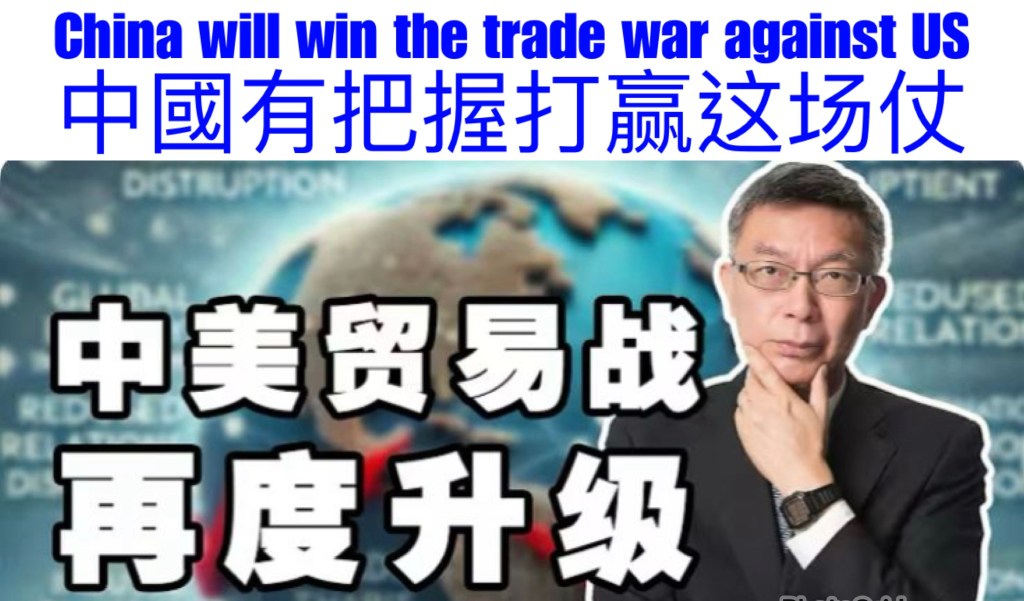
-
SCMP: How Peking University is fuelling China’s hypersonic weapons push
SCMP: How Peking University is fuelling China’s hypersonic weapons push ! Chinese state media has revealed for the first time how Peking University – one of the country’s most prestigious institutions – has contributed to China’s hypersonic weapons development. 南華早報:北京大學如何協助中國高超音速武器研發!中國官方媒體首次揭露了中國最負盛名的學府之一——北京大學如何為中國高超音速武器研發做出貢獻.
https://www.scmp.com/news/china/science/article/3328999/how-peking-university-fuelling-chinas-hypersonic-weapons-push?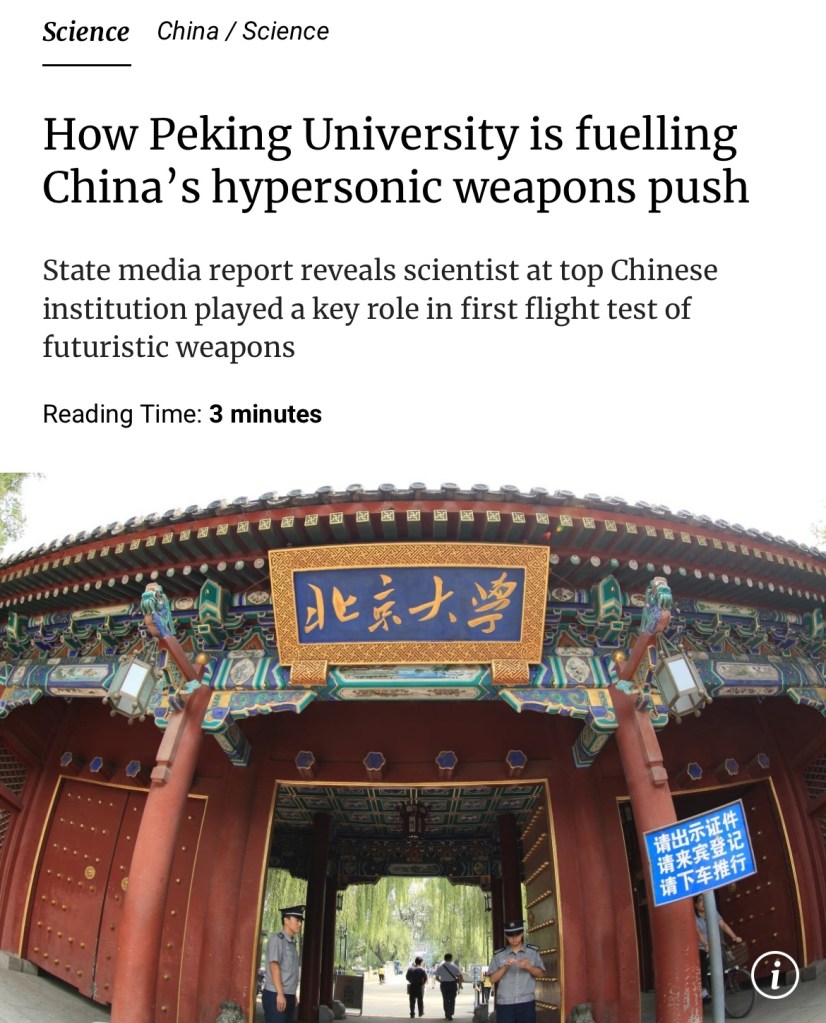
-
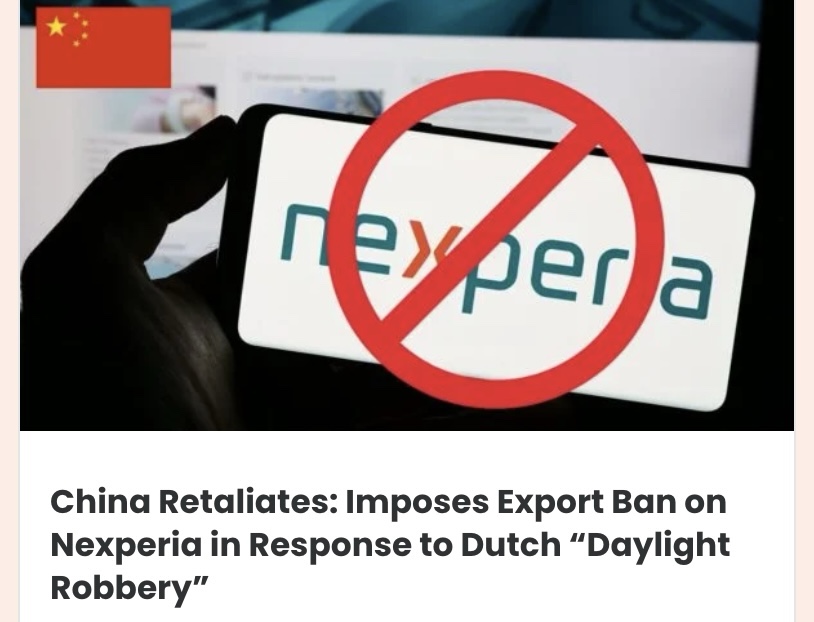
UPDATE China Retaliates! Imposes Export Ban on Nexperia in Response to Dutch “Daylight Robbery”
UPDATE 🚨🚨🚨China Retaliates! Imposes Export Ban on Nexperia in Response to Dutch “Daylight Robbery” 更新🚨🚨🚨中國反擊!為回應荷蘭“光天化日下的搶劫”,對Nexperia實施出口禁令
Beijing has fired back at the Netherlands, imposing an export ban on chipmaker Nexperia just days after the Dutch government seized control of the Chinese-owned company. The export ban, prohibits Nexperia’s Chinese subsidiaries and subcontractors from exporting certain finished and semi-finished products. This will have a significant impact on the company’s global operations, as its factory in Dongguan, China, produces over 50 billion chips annually. While Nexperia is now desperately trying to negotiate an exemption, the message from Beijing is clear: if you attack our companies, there will be consequences.
北京方面對荷蘭進行了反擊,在荷蘭政府接管這家中資晶片製造商Nexperia幾天后,就對其實施了出口禁令。該出口禁令禁止Nexperia的中國子公司和分包商出口某些成品和半成品。這將對該公司的全球營運造成重大影響,因為其位於中國東莞的工廠每年生產超過500億顆晶片。儘管Nexperia目前正在拼命爭取豁免,但北京方面發出的信息很明確:如果你攻擊我們的公司,後果自負
-
Music video: Headline News Sept 9 – Oct 14 2025
Music video: Headline News Sept 9 – Oct 14 2025 音樂錄影帶:《頭條新聞》2025 年 9 月 9 日至 10 月 14 日
https://www.tiktok.com/t/ZP8A9xKuY/
https://youtu.be/3MVYIWNo0Us?si=YkrNt4VNn4sCiBt9
https://rumble.com/v70ajru-headline-news-sept-9-oct-14-2025.html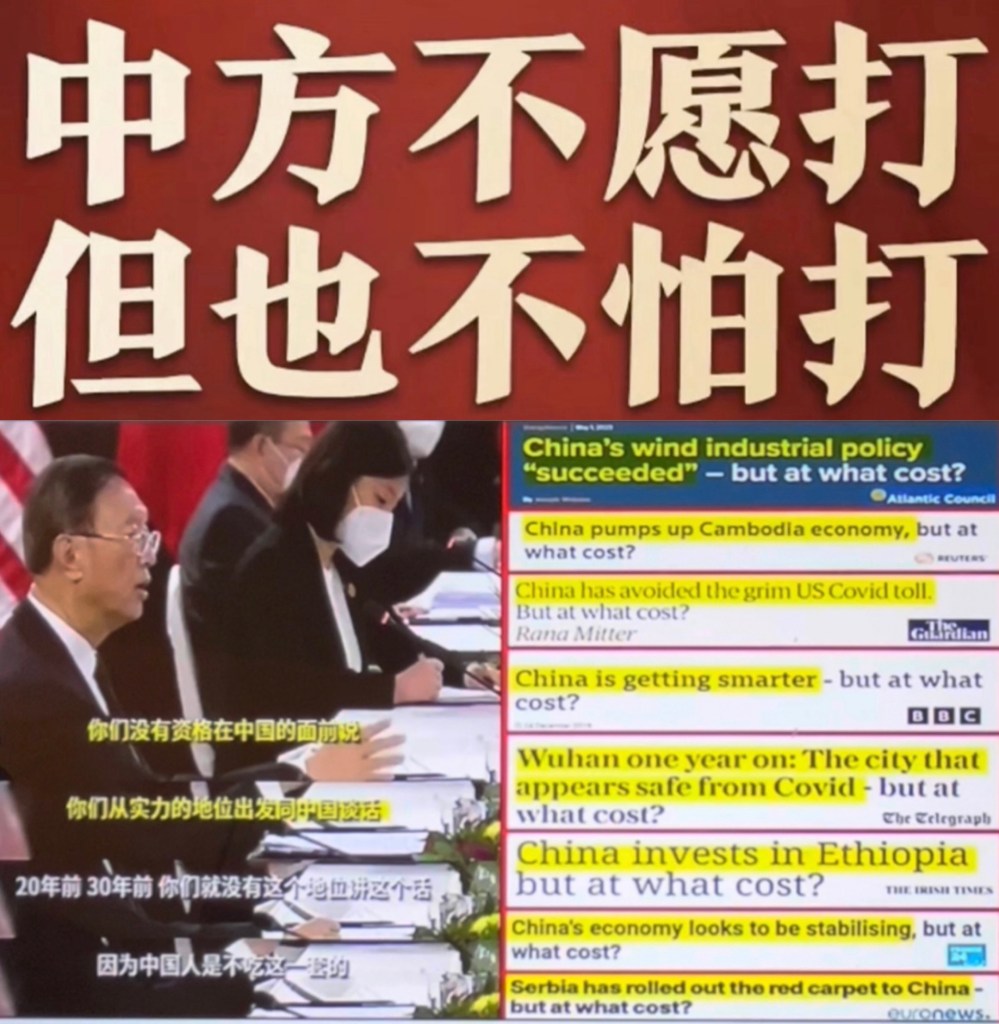
-
Subscribe
Subscribed
Have a WordPress.com account? Log in now.

