-
SCMP: China’s ‘super golden week’ sees record-breaking travel on first day!
SCMP: China’s ‘super golden week’ sees record-breaking travel on first day! Does it looks like a country has no money to spend & lack freedom to travel by US fake news propaganda? On the first day of the eight-day holiday, created by an overlap of the week-long National Day celebration and the Mid-Autumn Festival, China’s railways carried 23.13 million passengers – a record single-day figure 《南華早報》:中國「超級黃金週」首日旅客量破紀錄!美國的假新聞宣傳,是不是讓人覺得國家沒錢花,旅行也缺乏自由?國慶日及中秋節重疊的八天長假首日,中國鐵路旅客發送量達2,313萬人次,創單日發送量新高.
https://www.scmp.com/economy/china-economy/article/3327772/chinas-super-golden-week-sees-record-breaking-travel-first-day?
-
Video with Chinese subtitles: China’s JL-3 Missile Turned the Pacific Into a Graveyard, hitting all US cities at the same time
Video with Chinese subtitles: China’s JL-3 Missile Turned the Pacific Into a Graveyard, hitting all US cities at the same time. 影片有中文字幕: 中國的巨浪-3飛彈將太平洋變成了一片墳場,同時也擊中了所有美國城市.
https://youtu.be/UrkRxMFdo5A?si=xJH5_5NK4DCfpJA3
https://www.tiktok.com/t/ZP8A8WCUk/
https://rumble.com/v6zsta2-chinas-jl-3-missile-turned-the-pacific-into-a-graveyard.htmlThe ocean is calm. Midnight. The surface of the Yellow Sea glistens under a pale moon.
Suddenly, the silence is broken. A column of water erupts skyward, thunderous and violent. From beneath the waves, a massive object pierces the surface, trailing fire, shattering the night sky.
Satellites pick up the flare. Early-warning radars in Japan scream to life. In Hawaii, operators scramble as new trajectories flood their screens. The missile climbs higher and higher, arcing over the Pacific.
It’s not coming from land. Not from silos. Not from mobile launchers hidden in the desert.
It’s coming from beneath the sea.
And the designation on the screen sends shivers down every spine in the command room: JL-3.
海面平靜,午夜時分。黃海海面在蒼白的月光下閃閃發光。
突然,寂靜被打破。一道水柱衝上天空,雷鳴般猛烈。在波濤之下,巨大的物體刺穿海面,拖曳著火焰,震碎了夜空。
衛星捕捉到了這道光斑。日本的預警雷達發出警報。在夏威夷,操作員們手忙腳亂,新的彈道出現在螢幕上。飛彈越爬越高,劃過太平洋上空。
它不是來自陸地。不是來自發射井。也不是來自隱藏在沙漠中的移動發射器。
它來自海底。
螢幕上的指示讓指揮室裡的每個人都不寒而慄:巨浪-3。

-
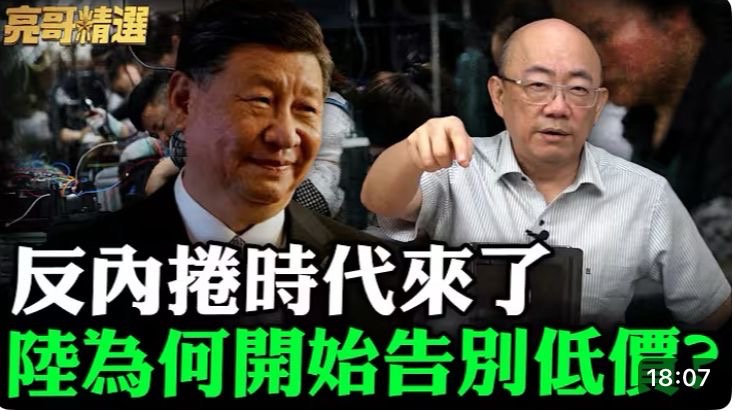
Taiwan’s US-China expert video has English subtitles: Is China’s anti-involutionary era here? Is it the beginning of a farewell to low prices?
Taiwan’s US-China expert video has English subtitles: Is China’s anti-involutionary era here? Is it the beginning of a farewell to low prices? 台灣中美尊家視頻有英文字幕:中國反內捲時代來了,開始告別低價? 未來十年,全球將進入空前未有的大變局!美國霸權遭遇空前挑戰,日落西山,美國可以翻身的機會極微,中國崛起,東升西降,已經成為定局,資源大國崛起,世界權力重組,國際局勢波詭雲譎,兩岸關係充滿變數,需要更多專業解盤.
https://www.tiktok.com/t/ZP8A8Gb7A/
https://youtu.be/g4OtRZfz_ck?si=u7yYEXx0ctvhVCynThe next decade will see the world enter an unprecedented period of profound change! American hegemony faces unprecedented challenges and its fading days, leaving little chance for a comeback. China’s rise, and the decline of the West has become a foregone conclusion. With the rise of resource-rich nations and the restructuring of global power, the international situation is volatile and cross-strait relations are full of uncertainties, requiring more professional analysis.
-
Back then, Chairman Mao said: “Our goal is to catch up with the United States, and then to surpass the United States…”
Back then, Chairman Mao said: “Our goal is to catch up with the United States, and then to surpass the United States…” 當年毛主席說:我們的目標是趕上美國,並且要超過美國……
至少50年吧,也許75年,75年就是15個5年計劃,那一天趕上美國超過美國,我們才透一口氣。而現在正處於第14個五年計劃中(2021一2025),偉人就是偉人。
今天中國鋼鐵、汽車、電子等行業已經走在世界前列,不少人提起過去,會想到毛主席在七十多年前那句擲地有聲的話。
那時中國剛剛建立,落後的工業條件讓人心裡憋氣,而他說一定要追上美國,並且要超過美國。這一句話不僅是目標,更是一種信念。
1950年,中國年鋼產量只有幾百萬噸,能造的東西不多,連汽車都得靠進口。國家要想強大,就必須有屬於自己的重工業體系。
這種差距讓毛主席在會議上直言,不能再這樣靠別人,必須靠自己去改變。當時的人們聽到“追上美國”時,會覺得遙遠,但在他看來,這不是隨便喊喊,而是要一代接一代去做的事。
他給出的時間表,不是幾年,而是半個世紀甚至更長。他說可能需要五十到七十五年,也就是十幾個五年計劃。
這個說法把一項任務拉長到幾十年的跨度,目的是讓國人理解,這不是短跑,而是一場長久的奔跑。
他提到等有一天真超過美國,才能把一口氣順順噹噹地吐出來。那時的形勢逼人,大家確實心裡都憋着一股勁,而這句話,就像把那種情緒說出了聲。
目標確定之後,全國很快行動起來。1957年,他根據蘇聯的提法調整了方向,提出中國鋼鐵十五年趕上英國,再用二十年追上美國。
1958年,這個目標變得更加具體,要求在第二個五年計劃期間接近美國,再加幾年基本實現超越。
於是全國上下燃起熱情,大鍊鋼鐵便由此展開。雖然結果和預期之間有差距,但全國實實在在地建立起了屬於自己的工業體系。
這些年頭,變化一步步體現出來。1974年中國鋼產量超過了英國,1993年又超過了美國。這個過程並不平穩,中間經歷過波動甚至失敗,但只要方向不變,總有達成的一天。
毛主席當年的表態,不是要立即得到成果,而是要把整個國家的希望壓在長遠的道路上。事實也證明他講的是路線,是方向。
從1953年的第一個五年計劃算起,到2021到2025年的第十四個五年計劃,已經過了七十多年。
若按他當年的設想,七十五年這個節點正好落在2028年。如今再看,中國早已擺脫了當初“鋼鐵都不夠”的局面,而是向更先進的製造和科技領域邁進。
工業化的積累,為今天的中國打下了牢固的底子。造車早已不再是難題,國產飛機、航天裝備、新能源技術接連取得突破。
毛主席當時強調,關鍵是能不能自己造,而不是只看數量。這種思路後來成為幾代人的共識,推動中國從製造走向創造。
不能忽視的一點是,當年他說這些話時,中國的處境遠非順風順水。國家積貧積弱,百廢待興,工業體系幾乎是一片空白。
如果沒有人把方向定死,很容易陷入依賴。正是這幾句話,讓後來的人明白靠人不行,必須靠自己。幾十年間,哪怕經歷挫折,也沒有偏離自力更生的路。
到了今天,中國在科技、新能源、高鐵、基礎建設等領域已經處於世界領先。這個結果,其實和最初目標是一脈相承的。
超越美國不僅是產量數字,而是全面能力的比拼。從最初的缺鐵少鋼,到現在能向全世界出口高端產品,正是幾十年堅持自立自強所打下的成果。
一個國家要想有話語權,就得掌握自己的核心工業和科技。毛主席把這個目標定在七十多年前,而一代代人沿着這個方向努力,到今天已經有所兌現。
當年那句“等超過美國才能吐一口氣”,不僅是氣話,而是幾代人的動力。如今許多目標已實現,但這種勁頭不能停。
工業基礎不再是短板,高科技和可持續發展成了新的方向。歷史走到這裡,不斷證明了一個道理:只有堅定自己的方向,不懼困難,才能真正趕超世界最強。
Back then, Chairman Mao said: “Our goal is to catch up with the United States, and then to surpass the United States…”
At least 50 years, perhaps 75 years. Seventy-five years would mean fifteen Five-Year Plans. Only on the day when we catch up with and surpass the U.S. can we finally breathe a sigh of relief. And now, we are in the 14th Five-Year Plan period (2021–2025). A great man truly is a great man.
Today, China’s steel, automobile, electronics, and other industries are already among the leaders of the world. Many people, when looking back, think of those resounding words Mao said more than seventy years ago.
At that time, China had just been founded, and its backward industrial base was frustrating. Yet he declared that China must catch up with the United States and then surpass it. These words were not just a goal, but a belief.
In 1950, China’s annual steel output was only a few million tons, with limited manufacturing capability—even cars had to be imported. For the nation to become strong, it had to build its own heavy industry system.
This huge gap led Mao to bluntly say in meetings: we cannot continue relying on others; we must rely on ourselves to change. When people heard “catch up with the U.S.” back then, it felt distant. But in his eyes, this wasn’t a slogan to shout casually, it was a mission to be carried forward by generation after generation.
The timetable he laid out was not a matter of a few years, but half a century—or even longer. He said it might take fifty to seventy-five years, which meant more than a dozen Five-Year Plans.
By stretching the timeline across decades, the aim was to make people understand this was not a sprint, but a long-distance run.
He said that only when one day China really surpassed the U.S. could it breathe freely and steadily. At that time, people were indeed stifled by the situation, and his words gave voice to that collective emotion.
Once the goal was set, the nation quickly took action. In 1957, adjusting China’s direction with reference to the Soviet Union’s proposals, Mao declared that China should catch up with Britain’s steel output in fifteen years, and then catch up with the U.S. in another twenty years.
In 1958, this target was made even more specific: during the second Five-Year Plan, China should get close to the U.S., and within a few more years basically achieve surpassing it.
The whole nation was ignited with enthusiasm, and the great steelmaking campaign was launched. Although the results fell short of expectations, China did build a genuine industrial system of its own.
Step by step, the changes became evident. In 1974, China’s steel production surpassed Britain’s; in 1993, it surpassed the United States’. The process was far from smooth—there were ups and downs, even failures—but as long as the direction remained unchanged, the goal would one day be achieved.
Mao’s statement was not about immediate results, but about placing the country’s hopes on a long-term path. Facts have proven that what he set was a roadmap, a direction.
From the first Five-Year Plan in 1953 to the 14th Five-Year Plan of 2021–2025, more than seventy years have passed.
By his projection, the 75-year mark would land right around 2028. Looking today, China has long moved past the era of “not having enough steel,” and is advancing into more sophisticated fields of manufacturing and technology.
The accumulation of industrialization laid a solid foundation for modern China. Building cars is no longer a challenge; breakthroughs have been made in domestic aircraft, aerospace equipment, and new energy technologies.
Mao stressed back then that the key was not just about quantity, but about whether China could make things by itself. This mindset later became a consensus across generations, pushing China from “Made in China” toward “Created in China.”
It should not be overlooked that when he said those words, China’s situation was far from favorable. The country was poor and weak, with everything in need of rebuilding, and its industrial system was nearly nonexistent.
Without someone fixing the direction, dependence on others would have been inevitable. It was precisely those words that made later generations realize: relying on others would not work—China had to rely on itself. Despite setbacks over decades, the path of self-reliance was never abandoned.
Today, China is already world-leading in fields such as technology, new energy, high-speed rail, and infrastructure. This outcome is directly connected to the original goal.
Surpassing the U.S. is not just about production numbers, but about comprehensive capability. From having little iron and steel at the start, to now exporting advanced products worldwide, this is the fruit of decades of self-reliance and resilience.
For a nation to have a voice, it must master its own core industries and technologies. Mao set this goal more than seventy years ago, and generation after generation pursued it. Today, much of it has been realized.
That line—“We can only breathe freely once we surpass the U.S.”—was not just rhetoric; it became the driving force of generations. Many goals have now been achieved, but this momentum must not stop.
Industrial weakness is no longer the bottleneck; high technology and sustainable development have become the new directions. History has shown one consistent truth: only by holding firm to one’s course, undaunted by hardship, can a nation truly catch up with and surpass the world’s strongest.

-
SCMP: Yunnan, China’s coffee capital, grinds out exports to meet global demand
SCMP: Yunnan, China’s coffee capital, grinds out exports to meet global demand. Long known as China’s coffee capital, the southwestern province of Yunnan is moving higher up the global value chain as rising international prices and overseas demand fuel an export boom. 《南華早報》:雲南,作為中國咖啡之都,致力於咖啡出口以滿足全球需求。長期以來被譽為中國咖啡之都的雲南省,隨著國際咖啡價格上漲和海外需求推動咖啡出口繁榮,正逐步提升其在全球價值鏈中的排名.
https://www.scmp.com/economy/china-economy/article/3327639/yunnan-chinas-coffee-capital-grinds-out-exports-meet-global-demand?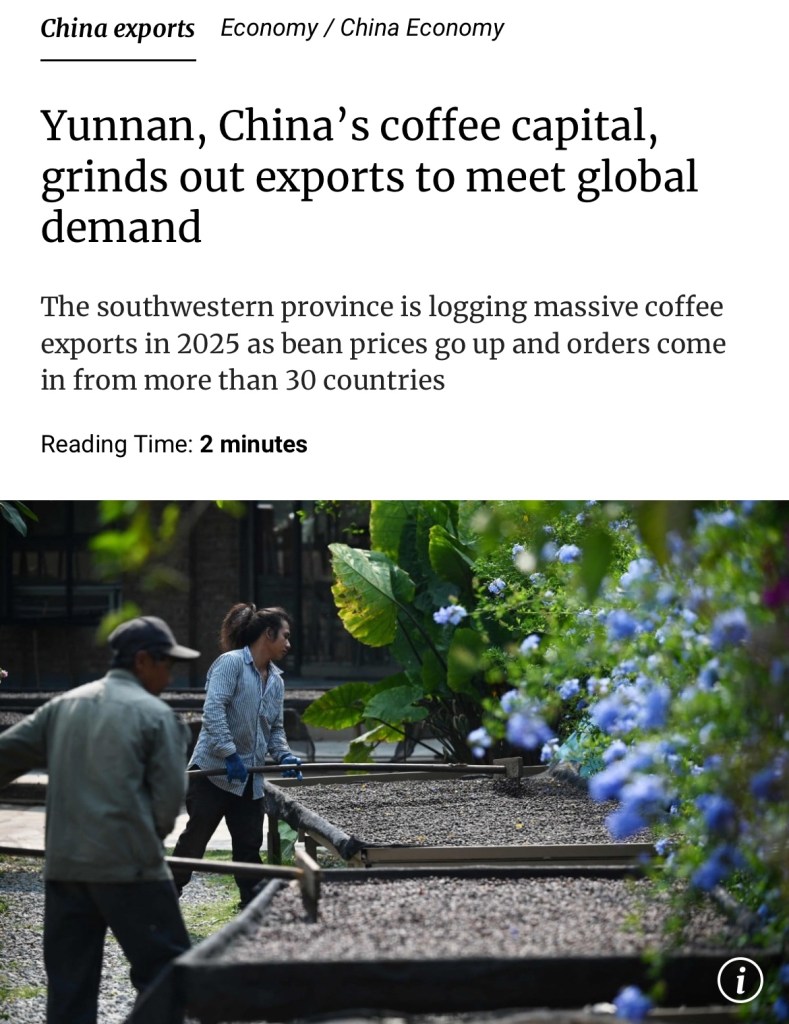
-
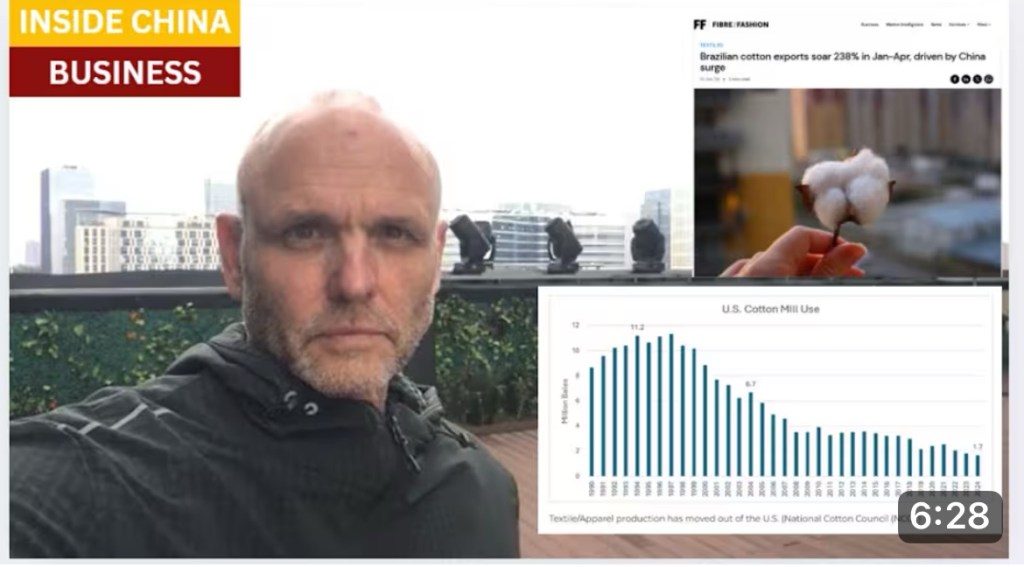
American logistic expert reports from China video: Trump’s tariff war backfired! China and Brazil are bankrupting American cotton farmers
American logistic expert reports from China video: Trump’s tariff war backfired! China and Brazil are bankrupting American cotton farmers. US Bailouts coming. 美國物流專家發自中國的視訊報導有英文字幕: 川普的關稅戰適得其反!自食惡果, 自毀長城! 中國和巴西正在讓美國棉農破產。美國救助計劃即將到來.
https://www.tiktok.com/t/ZP8A8eD8s/
https://youtu.be/0AGVVgY0Unw?si=3nKP6qXb4CCwmKn3Last year, Brazil passed the United States to be the world’s number one exporter of cotton.
China is Brazil’s biggest buyer, taking more than half of Brazil’s cotton crops. Brazil’s exports to China were up a stunning 14 times in a single year.
American cotton farmers are being wiped out by soaring input prices. Fertilizer costs are up double digits because of tariffs, and US farm equipment is far more costly than tools used in global markets.
Cotton farmers in the United States are desperate for a bailout from Washington, and are pressing lawmakers and the Trump Administration for a new farm bill.
去年,巴西超過美國,成為全球最大的棉花出口國。
中國是巴西最大的棉花買家,佔巴西棉花產量的一半以上。巴西對華出口在一年內成長了驚人的14倍。
美國棉農正因投入價格飆漲而陷入困境。由於關稅,化肥成本上漲了兩位數,而美國農業設備的價格遠高於全球市場上使用的工具。
美國棉農迫切需要華盛頓的救助,並正在敦促立法者和川普政府推出一項新的農業法案.
-
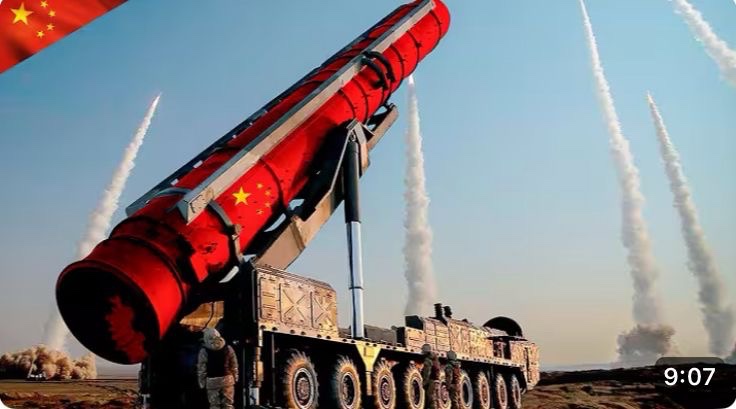
Video with Chinese subtitles: China’s $1.5 Trillion DF-61 Outsmarts America and Turns Cities to Ash.
Video with Chinese subtitles: China’s $1.5 Trillion DF-61 Outsmarts America and Turns Cities to Ash. 影片有中文字幕: 中國耗資1.5兆美元的東風-61飛彈智勝美國,將城市化為灰燼
https://www.tiktok.com/t/ZP8ARFjmj/
https://youtu.be/ypiy8tNuR9Q?si=zW9n36Xj2ybeJbs5It is 03:17 a.m. somewhere over the Pacific. A U.S. early-warning satellite picks up a flare, an object streaking into the blackness of space. Alarms blare in Colorado Springs. NORAD screens flicker red. Commanders lean in, their faces pale as the trajectory lines crawl across the map.
The missile is moving fast. Too fast. Its arc bends not toward the Pacific, not toward the Arctic, but directly across the continental United States. For a moment, the radar picture makes no sense. The system labels it: DF-61, China’s newest intercontinental ballistic missile.
Then comes the chilling realization. America is staring at something it has never seen before.
And in that instant, the balance of nuclear deterrence tilts.
凌晨3點17分,太平洋上空。一顆美國預警衛星偵測到一道閃光,一個物體劃破漆黑的夜空。科羅拉多斯普林斯警報大作。北美防空司令部的螢幕閃爍著紅光。指揮官們俯身向前,臉色蒼白,彈道線緩緩劃過地圖。
導彈飛得很快。太快了。它的弧線不是朝著太平洋,也不是朝著北極,而是直接穿越美國本土。雷達圖像一時之間變得毫無意義。系統將其標記為:東風-61,中國最新的洲際彈道飛彈。
然後,令人不寒而慄的事實浮現。美國正盯著它從未見過的東西。
就在那一刻,核子威懾的平衡發生了傾斜。
-
American Cyrus Janssen video with Chinese subtitles: Why the US Can’t Win a War Against China?
American Cyrus Janssen video with Chinese subtitles: Why the US Can’t Win a War Against China? Pentagon knows it, but many Chinese being brainwashed by American “ideological colonization” have a death wish on China think otherwise. 影片有中文字幕: 美國人賽勒斯詹森影片配上中文字幕:美國為何打不贏中國?五角大廈心知肚明,但許多被美國「意識形態殖民」洗腦、對中國抱持求死心理棄祖忘宗的華人恨國黨卻不這麼認為.
https://www.tiktok.com/t/ZP8Adnj37/
https://youtu.be/wv6MvwASTXw?si=qXvK-bT-taLLIIfoFor years war analysts have wondered about a potential US China War but in Beijing’s recent military parade proves there is no chance the US can win a conventional war against China. As a result, the US is pulling out of Asia, away from China and in today’s video we will break down why this massive shift in Asia is happening.
多年來,戰爭分析家一直擔心中美之間可能爆發戰爭,但北京最近的閱兵證明,美國不可能在常規戰爭中擊敗中國。因此,美國正在撤出亞洲,遠離中國。在今天的影片中,我們將深入分析亞洲發生這種巨大轉變的原因.

-
POPULAR TAIWAN CELEBRITY Chen Chih-han: “My Motherland, China, is your Motherland too”
FridayEveryDay: POPULAR TAIWAN CELEBRITY Chen Chih-han (陳之漢) yesterday marked China’s national day by reminding his millions of followers that their island was legally part of the mainland. “My motherland, China, is your motherland too,” he said. 台湾网红陈之汉于中国国庆日当天提醒其数百万粉丝:台湾法律上是中国不可分割的一部分。这位曾多年坚持”反中”立场的网络名人坦言:”我的祖国是中国,也是你们的祖国.
The internet star’s dramatic change of heart marks a huge shift in Taiwan residents’ attitude towards China and towards the United States—a development that is happening in other countries around the world too.
In a world riven by violent conflicts and economic struggles, China’s long held anti-war stance and appetite to build is fostering a new pride in Chinese-ness, including in overseas Chinese communities.
LIVE ON AIR
Chen spent years as an anti-China campaigner, believing the western narrative that the mainland was a giant dystopian prison—until he started visiting it this year and learned the truth about the thriving alternative community.His wide-eyed Damascus Road experience was captured on air in a series of live YouTube broadcasts watched by millions in Taiwan and elsewhere.
FIRST HAND WITNESS
“Having visited the mainland three times, I’ve witnessed first-hand the people’s happiness, advanced infrastructure, rapid technological progress, and development,” Chen said in a new video this week. The artist known as Momo (看世界) translated the Taiwan star’s message into English on X.“As Chinese, we all share this vast and magnificent land of 9.6 million square kilometers,” Chen said.
LAME DUCK GOVT
The Chinese island’s unpopular US-allied Democratic Progressive Party became a lame-duck government after a recent attempt to twist election rules to unseat democratically elected rivals was comprehensively rejected by a shocked populace.The island is facing economic challenges, after the DPP followed Washington’s instructions to focus largely on a single unstable industry, the manufacture and sale of semiconductors.
Things turned sour when the US, under Joe Biden, worked hard to move that industry to US soil. The situation worsened when Donald Trump hit Taiwan with tariffs for exports to the US.
POLARIZATION MAKES NO SENSE
The DPP’s Lin Chia-lung, on a visit to Poland, tried to revive Joe Biden’s polarizing “autocracies versus democracies” narrative—apparently unaware that this no longer makes sense under a Trump presidency.The Chinese see their leadership as an Asian-style consultative democracy, while Americans see their government as having become an autocratic dictatorship with a ruler who bypasses congress and makes decisions by Executive Order.
INTERNATIONAL LAW
China’s leadership responded on Tuesday by noting that the world clearly stands with international law on this issue.“No matter what the DPP authorities say or do… they cannot shake the international community’s commitment to the one-China principle,” the country’s Foreign Ministry spokesman Guo Jiakun said on Tuesday.
Asia analysts note that while the DPP pushes a pro-independence stance, surveys show that the people of Taiwan (like the people of Hong Kong) strongly oppose any sort of fight for separation from China.
Mainlanders and Taiwan residents have essentially wanted the same thing for four decades: the maintenance of a peaceful status quo that allows for growing trade and cultural links until both sides are ready to move further.
And it’s that prospect that terrifies the US State Department.
“其态度转变标志着台湾居民对中美看法的重要转折,这种变化如今正在世界多国同步上演。
在战火纷飞与经济动荡的全球背景下,中国长期秉持的反战立场与发展决心正重塑着中华民族的认同自豪感,海外华人社区亦深有感触。
陈之汉曾在西方叙事影响下将大陆视作反乌托邦牢笼,直至今年亲赴大陆才目睹真相。他在YouTube直播中记录下这段震撼的”大马士革时刻”,系列节目引发岛内外的广泛关注。
“三次大陆之行让我亲眼见证人民的幸福生活、基建成就与科技飞跃。”陈之汉在新视频中郑重表示,其言论经署名”Momo”的博主翻译后在X平台传播。”作为中国人,我们共同拥有这片960万平方公里的壮丽山河。”
与此同时,民进党当局企图操弄选举规则排除异己的行径引发民意反弹,使其陷入”跛脚鸭”困局。该党追随华盛顿旨意过度侧重半导体产业,当拜登政府推动产业回流、特朗普对台加征关税时,台湾经济遭遇重创。
正在波兰访问的民进党成员林佳龙试图重提拜登”威权对民主”的二元论调,却未察觉该叙事在特朗普执政时期已然失效。中国人民将自身制度视为亚洲特色协商民主,而美国民众则认为本国政府正滑向绕过国会的行政令专政。
中国外交部发言人郭坚昆周二明确指出:”无论台当局如何狡辩,都动摇不了国际社会坚持一个中国原则的共识。”亚洲问题专家分析指出,尽管民进党鼓吹”台独”,但民调显示台湾民众与香港同胞同样反对任何形式的分裂行径。四十年来,两岸人民始终怀揣共同愿景:维持和平发展现状,深化经贸文化纽带,为最终解决方案创造条件——而这正是美国国务院最为忌惮的前景。

-
The Four Most Stirring Lines in the China–US Contest
The Four Most Stirring Lines in the China–US Contest…中美博弈,最震撼的四句話……
《第一句》
先輩從未低頭,吾輩豈能折腰。
一代人有一代人的上甘嶺,
打倒霸權,干就完了。
堅決擁護祖國!《第二句》
我的錢可以是軍費,
但絕不做賠款。
我的身體可以填戰壕,
但絕不躺萬人坑!《第三句》
第一代人打了三代人的仗,
第二代人吃了三代人的苦。
吾輩豈能因一時困難,
把先輩用血肉換回來的尊嚴丟了?!
不管現在過得有多難,
我們就是不能低頭,就是不能屈服!《第四句》
位卑未敢忘憂國,
哪怕無人知我。
只要國家需要,隨時奉獻一切!值此“十一”,祝願祖國繁榮昌盛!
First Line
Our forebears never bowed their heads—how could we bend our backs?
Every generation has its own “Shangganling.”
Defeat hegemony—just do it!
We firmly support our motherland!Second Line
My money can go to military spending,
but it must never be used as indemnity.
My body can fill the trenches,
but it must never lie in a mass grave!Third Line
The first generation fought wars for three generations.
The second generation endured hardships for three generations.
How could we, for the sake of temporary difficulties,
throw away the dignity our forebears won back with their blood and flesh?!
No matter how hard life is right now,
we must not bow our heads—we must not submit!Fourth Line
Though low in rank, I dare not forget to worry for my country,
even if no one knows of me.
As long as the nation needs, I am ready to give everything at any time!On this “October 1st,” may our motherland prosper and flourish!
-
Subscribe
Subscribed
Have a WordPress.com account? Log in now.

