-
Video: An awkward moment: Netanyahu’s UN General Assembly speech erupted in booing before he could even begin
Video: An awkward moment: Netanyahu’s UN General Assembly speech erupted in booing before he could even begin. Seventy percent of the audience, including representatives from most countries, walked out in protest. The president banged his hammer and shouted six times, “Please maintain order in this chamber.” Israel, with the full support of the United States, continues its crimes against humanity in Gaza. 尴尬一刻 内塔尼亚胡联大演讲,未及开口,台下嘘声一片,七成的人,大部分国家代表离席以示抗议。主席敲捶,高喊六次“请保持会场秩序”, 得到美國的全力支持,以色列在加沙的反人類罪不絕.
https://youtu.be/kC7kgYICKxw?si=TMbLQIXy6IRGBZ_R
https://www.tiktok.com/t/ZP8SW7Ajj/
https://rumble.com/v6zi4kc-netanyahus-un-general-assembly-speech-erupted-in-booing-before-he-could-eve.html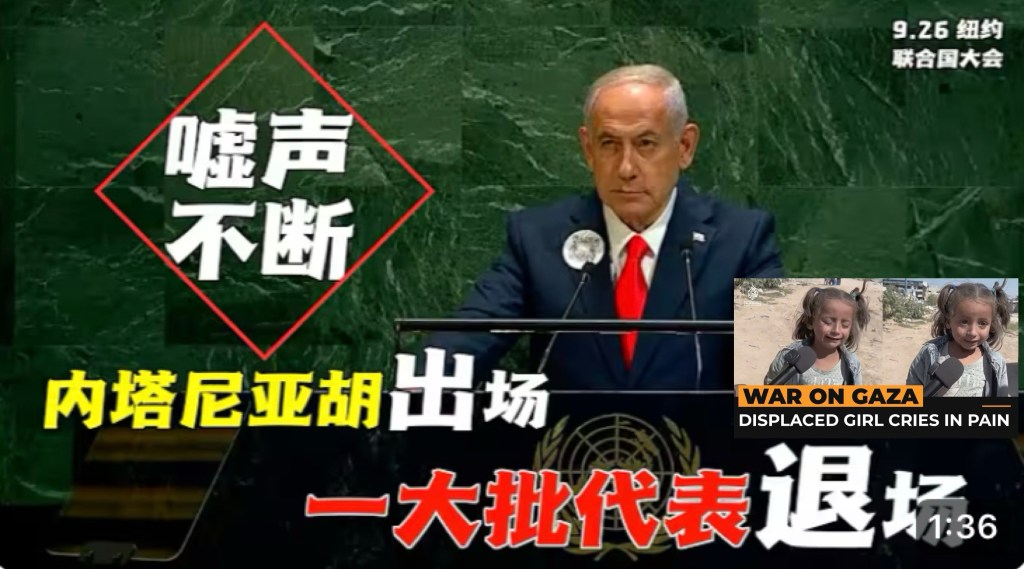
-
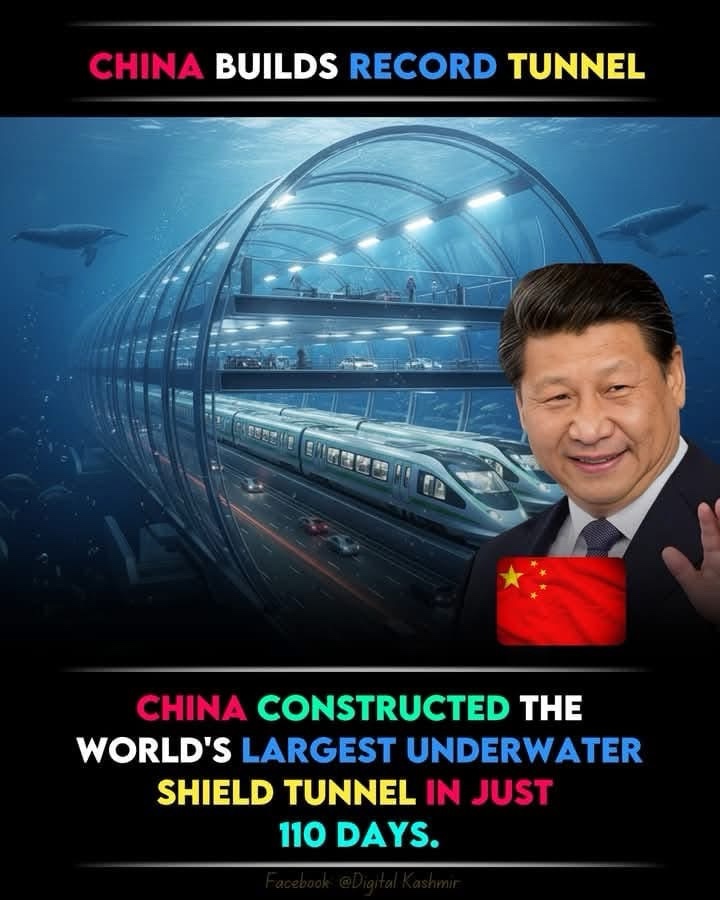
China has completed the world’s largest underwater shield tunnel under the Yellow River in Jinan, and the shield section was finished in only 110 days
China has completed the world’s largest underwater shield tunnel under the Yellow River in Jinan, and the shield section was finished in only 110 days. 中國濟南建成了世界最大的黃河水下盾構隧道。該隧道直徑17.5米,全長超過3.2公里, 盾構段僅花了110天完工.
The tunnel measures 17.5 meters in diameter and stretches more than 3.2 kilometers. Engineers used a massive machine called Shanhe to dig the passage. Work began on September 1, 2024.
This breaks global records for both scale and speed. The tunnel averaged 16 to 18 meters of progress per day. It is part of the Huanggang Road project and shows how China is pushing tunnel construction limits. Such projects improve transport, reduce travel time, and set new benchmarks for engineering worldwide.
中國濟南建成了世界最大的黃河水下盾構隧道。該隧道直徑17.5米,全長超過3.2公里。工程師們使用名為「山河」的巨型機器開挖了這條隧道。工程於2024年9月1日動工.
這打破了規模和速度的世界紀錄。隧道平均每天進展16至18公尺。它是黃岡路計畫的一部分,展現了中國如何突破隧道建設的極限。此類專案改善了交通運輸,縮短了行程時間,並為全球工程領域樹立了新的標竿
-
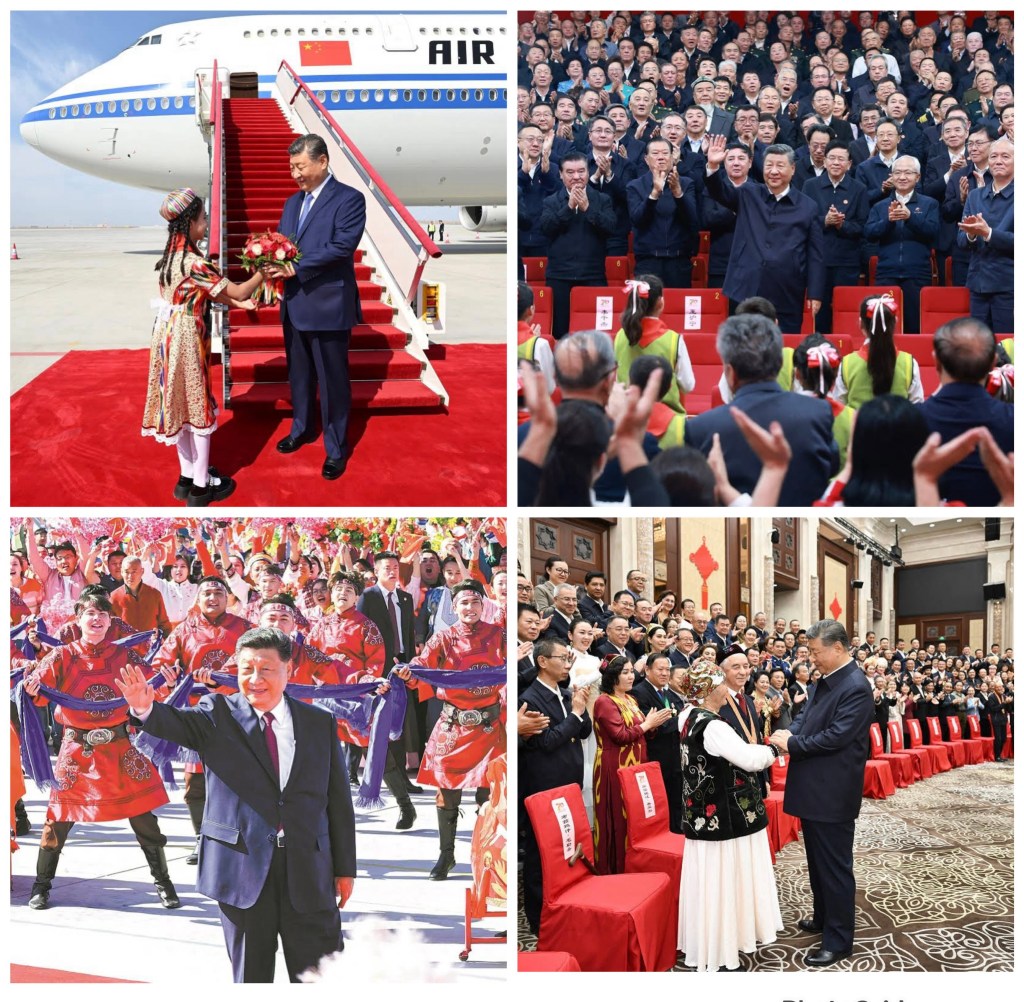
“Beautiful Xinjiang!” Chinese President Xi Jinping in Xinjiang
“Beautiful Xinjiang!” 🇨🇳 Chinese President Xi Jinping in Xinjiang to mark the 70th founding anniversary of the Xinjiang Uygur autonomous region in the regional capital Urumqi 「美麗的新疆!」🇨🇳中國國家主席習近平在新疆維吾爾自治區首府烏魯木齊慶祝新疆維吾爾自治區成立70週年
-
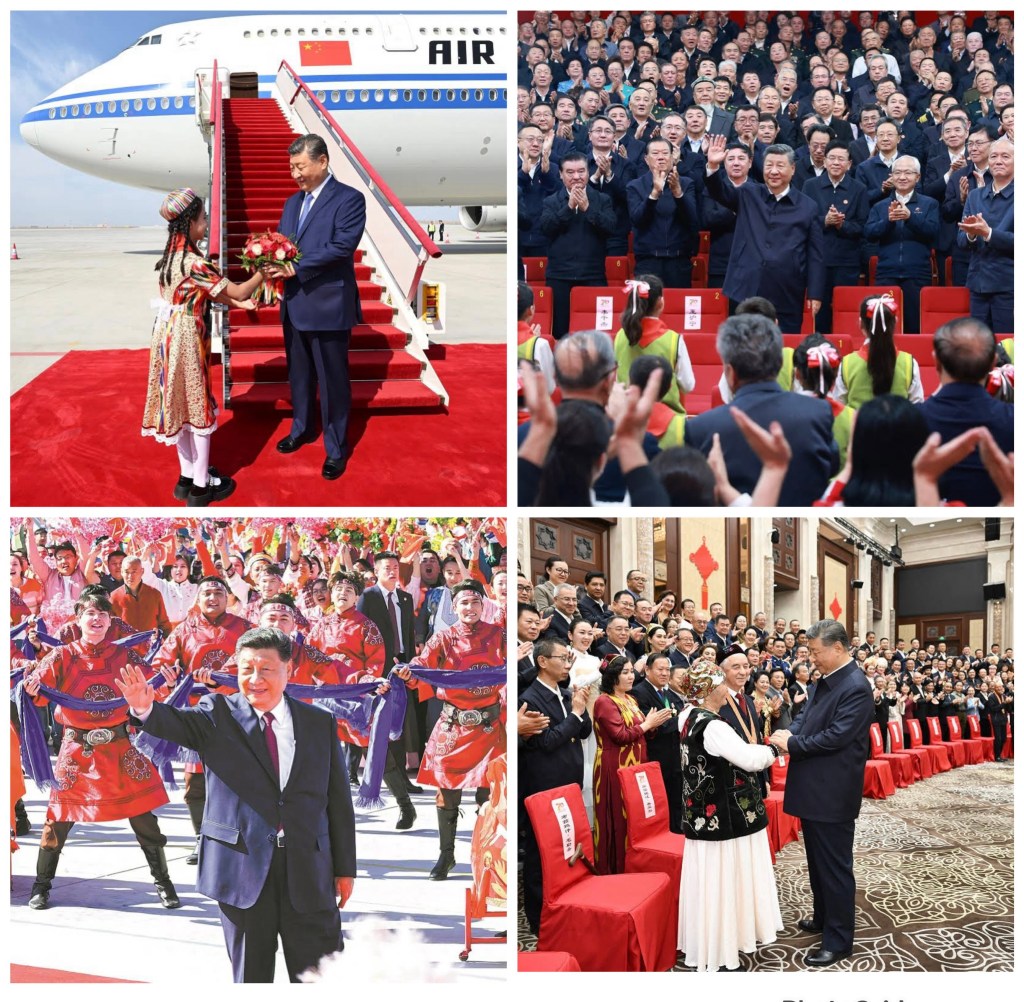
“Beautiful Xinjiang!” 🇨🇳 Chinese President Xi Jinping in Xinjiang
“Beautiful Xinjiang!” 🇨🇳 Chinese President Xi Jinping in Xinjiang to mark the 70th founding anniversary of the Xinjiang Uygur autonomous region in the regional capital Urumqi 「美麗的新疆!」🇨🇳中國國家主席習近平在新疆維吾爾自治區首府烏魯木齊慶祝新疆維吾爾自治區成立70週年
-
Taiwan professor video with English subtitles: US War Depart Secretary Hegseth summons generals and admirals to Virginia
Taiwan professor video with English subtitles: US War Depart Secretary Hegseth summons generals and admirals to Virginia meeting after 93 Military Parade 台灣教授影片配英文字幕:美國戰爭部長赫格塞斯在93屆閱兵後召集海軍將領到維吉尼亞開會
https://www.tiktok.com/t/ZP8SWa9hT/
https://youtu.be/NTJVfV_9fmI?si=DIBhO1K5zjIo3jKV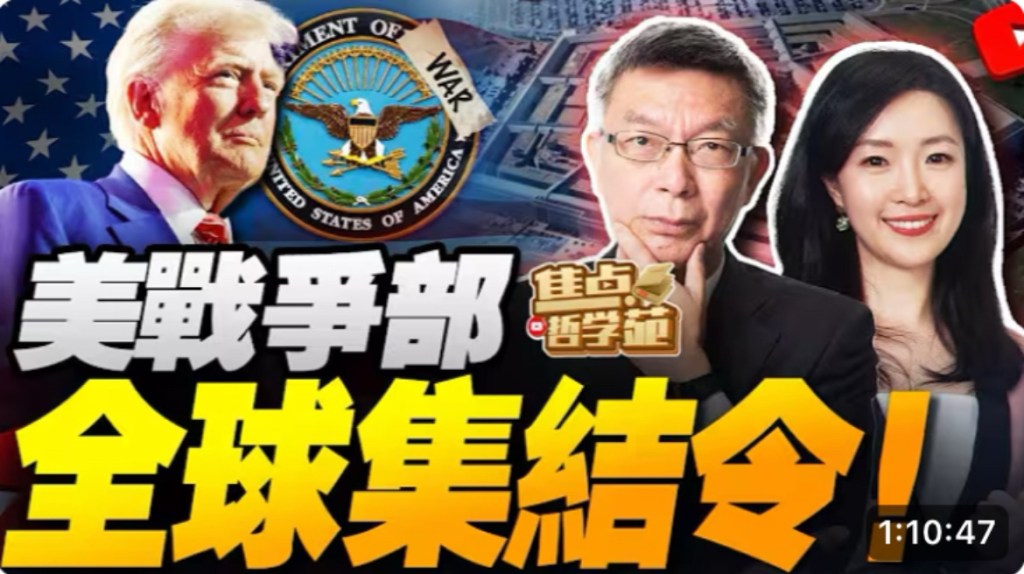
-
Video with English subtitles: Thunderclaps! The US Pacific hegemony has officially collapsed
Video with English subtitles: Thunderclaps! The US Pacific hegemony has officially collapsed, and the strategic decisive battle between China and the United States will take place in the Western Pacific! 影片有英文字幕: 一聲驚雷!美軍太平洋霸權正式崩塌,中美的戰略決戰在西太平洋!
https://www.tiktok.com/t/ZP8SWPQKj/
https://youtu.be/S3R18b_GR6k?si=CrtAA_jpy-ORTrqM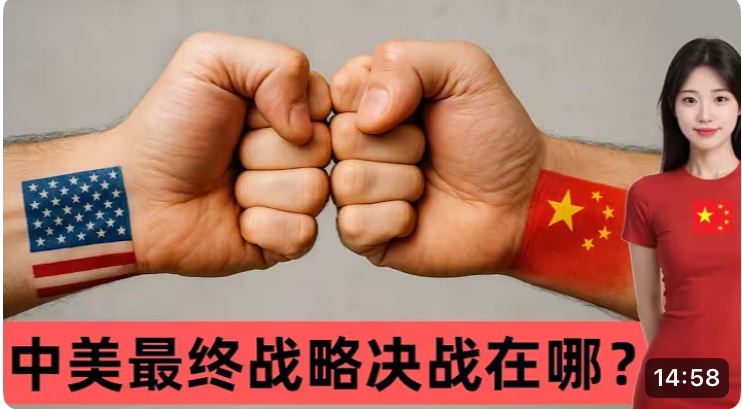
-
Only after Former U.S. Ambassador to China Nicholas Burns leaving office did he dare to speak his mind
Only after Former U.S. Ambassador to China Nicholas Burns leaving office did he dare to speak his mind. 美國前駐華大使尼古拉斯·伯恩斯離任后才敢吐露真言
He recently stated that Trump severely underestimated China, highlighting that the U.S. has long “seriously underestimated China’s strength” and called for acknowledging the gap. His remarks have attracted international attention. 離任后才敢吐露真言,美國前任駐華大使:特朗普太小看中國了,美國前駐華大使尼古拉斯·伯恩斯近期發聲,直言美國長期“嚴重低估中國實力”,呼籲正視差距,其言論引發國際關注。
As a senior diplomat from the Biden administration, this was his first criticism of the U.S. misjudgment in its China strategy after leaving office, presenting颠覆性 facts based on his personal experience.
In response to claims that “the PLA lacks combat capability,” he refuted by saying he had “seen the modernized troops of the PLA with his own eyes,” emphasizing that China’s military power has been underestimated.
In the field of science and technology talent, 34% of Chinese freshmen major in engineering or STEM subjects, compared to only 5.6% in the U.S. China’s large population base has created a key advantage in critical technology talent.
In terms of infrastructure, the 1,000-kilometer high-speed rail from Beijing to Shanghai can be covered in 4.5 hours, an efficiency “incomparable” to the U.S. railway system.
Diplomatically, the Chinese foreign minister has made Africa the first destination of their annual visits for 35 consecutive years. This long-term strategic consistency in global influence makes the U.S. pale in comparison.
Notably, he now criticizes the U.S. for “living in a Cold War mindset.”
He pointed out that the Trump administration’s tariff war accelerated China’s industrial chain independence, contrasting with his own tough stance toward China during his tenure.
This perspective is not an isolated one. China’s trade with Africa and export data under the Belt and Road Initiative directly counter the U.S. misjudgment of China’s ability to respond to sanctions.
Observers believe his remarks reflect the anxiety among American elites: the comprehensive gap between China and the U.S. in areas like infrastructure and tech talent is the “most alarming underestimation.”
作為拜登政府前資深外交官,他離任后首次批評美國對華戰略誤判,以親身經歷拋出顛覆認知的事實。針對“解放軍戰力不足”的說法,他反駁稱“親眼見過解放軍現代化部隊”,強調軍事力量被低估。
科技人才領域,中國大一學生34%主修工程或STEM專業,美國僅5.6%,龐大人口基數下形成關鍵技術人才優勢。
基建方面,北京到上海1000公里高鐵4.5小時可達,效率是美國鐵路系統“無法比擬”的。
外交上,中國外長連續35年新年首訪非洲,這種長期戰略定力展現的全球影響力讓美國相形見絀。
值得注意的是,他如今痛批美國“活在冷戰思維中”。
點名特朗普政府關稅戰加速中國產業鏈自主化,與其任內對華強硬態度形成反差。
這種觀點並非個例,中國對非貿易及“一帶一路”出口數據,直接回應了美國對中國應對制裁能力的誤判。
觀察人士認為,其言論折射美國精英層焦慮:中美在基建、科技人才等領域的全方位差距,才是“最可怕的低估”。

-
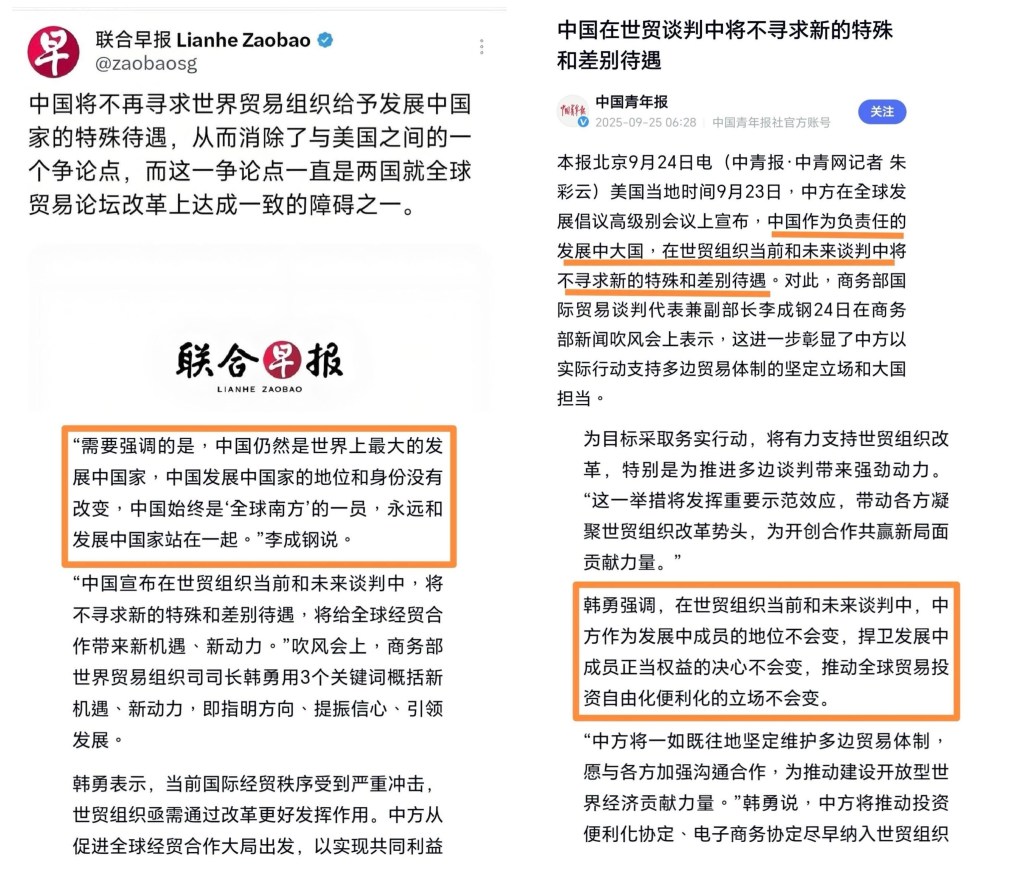
“China will no longer seek the special treatment granted to developing countries by the World Trade Organization.”
The report from September 24 can truly be described as a bolt from the blue! “China will no longer seek the special treatment granted to developing countries by the World Trade Organization.” How significant is this statement? 9月24日的這條報道,堪稱於平地之中聽驚雷! “中國將不再尋求世界貿易組織給予發展中國家的特殊待遇。”這句話的分量有多重?
Some have bluntly stated that this might be the second most impactful declaration made by China since “Reform and Opening Up,” one that could influence the global landscape. The reason lies in the key signal it sends: economically, China is adopting a more mature and confident posture, moving beyond the framework of “special treatment for developing countries” to face global trade competition head-on.
It is important to understand that “special treatment for developing countries” was once a crucial safeguard for China’s integration into the global trade system. In the early days after joining the WTO, China had a weak industrial base and an incomplete industrial chain. With this treatment, China gained more buffer space in tariff reductions and policy adjustments, gradually building its own manufacturing system and evolving from the “world’s factory” into the “core of the global supply chain.”
However, Western countries, led by the United States, have long fixated on this issue, repeatedly arguing that “China is no longer a developing country” and demanding that China abandon its special treatment. They have even used this as an excuse to obstruct reforms in global trade forums, repeatedly leading China and the U.S. into deadlocks in multilateral trade cooperation.
Now, China’s proactive decision to no longer seek this treatment is by no means a passive compromise but an active choice reflecting that “with increased strength, posture naturally changes.” It is like a student who once needed a teacher’s guidance and tolerance but, upon growing into a top-tier talent capable of standing on their own, naturally sheds the label of “special treatment” to compete with peers on equal footing.
Today, China’s manufacturing value-added accounts for nearly 30% of the global total. Industries such as 5G, new energy vehicles, and high-speed rail lead the world. A domestic market of 1.4 billion people supports the largest consumer scale globally. China has long passed the stage of needing “special treatment” for support. Voluntarily relinquishing this status is precisely an acknowledgment of its own economic strength and a respect for global trade rules—letting strength speak for itself rather than relying on a “special status” for advantages.
More critically, this statement directly eliminates the core point of contention between China and the U.S. in reforming global trade forums. In the past, Western countries, led by the U.S., often used the excuse that “China is taking advantage of developing country treatment” to refuse consensus with China on optimizing trade rules, stalling progress in WTO reforms.
Now, China’s proactive step effectively untangles the “deadlock” in multilateral trade cooperation: it not only demonstrates China’s sincerity in promoting global trade fairness but also strips Western countries of their pretext for criticizing China. Moving forward, global trade forums may achieve substantive breakthroughs in areas such as tariff coordination, digital trade, and intellectual property protection. The starting point for all this is China’s resounding declaration.
From “Reform and Opening Up,” which opened the door to embrace the world, to now voluntarily abandoning special treatment for developing countries to face competition directly, every step China takes is closely aligned with the pulse of the times and profoundly influences the global landscape. “Reform and Opening Up” integrated China into the world, spurring a restructuring of global industrial chains. This new declaration, however, marks China’s transition from an “integrator” to a “leader”—no longer relying on special policies but leveraging strength to gain a voice in global trade.
The impact of this statement has only just begun. It will not only reshape the dynamics of Sino-U.S. interactions in trade but also prompt countries worldwide to reassess China’s economic standing. In the future, China will participate in global trade cooperation with a more open and equal posture. This force may, like “Reform and Opening Up” did in its time, once again set off a wave of change that transforms the world.
有人直言,這或許是繼“改革開放”之後,中國說出的最可能影響全球格局的第二句話,因為它背後藏着一個關鍵信號:在經濟層面,中國正以更成熟、更自信的姿態,跳出“發展中國家特殊待遇”的框架,直面全球貿易競爭。
要知道,“發展中國家特殊待遇”曾是中國融入全球貿易體系的重要保障。早年中國剛加入WTO時,工業基礎薄弱、產業鏈尚不完整,藉助這一待遇,我們能在關稅減免、政策調整上擁有更多緩衝空間,一步步搭建起自己的製造業體系,從“世界工廠”慢慢成長為“全球供應鏈核心”。
而美西方多年來卻一直揪着這一點不放,動輒拿“中國早已不是發展中國家”說事,要求中國放棄特殊待遇,甚至以此為借口阻撓全球貿易論壇改革,讓中美在多邊貿易合作中屢屢陷入僵局。
如今中國主動提出不再尋求這一待遇,絕非被動妥協,而是“實力到了,姿態自然改”的主動選擇。就像一個學生,早年需要老師的輔導和包容,可當他早已成長為能獨當一面的頂尖人才,自然會主動卸下“特殊照顧”的標籤,以平等身份和同學競技。
現在的中國,製造業增加值佔全球近30%,5G、新能源汽車、高鐵等產業領跑世界,14億人的內需市場撐起全球最大消費規模,早已不是當年需要“特殊待遇”扶持的階段。主動放棄這一身份,恰恰是對自身經濟實力的認可,更是對全球貿易規則的尊重——用實力說話,而非靠“特殊身份”獲取便利。
更關鍵的是,這句話直接消除了中美在全球貿易論壇改革中的核心爭論點。過去美西方總以“中國占發展中國家待遇便宜”為理由,拒絕在貿易規則優化上與中國達成共識,導致WTO改革遲遲難有進展。
如今中國主動邁出這一步,相當於解開了多邊貿易合作的“死結”:既展現了中國推動全球貿易公平的誠意,也讓美西方失去了指責中國的借口。接下來,全球貿易論壇或許能在關稅協調、數字貿易、知識產權保護等領域取得實質性突破,而這一切的起點,正是中國這句擲地有聲的表態。
從“改革開放”打開國門擁抱世界,到如今主動放棄發展中國家特殊待遇直面競爭,中國的每一步選擇都緊扣時代脈搏,也深刻影響着全球格局。“改革開放”讓中國融入世界,催生了全球產業鏈的重構;而這句新表態,則標誌着中國從“融入者”向“引領者”轉變——不再依賴特殊政策,而是靠實力在全球貿易中贏得話語權。
這句話的影響才剛剛開始。它不僅會重塑中美在貿易領域的互動模式,更會讓全球各國重新審視中國的經濟地位。未來,中國將以更開放、更平等的姿態參與全球貿易合作,而這股力量,或許會像當年“改革開放”那樣,再次掀起一場改變世界的浪潮.
-
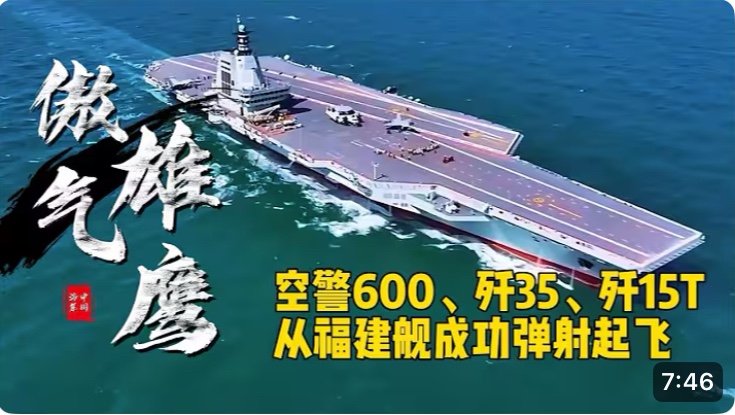
Video: China’s AEW & Fighters Launch from Aircraft Carrier Fujian
Video: China’s AEW & Fighters Launch from Aircraft Carrier Fujian 傲氣雄鷹, 中國空警600、殲35、殲15T在福建艦彈射起飛
https://youtu.be/XDDe2TDOze8?si=NGOJ6gh-PBhQ-yOr
https://www.tiktok.com/t/ZP8SWjLur/
https://rumble.com/v6zhdjg-chinas-aew-and-fighters-launch-from-aircraft-carrier-fujian.htmlSky Raptors, China’s Naval Air Force KJ-600, J-35, and J-15T Successfully Conduct Catapult Launches from Aircraft Carrier Fujian
Dedicated to the national heroes who, since the Opium War in 1840, have fought and sacrificed to defend the Chinese nation against foreign aggression and safeguard national unity!
中國海軍空警600、殲35、殲15T在航母福建艦成功彈射起飛
謹以此獻給自1840年鴉片戰爭以來,為中華民族抵禦外國侵略、維護國家統一而奮鬥犧牲的民族英雄們!
-
Video with English subtitles: China avenges a century of humiliation!
Video with English subtitles: China avenges a century of humiliation! From the tragic story of the First Sino-Japanese War of 1894 to the Fujian warship’s display of power, this video explains the history of China’s naval counterattack. Patriotic Chinese must watch it, and those who hate China will be disappointed! 影片有英文字幕: 中國百年雪耻!從1894甲午戰爭悲歌到福建舰亮剑,一部视频看懂中国海军逆袭史,愛國的中國人必須看,讓你興奮流淚,恨國黨你們又輸了讓你們失望了!
https://www.tiktok.com/t/ZP8StG2RS/
https://youtu.be/gzQ6mHsdYFU?si=VJ-tgsWjQkm2DxFj
https://rumble.com/v6zgkz4-china-avenges-a-century-of-humiliation.html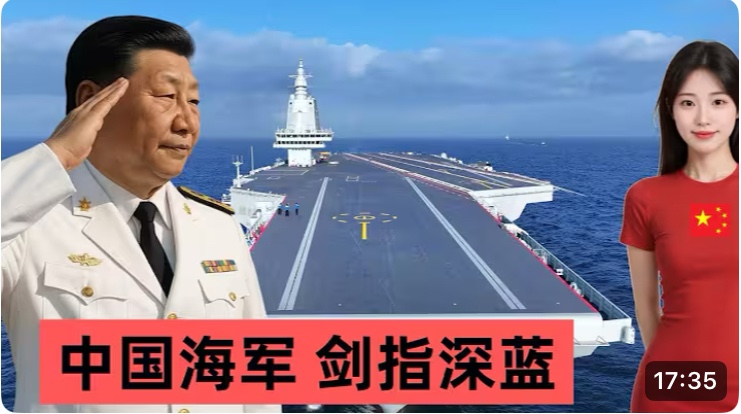
-
Subscribe
Subscribed
Have a WordPress.com account? Log in now.

