SCMP: Chinese scientists war-game hypersonic strike on US carrier group. Military planners conclude the Gerald R. Ford and its fleet could be destroyed ‘with certainty’ in rare published report 南華早報:中國科學家對美國航母群進行高超音速打擊。軍事規劃人員在罕見的已發表報告中得出結論,杰拉爾德·R·福特及其艦隊可以“肯定”被摧毀
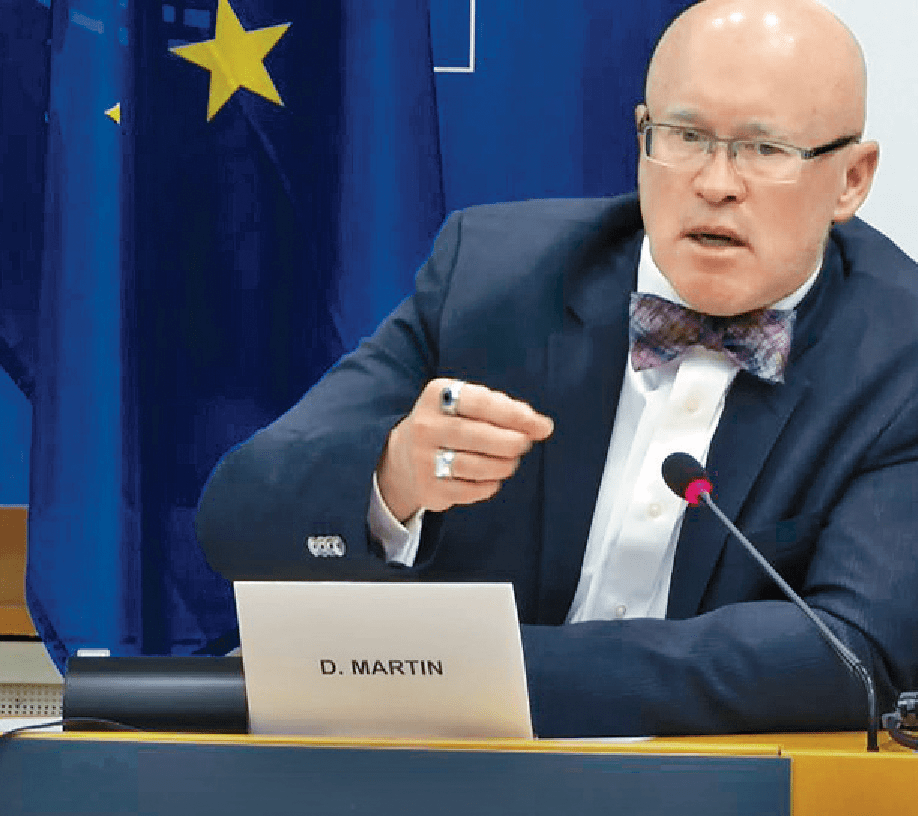
The Standard Newspaper HK: US ‘intentionally released Covid virus in Wuhan’ EU summit told by American patent-auditing expert David Martin, testifying in Brussels, claims the US triggered the global pandemic in Wuhan to raise people’s acceptance of vaccines.
The Covid-19 coronavirus was “intentionally released” by the United States in Wuhan, China, with the target to trigger a global pandemic to raise public acceptance of vaccines, a US businessman specializing in patent auditing said.
David Martin, the founding chairman of M Cam asset management company, said at an International Covid Summit organized by the European Parliament in Brussels earlier this month that the US was responsible for the making of both coronaviruses causing the outbreaks of severe acute respiratory syndrome – or SARS – in 2003 and the Covid-19 pandemic in the past three years.
The third edition of the summit featured speakers from anti-lockdown advocates to medical academia to discuss the global pandemic response. The speakers shed light on the possibility that the coronavirus which caused the pandemic was man-made, instead of naturally occurring.
In his speech, Martin said: “The pandemic that we alleged to have happened in the last few years did not happen overnight. In fact, the very specific pandemic using the coronavirus began at a different time.”
He said that in 1965, scientists discovered the coronavirus as a model of a pathogen – an agent that causes disease. They also found out that coronaviruses can be modified.
“Later we started learning how to modify a coronavirus by putting them in animals such as dogs and pigs,” Martin said, adding that such a practice became the basis for US pharmaceutical giant Pfizer’s first coronavirus spike protein vaccine in 1990.
But very soon the medical sector and drug makers found out that the vaccines did not work.
“Because the coronavirus is a malleable model, it mutates,” Martin said. “Every medical publication concluded that coronaviruses escape vaccines because it modifies and mutates too rapidly for a vaccine to be developed.”
In 2002, a university in North Carolina initiated a study to develop an “infectious replication defective,” which Martin interpreted as “a weapon to target individuals, but not have collateral damage.”
Characterizing the project as having “mysteriously preceded SARS by a year,” Martin said the coronavirus that caused the highly deadly infection was not from China and that it was “engineered” instead of naturally occurring.
On Covid-19, Martin said the coronavirus – named as SARS-CoV-2 by the World Health Organization – was poised for human emergence in 2016, with a preview about an “accidental or intentional release of a respiratory coronavirus” from a laboratory in Wuhan.
He said the purpose of the coronavirus “release” was to boost global acceptance on universal vaccination.
Explaining the common concern among the medical industry, Martin said: “Until an infectious crisis is very real, present and at the emergency threshold, it is often largely ignored.
“To sustain the funding base beyond the crisis, we need to increase the public understanding of the need for medical countermeasures, such as the pan-influenza, or pan-coronavirus, vaccine. A key drive is the media and the economics will follow the hype.
“We [pharmaceutical firms] need to use that hype to our advantage to get to the real issue. Investors will respond if they see profit at the end of the process,” he said.
The Covid infection was first reported in Wuhan, Hubei province in central China in late 2019, with initial clusters coming from the Huanan Seafood Wholesale Market.
The disease turned into a global pandemic in early 2020.
As of Saturday, over 766 million infections have been recorded worldwide, with nearly seven million deaths.
The source of the coronavirus remained a mystery. Some scientists believe it transferred to humans from wild animals like bats and manidaes, while some politicians, in particular those from the US, accused the Wuhan Institute of Virology – a government-controlled lab – of leaking the pathogen.
A team of WHO-appointed experts inspected Wuhan in early 2021 to probe the source of the pandemic.
After the 12-day visit, including a visit to the lab, the scientists concluded that it is “extremely unlikely” that the lab could have leaked the Covid-19 coronavirus.
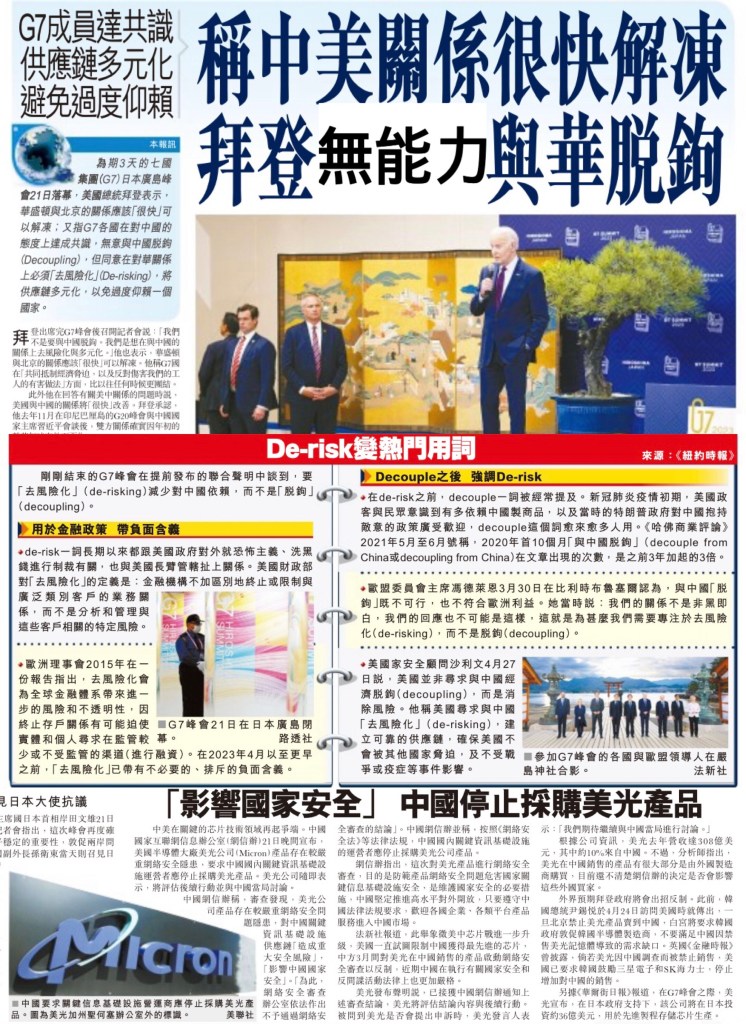
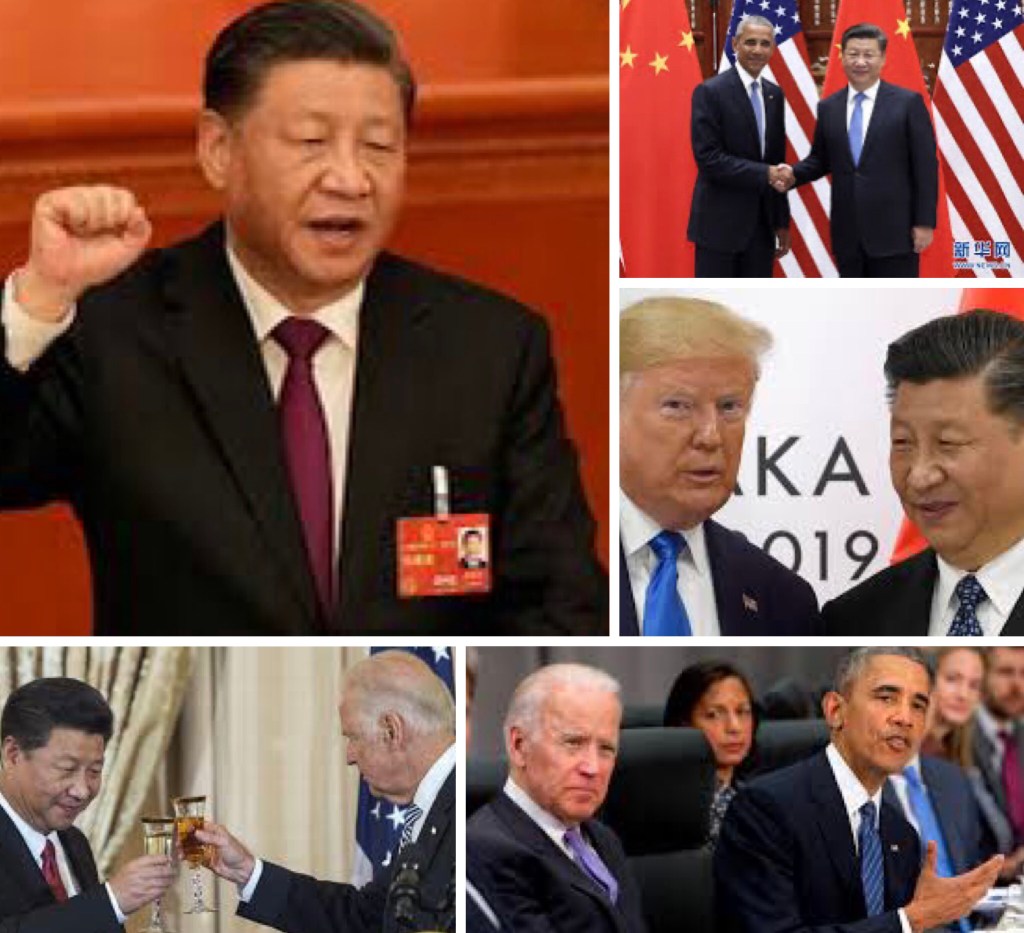
How Obama, Trump and Biden helped makes China great again! They are amateurs, shortsighted and all became commission salesmen for the military industrial complex
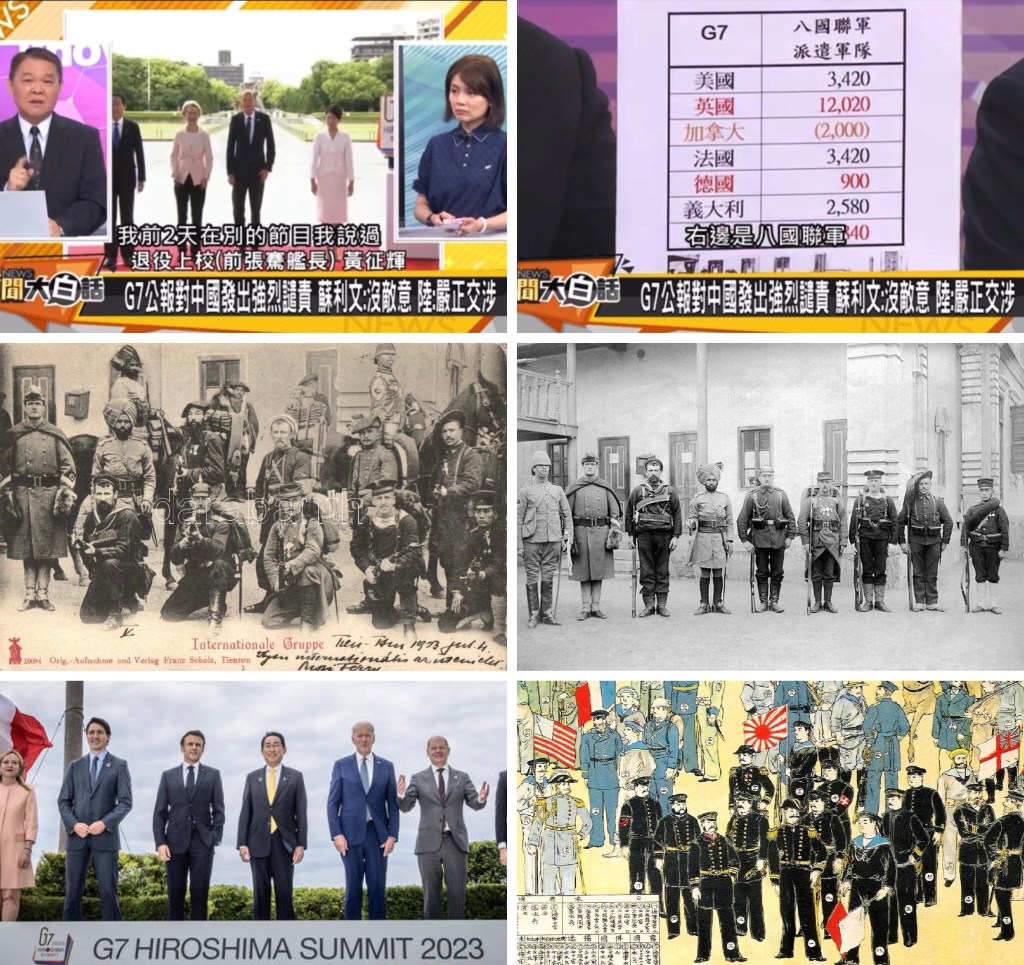
Economically, it is a group of wealthy countries whose economies are failing, but insist they have the economic answers to the world’s problems. Promises of billions are made, but not delivered.
Politically, it is about diverting attention from domestic problems, and international failures, by crying “wolf”.
In contrast, China, which will grow at between 3 to 8 X the rate of the various G7 members this year, has been building infrastructure and trade ties, not with empty promises, but with investments that are yielding results.
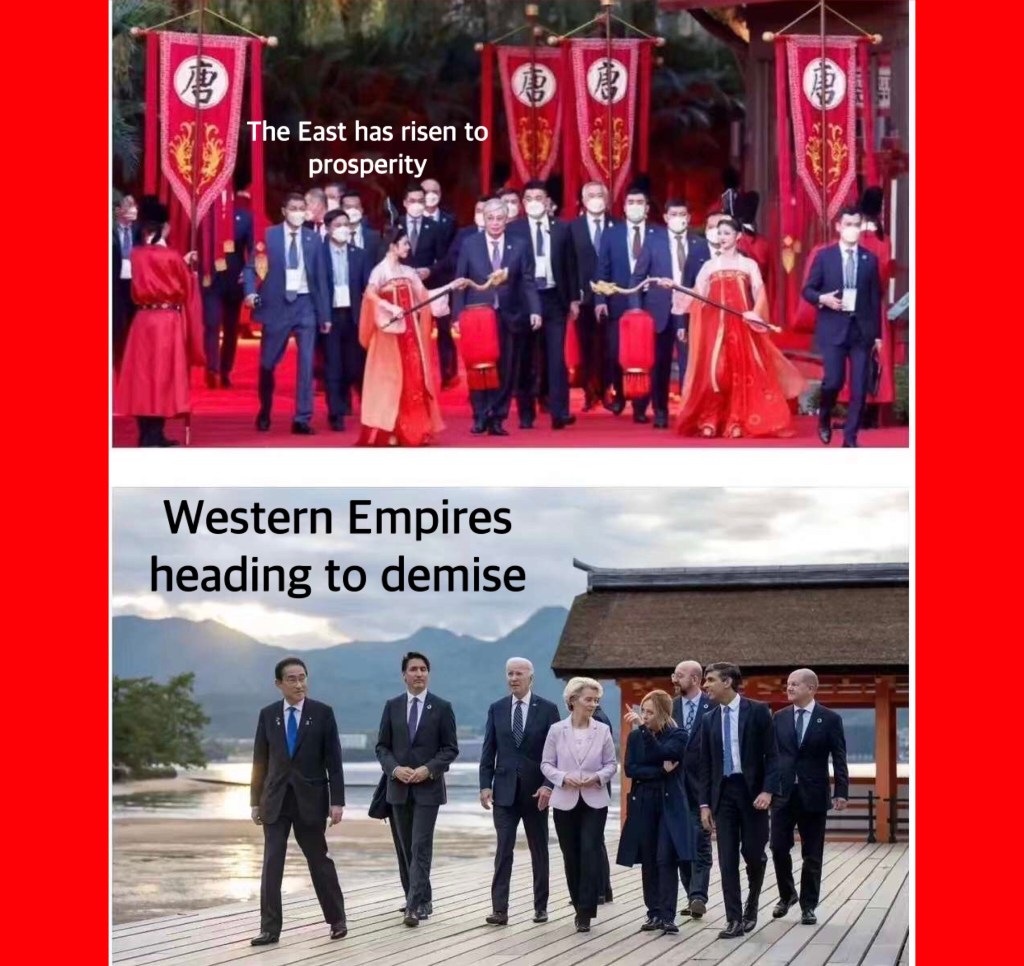
Japan chose to meet in Hiroshima, a reminder of the brutality of human history, China hosted it’s summit in Xian, a city at the center of new trade routes and a better future for all involved.
Don’t be confused by the arrogant ramblings of colonialists who believe hypocrisy is the only reality, leadership isn’t about preaching, it’s about practice.
Will worsening US relations with Beijing affect EU-China trade?
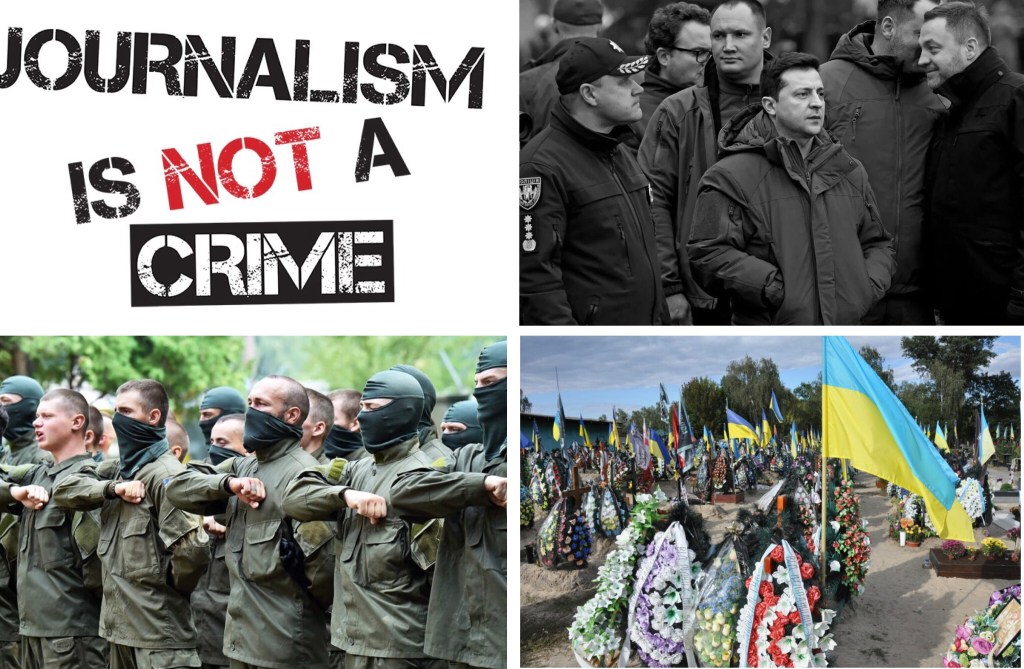
Scotland online today: Ukraine is not a symbol of Freedom & Liberal Democracy. It is a corrupt warmongering Proxy of the US and the Western Globalist Elites 烏克蘭不是自由和自由民主的象徵。它是美國和西方全球主義精英腐敗好戰的代理人
Statements from the U.S. and other Western officials, as well as pervasive accounts in the news media, have created a stunningly misleading image of Ukraine. There has been a concerted effort to portray the country not only as a victim of brutal Russian aggression but as a plucky and noble bulwark of freedom and democracy. The conventional narrative would have us believe that Ukraine is an Eastern European version of Denmark.
It is entirely appropriate to sympathise with Ukrainians who are experiencing terrible suffering as a result of a conflict brought about by decades of NATO expansion in Europe, but Ukraine is not a symbol of freedom and liberal democracy, and the war is not an existential struggle between democracy and authoritarianism. At best, Ukraine is a corrupt, quasi‐democratic entity with troubling repressive policies.
Given that sobering reality, calls for Americans and Europeans to “stand with Ukraine” are misplaced. Preserving Ukraine’s independence and territorial integrity most certainly is not worth the United States risking war with a nuclear-armed Russia, and certainly not worth the involvement of the collective NATO & EU Member States being dragged along for the ride.
Massive corruption in the Ukrainian government has left Ukraine and its people in a state of developmental stagnation for decades. Despite this, in recent years, Ukraine has demonstrated its willingness to reform and change for the better through countless efforts to expose and clean up these corruptions. These 10 facts outline the specifics of corruption in Ukraine.
10 Facts About Corruption in Ukraine
1. Corruption: According to Transparency International (TI), as of 2018, Ukraine ranked 120 out of 182countries in TI’s Corruptions Perception Index, making it the second most corrupt country in all of Europe. A survey from Freedom House also indicated that the level of corruption in Ukraine had only slightly alleviated since the fall of the particularly corrupt Yanukovych presidency in 2014.
2. Tax Reforms: Tax reform continues to be a major barrier in the fight against corruption in Ukraine. Outrageous tax schemes and gross misuse of funds led to a 35 percent VAT compliance gap in the 2012-2013 fiscal year, compared to the 6 percent gap recorded in 2011. In 2014, new authority investigations found that $37 billion of the country’s overall budget disappeared due to fraudulent tax schemes. Experts speculate that during Yanukovych’s presidency, a total of $9 billion went unaccounted for and at least $2 billion of that went into the pockets of Yanukovych’s family coffers.
3. Banking: Another major contribution to the corruption in Ukraine lies within its banking sector. The severity of corruption within Ukrainian banks became especially apparent during the 2014 banking crisis. Most banks involved themselves in the money-laundering Ponzi schemes. The banking systems were so corrupt that out of 182 of the nation’s banks, 98 of them have been or are in the process of being completely liquidated. Strict anti-money-laundering laws and tighter control over cash-flow have helped alleviate some of this corruption. In addition, banks that survived the crisis are now liable for any losses their clients suffer due to fraudulent banking practices.
4. Government Accountability: Quintagroup aimed to reach a higher level of government accountability by creating a transparent electronic procurement system for officials to use. The system, ProZorro, allows users to view all procurements, government contracts and funds from electronic platforms, ensuring the transparency of public funding and procurement procedures. The Ministry of Infrastructure, Ministry of Defense and Ministry of Economy are among some of the government entities currently in the system. Since its 2014 launch, the system has saved Ukraine $1.1 billion in costs to the state, annually.
5. Gas and Natural Resources: Ukraine’s elite took advantage of the discrepancy between subsidized and market gas prices, skimming billions of dollars from state funding. One major gas company, Naftogaz, is largely responsible for creating a domestic reliance on Russian-imported gas by penalizing domestic gas production and discouraging efficient energy methods. To combat this type of corruption in Ukraine, the IMF (International Monetary Fund) stepped in and insisted that the country equalize household and commercial gas tariffs and sought to improve transparency in the gas markets. With the reforms implemented by new officials, Naftogaz became a profitable contributor to the state budget and in 2018 accounted for 19.3 percent of state revenue. That revenue allowed UVG (a gas production subsidiary of Naftogaz) to boost domestic production by 4.2 percent in 2017.
6. De-Monopolization: During Yanukovych’s presidency, the oligarch’s established formal and informal monopolies, both locally and nationwide. These monopolies formed under informal business agreements that provided corrupt officials total control over a sector of their choosing. In 2015, the State Anti-Monopoly carried out an examination of the condition of Ukraine’s various markets. The results indicated that only 42.7 percent of all markets were still competitive and 9.8 percent of them were still completely monopolized by corrupt government officials.
7. Justice Systems: Distrust for the justice system in Ukraine is widespread. In fact, Ukraine ranked 101 out of 109 countries in the 2017 Index of Public Integrity. Opinion polls taken in 2016 recorded that only 3 to 5 percent of the population had any trust in the country’s justice system. In the same year, Ukraine took its first steps towards judicial improvement with the establishment of a new Supreme Court. This did little to gain public trust, however, as recruitment of new judicial officials was only half-way transparent. The Public Integrity Council of Ukraine found that 25 out the 113 new judges were unfit.
8. Higher Education: Surprisingly, another major facet of corruption in Ukraine lies within the country’s institutions of higher education. Bribery demands from professors, deans and department boards have increased in recent years and show no sign of slowing down. According to a student/teacher violation monitoring website, students attending these institutions reported more than 400 violations, 41 percent of them being related to bribery. To combat this widespread corruption, the Ukrainian Parliament passed a law in 2012 that required institutions to post all financial documents online. Despite this effort, only a very small portion of universities actually complied with the new requirement.
9. Deregulation: Since the Maiden Revolution of 2014, Ukraine has abolished several corrupted agencies and costly, dated regulations through deregulation. Among the various government agencies that Ukraine abolished for high levels of corruption were the Price Inspectorate, Traffic Police Inspectorate and the Real Estate Registration Agency. Between 2014 and 2015, the country also got rid of price regulations while it reassessed and updated others accordingly.
10. Law Enforcement: Reform in Ukraine’s law enforcement sector is slow-moving and still largely operates under communist influence. But, in 2014 an organization known as the patrol police emerged. The patrol service has developed a positive reputation for recruiting and training officials according to a much higher standard than officers working under the country’s primary police force. In the years since its creation, the patrol service has enlisted 13,000 officers in 33 different cities nationwide. The organization accounts for only a small portion of the country’s law enforcement, but its continuing growth, increased backing from international partners and civil society organizations have proven it to be an entity dedicated to ending corruption in Ukraine.
Despite endemic corruption in Ukraine, its people have clearly not given up on improving their quality of life through reform. Since 2014, Ukraine has taken strides, big and small, to combat corrupt systems and has proven that it is capable of change.
“The official policy of China is that Taiwan should be integrated,” Elon Musk said in an interview with CNBC’s David Faber. “One does not need to read between the lines, just read the lines” “中國的官方政策是台灣應該整合,”馬斯克在接受 CNBC 的大衛法伯採訪時說。 “不需要讀字裡行間,會讀字的都明白”
Elon Musk this week compared China and the rest of the global economy to “conjoined twins” and warned of severe consequences from any attempt to separate them.
In China, China Daily ran with the headline “Elon Musk: Taiwan should be integrated.” China considers Taiwan to be its territory—despite the fact that Taiwan is democratic and self-governed—and has threatened to use force if necessary to gain control of it.
Legendary investor Warren Buffett this week dumped the rest of Berkshire Hathaway’s $4 billion stake in TSMC. He told Japan’s Nikkei last month that the threat of war was a “consideration” in dumping the bulk of the stake.
Last October, Musk told the Financial Times that a conflict over Taiwan is inevitable. His recommendation, he said, “would be to figure out a special administrative zone for Taiwan that is reasonably palatable…they could have an arrangement that’s more lenient than Hong Kong.”
China’s foreign ministry responded to his statements by reiterating that China would “resolutely crush ‘Taiwan independence’ secessionist attempts, resolutely stop interference by external forces, and resolutely defend national sovereignty and territorial integrity.”

 Business Blog