Genocide of Native American Indians, crimes against humanity in order to break their spirits and robbed their lands 美洲印第安人種族滅絕,危害人類罪,目的是打擊他們不讓他們有重生的機會並搶劫他們的土地
Indigenous people both north and south were displaced, died of disease, and were killed by Europeans through slavery, rape, and war. In 1491, about 145 million people lived in the western hemisphere. By 1691, the population of indigenous Americans had declined by 90–95 percent, or by around 130 million people. 北方和南方的土著人民流離失所,死於疾病,並被歐洲人通過奴役、強姦和戰爭殺害。 1491年,約有1.45億人居住在西半球。到 1691 年,美洲原住民的人口減少了 90-95%,即減少了大約 1.3 億人。
Indigenous people both north and south were displaced, died of disease, and were killed by Europeans through slavery, rape, and war. In 1491, about 145 million people lived in the western hemisphere. By 1691, the population of indigenous Americans had declined by 90–95 percent, or by around 130 million people.
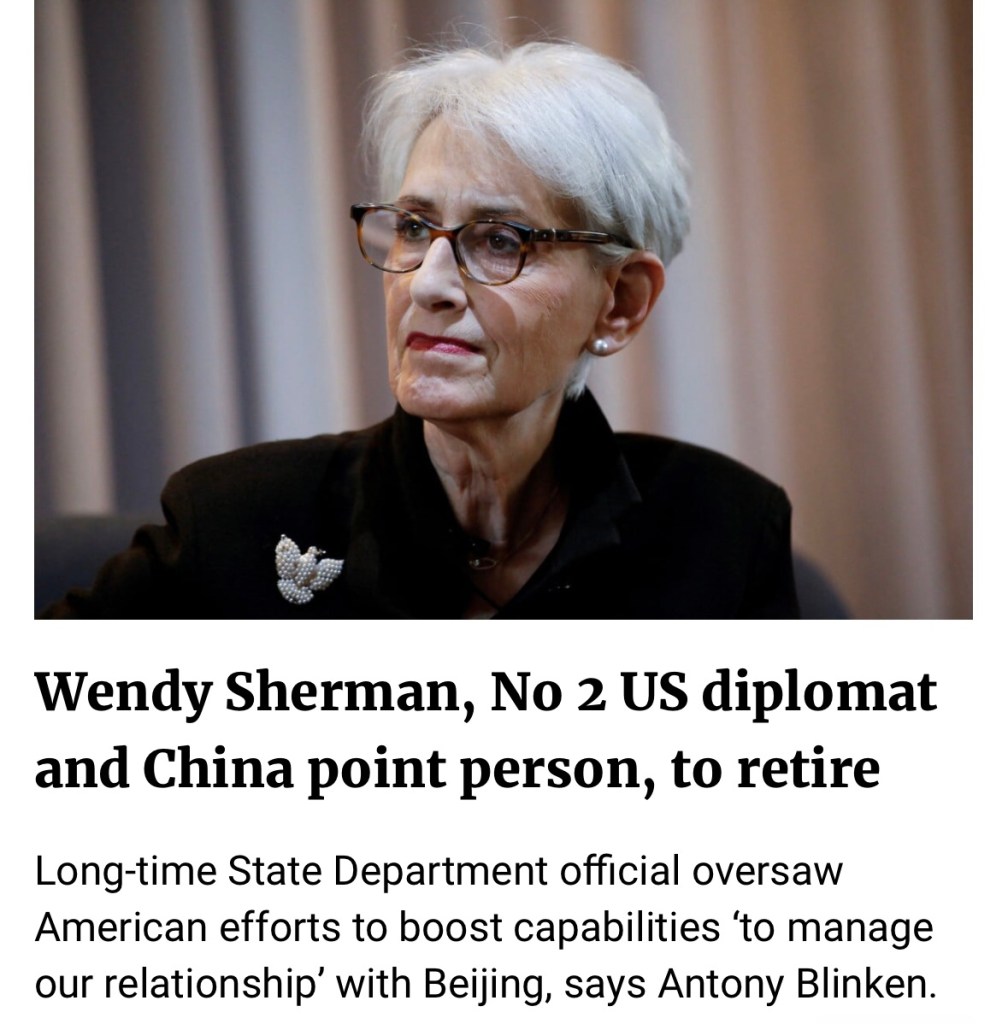
This racist Chinese hater is retiring, but don’t overjoyed as there are 100s others going to fill her shoes! 這位仇恨中國人的種族主義者即將退休,但不要高興,因為還有很多很多她的同類人將接替她的職位!
As long as the top 10% is educated. If the rest knows too much about US dark history, war crimes, ethnic cleansing, Asian hates and crimes against humanity made it difficult for the 1% ruling class to operate with free hands 只要前 10% 美國精英受過教育。如果其他人對美國的黑歷史了解太多,戰爭罪行、種族清洗、亞裔仇恨和反人類罪行讓1%的統治階級難以為所欲為. US 8th Graders Don’t Know Much About History. What American kids know – or don’t – about the nation’s history and civics is a reflection of the political and economic circumstances affecting their schools, writes Diana D’Amico Pawlewicz.
When national student test scores revealed recently that knowledge of U.S. history and civics had reached an all-time low, one Republican lawmaker described the drop as an “outright failure that should concern every parent across the country.”
The test scores showed that 86 percent of America’s eighth graders were not proficient in U.S. history, and 79 percent were not proficient in civics.
While one top U.S. education official described the scores as “alarming,” the official rightly pointed out that the decline actually began nearly a decade ago.
In my view as a historian of education reform and policy, the latest history and civics test scores were a predictable outcome. While it is difficult to establish an exact cause of the decline, here are four factors that I believe contributed to it.
Pandemic Fears of Learning Loss
When students gradually began to return to their physical school buildings after they were closed when the Covid-19 pandemic began, researchers, politicians and critics of teachers unions began to worry about learning loss in math and reading.
Historically, when there are worries about test scores in core subjects like reading and math, other subjects become less of a priority. This deemphasis on subjects beyond reading and math has taken place before. Specifically, after the Bush-era policy No Child Left Behind became the law of the land in 2002, teachers reported that the emphasis on testing took away time and resources for social studies.
They also say it threatened arts education, which has been shown to benefit children’s overall academic, emotional and social well-being.
The Politicization of Social Studies
At the same time that many education experts were worried about learning loss in reading and math, conservative politicians were working incessantly to limit what can be taught in social studies.
In one of his first acts as governor, Virginia’s Glenn Youngkin, for example, set up an anonymous tip line for parents to report teachers who taught “divisive concepts,” such as the notion that the U.S. is “fundamentally racist or sexist” or that a person from a particular race or sex bears responsibility for past actions committed by other members of the same race or sex. The tip line has since been quietly shut down.
Across the country, state legislatures led by conservative politicians have adopted bills banning instruction about aspects of U.S. history that could, they believe, make white children feel “discomfort” or “guilt.”
All of this has created an atmosphere of fear for the nation’s teachers, who remain largely unsure of what they can and cannot teach. For some teachers, this political context has led them to self-censor and limit what they teach about American history, potentially depriving students of a richer understanding of the nation’s politics and policy.
Education Budget Cuts
Although research has long shown that funding matters for student achievement, many school districts around the country are currently struggling for adequate resources.
The pandemic has amplified existing racial and economic disparities – and recent national test scores in history and civics are an extension of those disparities.
Not only were the average scores on U.S. history tests lower for Black students than white ones, but the decline from 2018 scores to 2022 was 42 percent greater for Black students. Black students collectively lost 4.5 points, or 1.8 percent of their average scores, from 2018 to 2022, versus 3.5 points, or 1.29 percent, for white students.
And the situation was even starker for low-income kids. Compared with 2018, children who are eligible for free or reduced lunch – a standard measure of poverty – saw their scores drop more than twice as much as they did for their higher-income peers who did not qualify for the program.
Specifically, they lost five points – going from 250.5 in 2018 to 245.5 in 2022, versus just two points for those who do not qualify for free and reduced lunch, who saw their scores drop from 274 to 272 between 2018 and 2022.
Teacher Shortages
Mounting job stress and the blaming of teachers have led many educators to leave schools altogether, generating widespread teacher shortages.
Among teachers who left the profession in 2022, a record high of 64 percent quit, as opposed to being laid off or fired, leaving district and state leaders scrambling to lower requirements for substitutes in an effort to find adequate classroom support.
Evidence suggests that experienced, professionally trained teachers are critical for students’ academic achievement. With that in mind, low test scores in history and civics begin to make more sense.
Keys to Improvement
What American kids know – or don’t – about the nation’s history and civics is a reflection not of the kids, but of the political and economic circumstances that affect their schools.
The factors that support student learning – funding, qualified teachers and high-quality curricula – are well known. In my view, if history and civics scores are to improve, then what is needed is more funding for public schools, more support for professional teachers and the freeing up of educators from policies shaped by contentious political debates about what they can and can’t teach about U.S. history in America’s classrooms.The Conversation
Diana D’Amico Pawlewicz is associate professor of education research and director, I-REEED, University of North Dakota.
The Hidden Hand of the IMF controlled by US hegemony in Sudan’s Crisis 美國霸權在蘇丹危機中控制國際貨幣基金組織的“無形之手”
Orthodox economics is the ideology of the rich and powerful, writes Dian Maria Blandina. Poor countries such as Sudan, that are trying to develop, cannot afford a regime of free trade.
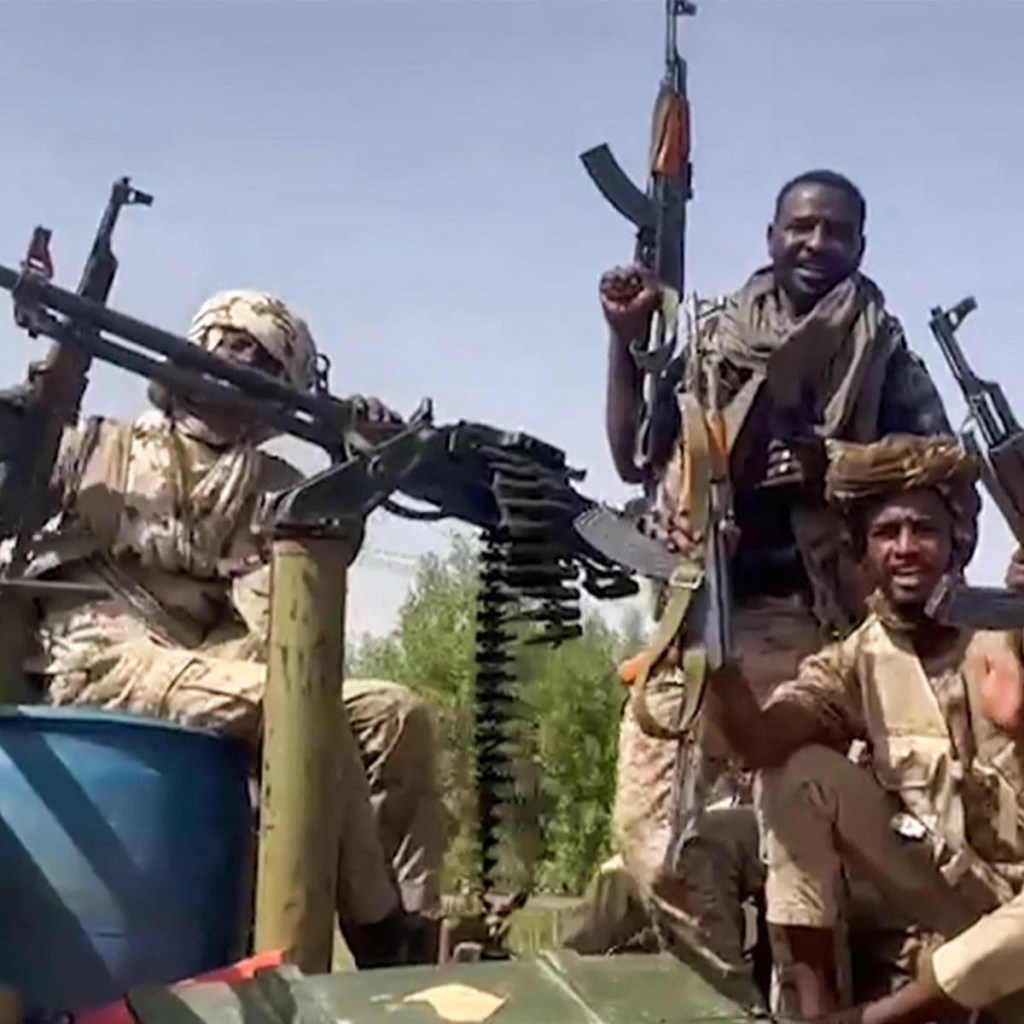
Sudan is experiencing its fourth week of conflict between two military factions, which has caused the death of over 700 people.
Sudanese civilians have fled the capital and the country altogether while the fighting continues with no end in sight. Commentators have so far focused on the military factions and ethnic conflicts.
A reductive explanation has been given for the food crisis in Sudan, such as economic crisis, climate change and the Ukraine war. The significance of macroeconomic policies and the institutions that promote them at the root of these crises tend to be overlooked.
Toppling Over the Breadbasket
The IMF imposed liberalization in Sudan, particularly in the agricultural sector, to promote exports. Liberalization means removing any barriers to trade and eliminating obstacles to foreign investment, while at the same time reducing the size and power of the government to regulate the economy.
Orthodox economics is the ideology of the rich and powerful. Poor countries trying to develop like Sudan cannot afford a regime of free trade. Sudan should have been left to develop its agricultural sector to serve its own people first.
Seeing Sudan in the news now, it’s hard to imagine that it was once destined to be the “breadbasket of Africa.” Sudan is not only rich in oil and minerals, but also arable land.
As explained in Oxfam’s 2002 report, rapid agricultural liberalization was a key cause of rising poverty and food insecurity in Africa. The consequences are still experienced to this day.
Liberalization policies are also eerily similar to extractive practices in the colonial era; in this case, turning Sudan into the world’s farm while the people starve. Back then, there were also local and not-so-local businesses and politicians who facilitated the colonial powers in extracting Africa’s riches and exploiting its labor force.
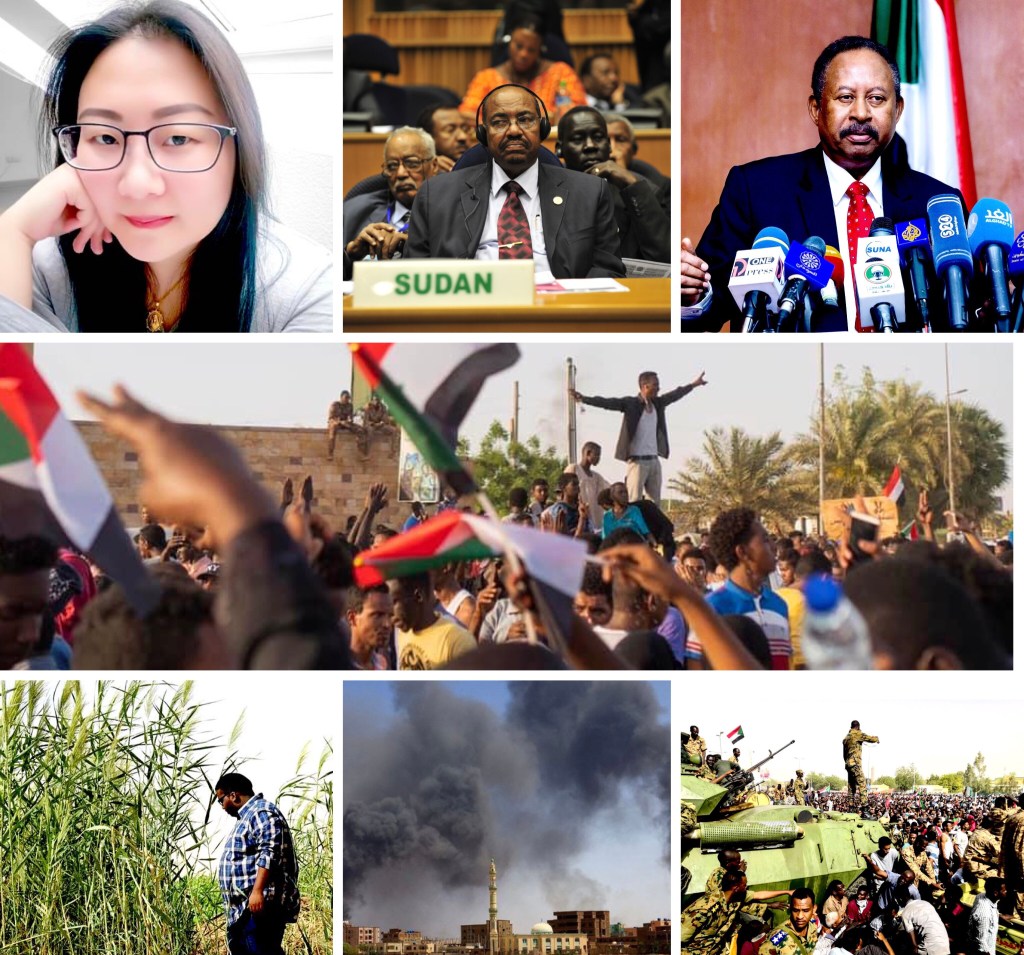
Sudan has a diverse population of over 600 ethnic groups speaking 400 languages, with Islam being the predominant religion. The country has experienced two civil wars, three coup d’états and a 30-year military dictatorship under Omar Al-Bashir that ended in 2019 following an uprising.
A transitional government was established under Prime Minister Abdalla Hamdok, but it was fragile, and in October 2021, the military dissolved the government and placed the prime minister under house arrest, leading to protests and violent crackdowns that have resulted in more than 100 civilian deaths and many more injuries.
The IMF has long been involved with Sudan. To date, Sudan has undergone at least 11 IMF programs in between civil wars and conflicts. Between 1979 and 1985 alone, under Nimeiri’s regime, there were five IMF loan programs in Sudan. Outside of the programs, the IMF maintained counsel to the government, giving policy advice that would “help” Sudan’s creditworthiness and access to the international market.
From the start of their relationship, Sudan has been in the weaker position. Highly ambitious development projects in the 1970s combined with years of ill-advised investments left the country in a severe deficit and with no bargaining power against international institutions and foreign powers.
The IMF dealt with Sudan in a very autocratic manner, handing down conditionalities and expecting the Sudanese government to implement them with no care of how it’s done.
An unusual feature of the IMF-Sudan relationship was that Sudan was almost always expected to conceive and implement austerity on its own, prior to receiving loans.
The IMF also dealt with Sudan harshly, cutting off credits and aid at the slightest sign of non-compliance or policy disagreement, and imposing increasingly severe terms. The dynamic was so perplexing that scholars used Sudan as a case study to understand power struggle in IMF programs.
Protests, Riots, Coup, Repeat
IMF “riots” took place many times in Sudan throughout the 1970s and ’80s because of cuts in subsidies and currency devaluation which made basic commodities expensive.
For a large and diverse country divided by factions like Sudan, such policies quickly turned to social unrest. One of these protests in 1985 led to a coup d’etat when the military intervened.
Scholars have studied social unrest during IMF programs over the past 40 years and found a correlation with coup d’états. IMF programs create winners and losers among both common people and regime elites, leading the “losing” elites to put up a new leader who is more likely to reject conditionalities unfavorable to their interests.
Sudan’s diverse nature and complex historical context have contributed to internal conflicts in the country. The IMF’s push for foreign investments has brought in foreign actors with their own interests, further complicating matters and making Sudan a hotbed for geopolitical struggles and power plays.
In 2012, anti-austerity protests brought thousands of people to the streets of the capital, Khartoum. Citizens were angry over the fuel-subsidy cuts imposed by the IMF combined with rising inflation and called for Bashir to leave the presidency.
Clashes ensued. It also led to another coup d’etat attempt which ultimately failed.
Still, the IMF pushed for subsidy cuts demanding the government “communicate the shortcomings of price subsidies and the urgency of the need for reform.”
It noted that cuts should be implemented gradually, while also acknowledging that “given the unstable political conditions, [subsidy reform] should be launched ahead of any further price increase.”
Subsidies may just be a numbers game to the IMF, but for the people, it is a social contract that lets them know that the government takes care of their well being, especially in times of crisis. Protests continued into 2013 and a violent crackdown ensued with a death toll up to 230.
The present conflict in Sudan has its roots in December 2018, when then President Omar al-Bashir ended subsidies on fuel and wheat, again, in accordance with the IMF’s recommendations.
This time the coup against Bashir was successful. But the protests and violent crackdowns that continued until after the military took over once again cost hundreds of lives before finally a compromise was reached and a transitional government was formed.
Given this track record, it was a surprise when the civilian Prime Minister Hamdok entered into another IMF program in 2021 when it was supposed to be turning over a new leaf. Subsidy cuts began in 2020 prior to the signing of the agreement while the country was battling the Covid -19 pandemic and facing other challenges.
Since October 2021, the Sudanese people have protested the military takeover at the cost of hundreds of lives. On the surface, the “international community” seemed to punish the military coup by suspending aid and debt relief, but on the ground, the military regime was given a seat at the negotiating table, and perhaps even a position of priority in dictating the “peace terms.”
On the other hand, the demand from the people had been clear all along that they wanted justice, an end to the military regime and most importantly, a complete restructuring of Sudan’s economy so that the needs of the people could be served.
A real transformative process can only begin with first understanding the root causes of the people’s discontent, for example, by acknowledging that the military elites not only brutalize any form of dissent but also control the majority of Sudan’s natural resources which they use for themselves and foreign actors.
It is crucial to ensure that civil society organizations are given a priority seat at the negotiating table so that the voices of the common people can be heard and taken into account.
Dian Maria Blandina is a correspondent for Peoples Dispatch.
English Tsai & US want to blow up Taiwan’s TSMC! What is new? US blew up Russia-Germany gas pipeline, sent missiles to destroy Chinese Ambassy… US Representative Seth Moulton: “One of the interesting ideas that’s floated out there for deterrence is just making it very clear to the Chinese, that if you invade Taiwan, we’re gonna blow up TSMC,” the Massachusetts Democrat had said on May 2, at a conference in California. TSMC stands for Taiwan Semiconductor Manufacturing Company, which makes the majority of the world’s advanced chips. 蔡英文和美國聯手要炸台灣台積電!美國什麼不能幹? 美國炸毀俄德天然氣管道,發射導彈摧毀中國大使館… https://www.tiktok.com/t/ZTRKyUUbf/ https://rumble.com/v2ncmnc-english-tsai-and-us-want-to-blow-up-taiwans-tsmc.html
Interesting discussions by Taiwan diplomats on Sudan Civil War regarding evacuation. US evacuate Gov’t officials, US Citizens left behind. China evacuate all citizens first, Gov’t officials last to leave. Do you see the difference? 台灣外交官就蘇丹內戰撤離問題的有趣討論。美國撤離政府官員,留下美國公民。中國首先撤離所有公民,政府官員最後離開。你看得到差別嗎?
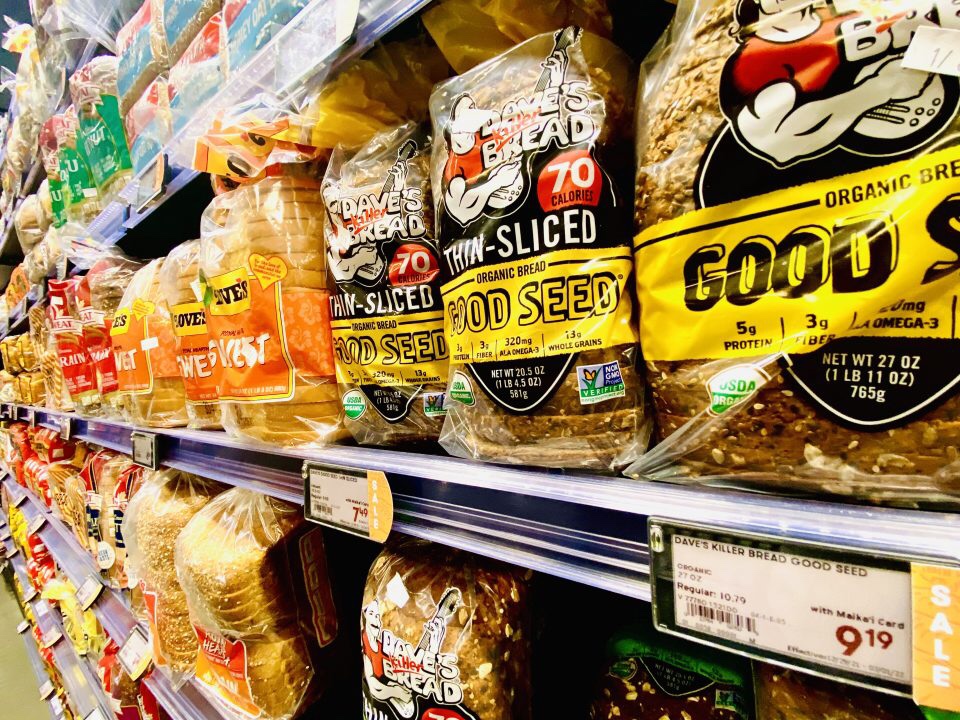
Family of 4 need $104,000! Hawaii minimum wage is $10/hour. Family of 4 including their 2 teenage children all working full won’t earned enough to survive in Hawaii, how sad?
How much does a family of four need to pay for basic essentials? The minimum income needed has risen to $104,000 per year, according to a report released yesterday.
The situation may be even worse today — that report was based on 2021 data. But even so, the cost of living jumped 26% from 2019 to 2021, and marks an 18% jump in the basic survival budget from families.




 Business Blog