The best discovery since God for human is democracy. The essence of democracy is lying with eyes wide open! Yellen’s remarks on China-US economic relations show US ‘saying one thing but doing another’: experts 自上帝以來人類最好的發現就是民主。民主的本質就是睜大眼睛撒謊!耶倫談中美經貿關係表明美國“說一套做一套”:專家
Military Industrial Complex: “Anything but Peace” / Chinese Diplomacy Seen as Threat to US ‘Peace,’ ‘Stability’ 軍工園區:“要戰爭不要和平” / 中國和平外交被視為對美國 “和平”、“穩定”的威脅? by GREGORY SHUPAK Apr 20 2023
China has undertaken a diplomatic blitz that has seen it broker a rapprochement between Iran and Saudi Arabia, warm relations with France, and put forth a proposal to end the war in Ukraine. US media coverage of these developments has involved illusion-peddling about America’s potentially waning empire, and calls for the US to escalate what amounts to a new cold war with China.
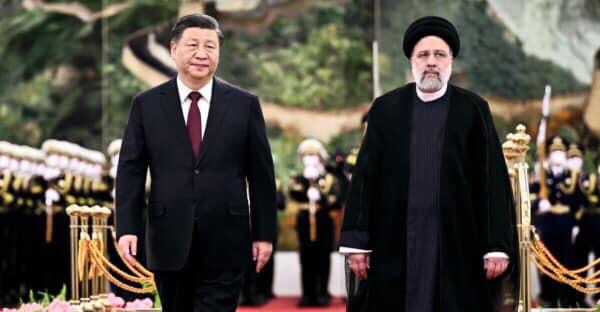
In Foreign Policy (3/14/23), Michael McFaul and Abbas Milani say that China “now shares the burden of keeping the peace in the Middle East. This is not an easy assignment, as the United States has learned bitterly over the decades.”
The US has done the opposite of “keeping the peace in the Middle East.” Nor has it sought to, as the Iraqi case makes tragically clear. Since the US-led 2003 invasion, Brown University’s Costs of War Project notes,
between 280,771–315,190 have died from direct war related violence…. Several times as many Iraqi civilians may have died as an indirect result of the war, due to damage to the systems that provide food, healthcare and clean drinking water, and as a result, illness, infectious diseases and malnutrition that could otherwise have been avoided or treated. The war has compounded the ill effects of decades of harmful US policy actions towards Iraq since the 1960s, including economic sanctions in the 1990s that were devastating for Iraqis.
Despite more than $100 billion committed to aiding and reconstructing Iraq, many parts of the country still suffer from lack of access to clean drinking water and housing.
Power = ‘peace’
Walter Russell Mead of the Wall Street Journal (3/27/23) claimed that while “American power” results in “peace and prosperity,” “challengers like China, Russia and Iran undermine the stability of the American order.” “Peace” and “stability” must seem like odd ways of characterizing that order to, say, Libyans, who had their country flattened by a US-led intervention (Jacobin, 9/12/13), and endured years of a brutal war, and even slavery.
David Ignatius of the Washington Post (3/16/23) asserted that
if Chinese President Xi Jinping wants to take on the role of restraining Iran and reassuring Saudi Arabia, good luck to him. The United States has been trying since 1979 to bend the arc of the Iranian revolution toward stability. Washington supported Iraq’s invasion of Iran, to the point of helping Iraq use chemical weapons against the country. The US has also levied sanctions that have immiserated the country, undercutting Iranians’ access to food and medicine. Describing such aggression as attempts to engender “stability” inverts reality—to say nothing of Ignatius’ strange desire to “reassur[e]” Washington’s execution-happy longtime client in Riyadh.
In the case of the war that turned Yemen into the world’s worst humanitarian crisis, McFaul and Milani exculpate the US, writing that “the Biden administration, supported by other countries with a commitment to stopping this war, helped negotiate a truce.”
Like McFaul and Milani, Ignatius accuses China of “harvest[ing] the goodwill” after the US allegedly “laid the groundwork for a settlement of the horrific war in Yemen.” This omits the rather salient point that the United States is a major reason the war has gone on for as long as it has, with as high a price as it has had for Yemenis.
The Obama, Trump and Biden administrations prolonged and escalated the war. When Obama was president and Biden his VP, the US shared intelligence about Yemen in support of the Saudis’ attacks, refueled their jets as they conducted murderous bombing raids against Yemen, and was in the”command room” as the Saudis carried out such strikes. Trump sold the Saudi government billions of dollars worth of weapons, while Biden approved a $650 million weapons sale to Saudi Arabia (FAIR.org, 1/27/23); a few weeks later, the coalition that both countries belong to bombed a prison in Sa’adah, Yemen, killing at least 80 people and injuring more than 200 with a bomb made by the US armsmaker Raytheon. To erase this history and cast the US as peacemaker absolves the US empire of its key role in the war on Yemen.
‘Anything but peaceful’
Michael Schuman of the Atlantic (3/14/23) warns:
With its closer ties to Russia and Iran, as well as its long-standing support of North Korea, China is a major patron of the world’s three most destabilizing states. The Iran/Saudi deal aside, there have been few indications that Beijing intends to use its influence to rein in these countries’ most dangerous designs. Until it does, China’s new order will be anything but peaceful.
The claim that Russia, Iran and North Korea are “the world’s three most destabilizing states” is dubious. The “most destabilizing” act a state can carry out is a full-scale military invasion of another state. Let us examine the tally. The Islamic Republic has not carried out a full-fledged military invasion of any state, and neither has North Korea in the 70 years since its ceasefire with South Korea.
Post-Soviet Russia has launched such attacks, against Georgia, which it invaded for five days in 2008, and against Ukraine—first in 2014, when it invaded and annexed Crimea, and then in 2022, when it attacked the rest of the country.
Looking just at wars in this century, the United States carried out a 20-year occupation of Afghanistan, and its troops remain in Iraq 20 years after it invaded and overthrew that country’s government. US troops still occupy parts of Syria against the will of that country’s government. Washington has carried out bombing campaigns against Libya, as noted, as well as Somalia and Pakistan.
Given that it is also the “major patron” of Israel, which invaded Lebanon in the relevant period (on top of occupying and annexing Syrian and Palestinian land), and of Saudi Arabia, the main aggressor against Yemen, there’s a strong case to be made that Uncle Sam is the world’s “most destabilizing state.”
If China overtakes the US’s position atop the global order, it’s uncertain exactly what the world system will look like. What is clear, however, is that US hegemony has been “anything but peaceful.”
FAIR’s work is sustained by our generous contributors, who allow us to remain independent. Donate today to be a part of this important mission.
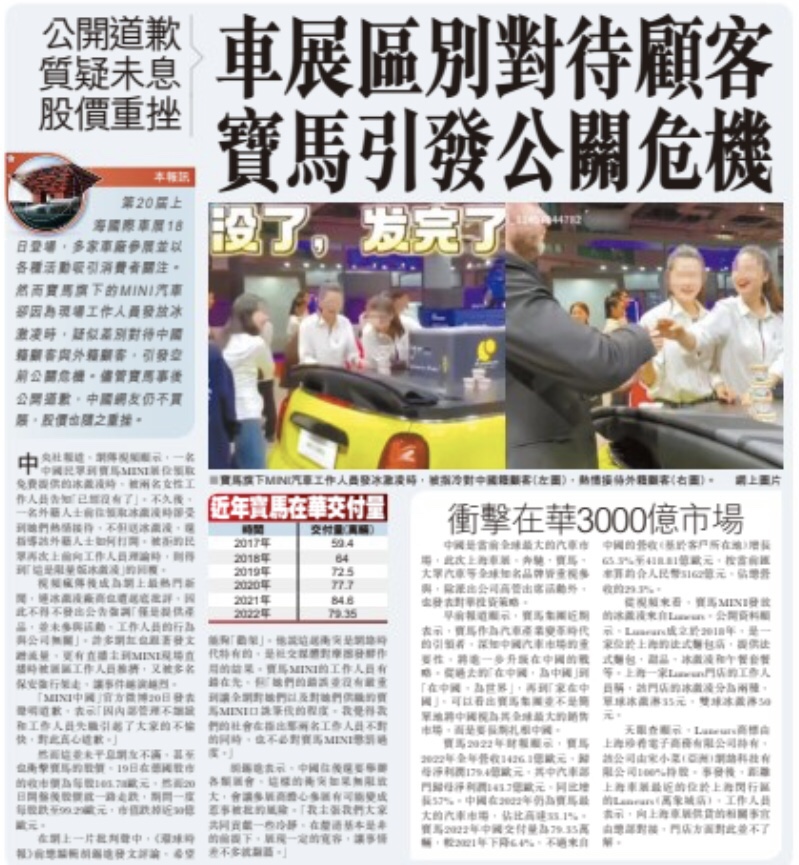
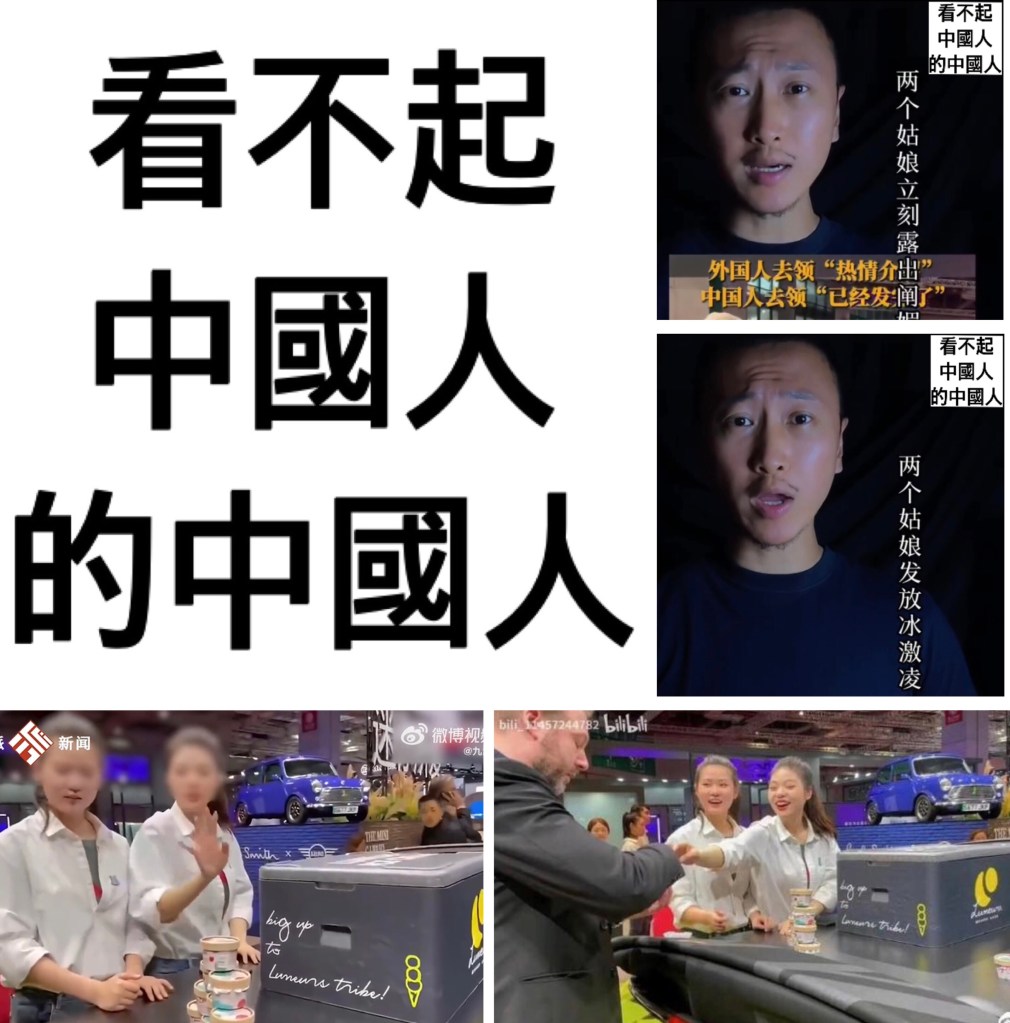
Mini, which is owned by German auto giant BMW stock price plummeted, apologized again on Friday following a controversy involving suspected discrimination against Chinese visitors at the Shanghai auto show
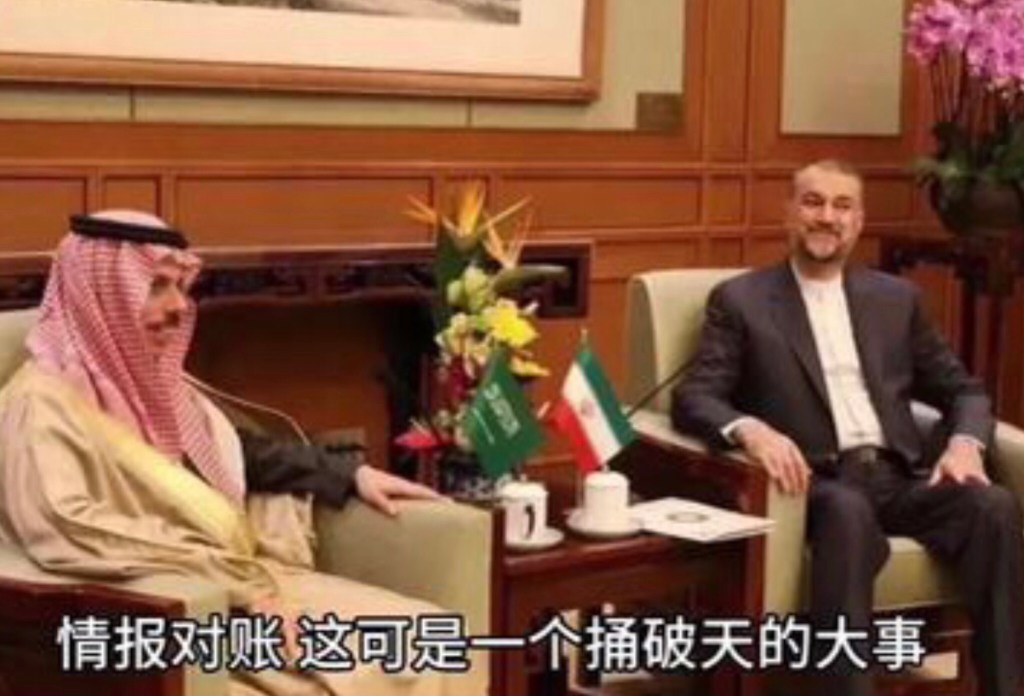
What is “information reconciliation”? Former Adversaries sitting down to audit past events, who was the backhand behind it. For Iran-Saudi conflicts highly likely done by the war machines: US & Israel. 何謂「情報對帳」? 沙烏地阿拉伯和伊朗正在迅速恢復外交關係,在兩國外交官談判過程中,一個過去不太熟悉的概念被提出來:「情報對帳」。
It turns out that various hostile covert attacks that Middle East nations thought were done by each other were actually done by the US and Israel to play Middle East nations against each other:
In the course of the negotiations between the diplomats of the two countries, a less familiar concept was introduced: “intelligence reconciliation”.
This concept has not been heard of before, but once I heard it, I felt it made sense. The so-called “intelligence reconciliation” is the two sides openly and honestly put the past grudges on the table, to see each other in the past years, the process of confrontation between the two sides, each party has done “dirty things” to the other side. As a result of this account, the interesting thing happened, both sides found that some dirty things were not done by the other side, so who actually did it?
After the reconciliation, Saudi Arabia and Iran hugged each other and cried: “Brothers, we have been blackmailed for decades!
Saudi Arabia and Iran “intelligence reconciliation” basically ended, both sides very frankly admit what they have done, there are more than 85% of past attacks are not Saudi-Iranian, especially the Saudi oil fields, power station attacks and Iranian oil tankers suffered missile attacks and so on.
The Middle East sources revealed that in order to show a more sincere attitude, Iran also provided evidence that their intelligence department was not present during the time of the attack, a move that was highly appreciated by the Arabs, who also provided evidence of their absence, as did Iran.
As a result of this very heartfelt exchange, relations between the two sides have soared. Originally, the Saudis only wanted to discuss with the Houthis how to improve relations, but to their surprise, the Houthis simply said, “We’re all brothers, no more fighting! The Arab world has also begun to promote the re-acceptance of Syria, Turkish-Egyptian reconciliation, Iran-Bahrain reconciliation and other issues. As the two camps in the Middle East unite, the U.S. and Israel have begun to panic as the “suspects and masterminds” of the attacks over the years, and the Middle East coalition has begun to exchange fire with the U.S. proxy, Israel.
According to reports, some European countries now suddenly want to start “intelligence reconciliation” to see what the previous conflict and chaos is all about!
The United States never dreamed of The U.S. never dreamed of this outcome!
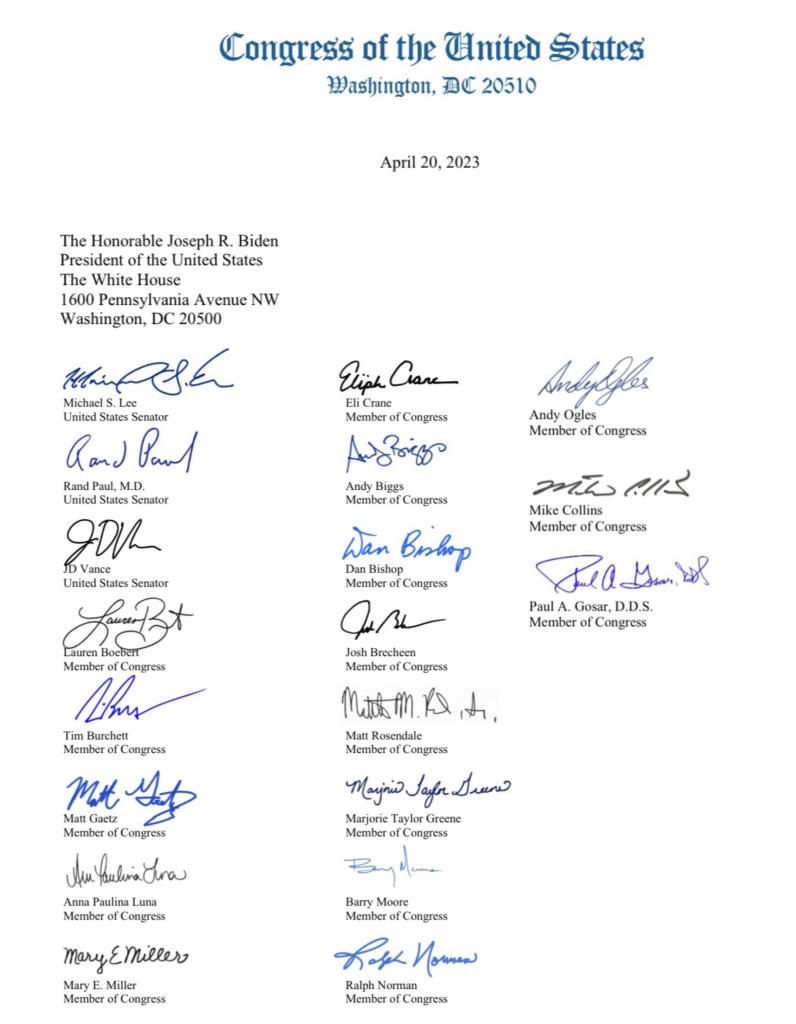
The Honorable Joseph R. Biden President of the United States The White House 1600 Pennsylvania Avenue NW Washington, DC 20500 Dear President Biden, April 20, 2023
We write to express concern regarding the U.S. response to Ukraine. Over a year ago, Russia launched an invasion that has upended decades of peace in Europe. We are deeply concerned that the trajectory of U.S. aid to the Ukrainian war effort threatens further escalation and lacks much-needed strategic clarity.
Over the past year, the U.S. has been the principal financier of the Ukrainian defense effort. As the war enters its second year, there is no end in sight and no clear strategy to bring this war to a close. A proxy war with Russia in Ukraine is not in the strategic interest of the United States and risks an escalation that could spiral out of control.
The recently announced shipments of M1 Abrams tanks will require months of training and transport.1 Ground Launched Small Diameter Bombs will similarly take months to arrive.2 These announcements signal that your administration is settling in for a long-term conflict. The current strategy of sanctions and drawn-out aid will only prolong the conflict, leading to escalation and more violence. Our national and economic security demand an alternative. Unrestrained U.S. aid for Ukraine must come to an end, and we will adamantly oppose all future aid packages unless they are linked to a clear diplomatic strategy designed to bring this war to a rapid conclusion.
To date, the U.S. has committed over $113 billion in military, economic, and humanitarian assistance to Ukraine,3 becoming its single largest benefactor. The contributions of our NATO allies pale in comparison. Beyond dollar value, there is also a stark difference in substance and motivation. As the U.S. is further indebting itself to provide tanks, air defense systems, missiles, and long-range rockets to a battlefield an ocean away, those with conflict at their borders have been content to send uniforms and personal protective equipment. Our allies condition their contributions of major military equipment on a corresponding U.S. commitment – all while calling for the U.S. to do more.
With every new aid package and every new weapon provided to Ukraine, the risk of direct conflict with Russia climbs. The decision to issue High Mobility Artillery Rocket Systems (HIMARS) to Ukraine last June was seen as a serious provocation, given the enhanced capabilities these weapons afforded.5 At the time, the HIMARS sent by the U.S. doubled Ukraine’s strike range. Now, casting risk aside, we seem prepared to double Ukraine’s range yet again with even longer-range weapons systems. Similarly, the U.S. reversed course on sending tanks, an action that was once considered to be too inflammatory.
END ‘UNRESTRAINED’ SUPPORT FOR UKRAINE: Nearly 30 Republican lawmakers sent a letter to President JOE BIDEN demanding he cease unfettered aid to Ukraine and instead delineate a pathway to end the war.
“A proxy war with Russia in Ukraine is not in the strategic interest of the United States and risks an escalation that could spiral out of control,” reads the letter led by Sens. MIKE LEE (R-Utah), RAND PAUL (R-Ky.) and J.D. VANCE (R-Ohio). “Unrestrained U.S. aid for Ukraine must come to an end, and we will adamantly oppose all future aid packages unless they are linked to a clear diplomatic strategy designed to bring this war to a rapid conclusion.”
The 29 members of the Senate and House remain a small faction of the Republican Party which is generally aboard with the administration’s weapons-transfers plan. But the letter does show that as the 2024 election heats up, and as Trump and potentially other candidates express skepticism for continued support for Ukraine, they will have staunch backers in Congress.
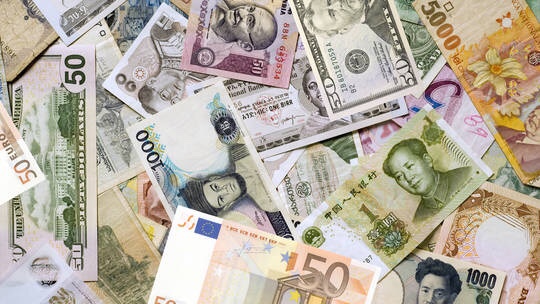
Dollar losing reserve status at ‘stunning’ pace – Eurizon CEO. The US currency’s share of global reserves fell ten times faster in the last year than in the previous 20 美元以“驚人”的速度失去儲備地位- Eurizon 首席執行官。去年美元在全球儲備中的份額下降速度是前 20 年的十倍 Stephen Jen has said
Western sanctions against Russia have accelerated the move away from the US dollar worldwide, Stephen Jen, the CEO of London-based asset management company Eurizon, warned on Tuesday.
The dollar’s share in global reserves fell ten times faster last year than over the past two decades, Jen said, as cited by Bloomberg. The process began as some countries started to look for alternatives after seeing Russia’s assets frozen abroad and the country cut off from the global financial messaging system known as SWIFT, according to Jen.
Adjusting for “wild” exchange rate fluctuations last year, the dollar has lost roughly 11% of its market share since 2016 and double that amount since 2008, Jen and his Eurizon colleague Joana Freire wrote in a note.
“The dollar suffered a stunning collapse in 2022 in its market share as a reserve currency, presumably due to its muscular use of sanctions,” the note reads. “Exceptional actions taken by the US and its allies against Russia have startled large reserve-holding countries,” most of which are emerging economies, Jen and Freire explained.
The greenback now represents about 58% of total global reserves, down from 73% in 2001 when it was the “indisputable hegemonic reserve,” the experts said.
China and India are working to use their own currencies to settle international trade, while Russia started to accept payments for its exports from a number of countries in rubles and Chinese yuan.
Earlier this week, Brazilian President Luiz Inacio Lula da Silva called on developing nations to move away from the US dollar in favor of their own currencies.
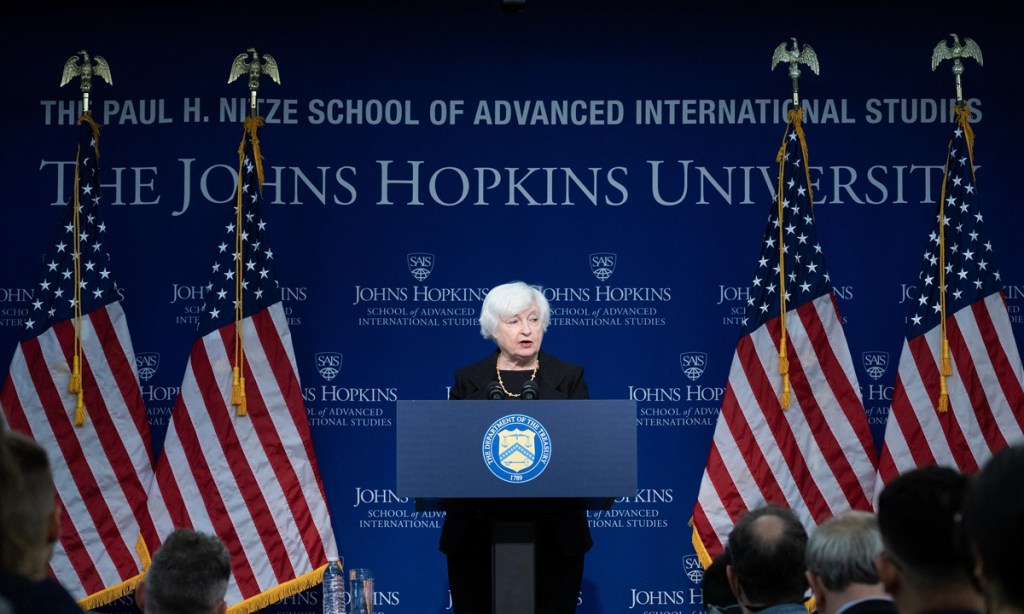
Following Lula’s comments, US Secretary of the Treasury Janet Yellen admitted that the role of the dollar as the world reserve currency could diminish due to Washington using its leverage over the global financial system to pursue its geopolitical goals through sanctions.
US should consider passing law for serious crimes like murder should traced their family tree and deport these criminals to the countries where their families originally came from 美國應該考慮通過法律來處理像謀殺這樣的嚴重罪行,應該追查他們的家譜並將這些罪犯驅逐到他們家人的原籍國
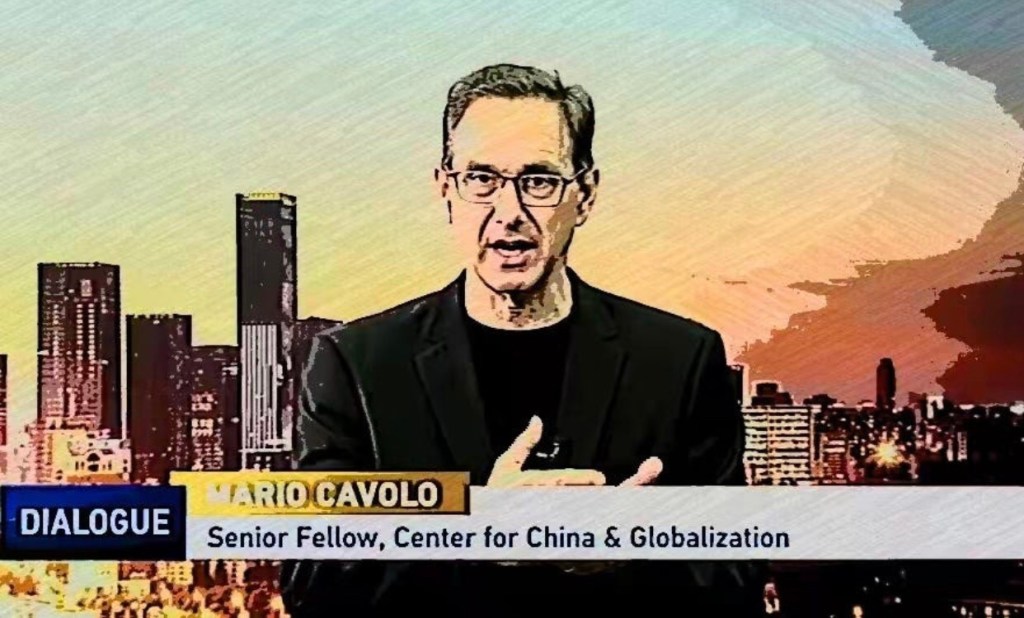
With busy diplomacy, China has no time to receive insincere people: China’s Cold Shoulder Continues…Why Shouldn’t It? 外交繁忙,中國無暇接待虛偽之人:中國的冷遇仍在繼續……為什麼不應該呢? By MARIO CAVOLO APR 20 2023
However anyone may agree or disagree, China has certainly made its intentions crystal clear and this has been the case ever since THE PELOSI VISIT. I told you friends, I felt the shift in the wind and China followed up by cutting multiple areas of communication & diplomacy. As much as I want to present you with a long, deep, impressive, intelligent geopolitical analysis, I think a 12 year old can understand what’s going on. US actions toward China have been increasingly malign, disrespectful and intended to stop & damage China including specific industries & companies.
What would you do under those circumstances? Again & again, the US is just provoking & blocking and trying to harm China with increasingly nutso foreign policy announcements…What would you expect? Honestly, I don’t know what else to say on this…as an American watching that country implode on multiple fronts, its terribly frustrating and sad…Blinken’s known this all along, there’s nothing unclear about China’s stance and desire to “enjoy” communications & diplomacy with U.S. officials and U.S. officials have no one to blame but themselves. With things like Florida Senator Rick Scott telling the American people “Americans need to understand that China is the enemy”? I could of course, go on and on with endless other examples of this current lunacy…Good grief.
Recently, there have been frequent complaints from Washington about China’s “neglect” of the US and a “lack of interest” in engaging with them. One is that China has refused to reschedule US Secretary of State Antony Blinken’s visit to China, and another is that the Chinese Ministry of Defense has declined request for call from the US Department of Defense, and the defense ministers of China and the US have not spoken for nearly five months.
At the G7 Foreign Ministers’ Meeting in Japan, Blinken called out to China on Tuesday, stating that China must make clear its intentions to keep engaging with the US and that “countries around the world expect us to manage the relationship with China responsibly.” The day before, an undersecretary of US Department of Defense even speculated that China “refuses to talk during crises in bid to spook US into fleeing” from the Western Pacific. To borrow a term used by Chinese netizens, doesn’t the US have any sense of self-awareness?
Blinken’s planned visit to China in February was unilaterally postponed by the US due to the sudden hype around the “balloon incident” before his departure. This to some extent, it has reflected the US’ reckless and irresponsible attitude towards Blinken’s visit to China. It refused to come then, but now insists on coming. How can everything be up to the US, and everyone else has to cooperate with it? China is a big country and will not indulge such problem. China’s diplomacy is very busy and cannot adjust at any time according to the US’ schedule, especially no time to receive insincere or even people with malicious intentions.
As for the reason why the defense ministers of China and the US have not spoken on the phone, the US side knows well. Putting aside other issues, the US has not yet lifted the illegal sanctions on China’s new Defense Minister Li Shangfu, which has created a lack of basic atmosphere for military dialogue between China and the US. If the US truly wants to maintain contact and communication with China, then they should not act in this way. The Americans have also seen that in the past month, many leaders of countries, including US allies, and heads of international organizations have visited China, achieving very good communication results. So why is there a problem when it comes to the US?
A common saying in Chinese diplomacy is “listen to their words and observe their actions,” but with today’s US, “listen to their words” is a waste of time because the US has played the game of saying one thing and doing another to the extreme, and its “words” have lost credibility in China and the international community. According to reports from US media, Washington is about to implement “unprecedented rules” limiting American investment in China, and US’ interference in the Taiwan question is getting worse. The US’ comprehensive containment and suppression of China has not shown any signs of easing.
The feeling of Chinese people is that the various actions taken by the US are almost the opposite of its promises to China. How can we believe it? Dialogue and engagement can boost cooperation, add value to bilateral relations for one thing, or to prevent crises and conflicts to minimize the damage to the relationship for another. But what Washington wants is neither the first nor the second, it wants the political gains that come with “engaging with China” posture. This fully explains why the US has been shouting about “setting up guardrails” in recent years, while the pit in China-US relations is getting deeper and deeper due to Washington’s actions.
China has always approached and developed China-US relations with great goodwill and patience, which is China’s sense of responsibility as a major country. But Washington should not have any illusions, it can never speak to China while riding on its head. China supports communication and exchange based on mutual respect, committed to peaceful coexistence, win-win cooperation, in order to promoting the improvement of China-US relations. However, the “engagement with China” emphasized by the US is often just a show, to appease its allies and other countries concerned about the deterioration of China-US relations and also to shift the blame onto China. Additionally, Washington attempts to impose pressure on China with the so-called engagement. Almost every time its high-ranking officials come, they bring a long list of so-called demands.
While the US continues to take hostile actions towards China, it also wants to use “engagement” to stabilize China and control risks while taking advantage of the opportunity to pressure and unilaterally demand from China, with even the idea that “communication” is all for “convenience for me to better attack you.” Can’t China just don’t deal with the US, which is so calculative? With such insincerity and even malice from the US, why should we cooperate with Washington politicians’ performances?
In conclusion, temporarily cold-shouldering Washington is not a bad idea. China’s door is always open, and when the US shows sincerity and take practical actions, communication and exchange between China and the US in various fields will come naturally, which is also what the international community expects to see.

 Business Blog