Video: US is no longer a superpower, her days are numbered 美超級強權時代 結束了… 天下群雄並起
https://youtu.be/KO3Q0KNEPwk
https://m.facebook.com/story.php?story_fbid=928741691682490&id=100036400039778&mibextid=qC1gEa
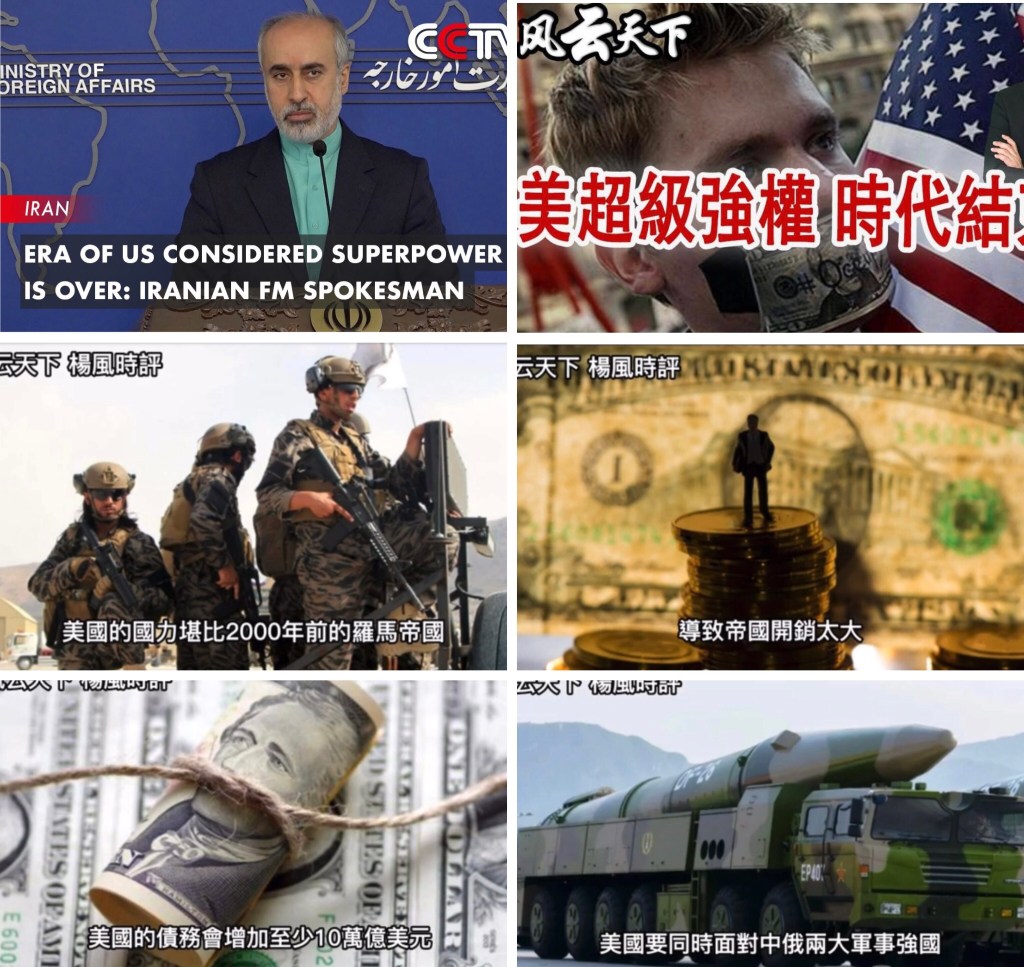
Video: US is no longer a superpower, her days are numbered 美超級強權時代 結束了… 天下群雄並起
https://youtu.be/KO3Q0KNEPwk
https://m.facebook.com/story.php?story_fbid=928741691682490&id=100036400039778&mibextid=qC1gEa
Video: Western Gov’t State Sponsored Mouthpiece Media got caught lying again. American felt safer in HK & China than US. 西方政府國家贊助的喉舌媒體再次撒謊。美國人覺得在香港和中國比在美國更安全
https://rumble.com/v2jb5ls-media-got-caught-lying-again.html
https://m.facebook.com/story.php?story_fbid=928707341685925&id=100036400039778&mibextid=qC1gEa
Social media’s rise to become the main source of news has had one remarkable effect: when corporate media takes an unfair line, a host of ordinary voices can rise to set the record straight.
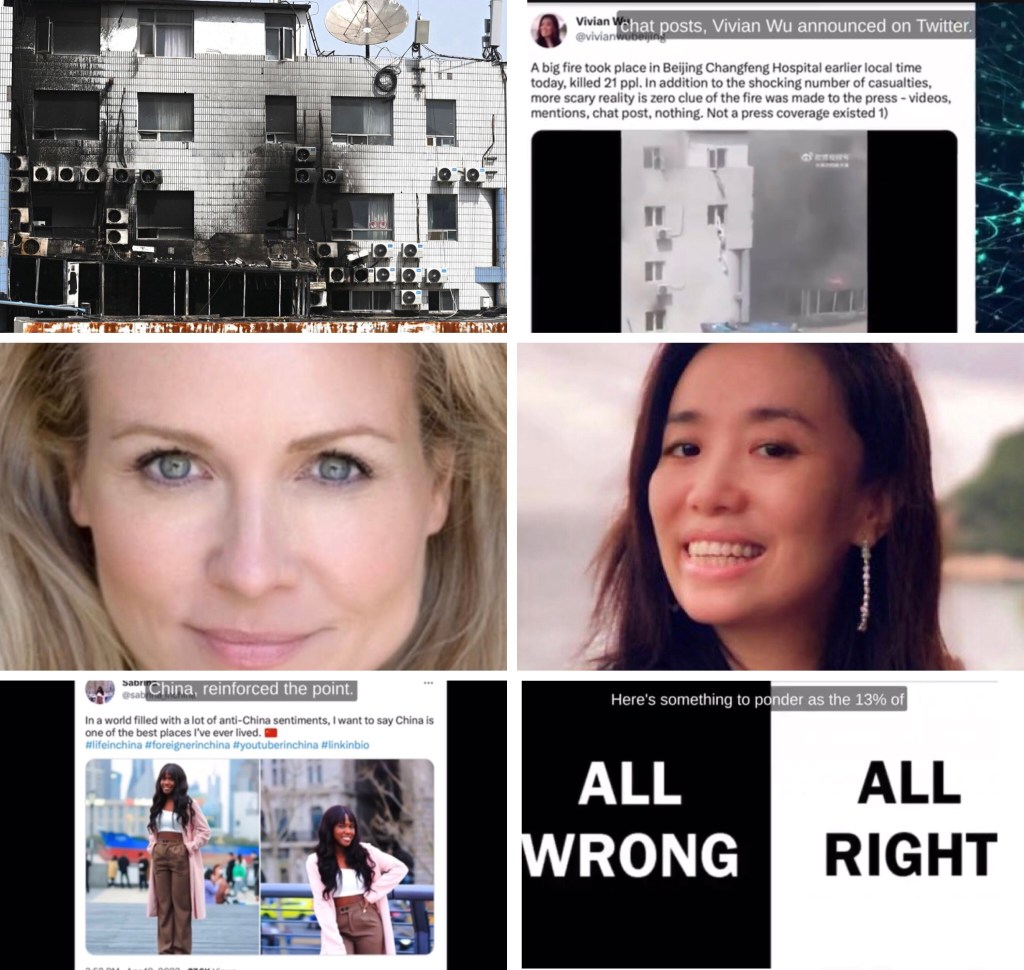
Two examples from today: Accusations made by a former BBC reporter of a news black-out over a tragic fire in Beijing were unfair, and the public set the record straight. The story may not have made headlines as quickly as it would in the west, but it was well covered, and accurately so.
Also today: An actress who used to live in Hong Kong has gone to the US and is shocked by the lack of safety there. Ines Laimins and others aren’t fooled about who is stirring up trouble for Taiwan.
社交媒體崛起成為新聞的主要來源產生了一個顯著的影響:當企業媒體採取不公平的立場時,許多普通人的聲音可以站出來澄清事實。
今天的兩個例子:BBC 前記者指責北京一場慘烈的火災導致新聞中斷是不公平的,公眾正視事實。這個故事可能沒有像在西方那樣迅速成為頭條新聞,但它得到了很好的報導,而且準確無誤。
同樣在今天:一位曾經住在香港的女演員去了美國,對那裡缺乏安全感感到震驚。 Ines Laimins 和其他人並沒有被誰在給台灣挑起事端上當.
LA Times: U.S.-China tensions are feeding a new wave of anti-Asian hate. 洛杉磯時報:美中緊張局勢正在助長新一輪的反亞裔仇恨浪潮 By Russell Jiang, April 17 2023
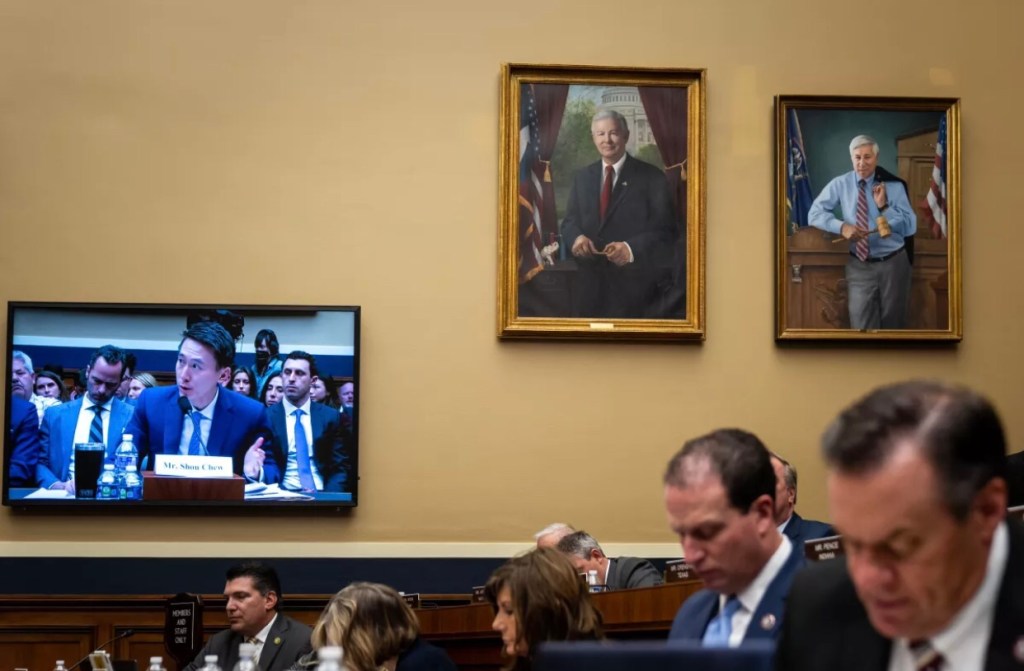
Two portraits hang on a wall next to a screen displaying attendees at a hearing, with people seated in front of the screen
During a congressional hearing to question TikTok Chief Executive Shou Zi Chew, lawmakers noted that concerns over the Chinese-owned app are a rare bipartisan issue — reflecting consensus that China is a threat.
The far-right website the Daily Caller recently smeared Asian American business leaders in L.A. as stooges of the People’s Republic of China. This portrayal — based on prejudice, not evidence — points to a trend we’re likely to only see expand. Amid widening U.S.-China tensions, American extremists and officials alike are stoking fears that will start another surge of racism toward Chinese people and others of Asian descent.
U.S. government leaders have been clear in their messaging: China, and anyone associated with it, may be a security threat. Lawmakers excoriated Shou Zi Chew, the Singaporean chief executive of the Chinese-owned social media platform TikTok, during last month’s congressional hearings, at times treating him and the app as a proxy for the Chinese government. During a university talk this month, FBI Director Christopher A. Wray again declared China the greatest “long-term” threat to the United States. “The current Chinese regime will stop at nothing to steal what they can’t create and silence the messages they don’t want to hear,” Wray claimed, “all in an effort to surpass us as a global superpower.” Others in the Biden administration, such as Defense Secretary Lloyd J. Austin III, have repeated this message.
SIMI VALLEY, CA – APRIL 05: Former Executive Director of the Ronald Reagan Presidential Foundation and Institute John Heubusch, left, receives Taiwan President Tsai Ing-wen, flanked by House Speaker Kevin McCarthy, 2nd from right, and David Trulio, President and CEO of Ronald Reagan Presidential Foundation and Institute, as she arrives at Ronald Reagan Presidential Library on Wednesday, April 5, 2023 in Simi Valley, CA. (Irfan Khan / Los Angeles Times)
CALIFORNIA
As the U.S. and China clash over Taiwan, Taiwanese Americans face an anxious new normal
Public officials have the right to — and should — critique other nations’ policies. Wray also did well to qualify his statement by saying: “To be clear, that threat stems from the Chinese government, not the Chinese people themselves.” But examples from the past and present tell us that this pattern of widely invoking the China threat has dangerous consequences for Americans of Asian descent, perpetuating long-standing stereotypes of Chinese and other Asian communities as foreign, dangerous and unscrupulous — an existential threat to the United States.
This message is coming after a couple of years of racist scapegoating of Asian Americans for COVID-19, and at a time when Americans’ view of China is the lowest it’s been in at least a decade. In 2022, 8 in 10 Americans polled by the Pew Research Center held an unfavorable opinion of China. That opinion can translate into more suspicion of Chinese individuals. A recent study by Princeton University researchers found that Americans who perceived China as a threat were also more likely to stereotype Chinese people as untrustworthy and immoral. Further, it found that those in Republican counties are more likely to homogenize East Asians as one group and extend these negative traits to other Asians in the U.S. as well. A 2021 survey estimated that nearly 1 in 5 Asian Americans — almost 5 million people — experienced a racist incident in the last year.
Yet despite these consequences, U.S. officials have long stoked xenophobia to serve a political agenda. In the 19th century, politicians blamed the American recession on Chinese migrants, who they charged stole white workers’ jobs and brought diseases to the West. By claiming that Chinese immigrants simply could not assimilate, the Workingmen’s Party riled up a voter base and swept into office.
Lawmakers then passed the Chinese Exclusion Act of 1882 and renewed it in 1892, institutionalizing discrimination against Chinese and other Asian immigrants by categorizing them as “aliens ineligible for citizenship” and sanctioning violence to expel them. In 1885 and 1886, mobs employed force to displace en masse 168 Chinese communities along the West Coast.
The animus against Chinese people is repeating in proposed policies today. Prompted by a Chinese developer’s proposed land purchase for a wind farm in Texas, the state banned infrastructure projects from entities with direct ties to China, and Gov. Greg Abbott endorsed expanding the ban to outlaw any property ownership by Chinese residents who aren’t U.S. citizens. (State lawmakers softened the bill, which would also apply to those from North Korea, Iran and Russia.) As of February, at least 11 state legislatures were considering legislation to limit Chinese landownership. In the broader push to ban books by minority authors nationwide, policymakers have sought to ban titles by Chinese American authors Kelly Yang, Malinda Lo and Laurence Yep (including “Dragonwings,” Yep’s Newbery honoree novel for children).
Ultimately, such hysteria is a measure of the American psyche. Today’s version of it speaks to Americans’ fears over our economic, moral and political standing in the world. Blaming other nations — and our own minority communities — for American woes is easier than reforming our faltering political and other systems.
If we truly believe in democratic ideals and values, let’s honor them. Rather than attacking groups to rile up voting blocs and stir up culture wars, we should safeguard our civil liberties and promote racial unity. Asian Americans, like everyone in the U.S., should be considered innocent until proved guilty, not assumed to be seditious or targeted as the result of others’ anxieties. The irony is that such fears stem from concerns about American weakness — but the resulting racism weakens our democracy.
Russell Jeung is a professor of Asian American studies at San Francisco State University. He is writing a book on anti-Asian racism and the Asian American movement for racial justice.
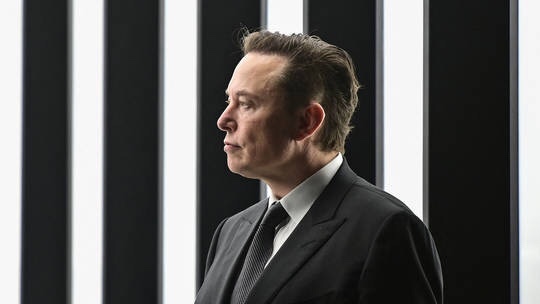
Looks like Elon Musk reenforced my prediction: US debt default a matter of time – Musk. The billionaire’s warning comes as the White House and Republicans in Congress are at an impasse over raising the debt ceiling 看起來馬斯克強化了我的預測:美國債務違約是時間問題 – 馬斯克。這位億萬富翁發出警告之際,白宮和國會的共和黨人在提高債務上限問題上陷入僵局
Tesla and Twitter chief executive Elon Musk, who has been calling for US government spending reductions, said on Wednesday that a debt default was just a question of time.
“Given Federal expenditures, it is a matter of when, not if, we default,” Musk wrote responding to a Twitter post by the White House that the Republican plan may be to default on US debt.
Earlier this week, US House of Representatives Speaker Kevin McCarthy warned in a speech at the New York Stock Exchange that the US debt is unsustainable and poses a threat to the nation. He said that Republicans would not allow the country to default on its debt, taking a jab at President Biden for refusing to negotiate on cost-cutting measures.
McCarthy added that the House of Representatives would soon vote on a bill to raise the debt ceiling through 2023.
US President Joe Biden urged the Republicans to first release their proposed budget, with the White House stressing it would not negotiate the debt ceiling until the GOP releases its counterproposal to the administration’s budget plan, which was put out in March.
White House Press Secretary Karine Jean-Pierre alleged late last month that the Republicans were threatening to wreak havoc on US economy, saying that it was time for the GOP to “stop playing games” and agree to pass a “clean” debt ceiling bill.
In January, the Treasury Department notified Congress of the start of “extraordinary measures” until June 5 in order to continue paying the government’s obligations as the US has reached its $31.4 trillion debt limit. Treasury Secretary Janet Yellen then called on lawmakers to “act promptly” to increase borrowing limits in order to avoid a default.
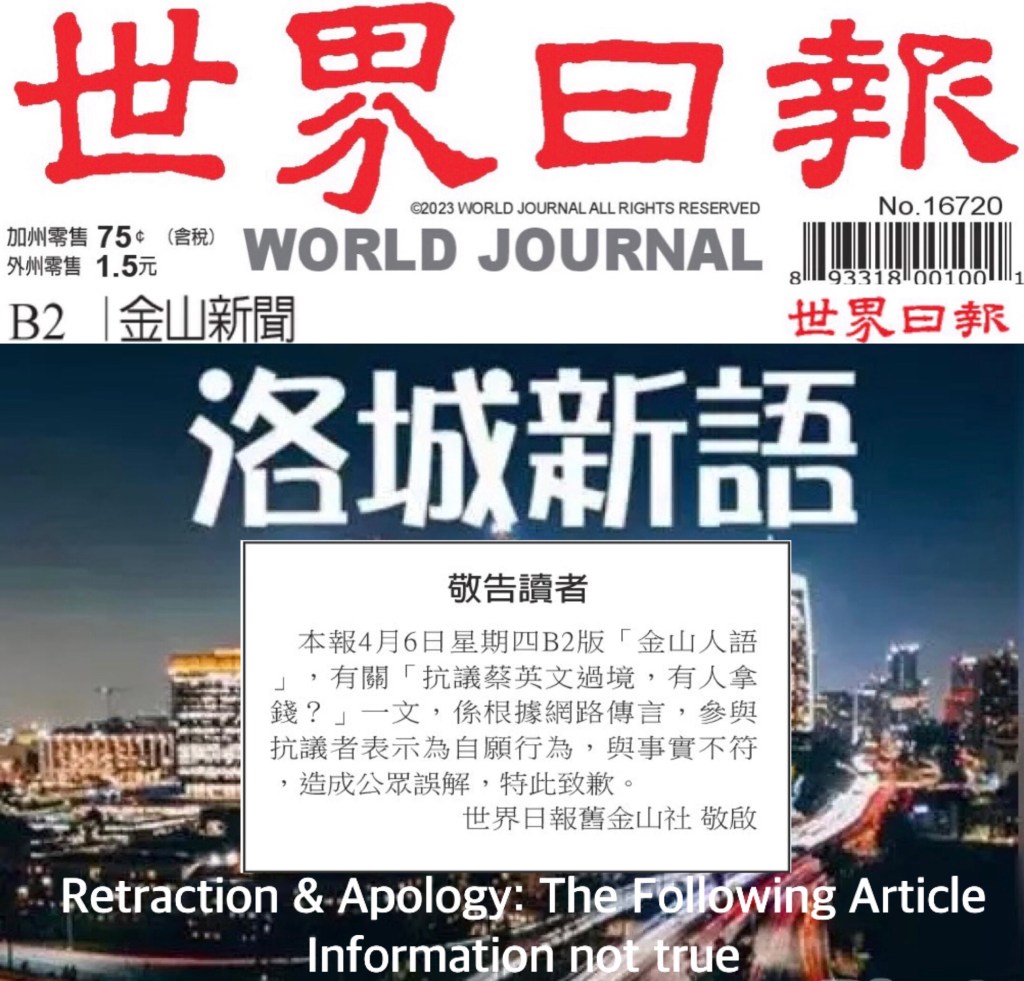
World Journal Newspaper Published Retraction and Apology on Apr 19 2023 for Misleading and Untrue Article on Apr 6 2023 Section B2 about Overseas Chinese received US$400 each to protest Against Taiwan Provincial Government Tsai Ing-Wen visit to US 世界期刊報紙於 2023 年 4 月 19 日就 2023 年 4 月 6 日 B2 關於華僑每人收400美元抗議台灣省長蔡英文訪美的誤導性和不實文章發表撤稿和道歉
“洛城新語/抗議蔡英文過境 有人拿錢?世界日報洛城新語 2023-04-06
中華民國總統蔡英文過境美國,5日在雷根圖書館與美國眾院議長麥卡錫等兩黨18位眾議員會談,華洋媒體逾150家採訪。網上傳言,中國駐美使領館動員大陸僑民抗議,紐約每人發200美元補助後,嫌聲勢不夠浩大,洛杉磯因此「加碼」,每人發400美元,希望能召集超過1000名群眾,抗議蔡英文來訪。
江澤民20多年前訪美,民眾夾道揮舞五星旗,每人發100美元車馬費,從那時起,歡迎領導人變成獨門「生意」。當時通知的發錢簡訊在網上流傳曝光,證據確鑿,大陸僑社和外界都知道「行情」。
事過20餘年,現在中方發車馬費通知不再廣為周知,可能僅極少數愛國僑領才收到,更可能改用口頭聯繫、分頭召集,避免行情被曝光,中共面子掛不住。而隨著通貨膨脹,如果召集1000人、每人400美元,總共得花40萬美元,對北京來說不是大數目,只要能給蔡英文難堪,中方或許自認值得。
不知北京當局是否想過,這錢花出去後,換來的不是蔡英文或中華民國「沒面子」,反而會增加台灣民眾同仇敵愾情緒,或中共根本在為民進黨選舉造勢,讓民眾看清北京所謂友台、對台各種溫情政策都是假的,對中共更不信任。
因為無論挺綠或挺藍,台灣2300萬民眾大概很少人會為民選總統訪美,被外人抗議而高興,因為蔡英文代表台灣,被尊重是起碼的尊嚴和禮儀。14億人口的大國、號稱要當世界領袖了,怎麼還這樣不自信?總統過境就實現台獨了,領導人不訪美,兩岸就能實現統一?2300萬人或國際社會都不這麼想,何時北京能展現自信,讓台灣也有起碼的國際空間?
主流媒體報導民眾抗議,必將強化大陸移民「愛中國、愛中共」形象。2020年新冠疫情爆發,全美各地華裔常遇被謾罵、侮辱或歧視,這400美元可能再把華人形象毀滅一次,強化主流社會「華人不愛美國、擁抱中共」印象,會認為中國移民不值得信任,不知給錢的、收錢的人怎麼看?
蓋洛普3月初最新民調,美國人對中國好感度直線下滑,只有15%受訪者對中國有好感,高達八成對中國(中共)持負面看法,而視中國為敵人、甚至頭號敵人的美國人直線增加至50%,72%共和黨人更視中國為主要敵人。對台灣持好感的美國人則大幅上升,達77%,是歷史最高。
拜登政府承繼川普政府遏制中國政策,麥卡錫這時不訪台灣,改與蔡英文在加州會面,美國已算「節制」,北京其實已找到下台階。但此時北京仍派海巡船到台灣海峽中北部,啟動「聯合巡航巡查專項行動」,不派海軍而改派海巡船,應算是「降級」威嚇台灣、「回報」美國了。
這些客觀形勢下,海外華人如為拿錢而抗議蔡英文,400美元不賺白不賺,既是表態,也賺外快。只是跟隨中共唱和,傷害的是華裔移民整體形象,對自己子女日後在美國就學、就業發展等,恐都有負面影響,未必明智。”
The reason why Rosaryhill School HK is not the same anymore, is because we buried the ones who used to keep RHS family together.

The reason why UH TIM School is not the same anymore, is because we buried the ones who used to keep TIM family together.
Leaks Spelling the End for Ukraine. Leaked U.S. intelligence documents have exposed Western disinformation about Ukraine winning the war. Now the heavy fighting moves to Washington, writes Joe Lauria. Apr 17 2023
A Washington Post headline last week was a bombshell for someone who has only been reading about the Ukraine war in The Washington Post and other Western media: “U.S. doubts Ukraine counteroffensive will yield big gains, leaked document says.”
The story admits that Western media audiences have been misled about the course of the war, that essentially what mainstream media has been reporting about Ukraine has been a pack of lies: namely that Ukraine is winning the war and is poised to launch an offensive that will lead to a final victory.
Instead, the second paragraph of the piece makes clear the leaked documents show the long-planned Ukrainian offensive will fail miserably — “a marked departure from the Biden administration’s public statements about the vitality of Ukraine’s military.”
In other words, U.S. officials have been lying about the state of the war to the public and to reporters who have faithfully reported their every word without a hint of skepticism.
The Post said, as if it’s a bad thing, that the leaks will likely “embolden critics who feel the United States and NATO should do more to push for a negotiated settlement to the conflict.”
That has begun to happen. Writing in the uber-Establishment Foreign Affairs, former State Department official Richard Haass and Charles Kupchan, a senior fellow at the Council on Foreign Relations, write that “it is difficult to feel sanguine about where the war is headed.”
In “The West Needs a New Strategy in Ukraine: A Plan for Getting From the Battlefield to the Negotiating Table,” they say:
“The best path forward is a sequenced two-pronged strategy aimed at first bolstering Ukraine’s military capability and then, when the fighting season winds down late this year, ushering Moscow and Kyiv from the battlefield to the negotiating table.”
The article does not mention the leaks, though it was published after the disclosures made clear that the Ukrainian offensive, intended to break through Russia’s land bridge to Crimea, would fail.
Filled with the usual talk about Ukraine having better “operational skill” than Russia, and that the war will end in a “stalemate,” the piece represents an emerging strategy in the West: namely that before negotiating, Ukraine needs to launch its offensive to gain back some territory, “imposing heavy losses on Russia, foreclosing Moscow’s military options, and increasing its willingness to contemplate a diplomatic settlement.”
But that is a tall order. Moscow would be unlikely to negotiate at the end of the Ukrainian offensive, particularly as the article admits the “Russian military’s numerical superiority” and that Ukraine is “facing growing constraints on both its own manpower and help from abroad.”
Moscow was ready to cut a deal with Kiev one month after Russia’s intervention but the West, with its strategy of lengthening the war to weaken Russia, quashed it. Why would Moscow accept a deal now when Ukraine is at its weakest and Russia is poised to make significant gains on the battlefield?
The Foreign Affairs piece admits, “This diplomatic gambit may well fail. Even if Russia and Ukraine continue to take significant losses, one or both of them may prefer to keep fighting.”
“Come the end of this fighting season,” the article says, “the United States and Europe will also have good reason to abandon their stated policy of supporting Ukraine for ‘as long as it takes,’ as U.S. President Joe Biden has put it.”
And what comes next? “NATO allies would start a strategic dialogue with Russia on arms control and the broader European security architecture.”
Incredibly this is what Russia was asking for before its February 2022 intervention and it was rebuffed by NATO and the U.S. Now a Foreign Affairs article is recommending it.
Is there no better sign that Ukraine has lost this war?
Going Ahead With the Offensive Anyway
The strategy of Ukraine going ahead with an offensive it knows will achieve little is Kiev’s last gasp — unless delusional neocons continue to outmaneuver the realists in Washington.
Most importantly for the West, the failure of this last-gasp attempt would serve as a way for it to escape the disaster it has created for itself: namely, the backfiring of the economic war on Russia; the failure of the information war in the non-West and ultimately defeat on the battlefield in its proxy war.
Already in February, French President Emmanuel Macron, who is also pushing this strategy, and German Chancellor Olaf Scholz, told Ukrainian President Volodymyr Zelenksy that the game was up. This news was brought to us by the establishment Wall Street Journal.
And then ten days later U.S. intelligence provided a story to The New York Times that a pro-Ukraine “group,” and possibly the Ukrainian government itself, was behind the destruction of the Nord Stream pipelines, a way of distancing the U.S. from Kiev as the exit ramp looms into sight.
Why Did the MSM Publish the Leaks?
Why did the Times, the Post and other establishment outlets publish stories about these leaks if they severely undermined their own credibility? There are three possibilities.
The first is simply competition. The Times or the Post may have gotten word that their rival had their hands on the leaks and did not want to be beat. There is almost nothing worse for an editor or reporter (in the petty world of journalism) then having to “match” a competitors’ story.
The second reason has to do with keeping up appearances. These leaks were eventually to come out somewhere and may not have been easily ignored. What would it have looked like if the big papers didn’t have it first?
More importantly, corporate journalism needs to keep up the pretense that it is actually doing journalism, i.e. that it will publish material from time to time that makes their governments look bad, and in this case, even themselves. They have to convince the public that they haven’t entirely given up on adversarial journalism if they are to survive.
It was the same when corporate outlets partnered with WikiLeaks in 2010 to publish leaks that exposed U.S. war crimes. But eventually the media turned on Assange and WikiLeaks, and fell into line with the state.
Why the Media Went After the Leaker
And that it is indeed what has happened here. After splashy stories about the leaks, the Times and the Post, teaming with Western intelligence-backed Bellingcat, turned their attention to finding the leaker, in what Elizabeth Vos in an article today on Consortium News argues makes corporate media the anti-WikiLeaks.
Rather than protecting the source of leaks, vital to the public, they hunted down the alleged leaker, 21-year old Air National Guardsman Jack Texiera, who was arrested by military-clad F.B.I. agents outside his Massachusetts home.
So what is the third reason why the major media published the leaks?
Very likely for the same reason they published the stories about Macron and Scholz telling Zelensky he’s lost the war, and that the Ukrainian government may have been responsible for the Nord Stream sabotage: to lay the ground work for the U.S. and its allies to pull the plug on their Ukrainian adventure by finally admitting Ukraine is losing.
Towards that end, there is speculation that Texiera did not act alone with the motive of impressing his teenage followers on the Discord chat forum, as the press has reported.
Former C.I.A. analyst Larry Johnson believes Texiera was set up, possibly by a senior officer. Johnson thinks this because among the documents Texiera allegedly leaked was one from the Central Intelligence Agency Operations Center, where Johnson used to work.
“CIA Operations Center produces two daily reports — one in the morning and one in the afternoon. It is not a ‘Community’ product, i.e., it is not distributed to the other intelligence agencies. It is an internal CIA document (of course, it is available to the Director of National Intelligence), ” Johnson wrote on his website Son of the New American Revolution.
Texiera was not in the C.I.A. so there is no way he’d have access to an Operations Center document, Johnson wrote. So how did he get his hands on it?
The implication is that Texiera may have been a patsy for someone within the realist wing of the U.S. military or intelligence establishment who opposes the neocons’ obsession with continuing the war at all costs.
The neocons are not going down without a fight. John Bolton, the former U.S. national security advisor and chief neocon, wrote a desperate piece in The Wall Street Journal last week, titled, “A New American Grand Strategy to Counter Russia and China.”
Bolton gets it that the world is changing, and not in America’s favor. So his response is not to reverse failed U.S. policy, for the U.S. to become part of the rest of the world rather than trying to dominate it, but to double down like a riverboat gambler. His solution: raise military spending to Reagan-era levels; resume underground nuclear bomb testing and taking “the North Atlantic Treaty Organization global, inviting Japan, Australia, Israel and others committed to NATO defense-spending targets to join.”
Bolton laughingly says the U.S. must “exclude” Moscow and Beijing from the Middle East, where both capitals are orchestrating the most dramatic diplomatic transformation in decades.
But Boltons saves his best laugh for Ukraine:
“After Ukraine wins its war with Russia, we must aim to split the Russia-China axis. Moscow’s defeat could unseat Mr. Putin’s regime. What comes next is a government of unknowable composition. New Russian leaders may or may not look to the West rather than Beijing, and might be so weak that the Russian Federation’s fragmentation, especially east of the Urals, isn’t inconceivable.”
Even if the ludicrous Bolton is dismissed, there’s still a major obstacle in the realists’ way: Biden’s re-election campaign. He says he’s going to announce soon. He’s already thrown his lot in with the neocons.
Is there any conceivable way that he could accept Ukraine losing this war, after all the blue and yellow flag-waving, without also losing the election?
The Biden team’s aim was to bleed Russia. But it is Ukraine that is hemorrhaging. Will reality at last overcome delusion in Washington?
Joe Lauria is editor-in-chief of Consortium News and a former U.N. correspondent for The Wall Street Journal, Boston Globe, and numerous other newspapers, including The Montreal Gazette and The Star of Johannesburg. He was an investigative reporter for the Sunday Times of London, a financial reporter for Bloomberg News and began his professional work as a 19-year old stringer for The New York Times. He can be reached at joelauria@consortiumnews.com and followed on Twitter @unjoe

Asia Times: Diplomacy for peace, dead in US, blossoms elsewhere, NYT writes premature obit for diplomacy as it thrives in the Middle East 亞洲時報:和平外交在美國死去,在別處開花,紐約時報為在中東蓬勃發展的外交寫下不成熟的訃告 By JOHN WALSH APRIL 17, 2023
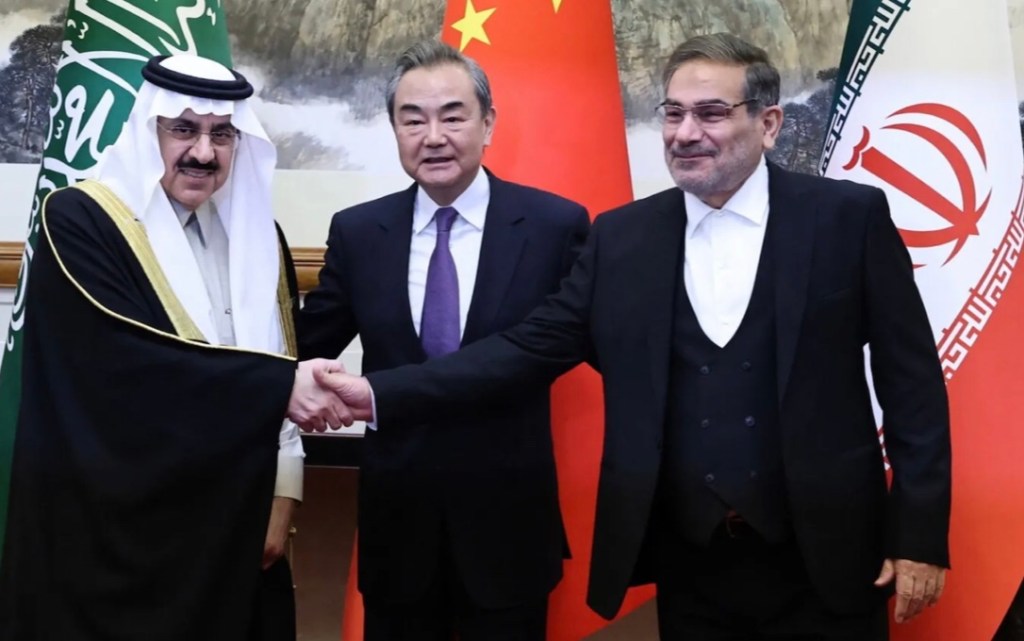
Wang Yi, China’s top diplomat, stands between Ali Shamkhani, secretary of Iran’s Supreme National Security Council, and Saudi Arabia’s minister of state and national security adviser, Musaad bin Mohammed Al Aiban, on March 3 in Beijing. Photo: Chinese Foreign Ministry
“Global power struggles signal an end to an era of diplomacy.” So ran a front-page headline in The New York Times’ April 11 print edition for an article marking US President Joe Biden’s ceremonial visit to Ireland to commemorate the 25th anniversary of the Good Friday Accords.
The commemoration served as an “unspoken reminder that such diplomatic breakthroughs remain a thing of the past,” bemoaned reporter Peter Baker.
Certainly, he is correct if one confines one’s view to the record of the US and its vassal states on the Ukraine crisis. Secretary of State Antony Blinken has made it abundantly clear that the US wants nothing to do with negotiations to end the US proxy war in Ukraine.
Likewise, the US and its allies cynically used negotiations over the Minsk Accords for eight years as a cover for war preparations. Then the US and the UK torpedoed the very promising negotiations between Russia and Ukraine to end the war in April of 2022.
But to declare diplomacy dead simply because US diplomacy is a corpse indicates a blinding tunnel vision. If we look at nations outside the West, the future of diplomacy looks brighter all the time. The Middle East provides a clear example, one among too many to be considered here.
China brokers Saudi Arabia–Iran deal
Early in March, Iran and Saudi Arabia restored diplomatic relations after a seven-year lapse, a deal brokered by China and announced at a meeting of foreign-policy officials of the two countries in Beijing in early April. This followed a visit by Chinese President Xi Jinping to Riyadh in December and a visit of Iranian President Ebrahim Raisi to Xi in Beijing in February.
By early June the countries will reopen embassies and consulates, and they look to cooperate on trade, technology, and combating terrorism.
Wang Yi, China’s top foreign-policy official, summed things up as follows: “This is a victory for dialogue, a victory for peace, and is major positive news for the world which is currently so turbulent and restive, and it sends a clear signal.”
The antagonism between Riyadh and Tehran has shaped much of the conflict in the Middle East including the horrific war in Yemen, a humanitarian catastrophe that has consumed 230,000 lives in fighting and famine. There is now movement to get a “permanent ceasefire” and end the war, perhaps the first dividend of the “clear signal,” Wang Yi said.
As The Intercept remarked, “To help end the Yemen war, all China had to do was be reasonable. With Joe Biden nowhere to be found, China’s diplomacy set the stage for Saudi concessions and cease-fire talks.”
As this article is written, there comes news of a swap of nearly 900 prisoners over three days between the warring Yemeni factions, unimaginable just weeks ago.
Moscow mediates Syria-Saudi reconciliation
Diplomacy seems to be spreading like a contagion in the region. In the wake of the Syrian-Saudi agreements mediated by Beijing, Moscow has moved to broker a reconciliation between Saudi Arabia and Syria that is leading to Syria’s rejoining the Arab League.
The Saudis plan to invite Syrian President Bashar al-Assad to an Arab League Summit on May 19. This is something that Washington has worked to prevent for more than a decade by threats and sanctions.
It is clear that the Moscow-Beijing “no limits” partnership facilitated the reconciliation between Syria, a Russian ally, and Saudi Arabia, the newfound friend of Beijing. A hint of things to come, perhaps.
Much of this diplomatic effort is simply to undo the damage inflicted on Syria after the Arab Spring unrest of 2011, which the US turned into a full-scale regime-change op and civil war. As part of its anti-Syrian vendetta, the US has used any and all means to keep Syria down and isolated from its Arab neighbors for the last 12 years.
It has also left nearly 1,000 US soldiers (the official count) fighting in Syria to this day in an undeclared war unknown to most of the American people. Those troops occupy a region that is the agricultural breadbasket and source of oil for Syria, which is starved for food and energy after the great damage caused by years of war.
The claim has always been made that US troops are there to fight Islamic State (ISIS) or its latest incarnation, but as Aaron Maté has demonstrated most persuasively, the real purpose remains regime change in Syria. (As the wise Jimmy Dore often asks, if Syria is fighting ISIS, why is the US fighting Syria?)
Diplomacy for peace
All these diplomatic moves in such a short time are almost dizzying. They were opened up by China’s masterful initiative with Iran and Saudi Arabia. And they are designed to bring stability and peace to a region that the developing nations there desperately need if they are to move forward. And that development can help the economies of the world.
The US made its own unique contribution to the process by dispatching CIA Director William Burns in an unannounced visit to Saudi Arabia with a complaint that the US was “blind-sided” by the move to reconcile with the Saudis.
Some see the Burns visit as a warning or perhaps even a threat. Crown Prince Mohammed bin Salman Al Saud will want to beef up his security detail.
To return to the New York Times account of Biden’s failure at diplomacy, one success in the eyes of the Times was mentioned: “Mr Biden and Secretary of State Antony J Blinken have successfully unified NATO against Russia’s invasion of Ukraine and won support from other countries as well.”
This may be a premature announcement of success, if one examines the situation in the European Union more closely. But whatever the case, this is a “diplomatic” initiative to further Biden’s cruel proxy war to bring down Russia, cynically using Ukrainians as cannon fodder. Diplomacy for war.
Quite a contrast. Diplomacy for war versus diplomacy for peace.
John V Walsh, until recently a professor of physiology and neuroscience at the University of Massachusetts Chan Medical School, has written on issues of peace and health care for the San Francisco Chronicle, EastBayTimes/San Jose Mercury News, Asia Times, LA Progressive, Antiwar.com, CounterPunch and others.
A little bit of history 23 years ago

 Business Blog