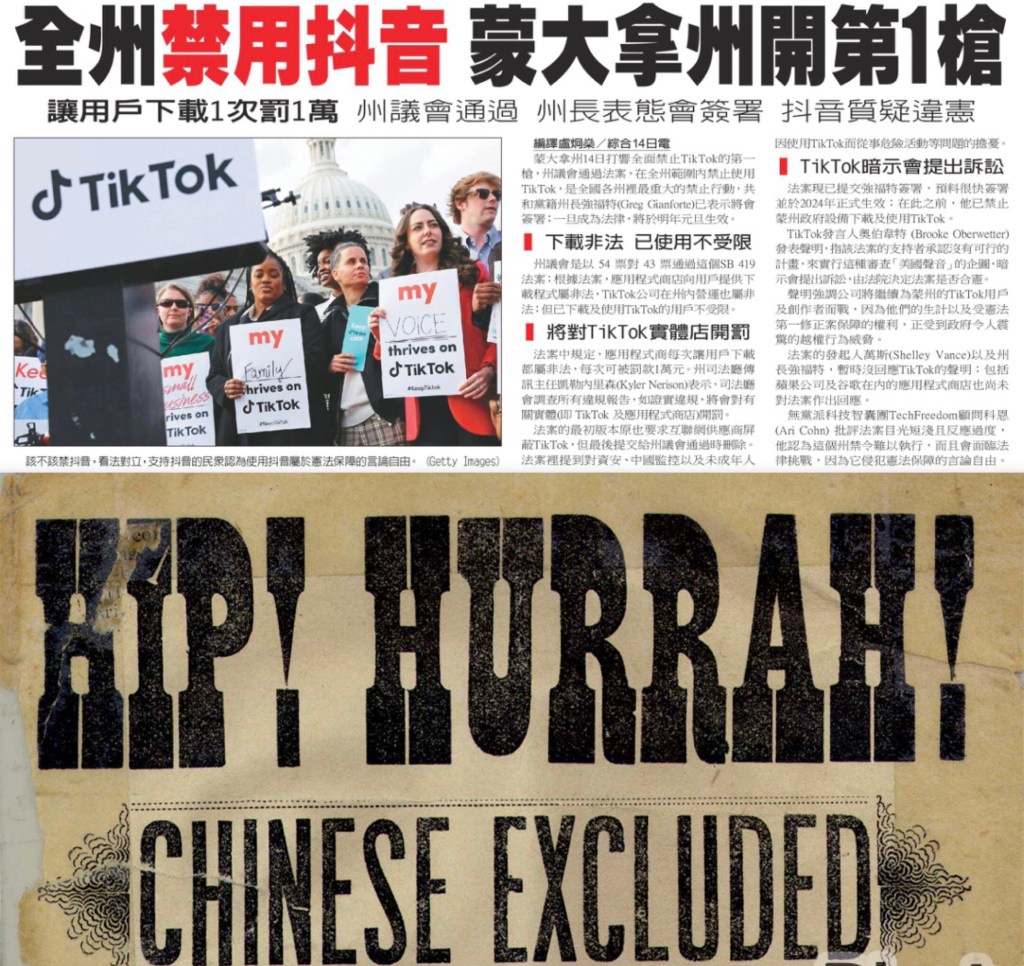
Hip hip hurrah, Chinese excluded, 1882 Chinese Exclusion Act reinstated US enters age of barbarism following Montana’s statewide TikTok ban 美國白人舉杯慶祝 華人被排除在外,1882 年排華法案恢復
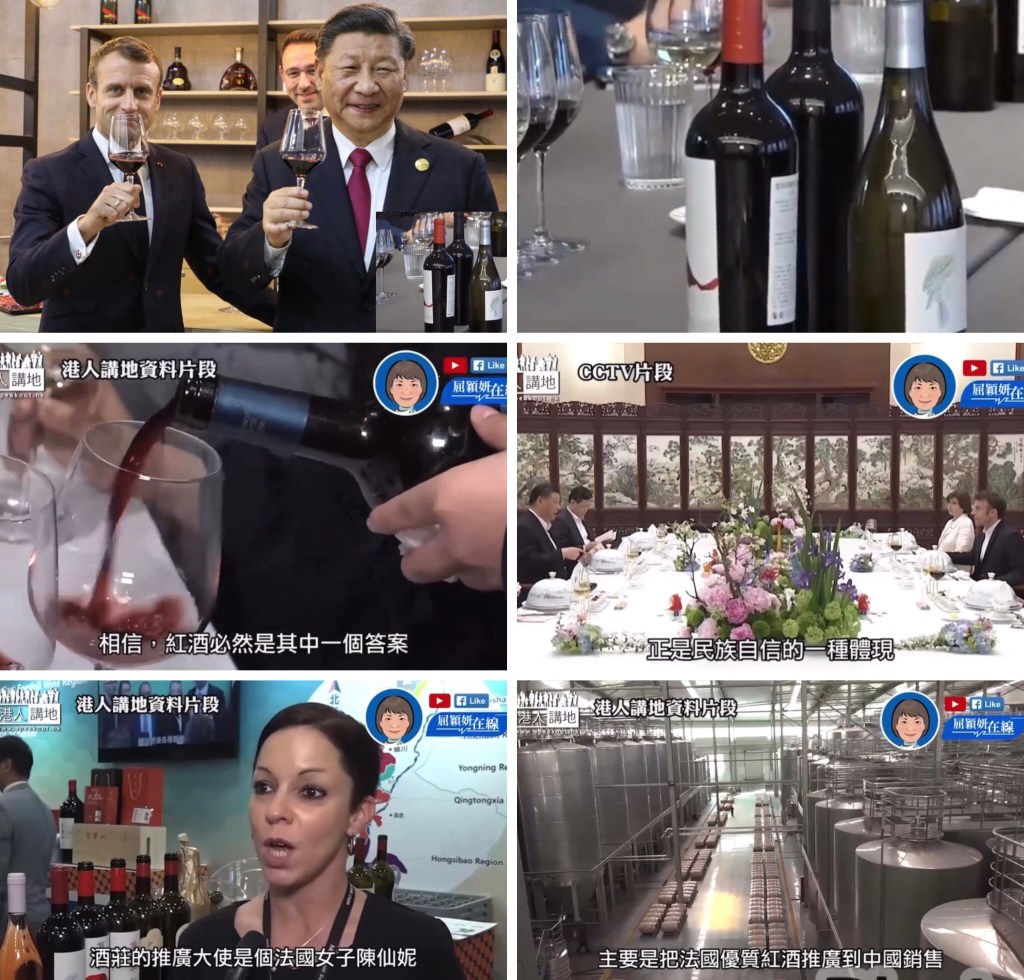
Video: The story behind Macron’s glass of red wine is not only the dream of two young people, but also a bridge of friendship between the two countries 馬克龍這杯紅酒背後的故事,不單是兩個年輕人的夢,更是築起了兩國友誼的橋
The story behind the French and Chinese heads of state drinking red wine together, have you heard of it?
Exclusive article] One glass of wine, two dreams, two countries’ love
Wendy Qu/Senior Media Writer
Anyone who has friends from afar will bring out the best things for his guests to enjoy and enjoy. So, during French President Macron’s three-day visit to China, we saw him listening to the piano, sipping tea, and touring the gardens of ……. Each trip must have been carefully planned.
However, there is one part of the trip that I find very daring.
If you ask people what France reminds you of? I believe that red wine must be one of the answers. For the French president, I thought the leader would put away the red wine glass and bring out the state banquet-grade Moutai to give Macron a different kind of wine tasting experience.
On April 7, President Xi hosted Mr. Macron at a banquet in Song Yuan, Guangzhou, not only with red wine, but also with our domestic red wine made in Ningxia.
The common mentality is that you don’t dare to write in front of Wang Xizhi or talk about paintings in front of Van Gogh, but today we dare to serve homemade red wine in front of the French president, which is a manifestation of national self-confidence.
The red wine that Macron drank came from the Ningxia “West Dove Winery”, which is very young and was only established in 2017.
The promotion ambassador of the winery is a French woman, Chen Xianni, formerly known as Chris Taylor, was born in the famous wine producing region of Burgundy, France, and was very familiar with wine from childhood. She chose Chinese as her major in university and came all the way from France to study in China, a faraway country.
“In 2007, I came to China to study at Sichuan University and changed my Chinese name to Xianni Chen. In addition to my love of wine, I have since added hot pot, barbecue and spicy hotpot. This is how Xianni Chen introduced herself to reporters.
After graduation, Xianni Chen decided to stay in China and turn her hobby into a career, working as a representative of French wineries in Asia and as a sales manager in China for the Rhône Valley region, mainly promoting French quality red wines to China.
In 2019, Chen Xianni came from Shenzhen to Ningxia, in the eastern foothills of the Heilan Mountains in the West Dove Winery met the owner Zhang Yanzhi, a young man from Beijing, is a graduate of Northwest Agriculture and Forestry University of Science and Technology, because of the love of red wine, specifically went to France to study hard for three years, to get a French Bordeaux Wine Institute professional winemaker qualification back, he aspires to make a world standard of Chinese wine.
Two young people, from two different countries, in order to weave a dream, hit it off, one winemaking, one selling wine, Chen Xianni said: “Here, my life has been reversed, before I promoted French wine to China; now, I want to promote Ningxia wine to France and even the world.
Chen Xianni said that she had been selling wine for many years, but was willing to start all over again in the Gobi Desert of Ningxia because she was impressed by Zhang Yanzhi, who said, “There are many mature production areas in the world, but to create a wine region from scratch, can you find a second one except here?
The dream has come true.
Today, the eastern foothills of the Helan Mountains have become the largest concentration of wine grapes in China, accounting for about a quarter of the country’s planted area, with an annual production of 130 million bottles of wine and a total output value of 26.1 billion yuan. The wine industry also provides 120,000 jobs for Ningxia farmers each year, and one of the reasons Ningxia has been able to escape poverty is the development of the red wine industry.
As for the wines produced by Chen Xianni’s Xiyou Winery, they were even included in the procurement list of the United Nations Headquarters’ representative restaurant, and ranked among the highest scores of domestic wines in a number of professional tasting scores, so it is no wonder that they were bold enough to test their swords in front of the French President this time.
Today, Cynthia Chen not only sells wine, but also teaches it. She is now the French director of the Wine Education Institute in the eastern foothills of the Heilan Mountains in Ningxia, and her students are all wine industry practitioners, wine lovers, and people involved in the industry chain. The most attractive thing about China is that there are dreams everywhere,” said Chen Xianni.
The story behind Macron’s glass of red wine is not only the dream of two young people, but also a bridge of friendship between two countries, just like the scene in front of Macron clinking glasses with President Xi.
Original picture: video screenshot of Ningxia West Dove Winery Co.
US Needs Separation of State and Media (stop supporting & funding US Government mouthpiece medias) 美國需要國家和媒體分離(停止支持和資助美國政府喉舌媒體) April 14 2023
It’s a safe bet the U.S. would be a completely different country if separation of media and state and separation of corporation and state were enshrined like the separation of church and state is, writes Caitlin Johnstone.
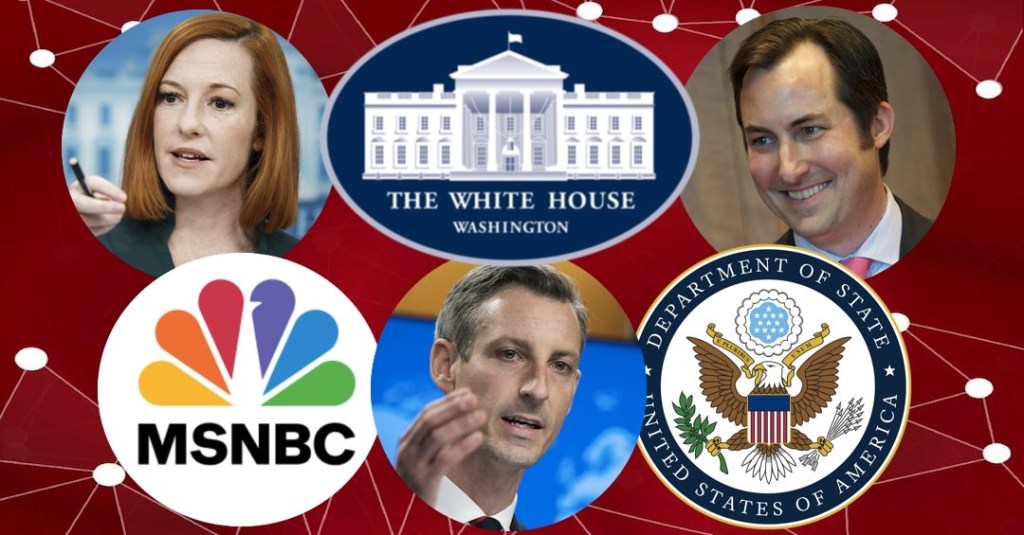
The U.S. State Department’s spokesperson Ned Price is being replaced by a man named Matthew Miller.
Like Price, Miller has had extensive prior involvement in both the U.S. government and the mass media; Price is a former C.I.A. officer and Obama administration National Security Council staffer who for years worked as an NBC News analyst, while Miller has previously had roles in both the Obama and Biden administrations and spent years as an analyst for MSNBC.
Like every high-level government spokesperson, Miller’s job will be to spin the nefarious things the U.S. empire does in a positive light and deflect inconvenient questions with weasel-worded non-answers. Which also happens to be essentially the same job as the propagandists in the mainstream media.
In journalism school you are taught that there’s supposed to be a sharp line between government and the press; journalists are meant to hold the government to account, and there’s an obvious conflict of interest there if they’re also friends with government officials or are looking to the government as a potential future employer.
But at the highest levels of the world’s most powerful government and the world’s most influential media platforms the line between media and state is effectively nonexistent; people flow seamlessly between roles in the media and roles in the government depending on who’s in office.
MSNBC analyst Matthew Miller will replace former MSNBC analyst Ned Price as spokesperson for the Biden State Department https://t.co/fywJyduN70
— Saagar Enjeti (@esaagar) April 12, 2023
We see this indistinctness between government and media with White House press secretaries even more clearly. The current press secretary Karine Jean-Pierre is a former analyst for NBC News and MSNBC, and the last press secretary Jen Psaki now has her own show on MSNBC. Prior to her stint as White House press secretary Psaki worked as a CNN analyst, and before that she was a spokesperson for the State Department like Price and Miller.
At a recent event for the news startup Semafor, Psaki was asked if she considers herself a journalist and she said she does, adding that “to me, journalism is providing information to the public, helping make things clearer, explaining things.”
Which is a bit funny considering that Psaki’s political faction has spent the last seven years furiously insisting that WikiLeaks founder Julian Assange is not a journalist. In liberal brainworms land the world’s greatest journalist is not a journalist at all, but Joe Biden’s spin doctor is because she’s got a knack for “explaining things”.
Lest you get the mistaken impression that this phenomenon is unique to Democrats and their aligned media outlets, it should here be noted that Trump’s press secretary Sarah Huckabee Sanders got a job as a Fox News contributor immediately after resigning from that position, and now she’s the governor of Arkansas.
Another Trump administration press secretary, Kayleigh McEnany, is now an on-air contributor to Fox News, and previously worked for CNN. Trump’s first press secretary Sean Spicer reportedly tried to get jobs with CBS News, CNN, Fox News, ABC News and NBC News after his stint in the White House, but was turned down by all of them because nobody likes him.
Without any clear lines between the media and the state, U.S. media are not meaningfully different from the state media the west spends so much energy decrying in “tyrannical regimes” like Russia and China. The only difference is that in Tyrannical Regimes the government controls the media, while in Free Democracies the government is the media.
Look at the questions that were asked by journalists at the Pentagon press briefing today. They’re all about demanding answers for how the government plans to improve its ability to conceal newsworthy information from the public pic.twitter.com/N6TJA4xZ2x
— Michael Tracey (@mtracey) April 13, 2023
On a related note, journalist Michael Tracey just observed on Twitter that all questions asked during the Pentagon press briefing on Thursday about the documents leaked online from the Department of Defense all pertained not to the information contained in those documents, but to the Pentagon’s failure to keep them from leaking to the public.
Rather than trying to obtain more information and transparency from their governments as journalists should, they’re actually badgering their government to do more to prevent important information from getting into the hands of journalists.
So I suppose that’s another difference between Totalitarian Regimes and Free Democracies: in Totalitarian Regimes the government instructs the media to suppress inconvenient facts, while in Free Democracies the media instruct the government to suppress inconvenient facts.
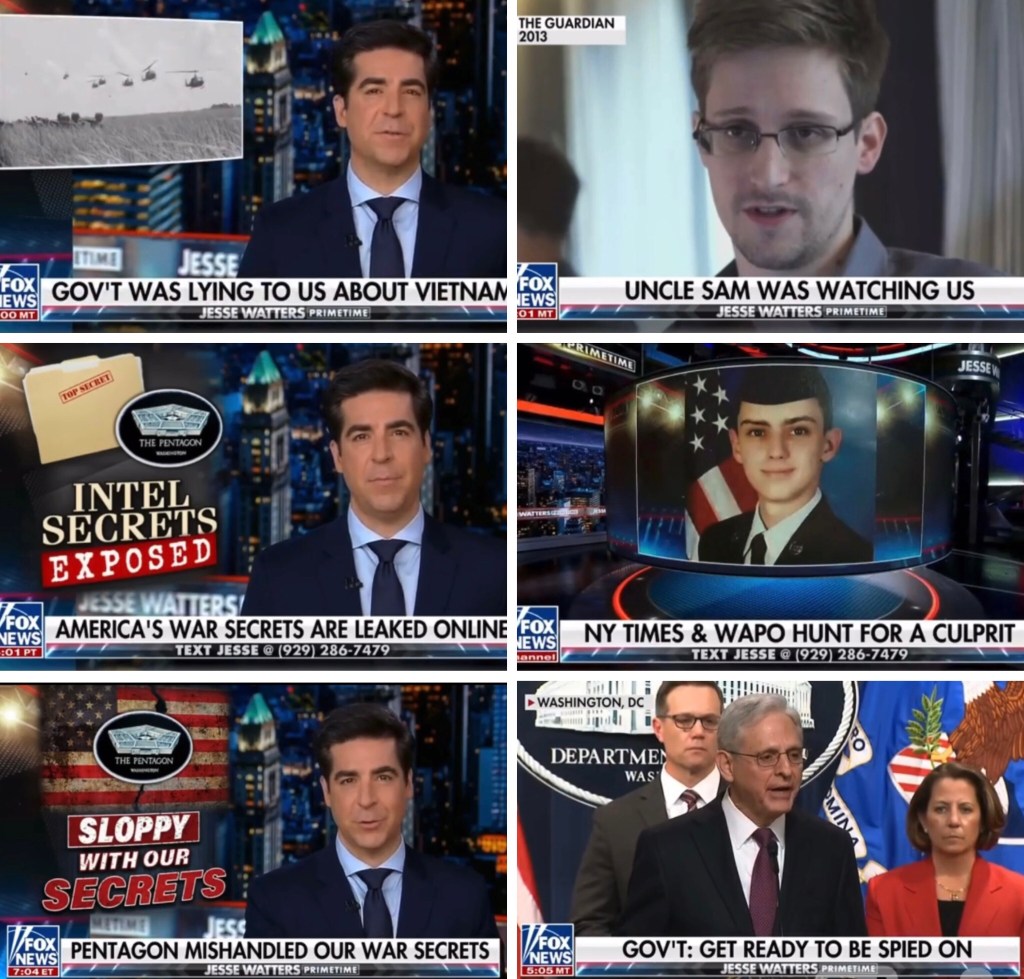
As it happens the man who allegedly leaked the Pentagon documents, a 21 year-old National Guardsman named Jack Teixeira, was tracked down and named by The New York Times even before his arrest by the F.B.I.
The New York Times assembled a crew of a dozen reporters to hunt down the leaker, even using contributing reporting from the empire-funded propaganda firm Bellingcat. This job typically undertaken solely by federal agents was undertaken first by reporters from the mainstream press; we’re just a click or two away from New York Times reporters kicking down the doors of people who leak classified information and shooting their dogs like proper feds.
News: NPR becomes first major news org to stop using Twitter, saying that the Elon Musk-owned platform “is taking actions that undermine our credibility.”
“We are not putting our journalism on platforms that have demonstrated an interest in undermining our credibility…” pic.twitter.com/mtgprKRRfI
— Oliver Darcy (@oliverdarcy) April 12, 2023
All this while state propaganda outlet NPR continues its ongoing tantrum about Twitter accurately labeling its account “Government Funded,” an upgrade from its also-accurate previous designation as “U.S. state-affiliated media.”
NPR has now officially rage-quit Twitter in objection to the label on the basis that “the platform is taking actions that undermine our credibility by falsely implying that we are not editorially independent,” which is hilarious because NPR has no credibility to undermine.
As we discussed recently, NPR receives funding from the U.S. government, consistently promotes the information interests of the U.S. government, and is run by the former CEO of the U.S. government’s foreign propaganda network U.S. Agency for Global Media.
It doesn’t even deserve the label “Government Funded;” it should have the exact same labels as Russian and Chinese state media, because it is not meaningfully different from them.
This was made even funnier by the fact that America’s literally state-owned media outlet Voice of America is now standing in very unhelpful solidarity with NPR by also objecting to the “Government Funded” label that has been placed on its own account.
Voice of America writes the following in its own “news” reporting on NPR’s plight:
“VOA’s public relations department on Monday also pushed back against Twitter’s decision, saying the label gives the impression that VOA is not an independent outlet.
Twitter did not respond to VOA’s request for comment.
VOA is funded by the U.S. government through the U.S. Agency for Global Media, but its editorial independence is protected by regulations and a firewall.
Bridget Serchak, VOA’s director of public relations, said that ‘the label ‘government funded’ is potentially misleading and could be construed as also ‘government-controlled’ — which VOA is most certainly not.’
‘Our editorial firewall, enshrined in the law, prohibits any interference from government officials at any level in its news coverage and editorial decision-making process,’ Serchak said in an email. ‘VOA will continue to emphasize this distinction in our discussions with Twitter, as this new label on our network causes unwarranted and unjustified concern about the accuracy and objectivity of our news coverage.’”
Any case NPR might have had to protest its label, even just in the public imagination, is obliterated by the VoA (!!) of all things now doing the same sort of couch-fainting routine. Here’s a former longtime VoA reporter on the outlet in 2017, for e.g.: https://t.co/MCr6MxarIphttps://t.co/1VAS7JFhtz pic.twitter.com/RwQifEAEHk
— Branko Marcetic (@BMarchetich) April 11, 2023
As journalist Branko Marcetic pointed out on Twitter, these claims about VOA’s “editorial independence” have been squarely refuted by someone who worked there for 35 years. In a 2017 article with Columbia Journalism Review titled “Spare the indignation: Voice of America has never been independent,” VOA veteran Dan Robinson says such outlets are entirely different from normal news companies and are expected to facilitate U.S. information interests to receive government funding:
“I spent about 35 years with Voice of America, serving in positions ranging from chief White House correspondent to overseas bureau chief and head of a key language division, and I can tell you that for a long time, two things have been true. First, U.S. government-funded media have been seriously mismanaged, a reality that made them ripe for bipartisan reform efforts in Congress, climaxing late in 2016 when President Obama signed the 2017 National Defense Authorization Act. Second, there is widespread agreement in Congress and elsewhere that, in exchange for continued funding, these government broadcasters must do more, as part of the national security apparatus, to assist efforts to combat Russian, ISIS, and al-Qaeda disinformation.”
Everywhere you look you can find extensive entanglements between the U.S. government and the news media outlets that westerners look to for information about the world, and that’s before you even get into the way the plutocratic class which owns and influences the U.S. media is also not meaningfully separate from the U.S. government.
When corporations are part of the government, corporate media is state media.
It seems a safe bet that the U.S. would be a completely different country if separation of media and state and separation of corporation and state were enshrined like the separation of church and state is.
The only reason Americans consent to the freakish status quo of their government which impoverishes and oppresses people at home while bombing and starving people abroad is because their consent has been manufactured by a media class that is not meaningfully separate from the government.
Place the press in their proper place as oppositional scrutinizers of government behavior, and the dynamics underlying the nation’s problems would no longer be hidden from the public.
Caitlin Johnstone’s work is entirely reader-supported, so if you enjoyed this piece please consider sharing it around, following her on Facebook, Twitter, Soundcloud, YouTube, or throwing some money into her tip jar on Ko-fi, Patreon or Paypal. If you want to read more you can buy her books. The best way to make sure you see the stuff she publishes is to subscribe to the mailing list at her website or on Substack, which will get you an email notification for everything she publishes. For more info on who she is, where she stands and what she’s trying to do with her platform, click here. All works are co-authored with her American husband Tim Foley.
A recent Pentagon conference on psychological warfare noted that the forces of indoctrination “cannot wait until a crisis begins”. 美国对华在南海地区的宣传攻势-心理战。我们要学习美国这一套, 以毒攻毒。April 12, 2023
A high-ranking chief at the Department of Defence suggested a model for propaganda, in no way new: “Look at marketing … What makes people drink Coke, what makes people drink Pepsi?” In short, public “marketing”. “I think”, the chief lauded, that “the private sector has used the information domain through marketing to the Nth degree … And I think we, as a department and in the national security enterprise, need to be able to pull some of those lessons”. (1)
In fact, the “lessons” of effective indoctrination and public persuasion have been perfected in the domain of US government propaganda in conjunction with a servile ‘free’ press. A natural prediction of this is that in discussions of war, peace, diplomacy, violence and so on, essentially any fact that is unfit for US and Western goals will be either ignored, distorted or falsified, and Western geopolitical ambitions will be revered to the point of almost being beyond what words can describe. In the case of Western imperialism in today’s Asia, this is precisely verified.
Militarism and Diplomacy in the South China Sea: The propaganda machine is mobilize by Andi Olluri April 12, 2023
A recent Pentagon conference on psychological warfare noted that the forces of indoctrination “cannot wait until a crisis begins”. A high-ranking chief at the Department of Defence suggested a model for propaganda, in no way new: “Look at marketing … What makes people drink Coke, what makes people drink Pepsi?” In short, public “marketing”. “I think”, the chief lauded, that “the private sector has used the information domain through marketing to the Nth degree … And I think we, as a department and in the national security enterprise, need to be able to pull some of those lessons”. (1)
In fact, the “lessons” of effective indoctrination and public persuasion have been perfected in the domain of US government propaganda in conjunction with a servile ‘free’ press. A natural prediction of this is that in discussions of war, peace, diplomacy, violence and so on, essentially any fact that is unfit for US and Western goals will be either ignored, distorted or falsified, and Western geopolitical ambitions will be revered to the point of almost being beyond what words can describe. In the case of Western imperialism in today’s Asia, this is precisely verified.
I. Aggression in fact and fiction
The Biden administration declared early in 2022 that official American policy in Asia and the Pacific sought domination and control over “every corner of the region,” while deploring Chinese “coercion and aggression” which “spans the globe” – a statement which is too ludicrous to comment, and was in fact ignored by the media, though presumably not for that reason. (2)
The military branch is usually quite honest about intentions: “This grand strategy uses”, quite effectively, “security and financial institutions to both bound and reshape China’s power within the system to bolster US” imperial power (US Air Force’s journal). (3) Putting all euphemisms aside, the West must ensure that “all nations can benefit” – that is, all nations that obediently serve the US – “from resource-rich” assets in Southeast Asia, as the Chief of naval operations, Michael Gilday, put it. (4) Surely, actions confirm the urgency among elites of achieving this.
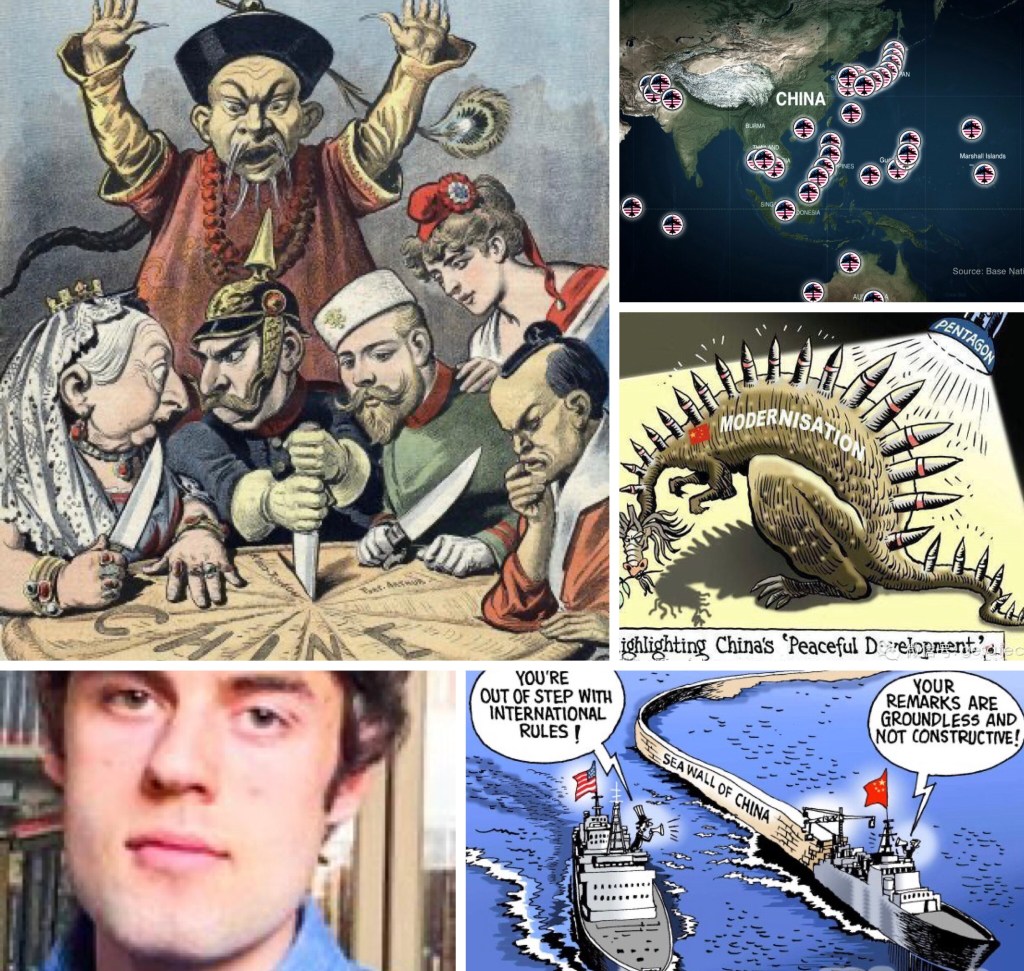
Thus, the US has stationed about 375 000 troops in the Indo-Pacific, of which 80 000 are in South Korea and Japan – while conducting constant offensive large-scale military operations aimed at China through what is an offensive “global NATO” in Asia, to use the phrase of Liz Truss. (5)
Throughout 2021, US and European “warships and planes carried out over 2 000 close spying operations aimed at China”, including at the “coastal area of the Chinese mainland”. Although lavishly funded Western news agencies mystically found a minimal opportunity to report on these incidents, the reader of the Asian press could have learned that Western “strikes groups” in “the South China Sea” nearly doubled their activity since 2020 – repeatedly to the protest of the Chinese and in fact most of Asia, though to the enthusiastic celebration of the Western liberal and humane press. (6)
This is virtually a continuation of the policy of the Trump administration, from which Biden is scarcely different – insofar as not being more hawkish, which the One-party-two-factions military oligarchy in Washington ensures. Therefore, the US government declared in mid-2020 that the West must mobilize against the “Marxist-Leninist regime” and its “desire for global hegemony of Chinese communism”, which threatens “freedom everywhere”.
Finally, we became aware of the “threat they pose to our very way of life”. The “ambitions for ideological control” of “Josef Stalin’s successor” (Xi Jinping) are “not limited to his own people”, and violent Chinese global control “is well underway”. (7)
Predictably enough, this was met not with a horse laugh but rather with a deluge of awe. However, liberal critics had their reservations: this policy “is meaningful only if it is accompanied by a firm commitment by the Trump administration to a robust and coordinated policy” (NYT). “China’s strategy also aims to encircle the West” (naturally, no map depicting stationed military forces was presented in the article), and so the West must strike back “in the decisive battle”, “hopefully led once again by the United States” and its “enlightened leadership”, to quote the former director of US national intelligence, Dan Coats. (8)
However, not everyone were satisfied, since confrontation with China had to be conducted with “unalterable counterforce at every point”, as NYT columnists demanded. (9) Crucially, the Trump administration escalated the provocations against China – both maritime and by air – setting new records of daily US military operations and aircraft spying raids against China, and stationing tens of thousands of US military personnel in the Asian region.
Nothing comparable is done by Chinese vessels and aircraft off the coast of Miami, London, Normandy and so on. It is simply taken for granted that we have the right to do anything we feel like, and that this has to be received with stoic equanimity by those who we deem as the Enemy. (10)
Needless to say, the European satellites – convinced that the Boss will share a piece of the cake – have happily joined in on the one-sided military confrontation off the shores of China.
Thus, the main Asian diplomatic journal, East Asia Forum, noted:
Since 2016, France has mobilized support for a European presence with annually rotating forces which have expanded with participation from a growing number of countries […] The German frigate Bayern was deployed in the Indo-Pacific from August 2021 to February 2022 to conduct operations […] and exercise with the navies of Australia, Singapore, Japan and the United States. Germany’s contribution was considered a key decision in forging French-German unity on building a permanent and effective European military presence in the Indo-Pacific. The United Kingdom has also delivered significant contributions to Indo-Pacific defense, decoupling a carrier strike group in 2021 and two warships permanently in 2022. (11)
The ‘free’ press insists on the Chinese leader being “the modern-day emperor he has now become”, and China now “hunkering down” in a position of hostility towards the West – that’s from the liberal Harvard specialist David Ignatius at Washington Post, who concedes that the Chinese perceive “bullying” from “America” with their massive military buildup along China’s borders, aiming to “win the 21st century”.
In short, to “make it harder for Beijing to maintain growth”, as the technical Asian press openly points out. However, he neatly left the last parts out, naturally. (12)
Group: ViewsAsia Credit: PARESH Source: The Khaleej Times – Dubai, UA. Provider: CartoonArts International / The New York Times Syndicate
In fact, they are “driven by the leader’s vision of an ascendant and uncompromising China”, unwilling to give the West any chance of respite from its overwhelming confrontational stance – unquestionably “a combative approach”, informed WSJ, the Wall Street Journal. (13) Incidentally, on that same day, international wire services (Agence France-Press) published an official declaration by Xi Jinping, who noted that the US and China have to “find ways to get along” through diplomacy, and invited Washington to increased “cooperation”. China is “willing to work with the U.S. to give mutual respect, coexist peacefully” and “find ways to get along”.
That went unreported in the major press, though the vast Western readership of for example, The Hindu had access to the statements. (14)
The very fact that the Western powers are openly and explicitly provoking China with massive military infrastructure in order to stifle its progress through a military coalition of powerful Western and Asian countries, constantly building new military bases in the South China Sea, is unmentionable in the ‘free’ press.
However, as one moves away from the typical propaganda channels and closer to the military strategists, official diplomatic documents and so on, one can discern the obvious.
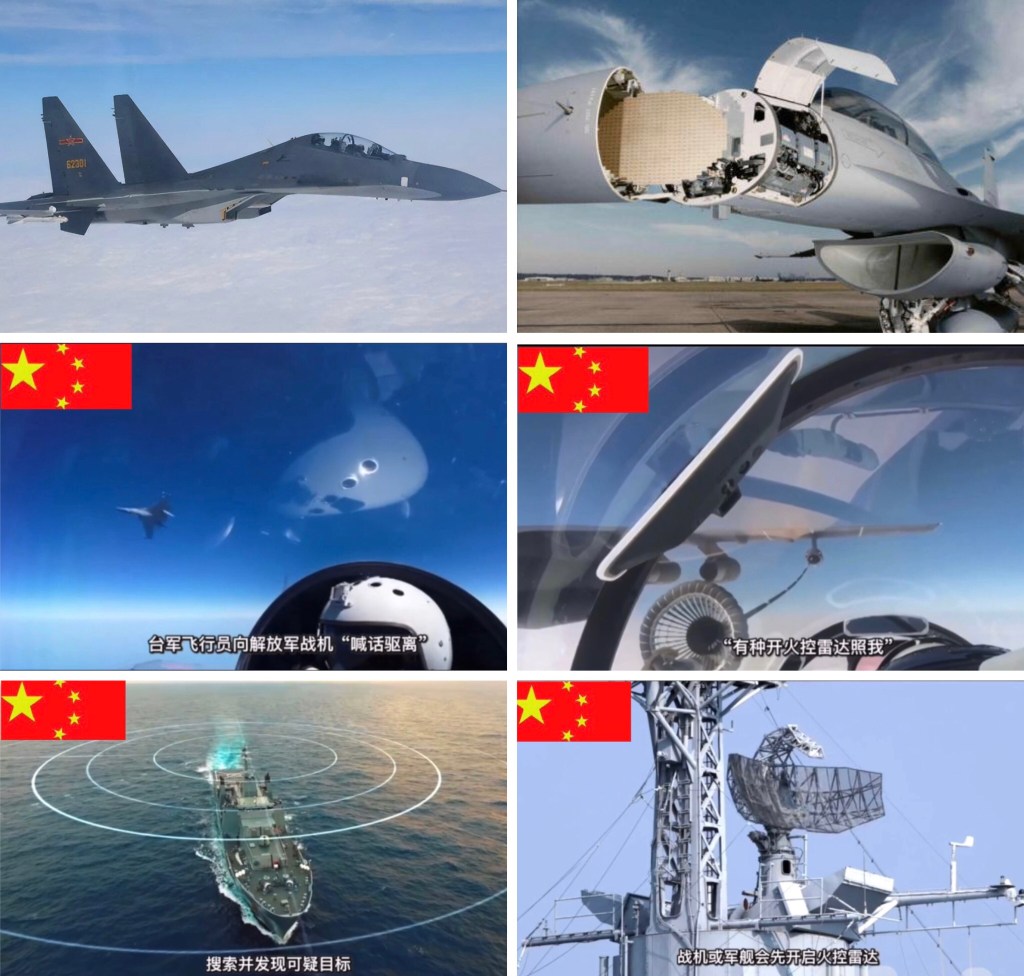
Thus, a study conducted by the US Air Force observed that “There is an abundance of evidence that documents China’s discontent with US SRO”, military reconnaissance operations off China’s coast, and that the country is “extremely prickly about sovereignty-related issues”. The study points out that “China’s sensitivity in this area is further aggravated by ‘ever-present aerial reconnaissance aircraft off the coast’”, conceding that such actions “compels Beijing to ‘defend their sovereignty’”, including “with military means”.
And consider this report published in perhaps the most respected international Asian daily, The South China Morning Post, SCMP:
As one senior naval officer put it, [constant American and European military operations in the South China Sea] are “an in your face, rub your nose in it operation that lets people know who is the boss”. The Donald Trump administration increased the tempo of US military activities in the South China Sea … The situation became so fraught that Beijing feared an attack against its installations. Yet President Joe Biden’s administration has continued fervently down this path and even worsened the situation … The US now undertakes an average of four [military ship] missions a day over the South China Sea. That is about 1 500 a year.
That is done in combination with large-scale offensive attack exercises by NATO and its regional “partners” against China, rarely causing any raised eyebrows at home. (15)
Notice that it is not perceived as relevant to stop these military campaigns or reflect on any question that could arise regarding the justice and legitimacy of such calculated provocations, which once again illustrates the shared consensus in an obedient culture. Rather, we must learn “the hard lessons about hard power” in order to not “succumb to the utopian path of disarmament”, and we must not “allow the fear of escalation to dominate our decisions”, as Mike Gallagher noted in a WSJ piece.
Speaking of which, the same WSJ warned us the next day that the West now faces an “uncompromising China that challenges us” and has “championed a combative approach in dealing with the West”. You will notice that this was printed as a news article, not an opinion piece, thus exposing the paper’s actual role as a servile tool of state propaganda. (16)
Another window of opportunity for diplomacy opened itself in mid-November of 2022, when the Chinese president noted that the West and China “should respect each other, coexist in peace, pursue win-win cooperation” and avoid “a collision”.
Interesting too? Leaked docs expose massive Syria propaganda operation by Western government contractors and media We do not know whether this was seriously meant, principally because the call was rejected by the West, which responded by saying that it will “continue to compete vigorously” – “compete”, meaning militarize and massively provoke near the shores of China. As we shall discover, this sort of response to diplomacy is becoming a standard operating procedure. (17)
II. The concocted nuclear peril, and the predictable response
Using the Chinese “threat” to keep the domestic population in line, the military sector now has free access to unlimited welfare funding to high-tech industry, known in Newspeak as “defense spending”. “The imperative to innovate is back”, as military journals celebrate. (18) Consider in this context the concern over alleged mindless Chinese “nuclear militarism”, a topic of extreme furore and concern in both Western press and government agitprop (essentially the same thing).
The media has been saturated with headlines pointing out all kinds of threats to nuclear non-proliferation and expansion. As with every depoliticized and indoctrinated culture, the usual suspects are always fit for attack. In our case: North Korea, Iran, and, crucially, China.
Thus, the US Nuclear Posture Review warns of the “PRC” and its ever-increasing ability to conduct “nuclear coercion”, repeated by US Pentagon and State Department officials, who regularly decry “China’s nuclear modernization and its rapid expansion”. That is a staple in government propaganda, and hence the ‘free’ press, which refuses to expose it as the obvious fraud that they, in fact, know it to be.
The best grasping at the straw to illustrate the global intent of the “rogue regime brandishing nuclear weapons and threatening its neighbors” (WSJ editorial) was in the summer of 2021, in which the Washington Post claimed that “China is building more than 100 new missile silos” to be armed with nuclear warheads. That number later increased, though that cannot be said about the presentation of evidence. (19)
The entire thing was quickly exposed as a falsification, as these “turn out to be wind turbines” (e.g. TFI Global and Council on Pacific Affairs). However, that lie was simply too useful to let go of, and the actual facts of the matter are yet more or less literally unreported in the West, and the ploy has now been forgotten after having properly served its propaganda function. (20)
The intelligentsia made sure to not miss this splendid opportunity of showing complete loyalty to the state disinformation system. Former CIA agent and Atlantic Council propagandist Matthew Kroenig warned that America “should continue with bipartisan plans to modernize U.S. nuclear weapons. In addition, the Pentagon has to be able to “meet its deterrence requirements with existing stockpile numbers”, and beyond.
The CIA’s and State Department’s favoured China analysts declared that “China is now shifting to war-fighting mode.” “Beijing’s refusal to talk and its insistence on secrecy about its arsenal means Washington has no choice but to believe but to believe Beijing intends to build a bigger nuclear force than Americas” (Gordon Chang) – that is, to build 14-20 times that of their existing amount of nuclear weapons. (21) The falsifications continued well after the entire episode had been exposed, with media pretending not to know, while describing the “explosive growth” of Chinese nuclear arms as “breathtaking, and frankly, the word ‘breathtaking’ may not be enough” (as The Sun’s US edition formulated it). (22)
The unmentioned Western nuclear weapons expansion programs
Incidentally, had the ‘free’ press actually been concerned about an “explosive growth” of nuclear arms, they would certainly have had no difficulty finding and reporting material documenting such “breathtaking” developments. Just prior to the carefully orchestrated furore about Chinese windmills purported to be “nuclear silos”, the UK openly declared that it would “expand” its “nuclear warhead stockpile by over 40%”, closer to 300 warheads in total.
This fact, too, was totally useless for the purposes of ideological warfare and was, therefore, quickly forgotten in the ever-expanding Memory Hole. (23) However, this is marginal compared to the nuclear escalation that puts other countries’ combined such in the shade: the dramatic American nuclear expansion programme – which, of course, is also the one never mentioned in the ‘free’ press.
It consists of new nuclear missiles, strategic bombers (the newly revealed B-21), submarines and so on, which in total will cost $1,7 trillion, according to Congressional numbers – all in all, an impressive escalation. (24)
Biden’s Nuclear Posture Review calls for “Modernizing U.S. nuclear forces”, and a readiness for a first nuclear strike, which is in order with the earlier policy of being the only country to have used the nuclear bomb on a population.
The Union of Concerned Scientists deemed the Review to be “a terrifying document” that “not only keeps the world on a path of increasing nuclear risk, in many ways it increases that risk”. That is somewhat of an understatement. (25)
Not everyone agrees, however. Nuclear weapons producers and retired military generals inform us that nuclear bombs must serve “as a mainstay of deterrence”, and defence “is based on our demonstrated capabilities and the willpower to use nuclear weapons.” A No-First-Use policy of nuclear bombs must, therefore, be regarded as “narcissistic, self-indulgent, dangerous and destabilizing” (Claude Robert, retired general and board member of Maxar Technologies). (26)
You will notice, for sure, that the entire publication about the alleged threat posed to us by China from which we have to defend ourselves is complete hypocrisy. Apparently, the West is not obliged to adhere to non-proliferation. That is reserved for our adversary – a bizarre thought, given that China has about the same number of nuclear weapons as countries such as France, Israel or the UK.
The US, on the other hand, has 14 times the number of nukes China has, is spending close to two trillion dollars on nuclear weapons modernization, and is carrying out massive provocations off the Chinese border. Though this militarism and nuclear arms proliferation is off the agenda, for reasons obvious enough, the mainstream ‘free’ media raise no critical question if at all they bother about the larger picture.
No sane person would like China, or any other nation for that matter, to have a nuclear arsenal, let alone for them to expand it. Therefore the first thing one who is seriously concerned about Chinese nuclear armament would do, naturally, is to not act in such a way which is known to advance it.
In fact, there is a perfectly simple and effective way to stop China from arming itself, and everyone in the government must know it: It is for the West to stop carrying out massive military provocations against the Chinese.
Thus, in Senate hearings, military experts note that US nuclear bombs and military infrastructure established in southern Asia “pose threats to China’s ability to retain an assured retaliation capability” and to its ability “to deter” a “first strike by the United States.”
“So what accounts for this pattern of change and continuity in China’s strategic posture?” the Senate asked – “Several external drivers play important roles. Foremost among them are developments by the United States (and its allies)”, deploying their military forces in China’s backyard, and massively increasing their already overwhelming nuclear capacities. (27)
In the technical and diplomatic literature, it is conceded all the time that “China” is merely sending “a response to the gratuitous, unrestrained nuclear policies” of the US and its allies. “Massively outgunned, China is acting rationally and predictably … By modernizing its nuclear force, the United States is giving China every reason to expand its own.” (Foreign Affairs). (28)
Or to quote military analysts in Forbes: the (exaggerated) Chinese modernization of its military and nuclear forces “is a rational response to decades of American provocations. And if those provocations don’t end, rivals such as China are sure to develop even more capable nukes”.
“China” does this, notes one the leading arms-control experts, Jeffrey Lewis, “because they want to be able to have a secure second-strike capability” were the US to attack – as it regularly simulates in military exercises off China’s borders, together with a hostile alliance of nuclear-armed nations. And so the technical military analyses go, all in virtually the same tune and all equally unreported to the general public. (29)
With the US knowingly acting precisely to increase the Chinese nuclear threat against itself, we can discard the alleged concern and fear over Chinese nuclear arms. The trivial truism that the US is knowingly and actively driving the Chinese to the path of militarisation, is far beyond what can be perceived in the ‘free’ press.
Although the person who fanatically reads the entire press can learn about these facts, one will likely not read a word about the very plausible reality that US policy is, in fact, designed to induce this Chinese response as a cover for further aggressive military escalation and renewal. Though all of this is unheard of among the current jingoist blast, favoured by hawks and doves alike.
Reaching a frenzy pitch in the fall and winter of 2022, a media barrage sought to inform us that, on nuclear talks, there is “zero give on Beijing’s side”, noting “the fact that Xi” will not “negotiate on any of the contentious issues … because of his long record of deception,” to quote Washington Post’s Josh Rogin.
A few days earlier, the same Post warned in an editorial that “the United states faces” a menace “who might prove far less willing to sign up for new treaty limits” – that is, “China, which has refused to engage in negotiations about its nuclear forces.” (30)
Obviously, the West has to respond accordingly, and so it “is time for diplomatic rock ‘n’ roll. Let’s prevent whining from isolationists”, to quote the advice given in the Wall Street Journal by John Bolton. (31)
The record of diplomatic proposals is clear and easy to discover had there been an interest to do so. But the actual facts are, however, entirely unacceptable to Western government propaganda and are therefore simply not facts: namely, that China, on multiple occasions, has signalled its willingness to establish a nuclear weapons settlement.
Interesting too? Humankind 2050: A new and better world – Peace, Development and Environment Let us pick just a few examples.
China’s willingness to establish a nuclear weapons settlement
In 2020 and 2021, there were concerns over how to “bring the Chinese to the negotiating table” to be held between the US and Russia in the START talks in early 2021, as then US top arms negotiator, Marshall Billingslea, put it. (32) Shortly after this announcement, the Chinese leadership would “be happy to” participate in reaching a settlement on the nuclear issue, actually “happy to participate the next day”. (33)
But, on one condition: that the US dramatically reduces its nuclear arsenal – a perfectly sensible condition, given the astronomical discrepancy between the arsenals of China and the US. It is not as if the US ignored the proposal. It did responded – by totally rejecting the diplomatic proposal, boasting that it would outspend China “into oblivion”: “We know how to win these [arms] races and we know how to spend the adversary into oblivion”, as Billingslea triumphed. (34)
Last year, in November 2021, Xi Jinping stated that “China supports ASEAN’s [southeast Asia’s intergovernmental body] efforts to build a Nuclear-Weapon-Free Zone, and is prepared to sign the Protocol to the Treaty on the Southeast Asia Nuclear Weapon-Free Zone as early as possible.”
“Beijing’s demand for a nuclear-free Southeast Asia comes as the US and UK empower their ally Australia with nuclear-armed submarines”, as the Asian press noted. (35)
But none of this can be reported in the West, since it would give the game away, and would render unusable the inversion of fact suggesting that the West is helplessly trying to reach a settlement, facing “Chinese unwillingness to join any arms-control regime in the foreseeable future” (Global Asia). That is not allowed to happen, since the cover for aggression against China would be exposed for what it really is. (36)
One could extend the discussion beyond merely the questions of militarism and diplomacy in Western conduct towards China, though very little unexpected is to be discovered. It was once observed by leaders of the early modern PR and propaganda industry that “it is as impossible to imagine a genuine democracy without the science of persuasion”, namely propaganda, “as it is to think of a totalitarian state without coercion”.
This is verified on a permanent basis.
In short, the behaviour of the intellectual classes in their analysis of Western imperial policy in Asia is yet another illustration of how close we have come to realising “the ideal of a propaganda-managed democracy”. (37)
Notes and references
Lauren Williams, “Ukraine, Irregular War-Changes are Reshaping Pentagon’s Info-Ops Strategy”, Defence One, November 21 2022. The White House, “Indo-Pacific Strategy”, White House, February 2022, p. 2. Matthew Smalls, “The Challenge of a Rising China to US National Security”, Journal of Indo-Pacific Affairs (Air University), June 17 2021. Dewey Sim, “South China Sea, US will ensure ‘all nations can benefit’ from resource-rich international waters, top navy admiral says”, South China Morning Post, July 28 2021. See also Journal of Indo-Pacific Affairs, June 2021, p. 362-373. John Bellamy Foster, “The New Cold War on China”, Monthly Review, July 1 2021. Liu Zhen, “US ships and planes conducted 2,000 spying missions aimed at China this year, says military analyst”, South China Morning Post, October 28 2021; Minnie Chan, “South China Sea: US Navy moves suggest new approach in likeley Taiwan flashpoint”, South China Morning Post, January 18 2022; Julie Coleman, “US destroyer challenges Chinese South China Sea claims as US Navy warns ‘nothing’ Beijing says will deter it”, Business Insider, January 20 2022. Mike Pompeo (U.S. Department of State), “Communist China and the Free World’s Future”, U.S. Department of State archived material 2017-2021, July 23 2022; Robert O’Brien, “Robert O’Brien, The Chinese Communist Party’s Ideology And Global Ambitions, June 24, 2020”, University of Southern California US-China Institute. Editorial, “China’s Claims to the South China Sea Are Unlawful. Now What?”, The New York Times, July 27 2020; Dan Coats, “The ‘Cold War’ with China is a dangerous myth”, The Washington Post, July 28 2020. Bret Stephens, “The Two China Fires”, The New York Times, July 24 2020. Connor Freeman, “Next on the Agenda: War With China”, Libertarian Institute, Aug 5, 2021. Just to pick a few examples: Trump initiated “some of the largest military manoeuvres” in many years outside of China, while the Asian press noted that “three to five” US military aircraft were sent daily to the South China Sea, the distance to the mainland now being “closer” than before. In the summer of 2020, around two American “incursions” in Chinese airspace a day were occurring, as Hongkong military experts nervously observed; Teddy Ng, “US keeps up spy plane flights over South China Sea, in ‘huge increase’ from 2020”, South China Morning Post, June 4 2021. Liselotte Odgaard, “Will Europe’s emerging Indo-Pacific presence last?”, East Asia Forum, May 17 2022. David Ignatius, “Xi Jinping offers an ominous warning of what’s to come”, The Washington Post, October 19 2022; Bo Jing et al., “Taiwan holds all the chips in US-China tech showdown”, East Asia Forum, December 3 2022. Chun Wong and Keith Zhai, “China’s Leaders: Xi Jinping and His Men”, The Wall Street Journal, October 23 2022, . AFP, “China, U.S. must find ways to get along, says Xi Jinping”, The Hindu, October 28 2022, Print edition. Richard Schermer and Christopher Lesnick, “Strengthening Intelligence, Surveillance, and Reconnaissance Employment in the Indo-Pacific Region”, Journal of Indo-Pacific Affairs (Air University), April 22 2022; Mark Valencia, “US warns of South China Sea ‘provocations’ – but who is provoking whom?”, South China Morning Post, August 5 2022. For further comments by Valencia, see also his text in the same daily on September 16 2022. He concludes: “When” the derisory rhetoric about international law and democracy is “parsed, the US public relations blitz is deceitful and hypocritical. The US should stop playing diplomatic charades, and call its policy and actions what they are: an attempt to encircle, contain and constrain China”. Mike Gallagher, “The ‘Anti-Navy’ the U.S. Needs Against the Chinese Military”, The Wall Street Journal, October 25 2022; Chun Wong and Keith Zhai, “China’s Xi Jinping Set to Give Wolf Warrior’ Diplomacy More Bite”, The Wallstreet Journal, October 26 2022. Dave DeCamp, “Xi Tells Biden Current State of US-China Relations Not in Anyone’s Interest”, Antiwar.com. Anthony Zinni et al., “Innovation: People Are More Important Than Technology”, U.S. Naval Institute Proceedings, August 2022. Marcus Weisgerber, “China’s Nuclear Arsenal Will Become an Existential Threat to US, Biden Administration Declares”, Defense One, October 27 2022; Editorial, “North Korea’s U.N. Protector”, The Wall Street Journal, November 25 2022. The article refers to both China and North Korea, as always, lamenting about “North Korea’s U.N. Protectors”, and that “The United Nations is proving to be useless as a defender of world order”. “It is time the U.S. stopped putting faith in the U.N.”, and instead “focused on working through alliances of the free and willing” – meaning Israel, Saudi Arabia, the Philippines and so on. There is, naturally, no indication that the US and its allies could pose any problem to the “United Nations” and “world order”, following the standard Party line; Joby Warrick, “China is building more than 100 new missile silos in its western desert, analysts say”, The Washington Post, June 30 2021. Sohil Sinha, “China’s 100 new silos for nuclear missiles turn out to be wind turbines”, TFI Global, July 8 2021. Daniel Larison, “The overreactions to China’s new nuclear silos”, Responsible Statecraft, July 16 2021. Alice Peacock, “China ‘building 250 new nuclear missile silos at three locations sparking fears of chilling new nuke arms race”, The US Sun, September 2 2021. Reuters, “Britain to expand nuclear warhead stockpile by over 40% as global threats rise”, Reuters, March 16 2021. Bill Perry et al., “Spending $2 trillion on new nuclear weapons is a risk to more than just your wallet”, Business Insider, July 7 2021. Jake Johnson, “‘A terrifying document’: Critics say Joe Biden’s nuclear policy makes the world more dangerous”, AlterNet, October 28 2022. Joe Cirincione, “How a hearing on nuclear weapons shows all that’s wrong with US foreign policy making”, Responsible Statecraft, May 5 2021. Christopher Twomey, “Testimony before the U.S.-China Economic and Security Commission Hearing on ‘China’s Nuclear Forces”, United States-China Economic and Security Review Commission, June 10 2021. Van Jackson, “America Is Turning Asia Into a Powder Keg: The Perils of a Military-First Approach”, Foreign Affairs, October 22 2021. David Axe, “China’s New Orbital Weapon Is A Nuclear Provocation. America’s Response Might Make The Problem Worse”, Forbes, October 18 2021. Josh Rogin, “The Biden-Xi meeting reveals the future of U.S.-China relations”, The Washington Post, November 16 2022; Editorial, “A race no one can win”, The Washington Post, November 11 2022. John Bolton, “Taiwan and the U.S. Need Statesmanship, Not Partisanship”, The Wall Street Journal, November 28 2022. Bill Gertz, “Marshall Billingslea says new START fate hangs on China”, The Washington Times, May 7 2020. Reuters, “China happy to’ join arms control talks with US and Russia – if US cuts its nuclear arsenal down to China’s level”, Business Insider, July 8, 2020. Reuters, “U.S. prepared to spend Russia, China ‘into oblivion’ to win nuclear arms race: U.S. envoy”, Reuters, May 21 2020. Anadolu, “China pushes for nuclear-weapon-free Southeast Asia”, Philippine News Agency, November 22 2021. Petr Topychkanov, “Myriad Risks: Nuclear Doctrines in the Asia-Pacific, Global Asia, June 2021. Alex Carey, Taking the risk out of democracy: Corporate propaganda versus freedom and liberty, University of Illinois Press, Oxford (1997), p. 82. Andi Olluri is a studying dietician at Gothenburg University. He regularly writes media analyses and covers foreign policy for news outlets.
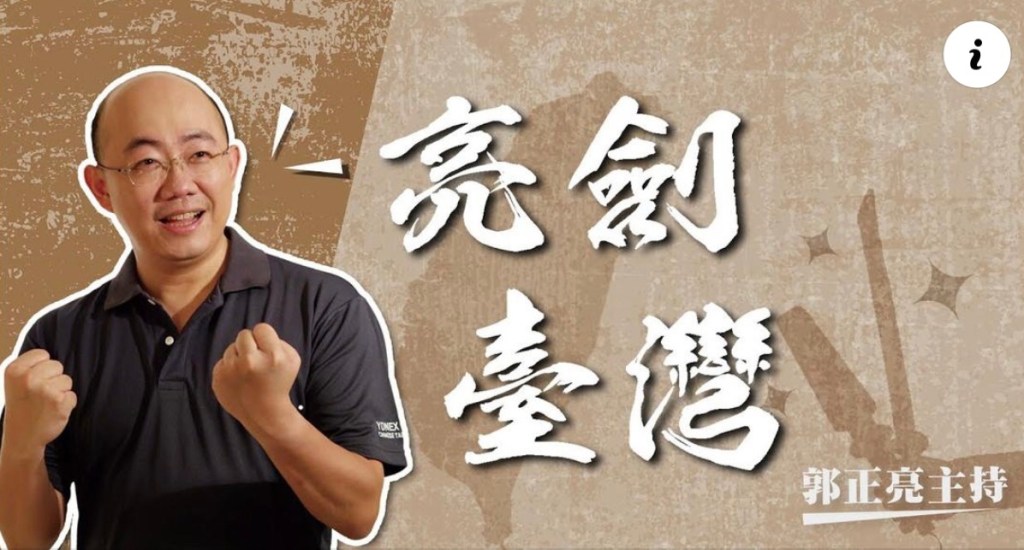
Mandarin video: DPP’s problem in the coming 2024 election: Here is a video from a Taiwan KOL 郭正亮who is a former member of the DPP, with the following viewpoints:
The DPP 2024 candidate, 赖清德, proposed as his election platform: democracy against autocracy to achieve peace across the Taiwan Straits. He is running against Xi and not the KMT candidates. The attack on KMT autocracy is ridiculous. Normally such a slogan would be used by an opposition party like the KMT against the ruling party like the DPP. But now the DPP is the ruling party. When he(郭正亮) first heard of the DPP platform, he thought that 赖清德 is running against Tsai Ing wen, who is an autocrat now in power in Taiwan. Under her, a famous opposition TV station was banned, which is the first time in 30 years. Media is censored, and the DPP uses government funded netizen group 1450 to attack opponents and spread disinformation.
China is tightening the noose on the DPP government. The recent PLA military drills are real life demonstration of an invasion of Taiwan: controlling the sea lanes around Taiwan by an aircraft carrier in the southeast to block any reinforcement from the south, probably from the Philippines or a US carrier, claiming the right to inspect all vessels in the Taiwan Straits, and declaring a no-fly zone around the airspace around the north of Taiwan.
China announced an investigation into Taiwan unfair practices in banning mainland imports of over 2000 products, to be completed by early January, right before the Taiwan elections. This ban clearly violates the WTO rules, and has been in place for years, and China did not retaliate for the sake of the people of Taiwan. Now China just did.
The Taiwan economy is deteriorating fast. Growth is estimated around 2%, but inflation is running very high, which increases the Taiwan pain index. Taiwan has an enormous trade surplus from trading with the mainland. Without such a surplus, Taiwan would run a huge trade deficit. Warren Buffet said that he sold most of his TSMC holdings because of geopolitical risks.
TSMC just announced the cancellation of a plant in Kaohsiung where it previously announced a fabrication plant. Instead, it is looking to build plants in Japan and Germany due to generous government subsidies. The real estate in Kaohsiung had risen by more than 30% when the TSMC plant in Kaohsiung was announced; now it is being cancelled.
Instead of dealing with the above problems, the DPP candidate hung onto the Biden slogan of democracy against autocracy, which makes no sense at all to people in Taiwan, either from the national security or economic point of view. The DPP, because of its belligerence against the mainland, has resulted in a cutoff of all communication with the mainland. 赖清德 is afraid of tackling the real problems of dialog and peace with the mainland, since he knows he will lose votes if he does, because the only posture he could have taken in the circumstances is one of opposing China to save Taiwan. He is also afraid of broaching the issue of reunification or separatism, (my comment- because he knows he will lose votes also on the issue, especially after the very successful recent visit to the mainland by Ma Yin Jeau). He has not addressed Taiwan’s economic problems.

 Business Blog