Washington’s actions pose a “severe challenge,” the Chinese president says, US seeking to contain China – Xi
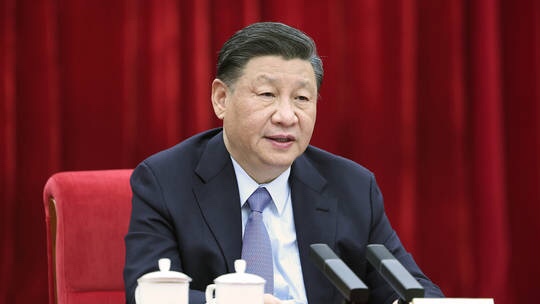
Xi Jinping visits national political advisers attending the 14th National Committee of the Chinese People’s Political Consultative Conference (CPPCC). Xinhua / Ju Peng
Chinese President Xi Jinping has publicly criticized the US and accused it of leading a Western attempt to “contain” his country. Foreign Minister Qin Gang also warned Washington to “hit the brakes” or risk “conflict and confrontation.”
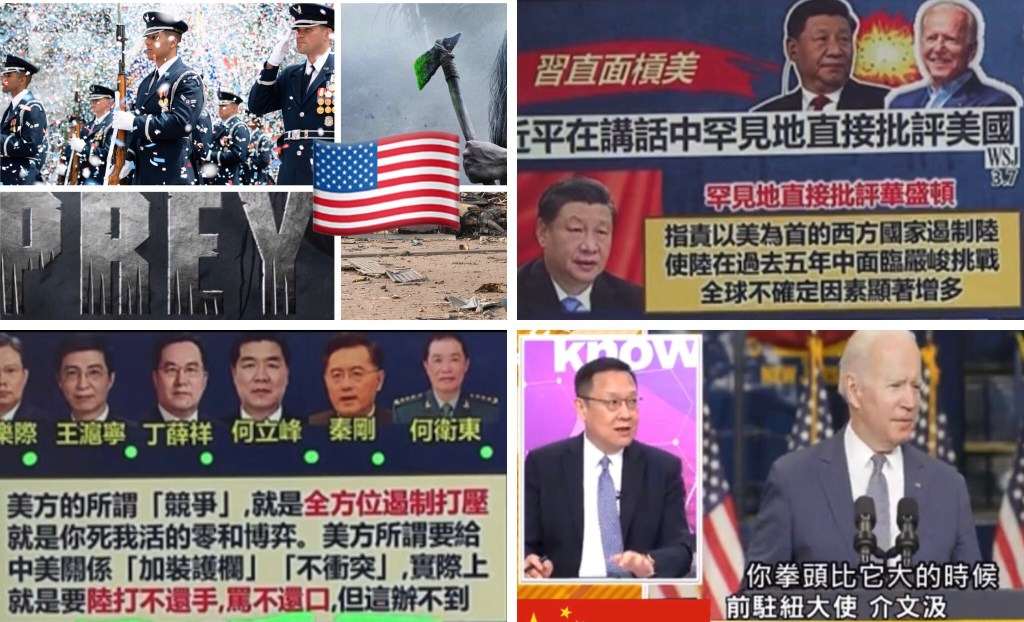
“Western countries led by the United States have implemented all-round containment, encirclement and suppression of China, which has brought unprecedented severe challenges to our nation’s development,” Xi said in a rare verbal attack on Monday, as quoted by state media.
The Chinese leader was meeting with industry and business groups during an annual gathering of an advisory body to the Communist Party. His speech focused on the national economy, with the remark about Washington’s policy illustrating what he called “uncertain and unpredictable factors” in the international environment, which also included the Covid-19 pandemic.
Xi normally refrains from targeted criticism of the US. Michael Swaine, a senior research fellow at the Quincy Institute for Responsible Statecraft, told the New York Times that, to his knowledge, it was the first time the Chinese leader “has publicly come out and identified the US as taking such actions.”
Meanwhile, another senior Chinese official accused Washington of using underhanded tactics on Tuesday.
“The US claims that it seeks to out-compete China but does not seek conflict. Yet in reality, its so-called ‘competition’ means to contain and suppress China in all respects,” Foreign Minister Qin Gang said in a speech on the sidelines of an ongoing session of the Chinese legislature.
He compared the US government to an athlete trying to trip their opponent instead of giving its best performance. Washington wants Beijing not to push back when it is targeted by such action or slander, the minister suggested, adding that this was not possible. The US trajectory could lead to a disaster that no guardrails would be able to prevent, he warned.
“If the US does not hit the brakes, but continues to speed down the wrong path, no amount of guardrails can prevent derailing and there will surely be conflict and confrontation,” said Qin, who previously served as the Chinese ambassador to the US.
Washington has accused Beijing of undermining a “rules-based order” with its policies and imposed a number of economic restrictions, including last year’s ban on exporting certain semiconductors to the country. Tensions escalated further last month after Washington accused the country of flying a “spy balloon” over American soil, which China said was just a stray weather aircraft.
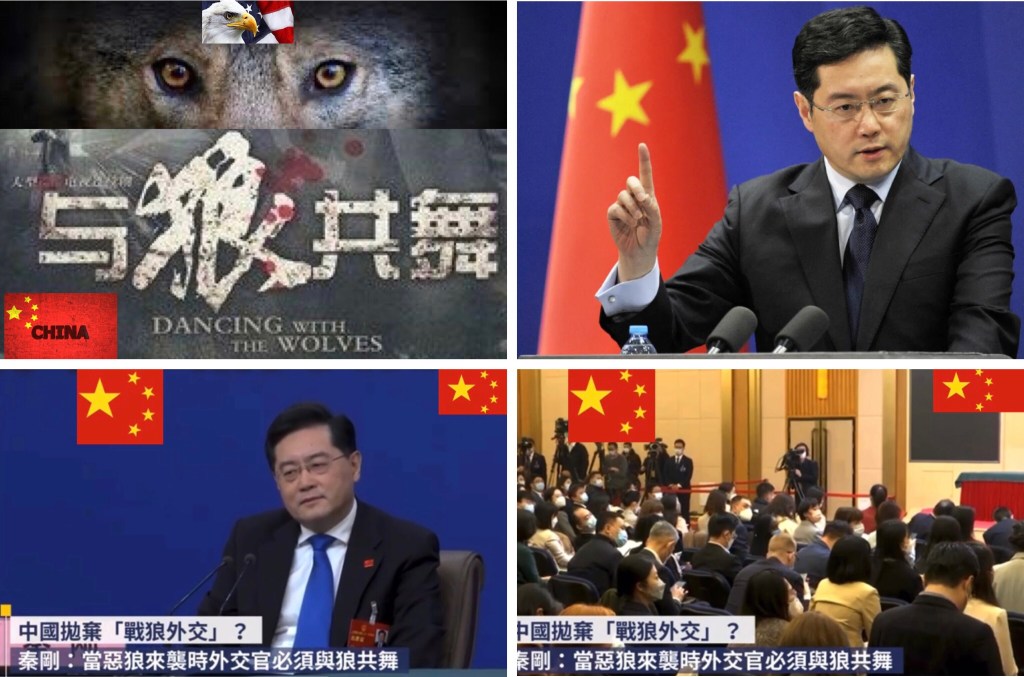
Chinese/English Video: China Abandoning “Wolf Warrior Diplomacy”? Qin Gang: Chinese Diplomats must dance with BAD wolves when wolves strike 中國拋棄「戰狼外交」秦剛: 當惡狼來襲時中國外交官必須與狼共舞
Foreign Minister Qin Gang Meets the Press
On 7 March 2023, a press conference was held on the margins of the First Session of the 14th National People’s Congress at the Media Center, during which Foreign Minister Qin Gang answered questions from Chinese and foreign media about China’s foreign policy and external relations.
Qin Gang: Friends from the media, good morning. I’m very pleased to meet you. As the world is undergoing major changes unseen in a century, China will continue to pursue the independent foreign policy of peace, and will continue to implement the mutually beneficial strategy of opening-up. China will always be a builder of world peace, a contributor to global development, and a defender of the international order. Now I’m ready to take your questions.
China Central Television: People at home and abroad have great expectations for China’s diplomacy in 2023. What will be the priorities and highlights in China’s diplomacy, particularly in head-of-state diplomacy? As the new foreign minister, how do you envision China’s diplomacy in the years to come?
Qin Gang: We’re in the first year of fully implementing the guiding principles set forth by the 20th National Congress of the Communist Party of China. The Congress has outlined top-level plans for China’s diplomacy, identified our missions and tasks, and made strategic arrangements to that end. With the COVID situation turning for the better in China, we’re steadily resuming exchanges with the world. We’ve pressed the “acceleration button”, and sounded the clarion call for our diplomacy.
We will follow the guidance of head-of-state diplomacy. In particular, we will ensure the success of the two major diplomatic events that we will host — the first China-Central Asia Summit and the third Belt and Road Forum for International Cooperation, which will be the showcase of the distinctive character of China’s diplomacy.
We will take it as our mission to defend China’s core interests. We firmly oppose any form of hegemonism and power politics. We firmly oppose the Cold War mentality, camp-based confrontation, and acts to contain and hold back other countries’ development. We will resolutely safeguard China’s sovereignty, security and development interests.
We will build on our extensive partnerships. We will pursue coordination and sound interactions among major countries, seek friendship and cooperation with other countries, and promote a new type of international relations. China has had a growing network of friends, made more and more new friends, and strengthened ties with old ones.
We will take openness and development as our objective. We will facilitate high-quality development and high-standard opening-up. We will reject “decoupling”, and oppose severing industrial and supply chains and imposing unilateral sanctions. We will uphold an open and inclusive world economy, and will generate new opportunities for the world with our new development.
We will take multilateralism as the way forward. We will promote the building of a community with a shared future for mankind, promote greater democracy in international relations, and make global governance more just and equitable. We will offer more, better Chinese insight and solutions to help meet humanity’s common challenges.
We will take “diplomacy for the people” as our guiding principle. We will always bear in mind the well-being and security of our overseas compatriots, and honor our commitment to serving the people. We will enhance the service for and protection of Chinese citizens and institutions abroad to make their overseas travels and exchanges safer and more convenient.
The world is far from tranquil, being entangled in intertwined turmoils and transformation, the clash between unity and division, and the coexistence of opportunities and challenges. The new journey of China’s diplomacy will be an expedition with glories and dreams, and it will also be a long voyage through stormy seas. The harder the mission, the more glorious its accomplishment. Under the strong leadership of the CPC Central Committee with Comrade Xi Jinping at its core, we will put Xi Jinping Thought on Diplomacy into full practice, follow through on the decisions of the 20th CPC Congress, and uphold our foreign policy goals of safeguarding world peace and promoting common development. We will meet challenges head-on, boldly take on responsibilities, foster an enabling external environment for building a modern socialist country in all respects, and write a new chapter in China’s distinctive major-country diplomacy in the new era.
Rose al-Yūsuf: Many see the Chinese path to modernization as a new path to modernity that will inspire other countries, especially the developing countries. How do you see the significance of the Chinese path to modernization for the world?
Qin Gang: Indeed as you said, “Chinese modernization” has become a popular phrase in the world. Achieving modernization for a country of more than 1.4 billion people will be an unprecedented feat in human history, one of profound global significance in itself.
Chinese modernization offers solutions to many challenges facing human development. It busts the myth that modernization is westernization; it creates a new form of human advancement; and it provides an important source of inspiration for the world, especially developing countries. As I see it, Chinese modernization has at least five features:
First, independence. The reason why the Chinese path to modernization works is exactly because it is developed in China and rooted in Chinese culture, and fits in well with China’s national conditions. China’s success in development also proves that every country has the right and ability to choose its own path, and to hold its future firmly in its own hands.
Second, putting people first. Chinese modernization is the modernization of common prosperity for all. It is about achieving both material abundance and cultural-ethical enrichment for the people. Modernization should not serve the interests of only a few countries or individuals. It should not make the rich richer and the poor poorer. Nor should it lead to cultural impoverishment, moral degradation or disorder. People around the world should all enjoy the rights to seek development as equals and pursue happiness.
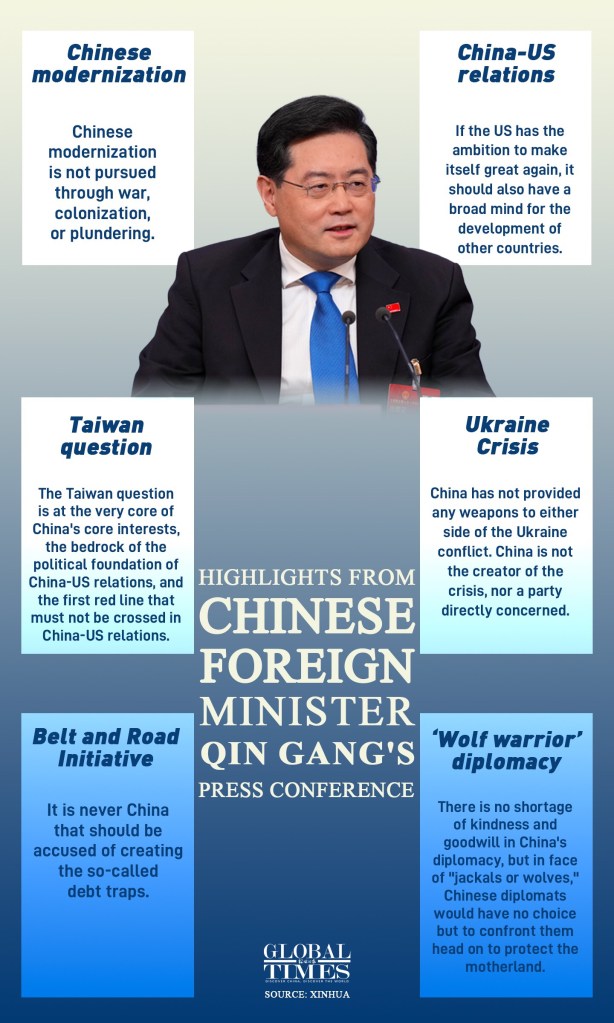
Third, peaceful development. Chinese modernization is not pursued through war, colonization, or plundering. It is dedicated to peace, development, cooperation and mutual benefit, and is committed to harmony between humanity and nature. It is a new path different from Western modernization.
Fourth, openness and inclusiveness. Humanity’s modernization should not be a one-flower show but a hundred flowers in bloom. It is important to respect the right of every country to pursue a modernization path tailored to its national reality, and encourage exchange and mutual learning, so that all will flourish and prosper together.
Fifth, working hard in unity. China’s success proves that acting in disunity like a heap of loose sand will get us nowhere, and that only by striving in unity can we pool strength. We will persevere in carrying out the set blueprint until it becomes reality. Partisan rift, empty talk and frequent policy flip-flop as seen in certain country will only make even the best blueprint an illusion and a castle in the air.
The process of Chinese modernization is a boost to the force for peace, justice and progress in the world. We hope and believe that as more and more countries begin their own journey of modernization, the vision of building a community with a shared future for mankind will become true.
TASS: How do you view the future of Russia-China relations? Will it provide a new model for state-to-state relations? Will the Chinese President visit Russia after the NPC and CPPCC Sessions? Is it possible for our two countries to drop the use of the US dollar and the Euro in bilateral trade settlement?
Qin Gang: You mentioned the model for major-country relations. That is a good perspective for observing China-Russia relations. Major countries should figure out what they want with each other — building exclusive blocs, or fostering friendship that is open and sincere. China and Russia have found a path of major-country relations featuring strategic trust and good neighborliness, setting a good example for a new type of international relations.
Some countries who are inclined to view China-Russia relations through the lens of Cold War alliances see nothing but their own image. The China-Russia relationship is based on no-alliance and no-confrontation, and it is not targeted at any third party. It is not a threat to any country, nor is it subject to any interference or discord sown by any third party. With China and Russia working together, the world will have a driving force toward multipolarity and greater democracy in international relations, and global strategic balance and stability will be better ensured. The more unstable the world becomes, the more imperative it is for China and Russia to steadily advance their relations.
Head-of-state interaction is the compass and anchor of China-Russia relations. Under the strategic guidance of the two presidents, the China-Russia comprehensive strategic partnership of coordination for the new era will surely grow from strength to strength.
As for the currencies to be used in China-Russia trade, the answer is simple. I would say whichever that are efficient, safe and credible. Currencies should not be trump cards for unilateral sanctions, still less a disguise for bullying or coercion.
People’s Daily: The Global Development Initiative (GDI) and the Global Security Initiative (GSI) put forward by President Xi Jinping have been welcomed by many countries. What role does China want to play in strengthening and improving global governance? What further steps will it take to this end?
Qin Gang: Amid the changes and confusion, people are wondering what’s wrong with our world and what we should do about it. Humanity has come to a new crossroads. Keeping in mind the lessons of history as well as the well-being of the world and all humanity, President Xi Jinping has proposed the right approach to global governance. Through the past ten years in the new era, President Xi Jinping has put forward a host of major initiatives and proposals, including building a community with a shared future for mankind, the Belt and Road Initiative, the common values of humanity, the GDI and the GSI. The core message of these initiatives is that countries are interdependent, mankind have a shared future, and the international community must get united for cooperation. With solidarity and cooperation, we can defeat COVID, address climate change, tackle the deficit in peace, security, development and governance, and build an open, inclusive, clean and beautiful world of lasting peace, universal security and common prosperity.
Yet the path to global governance is far from smooth. An ancient Chinese philosopher observed that “goodwill leads to good governance while enmity, chaos”. Another ancient philosopher stressed that “the rule of selfish interests spells chaos while the rule of law brings good governance”. The moral of these wise sayings is that global governance should be promoted in accordance with the law and the principles of international law enshrined in the UN Charter; equity and justice must be upheld while hegemonism and selfish interests must be rejected; solidarity must be defended while division and confrontation must be abandoned. Developing countries account for more than 80 percent of the global population and more than 70 percent of global economic growth. People in developing countries are entitled to a better life, and developing countries are entitled to greater representation and a louder voice in international affairs.
A just cause should be pursued for the common good. China will keep in mind the interests of the world, take an active part in global governance, and contribute more to world peace and development and to human progress.
NBC: You once wrote, “The future of American and Chinese peoples — indeed, the future of the entire planet — depends on a healthy and stable China-US relationship.” Healthy and stable relationship? Is that still possible given the widening conflict of interests on a whole range of issues? Or how do you purpose to make it possible? Besides China’s core interests, have you also considered the core interests of the United States?
Qin Gang: A recent episode in China-US relations is the unmanned airship incident. It is entirely an accident caused by force majeure, and its facts and nature are crystal clear. Even the United States did not believe it posed a physical threat. However, in violation of the spirit of international law and international customary practices, the United States acted with a presumption of guilt. It overreacted, abused force, and dramatized the accident, creating a diplomatic crisis that could have been avoided.
An accident can reveal something fundamental. In this case, the US perception and views of China are seriously distorted. It regards China as its primary rival and biggest geopolitical challenge. This is like the first button in a shirt being put wrong. And the result is that the US China policy has entirely deviated from the rational and sound track.
The United States claims that it seeks to “out-compete” China but does not seek conflict. Yet in reality, its so-called “competition” means to contain and suppress China in all respects and get the two countries locked in a zero-sum game. The United States talks a lot about following rules. But imagine two athletes competing in an Olympic race. If one athlete, instead of focusing on giving one’s best, always tries to trip or even injure the other, that is not fair competition, but malicious confrontation and a foul! Its so-called “establishing guardrails” for China-US relations and “not seeking conflict” actually means that China should not respond in words or action when slandered or attacked. That is just impossible! If the United States does not hit the brake but continues to speed down the wrong path, no amount of guardrails can prevent derailing, and there will surely be conflict and confrontation. Who will bear the catastrophic consequences? Such competition is a reckless gamble with the stakes being the fundamental interests of the two peoples and even the future of humanity. Naturally China is firmly opposed to all this. If the United States has the ambition to make itself great again, it should also have a broad mind for the development of other countries. Containment and suppression will not make America great, and it will not stop the rejuvenation of China.
As President Xi Jinping pointed out, whether China and the United States can handle their relationship well bears on the future of the world. Getting the relationship right is not optional, but something we must do and must do well. I have also noted that more and more people with vision and insight in the United States are deeply worried about the current state of China-US relations, and have been calling for a rational and pragmatic policy toward China.
The American people, just like the Chinese people, are friendly, kind and sincere, and want a better life and a better world. When I was working in the United States, I visited many places. In Los Angeles, workers at the port of Long Beach shared with me how their entire families live off trade with China, stressing that the United States and China should prosper together. Farmers in Iowa told me that they want to produce more food because a great number of people in the world are still living in hunger. Presidents of universities stressed that international exchange is critical for technological advancement, and that technological decoupling is a lose-lose and all-lose. A kid in the Yinghua Academy in Minnesota, the world champion of the “Chinese Bridge” Chinese show for foreign elementary school students, confided in me in fluent Chinese that she is learning the language because she loves China. Every time I think about them, I’m convinced that the China-US relationship should be determined by the common interests and shared responsibilities of the two countries and by the friendship between the Chinese and American peoples, rather than by US domestic politics or the hysterical neo-McCarthyism.
China will continue to follow the principles put forth by President Xi Jinping, namely, mutual respect, peaceful coexistence and win-win cooperation, to pursue a sound and stable relationship with the United States. We hope the US government will listen to the calls of the two peoples, rid of its strategic anxiety of “threat inflation”, abandon the zero-sum Cold War mentality, and refuse to be hijacked by “political correctness”. We hope that the United States will honor its commitments and work with China to explore the right way to get along with each other to the benefit of both countries and the entire world.
Phoenix Television: Some US think tanks and officials have been hyping up the possibility of a conflict between China and the US over the Taiwan question in the year 2027 or 2025. Some media even say the United States has made up a plan for the “destruction of Taiwan”. How do you see the current situation in the Taiwan Strait? How likely is such a conflict between the two countries in the Taiwan Strait?
Qin Gang: I knew that the Taiwan question would be raised, so I’ve brought a copy of the Constitution of the People’s Republic of China. Let me first quote two lines from the Preamble of the Constitution — “Taiwan is part of the sacred territory of the People’s Republic of China. It is the inviolable duty of all Chinese people, including our compatriots in Taiwan, to accomplish the great task of reunifying the motherland.” Resolving the Taiwan question is a matter for the Chinese people, and no other country has the right to interfere in it. Some senior US officials have recently asserted that the Taiwan question is not an internal affair of China. We firmly oppose such absurd comments, and we will stay on high alert.
The two sides of the Taiwan Strait belong to one common family, which is called China. As brothers and sisters, we will continue to work with the greatest sincerity and utmost efforts to pursue peaceful reunification. Meanwhile, we reserve the option of taking all necessary measures. In fact, China’s Anti-Secession Law has explicitly made this point. In case this Law is violated, we must act in accordance with the Constitution and the Law. No one should ever underestimate the firm resolve, strong will or great capability of the Chinese government and people to safeguard national sovereignty and territorial integrity.
The Taiwan question is the core of the core interests of China, the bedrock of the political foundation of China-US relations, and the first red line that must not be crossed in China-US relations. The US has unshirkable responsibility for causing the Taiwan question. The reason why China raises this question to the US is to urge it to stop interfering in China’s internal affairs. The Chinese people have every right to ask: Why does the US talk at length about respecting sovereignty and territorial integrity on Ukraine, while disrespecting China’s sovereignty and territorial integrity on China’s Taiwan question? Why does the US ask China not to provide weapons to Russia, while it keeps selling arms to Taiwan in violation of the August 17Communiqué? Why does the US keep on professing the maintenance of regional peace and stability, while covertly formulating a “plan for the destruction of Taiwan” ?
Separatism for Taiwan independence is as incompatible with peace and stability of the Taiwan Strait as fire with water. For peace and stability in the Taiwan Strait, its real threat is the separatist forces for Taiwan independence, its solid anchor is the one-China principle, and its genuine guardrails are the three China-US joint communiqués. Mishandling of the Taiwan question will shake the very foundation of China-US relations. If the United States truly expects a peaceful Taiwan Strait, it should stop containing China by exploiting the Taiwan question, return to the fundamental of the one-China principle, honor its political commitment to China, and unequivocally oppose and forestall Taiwan independence.
Global Times: The Russia-Ukraine conflict has been going on for over a year. Some in the United States and other Western countries are now urging China not to provide lethal assistance to Russia, and hyping up China’s “special responsibility”. What is your take on this?
Qin Gang: The Ukraine crisis is a tragedy that could have been avoided. But it has come to where it stands today. There are painful lessons that all parties should truly reflect upon.
The Ukraine crisis has a complex history and reasons. In essence, it is an eruption of the problems built up in the security governance of Europe. China always makes its own judgment independently based on the merits of the issue. Between peace and war, we choose peace. Between dialogue and sanctions, we choose dialogue. Between lowering the temperature and fanning the flames, we choose the former. China did not create the crisis. It is not a party to the crisis, and has not provided weapons to either side of the conflict. Why on earth the blame, sanctions and threats against China? This is absolutely unacceptable.
Less than two weeks ago, we issued China’s Position on the Political Settlement of the Ukraine Crisis. It offers 12 propositions, including respecting the sovereignty of all countries, abandoning the Cold War mentality, ceasing hostilities, and resuming peace talks. The core stance is to promote talks for peace.
Regrettably however, efforts for peace talks have been repeatedly undermined. There seems to be “an invisible hand” pushing for the protraction and escalation of the conflict and using the Ukraine crisis to serve certain geopolitical agenda.
The Ukraine crisis has come to a critical juncture. Either hostilities stop and peace is restored and the process of political settlement begins, or more fuel is added to the flames and the crisis further expands and spirals out of control. Conflict, sanctions and pressure will not solve the problem. What is needed is calmness, reason and dialogue. The process of peace talks should begin as soon as possible, and the legitimate security concerns of all parties should be respected. This is the right way to achieve durable security in Europe.
Associated Press of Pakistan: This year marks the tenth year of China’s Belt and Road Initiative. The United States and the European Union have also come up with their own global infrastructure initiatives. Do you see them as competing initiatives? Some people say the Belt and Road can lead to debt traps. How would you respond to that?
Qin Gang: The Belt and Road Initiative (BRI) is a high-quality public good initiated by China, built by the parties involved, and shared by the world. The BRI delivers high-standard, sustainable and livelihood-enhancing outcomes, and is hence widely welcomed. To date, over three quarters of countries around the world and 32 international organizations have joined this initiative.
Ten years after its inception, the BRI has evolved from vision into reality, boosting development in partner countries and bringing real benefits to the people. A decade of efforts have laid down a pathway toward common development, and created an array of national landmarks, livelihood projects, and milestones of cooperation. Over the past decade, the BRI has galvanized nearly US$1 trillion of investment, established more than 3,000 cooperation projects, created 420,000 local jobs, and helped lift almost 40 million people out of poverty. The China-Laos Railway helps make land-locked Laos a land-linked country. The Puttalam power plant helps light up numerous Sri Lankan homes at night. The Mombasa-Nairobi Railway adds more than two percentage points to local economic growth. Luban workshops help young people in over 20 countries acquire vocational skills. The China-Europe Railway Express has completed 65,000 freight services, serving as a steel camel fleet between Asia and Europe, and a health train delivering medical supplies during the pandemic. China will host the third Belt and Road Forum for International Cooperation this year. Taking this as an opportunity, we will work with all relevant parties for more fruitful outcomes from Belt and Road cooperation.
The BRI is a practical and open initiative guided by the principle of extensive consultation, joint contribution and shared benefits. Its cooperation is conducted through consultation, and its partnerships are built with friendship and good faith. We welcome all initiatives that are not ideologically-driven proposed by other countries, and we are happy to see them succeed if they don’t carry a geopolitical agenda.
China should be the last one to be accused of the so-called debt trap. Data show that multilateral financial institutions and commercial creditors account for over 80 percent of the sovereign debt of developing countries. They are the biggest source of debt burden on developing countries. Particularly since last year, the unprecedented, rapid interest hikes by the United States have led to capital outflows in many countries and worsened the debt problems in the countries concerned.
China has been making efforts to help the countries in distress, and is the biggest contributor to the G20’s Debt Service Suspension Initiative (DSSI). China will continue to participate constructively in the resolution of international debt issues. Meanwhile, we call on other parties to act together and share the burden fairly. When parties sit together and talk things through, there will be more solutions than problems.
NHK: This year marks the 45th anniversary of the Japan-China Peace and Friendship Treaty. Now, the difference in the positions of the two countries in the fields of politics, economy and security has become clear. How does the new Chinese government plan to build relations with Japan in the future?
Qin Gang: China and Japan are close neighbors. To foster a China-Japan relationship for the new era, it is important to do the following:
First, honor commitments. Our two countries signed the Treaty of Peace and Friendship 45 years ago, codifying the principles and direction for the development of China-Japan relations for the first time. This Treaty, together with the other three political documents between China and Japan, form the political foundation of the bilateral relations. These documents, particularly the important political consensus that the two countries should “be partners, not threats”, must be truly observed. Words must be matched with actions.
Second, learn lessons from history. The immense sufferings imposed by the Japanese militarists on the Chinese nation are still painful today. The Chinese people will not forget this, and the Japanese side must not forget. Forgetting history is a betrayal, and denying a crime is to repeat a crime. China always treats Japan with goodwill and hopes for friendship and good-neighborliness. Yet, should some people from the Japanese side choose a beggar-thy-neighbor approach rather than pursuing partnership, and even take part in a new Cold War to contain China, the bilateral relations would only suffer new wounds when the old ones are yet to be healed.
Third, preserve the international order. Some leaders in Japan recently have also been talking a lot about “international order”. We need to make clear what order they are talking about. Today’s international order is built on the victory of the World Anti-Fascist War, which cost the lives and blood of 35 million Chinese soldiers and civilians. The Chinese people will never accept any form of historical revisionism that challenges the post-war international order and international justice. The Treaty of Peace and Friendship explicitly opposed hegemonism, and its spirit remains relevant today.
Fourth, promote win-win cooperation. China and Japan are highly complementary and need each other. We should uphold market principles and a free and open spirit, increase cooperation, jointly ensure stable and smooth industrial and supply chains, and inject impetus and vitality into global economic recovery.
One more issue I wish to raise here. The Japanese government has decided to discharge contaminated water of the Fukushima nuclear power plant into the sea. This is not Japan’s private business, but a major issue vital to the marine environment and human health. We urge the Japanese side to properly handle this matter in a responsible manner.
Xinhua News Agency: The United States claims that it will “shape the strategic environment in which China operates”. Its Indo-Pacific Strategy is an important leverage to achieve this. As a result, many countries in the region have felt great pressure. Some media suggested that as the Chinese economy faces growing downward pressure, regional countries have found it difficult to continue to “rely on the United States for security guarantee, and on China for economic development”. What is your view?
Qin Gang: The US Indo-Pacific Strategy, while purportedly aiming at upholding freedom and openness, maintaining security and promoting prosperity in the region, is in fact an attempt to gang up to form exclusive blocs, to provoke confrontation by plotting an Asia-Pacific version of NATO, and to undermine regional integration through decoupling and cutting chains.
The US claim to “shape the strategic environment in which China operates” actually reveals the real purpose of its Indo-Pacific Strategy, that is, to encircle China. Such an attempt will only disrupt the ASEAN-centered, open and inclusive regional cooperation architecture, and undermine the overall and long-term interests of regional countries. It is bound to fail.
I noticed that leaders of a number of regional countries have recently stated that ASEAN should not be a proxy for any party and should stay clear from big power rivalry. As a pacesetter in global development, Asia should be a stage for win-win cooperation rather than a chessboard for geopolitical contest. No Cold War should be reignited, and no Ukraine-style crisis should be repeated in Asia.
As for who to rely on in terms of security and economy, I believe it is necessary to stand together in face of difficulties, jointly pursue security and development, and work together to build a closer community with a shared future in the neighborhood.
Some are concerned about China’s economic outlook. I think that’s quite unnecessary. Some international institutions have recently revised upward their forecast on China’s economic growth this year. Our projected growth target is around five percent, far higher than other major economies. Last year, China’s paid-in foreign investment was up by 8 percent, and it remained a top destination for foreign investors. The China Development Forum and the Boao Forum for Asia Annual Conference will soon be held, and so will the Summer Davos in Tianjin. I have learned that many foreign business leaders have applied to participate. In the recent exchanges with my counterparts from regional countries, development is what we all hope for the most, and cooperation is more discussed than any other subject. I believe that as China accelerates high-quality development, expands high-standard opening-up and fosters a new development paradigm, it will surely bring new opportunities to all countries in the world, especially to regional countries.
The Paper: Late last year, President Xi Jinping attended the first China-Arab States Summit and the China-Gulf Cooperation Council Summit, and paid a state visit to Saudi Arabia. In February this year, China hosted Iranian President Ebrahim Raisi. This shows China is giving more attention to the Middle East. What will be China’s priorities in its Middle East policy?
Qin Gang: There are long-standing relations between China and Middle Eastern countries. We are good friends and good partners.
At the first China-Arab States Summit late last year, the two sides agreed to build a China-Arab community with a shared future in the new era. This is a strong boost to our friendship and cooperation. Last month, Iranian President Ebrahim Raisi paid a successful visit to China. During the visit, the two sides agreed to deepen the China-Iran comprehensive strategic partnership and take the bilateral relations to new levels.
China supports the strategic autonomy of Middle Eastern countries, and opposes foreign interference in their internal affairs. China will continue to stand for justice and support countries in this region in seeking political settlement of hotspot issues through dialogue and consultation. China fully respects Middle Eastern countries as the masters of their own affairs. We have no intention to fill a so-called “vacuum”. And we will not build exclusive circles. In the Middle East, China will be a facilitator for peace and stability, a cooperative partner for development and prosperity, and an enabler for building strength through unity.
The Straits Times: Some see your appointment as foreign minister as a signal that China is moving away from the so-called “wolf warrior diplomacy” and taking a softer approach with its diplomacy. Is China really pivoting away from what had been viewed as a tough brand of engagement?
Qin Gang: A very interesting question. I recall when I just arrived as Chinese ambassador to the United States, American media exclaimed, “Here comes a Chinese wolf warrior.” Now I am back as the foreign minister, the media have stopped calling me that way. I kind of feel at a loss. Truth is, “wolf warrior diplomacy” is a narrative trap. Those who coined the term and set the trap either know little about China and its diplomacy, or have a hidden agenda in disregard of facts.
Confucius said over 2,000 years ago, “One should repay kindness with kindness, and resentment with justice. If resentment is repaid with kindness, with what then should one repay kindness?” In China’s diplomacy, there is no shortage of goodwill and kindness. But if faced with jackals or wolves, Chinese diplomats would have no choice but to confront them head-on and protect our motherland.
AFP: Given China’s tense relations with the United States in recent months, does China plan to strengthen its ties with the European Union on political and commercial levels?
Qin Gang: China and Europe are two great civilizations, two big markets and two major forces. Our interactions are an independent choice made by the two sides entirely based on our respective strategic interests. The China-Europe relationship is not targeted at any third party, nor is it subjugated to or controlled by any third party.
No matter how the situation may evolve, China all along sees the European Union as a comprehensive strategic partner and supports European integration. We hope that Europe, with the painful Ukraine crisis in mind, will truly realize strategic autonomy and long-term peace and stability.
We will work with Europe to uphold true multilateralism, and keep to mutual respect and win-win cooperation. We wish to work with Europe to overcome disruptions and challenges, keep deepening the China-EU comprehensive strategic partnership, and bring more stability, certainty and positive energy to a world of change and disorder.
China Daily: We recently launched a survey to collect questions for the foreign minister. Many young people care a lot about China’s international image and voice in international affairs. How can we present to the world a true, multi-dimensional and panoramic picture of China? What role can young people play in making China’s voice better heard?
Qin Gang: I’d like to first thank China Daily for conducting this survey. I believe this helps to bring the general public, especially the young people, closer to China’s diplomacy. I’d also like to thank our young friends for your interest in and support for China’s diplomatic work. This is a good question. I’m very pleased to see that our young people have this ambition and vision. As a Chinese proverb goes, “Everyone has a responsibility for the future of their country.” General Secretary Xi Jinping observed that young people are our hope and will shape the future, and that they should demonstrate their youthful vigor in the building of a community with a shared future for mankind.
China is moving closer to the center of the world stage. We make trending topics and find ourselves in spotlight more often. But we don’t have enough microphones, and our voice is not loud enough. Some are still hogging the microphones, and there are quite many noises and jarring notes about China. When it comes to making China’s voice heard loud and clear, young Chinese have an important role to play.
First, be confident. Our 5,000-year civilization and our achievements in modernization are the source of such confidence. I hope that young people will foster greater ambition, grit and determination through practice. I hope you will look the world in the eye and have dialogue with the world on an equal footing to share your unique perspectives, make your voices heard, and tell the world who you are.
Second, be enterprising. To realize the great rejuvenation of the Chinese nation and build a community with a shared future for mankind, young people should step forward with courage and tenacity. While Western modernization is the prelude to the modernization of humanity, the development and progress of developing countries including China is a symphony. Young Chinese can compose the most exciting and beautiful part of this symphony with your relentless pursuit of dreams.
Third, be open-minded. You need to cultivate a global vision and draw on others’ strengths through exchange and mutual learning. You need to see the world with your own eyes and tell the world about China in your own words. In this process, you can be good narrators of China’s stories and envoys of Chinese culture.
I hope more young friends will join the diplomatic service, and live youth to the fullest in the times of great opportunities.
Qin Gang: Tomorrow will be the International Women’s Day. I wish to send festive greetings to all female NPC deputies, CPPCC National Committee members, journalists and friends. Wish you a happy Women’s Day and all the best!
Perth Mint sold diluted gold to China, got caught, and tried to cover it up 珀斯鑄幣廠向中國出售稀釋黃金,被抓,並試圖掩蓋 By Angus Grigg, Ali Russell, Stephanie Zillman and Meghna Bali March 6 2023
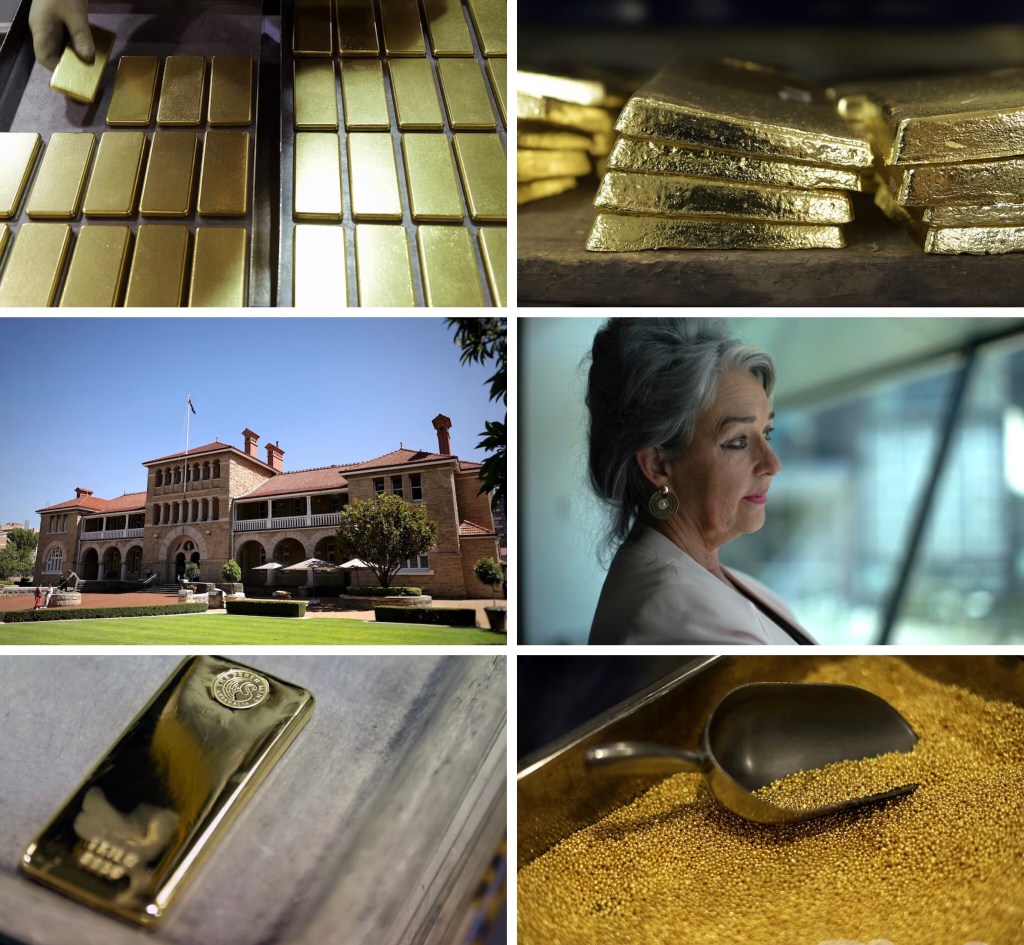
Gold bars arranged – The Perth Mint is one of the largest gold refineries in the world.
The historic Perth Mint is facing a potential $9 billion recall of gold bars after selling diluted or “doped” bullion to China and then covering it up, according to a leaked internal report.
Key points:
*The mint started “doping” its gold as a cost-saving measure *When it got caught for some of its gold dipping below Shanghai Gold Exchange standards, it kept it quiet *While the gold remained above the 99.99 per cent requirement, it exceeded the amount of allowable silver
in Shanghai Four Corners has uncovered documents charting the WA government-owned mint’s decision to begin “doping” its gold in 2018, and then how it withheld evidence from its largest client in an effort to protect its reputation.
While the gold remained above broader industry standards, the report estimated up to 100 tonnes of gold sent to Shanghai Gold Exchange (SGE) potentially did not comply with Shanghai’s strict purity standards for silver content.
One Perth Mint insider, who asked not to be named as they could face five years’ jail if their identity is revealed, says it is a “scandal of the highest level”.
“I don’t know if I’ve ever seen one this big,” they say.
The mint is the largest processor of newly mined gold in the world, one of Perth’s top tourist attractions and well known for producing commemorative coins to mark everything from royal weddings to a new James Bond film.
Last year alone it sold $20.3 billion in gold. It is the only mint in the world that has a government guarantee.
But in recent years the 124-year-old institution, officially known as Gold Corporation, has been plagued by a series of scandals.
WA Premier Mark McGowan had ministerial responsibility for the mint for four years until March 2021.
Shaped pieces of a gold sit stacked four high on a surface. Their unpolished surface shines in the light. The mint started doping in 2018 in a bid to save money.(Getty Images/Bloomberg) Doping the gold
Gold doping is a somewhat accepted practice in the industry and is not illegal, but is high risk for refiners, as it lowers the quality of bullion by adding impurities like silver or copper.
Trace amounts of these metals are permitted, but Perth Mint’s plan – to keep just within industry standard of 99.99 per cent purity – only left a miniscule margin of error.
The mint began doping its gold as a cost-saving measure in 2018, expecting to save up to $620,000 a year — a tiny fraction of its annual sales.
A historic three story building with arches and columns on its facade. It has a statue and green lawns in front of it.
Perth Mint has been a pillar of Western Australia’s gold industry for more than 120 years.(Four Corners: Mat Marsic) Within two years this desire to save money would put the mint at the centre of what may be one of the biggest gold scandals in Australian history.
From the outset there were signs of trouble. Just months after the doping began, the report says refinery staff identified concerns that silver and copper levels may have exceeded those allowed by the SGE.
Despite this, refinery staff continued doping the gold.
Damage control
The doping program began to unravel in September 2021. Shanghai Gold Exchange alleged two bars contained too much silver and were non-compliant with its specifications.
Fearing a major blow to its reputation, an internal investigation was ordered on the same day the complaint was received.
The investigation made clear just how much was on the line if the SGE went public.
“If SGE – Gold Corporation’s pre-eminent exchange client – had made public that they had issues with Gold Corporation bars … the impact of negative public statements on the business could be very significant,” the internal report said.
It then laid out just how large the problem was.
“Based on average understandings of volumes … it was possible for up to 100 tonnes of stock to be recalled from the Shanghai Gold Exchange for replacement,” the report said.
A metal scoop sits in a metal container of tiny granules of gold.
Perth Mint feared a major blow to its reputation.(Four Corners: Mat Marsic) At today’s gold prices, buying back that amount of bullion would cost $8.7 billion. This would then need to be transported back to Perth and recast before it could be sold again.
Financing a recall of this scale would also be difficult for the mint and would likely require support from WA taxpayers.
Shanghai exchange ‘misled’
When Perth Mint went back and checked the two gold bars at the centre of the customer complaint it found one had been “red flagged” by its refinery.
The bar’s purity test, known as an “assay”, had failed to meet SGE’s strict standards for silver, but was still above the crucial 99.99 per cent purity.
But it wasn’t just one bad batch, it meant most of the gold bars during the three-year doping program were potentially non-compliant with Shanghai standards.
Crucially, the mint did not share this information with its largest client.
A gold bar stamped with Perth Mint’s logo sits on a metal tray. Its surface is polished.
The mint didn’t send SGE the failed purity test.
The report claims that during a meeting on September 30, 2021, advice was sought from then-CEO, Richard Hayes, as to whether both the failed and compliant assays should be sent to Shanghai.
“CEO confirmed only the compliant assay would be provided to the customer, with the broader burden of proof to be left with the SGE to prove non-compliance,” the report alleges.
On the day the failed assay was discovered, the mint immediately ceased its gold doping program.
Governance and transparency advocate, Serena Lillywhite says all the test results should have been sent to the SGE.
“I think it can be described as a cover-up, because [the mint] had a choice to disclose all the information, and in fact chose not to,” she says.
“They chose a selected amount of information that was perhaps less damning to their reputation and their business practices.”
A woman with grey hair looks out a window at a street and buildings. She has a neutral expression.
Serena Lillywhite says all the test results should have been sent.(Four Corners: Mat Marsic)
The mint insider agrees.
“If they’ve … traded bars through the SGE that are non-compliant, they’d lose their accreditation.”
In the same week as this crisis was unfolding behind closed doors at the Perth Mint, it was announced that Mr Hayes would be retiring early due to illness. He did not respond to Four Corners’ questions or a request for an interview.
Perth Mint confirmed it did receive a customer complaint about a small number of 1kg gold bars but that, “due to Chinese government restrictions on exporting gold from China, the customer did not return the bars … and therefore the customer’s concerns could not be verified”.
It said its refining methods had been enhanced since late 2021 and it was now committed to higher purity standards than the industry average.
Reputation and trust
In the end the SGE chose not to make its complaint public and accepted assurances around quality from the mint. The mint agreed certificates of assay would accompany all bars sent to the SGE in the future.
The longer-term damage to the mint’s reputation stands to be far greater.
“Potentially you’ll get gold buyers in the market going, ‘Can we trust anything coming out of the Perth Mint? Including coins, bullion, anything?’,” the insider says.
“It happened in the first place because of poor systems management and incompetence on the refining side. But once they found it, they knew what they were doing. They took deliberate actions to ensure this didn’t get out.”
This is the latest scandal to hit the mint, after it was investigated by the London Bullion Market Association (LBMA) in 2020 over gold purchased from a convicted killer in Papua New Guinea.
The mint was forced to adopt a “corrective action plan” after the PNG gold was revealed to have been cut with mercury and mined with the help of child labour.
The mint kept its accreditation, but the LBMA says it “reserves the right to re-visit” the issue “if new information … becomes available”.
The other headache for the mint is an ongoing investigation by financial crime regulator, AUSTRAC, into its compliance with Australia’s anti-money-laundering laws.
It could be facing a hefty fine, potentially running into the hundreds of millions of dollars, like those levied on Australian banks and casinos in recent years.
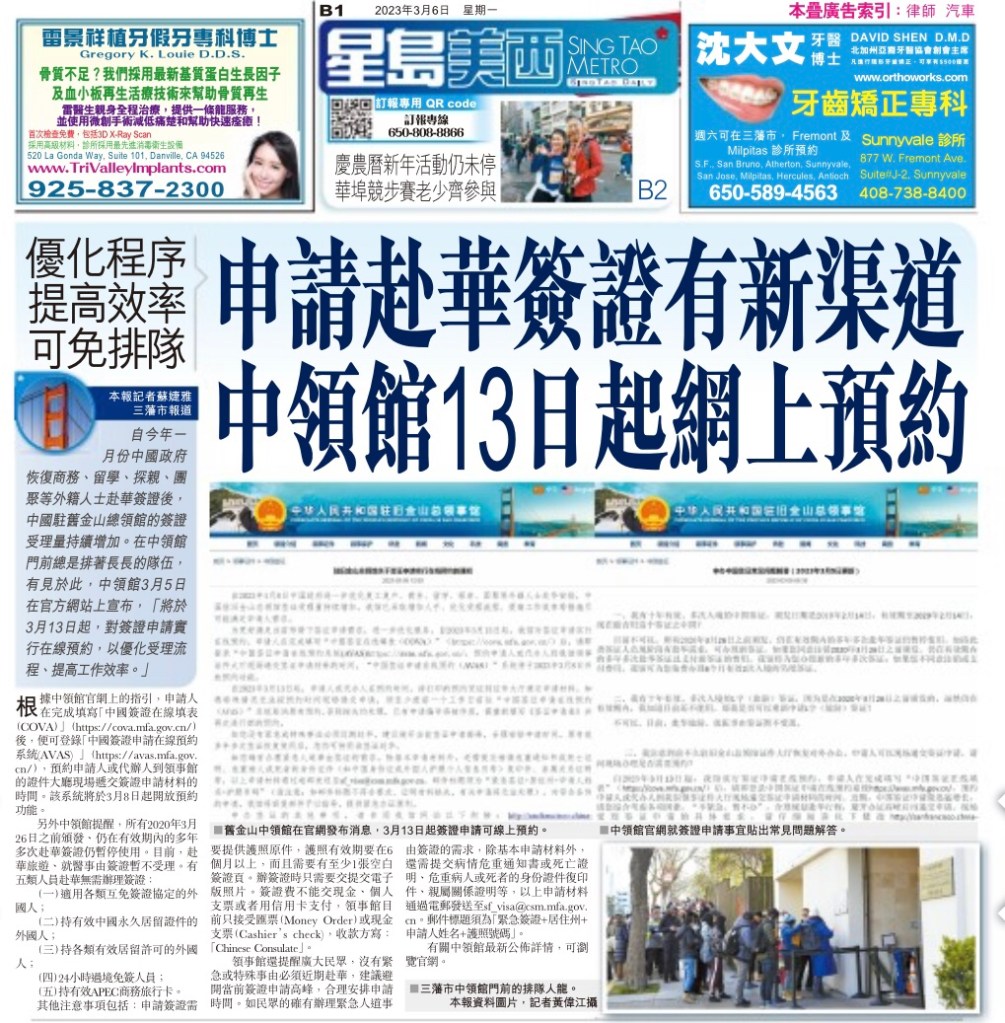
Notice on Appointment for Visa Application Submission (AVAS) 2023-03-06
As of March 13, 2023, after filling out the “China Visa Online Filling Form (COVA)” (https://cova.mfa.gov.cn/ ), visa applicants (or agents) need to log on to the website https://avas.mfa.gov.cn/ “Appointment for Visa Application Submission (AVAS)”, and make appointments for on-site submission at the Visa Office of the Consulate-General to submit the physical visa application documents. AVAS website appointment function will open as of March 8 , 2023.
The physical application documents can be submitted to the Visa Office at the appointed time by the visa applicant or by an agent with the printed “AVAS Confirmation” page. If the applicants (or agents) are unable to be present at the Visa Office at the appointed time, they must log on to the website “Appointment for Visa Application Submission (AVAS)” to cancel the appointment at least 1 business day in advance. Otherwise, the COVA Application ID and the AVAS Appointment Number will be invalidated. The applicant needs to fill in a new COVA form and make another appointment on AVAS. For other matters on applying for a Chinese visa, please refer to the following website: http://sanfrancisco.china-consulate.gov.cn/zytz/202301/t20230117_11009747.htm
The greatest propaganda campaign “against China” in human history 人類歷史上最大規模的“反華”宣傳運動 By Jerry Grey Mar 6, 2023
China is the victim of the largest and greatest propaganda campaign in human history. Whether this is a sign of things to come or an aberration based around a particular point in time remains to be seen but propaganda it is.
Apparently, in 2017, China incarcerated between 1 and 5 million Xinjiang residents, except there’s no logistics to provide for the movement and incarceration of this many people, so that was impossible.
When those claims were discredited, they softened the allegations, yet 150 million tourists a year went to engage with local culture, eat local foods and they saw local language and the religion of Islam were widely practiced so, it wasn’t “cultural genocide”.
The claims were diluted to “forced labour”, except some of the world’s biggest companies work there: Germany’s Volkswagen; USA’s Skechers; Japan’s Uniqlo; France’s SMCP; and Spain’s Inditex which owns Zara, have all investigated – and some have been investigated but no evidence has been found. One of the world’s largest apparel companies, HK based Esquel have taken this matter to the US Supreme Court. Hilton and Marriott Hotels, KFC, McDonalds and many more US brands operate without any issue and employ people in accordance with their own standards and local laws. The world’s biggest agricultural machinery company, John Deere, company, not only operates there, business is so good it started a JV in China in 2020 in order to “capitalize on this important and rapidly expanding marketplace”.
So, the story was changed again, from forced labour in Xinjiang to wider distribution of forced labour in other provinces. And, once again, that was investigated; it was found to be a normal migrant worker program benefitting Xinjiang by providing better paid jobs in Eastern regions so money could be sent home. The Cowestpro Papers did an excellent job of debunking this.
These allegations are so widely reported that it doesn’t matter what the Supreme Court says, it doesn’t matter that the evidence has been debunked, it doesn’t matter when diplomats from 21 countries visit in 2021, or religious and political leaders from 32 Muslim countries visit in 2022, or even 8 African countries in 2023 and say they’ve seen no evidence. Because it’s on every news channel, it must be true – except, as they all know, it isn’t.
Nor is it true that Xi Jinping threatened to invade Taiwan, he’s never said anything of the sort. What he has said, and the United Nations agrees with him, is that Taiwan is a part of China, China will defend its property. He said, China won’t accept another period of humiliation like the Qing Dynasty, when Hong Kong was taken by the British and more than 40 foreign concessions were taken by nine different countries.
Talking of Hong Kong, we were widely and credibly informed that China would send troops there in 2019, but they didn’t. We were told the “freedoms and democracy” were taken from Hong Kong; except they weren’t. China has broken the Joint Declaration media reported, but they haven’t according to British Barrister and Hong Kong’s former top lawyer, who wrote an open letter to the then PM Johnson to let him know how widely misinformed he and his advisors were.
I urge everyone who has any interest in the well-being of HK to read this letter to understand how misinformed they are about the true situation in HK where more democracy now exists than at any time in their history. The success is so widely recognised in both HK, by the vast majority of Hong Kongers, and the Mainland that Xi Jinping suggested on the 25th anniversary that “One Country Two Systems” would endure beyond the 50 agreed years.
So, if China isn’t persecuting Uyghurs, nor is it threatening Taiwan, hasn’t removed any of the rights or freedoms from Hong Kong’s residents; what is it actually doing wrong?
It may be sending balloons the size of circus tents over America but, let’s be honest, if it was doing that to spy then it’s the stuff of a Marx Brothers comedy skit. And, there are probably millions of Americans who believe it; many of them were encouraged out of the basement to shoot at it.
What China is doing, is growing. Growing in influence, growing in trade, growing in economy, growing in wealth, growing in every aspect of technology, medicine, education and lifestyle and yes, in order to protect these improvements, it has grown in military power too – a defensive military power.
It may have militarised some atolls in the South China Sea but, unlike the USA, it doesn’t have 7000 troops and occupy 30% of the land in Guam. China doesn’t have nearly 30,000 troops in any of its neighbouring countries, as USA has in South Korea. Nor has it colonised any Asian country with 80,000 troops and 125 active bases like the US bases in Japan.
This is another of the great disinformation campaigns: the military expansion of China. A country which hasn’t invaded in a generation and works closely with the USA in Djibouti, the only overseas base China actually has.
China isn’t fortifying Gwadar Port in Pakistan, as alleged by some media, nor is it, as suggested in think tank reports, providing military aid to the Solomon Islands, in fact the agreement with the Solomon Islands specifically excludes military aid.
What China is doing is building world-class infrastructure. 42,000 kilometres of high-speed rail with 1,100 stations criss-cross the country. China has lifted 800 million out of poverty in the last 40 years. China has improved the air and water quality to the point where there was once smog, there are now blue skies, where people once said it was hard to find wild animals in China they now abound, from the protected and rarely seen wetland birds in Jiangsu, to rare whales off Guangdong, to Asian elephants wreaking havoc in Yunnan, from leopards in Shenzhen to Tigers in Heilongjiang. These ecological changes say more about a country than teams of Western economists can.
For the real perspective of China, try Chinese media and then watch what China does. In every case so far, what China said it would do, is what they actually did. Another rule of thumb I adopt is to look at what Western media says is happening in China and then assume it’s a deflection from what really happens somewhere else, it usually is.
Jerry Grey is a former British Police officer who was a general manager in a multi-national security company based in Australia for 17 years. He has lived, worked, travelled extensively and studied in China for the past 18 years. He holds a Master Degree in cross cultural change management. Jerry Grey is a freelance writer living in Southern China’s Guangdong province.


 Business Blog