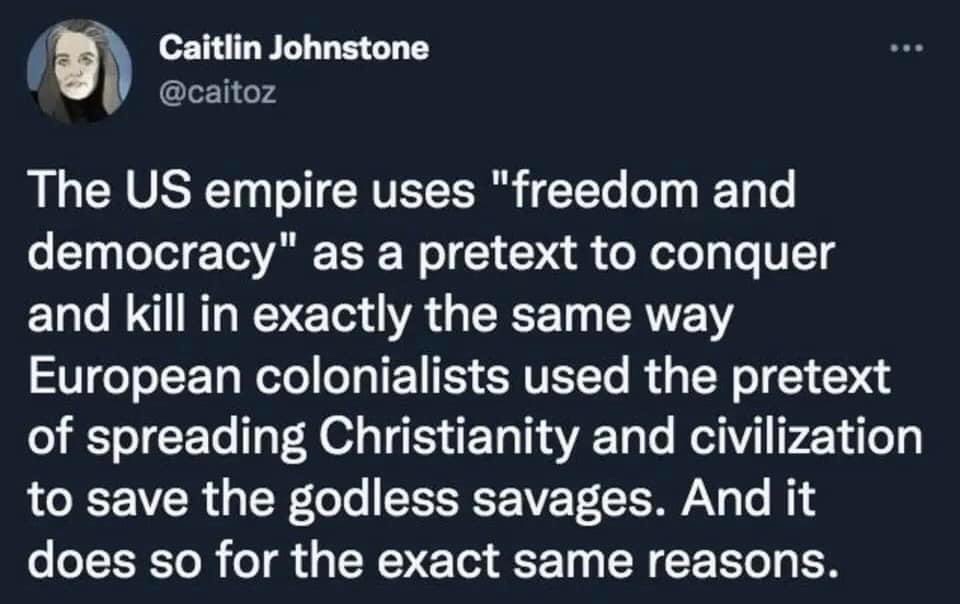
My high school classmates asked me recently, ain’t you Catholic? When colonialists went to Africa, Philippines, Hawaii, China…they lack common language so they import Christianity to brainwash conquer & rule. Today, they are using the same to engage in subversive activities in HK, Thailand, Myanmar… 最近我的高中同學問我,你不是天主教徒嗎? 當殖民主義者去非洲、菲律賓、夏威夷、中國… 他們缺乏共同語言,所以他們輸入基督教/天主教來洗腦征服和統治當地人民. 今天,他們正利用它在香港、泰國、緬甸……從事顛覆活動
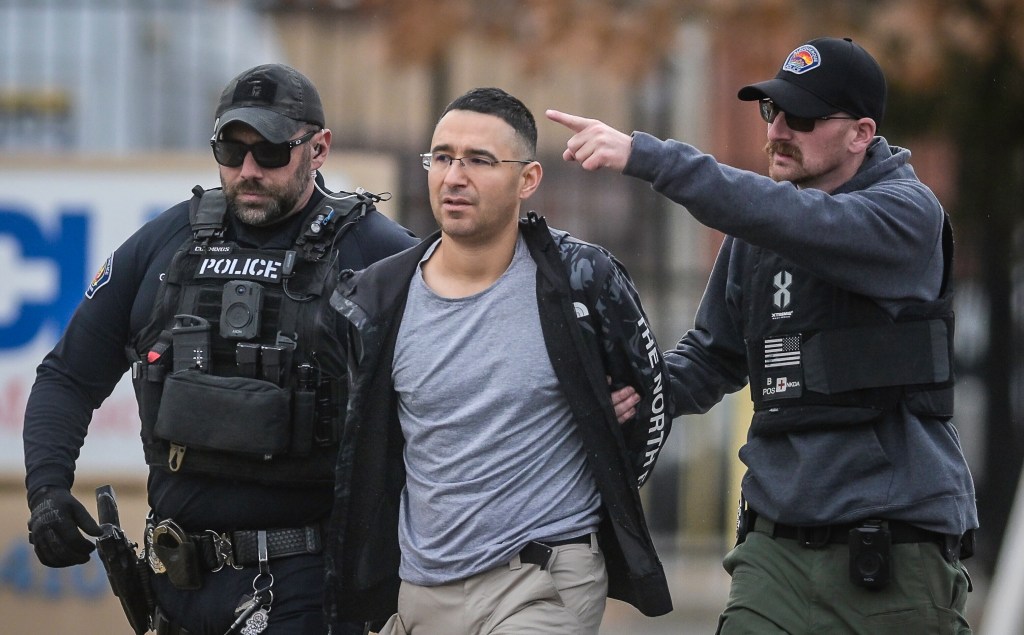
HuffPost: Two major underworlds in US doing business as Republicans and Democrats. FAILED GOP (Mafia) CANDIDATE CHARGED IN STRING OF SHOOTINGS AT NEW MEXICO DEMOCRATS’ (Triads) HOMES Police in Albuquerque arrested a former Republican candidate for the state House of Representatives in connection with multiple shootings at local Democratic politicians’ homes. Solomon Peña is accused of conspiring with and paying four other men to shoot at the homes of two county commissioners and two state legislators last month.
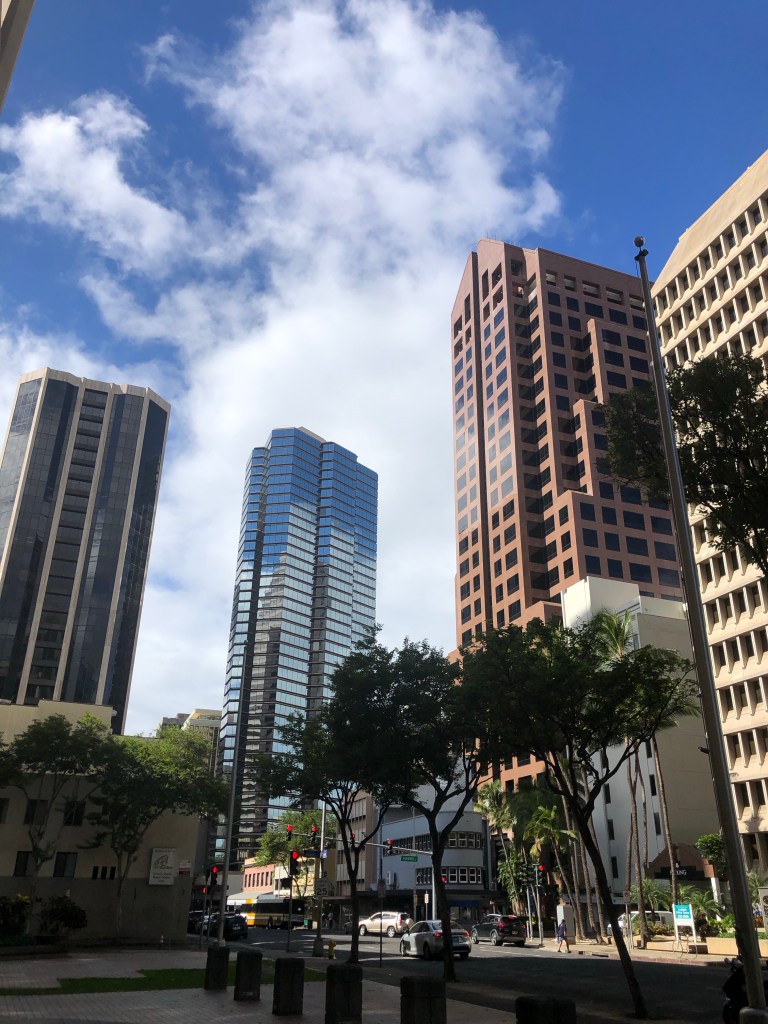
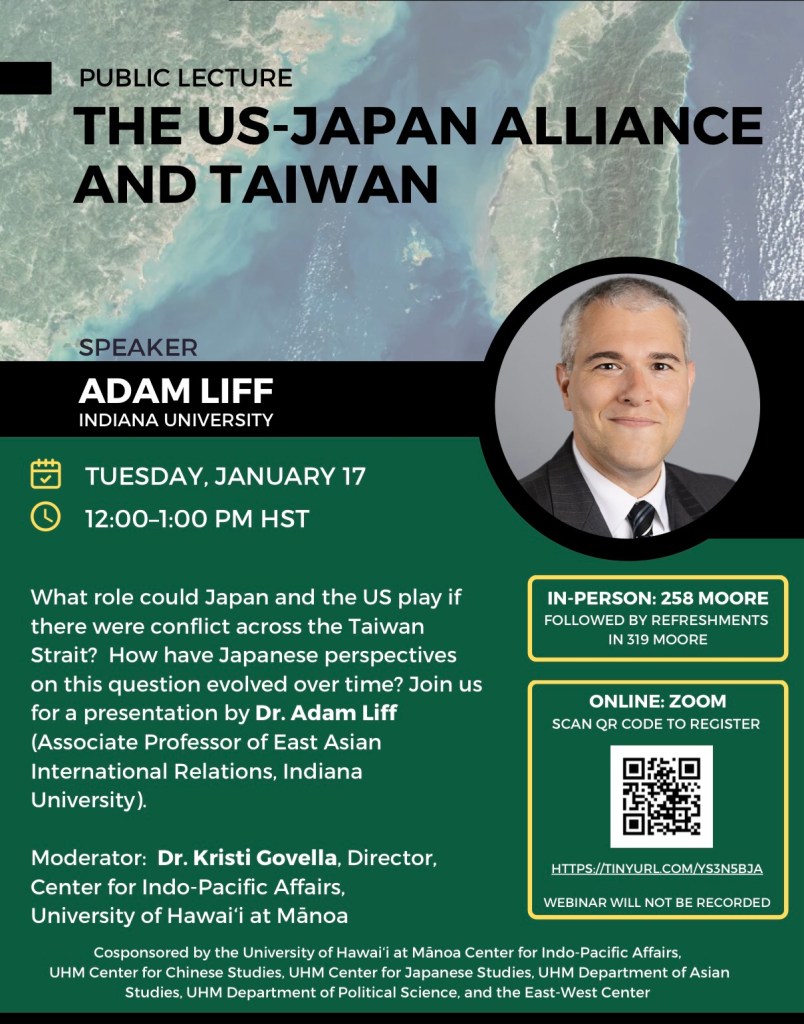
Zoom Reminder: CCS Webinar Tues Jan 17th 12-1:00pm Hawaiian Time: The US-Japan Alliance & Taiwan. Prof. Adam Liff (Indiana University) Moore 258 on the UHM campus. Also via Zoom: register at HTTPS://TINYURL.COM/YS3N5BJA Prof. Kristi Govella (UHM) will moderate
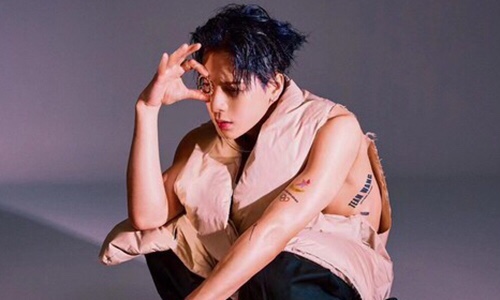
Jackson Wang’s attack on Western media’s false China narrative shines a light on elephant in the room by Ai Bo Jan 16 2023
On January 12, China’s Hong Kong-born superstar Jackson Wang publicly rebuked Western media and defended his home country China as a “dope place” during a concert at the Eventim Apollo in London for his 2023-24 Magic Man headline tour.
While the foul language he used may be questionable, London fans nonetheless cheered on Wang to show their support. The star’s statement shined a light on a long-standing elephant in the room: Western media’s longtime rumor-mongering and the tricks it uses to twist people’s perceptions of China. Everyone knows there are a lot of lies in Western media’s China reports, but most cannot be bothered to burst Western media’s self-deception bubble.
“I was also born in Hong Kong… He spoke out the truth for us. Our mother country is great,” Mila Yip, a fan who attended Wang’s show, told the Global Times.
It should be noted that Wang’s public criticism was not targeting Western people, but only the mental manipulations of Western media. This is the main reason why the star’s Western fans headed to platforms such as YouTube to leave comments such as “I respect his patriotism” on the video clip from the concert.
As a global icon from China that is followed by over 7 million fans on Twitter, Wang’s public speech did not seem choreographed, but it was indeed a deliberate tactical move, which effectively invited his Western fans, mostly young Westerners, to explore the real Chinese narrative.
“If you’d travel to China just one time, you’d feel like ‘damn, this is a cope place,’” he said.
In the context of globalized pop culture, idols like him have become new “global cultural ambassadors” who “make full use of the international stage to promote his values and beliefs,” Zheng Xu, a cultural globalization researcher, told the Global Times, adding that the power of these “pop ambassadors” can be very influential.
Wang’s sharp-tongued criticism quickly became a hot topic on Sina Weibo. While an overwhelming number of people showed the star support, some criticized him as “trying too hard to depict a patriotic persona.”
But how can it be a bad thing if a celebrity establishes a patriotic persona for the good of the nation? Should they not work to be positive role models for fans?
Born in the Hong Kong SAR and kicking off his career in South Korea, the idol has never changed his patriotic footing even when facing publicity issues such as being abused online after he posted his support for the Chinese national flag in 2019.
“I’m an artist, I’m an entertainer, I’m a citizen,” Wang said during the concert.
 Business Blog