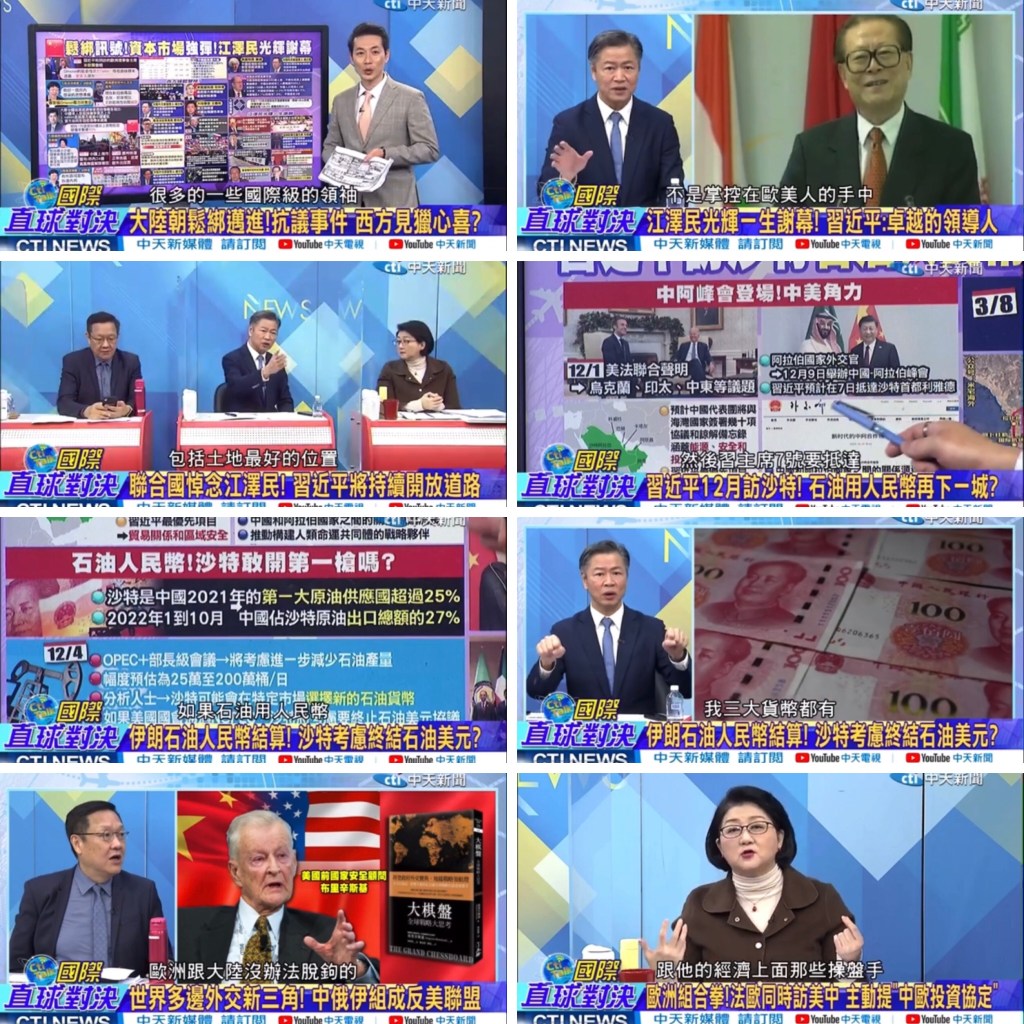
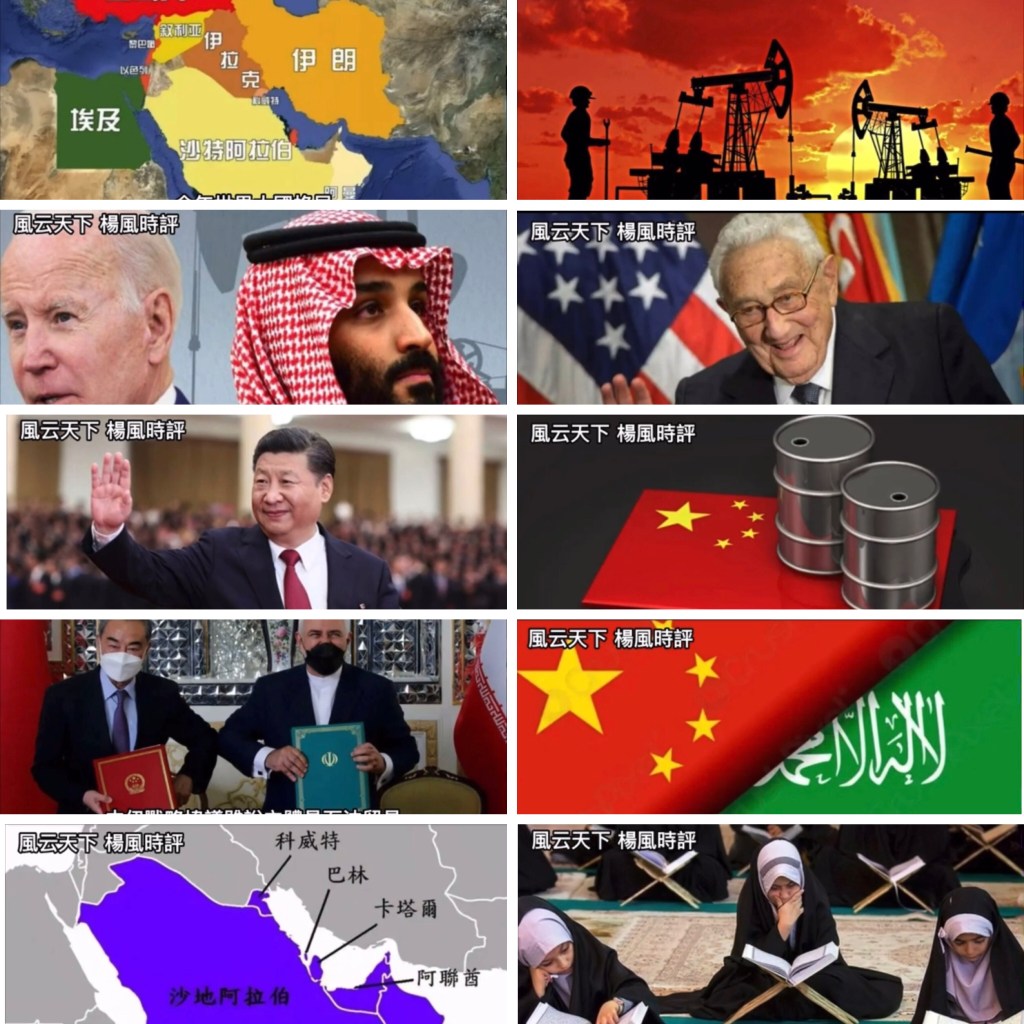
Taiwan Diplomat video: Saudi learned it from China, those Chinese moved to US just like the Rich Saudi left came to US, after 1st generation, they are no longer thinking themselves as Saudi. Therefore Saudi must use oil money to build up Saudi using Chinese model so smart and rich Saudi stayed in Saudi. No Country could help Saudi to achieve that except China. Forget about US, they cannot be trusted. 台灣外交官視頻:沙特從中國學來的,就像在美國的中國人一樣,富沙特離開來到美國,第一代之後,他們不再認為自己是沙特。 因此,沙特必須利用中國模式進行建設,這樣聰明而富有的沙特就留在了沙特。 這個世界上除了中國,沒有哪個國家可以幫助沙特實現這一目標。 忘記美國吧,他們是小偷,不可信任, 有美國這樣的朋友你還需要敵人嗎? 沙特高規格接待還沒落地就開始 6架沙特之鷹伴飛 護衛習近平專機. 沙特以最高禮遇歡迎習近平主席到訪 中國國家主席習近平當地時間7日下午抵達利雅得,出席首屆中國-阿拉伯國家峰會、中國-海灣阿拉伯國家合作委員會峰會並對沙特進行國事訪問。習近平主席專機進入沙特領空後,沙特戰機升空護航. https://rumble.com/v1zhi9c-no-one-could-help-saudi-better-than-china.html https://m.facebook.com/story.php?story_fbid=848814723008521&id=100036400039778&mibextid=qC1gEa
I may not be a perfect father. But my son follows Choi’s family exhortation passed down from my grandfather to my father and I (all born and raised in HK) to him that all Choi family members were taught at very young age must finish a minimum of a bachelor degree to complete in no more than 4 years, after college or age 22, they must leave the parents home, all financial support stopped, that means they better studied a college degree that can find job.
My son lives up to and beyond expectations. Without $1 from his parents, at age 39, he already owned multi-real estates in Hawaii worth more than 2 millions.
The picture is my son Jonathan, his wife Annie, 3 sons – Kayden (July 14th), twins – Arty & Brady born on China National Day, Oct 1st
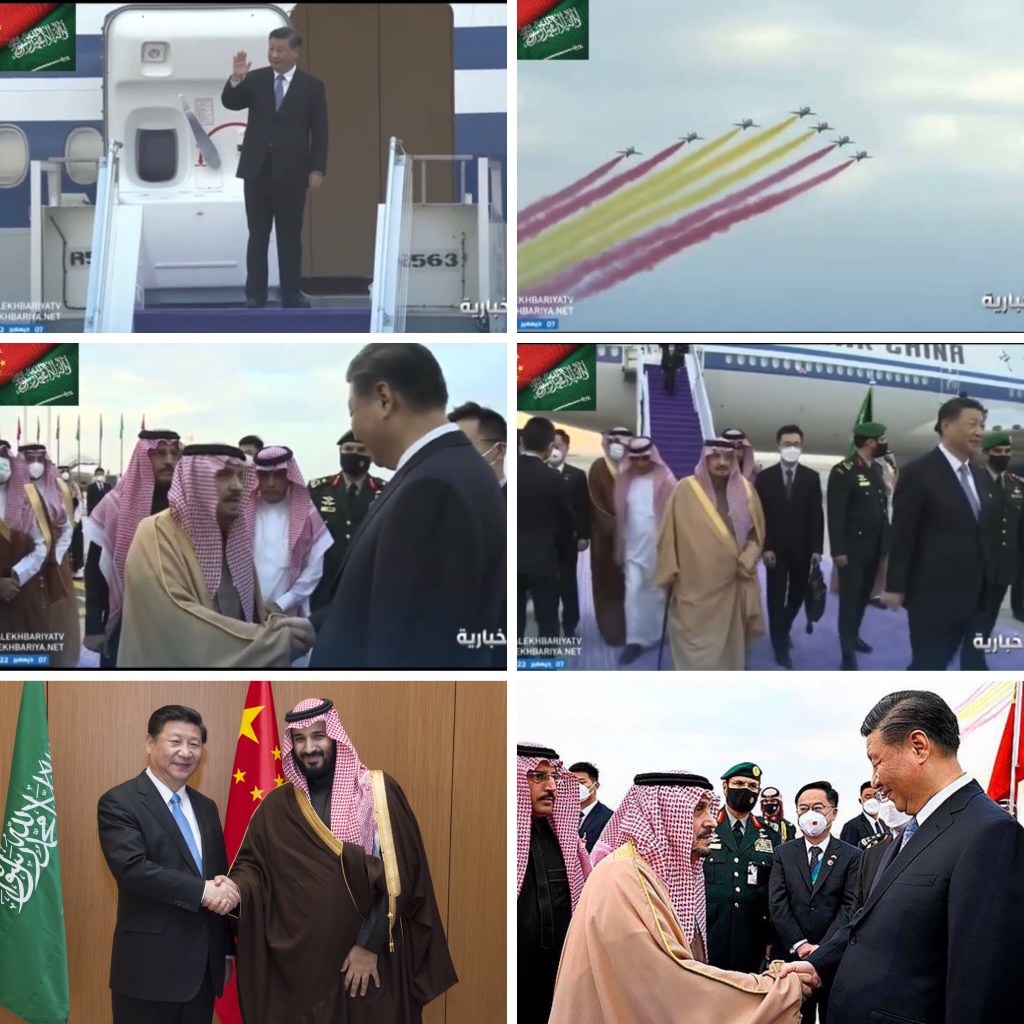
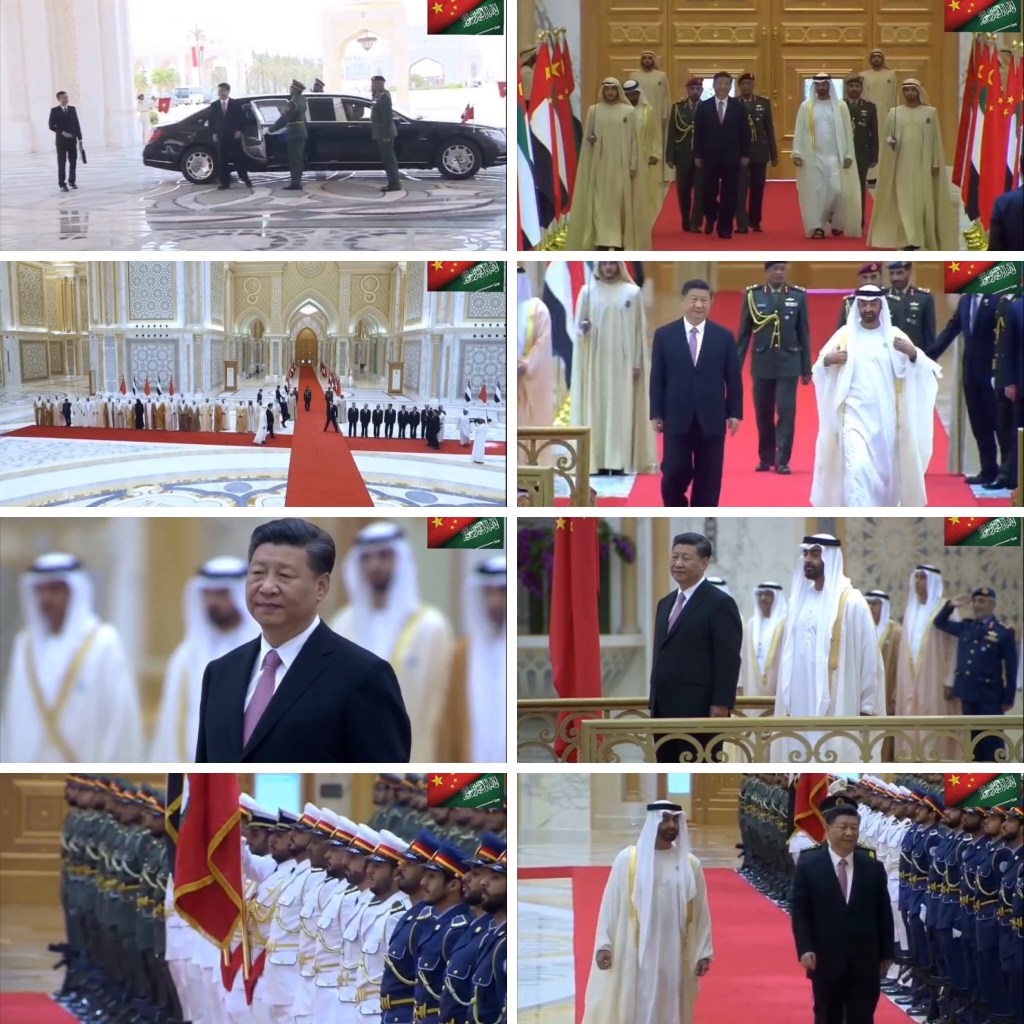
Video: Chinese President Xi Jinping lands in Riyadh, Saudi leaders receive Xi with top honors normally reserved for the kingdom’s former strategic ally, the US. 中國國家主席習近平抵達利雅得,沙特領導人以通常留給該國前戰略盟友美國的最高榮譽迎接習近平
China’s President Xi Jinping has arrived in Saudi Arabia on Wednesday as part of a three-day visit to the Kingdom. Xi was invited by King Salma bin Abdulaziz to attend a Saudi-Chinese summit in the kingdom, which will run until Dec. 9, state agency SPA reported. The summit, headed by King Salman, will also see the participation of Crown Prince Mohammed bin Salman. Xi is set to attend two more conferences, the Riyadh Gulf-China Summit for Cooperation and Development and the Riyadh Arab-China Summit for Cooperation and Development during his visit. All three summits will focus on ways to enhance joint relations in all fields and economic cooperation. Leaders from GCC and Arab countries will also participate in the events held in Saudi Arabia. Xi’s visit reflects the leaders’ desire to strengthen bilateral relations, enhance strategic partnerships and highlight potential political and economic cooperation to serve common interests, SPA added.
(CNN)When Chinese President Xi Jinping lands in Riyadh in the coming hours Saudi leaders are expected to receive him with the pomp and circumstance normally reserved for the kingdom’s most strategic ally, the United States.
The multiple-day visit will include two conferences that will gather leaders from across the Arab world. Dozens of trade, economic and military agreements — to the tune of tens of billions of dollars — will be signed.
Saudi leaders will infuse the trip with a dose of spectacle. Traditional sword dances are likely to be conducted at lavish receptions. The Saudi king — or his powerful Crown Prince, Mohammed bin Salman — may bestow the Chinese leader with some honors and medals. Many more extravagant expressions of friendship will pepper the diplomatic proceedings, all with a view to underscoring the deepening partnership between Beijing and Riyadh.
to Riyadh in 2017. That trip was also a carefully choreographed three-day event designed to dazzle, even if sometimes clumsily (the true meaning behind the viral image of Trump touching a glowing orb remains a mystery).
Xi’s red-carpet welcome will be a far cry from President Joe Biden’s trip to Riyadh this summer. An unsmiling Crown Prince Mohammed bin Salman greeted the President with a fist-bump then publicly embarrassed him during a televised roundtable meeting, announcing a limited increase in oil production that fell far short of US demands. While bin Salman uttered the decision, Saudi state television turned to a visibly exasperated Biden, who appeared to have been caught off-guard by the development.
By striking a sharp contrast with Biden’s visit, the pageantry of Xi’s trip to Saudi Arabia carries an implicit message to the US. Despite Washington’s repeated pleas to its Gulf Arab allies to spurn China’s commercial carrot, the region’s relationship with Beijing continues to evolve, advancing not only in trade but also in security.
“The first message is that this is a new Saudi Arabia. This is a new Gulf. This is a new reality,” United Arab Emirates analyst and Visiting Senior Fellow at Harvard University Abdulkhaleq Abdulla told CNN.
“The new reality is that China is rising and Asia is rising and whether the US likes it or not, we have to deal with China.”
‘A milestone’ in relations
The summit marks a “milestone” in Chinese-Arab relations, as one high-level Arab diplomat put it to CNN earlier this week. It also represents a major diplomatic triumph for Mohammed bin Salman. For years he was frozen out by the West following the murder of journalist Jamal Khashoggi at the Saudi consulate in Istanbul in 2018; Now, MBS, as he is known by many, is set to convene meetings with Xi and at least 14 other Arab leaders on short notice.
For China, meanwhile, it is a chance to expand its geopolitical footprint in the US’ former backyard — and Beijing will also need more Saudi oil as it finally starts to loosen Covid rules.
Two decades ago, China’s leaders were personae non grata in a decidedly anti-communist Saudi Arabia that had thrown its lot in with Washington. Back then, the US was the biggest consumer of the kingdom’s oil. Today, the US consumes only a fraction of that Saudi oil, and China is Saudi Arabia’s biggest client and trading partner. Exports to China exceeded $50 billion last year — more than 18% of the kingdom’s total exports.
The shifting trade relationship prompted a shift in US attitudes towards its Arab allies. In 2016, when former President Barack Obama’s administration signed a landmark nuclear deal with Iran, Washington side-lined its Arab allies in the region, Iran’s long-time foes, from the negotiation process. US tolerance for the Gulf’s autocratic style of governance, and its poor human rights record, also began to waver. The US’ military presence in the region — one of its largest in the world — dwindled.
Increasingly, Gulf leaders began to speak publicly of a post-American Middle East. The Gulf, officials said, would have to try to cut a path without its major security guarantor, the United States. That attitude appeared to have precipitated a Trump-backed wave of normalization of relations with Israel, known as the Abraham Accords, despite the continued popularity of the Palestinian cause among the Arab masses. It also triggered a begrudging rapprochement between Saudi Arabia and Iran, and a full restoration of relations between Abu Dhabi and Tehran.
decades they walked in lockstep with US foreign policy, they have lately been stepping out of line. Gulf leaders made clear that a growing relationship with Russia would remain unscathed after Russia launched a war on Ukraine this year, impeding an international effort to isolate Moscow. At times, Gulf leaders seemed to work in cahoots with Russian President Vladimir Putin over oil policy.
On China, the Gulf has flouted many warnings from the US about growing partnerships with Beijing and Chinese companies. Last year, Emirati officials accused the US of “bullying” them into shuttering a Chinese facility on Emirati soil. When the US threatened to pull a landmark deal to sell F-35 fighter jets to the UAE over the oil-rich state’s 5G deal with Chinese tech giant Huawei, Abu Dhabi carried on with the agreement.
The relationship with China is evolving militarily as well, to the chagrin of the US.
“Saudi is, of course, not indifferent to the US which continues to be a key partner. But the Kingdom has learned the hard way that the US cannot be relied on consistently for support,” said Ali Shihabi, a Saudi analyst familiar with the Saudi leadership’s thinking.
“The Kingdom has to work around that reality and develop multiple key relations in an increasingly multipolar world. That is a process that began a few years ago and is irreversible.”
“(Xi’s) visit will be a state visit that crowns this growing relationship with China,” he added.
The writing on the wall
When Trump visited Riyadh in 2017, it was his first overseas trip as president. He seemed to signal a U-turn from the Obama administration’s disengagement from the region. America was squarely in the Gulf Arab’s corner again and Gulf Arabs would embrace him with open arms. It set the tone for a fraught relationship between Riyadh and the Trump administration.
As MBS clamped down on dissent — culminating in the Khashoggi murder — Trump’s support for the young prince was unwavering.
Trump also seemed to, at least partially, be doing the kingdom’s bidding by pulling out of Obama’s nuclear agreement with Iran, unleashing a torrent of sanctions on the country despite Tehran sticking to its side of the agreement.
But then in 2019, missiles launched by the Iran-backed Yemeni Houthi rebels rained down on oil processing facilities in Saudi Arabia’s Abqaiq and Khuraiss, knocking off nearly half of the kingdom’s oil production.
The Trump administration did not come to its ally’s rescue and Gulf Arab states saw the writing on the wall: the region’s security could no longer be outsourced to the US, regardless of who sits in the Oval Office.
As Xi prepares to touch down, the UAE’s Abdulla said: “If America is in the mood to pursue a better relationship, then it has to be more committed. If we don’t get this then it might be time to part away from each other, gradually, slowly. The ball is in Washington’s court.”
LAW MAKES UNMARRIED COHABITATION ILLEGAL IN INDONESIA — JUST LIKE IN THE UNITED STATES – why western media not reporting it? 法律規定未婚同居在印度尼西亞是非法的——就像在美國一樣 – 為什麼西方媒體不報導呢?
I’m not kidding. There are many headlines today about a proposed Indonesian law about who can share hotel rooms. But the fact is that the U.S. states of Michigan and Mississippi still have enforceable laws on their books prohibiting unmarried cohabitation, and in some other states, like North Carolina, the issue remains under debate. . Some states had such laws until surprisingly recently. (The Florida legislature voted to repeal the state’s ban on cohabitation only in March, 2016). . So, are reporters from Indonesia flying to the United States to shout “human rights violation” at people in that country? I very much doubt it. . The story so far: Indonesia this week made initial moves to pass a law banning unmarried sharing of hotel rooms, among other things. The mainstream media is up in arms, and is calling organizations like Human Rights Watch to give them quotes to paint the step in a negative light. . But the news reports make no mention that other countries, including the US, have similar laws. Of course, some people argue that the laws in the US are on the books but have zero practical effect, since they are never used. . That may not be true. In North Dakota until 2007, the courts confirmed that it was “not an unlawful discriminatory practice to refuse to rent to unmarried persons seeking to cohabit.” And some sources say the country’s Internal Revenue Service has a continuing policy of not granting exemptions for a cohabiting dependent and relatives if cohabitation is illegal in the local jurisdiction. . So the proposed Indonesian law against unmarried cohabitation that’s is being written up as outrageous attack on human rights – well, western reporters should remember that their home countries may not be as different as they think. In fact, the history of the issue is interesting. . U.S. HOTELS As recently as the 1970s, couples in the United States were routinely asked to show their marriage certificate when they checked into hotels—it was a legal requirement in some areas. . In the early 1960s and before, it would have been difficult or impossible for an unmarried couple to check into a hotel pretty much anywhere in the US, and it would have been challenging even to achieve unmarried cohabitation even in your own home. Furthermore, there was no way an unmarried couple could get a home mortgage from a bank. . So the two countries were very similar, not so long ago. Is there a rule that says all countries have to follow the U.S. path of cultural development? I sincerely hope not. . Furthermore, there are other aspects of the coverage of the proposed Indonesian cohabitation law by the mainstream media that are problematic. Many reports say the law, which is due to be implemented in three years, specifically applies to foreigners too, but bury the fact (or fail to mention) that cases must be triggered by family members, making it unlikely that cases against westerners will ever be filed. . POINTING AT ISLAM More troubling is that fact that almost every report I have seen is written as if this is a unique Indonesian issue, with the writers pointing the finger at the country’s Islamic religion. . But the truth is that many places have similar or identical rules at their hotels, including modern ones like Israel. Israel is not Islamic. The habit has been observed in Israel guest houses of Jewish, Muslim and Christian backgrounds. . Other countries in which couples may will be asked for their marriage certificate as they try to check in to hotels, include Pakistan, the United Arab Emirates, Jordan, Kuwait, Saudi Arabia, Turkey, and Morocco. Egypt is another place where this may be an issue. (This writer used to be a frequent traveller.) . The issue is rarely standardized, so people who travel with their spouses are used to keeping the right documents at hand (and pictures of their wedding on their phones). . In India, there’s no specific law against unmarried people sharing a hotel room – but some hotel managers do require to see marriage certificates, and this is more likely to happen in some parts of the country than others. Certainly this writer and his wife were careful to always have a marriage certificate at hand when travelling in India. . In fact, the practice of asking for marriage certificates is common in so many countries that it is clearly seen as reasonable by a large swathe of humanity. Indonesia by itself is one of the most populous countries on earth and Pakistan is also large. . Instant condemnation is NOT the tolerant choice. . NOT NEW Another issue is that many reports imply this is some sort of dramatic NEW development. . In fact, all this shows is that those reporters may not know Indonesian society as well as they think. Anyone who lives in that enrapturing country or who has visited regularly, knows that this rule has existed in some form or other since time immemorial. . It’s just that some hotels turn a blind eye, while others don’t. It has long been taken very seriously indeed. Many hotels and hostels have been actively raided by police for allowing this infraction to occur. . But the law has been rather vague, and there have been efforts to codify the law in Indonesia for many years. This is simply the latest attempt of many. Others failed. This may fail too. . COVERAGE At the moment, all the coverage of the Indonesian proposal I have seen takes a “west is best” standpoint, with reporters getting quotes from groups which oppose it. . A wiser response, especially for American reporters, may be to take a look at unmarried cohabitation laws in their home country and elsewhere before choosing to shout “human rights violation” at Indonesians. . The world is a complicated place and there is a need for a willingness to go the extra mile with other cultures. . Tolerance is giving respect to people whose opinions are different – it doesn’t mean you agree with them. . But it does mean that you prefer civil discussion to conflict. And that’s always a good thing. . Unless of course your economy depends on weapons sales, but that’s a whole different discussion. . Peace! . [from fridayeveryday]
The UK is merely the first victim of the chaos the US is creating in Europe by John Ross Dec 06 2022
For many centuries the UK was renowned for ruthless but stable and effective policy – its international nickname “perfidious Albion” testifying to ruthlessness and creating the largest Empire in world history to effectiveness.
There could therefore scarcely be a greater contrast to the chaos gripping British politics this year – making it almost an international laughing stock. The UK has had three prime ministers in one year. The first, Boris Johnson, was ousted after a police investigation over breaking his own lockdown laws. The second, Liz Truss, held office for only 44 days before being ejected – the shortest premiership in British history. The third, Rishi Sunak, took office despite a few weeks earlier being rejected by a majority of members of the ruling Tory Party.
To add to the political meltdown, the UK had four chancellors of the exchequer in four months. One lasted merely 38 days – the shortest in British history, except for a chancellor who died in office. During that time, he introduced a disastrous budget causing a national financial crisis which brought down the Truss premiership.
After this mayhem, the ruling Tory Party has fallen more than 30 percent behind the opposition Labour Party in opinion polls.
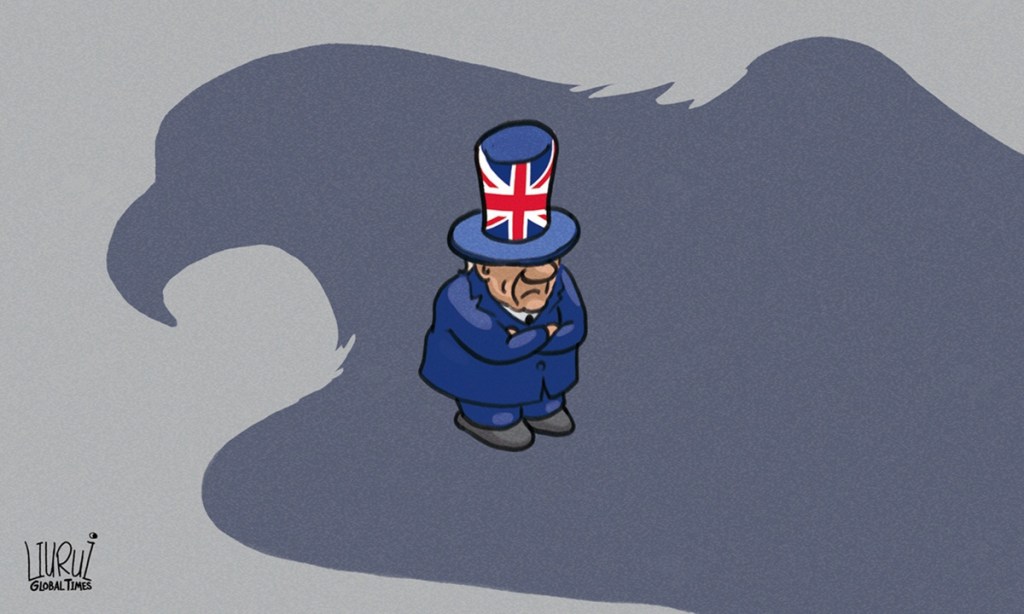
The explanation of descent from ruthless political efficiency to farce is that the UK has become the most advanced case of the chaos that US policy is currently bringing to Europe – very logically, as the UK is historically the US’ most loyal ally in that continent.
Europe’s current disorder is self-evidently the worst since World War II. Inflation is at its highest in over 30 years, economic growth is the slowest since World War II, and a major war is taking place in the continent in Ukraine. Reflecting the resulting discontent, numerous European governments are deeply unpopular, independent of their political complexion. In addition to the UK, already analysed, in Sweden and Italy centre-left governments were replaced with major electoral gains for the extreme right, while in France the right-wing president suffered large loss of parliamentary seats to strongly left-wing forces.
This continent-wide chaos is directly due to US policies in Europe – many of which are created by pursuit of cold war policies against China. The UK’s case is particularly acute because it followed the policies of the Trump administration in an economically irrational withdrawal from the EU in order to seek even closer links with the US.
Previously US policies in Europe were damaging but insufficient to destabilize the situation. For example, the US campaign to block Huawei’s participation in Europe’s telecommunications network, which succeeded in Britain, means the UK pays more for its 5G than necessary – damaging, but not powerful enough to destabilize Britain.
But US policies have now become sufficiently damaging to destabilize the European continent. First was the threat to bring Ukraine into NATO – which the US understood directly militarily threatened Russia and is the real cause of the Ukraine war. Directly, the US pursued this policy to weaken Russia – and Germany, by forcing it to buy expensive US gas instead of cheap Russian gas. But the US also sought to intimidate Russia into breaking off good relations with China. But instead Russia resisted these attacks on its vital national interests. US policy thereby created the biggest European war since 1945.
Second, the inflation destabilizing Europe was created in the US, not in Ukraine – as the chronology clearly shows. US inflation soared from 0.1 percent in May 2020 to 7.5 percent in January 2022, before the Ukraine war started – Europeans simply followed the US with a three-month delay.
US inflation was due to hyper stimulatory policies adopted in an unsuccessful attempt to keep up with China’s economic growth. US money supply rose by 27 percent in a year, while the excess of government current spending over current income soared to 26 percent of GDP. This created a vast demand-side stimulus – US consumption rose by $3,436 billion between the last quarter of 2019 and the third quarter of 2022. But on the supply side, US net fixed investment fell by $52 billion in the same period. A massive demand surge, with no supply increase in supply, created the biggest US inflationary wave for 40 years – which inevitably spread into Europe.
As the British government refused to show independence from US foreign policy – it became the US’ biggest cheerleader over Ukraine – both the British economy and its population suffered severely as they were hit by US inflation. British life expectancy is already falling, and average incomes are officially projected to fall by 7 percent in the next two years. Political mayhem, replacing the UK’s historical competence, ensued.
The UK therefore became the first victim of the current chaos that US policy is creating in Europe. But unless European governments show some independence from the US, it will be far from the last.
The author is senior fellow at Chongyang Institute for Financial Studies, Renmin University of China. opinion@globaltimes.com.cn



 Business Blog