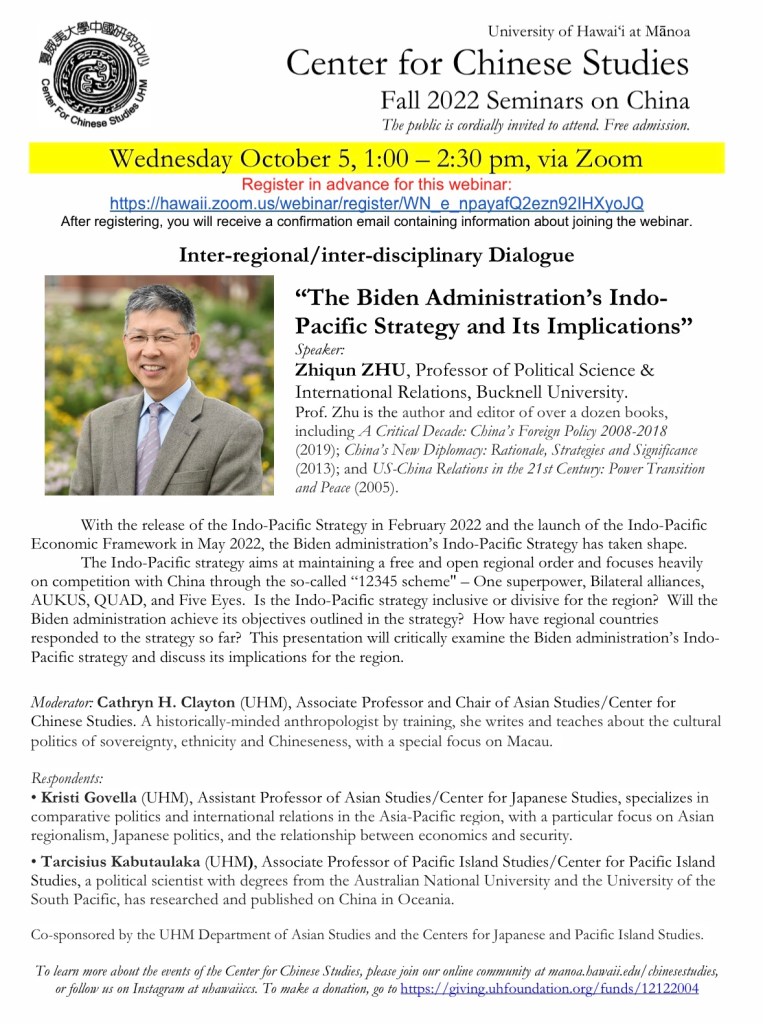
“The Biden Administration’s Indo-Pacific Strategy and Its Implications” Zhiqun ZHU, Professor of Political Science & International Relations, Bucknell University.
Smart Chinese should leave America! The US is furthering its own decline by scaring off Chinese scientists. America’s Asian community is the latest diaspora caught in the crossfire of Washington’s foreign policy – and they’ve had enough 聰明的中國人應該離開!美國嚇跑了中國科學家,從而進一步加劇了自己的衰落。美國的亞裔社區是華盛頓外交政策交火中最新的僑民 – 他們已經受夠了
By Bradley Blankenship, he is an American journalist, columnist and political commentator. He has a syndicated column at CGTN and is a freelance reporter for international news agencies including Xinhua News Agency.
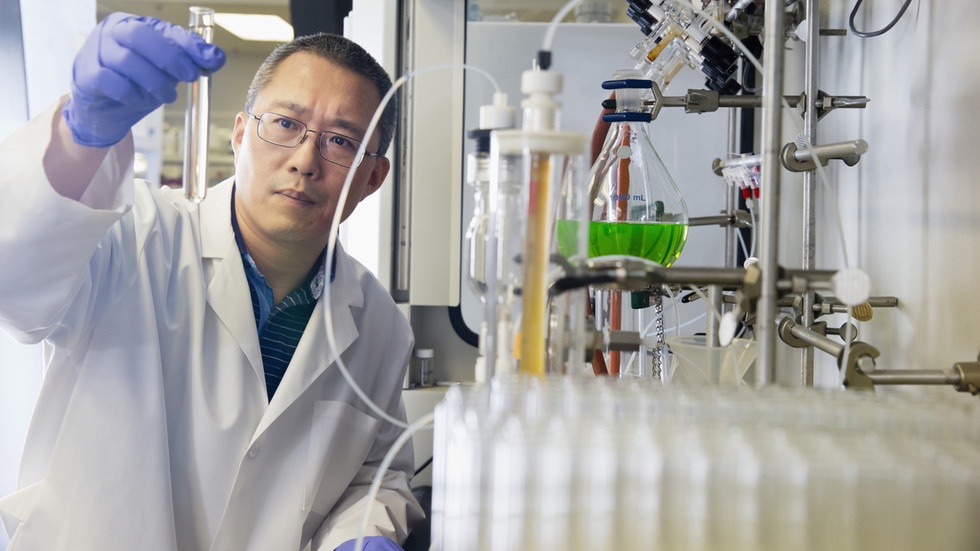
A recent report by the Wall Street Journal found that many top-tier academics of Chinese descent who hold positions in American universities are considering leaving the country over increased escalations between Beijing and Washington. The paper found that 1,400 US-trained Chinese scientists traded their American affiliation for a Chinese one in 2021, and that 40% of Chinese scholars at top research institutions like Harvard and MIT might leave.
Among the main reasons cited by the people who spoke to the WSJ were fears of government surveillance, such as the Trump-initiated FBI “China Initiative” that targeted people of Chinese origin over alleged “economic espionage,” and rising hate crimes against people of Asian descent. Considering the former was essentially a nothingburger that descended into a McCarthyite, racially motivated attack on people of Chinese heritage, both of these have to do with racism.
And that vitriol is prompting a reverse brain-drain, by which experts of Chinese heritage are going back to China for better opportunities. A lot of these people, the paper found, work in strategically important areas for the US military-industrial complex. This poses severe challenges for Washington’s future outlook in a competitive global geostrategic environment with Beijing.
US may take action against Chinese tech sector READ MORE US may take action against Chinese tech sector What’s important to note is how dependent highly skilled sectors of the American economy are on immigrants. According to a 2013 report by the Immigration Policy Center, from the years 1995 to 2005, over 52% of startup companies in Silicon Valley had at least one immigrant founder. Think of people like Elon Musk and Sergey Brin, who were instrumental in founding Google and PayPal during that time.
Meanwhile, the US is heavily reliant on foreign-sourced talent, and there is a lack of funding for education, as well as a lack of universal higher education – unlike many of its high-income peers. This means the US can’t fill these gaps domestically. In fact, National Security Advisor Jake Sullivan quoted First Lady Dr. Jill Biden as saying that “any country that out-educates the United States will outcompete the United States, and that is a fundamental national security issue.”
The US actually acknowledges, at the highest levels of government, that its lack of skilled candidates in in-demand fields is “a fundamental national security issue.” To the Biden administration’s credit, they did shut down the China Initiative and have signed bills designed to curb the nationwide surge in anti-Asian hate crimes. But it’s unclear whether these are actually helping to the desired degree.
Indeed, while President Joe Biden’s early tenure did improve America’s image compared to the Trump years, a Morning Consult survey found that most of the surveyed countries don’t have romantic views of Uncle Sam anymore. Notably, China had a 74% unfavorability rating.
A May 2021 feature by Chemical & Engineering News already hinted that Asian scientists were ditching America because of unfair treatment by the US government and because of hate crimes. The publication noted that experts of Asian heritage in this field are the “cornerstone of US chemistry,” and that their departure would hurt Washington’s competitiveness indefinitely.
Despite the overt nature of the China Initiative and street violence against Asians, one very important thing that is hurting China’s view among people of Asian descent and especially Chinese people is Washington’s erratic foreign policy. It’s actually that piece that is the antecedent of all the other things that are driving talented Chinese immigrants away.
China’s dramatic population decline may have a profound effect on its future READ MORE China’s dramatic population decline may have a profound effect on its future If the US did not have a hostile foreign policy against China in general, there would not be racist federal investigations against people of Chinese heritage nor would there be a media machine pumping out hatred against the Beijing government and creating fertile ground for surging hate crimes. All of these things are connected: foreign policy, general attitudes toward diaspora communities, and institutional biases.
And we have seen how American society repeats these same cultural genuflections depending on the enemy of the day. During the Cold War, there were offensive and caricatured views of Eastern Europeans and, during the height of the War on Terror, there were these same attitudes toward people from Muslim-majority countries. Each of these points in history had attendant discrimination and hate crimes against their respective diaspora communities in the United States.
Now, Asian people are being targeted thanks to the new Cold War on China. Except, this time, with the decline of the US, coupled with China’s meteoric rise, the ball is in the Chinese community’s court to decide where to leverage its talent. This is, ironically, hastening Washington’s nosedive into the trash can of history. If the US wants to do anything to change this, it would require changing US foreign policy vis-a-vis China.
Asia Times: US pushes ‘rule-based disorder’ Latest set of sanctions targeting the chip industry will do no one any good, certainly not the US itself. By George Koo Oct 1 2022
Upon becoming president of the United States, Joe Biden immediately set forth to promote “rule-based international order,” ostensibly for the world community, but the message was really intended for China. The “world order,” according to Biden, was for Beijing to conduct its foreign affairs in line with Washington’s expectations.
Now into the second year of his regime, it has become increasingly clear that Biden’s idea of order is actually disorder and is causing chaos not only in the world but especially to the American economy.
The latest example is the most recent series of sanctions and embargoes forbidding sales of semiconductor chips and manufacturing equipment to China.
Up to now, China has been far and away the largest buyer for semiconductor processing equipment and is the major market for advanced chips designed by such Silicon Valley companies as Nvidia and made by such foundries as Taiwan Semiconductor Manufacturing Company (TSMC).
The ban seeks all the members of the semiconductor industry, foreign and domestic, to go cold turkey and stop doing business with China.
Heretofore, the industry has been a prime example of a virtuous circle created by globalization. In simplified terms, we can say that innovations in chip designs for new uses are created in Silicon Valley, fabricated by foundries in Taiwan and South Korea, and then shipped to China to assemble into devices and final products, which are then sold around the world.
Companies engaged in making fabrication and processing equipment kept pushing the boundaries of their technology and collaborated with the foundries to produce the next generation of advanced chips. The equipment companies were not just in the US but also in Japan and the Netherlands.
Everyone wins in a virtuous circle
In a virtuous circle, everybody does what he does best and contributes to a supply chain at the most cost-effective efficiency. Everybody wins in such a circle.
By breaking up the circle, everybody loses. South Korean foundries such as Samsung sell 40% of their output to China, including foundries they operate inside China.
China represents around 30% of sales for semiconductor fabrication equipment from American companies such as Applied Materials and Lam Research.
China is also the most important market for ASML, the Netherlands-based company that is in essence the only maker of advanced lithographic machines. Despite the just-imposed ban, the company has continued to increase its local hire in China to support its sales and technical services.
Every member of the circle now faces a perplexing dilemma: Do they obey the Washington edict at the expense of their financial interests and companies’ futures? Or do they pay a lot of money to lawyers and lobbyists to plead on their behalf and secure certain dispensations that would allow their continuing to do business with China, perhaps at a more subdued level?
Or do they find questionable routes and intermediaries to continue their sales to China? Or can they flat out defy Washington?
In theory, their lost sales to China would be replaced by the expansion of a new and growing US market, as foreign companies such as TSMC and Samsung are enticed or coerced into building new fabs in the US.
The challenge is whether other members of the circle can survive long enough while waiting for the new capacities in America to make up the immediate shortfall around the world. Furthermore, there are serious concerns and doubts as to whether new fabs could actually happen in the US.
The cost of defying Washington’s order will be high, but the industry can already see that the cost of yielding to Biden’s sanctions makes no sense given the devastating consequences.
TSMC obediently gave up on serving Huawei, its most important customer, under orders from Donald Trump’s White House more than two years ago. Now it apparently has given up on the rest of the China market in exchange for locating fabs in the US. Since then, the market capitalization of the company has declined by half from its peak.
Washington offers losing propositions
Washington doesn’t offer any incentives or rewards, just threats and intimidation if they are not obeyed. This is what a hegemon does, but increasingly the world is disenchanted and not convinced
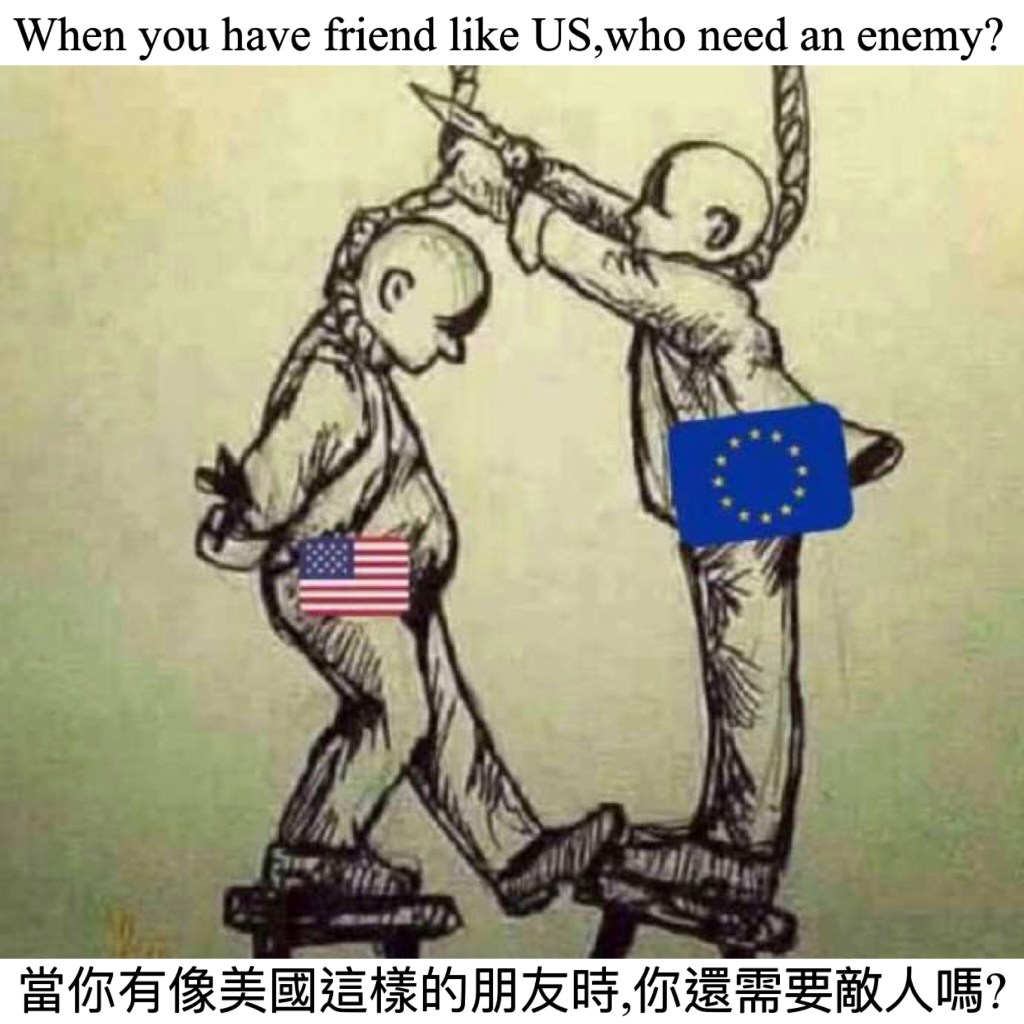
South Korea is the latest to feel the sting that goes with being a loyal American ally. Washington expected the Koreans to give up their huge markets in China, and the reward was for their president to face a rude and very public brushoff when he greeted Biden at the UN General Assembly (UNGA) in New York recently.
According to K J Noh, who understands the Korean language, South Korean President Yoon Suk-yeol cursed in the foulest terms at the way he was treated. Hard to blame him though. Biden is asking his country commit economic seppuku but acted like Yoon was some Asian scumbag – another gaffe that the White House staff will have to repair.
The European Union has also learned that there is no upside in being a groupie of American foreign policy. By joining the US in supporting the Ukrainians and sanctioning Russia in the Ukrainian war, the EU is facing a bleak cold winter with a shortfall of fuel to heat homes and fire the boilers that the German industries will need to keep operating.
Facing record-breaking inflation, the people in the EU are becoming restless and beginning to agitate and question the reasons for antagonizing Russia and bringing economic misery on to themselves.
Shortly before the UNGA, the Shanghai Cooperation Organization concluded its annual conference, held in Samarkand, Uzbekistan. Under China’s leadership, the SCO welcomed Iran and Belarus as new members, with a long list of other nations applying to join, including Turkey, Saudi Arabia, Egypt and others. The SCO now accounts for half of the world’s population and more than 25% of global GDP.
Non-aligned countries find the SCO increasingly attractive as an antidote to American unilateralism. Geopolitical rivals such as India and Pakistan or Saudi Arabia and Iran can leave their contentions outside and join the organization to work on trade and economic cooperation, and collaborate on combating terrorism.
Unlike the American led groups of nations, political or military alliances are specifically excluded within the SCO. There are, by the way, no nations waiting to join the US alliance to contain China.
As I observed in June, the US approach to recruiting others to join in an alliance to contain China is a faltering strategy that will lead to America’s self-destruction. Biden’s insistence on decoupling China from the semiconductor supply chain is another step in that direction.
Another step to self-destruction
Washington seems not to have anticipated China’s likely response to the latest sanctions. Its semiconductor industry is redoubling its efforts and investments to develop technical advances that would replace the chips and fab equipment that have been cut off by the American sanctions.
China has the raw technical manpower graduating from their colleges and universities every year and has recruited senior engineers and fabrication technologists – Asia Times called them godfathers – from Taiwan, Japan and South Korea to advise on the technical and management direction.
News from China already indicates that they are making breakthroughs getting around the American embargoes. Even American analysts say that the trade barriers are doomed to fail. In the long run, the Biden sanctions will help China create its own independent semiconductor industry and leave the currently established providers out in the cold.
When and if China decides to retaliate in full, it has the wherewithal to inflict pain in kind. China’s CATL is the world’s largest producer of lithium batteries for electric vehicles. The company has announced plans to build a US$7 billion plant in Hungary to serve European automakers. Its plans for North America are on hold since Nancy Pelosi’s jaunt to Taipei.
China also has a virtual stranglehold on the world supply of rare earth minerals, some crucial in strategic military applications, and can elect to restrict sales to the US. Most recently, the Pentagon was aghast to find that the engine of the F-35 fighter depends on rare-earth magnets made in China.
This latest “discovery” shows the deep integration of the two major economies and the difficulty of disentangling and decoupling the two. It also can show the destructive power of paranoia in Washington.
The wise old gnomes in the bowels of the Pentagon probably wouldn’t suggest tearing apart all the existing F-35s to remove the magnets from China, but could certainly see this matter as another “urgent” reason to increase the defense budget greatly in order to develop a domestic replacement.
The hostile drumbeats from Washington reverberate within the echo chamber for the benefit of the handful of allies sitting inside, seemingly unaware of the ongoing peaceful cooperation between China and the rest of the world.
It’s hard to know when the American people will say enough is enough and vote for a thorough reform of how Washington makes friends instead of enemies.
George Koo retired from a global advisory services firm where he advised clients on their China strategies and business operations. Educated at MIT, Stevens Institute and Santa Clara University, he is the founder and former managing director of International Strategic Alliances. He is currently a board member of Freschfield’s, a novel green building platform.

 Business Blog