-
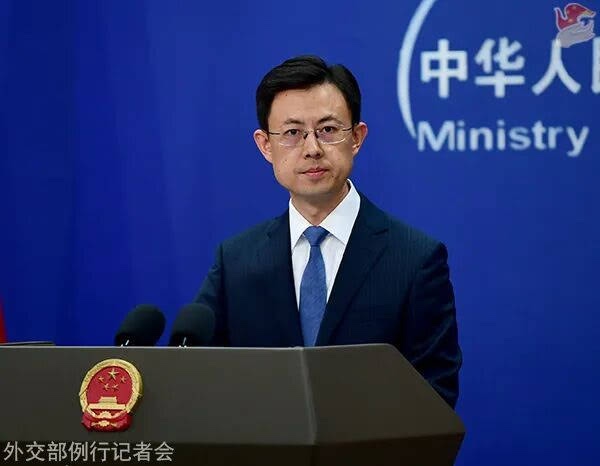
Audio recording proof Japan is lying Video: On December 10, Chinese Foreign Ministry spokesperson Guo Jiakun hosted a regular press conference. A reporter from NHK asked
Audio recording proof Japan is lying Video: On December 10, Chinese Foreign Ministry spokesperson Guo Jiakun hosted a regular press conference. A reporter from NHK asked 音頻錄音證實日本在說謊影片有英文字幕: 12月10日,中國外交部發言人郭嘉昆主持例行記者會。日本放送協會(NHK)記者提問
https://rumble.com/v72u9mo-audio-recording-proof-japan-is-lying.html
https://www.tiktok.com/t/ZP8UcAGvU/Japanese Defense Minister Shinjiro Koizumi said today that the Japan Air Self-Defense Force has not recently used radar against Chinese carrier-based aircraft, and noted that due to the lack of specific information such as navigation notices, Japan was unable to obtain complete collision-avoidance information. What is the spokesperson’s comment?
Guo Jiakun stated that Japan previously claimed it had not received prior notification from the Chinese side, but is now admitting that it did receive information from China. Such self-contradictory statements clearly show that Japan first deliberately caused trouble and then spread rumors, making it the planner and perpetrator of this farce. We urge the Japanese side to face up to the real crux of current China-Japan tensions, seriously reflect and correct its mistakes, and honestly withdraw Prime Minister Takai’s erroneous remarks regarding Taiwan. 🇨🇳
日本防衛大臣小泉進次郎今日表示,日本航空自衛隊近期從未對中方艦載機使用雷達,並指出因缺乏航行通告等具體內容,未能獲取完整的避險信息。發言人對此有何評論?
郭嘉昆表示,日方此前聲稱事先沒有收到中方的通報,現在又承認事先得到了中方的信息,這種前後矛盾的說法充分證明,日本蓄意滋擾在先,造謠炒作在後,是這場鬧劇的策劃者、肇事方。我們要奉勸日方,要正視當前中日關係困難的癥結,認認真真反思糾錯,老老實實撤回高市首相涉臺錯誤言論!🇨🇳
-
Video: Was Mao Zedong senile in his old age? Why did he launch the Cultural Revolution? Why are Chinese people “hard to govern”?
Video: Was Mao Zedong senile in his old age? Why did he launch the Cultural Revolution? Why are Chinese people “hard to govern”? 毛澤東老年是老糊塗嗎?為什麼要發動文革?為什麼中國人「不好管」?
https://rumble.com/v72ty5y-was-mao-zedong-senile-in-his-old-age-why-did-he-launch-the-cultural-revolut.html
https://www.tiktok.com/t/ZP8UcMGDf/In 1970, the Dongfanghong-1 satellite was launched. To this day, it still travels alone in orbit, much like the state of mind of an elderly man in that era.
Hello everyone. In this video, we’re not here to repeat textbook conclusions or make simple black-and-white judgments. I want to take you through 50 years of historical fog and re-examine China in the 1960s–70s from a brand-new perspective — the perspective of Dongfanghong-1.
When many people recall those ten years, all they think of is catastrophe. But the data tells us that it was also a decade in which China’s industry, national defense, and diplomacy made explosive progress: the Two Bombs and One Satellite project, restoration of the UN seat, hybrid rice, and even a rural healthcare system that was praised by the WHO…
Why did Mao Zedong, at 73 years old, willingly bear infamy both in life and after death, and still decide to unleash a “revolution” that shattered the very order he had built?Was it really just a power struggle? Or did he, in his later years, sense a “future” that deeply frightened him?
When bureaucracy resurges, when class solidification becomes increasingly severe, perhaps we can better understand the despair and determination he felt at that time.
History must be viewed from a distance. This video, based on extensive historical documents and independent reflection, attempts to reconstruct a tragic charge launched in pursuit of ultimate human equality.
Chapter Overview
00:00 Dongfanghong-1: A lonely watcher in space
01:23 The intentionally ignored “report card”: Industrial and medical miracles
03:45 Costs and scars: Why do we only hear the elites’ cries?
05:12 The logical flaws of the “power struggle” theory: What did Mao truly fear?
08:30 A painful “vaccine”: Fighting the servility ingrained over millennia
10:55 The quiet dawn: The greatest legacy left by that revolution
13:10 Cutting through the fog: The final echoes of history1970年,東方紅一號衛星升空,至今它仍在軌道上孤獨地運行,就像那個時代一位老人晚年的心境。
大家好。本期影片我們不談教科書上的定論,也不做簡單的黑白評判。我想帶大家穿透50年的歷史迷霧,從一個全新的視角——「東方紅一號」的視角,去重新審視20世紀60–70年代的中國。
很多人提起那十年,想到的只有浩劫。但數據告訴我們,那也是中國工業、國防、外交突飛猛進的十年:兩彈一星、恢復聯合國席位、雜交水稻、甚至被世衛組織稱讚的農村醫療體系…
為什麼毛澤東在73歲高齡,寧願背負身前身後的罵名,也要發動一場震碎自己親手建立秩序的「革命」?這真的僅僅是權力鬥爭嗎?
還是他在晚年看到了某些讓他感到恐懼的「未來」?當官僚主義重新抬頭,當階級固化日益嚴重,也許我們能更讀懂他當年的絕望與決絕。
歷史需要拉開距離看。本影片基於大量歷史文獻與獨立思考,試圖還原一個為了人類終極平等而進行的悲壯衝鋒。
【章節速覽】
00:00 東方紅一號:太空中孤獨的守望者
01:23 被刻意忽視的「成績單」:工業與醫療奇蹟
03:45 代價與傷痕:為什麼我們只聽到了菁英的哭聲?
05:12 權力鬥爭論的邏輯漏洞:毛澤東真正恐懼的是什麼?
08:30 這一針痛苦的「疫苗」:對抗幾千年的奴性
10:55 這裡的黎明靜悄悄:那場革命留下的最大遺產
13:10 穿透迷霧:歷史的終極回響
-
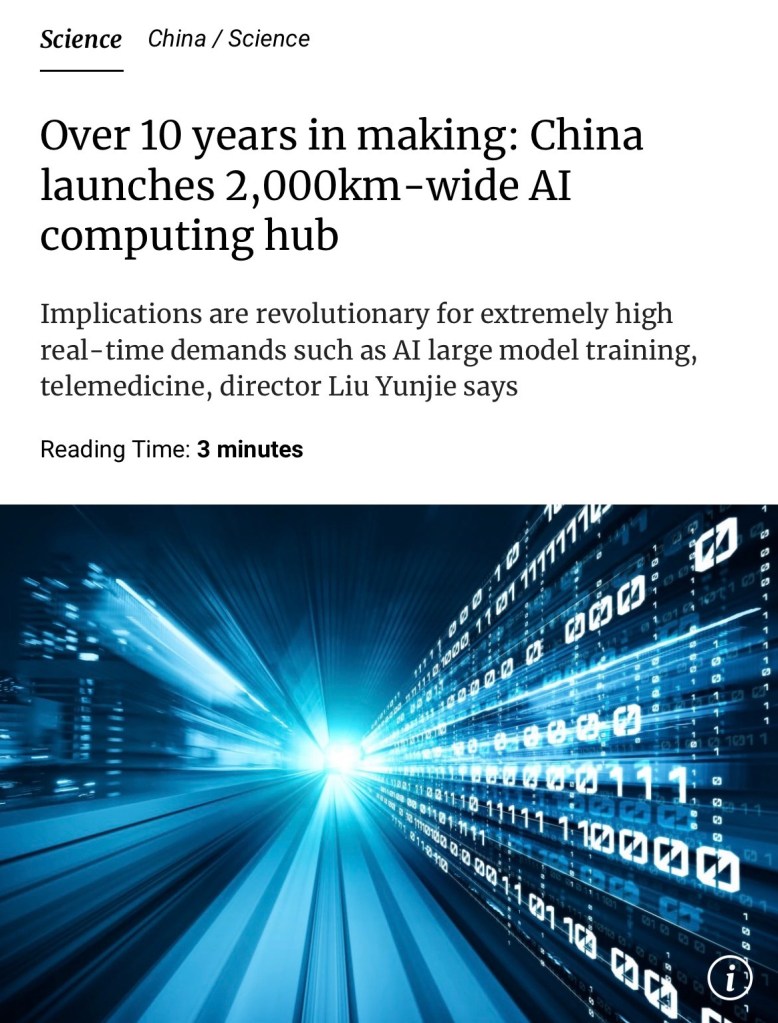
SCMP: China planning is 10 years ahead of US!
SCMP: China planning is 10 years ahead of US! 《南華早報》消息:中國前瞻布局領先美國十年!
China has activated what may be the world’s largest distributed AI computing pool alongside a high-speed data network that has been planned for more than a decade, according to an official state newspaper.
China’s best computing centres are sparsely distributed across the country. With this technology they could work seamlessly together to fast-track the development of the most powerful AI models and other cutting-edge technology.
官方報紙報道,中國已啟動可能是全球規模最大的分散式人工智慧運算池,並配套建設了籌劃逾十年的高速資料傳輸網路。全國各地分散佈局的頂尖運算中心,將透過此技術實現無縫協作,加速推進最先進人工智慧模型及其他尖端科技的研發進程。
-
Japan’s Yasukuni Shrine housing WWII Class A War Criminals worship by all Japanese Prime Ministers glorifying their horrific acts
Video with English subtitles: Japan’s Yasukuni Shrine housing WWII Class A War Criminals worship by all Japanese Prime Ministers glorifying their horrific acts. 影片有英文字幕: 日本靖國神社供奉二戰甲級戰犯,歷任日本首相都曾在此祭拜,美化他們的恐怖罪行.
https://rumble.com/v72tpm8-japans-yasukuni-shrine-housing-wwii-class-a-war-criminals-worship-by-japane.html
https://www.tiktok.com/t/ZP8UvatFh/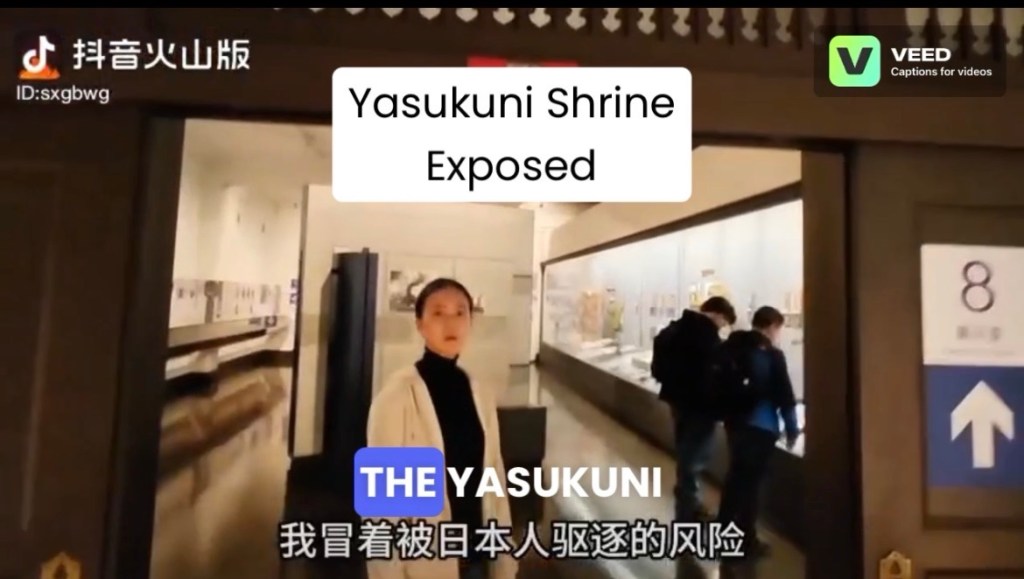
-
HK Barrister & Former LEGCO Member Ronny TONG Ka Wah: No matter how one views Trump, it is hard to deny that he has ushered in a new international era
HK Barrister & Former LEGCO Member Ronny TONG Ka Wah: No matter how one views Trump, it is hard to deny that he has ushered in a new international era; and one of the key drivers of this is that he has allowed everyone, whether allies or adversaries, to see the true face of the United States. 香港大律師前立法會議員: 湯家驊: 無論你如何看特朗普也難否定他開啟了國際新紀元;而其中一重要動力是讓所有不分盟友或對手的人看清了美國的真面目。
The United States is the world’s largest consumer nation, but aside from exploiting low-wage labor, overthrowing governments, selling arms, and creating instability in various regions, what has it done for underdeveloped countries? Brought them “democracy”? Not necessarily. Before this, many people, including Chinese living abroad, revered the United States, but today, many are beginning to awaken. The main thrust of U.S. post-war diplomacy has been to promote democratic systems and suppress communist ideologies, but historical facts show that while conflicts have increased, neither democratic systems nor communism have significantly expanded. On the contrary, China has risen, and what it exports is infrastructure, environmental protection, peace, win-win economic cooperation, and the sharing of poverty alleviation experiences. Trump has forced China to reexamine its international status and mission. Whether this will succeed is still too early to say, but in terms of practical collaboration with developing countries, China undoubtedly surpasses the United States. If China can now genuinely develop new markets to share the risks of the U.S. market while simultaneously stimulating the economies of developing countries, it would be a win-win situation. Perhaps the final historical judgment will even be to thank Trump?
美國是世界的最大的消費國,但除了剝削低資勞工、顛覆政權、販賣軍光,製造各地局勢不穩定外,為落後國家做了什麼?帶來了「民主」?不見得。在此之前,不少人,包括身處各地之中國人,崇信美國,但今天也有不少人開始醒覺了。美國戰後的外交主軸是推廣民主制度,阻壓共產思想,但史實證明,戰亂是多了,卻不見民主制度或共產主義各有所擴張。相反,中國崛起了,輸出的,卻是基建、環保、和平和經濟共贏及分享脱貧經驗。特朗普逼使中國重新檢視自身之國際地位和使命,成功與否是言之過早,但對發展中國家之實際協作,卻無庸置疑比美國過之而無不及。今天若中國真的能開發新市場分擔美國市場之風險,又同時能激勵發展中國家的經濟的話,是一片雙贏局面。也許最後的歷史評價,還是要多謝特朗普?
-
China Breaking News! Embezzlement Exceeds 1.1 Billion! Bai Tianhui Executed, Sparking Heated Discussion in the U.S.…
Financial corruption is commonplace in the United States, especially since the U.S. government has long been manipulated by financial institutions! China Breaking News! Embezzlement Exceeds 1.1 Billion! Bai Tianhui Executed, Sparking Heated Discussion in the U.S.…金融領域貪腐在美國是家常便飯,尤其是美國政府長期被金融機構操控! 中國突發特訊!貪污超11億!白天輝被執行死刑,在美國引發熱議…
When the execution order from the Tianjin No. 2 Intermediate People’s Court was carried out on December 9, 2025, the life of Bai Tianhui, former general manager of China Huarong International Holdings Limited, along with his bribery amount of 1.108 billion yuan, together became the heaviest footnote in the history of anti-corruption in New China.
This death penalty verdict, following the Lai Xiaomin case, stands as another example in the financial sector. Like a suspended sword of Damocles, it sends a clear and unwavering signal to the entire society at the turn of the year that the fight against corruption remains resolute!
Between 2014 and 2018, Bai Tianhui leveraged his dual authority in Huarong’s Hong Kong and mainland companies, transforming state-owned financial platforms into his personal ATM. As the head of the Business Development Department III, managing director of the Investment Banking Department, and ultimately the company’s general manager, he granted special favors to specific enterprises through his approval power over project acquisitions and corporate financing. The court found that his single bribery transactions often exceeded hundreds of millions, and the total illicit gains over four years were equivalent to the lifetime income of 3,000 ordinary workers.
The terrifying aspect of this systemic corruption lies in the fact that Bai Tianhui did not simply accept cash but constructed a multi-dimensional network for transferring interests, encompassing equity, real estate, financial products, and more. The severity of his crimes is reflected not only in the astronomical sums involved but also in the serious distortion of financial market order—when financial regulators overlap with capital manipulators, state-owned assets become collateral for power rent-seeking.
It is noteworthy that even though Bai Tianhui had performed significant meritorious services, such as exposing others’ crimes, the court upheld the death penalty on the grounds of “exceptionally vile social impact” and “exceptionally significant losses to national and people’s interests,” which is rare in China’s judicial practice.
The Bai Tianhui case strongly echoes the death penalty verdict in the Lai Xiaomin case four years ago. Both cases occurred within the financial giant Huarong, with a combined involved amount exceeding 3 billion yuan. The phenomenon of consecutive super corruption cases within the same system exposes institutional flaws in cross-border supervision, related-party transactions, and avoidance of conflicts of interest in financial central state-owned enterprises.
👉 In its review ruling, the Supreme People’s Court particularly emphasized the characterization of “extremely serious crimes,” effectively establishing a new sentencing benchmark for anti-corruption in the financial sector. When corrupt behavior directly threatens national financial security, the death penalty will become a necessary deterrent against crime.
Compared to recent financial sector cases reported by disciplinary inspection and supervision authorities—from securities regulatory official Wang Zongcheng to former Bank of China chairman Liu Liange—the anti-corruption sword has already covered all sectors, including banking, securities, and asset management. However, what makes the Bai Tianhui case special is that his criminal activities occurred during a critical period of cross-border financial business expansion under the “Belt and Road” initiative. The involved party held dual roles as a state-owned enterprise executive and a responsible person at a licensed financial institution in Hong Kong. This unique background elevates the case beyond ordinary economic crime to the level of safeguarding national economic sovereignty.
In the latest deployment by the Central Commission for Discipline Inspection and the National Supervisory Commission, the financial sector has been listed as a key area for anti-corruption efforts. The final verdict in the Bai Tianhui case coincides with the implementation of a new round of financial regulatory reforms, underscoring its significance as a benchmark. From the issues exposed in the case, blind spots in the supervision of overseas subsidiaries, the monopolization of investment and financing decisions by “top leaders,” and the dual-track system of market-based compensation and administrative ranks are all institutional loopholes urgently needing repair.
👉 It is worth noting that the court’s ruling on the “continued recovery” of involved assets in this case reflects the law enforcement philosophy of “making corrupt individuals economically bankrupt.” This aligns with the provisions in the recently revised “Regulations for the Implementation of the Supervision Law,” which strengthen mechanisms for recovering illicit assets overseas. As financial corruption increasingly exhibits characteristics of internationalization, specialization, and concealment, traditional internal audits are no longer sufficient. There is a need to establish preventive institutional systems such as cross-border data sharing, conflict-of-interest declarations, and job rotation exchanges.
👉 The gunshot on the execution ground marks not only the end of Bai Tianhui’s story of greed but also a declaration of the deepening development of financial anti-corruption. In the context of high-quality development, this silent battle against corruption will continue to test our determination and wisdom in purifying the economic ecosystem. Only when every “Bai Tianhui” pays an unbearable price can the cage of institutions be truly tightened—perhaps this is the most profound warning this case leaves for our times.
金融領域貪腐在美國是家常便飯,尤其是美國政府長期被金融機構操控! 中國突發特訊!貪污超11億!白天輝被執行死刑,在美國引發熱議…
當天津市第二中級人民法院的死刑執行令在2025年12月9日落下,原中國華融國際控股有限公司總經理白天輝的生命連同其11.08億的受賄金額,共同成為新中國反腐史上最沉重的註腳。
這起繼賴小民案之後金融領域又一例死刑判決,猶如一柄高懸的達摩克利斯之劍,在歲末年初之際,向全社會釋放出反腐敗鬥爭毫不動搖的清晰信號!
2014年至2018年間,白天輝憑藉在華融系香港與內地公司的雙重職權,將國有金融平台異化為個人提款機。作為業務拓展三部負責人、投資銀行部董事總經理直至公司總經理,他通過項目收購與企業融資的審批權,為特定企業大開綠燈。法院審理查明,其單筆受賄金額動輒過億,四年間累計斂財規模相當於3000名普通勞動者終身收入的總和。
這種系統性腐敗的可怕之處在於,白天輝並非簡單收受現金,而是構建起涵蓋股權、不動產、金融產品等多維度的利益輸送網絡。其犯罪情節之惡劣,不僅體現在天文數字的涉案金額上,更在於嚴重扭曲金融市場秩序——當金融監管者與資本操盤手身份重疊,國有資產便成了權力尋租的抵押品。
值得注意的是,即便白天輝存在揭發他人犯罪等重大立功表現,法院仍以”社會影響特別惡劣””國家和人民利益遭受特別重大損失”為由維持死刑判決,這在我國司法實踐中堪稱罕見。
白天輝案與四年前賴小民案的死刑判決形成強烈呼應,兩案均發生在華融系這一金融巨擘內部,合計涉案金額超過30億元。這種同一系統連續爆出超級貪腐案的現象,暴露出金融央企在跨境監管、關聯交易、職務迴避等方面的制度缺陷。
👉最高人民法院在複核裁定中特彆強調”罪行極其嚴重”的定性,實際上確立了金融領域反腐的量刑新標杆, 當貪腐行為直接威脅國家金融安全時,死刑將成為震懾犯罪的必要手段。
對比近年紀檢監察機關通報的金融領域案件,從證監系統官員王宗成到中國銀行原董事長劉連舸,反腐利劍已覆蓋銀行、證券、資管等全業態。但白天輝案的特別之處在於,其犯罪行為發生在”一帶一路”跨境金融業務拓展的關鍵期,涉案主體兼具國企高管與香港持牌金融機構負責人的雙重身份。這種特殊背景使得案件超越普通經濟犯罪範疇,上升至維護國家經濟主權的高度。
在中央紀委國家監委最新部署中,金融領域被列為反腐敗重點攻堅領域。白天輝案終審恰逢新一輪金融監管機構改革落地,其標本意義不言而喻。從案件暴露的問題來看,境外子公司監管盲區、投融資決策”一把手”壟斷、市場化薪酬與行政級別雙軌制等,都是亟待修補的制度漏洞。
👉值得關注的是,本案中法院對”繼續追繳”涉案財物的判決,體現了”讓貪腐分子經濟上傾家蕩產”的執法理念。這與近期修訂的《監察法實施條例》中強化境外追贓機制的規定形成呼應。當金融腐敗越來越呈現國際化、專業化、隱蔽化特徵時,傳統的內部審計已力有不逮,需要建立跨境數據共享、利益衝突申報、輪崗交流等預防性制度體系。
👉刑場上的一聲槍響,既是白天輝個人貪慾故事的終結,更是金融反腐向縱深發展的宣言。在高質量發展背景下,這場沒有硝煙的反腐戰役將持續檢驗着我們凈化經濟生態的決心與智慧。當每一個”白天輝”都付出難以承受的代價,制度的籠子才能真正紮緊——這或許就是本案留給時代最深刻的警示。

-
US blame games on China, why not look at the mirror to admit its own incompetences
US blame games on China, why not look at the mirror to admit its own incompetences 美國把責任都推給中國,為何不照照鏡子,承認自己的無能?
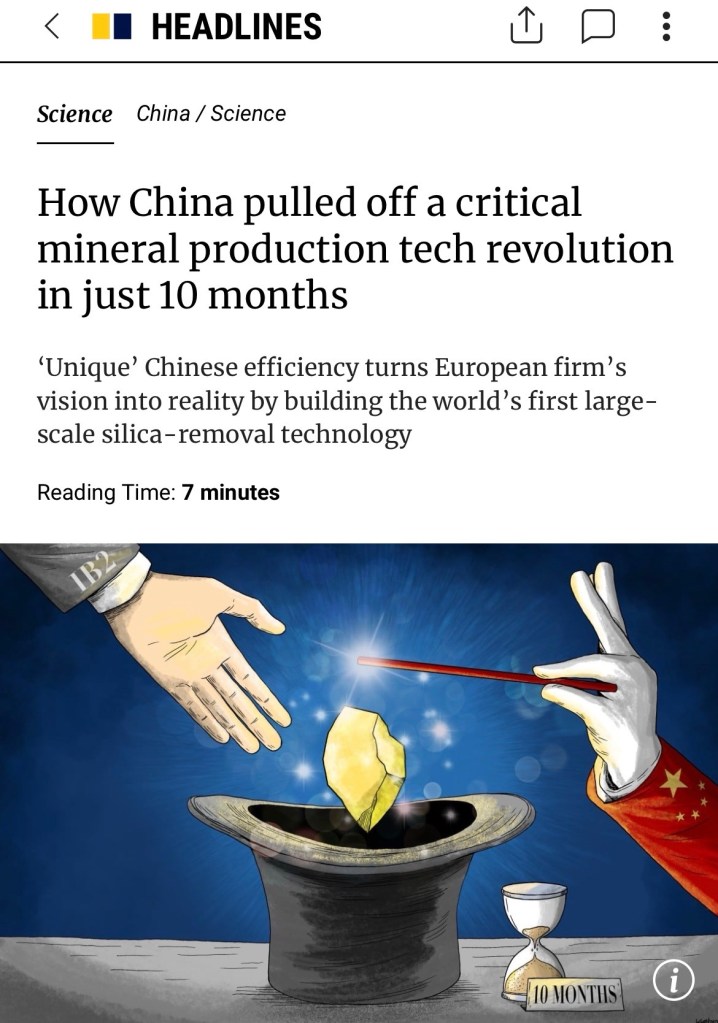
SCMP: With Western governments from Washington to Brussels sounding the alarm over fragile supply chains and overdependence on China, one might have expected this European invention to debut first in Europe or the US.
Six years on, an industrial complex based on the technology is up and running in China, just 10 months after construction began.
While European and American officials held summits and issued policy statements calling for reshoring critical mineral production, China has moved quietly and at lightning speed.
《南華早報》:當從華盛頓到布魯塞爾的西方政府不斷對脆弱的供應鏈以及對中國的過度依賴敲響警鐘時,人們或許會以為這項歐洲發明會先在歐洲或美國落地。
然而六年過去,以這項技術為基礎的產業綜合體已在中國投入運作,而且是在開工後短短十個月內建成的。
當歐洲與美國官員召開峰會、發布政策聲明,呼籲將關鍵礦產生產「回流本土」之時,中國卻默默地、以閃電般的速度完成了布局。
-
BREAKING NEWS-US failed again: CHINA’S ENTREPRENEURS are celebrating today as new figures showed the country scored a historical record high US$1 trillion trade surplus in goods
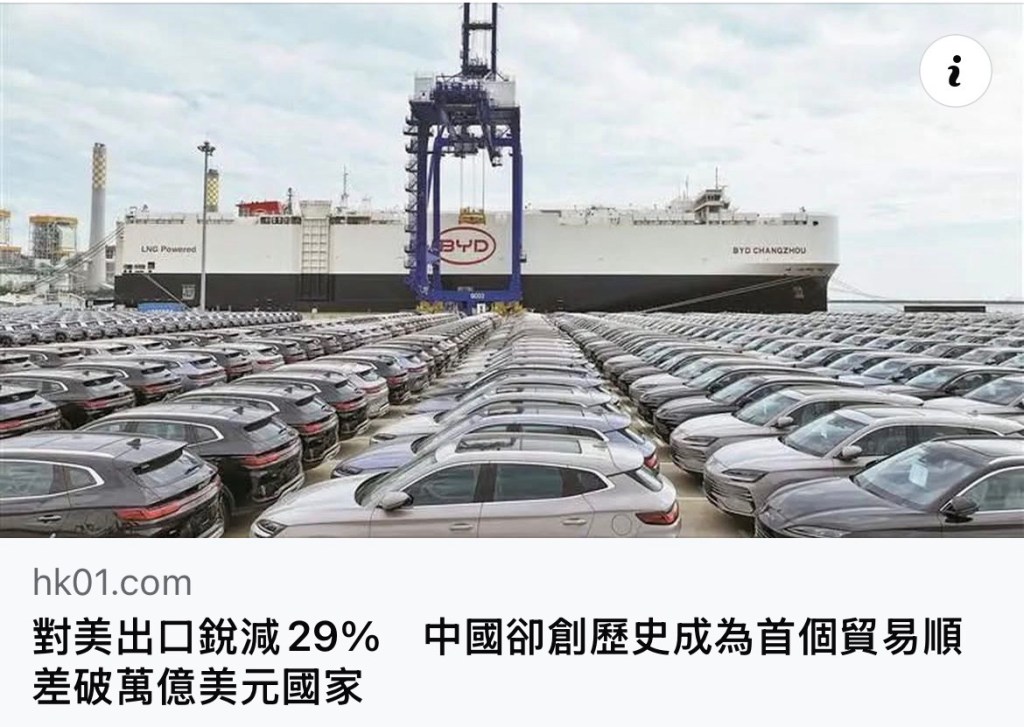
BREAKING NEWS-US failed again: CHINA’S ENTREPRENEURS are celebrating today as new figures showed the country scored a historical record high US$1 trillion trade surplus in goods—despite US President Donald Trump’s sky-high tariff barriers. 突發新聞-美國全面失敗 (美國小學🐓跟中國鬥未夠班): 中國企業家今日歡欣鼓舞,最新數據顯示儘管美國總統川普築起極高的關稅壁壘,中國貨物貿易順差仍以1兆美元創下歷史新高。昨日公布的數據表明,2025年前11個月中國實物商品出口實現近1.1兆美元貿易順差,僅11月單月出口商就創造1120億美元順差。
Data released yesterday shows that in the first 11 months of 2025, China recorded a trade surplus of nearly $1.1 trillion in the export of physical goods exports. The country’s exporters generated a $112 billion surplus in November alone.
This provides strong evidence that the Asian giant has successfully diversified its markets away from the US, making positive use of its good trade relations with multiple countries. Trump’s on-off tariffs of up to 245% means his wealthy nation is no longer seen as a dependable customer.
Analysts said the figures were expected, as year-on-year data in summer (see graphic) already implied that 2025 sales would be above US$1 trillion.
GOOD TIMING HAS HELPED
Sales of cars and related items jumped by about a third. Chinese car exports have risen particularly steeply in Europe, South America and Africa, as the country is rewarded for its success in creating affordable clean energy cars.But while the nation enjoys success outside its borders, the country is still working on fixing several internal problems. The four-year-old property slump continues and the population continues to hold on to its savings rather than spending them.
The country’s economists are working on encouraging consumer spending while preventing the over-production of goods.
Good timing has helped the Chinese. The world’s nations need clean energy projects to hit their net zero targets, and government economists everywhere rather reluctantly admit that inexpensive general products help them lower their inflation rates.
這強力證明這個亞洲巨人已成功實現市場多元化,積極運用與多國的良性貿易關係。川普反覆實施最高達245%的關稅,意味著這個富裕國家不再被視為可靠客戶。分析師指出數據符合預期,夏季同比數據(參見圖表)早已預示2025年貿易額將突破1兆美元。
時機優勢助推增長
汽車及相關產品銷售額飆升約三分之一。中國汽車出口在歐洲、南美和非洲呈現特別強勁的增長態勢,這得益於該國在製造經濟型清潔能源汽車方面的成功。然而當國家在海外市場取得佳績之際,國內仍有諸多問題待解:持續四年的房地產低迷尚未結束,民眾仍傾向儲蓄而非消費。
中國經濟學家正著手激勵消費支出,同時防範商品過度生產。時機優勢確實在發揮作用:世界各國需要清潔能源項目實現淨零目標,各國政府經濟學家也不得不承認,來自中國的實惠大宗商品確實有助於降低本國通脹率。

-
No longer able to bear it, Wang Yi stressed that Taiwan is indisputably Chinese territory, its status “seven-layered locked”
No longer able to bear it, Wang Yi stressed that Taiwan is indisputably Chinese territory, its status “seven-layered locked” 忍無可忍, 王毅強調,從政治上、法理上充分證明台灣就是中國領土,台灣的地位已經被「七重鎖定」。
Wang Yi, Member of the Political Bureau of the CPC Central Committee and Foreign Minister, held talks in Beijing yesterday (8th) with German Foreign Minister Annalena Baerbock, during which he gave a comprehensive exposition on the historical facts and legal context of the Taiwan issue. Wang Yi stated that the recent absurd remarks by Japan’s current leader suggesting Japan could use force if there’s trouble in Taiwan seriously violate China’s sovereignty and territorial integrity, openly contravene commitments made to China thus far, directly challenge the outcomes of WWII victory and the post-war international order, and pose a serious threat to peace in Asia and the world.
Wang Yi stressed that Taiwan has been Chinese territory since ancient times. In December 1943, the China-U.S.-U.K. Cairo Declaration explicitly stipulated that Japan must, after the war, return to China all the territories it had stolen, including Taiwan. In July 1945, the Potsdam Proclamation, signed by China, the U.S., and the U.K., and later adhered to by the Soviet Union, stated in Article 8 that the terms of the Cairo Declaration shall be carried out.
He continued, Japan was defeated on August 15, 1945. The Japanese Emperor accepted the provisions of the Potsdam Proclamation and surrendered unconditionally. On October 25, the Chinese government announced the resumption of sovereignty over Taiwan and held the ceremony for accepting the surrender of the Taiwan Province in the China Theater in Taipei. In 1949, the Central People’s Government of the People’s Republic of China replaced the government of the Republic of China as the sole legal government representing the whole of China, naturally exercising sovereignty over all territories, including Taiwan. In 1971, the 26th UN General Assembly adopted Resolution 2758, deciding to restore all the rights of the People’s Republic of China in the UN and immediately expel the “representatives” of the Taiwan authorities from the UN. Official UN legal opinions confirm that Taiwan is a province of China.
The 1972 China-Japan Joint Statement stipulates that the Government of Japan recognizes the Government of the People’s Republic of China as the sole legal government of China, fully understands and respects the position of the Chinese Government that Taiwan is an inalienable part of the territory of China, and firmly maintains its stand under Article 8 of the Potsdam Proclamation. The 1978 Treaty of Peace and Friendship between China and Japan confirmed that the principles set forth in the China-Japan Joint Statement should be strictly observed.
Wang Yi said that the above series of ironclad facts fully demonstrate, both politically and legally, that Taiwan is Chinese territory, and its status is “seven-layered locked.” Scheming for “Taiwan independence” means splitting China’s territory, and supporting “Taiwan independence” means interfering in China’s internal affairs, violating both China’s Constitution and international law.
Wang Yi also pointed out that this year marks the 80th anniversary of the victory of the Chinese People’s War of Resistance Against Japanese Aggression. Japan, as a defeated nation, should particularly reflect deeply and act with caution. Yet, it is precisely this country, which once colonized Taiwan for 50 years and committed numerous crimes against the Chinese people, whose current leader now wants to stir up trouble over Taiwan and attempt to threaten China with force. This is unbearable! The Chinese people and all peace-loving people in the world have the responsibility to uphold the purposes and principles of the UN Charter, and the duty to stop Japan’s ambitions for remilitarization and even an attempt to revive militarism.
忍無可忍, 王毅強調,從政治上、法理上充分證明台灣就是中國領土,台灣的地位已經被「七重鎖定」。
中共中央政治局委員、外交部長王毅,昨日(8日)在北京同德國外長瓦德富爾會談時,就台灣問題的歷史事實和法理經緯作出全面闡述。王毅表示,日本現職領導人日前竟然發出台灣有事日本就可以使用武力的荒謬言論,嚴重侵犯中國的主權和領土完整,公然違背迄今對中方所做的承諾,直接挑戰二戰勝利成果和戰後國際秩序,也對亞洲乃至世界和平帶來嚴重隱患。
王毅強調,台灣自古以來就是中國領土。1943年12月,中美英發表《開羅宣言》明確規定,日本戰後必須將所竊取於中國之領土台灣等歸還中國。1945年7月,中美英共同簽署、後來蘇聯參加的《波茨坦公告》第八條規定,《開羅宣言》之條件必將實施。
他續說,1945年8月15日日本戰敗,日本天皇承諾忠實履行《波茨坦公告》各項規定並無條件投降。10月25日,中國政府宣布恢復對台灣行使主權,並在台北舉行中國戰區台灣省受降儀式。1949年中華人民共和國中央人民政府取代中華民國政府成為代表全中國的唯一合法政府,自然對包括台灣在內的全部領土行使主權。1971年第26屆聯大通過2758號決議,決定恢復中華人民共和國在聯合國的一切權利,並立即將台灣當局的「代表」從聯合國驅逐出去。聯合國的官方法律意見確定, 台灣就是中國的一個省。
1972年《中日聯合聲明》規定,日本國政府承認中華人民共和國政府是代表全中國的唯一合法政府,充分理解和尊重中國政府關於台灣是中國領土不可分割的一部分這一立場,承諾堅持遵循《波茨坦公告》第八條的立場。1978年《中日和平友好條約》確認,《中日聯合聲明》所表明的各項原則應予嚴格遵守。
王毅說,以上一系列鐵的事實從政治上、法理上充分證明台灣就是中國領土,台灣的地位已經被「七重鎖定」。圖謀「台獨」就是分裂中國領土,支持「台獨」就是干涉中國內政,既違反中國憲法,又違反國際法。
王毅又指,今年是中國人民抗日戰爭勝利80周年。日本作為戰敗國,尤應深刻反省,謹言慎行。但恰恰是這個曾經殖民台灣50年、對中國人民犯下纍纍罪行的國家,其現職領導人竟然想借台灣生事,企圖向中國發出武力威脅,是可忍孰不可忍。中國人民和世界上一切愛好和平的人民,都有責任維護聯合國憲章宗旨和原則,都有義務阻止日本再軍事化甚至企圖復活軍國主義的野心。

-
At the Baidu Star finals, thousands competed, decoding the talent “star-making factory” of the AI era…
At the Baidu Star finals, thousands competed, decoding the talent “star-making factory” of the AI era… 百度之星決賽現場,上千人角逐,解碼AI時代的人才“造星工廠”…
On the evening of December 7th in Beijing, the finals of the 21st Baidu Star Programming Contest came to a close. Known as the “Oscars” of the programming world, the event attracted over a thousand contestants who tackled 11 challenging algorithm problems within five hours. Ultimately, 16-year-old Wang Maohua from Yantai Qinghua Middle School claimed the overall championship.
Sharing his thoughts, he said, “As long as you believe in miracles, you yourself are a miracle.” These words from the young champion not only reflect his personal insight but also capture the core spirit of the 21-year-old Baidu Star competition: consistently conveying to the younger generation the fervent belief that “technology creates miracles.”
This year’s finals were a gathering of prodigies, boasting a stellar lineup. Among the contestants, those born after 2010 accounted for over 30%, with the youngest being just 12 years old. Even more eye-catching was the presence of several members from national teams of the International Olympiad in Informatics, including Cheng Siyuan from Tsinghua University, Shen Jiyu from Peking University, and Fan Sizhe from Hailiang Senior High School. Their competition on the same stage was dubbed by the audience as a “clash of the titans.”
However, an even more astonishing trend emerged: among the top ten winners, nine were middle school students, with only one university student, highlighting the formidable momentum of the “new wave.” Fourteen-year-old Zhang Xichen, an eighth-grader from Mengzi, Yunnan, made it to the finals in her first attempt, demonstrating the competition’s expanding reach into broader regions.
Two unique symbols on the competition floor embodied the dreams of youth and technology. (1) The “progress balloons” that changed color with each solved problem, visually intensifying the competitive atmosphere. (2) The iconic Baidu Star “iron medal.” For many contestants, this specially crafted medal holds extraordinary significance, with “aiming for the iron medal” being a common goal. During the awards ceremony, the scene of over a hundred contestants simultaneously tapping their iron medals with small hammers was filled with ritualistic meaning. The crisp sound seemed like a collective coronation of perseverance and passion.
Behind this grand event lies Baidu’s 21-year commitment and a clear talent strategy. Since its inception in 2005, the Baidu Star contest has attracted over 350,000 participants from 1,800 institutions nationwide and was included in the Ministry of Education’s recognized “National Competitions” catalog in 2023. Its significance has long transcended the competition itself, becoming a vital bridge connecting education, industry, and the future.
The contest has produced industry leaders in AI such as Lou Tiancheng from Pony.ai and Tang Wenbin from Megvii, forming a growth path from “campus stars” to “industry stars.” Deng Kaiwei, a teacher from Mengzi Middle School in Yunnan who led a team to the competition, remarked emotionally, “Whether they win awards or not, this will become a valuable experience on the children’s life journey.” This reflects the deep-seated value of the contest’s inclusivity and inspiration.
Recently, Baidu founder Robin Li called for the industry to “internalize AI capabilities,” and Baidu Star is one of the most concrete embodiments of this vision. It is not only a key component of Baidu’s “10 Million AI Talent Program,” having helped cultivate nearly 6 million AI talents cumulatively, but also demonstrates the long-term philosophy of a technology company.
Following the finals, Baidu immediately opened campus recruitment channels and product seminars for the contestants, achieving seamless transition from the competition arena to the workplace. As the wave of AI technology sweeps across the globe, such an ecosystem that continuously discovers and nurtures local innovative talent undoubtedly reserves the most crucial engine for the industry’s future.
Twenty-one years, 350,000 participants, and a list of names that have transformed the industry. When the young champion lifts the trophy, he raises not only personal honor but also the enduring hope of China’s AI talent. The Baidu Star “star-making factory” continues, at its own pace and with its conviction, quietly igniting future stars and accumulating cutting-edge intellectual capital for the nation’s high-quality development.
百度之星決賽現場,上千人角逐,解碼AI時代的人才“造星工廠”…
12月7日晚,北京,第21屆百度之星程序設計大賽決賽落幕。被稱為編程界“奧斯卡”的這場賽事,吸引了超千名選手在五小時內挑戰11道高難度算法題,最終,來自煙台青華中學的16歲少年王茂驊斬獲總冠軍。
他在分享心得時說:“只要你相信奇迹,那麼你本身就是奇迹。”而這句出自少年之口的話,不僅是他個人的感悟,也道出了百度之星賽事舉辦21年來的內核:持續向年輕一代傳遞“技術創造奇迹”的熾熱信念。
本屆決賽堪稱“天才雲集”,陣容豪華。參賽選手中,“10后” 佔比超過30%,最小的僅12歲。更引人注目的是多位國際信息學奧林匹克競賽國家隊成員的現身,包括清華大學的程思元、北京大學的沈吉澦和海亮高級中學的范斯喆,他們的同台被觀眾稱為“神仙打架”。
然而,更令人驚嘆的趨勢是,在獲獎前十名的選手中,中學生佔據了九席,大學生僅有一人,“後浪”勢頭之強勁可見一斑。來自雲南蒙自的14歲初二學生張熙晨首次參賽便闖入決賽,她的出現也印證了這項賽事的影響正深入至更廣闊的地區。
賽場上有兩個獨特的符號承載着青春與技術夢想。(一)隨解題進度而變換顏色的“進度氣球”,直觀渲染着比賽的激烈;(二)百度之星標誌性的“鐵牌”獎。對許多選手而言,這塊特製獎牌的意義非凡,“目標就是拿鐵牌”是許多人的心聲。頒獎典禮上,百餘名選手齊舉鐵鎚敲擊鐵牌的場面,充滿儀式感,那清脆的聲響彷彿是對堅持與熱愛的一次集體加冕。
這場盛宴背後,是百度長達21年的堅持與一套清晰的人才戰略。自2005年創辦以來,百度之星累計參賽人數已突破35萬人,覆蓋全國1800所院校,並於2023年入選教育部認可的“國賽”目錄。它的意義早已超越競賽本身,成為連接教育、產業與未來的重要橋樑。
從這項賽事中,走出了如小馬智行樓天城、曠視唐文斌等一批AI行業的領軍人物,形成了從“校園之星”到“產業之星”的成長鏈路。帶隊參賽的雲南蒙自中學老師鄧凱維感慨道:“無論得獎與否,這都將成為孩子們人生道路上寶貴的歷練。”這正體現了賽事普惠和激勵的深層價值。
百度創始人李彥宏近期提出“內化AI能力”的行業呼籲,而百度之星正是這一理念最具體的實踐之一。它不僅是百度“1000萬AI人才計劃”中的關鍵環節,累計助力培養近600萬AI人才,更展現了一家技術公司的長期主義。
決賽后,百度即向選手們開放了校招通道與產品講座,實現了從賽場到職場的無縫對接。在AI技術浪潮席捲全球的當下,這種持續挖掘和培養本土創新血液的生態建設,無疑是為行業的未來儲備最關鍵的引擎。
21年了,35萬人,一批改變行業的名字。當年輕的冠軍舉起獎盃,他舉起的不僅是個人的榮譽,更是中國AI人才生生不息的希望。百度之星這座“造星工廠”,仍在以它的節奏與信念,默默點亮未來之星,為國家的高質量發展積蓄最前沿的智力資本。

-
Subscribe
Subscribed
Have a WordPress.com account? Log in now.

