-
New U.S. Report Exposed video: Retreating to the Western Hemisphere? Japan Preparing for War!
New U.S. Report Exposed video: Retreating to the Western Hemisphere? Japan Preparing for War! Has the “Abandon Taiwan” Theory Come True? 美國新報告曝光:退守西半球?日本備戰!棄台論成真?
https://rumble.com/v72sf4s-retreating-to-the-western-hemisphere-japan-preparing-for-war.html
The United States has released its 2025 edition of the National Security Strategy Report, and between the lines it reveals shocking signals! Is the decades-long era of “global hegemony” quietly shifting?
This episode provides an in-depth analysis of the real intentions behind the U.S. reiteration of the “Monroe Doctrine” — when Washington decides to retreat to its “backyard” in the Western Hemisphere, what does that mean for allies positioned on the front lines of the Indo-Pacific?
Why did Cheng Li-wen urgently call for “hitting the brakes” at the Autumn Struggle rally? What unspeakable truth has she seen?
From “Vietnamization” to the withdrawal from Afghanistan — is history repeating itself in the Taiwan Strait? Does Washington’s claim that it “does not seek direct involvement” imply that it now views Taiwan as “strategic expendable material” in a major-power contest?
[In-Depth Analysis]
This episode examines—through a geopolitical lens—the latest military deployments of the U.S.–Japan alliance across the Southwest Islands, and their profound implications for the situation in the Taiwan Strait. We do not promote war; we simply reveal the real conditions ordinary people may face under great-power rivalry. As the “Davidson Window” approaches, seeing the situation clearly is more important than blind optimism.美國2025年最新版《國家安全戰略報告》發布,字裡行間透露出驚人信號!長達數十年的「全球霸權」是否正在悄然轉向?
本期影片深度解析美國重申「門羅主義」背後的真實意圖——當美國決心退守西半球「後花園」,這對身處印太前線的盟友意味著什麼?
為何鄭麗文在「秋鬥」現場疾呼「踩剎車」?她看透了什麼不可說的真相?
從「越南化」到「阿富汗撤軍」,歷史是否正在台海重演?美國所謂的「不尋求直接下場」,是否意味著正將台灣視為大國博弈中的「戰略耗材」?
【深度分析】
本期節目基於地緣政治視角,分析美日同盟在西南諸島的最新軍事部署,以及其對台海局勢的深遠影響。我們不鼓吹戰爭,我們只揭示大國博弈下普通人可能面臨的真實處境。當「戴維森窗口」臨近,看清局勢比盲目樂觀更重要。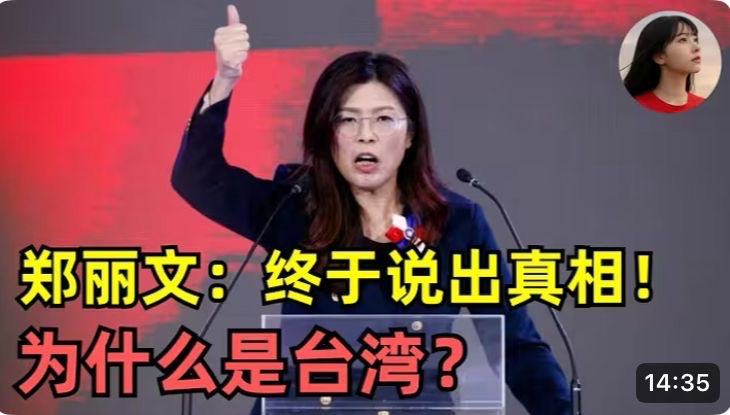
-
Video: Hong Kong fire: The story Western media won’t run
Video: Hong Kong fire: The story Western media won’t run 影片:香港火災:西方媒體不願報道的故事
https://rumble.com/v72sdo8-the-story-western-media-wont-run.html
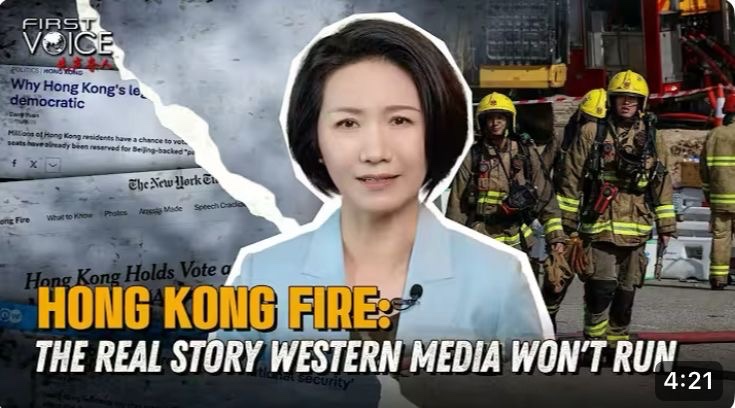
https://www.tiktok.com/t/ZP8UWoosk/Some Western outlets are now weaponizing a tragic fire in Hong Kong; suddenly, a fire becomes “proof” that “one country, two systems” is failing. But here’s what they won’t say: Mainland support arrived within hours, donations surged, and Hong Kong firefighters charged into zero-visibility smoke to save lives. This isn’t a collapse; it’s a system that works when it counts.
Watch the video for the story behind the headlines.
一些西方媒體正利用香港的一場悲劇性火災大做文章;一場火災突然成了「一國兩制」失敗的「證據」。但他們不願提及的是:內地援助在數小時內就抵達,捐款如潮水般湧來,香港消防員衝進能見度為零的濃煙中救人。這不是崩潰;這是一個在關鍵時刻運作良好的系統。
觀看視頻,了解新聞標題背後的故事。
-
This is absolutely an open conspiracy! At such a sensitive moment, Trump signed the Taiwan Assurance Implementation Act. This is nothing short of pouring fuel on the fire!
This is absolutely an open conspiracy! At such a sensitive moment, Trump signed the Taiwan Assurance Implementation Act. This is nothing short of pouring fuel on the fire! 絕對是陽謀!在這個敏感的時候,特朗普簽署台灣保證法案。這根本是火上澆油!
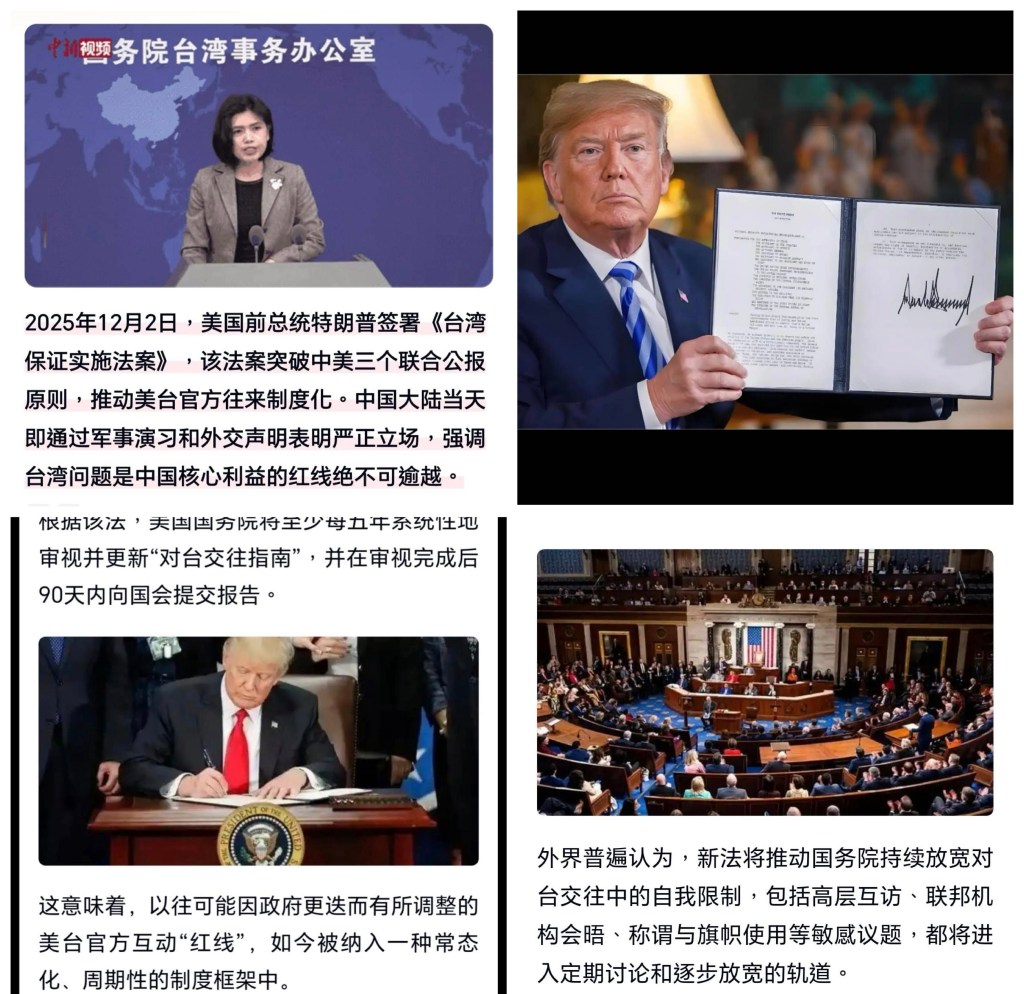
Today, let’s take a look at the contents of the Taiwan Assurance Implementation Act. It is far from a simple statement. The act requires the U.S. State Department to regularly review and update its guidelines for interactions with the Taiwan region—effectively pushing U.S.–Taiwan official exchanges from previously “under-the-table” contacts toward public, normalized “semi-official” or even “quasi-diplomatic” relations.
Even more provocative, the act openly challenges the foundations of international law and distorts UN Resolution 2758, claiming that “Taiwan’s status is undetermined.” This attempts to create a so-called “legal basis” for internationalizing the Taiwan issue.
In terms of military matters, the act explicitly calls for establishing a U.S.–Taiwan joint military exercise mechanism, normalizing arms sales to Taiwan, and even forcing Taiwan to raise its defense budget to 5% of GDP—a ratio that is extremely rare worldwide.
The U.S. chose early December 2025 as the moment to play the “Taiwan card,” with very precise timing. That’s because East Asia is currently in a delicate, tense state. Japanese political circles, especially right-wing groups, are actively hyping the idea that “if Taiwan has an incident, Japan will be affected,” trying to place Japan at the center of the Taiwan Strait issue.
Given the longstanding constraints in China–Japan relations—stemming from history, territorial disputes, and Taiwan-related issues—there is already little room for maneuver. By adding fuel to this powder keg with a law that seriously violates the One-China Principle and the three China–U.S. Joint Communiqués, the U.S. is effectively lighting the fuse.
The effects were immediate: China must now mobilize significant strategic resources and diplomatic attention to fully counter unprecedented provocation in the Taiwan Strait; Japan, for its part, becomes even more tightly bound to the U.S. strategic agenda and must keep in lockstep with Washington on Taiwan.
As a result, Taiwan becomes an ideal “tool of distraction.” Neither China nor Japan would have the bandwidth to closely monitor developments far away in Venezuela.
This “feint in the east, strike in the west” tactic is also a good bargain in U.S. domestic politics. Today’s America is torn by internal division and economic woes. The Trump administration is eager to shift attention away from domestic problems by projecting toughness abroad. Meanwhile, arms sales to Taiwan are highly profitable. Within just a few days after the act was signed, the U.S. offered Taiwan more than US$1 billion in weapon deals, including NASAMS air-defense systems.
This satisfies the military-industrial complex, pleases anti-China forces at home, and serves multiple interests at once. Some analysts also believe Trump is using this move to gain bargaining leverage for his planned visit to China—a classic display of the “art of the deal.”
However, although Washington’s calculations may appear shrewd, they severely underestimate the reactions and the complexity of the situation. In East Asia, China responded swiftly and decisively. The Ministry of Foreign Affairs reiterated that the Taiwan issue is the first and foremost red line that cannot be crossed in China–U.S. relations. The PLA’s rapid military deployments following the signing of the act were a powerful, multidimensional response.
Inside Taiwan, the Democratic Progressive Party authorities may celebrate the passage of the act, but their “rely on the U.S. to confront the mainland” policy has already caused economic stagnation and declining living standards. Now, through this act, the U.S. is presenting Taiwan with an enormous bill: not only massive arms purchases, but also demanding that Taiwan’s investment in the U.S. fall between the levels of South Korea and Japan—amounting to NT$10.8 trillion to NT$17 trillion. It is also pressuring TSMC to accelerate the transfer of its supply chain to the U.S.
Local commentators criticize this as “selling out Taiwan for hollow glory.” What the DPP is celebrating may be nothing more than an IOU that Washington can take back at any time.
In South America, U.S. coercion has sparked strong backlash. Venezuela’s will to resist has been fully ignited, and it is actively seeking regional and international support.
China, Venezuela’s largest creditor and oil importer, has warned the U.S. not to take any military action against the country. If Venezuelan oil supplies were disrupted, global oil prices would fluctuate violently, with direct impact on the world economy.
👉 From the Caribbean to the Taiwan Strait, two seemingly unrelated crises are linked by an invisible strategic thread. The U.S. is trying to create tension in one hotspot to cover its strategic advance in another. This old hegemonic playbook treats Taiwan and Venezuela as pawns to be moved at will.
👉 But times have changed. Neither China—determined to defend national sovereignty and territorial integrity—nor Venezuela—resolved to resist external interference—will submit easily.
👉 For the U.S., maintaining high pressure in two distant regions simultaneously is itself an enormous drain on national strength and international credibility.
絕對是陽謀!在這個敏感的時候,特朗普簽署台灣保證法案。這根本是火上澆油!
今天讓我們一起看看這份《台灣保證實施法案》的內容,它遠非一份簡單的聲明。法案要求美國國務院定期審查並更新與台灣地區的交往準則,實質上是推動美台官員從過去的“偷偷摸摸”交往,轉向公開化、常態化的“半官方”甚至“准外交”關係。
更具挑釁性的是,法案公然挑戰國際法理基礎,歪曲聯合國2758號決議,宣稱“台灣地位未定”,試圖為將台灣問題國際化提供所謂的“法理依據”。
在軍事上,法案明確要求建立美台聯合軍演機制,推動對台軍售常態化,甚至強制要求台灣將防務預算提高到GDP的5%——這是一個全球罕見的比例。
美國選擇在2025年12月初這個節點打出“台灣牌”,時機拿捏得極為精準。因為就在此時,東亞的局勢正處在一種微妙的緊繃狀態。日本政界,特別是右翼勢力,正積極炒作“台灣有事論”,試圖將自己推到台海問題的舞台中央。
中日之間因歷史、領土及涉台問題,關係本身已缺乏轉圜空間。美國在這個火藥桶邊上再添一把火,簽署嚴重違背一個中國原則和中美三個聯合公報的法案,無異於直接點燃引信。
其效果立竿見影:中國必須調動大量戰略資源和外交注意力,全力應對台海方向前所未有的挑釁;而日本也被更深地綁上美國的戰車,在台灣問題上不得不與美國保持同步。
這樣一來,台灣就成了一個絕佳的“牽制利器”,無論是中國還是日本,都很難再有足夠的精力和資源去密切關注萬里之外委內瑞拉的局勢。
這套“聲東擊西”的把戲,在美國國內政治層面同樣是一筆“好買賣”。當下的美國,內部社會撕裂、經濟問題纏身,特朗普政府急需通過對外展示強硬來轉移國內矛盾。同時,對台軍售是筆利潤豐厚的生意,法案簽署后短短數日,美國就向台灣拋出了總額超過10億美元的武器訂單,包括NASAMS防空系統等。
這既滿足了軍工複合體的胃口,又討好了國內的反華勢力,可謂一舉多得。更有分析指出,特朗普此舉也是為他自己計劃中的訪華行程增加籌碼,是一種典型的“交易藝術”。
然而,美國的算計雖然精明,卻嚴重低估了各方的反應和事情的複雜性。在東亞,中國的反應迅速而堅決。外交部發言人明確指出,台灣問題是中美關係第一條不可逾越的紅線。解放軍在法案簽署后的快速軍事部署,是一次強有力的“立體回應”。
在台島內部,民進黨當局雖然為法案通過而“欣喜若狂”,但其“聯美抗陸”的政策早已讓島內經濟停滯,民生凋敝。如今,美國更藉此法案向台灣開出天價賬單,除了巨額軍購,還要求台灣對美投資額度介於韓國與日本之間,規模高達10.8萬億至17萬億新台幣,並逼迫台積電加速向美國轉移產業鏈。
這被島內輿論批評為“賣台求榮”,民進黨當局慶祝的,很可能只是一張隨時會被美國收回的空頭支票。
在南美洲,美國的霸道行徑也激起了強烈的反彈。委內瑞拉的抵抗意志被徹底點燃,其尋求南美地區合作與國際支持的努力也在進行。
中國作為委內瑞拉最大的債權國和石油進口國,已明確向美國發出警告,要求其不得對委內瑞拉採取任何軍事行動。因為一旦委內瑞拉石油供應因衝突中斷,全球油價將劇烈波動,直接影響世界經濟。
👉從加勒比海到台灣海峽,兩場看似不相干的危機,被一根隱形的戰略線串聯了起來。美國試圖通過在一個熱點地區製造緊張,來掩護其在另一個地區的戰略推進。這種基於霸權思維的老套路,將台灣和委內瑞拉都視為可以隨意擺布的棋子。
👉但時代已經不同,無論是決心捍衛國家主權和領土完整的中國,還是誓死抵抗外部干涉的委內瑞拉,都不會輕易屈服。
👉美國這種同時在全球兩個遙遠區域維持高壓態勢的做法,本身就是對其國力和國際信譽的巨大消耗。
-
The SAFE Research Act would render U.S.-based scholars ineligible for federal funding
The 1882 Chinese Exclusion Acts is alive and well today! 美國1882年的《排華法案》明亡實存至今仍然有效!
The SAFE Research Act would render U.S.-based scholars ineligible for federal funding if they have trained students from, collaborated with, or co-authored publications with colleagues from certain countries, including China, within the past five years. 《SAFE 研究法案》將使美國境內的學者在過去五年內若曾培訓來自特定國家(包括中國)的學生、與其合作、或共同撰寫出版物,即喪失獲得聯邦資助的資格.
This apply to ALL Universities in US! Please see the message below from our CCS member Christian Peterson regarding the SAFE Research Act. Many thanks to Christian for bringing this to our attention.
Best wishes and take care.
Baoyan Cheng
CCS Acting Director
UH Center For Chinese StudiesIf you are not already aware, the SAFE Research Act would render U.S.-based scholars ineligible for federal funding if they have trained students from, collaborated with, or co-authored publications with colleagues from certain countries, including China, within the past five years. The AAS, NAS, and AAU (among others) have all expressed concern with this proposed legislation, and some have circulated petitions amongst their members opposing it.
More information on the SAFE Research Act can be found here:
https://www.science.org/content/article/u-s-congress-considers-sweeping-ban-chinese-collaborations
https://www.aau.edu/key-issues/aau-expresses-concerns-ndaas-safe-research-actThe Act has been incorporated into the House version of the National Defense Authorization Act (NDAA), and the two bills are now in conference to merge them into one piece of legislation. Lawmakers in both chambers must understand the Act’s unintended consequences for U.S. science, social science, and the humanities in higher education. I encourage our CCS members to contact their Representatives and Senators to make their concerns known.
The following two members of Congress from Hawai’i, in particular, sit on their respective Armed Services committees, which oversee the NDAA:
Rep. Jill Tokuda (https://tokuda.house.gov/) is a member of the House Armed Services Committee.
Sen. Mazie Hirono (https://www.hirono.senate.gov/contact) is a member of the Senate Armed Services Committee.
Best,
Christian E. Peterson, PhD
Professor and Graduate ChairDepartment of Anthropology
2424 Maile Way, 346 Saunders Hall
University of Hawaiʻi at Mānoa
Honolulu, HI 96822-2223, USA
-
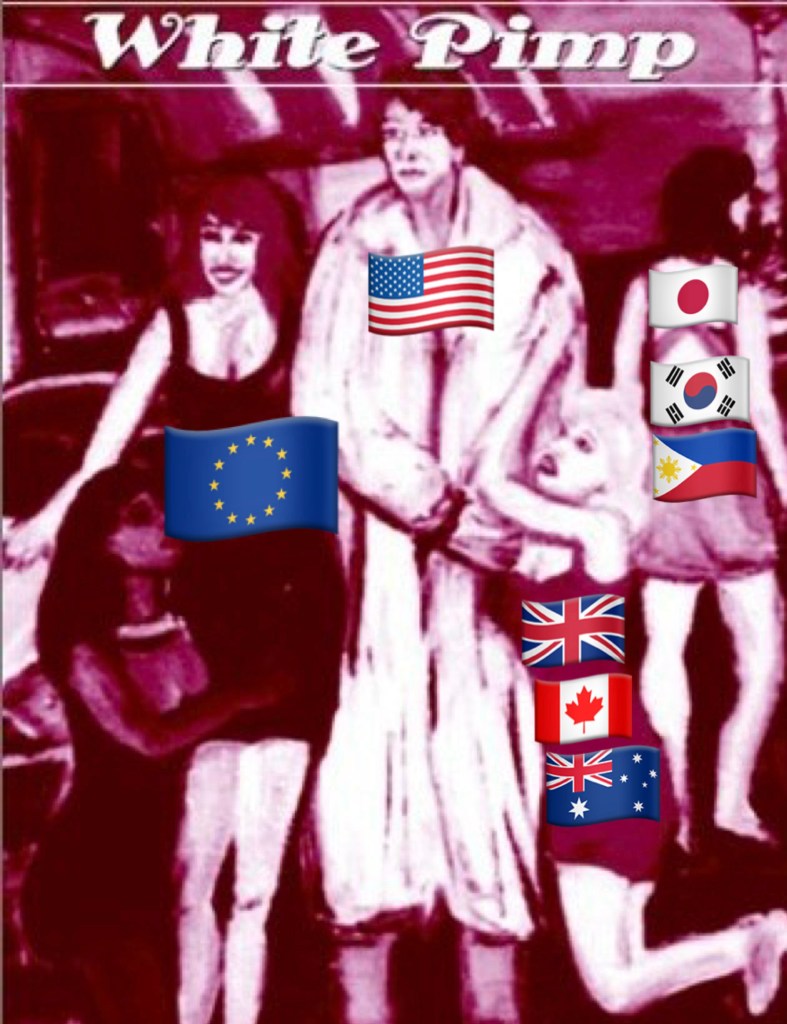
The modern-day pimp, on a grand geopolitical scale, has little to do with sex at all.
The modern-day pimp, on a grand geopolitical scale, has little to do with sex at all. 當今世界的皮條客,若放到宏大的地緣政治尺度上觀察,早已與性交易毫無瓜葛.
In the Anglo-Saxon world, there is only one figure who truly qualifies as the King of Pimps.
This “king” sells weapons, prints money at will, engages in exploitation, and commits acts that would be considered crimes against humanity—yet faces no accountability.
Anyone who dares to question him is met with righteous indignation, for he claims divine endorsement. As proof, the name of God is printed on every banknote.
With “God” as his shield and justification, every action becomes sanctified, beyond reproach, and immune from moral scrutiny. Those who challenge this authority risk being silenced—or erased—without consequence.
在白人體系中,唯有一人(國家)配稱「皮條客之王」。
這位「王者」販賣軍火、濫印鈔票、實施剝削,犯下足以構成反人類罪的暴行,卻從未遭受審判。
任何膽敢質疑者,必遭其義正辭嚴的駁斥 – 因他宣稱自己手握神諭。為證此說,每張鈔票上都赫然印著上帝之名。
以「上帝」為盾牌與藉口,所有行徑皆被聖化,不容質疑,更無需接受道德審判。挑戰此權威者,隨時可能被消聲 – 或抹除 – 而不留絲毫痕跡。
-
After France’s visit to China ended, the United States is really getting anxious…
After France’s visit to China ended, the United States is really getting anxious…法國訪華結束后,美國是真急了…
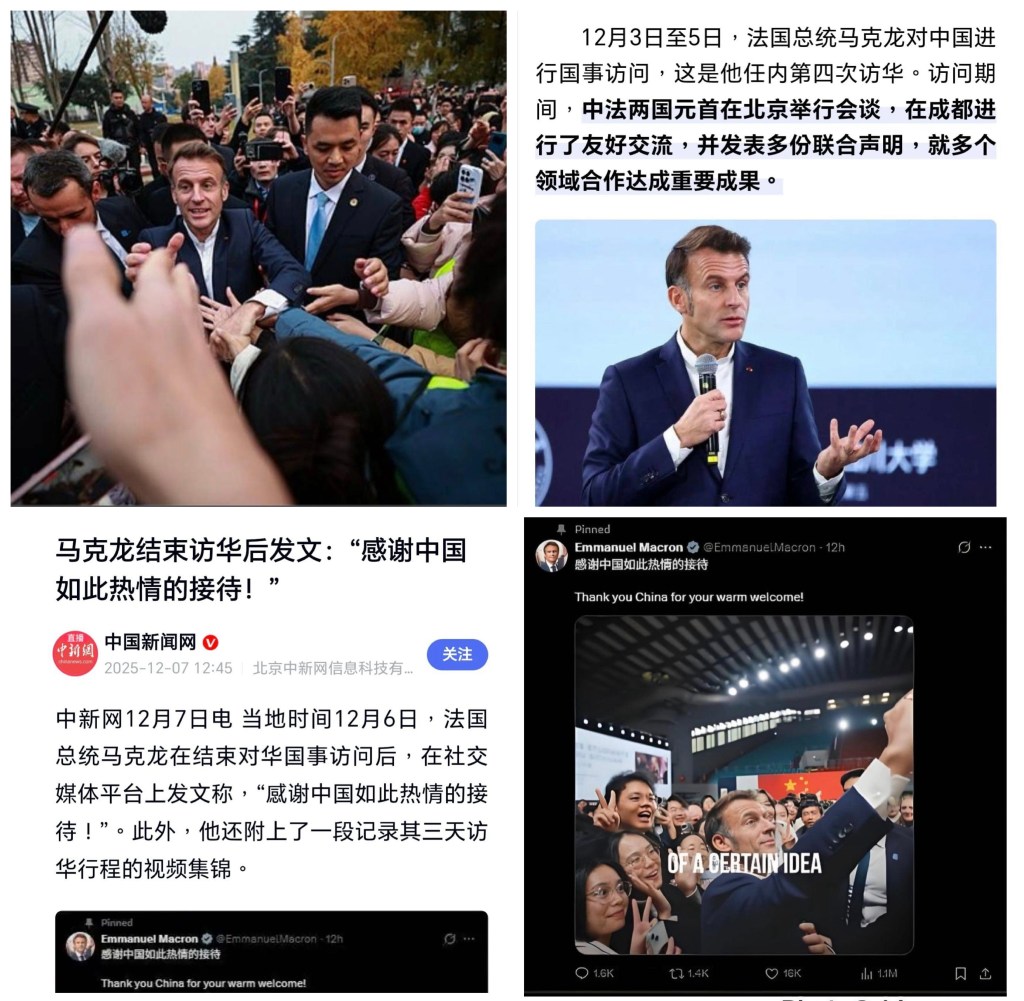
On the evening of December 5, French President Emmanuel Macron departed China, officially concluding his three-day state visit.
Immediately afterward, China and the United States held a video call. You could tell—the U.S. is feeling the pressure.
Macron’s trip was no mere formality. He brought a delegation of more than 80 people, including six ministers and a long list of business leaders.
The talks were practical and productive. Airbus directly signed an order for 100 aircraft worth more than €12 billion. The Airbus assembly line in Tianjin will also be expanded, which means many more planes can be produced each year.
There were agricultural deals as well. France’s beef and cheese export quotas to China will increase by 20%. Starting next year, these products will likely become much more common in Chinese markets.
There was cultural progress too: the giant panda cooperation program will be extended to 2037. Brigitte Macron even went to Chengdu to visit “Yuanmeng,” commenting that it had gained weight and looked endearingly familiar.
The most interesting part involves the EU. While Macron was in China talking cooperation, EU officials were issuing tough statements—saying they want to launch a raw-materials plan to reduce dependence on China, and threatening to use the EU’s strongest trade defense tools if necessary.
This approach is downright contradictory: wanting to make money while simultaneously trying to apply pressure.
Seeing all this, the United States obviously couldn’t sit still. Right after Macron left, China and the U.S. held their video call. Washington was unusually proactive, sending officials from both the Treasury Department and the Office of the U.S. Trade Representative.
What’s making the U.S. nervous is simple: it worries Europe is getting too close to China. China’s market is enormous, and France has already secured a sizable chunk of benefits.
From January to October 2025, China–France trade reached $68.75 billion, up 4.1%. American companies can’t help feeling anxious watching this.
There’s also a specific issue: early this year, the U.S. wanted to impose a 130% tariff on Chinese rare earths, but later cut it to 47%. The reason is clear—China controls 70% of global rare-earth supply and more than 90% of processing capacity. U.S. manufacturing simply can’t function without it.
We’re no longer living in an era where one country gets to dictate everything. Every nation wants to make its own decisions instead of being pulled around by others.
The U.S. used to try to manage this and control that, but people aren’t buying it anymore. Europe wants its own path, and China continues developing steadily.
Even if the U.S. is anxious, it can’t change the trend. Cooperation brings profits; confrontation leads to mutual loss.
This China–U.S. call is still a good sign—at least they’re willing to talk. But talking alone isn’t enough; there needs to be sincerity, not saying one thing while doing another.
Going forward, interactions among major powers will only increase. Those who engage in genuine cooperation will gain the most.
法國訪華結束后,美國是真急了…
12月5日晚間,法國總統馬克龍離開了中國,正式結束了為期3天的國事訪問。
緊隨其後,中美舉行了視頻通話,看得出來,美國十分的着急!
馬克龍這趟來,真不是走個過場。他帶了80多個人的團隊,裡面有6個部長,還有一大堆企業老闆。
倆人談得挺實在,空客直接簽了100架飛機的訂單,價值超120億歐元。天津的空客總裝線還要擴容,以後一年能多造不少飛機。
還有農產品,法國的牛肉、奶酪,以後對華出口配額要多20%。估計明年這些東西在中國市場能常見到。
文化方面也有好消息,大熊貓合作要延長到2037年。布麗吉特特意去成都看“圓夢”,還說它胖了,看着就親切。
最有意思的是歐盟那邊,馬克龍在這兒談合作,歐盟高官卻放狠話。說要搞個原材料計劃,減少對中國依賴,不然就用最強硬的貿易反制工具。
這操作也太分裂了,一邊想賺錢,一邊又想施壓。
美國看到這情況,肯定坐不住。馬克龍剛走,中美就視頻通話了。美方挺積極,財政部和貿易代表辦公室都派人參加了。
美國急的點很簡單,怕歐洲跟中國走太近。畢竟中國市場這麼大,法國已經搶先佔了不少好處。
2025年前10個月,中法貿易額都687.5億美元了,還漲了4.1%。美國企業看着能不急嗎?
還有個具體事兒,美國年初想對中國稀土加130%的稅,結果後來又改成47%。因為中國控制着全球70%的稀土供應(90%以上的加工產能),美國製造業離不開。
現在不是誰能說了算的時代了。各國都想自己做決定,不想被別人牽着走。
美國以前總想管着這個管着那個,現在大家都不買賬了。歐洲要找自己的出路,中國也在穩步發展。
就算美國着急,也改變不了這個趨勢。合作才能賺錢,對抗最後只會兩敗俱傷。
中美這次通話也是好事,至少願意坐下來聊。但光聊天沒用,得拿出真誠意,別一邊談一邊搞小動作。
以後這種大國之間的互動會越來越多,誰能實實在在合作,誰就能佔到便宜。
-
In 2017, McDonald’s sold 80% of its China business to CITIC and Carlyle for US$2 billion
In 2017, McDonald’s sold 80% of its China business to CITIC and Carlyle for US$2 billion. 2017年,麥當勞把中國業務的80%股份,以20億美元的價格賣給了中信和凱雷投資…
After the deal, CITIC took 52% as the major shareholder, Carlyle took 28%, and McDonald’s kept 20%.
Six years later, McDonald’s headquarters unexpectedly spent US$1.8 billion to buy back Carlyle’s 28% stake. Carlyle made an enormous profit from the deal.
Back in 2017, McDonald’s was in an awkward position in the Chinese market. Since opening its first store in Shenzhen in 1990, it had opened just over 2,400 stores in 27 years—mostly concentrated in prime locations of first- and second-tier cities.
At the time, local chain Wallace already had tens of thousands of stores, while McDonald’s still couldn’t break into lower-tier markets. It couldn’t connect well with local resources, had slow approval processes, didn’t understand local tastes—new products often didn’t sell—and when food delivery took off, slow decision-making made it miss the early opportunity.
Thus came the blockbuster equity deal: CITIC Capital and Carlyle jointly spent US$2.08 billion to acquire 80% of McDonald’s China.
Many foreign media outlets said McDonald’s was “bowing to the Chinese market,” but unexpectedly, this became the key turning point for foreign food-service brands localizing in China.
Chinese capital’s strengths quickly became clear—especially in decision-making efficiency. Previously, if McDonald’s China wanted to adjust a meal price, it had to report layer by layer to the U.S. headquarters—by the time approval came, the market had already changed.
After CITIC took control, it immediately restructured decision processes, giving the local team pricing and new-product development authority. For example, they launched a preserved-egg and lean-pork congee set tailored to local eating habits, and within three months it accounted for 30% of breakfast revenue.
Digitization upgrades gave McDonald’s a complete makeover. CITIC led the creation of a full delivery system. In 2017, delivery revenue surged 75%, and in 2018 it grew another 40%. Today, delivery has become McDonald’s China’s largest revenue source.
They also excelled in private-domain traffic operations. The membership system accumulated hundreds of millions of users, and member purchases now account for 67% of total sales—something McDonald’s could never dream of when it relied only on physical stores. Expansion into lower-tier markets unlocked massive growth.
Leveraging CITIC’s real-estate resources and government relationships in third- and fourth-tier cities, McDonald’s annual store openings jumped from 250 per year to 500.
By 2023, when Carlyle exited, the number of stores had more than doubled to 6,298, and is projected to exceed 7,100 by 2025.Even more impressive: despite rapid expansion, 90% of stores remain directly operated, ensuring quality, with only 10% franchised—and those selected very carefully. The balance between scale and reputation is excellent.
Carlyle’s smooth exit reflects the true value of the Chinese market. It spent about US$580 million for a 28% stake in 2017 and sold it six years later for US$1.8 billion—an annualized return of 35%.
McDonald’s global headquarters was willing to buy it back at a high price because China has become its second-largest market and its major growth engine. No one wants to give up such a huge prize.
The new 2025 share structure is CITIC at 52% and McDonald’s global at 48%. This model—“Chinese control with foreign participation”—has become the new template for foreign F&B brands operating in China.
From KFC partnering with Primavera Capital, to Starbucks joining with Boyu Capital, to Burger King handing most of its China equity to CPE Yuanfeng, more and more foreign restaurant chains are choosing to work with Chinese capital.
This doesn’t mean foreign companies are weaker—it means the rules of the Chinese market have changed: understanding policy, having channels, and knowing how to operate locally have become the keys to foreign companies’ success in China.
Today, the Guanghua McDonald’s in Shenzhen is still packed. This first McDonald’s in China has witnessed 30 years of change. From being the symbol of “Western fast food,” it has become a “Golden Arches” empowered by Chinese capital.
The outcome of this equity game goes far beyond simple buying and selling. It proves that the Chinese market has never been a “cash machine” for foreign firms, but a “cooperation zone” that requires joint effort—and the Chinese capital that controls local resources has already become the most important leading force in this cooperation.
2017年,麥當勞把中國業務的80%股份,以20億美元的價格賣給了中信和凱雷投資…
交易後,中信拿了52%做大股東,凱雷拿了28%,麥當勞自己留了20%。
6年後,麥當勞總部竟然又花了18億美元,把凱雷手裡的28%股份買了回來,凱雷這筆買賣真是賺翻了。
回到2017年,麥當勞在中國市場有點尷尬。從1990年在深圳開第一家店算起,27年才開了2400多家店,而且大多集中在一二線城市的核心地段。
那時候,本土的華萊士都上萬店了,麥當勞卻打不開三四線市場,因為它對接本地資源不順暢,審批流程慢;不了解本地人的口味,新品老是賣不動;外賣興起時,因為決策慢錯失了先機。
於是就有了那次轟動的股權交易:中信資本和凱雷聯手,花了20.8億美元拿下了麥當勞中國80%的股份。
當時很多國外媒體說麥當勞是“向中國市場低頭”,但沒想到,這反而是外資餐飲在中國本土化轉型的關鍵點。
中國資本的本事很快就顯現出來,主要體現在決策效率上。以前麥當勞中國要調個套餐價格,得一層層報給美國總部,等批下來市場早就變了。
中信入主后,立刻調整了決策流程,讓本土團隊有了自己定價和研發新品的權力。比如,針對中國人的習慣推出了皮蛋瘦肉粥套餐,三個月內就佔了早餐收入的30%。
數字化升級更是讓麥當勞煥然一新。中信團隊主導建立了外賣系統,2017年外賣業務猛增75%,2018年又增長了40%。現在,外賣成了麥當勞中國最大的收入來源!
私域流量運營也做得特別好,會員系統積累了幾億用戶,這些會員貢獻的銷售額佔了總額的67%,這是以前只靠門店的麥當勞想都不敢想的。下沉市場的開拓徹底釋放了增長潛力。
藉助中信在三四線城市的地產資源和政府關係,麥當勞的開店速度從每年250家提高到了500家。
到2023年凱雷退出時,門店數翻了一倍多,達到6298家,預計2025年將超過7100家。更厲害的是,雖然擴張快,但90%的店還是直營,保證品質,只有10%是嚴格挑選的加盟店,規模和口碑平衡得很好。
凱雷順利退場,其實就是中國市場價值的體現。2017年它花5.8億多美元買了28%的股份,6年後18億美元賣出,年化回報率高達35%。
麥當勞全球願意高價回購,是因為中國市場已經成了它的第二大市場和增長動力,誰都不想放過這塊大蛋糕。
2025年的新股權結構是中信佔52%,麥當勞全球佔48%。這種“中國控股、外資參與”的模式,成了外資餐飲在中國發展的新模板。
從肯德基和春華資本合作,到星巴克和博裕投資聯手,再到漢堡王把大部分股份交給CPE源峰,越來越多的外資餐飲選擇和中國資本合作。
這說明的不是外資變弱了,而是中國市場的規則變了:懂政策、有渠道、會運營的本土力量,已經成了外資在中國成功發展的關鍵。
現在深圳的光華餐廳依然人很多,這家中國第一家麥當勞見證了三十年的變化。它從最初的“外國快餐代表”,變成了被中國資本“賦能”的“金拱門”。
這場股權遊戲的結果已經超越了簡單的買賣。它證明:中國市場從來不是外資的“提款機”,而是需要大家一起努力的“合作地”,而掌握了本地資源的中國資本,已經成了這場合作中最重要的主導者。

-
Video with English subtitles: Trump’s Dilemma! US Carriers Surround Venezuela for 3 Months but Dare Not Strike. East rise and West fall are unfolding in front of us!
Video with English subtitles: Trump’s Dilemma! US Carriers Surround Venezuela for 3 Months but Dare Not Strike. East rise and West fall are unfolding in front of us! 影片有英文字幕: 川普的兩難!美國航母包圍委內瑞拉 3 個月卻不敢開火,東升西降正在我們眼前展開! 美國衰敗已經成為定局!
https://rumble.com/v72pqoo-trumps-dilemma-us-carriers-surround-venezuela-for-3-months-but-dare-not-str.html
https://www.tiktok.com/t/ZP8UsEH56/Trump is in trouble! US aircraft carriers have surrounded Venezuela for 3 months but dare not open fire – behind this standoff lies the great power game between China, the US, and Russia.
🔍 Core Content:
Trump has deployed 15% of the US naval fleet, dispatched the USS Gerald R. Ford carrier, and mobilized B-52 bombers to create a war posture in the Caribbean, targeting Venezuela – a South American nation less than 2,000 km from the US. Yet after 3 months, Trump still hesitates to act.💥 Why is this happening?
Venezuela holds 17% of global oil reserves – the world’s largest
China signed a $60 billion oil-for-loan agreement with Venezuela
Maduro rejected Trump’s “resignation” ultimatum
China-Japan tensions escalate with Taiwan Strait situation intensifying
December becomes the critical decision point for Trump🎯 The essence of this standoff:
This is not just Trump vs Maduro – it’s a symbolic event of US hegemony retreating from global dominance to hemispheric control. Attack and risk total defeat; don’t attack and lose all credibility.⚠️ Critical Timeline:
Between Thanksgiving and Christmas, Trump must make his decision, or he’ll become a complete paper tiger.📌 Key Analysis Points:
- Why Trump must act against Venezuela (oil, political achievements, strategic retreat)
- Why he dare not strike (Maduro’s defiance, Taiwan Strait constraints, China-Russia silence)
- How this standoff reflects the decline of American hegemony
🌍 Let’s witness together how this great power game unfolds.
川普的兩難!美國航母包圍委內瑞拉 3 個月卻不敢開火,東升西降正在我們眼前展開!
川普麻煩大了!美軍航母已經在委內瑞拉周邊部署長達 3 個月卻始終不敢開火——而在這場僵局背後,牽動的是中美俄三方的大國博弈。
🔍 核心內容:
川普動用了美國 15% 的海軍艦隊,派出「福特號」航母,並調動 B-52 轟炸機,在加勒比海營造濃厚的戰爭態勢,劍指距離美國不到 2,000 公里的南美國家——委內瑞拉。然而 3 個月過去,川普仍然遲遲不敢下手。💥 為什麼會這樣?
• 委內瑞拉掌握全球 17% 的石油儲量——世界第一
• 中國與委內瑞拉簽署了 600 億美元石油換貸款協議
• 馬杜羅拒絕川普提出的「辭職」最後通牒
• 中日緊張升級、台海局勢加劇
• 12 月成為川普的關鍵決策窗口🎯 這場僵局的本質:
這不只是川普 vs 馬杜羅,而是一場象徵性的事件:
美國霸權從「全球支配」退縮到「半球控制」的轉折點。
攻打——可能輸得徹底;
不攻——顏面盡失、威信全無。⚠️ 關鍵時間線:
從感恩節到聖誕節這段期間,川普必須做出決定,否則他將徹底成為一隻紙老虎。📌 關鍵分析點:
1. 為什麼川普「必須」對委內瑞拉動手(石油、政績、戰略退縮)
2. 為什麼他又「不敢」開火(馬杜羅強硬、台海牽制、中俄保持沉默)
3. 這場僵局如何反映美國霸權的衰落🌍 讓我們一起見證這場大國博弈如何展開。

-
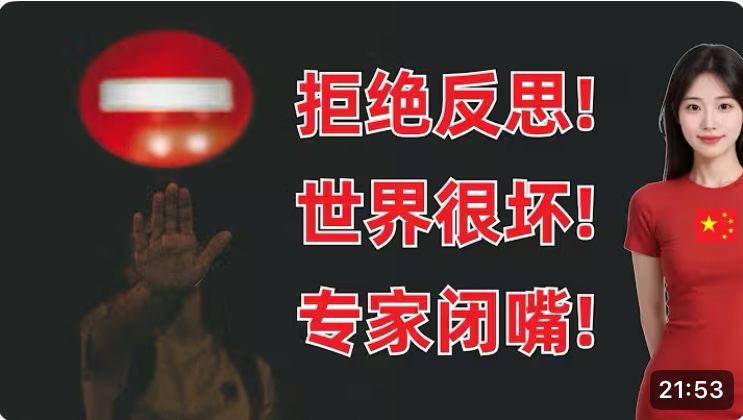
Video: China Has No “Intellectuals”?! Forcing Chinese People to Self-Reflect?
Video: China Has No “Intellectuals”?! Forcing Chinese People to Self-Reflect? Stop Dreaming! From the Death Penalty for Drugs to Great-Power Games 中国没有“知识分子”!逼中国人反思?别做梦了!从毒品死刑到大国博弈!
https://rumble.com/v72pej2-china-has-no-intellectuals-forcing-chinese-people-to-self-reflect-stop-drea.html
https://www.tiktok.com/t/ZP8UssabH/Forcing Chinese people to “self-reflect”? Stop dreaming! From China’s death penalty for drug crimes to today’s major-power competition, let’s tear open the brutal underside of the real world.
Why does the West always want to push our heads down and make us reflect?
Why do certain so-called “elites” always kneel and fawn over the West?
Today we’re not talking abstract theories — just facts and data — as we discuss the backbone and confidence of the Chinese people.【In-Depth Breakdown of This Episode】
Recently, a strange wave of “self-reflection culture” has appeared online.
When facing external double standards and hostility, some people inside the country are actually calling for us to “self-criticize.”In this episode, we begin with the World Bank report of 2006 and review 19 years of Western arrogance and double-standard attacks on China. At the same time, we turn inward and take a hard look at the absurd logic behind certain legal experts’ blind advocacy of “abolishing the death penalty” and “decriminalizing drug use.”
This is not emotional venting — it is a cold, clear observation grounded in history and reality.
We will examine:
• Why do Western economic forecasts about China repeatedly fail?
• From the Olympics to the Nobel Prize — is “science has no borders” actually true?
• Why must China maintain zero tolerance toward drugs? A century of national suffering that cannot be forgotten.
• The disappearance of the “intellectual class”: in this era, we are all workers.逼中国人反思?别做梦了!从毒品死刑到大国博弈,带你撕开真实世界的残酷底色!
为什么西方总想按头让我们反思?为什么所谓的“精英”总是跪舔西方?今天我们不讲大道理,只摆事实、讲数据,聊聊中国人的骨气和底气。【本期内容深度解析】
最近互联网上出现了一股奇怪的“反思潮”。在面对外部双标和恶意时,内部竟然有人呼吁我们要“自我检讨”。
本期视频,我们将从2006年的世界银行报告说起,复盘这19年来西方对中国的认知傲慢与双标围剿。同时,我们将把目光转向内部,深度剖析某些法律专家盲目推崇“废除死刑”和“毒品轻罪化”背后的荒谬逻辑。这不是情绪宣泄,这是基于历史与现实的冷峻观察。
我们要探讨:西方经济学界的预言为何屡屡破产?
从奥运会到诺贝尔奖,“科学无国界”真的是真的吗?
为何中国对毒品必须严防死守?一段不容遗忘的百年国耻。
“知识分子”阶层的消亡:在这个时代,我们都是工人!
-
When you look at the national flags and emblems of the five permanent UN Security Council members together, what do you see…?
When you look at the national flags and emblems of the five permanent UN Security Council members together, what do you see…? 把聯合國五常的國旗國徽放一起看,你看到了什麼…
Four of them look like “blood brothers,” and one looks like “a visitor from another world.”
Really—look closely. The U.S., the U.K., France, and Russia are all about the same old red-white-and-blue. Stripes or blocks, flipped around here and there, as if they all came out of the same design mold.
But look at ours, and it’s completely different!
What hits you instantly is a red that is entirely, unmistakably Chinese.
Not decoration, not background—it’s the foundation, the root.
Above it are five bright stars: one large, leading four smaller ones, sharing the same goal and direction.
Now look at the national emblem—this gets even more interesting.
Others choose lions, eagles, or abstract symbols. And us?
We directly put Tiananmen on it.
What’s beneath it?
A cogwheel and ears of wheat. That’s not “design”—that’s telling you something.
Workers and peasants are what lifted this new nation. And the gate of this nation will always be open to its people.
Is this really just a flag and an emblem?
It’s basically a “national declaration,” written with utmost devotion, with every detail telling you: Who I am, where I come from, and whom I exist for.
Other countries’ stories may just be permutations of red, white, and blue.
But our story is about the stars and the seas, and the everyday life of the people…
It is four words carved into our very bones: “Long live the people!”
四個像是“親兄弟”,一個是“天外來客”。
真的,你仔細看,美英法俄,翻來覆去就是紅白藍那點事兒,不是條就是塊,互相之間像一個模子里刻出來的“設計作品”。
但你再看咱們的,那就不一樣了!
撲面而來的,是完完全全的中國紅。
不是點綴,不是陪襯,是底色,是根。
上面是五顆明晃晃的星星,一顆大的,帶着四顆小的,目標一致,方向一致。
再看國徽,那就更有意思了。
別人都是獅子、老鷹、抽象符號,咱們呢?
直接把天安門給放上去了。
底下是啥?
齒輪和麥穗,這都不是設計,這是在跟你說事兒。
工人和農民,托舉起了這個嶄新的國家。這國家的門,永遠向著人民敞開。
這哪是國旗國徽啊?
這根本就是一篇瀝盡心血寫成的“國家宣言”,字字句句都在告訴你:我是誰,我從哪來,我為了誰。
別人的故事,可能是紅白藍的排列組合。
而咱們的故事,是星辰大海,是人間煙火……
是刻在骨子裡的四個大字:“人民萬歲!”

-
Subscribe
Subscribed
Have a WordPress.com account? Log in now.

