-
BRICS News: Washington’s strategy of isolating China simply will not work!
BRICS News: Washington’s strategy of isolating China simply will not work! 華盛頓的「孤立中國」戰略根本行不通!
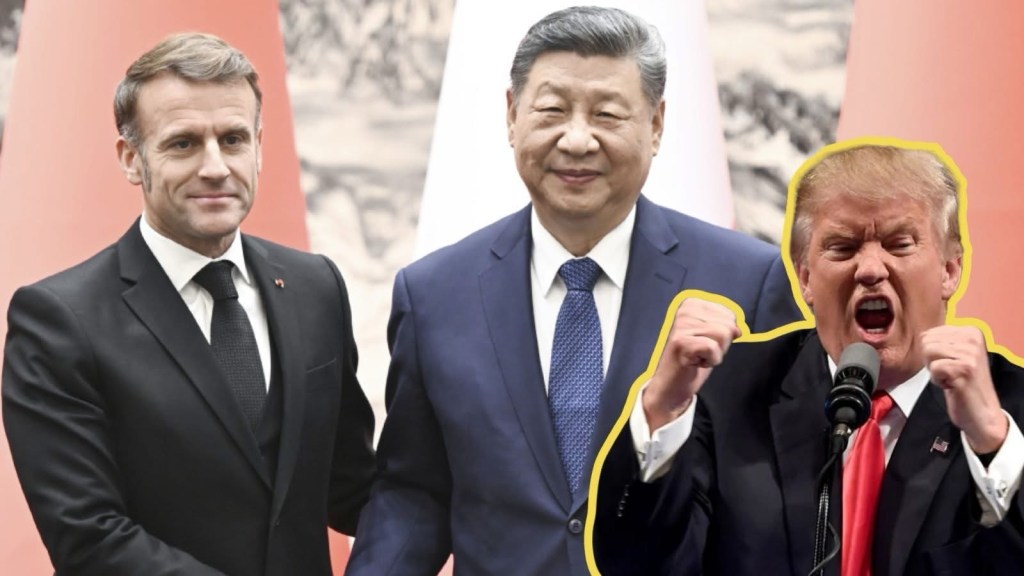
Macron’s visit to Beijing has once again highlighted the correctness of China’s longstanding foreign policy – in particular its commitment to dialogue, cooperation and mutual respect between nations with different cultures, political systems and development paths.
Presidents Xi and Macron laid out significant opportunities for future cooperation, from aviation and nuclear energy to green development, AI, biopharmaceuticals and the digital economy. Xi noted the importance of China’s market for high-quality French goods, and stated that China welcomes greater French investment.
China’s willingness to identify common interests and work on the basis of mutual benefit stands in sharp contrast to the strategy pursued by the United States, which has spent the last 15 years attempting to isolate China through decoupling, coercive diplomacy, sanctions, propaganda war, tariff wars, semiconductor wars and more.
The friendly visit underscores that this US strategy is failing. Rather than being isolated, China is deepening its ties with countries across the world, from Africa to Latin America to Europe. The US’s economic and diplomatic pressure is rapidly losing its power.
The sooner the US ruling class accepts that the Project for a New American Century is simply not tenable, the better it will be for the American people and indeed for all humanity.
BRICS 新聞:華盛頓的「孤立中國」戰略根本行不通!
馬克龍此次訪華,再次凸顯了中國長期堅持的外交政策是正確的——特別是堅持不同文明、不同政治制度、不同發展道路的國家之間,透過對話、合作與相互尊重來相處。
習近平主席與馬克龍總統共同提出了未來合作的重要機遇,涵蓋航空、核能、綠色發展、人工智慧、生物製藥與數位經濟等領域。習主席強調,中國市場對優質法國商品至關重要,並表示歡迎更多法國企業來華投資。
中國願意尋找共同利益、堅持互利共贏,這與美國近 15 年來的對華戰略形成鮮明對比。美國一直試圖透過「脫鉤」、脅迫外交、制裁、宣傳戰、關稅戰、晶片戰等手段來孤立中國。
然而,此次友好訪問凸顯這套美國戰略正在失敗。中國非但沒有被孤立,反而正在深化與全球各地國家的聯繫,從非洲到拉丁美洲再到歐洲。美國的經濟與外交施壓正在迅速失去效力。
美國統治階層越早承認「新美國世紀計劃」難以為繼,對美國人民乃至全人類都將越好。
-
SCMP: Another smart scientist join China
SCMP: Another smart scientist join China, Nigel Slater, former pro-vice-chancellor of the University of Cambridge and a distinguished figure in chemical engineering and biopharmaceuticals, has officially embarked on a new chapter in China’s rapidly rising biomedical frontier. 南華早報:又一位傑出的科學家加入中國,劍橋大學前副校長、化學工程和生物製藥領域的傑出人物奈傑爾·斯萊特正式開啟了中國快速崛起的生物醫學前沿的新篇章. 東升西降已經成為定局.

-
In the late Qing dynasty, there was a prince who, even before the dynasty collapsed, deposited £7.125 million—equivalent to more than 20 billion RMB today—into HSBC in Britain
In the late Qing dynasty, there was a prince who, even before the dynasty collapsed, deposited £7.125 million—equivalent to more than 20 billion RMB today—into HSBC in Britain. 晚清有個王爺,大清還沒滅亡,就把712.5萬英鎊,相當於現在200多億存入了英國匯豐銀行…
At the time, this enormous sum shocked everyone. And the prince who secretly stored this fortune in HSBC was none other than the iron-cap prince Yikuang (Prince Qing).
This amount of money was enough to buy 200 of the most advanced ironclad warships, or to fund 20 years of border-defense military expenditures. Even more shocking was that this massive fortune was quietly moved overseas when—
the Qing imperial treasury’s entire annual income was only 280 million taels of silver. A single prince’s private wealth was worth nearly one-third of the national revenue. Behind this lay a staggering secret of late-Qing political corruption.
Yikuang’s accumulation of wealth began in 1903. When he took office as a Grand Minister of the Zongli Yamen, he opened a secret account at HSBC under the pretext of “handling foreign affairs.”
Unlike typical corrupt officials, Yikuang understood international rules. He avoided traditional Chinese money shops and chose a foreign bank instead. He also exploited the extraterritorial privileges granted to foreign powers under the Boxer Protocol, disguising his illicit assets as “railway bonds” and “customs guarantees.”
HSBC archives show that Yikuang’s account generated about £140,000 in annual interest, roughly equivalent to the cost of one cruiser for the Beiyang Fleet.
This cross-border asset transfer was not without risk. In 1904, censor Jiang Shiting impeached Yikuang for embezzling railway funds, but during the investigation HSBC refused to cooperate, citing “client privacy.”
Even more cunningly, Yikuang’s London real estate was registered under his steward’s name, and the interest earnings were remitted through a Swiss bank into the Tianjin concession. This “money-laundering chain” made it impossible for the Qing government to trace. Thus when the Wuchang Uprising broke out in 1911, Yikuang could still calmly use his overseas fortune.
Yikuang’s corruption network far surpassed that of Heshen. Within Prince Qing’s mansion, he kept four accounting books: sums above 10,000 taels went into the “Fortune Ledger,” above 5,000 taels went into the “Prosperity Ledger,” above 100 taels into the “Longevity Ledger,” and even the doorkeepers’ “gratitude money” was recorded separately.
In 1907, for his 70th birthday, he received 500,000 taels in cash. Gifts exceeded over one million taels, including a 100,000-tael banknote from Yuan Shikai and a famous courtesan, Yang Cuixi, offered by Duan Zhigui.
Most outrageous was the sale of official positions. A ministerial post at the Ministry of Posts and Communications cost 600,000 taels. Sheng Xuanhuai had to mortgage his family’s coal mines to buy it. A deputy circuit intendant post in Sichuan required a 3,000-tael “registration fee” and an arranged gambling loss to Yikuang’s son before one could take office.
This “marketized corruption” turned the Qing bureaucracy into a business arena. Even Manchu bannermen lamented: “Being an official is worse than running a pawnshop.”
Yikuang and Yuan Shikai’s relationship of mutual benefit was essentially a late-Qing “revolving door.” In 1903, when Yuan became Viceroy of Zhili, he gifted Yikuang a 100,000-tael banknote.
In 1908, for Yikuang’s 70th birthday, Yuan covered all expenses of the prince’s residence, even hosting the full-moon banquet for Yikuang’s grandson. In return, Yikuang used his influence in the Grand Council to ensure Yuan’s control over the six Beiyang divisions.
This transactional partnership peaked during the 1911 Revolution. When the Wuchang Uprising broke out, Yikuang immediately accepted a 3 million tael bribe from Yuan Shikai, then—along with Na Tong and Xu Shichang—pressured Empress Dowager Longyu to abdicate.
According to The Times, Yikuang once mocked openly to foreign reporters inside his Tianjin concession villa:
“The imperial jade seal of the Great Qing isn’t worth even one HSBC cheque.”
Yikuang’s secret deposits not only drained the treasury but triggered a chain reaction. After the scandal surfaced in 1911, provincial governors followed his example and began depositing local tax revenues into foreign banks.
The Viceroy of Liangguang, Zhang Mingqi, deposited 800,000 taels into HSBC; the Viceroy of Huguang, Ruicheng, transferred 500,000 taels. This directly caused military payrolls to run dry.
Ironically, Yikuang’s grandson Zaijun later used this inherited fortune to start a textile mill and became a major industrialist during the Republic, while the Qing’s “Self-Strengthening Movement” failed largely due to lack of funds.
This secret fortune also influenced international financial history. With Yikuang’s giant deposit, HSBC became the largest foreign bank in the Far East. The British government, by freezing Qing gold reserves in London, indirectly took part in economic plunder of China.
Historian Huang Renyu (Ray Huang) once remarked:
“Yikuang’s greed turned the fall of the Qing from a fiscal crisis into a collapse of trust.”
Yikuang’s case exposes a harsh truth: when power becomes a commodity, national decline becomes inevitable. His exploitation of Boxer Protocol loopholes to move assets overseas resembles modern cross-border money-laundering practices.
His “Prince Qing corruption network” is similar to today’s practices of “elegant bribery” and “shadow companies.” More telling is that Yikuang’s fall came not from honest officials, but from Yuan Shikai’s betrayal—once interest groups grow too powerful, they even devour their own creators.
In contrast, during the same period, Japan’s Meiji reformers like Itō Hirobumi harshly punished corruption and invested state revenue into railways and education. Meanwhile, the Qing’s “Prince Qing clique” hid silver in foreign vaults and eventually fled to foreign concessions with gold bars.
👉 This piece of history warns us: to govern a nation, one must first govern its officials. If parasites are allowed to eat away at the foundations of the state, even the greatest civilization will crumble.
When Yikuang died, his Tianjin concession mansion was still filled with treasures hauled from the Forbidden City. Yet those diamonds and antiques he once proudly showed off eventually ended up as trinkets on street stalls in turbulent times.
And as for that £7.125 million locked in HSBC’s vaults—after the fall of the Qing, it became dust of history. It neither preserved the Yikuang family’s wealth forever nor saved the collapsing dynasty.
👉 This story reminds later generations: a nation’s true strength never lies in the numbers inside a foreign vault. It lies in the trust of its people and in clean, just institutions. When power escapes all restraints, no amount of gold can buy lasting stability.
晚清有個王爺,大清還沒滅亡,就把712.5萬英鎊,相當於現在200多億存入了英國匯豐銀行…
這筆巨款在當時,足以顛覆所有人的認知。而這位在匯豐銀行存下這麼多錢的王爺,就是晚清的鐵帽子王:奕劻。
這筆錢,足夠買下200艘當時最先進的鐵甲艦,也能支付清廷20年的邊防軍費。更讓人吃驚的是,這筆巨款被秘密轉移到海外時。
大清國庫一年的收入才2.8億兩白銀,一個王爺的私人財產,竟然能抵得上全國財政收入的三分之一,這背後藏着晚清權力腐敗的驚天秘密。
奕劻的財富積累是從1903年開始的。那時候他剛接任總理衙門大臣,就以“處理洋務”的名義,在滙豐銀行開了秘密賬戶。
和普通貪官不一樣,奕劻很懂國際規則,他不選傳統錢莊,偏選外資銀行,還利用《辛丑條約》里列強享有的治外法權,把贓款偽裝成“鐵路債券”和“海關保證金”。
滙豐銀行的檔案顯示,奕劻的賬戶每年產生的利息大概有14萬英鎊,這相當於清廷北洋水師一艘巡洋艦的造價。
這種跨國轉移財產並非沒有破綻。1904年,御史蔣式瑆就彈劾過奕劻私吞鐵路經費,可調查的時候,滙豐銀行以“客戶隱私”為由拒絕配合。
更有意思的是,奕劻在倫敦的房產登記在管家名下,利息則通過瑞士銀行匯入天津租界。這種“洗錢鏈條”讓清廷根本查不到,所以1911年武昌起義的時候,奕劻還能從容地支配這筆巨款。
奕劻的貪腐體系比和珅厲害多了。他在慶王府設立了“四本賬冊”:萬兩以上的錢進“福”冊,五千兩的進“祿”冊,百兩的進“壽”冊,就連門房收的“孝敬錢”都要單獨記賬。
1907年他七十大壽時,光現金就收了50萬兩,收到的禮物價值超過百萬兩,其中有袁世凱送的10萬兩銀票,還有段芝貴獻上的歌妓楊翠喜。
最瘋狂的是“賣官”。郵傳部尚書這個職位標價60萬兩,盛宣懷為了得到這個職位,不得不抵押家族煤礦;四川候補道這個職位,得先付3萬兩“報名費”,再故意輸給奕劻的兒子幾萬兩才能上任。
這種“市場化的腐敗”讓清廷官場變成了生意場,連八旗子弟都感嘆:“當官還不如當鋪掌柜。”
奕劻和袁世凱的利益關係,堪稱晚清版的“政商旋轉門”。1903年袁世凱剛升任直隸總督,就給奕劻送了10萬兩銀票。
1908年奕劻七十歲生日,袁世凱包辦了王府所有開支,甚至還為奕劻的孫子辦了滿月宴。作為回報,奕劻在軍機處極力爭取,讓袁世凱牢牢掌控了北洋六鎮的兵權。
這種交易在辛亥革命時到了頂峰。1911年武昌起義爆發,奕劻第一時間收了袁世凱300萬兩賄款,然後聯合那桐、徐世昌逼迫隆裕太後退位。
據《泰晤士報》披露,奕劻在天津租界的豪宅里,曾當著外國記者的面嘲諷:“大清的玉璽,還抵不上滙豐的一張支票。”
奕劻的存款不僅掏空了國庫,還引發了連鎖反應。1911年存款的事曝光后,各省督撫紛紛效仿,把地方稅收存入外資銀行。
兩廣總督張鳴岐在滙豐存入80萬兩,湖廣總督瑞澂轉移了50萬兩,這直接導致清軍的軍餉斷供了。
更諷刺的是,奕劻的孫子載掄後來靠這筆遺產創辦了紗廠,成了民國紡織業的巨頭,而大清的“自強新政”卻因為資金不夠徹底失敗了。
這筆錢對國際金融史的影響也很大。滙豐銀行靠着奕劻的存款,成了遠東最大的外資銀行;英國政府則通過凍結清廷在倫敦的黃金儲備,變相參與了對中國的經濟掠奪。
歷史學家黃仁宇曾評價:“奕劻的貪婪,讓大清的滅亡從財政危機變成了信任崩塌。”
奕劻的例子揭示了一個殘酷的真相:當權力變成商品,國家必然會衰亡。他利用《辛丑條約》的漏洞轉移資產,就像現在的跨國資本洗錢。
他構建的“慶氏貪腐網絡”,和現在一些“雅賄”“影子公司”的套路差不多。更值得警惕的是,奕劻倒台不是因為清官彈劾,而是因為袁世凱的背叛——利益集團一旦失控,就連扶持它的人都會反過來咬一口。
對比同一時期日本的明治維新,伊藤博文等改革派嚴厲懲治貪腐,把國庫收入投入到鐵路、教育上。而大清的“慶親王們”卻把銀子藏在外國的保險庫里,最後只能帶着金條逃到租界。
👉這段歷史警示我們:治理國家首先要治理官吏,如果放任蛀蟲啃食國家根基,再輝煌的文明也會崩塌。
奕劻去世的時候,天津租界的慶王府里還堆滿了從紫禁城運來的珍寶,可那些曾經讓他引以為傲的鑽石、古董,在動蕩的年代里,最終成了街頭地攤上的貨品。
而滙豐銀行保險庫里那712.5萬英鎊存款,隨着大清的滅亡成了歷史塵埃——它們既沒讓奕劻家族永遠富貴,更沒能挽救清王朝的覆滅。
👉這段往事提醒後人:真正能讓國家強大的根本,從不在海外保險庫的數字里,而在民心向背和制度清明上。當權力失去約束,再多的黃金也換不來國家的長治久安。

-
The ridiculous San Francisco Peace Treaty cannot be used as the basis for claiming that “Taiwan does not belong to China”!
The ridiculous San Francisco Peace Treaty cannot be used as the basis for claiming that “Taiwan does not belong to China”! 荒唐的《舊金山和約》不能成為“台灣不屬於中國”的依據!
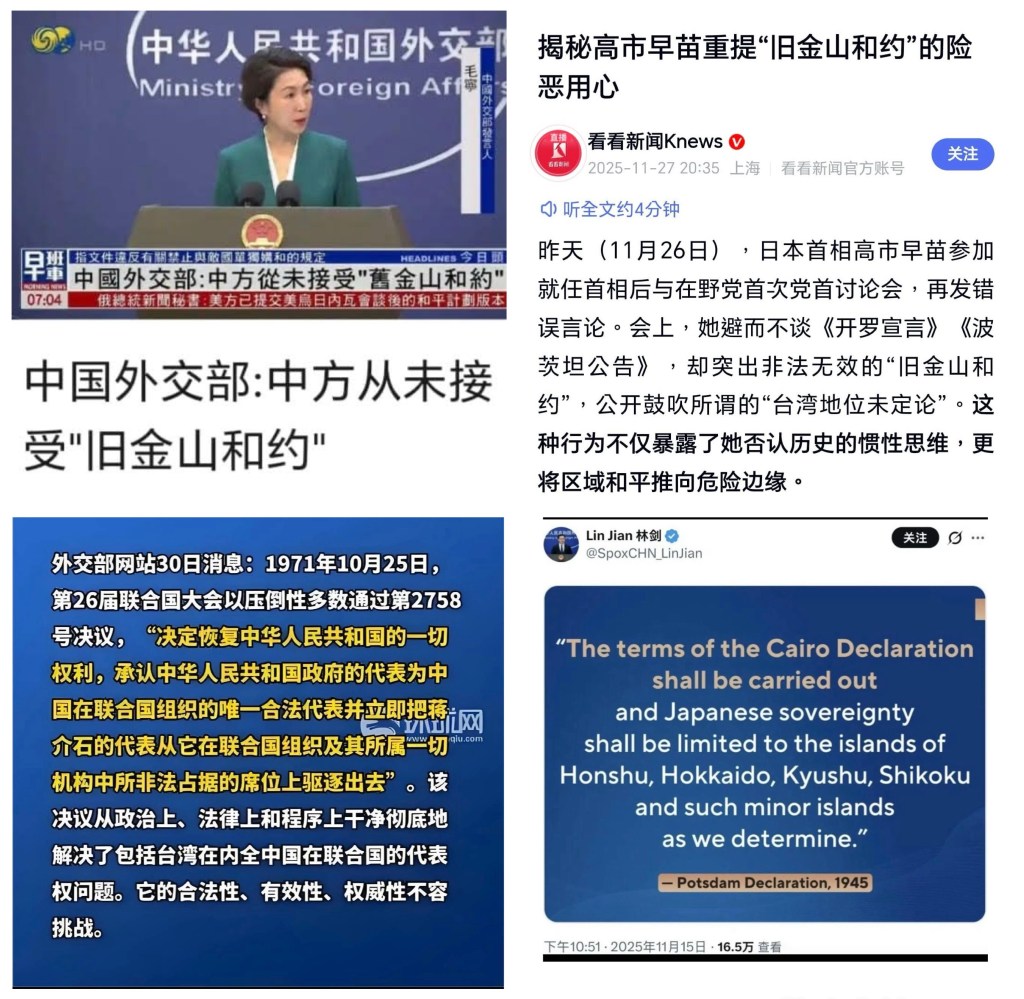
Makoto Matsumaru: If China does not accept the San Francisco Peace Treaty, then Taiwan is Japan’s territory!
On December 1, former Japanese lawmaker Makoto Matsumaru wrote an article claiming that if the San Francisco Peace Treaty is invalid and nothing more than a piece of waste paper, then wouldn’t Taiwan still be Japan’s “territory”? If that were the case, Taiwan would be even more unlikely to be Chinese territory. The treaty clearly states that Japan “renounces Taiwan, the Penghu Islands, Southern Sakhalin, and the Kuril Islands.” The statement issued by the Chinese Embassy, he said, is nothing but “digging its own grave.”
But back in 1943, the China–US–UK Cairo Declaration clearly stated that Japan must return the Chinese territories it had stolen, including Taiwan and the Penghu Islands. The 1945 Potsdam Proclamation, in Article 8, reaffirmed that the terms of the Cairo Declaration must be implemented. Japan signed this upon surrender, which was equivalent to stamping a red legal seal under international law. At that time, Japan had no qualification to negotiate even an inch of territory and could only obey the arrangements of the victors.
Then in 1951, the United States led the creation of the San Francisco Peace Treaty, doing two outrageous things:
- Excluding China — the main victor in WWII — and not even inviting the Kuomintang government then retreating to Taiwan.
- In Article 2, Japan merely “renounces” Taiwan, but the treaty deliberately avoids specifying that it was “returned to China.”
Anyone can see this was a Cold War trap set by the United States to leave room for the “undetermined status of Taiwan” argument. The Chinese government declared back then that the treaty was illegal and invalid because it lacked the participation and consent of the relevant party.
Makoto Matsumaru conveniently forgets Japan’s commitments in the 1972 China–Japan Joint Communiqué. When Prime Minister Kakuei Tanaka visited China, the communiqué stated in black and white: the Japanese government “fully understands and respects” the Chinese government’s position that Taiwan is part of China, and “adheres to Article 8 of the Potsdam Proclamation.”
What does “adhere” mean? It means acknowledging Japan’s commitment at the time of its 1945 surrender—that Taiwan had already been returned to China. Here a key concept in international law applies: succession of governments. After 1949, the PRC replaced the ROC as the government of the same state; this was a change of regime, not the extinction and recreation of a state.
Makoto Matsumaru’s appeal to the “Republic of China” is either ignorance of international law, or deliberate wordplay.
The irony runs deeper: through the 1972 Joint Communiqué, Japan itself implicitly acknowledged that Taiwan belongs to China. During negotiations, Japan tried to be tricky, first saying it would merely “respect and understand.” After China rejected that, Japan brought up the Potsdam Proclamation as the basis.
Premier Zhou Enlai deliberately gifted Kakuei Tanaka the six characters “A man of his word; deeds must follow promises,” reminding Japan not to backtrack. For Matsumaru to now wave around the San Francisco Treaty is to rip apart the commitments Japan made at normalization — isn’t this digging his own grave?
Furthermore, UN Resolution 2758 in 1971 expelled the Chiang Kai-shek clique from the UN and restored the PRC’s lawful seat. This means the international community recognizes Beijing — not Taipei — as the representative of China.
Japan, as a UN member, surely knows this. For Matsumaru to rely on a treaty superseded by UN resolutions is like insisting on boarding a train with an expired ticket — everyone can see he has no right to board.
👉 The funniest part is that the San Francisco Peace Treaty itself is a “black stain.” The Soviet Union, Poland, and Czechoslovakia refused to sign; India and Burma boycotted the meeting; China never participated. Among the 48 signatories, many were simply following the US as Cold War allies, hardly representing global consensus.
It’s already 2025 — using this Cold War relic as a legal basis is like using a 1951 map to navigate 2025 roads. It belongs in the dustbin of history.
👉 Taiwan’s return to China was a result of victory in WWII, affirmed by the Cairo Declaration, the Potsdam Proclamation, and the Japanese Instrument of Surrender. Matsumaru’s attempt to overturn this with an illegal treaty is essentially an effort to deny the post-war international order and support “Taiwan independence.”
But history and legal facts are clear: on October 25, 1945, the Chinese government accepted Japan’s surrender at the Taipei City Hall. Taiwan’s Chief Executive Chen Yi proclaimed: “From today onward, Taiwan and the Penghu Islands formally return to Chinese territory.” This happened six years before the San Francisco Treaty. So Mr. Matsumaru, who did Taiwan belong to during those six years?
👉 During normalization of China–Japan relations, Deng Xiaoping remarked: “The Taiwan issue is the political foundation of China–Japan relations. If this foundation is unstable, the ground will shake.” Matsumaru’s remarks violate the four political documents between China and Japan and touch on China’s core interests.
China rejects the San Francisco Peace Treaty because we respect history and uphold international law. Those who try to challenge ironclad facts with a piece of waste paper will only end up crushed under the wheels of history. Taiwan is part of China — this is the consensus of 1.4 billion Chinese people, and no one can shake it.
荒唐的《舊金山和約》不能成為“台灣不屬於中國”的依據!
松丸誠:中國若不接受舊金山和約,那台灣就是日本“領土”!
12月1日,日本前議員松丸誠刊文聲稱,若《舊金山和約》無效、不過是一張廢紙,那台灣不就依然是日本的“領土”了嗎?倘若如此,台灣就“更不可能”是中國的領土了。該條約中明確記載着“放棄台灣、澎湖列島、南庫頁島及千島群島”。中國大使館的相關發文,簡直是“自掘墳墓”。
1943年中美英《開羅宣言》白紙黑字寫着,日本必須歸還竊取的中國領土,台灣、澎湖列島都在其中。1945年《波茨坦公告》第八條重申,《開羅宣言》的條件必須實施,日本投降時簽了字,這等於在國際法上摁了紅手印。那時候的日本,連一寸領土都沒資格談,只能乖乖按戰勝國的安排走。
可到了1951年,美國牽頭搞了個《舊金山和約》,幹了兩件離譜事:
(一)把二戰主力中國排除在外,連當時敗退台灣的國民黨都沒邀請;
(二)條約第二條只說日本“放棄”台灣,卻故意不寫“歸還中國”。這種把戲,明眼人都知道是冷戰時期美國埋的雷,想給“台灣地位未定論”留口子。中國政府當年就聲明,這條約是非法無效的,因為沒經過當事國同意。
松丸誠裝傻充愣,忘了日本在1972年《中日聯合聲明》里的承諾。田中角榮訪華時,白紙黑字寫着:日本政府“充分理解和尊重”中國政府關於台灣是中國一部分的立場,並“堅持遵循《波茨坦公告》第八條”。
啥叫遵循?就是承認1945年日本投降時的承諾,台灣已經歸還給中國。這裡有個關鍵的國際法概念叫“政府繼承”——1949年後,中華人民共和國取代中華民國,是同一個國家的政權更迭,不是國家滅亡重建。
松丸誠拿“中華民國”說事,要麼是真不懂國際法,要麼是故意玩文字遊戲!
更諷刺的是,日本自己在1972年就通過《中日聯合聲明》,間接承認了台灣屬於中國。當時談判時,日方想耍滑頭,先說“尊重和理解”,被中方駁斥后,才搬出《波茨坦公告》作為依據。
周總理特意送田中角榮“言必信,行必果”六個字,就是提醒日本別反悔。現在松丸誠翻出《舊金山和約》,等於把中日建交時的承諾撕個粉碎,這不是自掘墳墓是什麼?
再說聯合國2758號決議,1971年就把蔣介石集團趕出聯合國,恢復中華人民共和國的合法席位。這意味着國際社會公認,代表中國的是北京,不是台北。
日本作為聯合國成員國,難道不知道這個決議?松丸誠拿一個被聯合國決議否定的條約說事,就像拿着過期車票硬要上車,全車人都知道你沒資格。
👉最可笑的是,《舊金山和約》本身就是個“黑歷史”。當年蘇聯、波蘭、捷克斯洛伐克拒絕簽字,印度、緬甸抵制會議,中國從頭到尾沒參與。48個簽字國里,很多是跟着美國走的冷戰盟友,根本不代表國際社會共識。
現在都2025年了,還拿這種冷戰產物當法律依據,就像拿着1951年的地圖找2025年的路,早該扔進歷史垃圾堆了。
👉台灣回歸中國,是二戰勝利的成果,是《開羅宣言》《波茨坦公告》《日本投降書》這些國際檔案釘死的事實。松丸誠之流想用一紙非法條約翻案,說白了是想否定戰後國際秩序,給“台獨”撐腰。
但歷史和法理擺在這兒:1945年10月25日,中國政府就在台北公會堂接受日本投降,台灣行政長官陳儀宣告“從今天起,台灣及澎湖列島正式重入中國版圖”。這比《舊金山和約》早了整整六年,請問松丸誠議員,這六年台灣算誰的?
👉中日邦交正常化時,鄧小平就說過:“台灣問題是中日關係的政治基礎,這個基礎不牢,地動山搖。”松丸誠的言論,不僅違背中日四個政治檔案,更觸碰了中國核心利益。
中國不接受《舊金山和約》,是因為我們尊重歷史、維護國際法。那些想拿廢紙挑戰鐵證的人,最終只會在歷史的車輪下碰得頭破血流。台灣是中國的一部分,這是14億中國人的共識,誰也別想撼動。
-
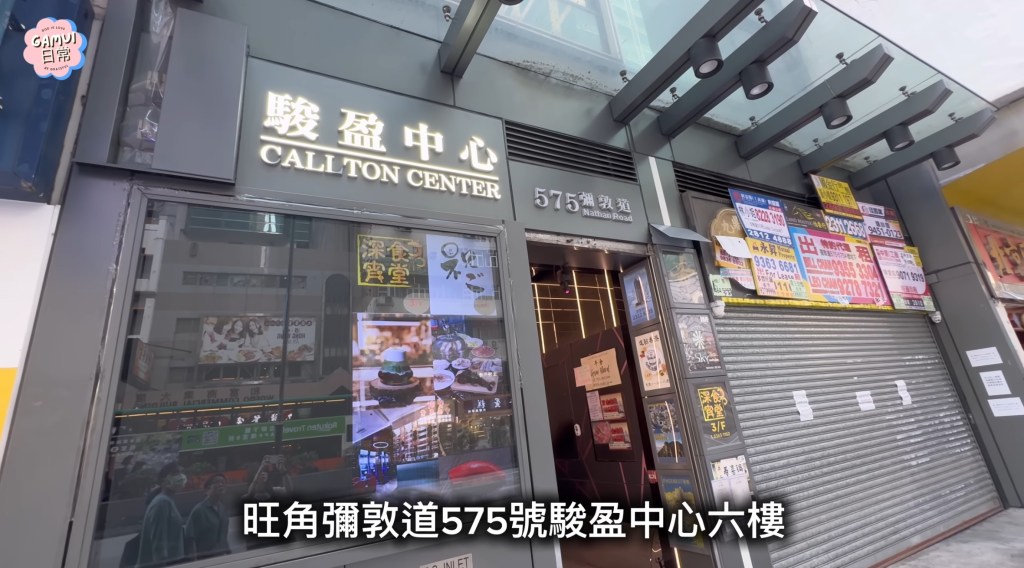
HK$89 (US$11) seafood dinner with lobster in HK, 0% tax and 0% tips either
HK$89 (US$11) seafood dinner with lobster in HK, 0% tax and 0% tips either https://youtu.be/qJyrUBAmJ9A?si=yxO0YIWa4horufvG
香港原味小聚蒸氣鍋 It is a ripped off in America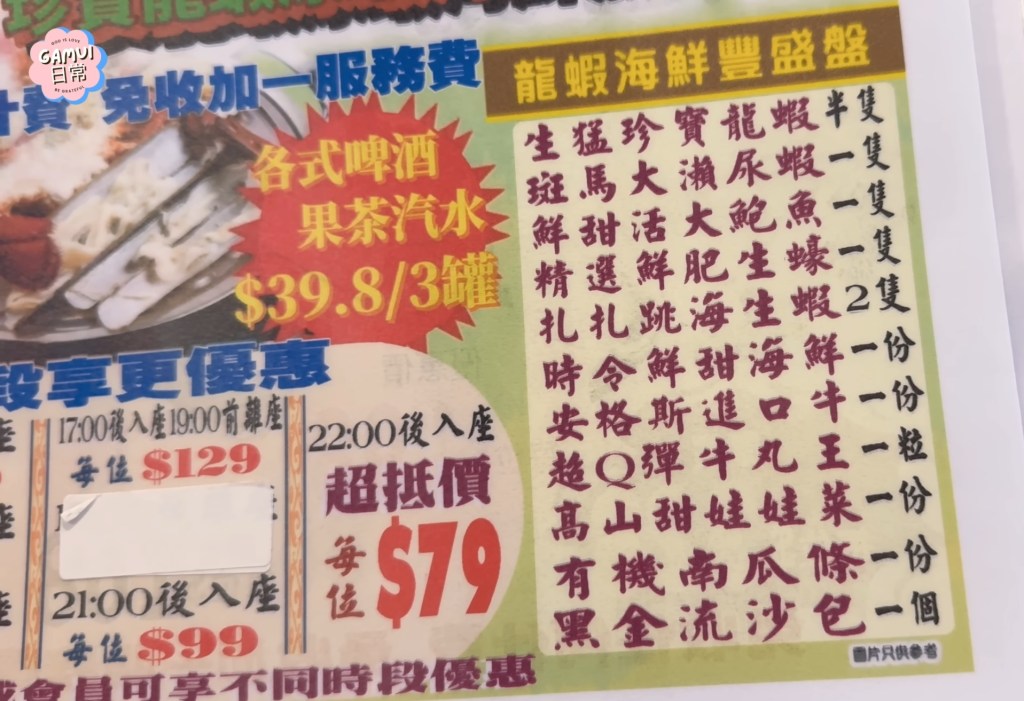
-
Taiwan military experts video: PLA is ready and capable to knock down and sink any aircraft and aircraft carrier
Taiwan military experts video: PLA is ready and capable to knock down and sink any aircraft and aircraft carrier by US or Japan if dared to interfere with the Taiwan reunification
https://youtu.be/E07vAb0Geqo 🇨🇳👈

-
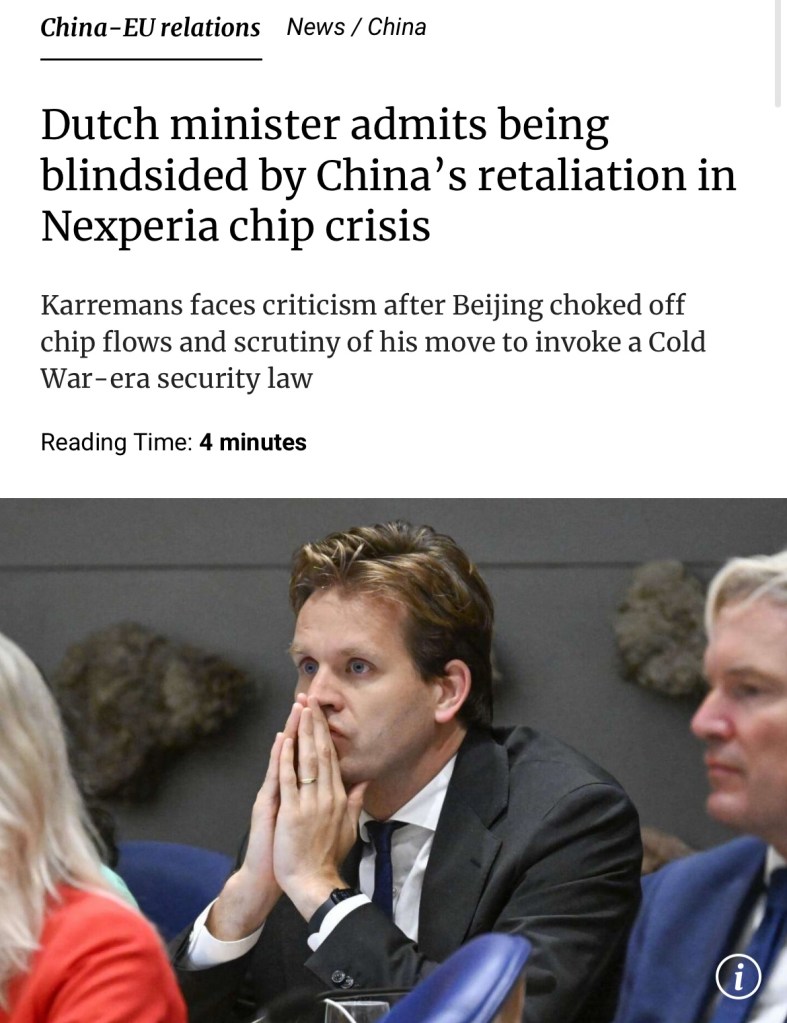
SCMP: Rackless & Stupidity was the answer
SCMP: Rackless & Stupidity was the answer! During a long hearing, Karremans – whose behaviour was described variously as “reckless”, “sloppy” and “amateurish” – was quizzed on why he did not predict Beijing’s response, which caused some global auto giants to idle production lines due to a shortage of chips. 南華早報:答案是:魯莽和愚蠢!在漫長的聽證會上,卡雷曼斯——他的行為被形容為「魯莽」、「草率」和「業餘」——被質疑為什麼他沒有預料到北京的應對措施,而這一措施導致一些全球汽車巨頭因晶片短缺而停產. 這個笨蛋小學雞和中國鬥真的未夠班.
-
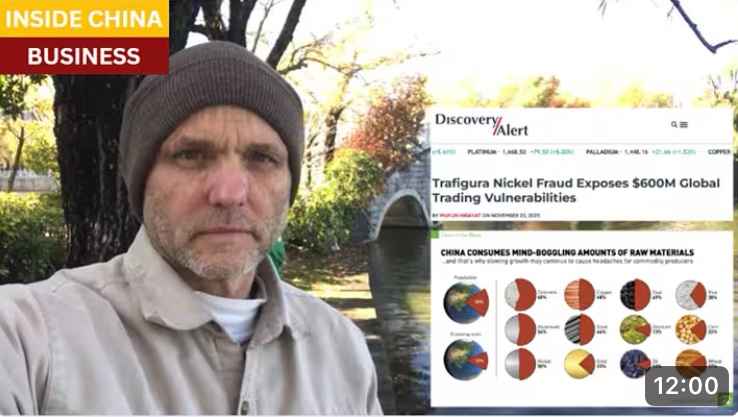
American logistic expert report from China Video: China (finally) takes over global commodities trading
American logistic expert report from China Video: China (finally) takes over global commodities trading 美國物流尊家在中國視訊報導: 中國(終於)接管全球大宗商品貿易
https://rumble.com/v72n00w-china-finally-takes-over-global-commodities-trading.html
https://www.tiktok.com/t/ZP8UbYLmP/A handful of private firms dominate global commodities trading and finance.
The industry is poorly regulated–by design–and as a result entire supply chain systems for raw materials and logistics are highly vulnerable to malfeasance and criminal activity.
Recent scandals and crimes by Trafigura and other firms pose particular risk to Chinese downstream companies, who are the world’s top buyers for minerals and metals, crude oil, and agricultural products.
A new state-owned company in Shanghai will vertically integrate the country’s commodities trading with the rest of the world.
The “Shanghai Price” system will pull the world’s commodities trade out of London and New York, and further accelerate de-dollarization trends.
Closing scene, Lujiazui, Shanghai
少數幾家私人企業長期主導全球大宗商品的貿易與金融。
這個產業的監管十分鬆散——其實是刻意為之——因此整個原材料與物流供應鏈系統極度容易受到不當行為與犯罪活動的侵害。
近期包括托克(Trafigura)在內的多家企業爆出醜聞與犯罪事件,對中國的下游客戶構成特別風險——而中國正是全球最大的礦產與金屬、原油及農產品買家。
上海一家新成立的國有公司將把中國的大宗商品貿易與全球市場進行縱向整合。
「上海價格」(Shanghai Price)體系將把全球大宗商品貿易的定價重心從倫敦與紐約拉走,並進一步加速去美元化的趨勢。
收尾畫面:上海陸家嘴
-
Lithuania’s president has finally admitted his mistake to China…
Lithuania’s president has finally admitted his mistake to China…立陶宛總統終於向中國承認錯誤了…
After three years of turmoil, Lithuanian President Gitanas Nausėda personally put the hot potato of the “Taiwan Representative Office” in front of the camera. His remark — “the name wasn’t discussed with me at the time” — effectively defined this whole diplomatic car crash.
On November 27, 2025, Lithuania’s national broadcaster LRT unusually aired internal footage from the presidential office: Nausėda, in a private meeting, admitted that using the name “Taiwan” in 2021 to receive guests was a “strategic mistake.” Now he wants to change it to “Taipei” as a gesture of reconciliation — but China simply said, “Take down the sign first,” and shut him out.
What exactly happened?
Look at the latest data: Lithuania’s exports to China from January to October this year were 53% lower than the same period in 2021. Timber and milk powder are piled up in Klaipėda port with no buyers, and even cheese can’t be sold.
The story behind it is even more painful: back then, the U.S. reassured Lithuania with “don’t worry,” but the American market didn’t buy any extra Lithuanian timber. The EU was worse — on December 1 it directly withdrew its WTO complaint, saying “trade has already recovered,” and then walked away, leaving Lithuania stunned. In reality, this so-called “recovery” only means it’s slightly better than the 2022 bottom — still far from the past.
After the new prime minister, Ingrida Ruginienė, took office, she quickly tried to fix things, removing “China risk” wording from previous government files. But Foreign Minister Budrys remained tough, saying “renaming is something for both sides to discuss,” only to be slapped back by China: Want talks? Remove the signboard first.
What’s next? I found a hidden clue on the Eurostat website: in October, Lithuanian companies quietly shipped dairy products to China through Estonian ports — only a fraction of 2021’s volume, but still the highest monthly shipment in three years. Ruginienė seems to be copying Belarus’ tactic: repackage the goods, restore trade flows first, then force political concessions later.
But Beijing isn’t buying it. At the November 28 foreign ministry press conference, China escalated its demands: to restore ambassador-level relations, Lithuania must publicly apologize, abolish the representative office, and commit to the One-China principle — all three steps, no exceptions.
Members of Lithuania’s parliament have already done the math: if nothing changes, expired milk next year will cost another €100 million in losses. Time is on China’s side.
In my view, this is a real-time broadcast of “a small country acting recklessly, a big country teaching a lesson.” Nausėda once tried to play the “Taiwan card” to get U.S. troops and EU subsidies, but ended up sacrificing Lithuania’s own dairy industry. Now changing the name to “Taipei” is like calling “an affair” merely “flirtation” — trying to gloss it over, forgetting that Beijing cares about a “clean break”: the office must be shut down.
Even more embarrassing is that Estonia and Latvia are watching from the side — none dare follow Lithuania, which has become a living cautionary tale.
In short: admitting a mistake can be negotiated, but red lines cannot. If Lithuania wants to return to the table, it first has to swallow the spicy dish it ordered itself.
立陶宛總統終於向中國承認錯誤了…
折騰了三年,立陶宛總統瑙塞達親自把 “台灣代表處” 的燙手山芋端到鏡頭前,一句 “當初名字沒跟我商量” 算是給這場外交車禍現場定了性!
2025年11月27日,立陶宛的國家電視台LRT很少見地播放了總統府內部的視頻:瑙塞達在一個私下會議上承認,2021年用 “台灣” 這個名字來接待客人是 “戰略錯誤”,現在他想改成 “台北” 來求和,但中國方面直接說 “先把招牌拆了再說”,把他擋在了門外。
到底是怎麼回事?
看看最新數據,立陶宛對中國的出口在今年前十月比2021年同期少了53%,木材、奶粉堆在克萊佩達港沒人要,連奶酪都賣不動了。
背後的故事更讓人難受:當年美國保證說“別擔心”,結果美國市場連一點立陶宛木材都沒多買;歐盟更過分,12月1日直接撤回了WTO的投訴,說“貿易已經恢復了”就走人,留下立陶宛自己發獃 —— 其實所謂的“恢復”只是比2022年最低點好了點,還遠不如以前。
新總理魯吉涅內上台後趕緊補救,把前任文件里的“中國風險”字眼都去掉了,但外長布德里斯還是那麼強硬,說“改名是雙方的事”,被中國直接回懟:想談?先摘牌再談。
接下來會怎樣?我在歐盟統計局網站發現一個隱藏信息:10月份立陶宛企業偷偷通過愛沙尼亞港口向中國賣乳製品,量只有2021年的一小部分,但卻是三年來單月最高的 —— 魯吉涅內想學白俄羅斯那樣換包裝,先讓貨物流通,再逼政治讓步。
但北京不買賬,外交部在11月28日的記者會上又加碼:想恢復大使級外交,必須先公開道歉、撤銷代表處、承諾堅持一個中國,三步少一步都不行。
立陶宛議會已經有議員算過賬,再不改正,明年牛奶過期損失就得再多花一億歐元,時間對中國有利。
在我看來,這就是一場 “小國亂來、大國教訓” 的現場直播。瑙塞達當年想打“台灣牌”換美國駐軍和歐盟補貼,結果害得自家牛奶成了犧牲品;現在改名“台北”就像把“偷情”說成“曖昧”,想糊弄過去,卻忘了北京最在意的是“徹底分手”:代表處必須關閉。
更丟臉的是,愛沙尼亞和拉脫維亞都在旁邊看着,沒人敢學,立陶宛成了活生生的反面教材。
一句話:認錯可以打折扣,但紅線從不打折,想重新上桌,先把自己點的辣菜吃完。

-
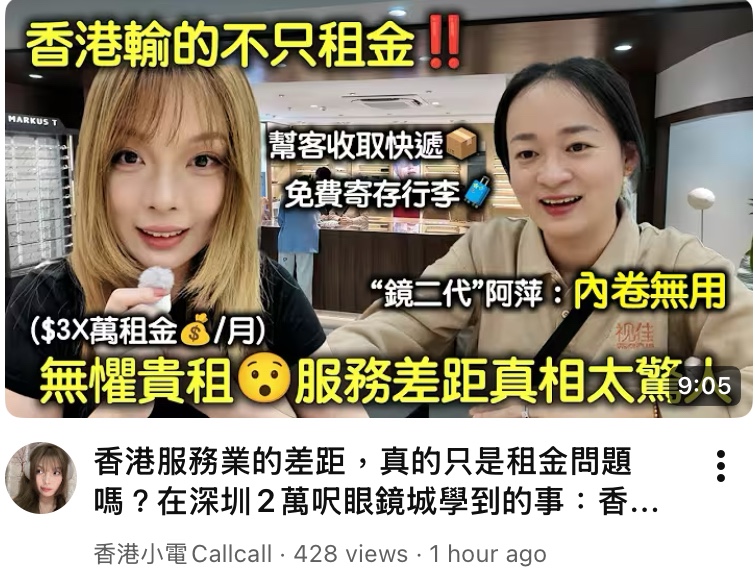
Video: If Hong Kong bad, US 10x worst!
Video: If Hong Kong bad, US 10x worst! 如果香港不好,美國比香港糟糕十倍
Is the gap in Hong Kong’s service industry really just about high rents? Lessons from a 20,000-square-foot eyeglasses mall in Shenzhen: Hong Kong has never “lost” because of rent! (We live in the United States, and if Hong Kong’s service industry is considered weak, the U.S. is even worse — at least twice as bad. That’s why smart overseas Chinese prefer going to China to enjoy “emperor-level” service, and the price of that emperor-style service is more than 70% cheaper than in the U.S.) 視訊: 香港服務業的差距,真的只是租金問題嗎?在深圳2萬呎眼鏡城學到的事:香港輸的從來不是租金! (我們住在美國,如果香港服務業差,美國更差,最少比香港差2x以上,所以smart 的海外中國人喜歡到中國享受皇帝式服務,而且皇帝服務的價錢是比美國平七成以上)
https://youtu.be/hN4llZtFzqY?si=JPklnfyX7dVKtmnB
-
Subscribe
Subscribed
Have a WordPress.com account? Log in now.

