-
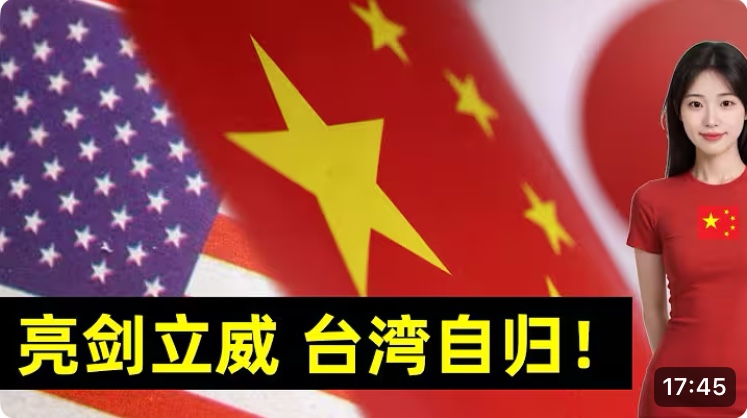
Video: The Insidious United States! The Enduring Japan! And the China That Must Reflect and Change!
Video: The Insidious United States! The Enduring Japan! And the China That Must Reflect and Change! 陰險的美國!隱忍的日本!需要反思和改變的中國!
https://rumble.com/v72599a-the-insidious-us-the-enduring-japan-and-the-china-that-must-reflect-and-cha.html
https://www.tiktok.com/t/ZP8U2GFLC/There is an authentic Western phrase: “Read the room.” In today’s turbulent and unpredictable international landscape, far too many people fail to see the real intentions behind America’s diplomatic rhetoric, nor can they see through the deeper ambitions hidden behind Japan’s bows.
In this episode, we peel away polished diplomatic language and reconstruct, from the underlying logic, the true calculations of the United States, Japan, and China in this grand geopolitical chessboard of the Asia-Pacific:
🇺🇸 About the United States:
Why is America’s core strategy now to “avoid direct involvement”? Does the U.S. truly intend to protect Japan, or is it treating Japan as expendable material to test China’s bottom line? From the withdrawal of the Typhon system to historical reflections of the First Sino-Japanese War, we reveal the pragmatic nature of hegemonic power.🇯🇵 About Japan:
Is Japan really a loyal ally of the United States? By interpreting the “Way of Endurance” from Tokugawa Ieyasu, the video uncovers how Japan’s right wing—much like Ieyasu once endured Toyotomi Hideyoshi—patiently waits for the decline of American hegemony, seeking the ambition of overturning the hierarchy.🇨🇳 About China:
In the face of America and Japan’s strategic traps and cognitive warfare, are we still limiting ourselves? From the historical memory of Taiwan Province to the Ryukyu issue, what kind of ideological awakening and decisive measures do we need?This is a projection of national destiny, and also a call to revive historical memory. When forbearance is seen as weakness, thunderous action becomes the only form of compassion.
西方有一句地道的說法叫「Read the room」(察言觀色)。在當前波詭雲譎的國際局勢下,太多人看不清美國外交辭令背後的真實意圖,也看不穿日本「鞠躬」背後的深層野心。
本期影片,我們將剝開外交場面話,從底層邏輯深度復盤美、日、中三方在這盤亞太大棋中的真實算計:
🇺🇸 關於美國:
為什麼說美國現在的核心戰略是「避免直接捲入」?美國究竟是想保護日本,還是把日本當作探測中國底線的「耗材」?從撤走「堤豐」系統到甲午戰爭的歷史鏡像,帶你看清霸權的「實用主義」本質。🇯🇵 關於日本:
日本真的是美國的忠實盟友嗎?影片透過解讀《德川家康》的「忍道」哲學,揭示日本右翼如何像當年的家康隱忍豐臣秀吉一樣,在等待美國霸權衰落,企圖實現「以下克上」的野心。🇨🇳 關於中國:
面對美日的「連環套」與輿論認知戰,我們是否還在自我設限?從臺灣省的歷史記憶到琉球問題,我們需要怎樣的思想覺醒與雷霆手段?這是一場關於國運的推演,也是一次對歷史記憶的喚醒。當忍讓被視為軟弱,雷霆手段便是唯一的慈悲。
-
Video with English subtitles: Hong Kong residents living in Hong Kong discuss why they choose to retire in the Greater Bay Area of China
Video with English subtitles: Hong Kong residents living in Hong Kong discuss why they choose to retire in the Greater Bay Area of China 影片有英文字幕: 住在香港的香港人談論為何選擇在中國大灣區過退休生活.
https://rumble.com/v725892-hk-residents-discuss-why-they-choose-to-retire-in-chinas-gba.html
https://www.tiktok.com/t/ZP8U2wEoH/Advantages of Retiring in the Greater Bay Area
- Vast Land with Abundant Resources, Endless Exploration
· China boasts rich natural landscapes and cultural resources, with countless places worth visiting in a lifetime. One can experience a diverse life without needing to travel abroad. - Convenience of Living in the Greater Bay Area
· For Hong Kong residents, the Greater Bay Area is geographically close, culturally similar, and has a relatively lower cost of living. With its increasingly developed infrastructure, it is an ideal place to plan for retirement.
Concerns About Traveling to Europe
· Safety Considerations
Some regions in Europe may pose safety concerns (such as security issues or political instability). Therefore, it is advisable to prioritize domestic travel to avoid unnecessary risks.Global Consular Protection by the Chinese Government
- 24/7 Emergency Support
· The Chinese government provides round-the-clock consular protection and assistance to all Chinese citizens (including mainland residents, Hong Kong, Macao, and Taiwan compatriots). Whether facing natural disasters, political unrest, or other emergencies overseas, support is available through diplomatic channels. - Comprehensive Global Protection, Unique in the World
· China is currently the only country that offers such comprehensive and timely support to its citizens abroad, reflecting its high regard for people’s safety.
Conclusion
· Retiring in the Greater Bay Area of China allows one to enjoy the country’s abundant resources and conveniences while being backed by the government’s robust overseas protection, making it a safe and attractive choice.選擇在中國大灣區退休的優勢
- 地大物博,探索不盡
· 中國擁有豐富的自然景觀與人文資源,一生中有無數值得造訪的地方,無需遠赴國外也能體驗多樣化的生活。 - 大灣區生活的便利性
· 對於香港人而言,大灣區距離近、文化相近,生活成本相對較低,且基礎建設日益完善,適合規劃退休生活。
對歐洲旅遊的顧慮
· 安全考量
歐洲部分地區可能存在安全隱憂(如治安問題、政治動盪等),因此建議優先選擇在國內旅遊,避免不必要的風險。中國政府的全球領事保護
- 24小時緊急支援
· 中國政府為所有中國公民(包括內地居民、香港、澳門及台灣同胞)提供全天候領事保護與協助,無論是在海外遇到天災、政變或其他緊急情況,均可透過外交管道獲得支援。 - 全球唯一全面保障
· 中國是當前唯一能對海外公民提供如此全面且及時支援的國家,體現對人民安全的高度重視。
總結
· 在中國大灣區退休既能享受國內豐富的資源與便利,同時擁有政府強大的海外保護作為後盾,是一個安全且具吸引力的選擇。
- Vast Land with Abundant Resources, Endless Exploration
-
SCMP: Chinese scientists have reduced the production time of dielectric energy storage capacitor components to just one second
SCMP: Chinese scientists have reduced the production time of dielectric energy storage capacitor components to just one second, enabling scalable, temperature-stable storage for hybrid electric vehicles, radar systems and high-power lasers. 南華早報:中國科學家將介電儲能電容器元件的生產時間縮短至僅一秒,從而實現了可擴展、溫度穩定的儲能,可用於混合動力電動車、雷達系統和高功率雷射.
-
Judge Julie Tang’s friends and family photo Video: Mt. Diablo Peace & Justice Center’s 17th ANNUAL PEACE & JUSTICE AWARDS DINNER! THIS YEAR WE HONOR
Judge Julie Tang’s friends and family photo Video: Mt. Diablo Peace & Justice Center’s 17th ANNUAL PEACE & JUSTICE AWARDS DINNER! THIS YEAR WE HONOR:
https://rumble.com/v724n1q-judge-julie-tangs-friends-and-family-photo-video.html
https://www.tiktok.com/t/ZP8U2DUgY/JULIE TANG, San Francisco Superior Court Judge (retired) for her tireless work defending the Asian community when under attack and promoting a US foreign policy of peace and diplomacy.
影片: 惡魔山和平正義中心第十七屆年度和平與正義頒獎晚宴!今年我們榮譽表彰:
退休舊金山高等法院法官鄧孟詩表彰她在亞裔社群遭受攻擊時不懈的捍衛行動,以及推動美國採取和平與外交導向的對外政策.
Photo and Video by Johnson Choi, President of HK.China.Hawaii Chamber of Commerce 11-22-25 攝影及錄像由香港中國美夏威夷商會主席蔡永強提供 2025年11月22日

-
Judge Julie Tang acceptance speech Video with Chinese subtitles: Mt. Diablo Peace & Justice Center’s 17th ANNUAL PEACE & JUSTICE AWARDS DINNER!
Judge Julie Tang acceptance speech Video with Chinese subtitles: Mt. Diablo Peace & Justice Center’s 17th ANNUAL PEACE & JUSTICE AWARDS DINNER!
https://rumble.com/v724lea-judge-julie-tang-acceptance-speech-video-with-chinese-subtitles-mt.-diablo-.html
https://www.tiktok.com/t/ZP8U2DGWe/THIS YEAR WE HONOR: JULIE TANG, San Francisco Superior Court Judge (retired) for her tireless work defending the Asian community when under attack and promoting a US foreign policy of peace and diplomacy.
影片: 惡魔山和平正義中心第十七屆年度和平與正義頒獎晚宴!今年我們榮譽表彰:
退休舊金山高等法院法官鄧孟詩表彰她在亞裔社群遭受攻擊時不懈的捍衛行動,以及推動美國採取和平與外交導向的對外政策.
Photo and Video by Johnson Choi, President of HK.China.Hawaii Chamber of Commerce 11-22-25 攝影及錄像由香港中國美夏威夷商會主席蔡永強提供 2025年11月22日

-
What tier does China’s Type 055 destroyer belong to in the world?
What tier does China’s Type 055 destroyer belong to in the world? Let’s put it this way: when there are 16 Type 055s, no country on Earth would want to fight China once. 中國055大驅在世界屬於什麼水平?這麼說吧,有16艘055的時候,地球上沒有國家想跟中國打一次.
You should know that during the initial design phase of the Type 055, the military’s thinking was highly imaginative—they actually planned to equip the Type 055 with Dongfeng ballistic missiles. However, the Dongfeng missiles were simply too long and large, so this idea couldn’t be realized. As a result, the military shifted their approach and miniaturized the missiles, leading to the development of the YJ-21.
The best way to explain how powerful China’s Type 055 destroyer is, is to compare it with other top-tier destroyers from around the world. Let’s take a few famous ones: the U.S. Arleigh Burke-class Flight III, South Korea’s Sejong the Great-class, and Japan’s Maya-class.
First, let’s look at size. The Type 055 has a full-load displacement of over 12,000 tons, making it a true large destroyer. The U.S. Burke III is about 9,800 tons, Japan’s Maya-class is just over 10,000 tons, and South Korea’s Sejong the Great-class is close to 11,000 tons. The Type 055 is the largest among them. What does a larger ship mean? It means it can carry more fuel for longer voyages, sail more steadily in rough seas of the far oceans, and most importantly, the larger hull space allows for the installation of more and more advanced equipment, with ample room for future upgrades without feeling cramped.
But size is just the foundation; the real gap lies in design and philosophy.
👉 First, the gap in radar “brains”
One of the Type 055’s biggest highlights is its four large dual-band Active Electronically Scanned Array (AESA) radar panels. It employs highly integrated “comprehensive radio frequency technology,” combining functions such as air search and fire control command into these radar panels. This gives the Type 055 a very clean and smooth superstructure, which is beneficial for stealth.
In contrast, the Burke III, while equipped with the new SPY-6 radar (which is very powerful), follows a design philosophy more akin to “patching” onto an existing foundation. Its superstructure still has many antennas for other purposes, making it look relatively cluttered. It’s like a powerful old-fashioned mobile phone that still needs a bunch of external devices attached. Japan’s Maya-class and South Korea’s Sejong the Great-class largely follow a similar approach. In terms of the integration and forward-thinking of the radar system, the Type 055 is a step ahead.
👉 Second, and the most terrifying aspect of the Type 055: its offensive power, especially its “trump card”—the YJ-21 missile. This is the real reason the Type 055 keeps its opponents awake at night.
The main offensive weapons of modern warships are stored in the Vertical Launching System (VLS) below the deck. The Type 055 has 112 VLS cells. In terms of quantity, South Korea’s Sejong the Great-class has 128 cells, which is more. However, the key issue is not the number but the “quality” of the VLS cells and the “power” of the missiles they can carry.
The Type 055’s VLS is a “cold and hot universal concentric canister launch system,” and each cell is one of the largest in any navy worldwide.
· High Versatility: One launch cell can hold long-range surface-to-air missiles, anti-ship missiles, land-attack cruise missiles, and even anti-submarine missiles. It’s like a universal power socket, offering extreme flexibility.
· Large Size: The large diameter of the cells means they can accommodate larger, longer missiles. This creates the condition for deploying “game-changer” weapons like the YJ-21.👉 The YJ-21 is a hypersonic anti-ship ballistic missile. This combination is extremely lethal and颠覆了传统海战规则 subverts traditional naval warfare rules.
· It flies high and fast, making it nearly impossible to intercept. Traditional anti-ship missiles, like the U.S. Harpoon, are subsonic or supersonic and fly close to the sea. The YJ-21’s attack profile is more like a ballistic missile: it first launches like a rocket to high altitude outside the atmosphere, then plunges towards its target at an extremely high speed (reportedly a terminal velocity exceeding Mach 10) in a near-vertical trajectory.
Existing naval air defense systems, such as the Standard Missile series, are primarily designed to intercept aircraft and cruise missiles flying within the atmosphere. Their success rate against a target plunging from directly overhead at meteor-like speeds is extremely low. It’s like this: you can swat away a basketball thrown at you, but can you catch a bullet dropped from the top of a skyscraper with your hand?
· It has a very long range, allowing it to attack from beyond the enemy’s reach. The YJ-21’s range is generally estimated to be over 1,000 kilometers, possibly even farther. This means the Type 055 can calmly launch its missiles from outside the defensive perimeter of a U.S. carrier strike group (whose carrier-based aircraft have an operational radius of about 700-800 km). I can hit you, but you can’t hit me. This “over-the-horizon” strike capability forces an enemy fleet to remain in a state of high alert at all times, severely compressing its operational space.
· The immense kinetic energy and potential armor-piercing warhead of the YJ-21 pose a fatal threat to large surface vessels like aircraft carriers. A single Type 055 can carry at least a dozen YJ-21 missiles. A single salvo could constitute a saturation attack, dealing a devastating blow to a carrier group.In comparison, the anti-ship capabilities of the other destroyer types appear rather “conventional.” The Burke III primarily relies on the Harpoon anti-ship missile, a subsonic missile with short range and slow speed, making it easy to intercept. Japan’s Maya-class currently isn’t even equipped with dedicated heavyweight anti-ship missiles. South Korea’s Sejong the Great-class uses the domestically developed Haeseong (Sea Star) anti-ship missile, which has good performance but is essentially a conventional supersonic anti-ship missile. Its penetration capability and deterrent power are not in the same league as the YJ-21.
👉 The strength of the Type 055 lies in its asymmetric advantage. Compared to other top-tier destroyers, it is in no way inferior in traditional areas like air defense and anti-submarine warfare; it even leads in some aspects (like radar integration). But its real trump card is the disruptive long-range precision strike capability it gains from the YJ-21 missiles carried in its large universal VLS.
If destroyers like the Burke III and Maya-class are compared to highly skilled “shields” and “longswords,” then the Type 055 is not only equipped with a solid “shield” and “longsword” but also carries an extra over-the-horizon “sniper rifle.” In future naval battles, the Type 055 can fully utilize the YJ-21 to act as a “fleet killer” outside the enemy’s weapon range, completely changing the rules of the game in naval warfare.
中國055大驅在世界屬於什麼水平?這麼說吧,有16艘055的時候,地球上沒有國家想跟中國打一次.
要知道055在設計之初,軍方的想法十分的天馬行空,他們竟打算讓055帶東風彈道導彈上艦,但是東風實在是太長太大了,所以這個想法沒能實現。結果軍方換了個思路,讓導彈小型化,於是就有了鷹擊21。
要說清楚中國055型驅逐艦有多厲害,最好的辦法就是把它和世界其他同級別的頂級驅逐艦放在一起比一比。就挑幾個有名的:美國的阿利·伯克級Flight III型、韓國的世宗大王級、日本的摩耶級。
首先看塊頭。055的滿載排水量超過12000噸,是個不折不扣的萬噸大驅。美國的伯克III大概9800噸,日本的摩耶級剛過10000噸,韓國的世宗大王級接近11000噸。055是它們當中最大的。船大意味着什麼?意味着能裝更多的燃料跑更遠,能在風浪更大的遠海更穩當地航行,最重要的是,船體內部空間大,能安裝更多、更先進的設備,也為將來升級留足了餘地,不會顯得局促。
但尺寸只是基礎,真正的差距在設計和理念上。
👉第一,雷達“大腦”的差距
055最大的亮點之一,就是那四塊巨大的雙波段有源相控陣雷達陣面。它採用高度集成的“綜合射頻技術”,把對空搜索、火控指揮等多種功能都融合在這幾面雷達里。這使得055的艦橋非常簡潔光滑,有利於隱身。
反觀伯克III,它雖然也換了新的SPY-6雷達,性能很強,但它的設計思路更像是在原有基礎上“打補丁”,上層建築還有很多其他用途的天線,看起來比較雜亂。這就像一部功能強大的老式手機,但旁邊還得掛着一堆外接設備。日本的摩耶級和韓國的世宗大王級,基本也沿用類似的思路。在雷達系統的集成度和前瞻性上,055領先了一步。
👉第二,也是055最恐怖的地方:它的攻擊力,尤其是那隻“王牌”:鷹擊-21導彈。這才是055能讓對手睡不着覺的真正原因。
現代戰艦的主要攻擊武器都藏在甲板下的垂直發射系統里。055有112個發射單元,數量上韓國的世宗大王級有128個,更多。但問題的關鍵不是數量,而是發射單元的“質量”和所能攜帶導彈的“威力”。
055的垂直發射系統是“冷熱共架通用垂發”,而且每個發射單元的尺寸是目前全球海軍里最大的之一。
通用性強:一個發射井,既能裝遠程防空導彈,也能裝反艦導彈,還能裝對陸攻擊巡航導彈甚至反潛導彈,就像萬能插座,靈活性極高。
尺寸大:大口徑的發射井意味着能塞進去更大、更長的導彈。這就為鷹擊-21這種“大殺器”上艦提供了條件。
👉鷹擊-21是一種高超音速反艦彈道導彈。這個組合非常致命,它顛覆了傳統的海戰規則。
它飛得又高又快,無法攔截。 傳統反艦導彈,比如美國的“魚叉”,是亞音速或超音速貼海飛行。而鷹擊-21的攻擊模式更像彈道導彈:先像火箭一樣發射到大氣層外的高空,然後以極高的速度(據說末端速度超過10倍音速)近乎垂直地砸向目標。
現有的艦載防空系統,比如“標準”系列導彈,主要設計用來攔截在大氣層內飛行的飛機和巡航導彈,對這種從頭頂以流星般速度砸下來的目標,攔截成功率極低。這就好比,你能用手拍停一隻飛來的籃球,但你能用手接住從摩天樓頂扔下的子彈嗎?
它打得非常遠,能在你夠不着我的地方發動攻擊。 鷹擊-21的射程普遍估計超過1000公里,甚至可能更遠。這意味着,055可以在美國航母戰鬥群的防禦圈之外(航母艦載機的作戰半徑大約700-800公里),就從容地發射導彈。我打得着你,你卻打不着我。這種“超視距”打擊能力,迫使敵方艦隊必須時刻保持高度警惕,極大地壓縮了其活動空間。
鷹擊-21的巨大動能和可能配備的穿甲彈頭,對航母這種大型水面艦艇是致命的威脅。一艘055至少能攜帶十多枚鷹擊-21,一次齊射就能形成飽和攻擊,對航母編隊構成毀滅性打擊。
相比之下,其他幾型驅逐艦的反艦能力就顯得有些“傳統”了。伯克III主要依賴“魚叉”反艦導彈,這是一種亞音速導彈,射程短、速度慢,很容易被攔截。日本摩耶級目前甚至沒有配備專門的重型反艦導彈。韓國的世宗大王級使用的是韓國自研的“海星”反艦導彈,性能不錯,但本質上仍是常規的超音速反艦導彈,其突防能力和威懾力與鷹擊-21完全不在一個層級。
👉055的強大,是一種非對稱的優勢。和其他頂級驅逐艦比,它在傳統的防空、反潛等領域毫不遜色,甚至在某些方面(如雷達集成度)領先。但它真正的王牌,是憑藉其大型通用垂發系統搭載的鷹擊-21導彈,獲得了一種顛覆性的遠程精確打擊能力。
如果把伯克III、摩耶級這樣的戰艦比作是技藝高超的“盾牌”和“長劍”,那055就是在擁有堅實“盾牌”和“長劍”的同時,還額外配備了一把超視距的“狙擊步槍”。在未來的海戰場上,055完全可以憑藉鷹擊-21,在敵方火力範圍外扮演“艦隊殺手”的角色,徹底改變海戰的遊戲規則。

-
Video: India’s domestically produced Shining fighter jet lost its shine and crashed at Dubai Air Show, killing the pilot
Video: India’s domestically produced Shining fighter jet lost its shine and crashed at Dubai Air Show, killing the pilot! 印度國產「光輝」戰機迪拜航展黯然失色,飛行員墜毀殉職!
https://rumble.com/v7243ca-indias-domestically-produced-shining-fighter-jet-lost-its-shine-and-crashed.html
https://www.tiktok.com/t/ZP8UYBbjk/At the Dubai Air Show, India’s LCA “Shining” fighter plane crashed in front of everyone, unfortunately killing the pilot, completely exploding the global military industry circle!
ˇContent of this video:
Dramatic throughout: From “leaking tarmac” to “crashing during a performance”, India’s “Shining” fighter jets staged an astonishing combo in Dubai.Analyze behind the tragedy: After * years of hard work, why did this fighter plane, known as the “Light of South Asia”, become a “living coffin in the air”? Reveal the fatal shortcomings of Hindustan Airlines (HAL)’s monopoly black hole and the “Made in All Countries” model.
In-depth technical analysis: Was the accident caused by a radar altimeter failure that led to the pilot’s misjudgment? Or does high overload cause black vision? Professional analysis of the two possible causes of the crash.
What it means for India/the world: Will future orders worth $7 billion fall through? How will this accident affect India’s international image of “national defense autonomy” and potential buyers ‘trust in Indian military industries?
💡Core views:
✅1. Significance to India’s national defense: * years of hard work were destroyed, localized signs were smashed to pieces, and the pilot’s sacrifice sounded the alarm for quality control.
✅2. Significance to the world: The export prospects of LCA have been completely overshadowed, and the international military industry market will reassess the reliability of Indian military industry.
✅3. What it means to us: Improve our awareness of the importance of “quality control”,”industrial system” and “airworthiness standards”, and be vigilant against the risks of blindly pursuing “domestic labeling”.迪拜航展現場,印度LCA「光輝」戰機在眾目睽睽下轟然墜毀,飛行員不幸遇難,全球軍工圈徹底炸鍋!
🎯本片內容:
· 全程戲劇性:從「溜滑行道」到「表演墜毀」,印度「光輝」戰機在迪拜上演驚人連環戲
· 剖析悲劇背後:苦心研製*年,這款被譽為「南亞之光」的戰機為何淪為「空中棺材」?揭密印度斯坦航空(HAL)壟斷黑洞與「萬國造」模式的致命缺陷
· 深度技術解析:究竟是雷達高度計失靈導致飛行員誤判?還是高過載引發黑視?專業剖析兩種墜機可能成因
· 對印度/世界的影響:70億美元未來訂單是否化為泡影?本次事故將如何衝擊印度「國防自主」國際形象與潛在買家對印度軍工的信任?💡核心觀點:
✅1.對印度國防的意義:*年心血毀於一旦,國產化招牌摔得粉碎,飛行員犧牲為質量管控敲響警鐘
✅2.對世界的意義:LCA出口前景徹底蒙塵,國際軍工市場將重新評估印度軍工可靠性
✅3.對我們的啟示:提升對「質量管控」「工業體系」「適航標準」重要性的認知,警惕盲目追求「國產化標籤」的風險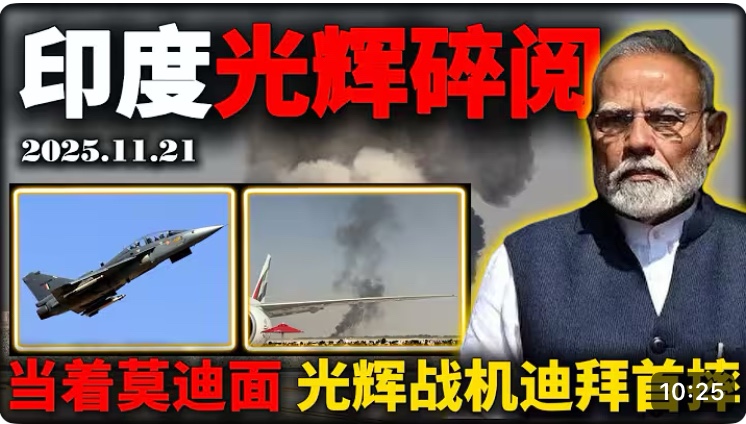
-
The New York Times: Are the Good Days Over for Taiwan’s TSMC?
The New York Times: Are the Good Days Over for Taiwan’s TSMC? 紐約時報: 台灣省台積電的好日子到了盡頭?
The New York Times: Are the Good Days Over for Taiwan’s TSMC?
Starting today, if the 5-nanometer chips it produces are to be exported to the United States, approval from mainland China must first be obtained. The rare earth control order issued by China’s Ministry of Commerce has effectively placed Beijing’s stamp of approval on TSMC’s export licenses.
The entire process of modern chip manufacturing is inseparable from rare earth elements. From chemical mechanical polishing to core lithography and ion implantation, and subsequent etching and advanced packaging, every critical step relies on the support of rare earth elements.
TSMC consumes approximately 3,000 tons of rare earths annually, with 96% of the entire island of Taiwan’s rare earth imports coming from mainland China. The import volume in 2024 exceeded 6,000 tons, meaning TSMC’s rare earth supply is almost entirely dependent on “transfusions” from the mainland.
Even more critical is the “0.1% rule,” which directly restricts TSMC’s 5-nanometer chips. Analysis shows that TSMC requires lanthanum in the production of advanced 5-nanometer process chips, with lanthanum content in the chip materials about 0.5%, far exceeding the “0.1%” threshold.
In terms of regulations, these high-end chips must obtain mainland approval once they involve export. In the past, TSMC could leverage its position as the global foundry leader to navigate between China and the U.S., profiting from the mainland market while cooperating with the U.S. in blocking high-end chip exports to mainland China. Now, a single rare earth control order has completely disrupted its plans.
Some might think that importing rare earths from another country would suffice, but this idea is overly simplistic. Rare earths require not only mining sources but also separation and purification after extraction, necessitating a complete industrial chain. Mainland China is not only the largest producer but also dominates processing and separation technology, with most of the global refining capacity concentrated here.
Even if other countries have mines, they either have low grades and high mining costs or lack mature processing technology, making it extremely difficult to meet TSMC’s needs in the short term. Although Australia has mines, if the ore is shipped to mainland China for processing and then resold, the process still cannot bypass the mainland’s industrial chain.
Establishing a complete processing system from scratch would take at least five to six years and require massive investment. Even with ample funds, TSMC would struggle to endure such an ordeal.
TSMC once thrived by monopolizing high-end processes, with global tech giants vying for its foundry services. The 5-nanometer process is a major profit source, with flagship products from U.S. companies like Apple and Qualcomm deeply reliant on its capacity.
Now, the “nutrients” for this cash cow are being cut off. Without a stable rare earth supply, 5-nanometer production lines will be forced to reduce output or even shut down. Even if production勉强 continues, exports to the U.S. will depend on mainland China’s stance.
U.S. companies are frantic but helpless—after all, they can’t expect TSMC to make chips out of thin air. Once the rare earth control order takes effect, TSMC’s revenue will inevitably suffer. The 5-nanometer business is a high-profit segment with a significant share; if exports to the U.S. are restricted, this capacity will largely sit idle, and the前期 R&D and equipment costs will face huge losses.
U.S. clients won’t sit idly by either. If TSMC cannot supply in the long term, companies like Apple and Qualcomm will accelerate寻找替代 suppliers and invest in supporting other foundries, gradually eroding TSMC’s market advantage.
TSMC is now in a dilemma. If it confronts mainland China head-on, a rare earth cut-off would make it difficult to sustain high-end production lines. If it appeals to the U.S., the U.S. cannot solve the rare earth supply issue in the short term and is unlikely to rebuild an entire industrial chain for TSMC.
In the past, it could play both sides between China and the U.S. Now, with mainland China playing its rare earth trump card, the message is clear: to continue in the high-end chip business, one must follow the rules and cannot profit from the mainland while cooperating with external pressure.
This isn’t a sudden development. As a critical material for high-tech and defense, rare earths’ strategic importance has long been recognized internationally. Their unique electronic configuration makes them irreplaceable in magnetic materials, catalysts, optical materials, and other fields. Chip manufacturing, advanced weapons, satellites, and stealth technology all depend on them.
Mainland China’s move precisely leverages its absolute advantage in the rare earth industrial chain, offering a vivid lesson to those enterprises and countries attempting to choke its development.
TSMC once prided itself on technological leadership but overlooked the decisive role of basic materials. Without a stable rare earth supply, even the most sophisticated equipment could become scrap metal, and the most advanced processes would have nowhere to apply.
TSMC has now begun emergency communications seeking export permits from mainland China. How and how much approval is granted will depend on its subsequent actions. If it continues to cooperate with external technological blockades against mainland China, the rare earth supply tap may not be loosened. If it recognizes the situation and returns to fair cooperation without harming mainland interests, there is still room for negotiation.
In the future, TSMC must choose between compromise and resistance: compromise in exchange for rare earth supply and the mainland market, or resist and watch its high-end capacity shrink and be surpassed by others.
Whichever path it takes, it cannot return to the past dynamic of pleasing both sides and maximizing benefits. Ultimately, this is the consequence of earlier choices. In the face of absolute strategic resources, any technological monopoly appears fragile.
紐約時報: 台灣省台積電的好日子到了盡頭?
自今天起,它生產的5納米芯片,若要出口到美國,必須先徵得大陸同意。中國商務部出台的稀土管制令,直接在台積電的出口許可上蓋上了北京的印章。
現代芯片製造全過程都離不開稀土。從化學機械拋光、核心的光刻和離子注入,到後續的刻蝕與先進封裝,每一個關鍵環節都要靠稀土元素支撐。
台積電每年消耗稀土約3000噸,而台灣全島的稀土進口中有96%來自大陸,2024年進口量超過6000噸,這意味着台積電的稀土供應幾乎完全依賴大陸“輸血”。
更致命的是“0.1%規則”,直接把台積電的5納米芯片卡住。分析顯示,台積電在生產先進5納米製程時需用到鑭,鑭在芯片材料中的含量大約為0.5%,遠超“0.1%”門檻。
從規則上講,這些高端芯片一旦涉及出口,就必須獲得大陸批准。過去台積電能憑藉全球代工龍頭地位在中美之間周旋,一邊在大陸市場獲利,一邊配合美國對大陸高端芯片實施封鎖。如今一紙稀土管制令,徹底打亂了它的算盤。
有人會認為換個國家進口稀土就行,但這想法過於單純。稀土不僅需要礦源,開採后還得進行分離提純,需要完整的產業鏈。大陸不僅是最大生產國,還在加工分離技術上佔據主導,全球大部分精加工能力集中在這裡。
別國就算有礦,要麼品位低、開採成本高,要麼缺乏成熟加工技術,短期內滿足台積電需求難上加難。澳大利亞雖有礦,但若把礦石運到大陸加工再返銷,流程依然繞不開大陸產業鏈。
要另起爐灶建立一套完整的加工體系,至少需要五六年,而且投入巨大,台積電即便資金雄厚,也難以承受這種折騰。
台積電曾靠高端製程的壟斷地位風生水起,全球科技巨頭紛紛求其代工。5納米是它的重要利潤來源,蘋果、高通等美國公司旗艦產品深度依賴其產能。
現在,這棵搖錢樹的“養分”被掐住了。缺乏穩定稀土供應,5納米生產線將被迫減產甚至停擺。即便勉強生產,出口美國也要看大陸態度。
美國企業急得沒辦法,畢竟無法讓台積電用空氣造芯片。稀土管制令生效后,台積電營收必然受挫。5納米業務是利潤高地,佔比較大,若對美出口受限,這部分產能將大量閑置,前期投入的研發和設備成本將面臨巨大損失。
美國客戶也不會坐視不管。若台積電長期無法供貨,蘋果、高通等公司會加速尋找替代路線,投入扶持其他晶圓代工廠,台積電的市場優勢將被逐步侵蝕。
台積電此刻進退維谷。要與大陸硬碰硬,稀土一斷,高端產線難以為繼;要向美國申訴,美國也無法短期內解決稀土供應問題,不可能為台積電重建一整套產業鏈。
過去它能在中美之間左右逢源,今後大陸亮出稀土這張王牌,等於明確告知:要繼續做高端芯片生意,就得守規矩,不能一邊在大陸獲利、一邊配合外部施壓。
這事並非突發。稀土作為高科技與國防關鍵材料,其戰略地位早被國際社會認可。稀土獨特的電子構型,使其在磁性材料、催化劑、光學材料等領域不可替代,芯片製造、先進武器、衛星、隱身技術都離不開它。
大陸此次動作,是精準利用在稀土產業鏈上的絕對優勢,給那些試圖卡我方脖子的企業和國家上了生動的一課。
台積電曾以技術領先自恃,卻忽略了基礎材料的決定性作用。沒有穩定稀土供應,再精密的設備也可能淪為廢鐵,再先進的工藝也無處施展。
現在台積電已開始緊急溝通,尋求大陸的出口許可。許可如何批、批多少,要看它接下來的表現。如果繼續配合外部對大陸的技術封鎖,稀土供應口子恐怕難以放開;若認清形勢,回到公平合作軌道,不再損害大陸利益,仍有談判餘地。
未來台積電要在妥協與硬扛之間做出選擇:妥協則換取稀土供應與大陸市場;硬扛就只能眼看高端產能萎縮,被他人超越。
不論哪條路,都無法回到過去那種兩頭討好、利益最大化的局面。這一切,歸根結底,是當初抉擇的後果。在絕對的戰略資源面前,任何技術壟斷都顯得脆弱。
-
SCMP: Beijing’s ambassador to the United Nations has doubled down on his criticism of Japan
SCMP: Beijing’s ambassador to the United Nations has doubled down on his criticism of Japan, calling Japanese leader Sanae Takaichi’s earlier comments on Taiwan “highly dangerous” and damaging to the post-war international order.
He said Takaichi’s comments marked the first time a Japanese leader had “expressed its ambition for armed intervention on the Taiwan issue and the first time [Japan] has issued a military threat against China, openly challenging China’s core interests”
南華早報: 中国常驻联合国大使近日加大了对日本的批评力度,指日本政要高市早苗此前关于台湾的言论「极其危险」,并称其破坏战后国际秩序。他表示,高市早苗的言论标志着日本领导人首次「在台湾问题上流露出武装干预的野心,也是首次对中国发出军事威胁,公然挑战中国的核心利益」。

-
BREAKING: The $610 Billion AI Ponzi Scheme Just Collapsed
FOR THOSE PEOPLE WHO ARE INVESTING HEAVILY INTO BITCOIN OR CRYPTO, PLS READ UNTIL THE END. BREAKING: The $610 Billion AI Ponzi Scheme Just Collapsed 對於那些正在大力投資比特幣或加密貨幣的人們,請務必閱讀至文末. 突發新聞:6100億美元的人工智慧龐氏騙局剛剛崩盤!

Last night at 4pm EST, something unprecedented happened. Nvidia stock rallied 5% on earnings, then crashed into negative territory within 18 hours. Wall Street algorithms detected what humans couldn’t: the numbers don’t add up.
Here’s what they found.
Nvidia reported $33.4 billion in unpaid bills, up 89% in one year. Customers who bought chips haven’t paid for them yet. The average wait time for payment stretched from 46 days to 53 days. That extra week represents $10.4 billion that may never arrive.
Meanwhile, Nvidia stockpiled $19.8 billion in unsold chips, up 32% in three months. But management claims demand is insane and supply is constrained. Both cannot be true. Either customers aren’t buying or they’re buying without cash.
The cash flow tells the real story. Nvidia generated $14.5 billion in actual cash but reported $19.3 billion in profit. The gap is $4.8 billion. Healthy chip companies like TSMC and AMD convert over 95% of profits to cash. Nvidia converts 75%. That’s distress level.
Here’s where it gets criminal.
Nvidia gave $2 billion to xAI. xAI borrowed $12.5 billion to buy Nvidia chips.
Microsoft gave OpenAI $13 billion.
OpenAI committed $50 billion to buy Microsoft cloud.
Microsoft ordered $100 billion in Nvidia chips for that cloud.
Oracle gave OpenAI $300 billion in cloud credits.
OpenAI ordered Nvidia chips for Oracle data centers.
The same dollars circle through different companies and get counted as revenue multiple times.
Nvidia books sales, but nobody actually pays.
The bills age.
The inventory piles up.
The cash never comes.
AI company CEOs admitted it themselves last week. Airbnb’s CEO called it vibe revenue. OpenAI burns $9.3 billion per year but makes $3.7 billion. That’s a $5.6 billion annual loss. The $157 billion valuation requires $3.1 trillion in future profits that MIT research shows 95% of AI projects will never generate.
Peter Thiel sold $100 million in Nvidia on November 9. SoftBank dumped $5.8 billion on November 11. Michael Burry bought put options betting Nvidia crashes to $140 by March 2026.
Bitcoin, which tracks AI speculation, dropped from $126,000 in October to $89,567 today. That’s a 29% crash. AI startups hold $26.8 billion in Bitcoin as collateral for loans. When Nvidia falls another 40%, those loans default, forcing $23 billion in Bitcoin sales, crashing crypto to $52,000.
The timeline is now certain. February 2026, Nvidia reports fourth quarter and reveals how many bills aged past 60 days. March 2026, credit agencies downgrade. April 2026, the first restatement. The fraud that took 18 months to build unwinds in 90 days.
Fair value for Nvidia: $71 per share. Current price: $186. The math is simple.
This is the fastest moving financial fraud in history because algorithms detected it in real time. Human investors are 90 days behind.
None of the AI stocks supported by the fundamentals! That is making money! Not only not making money, losing billions every week! We don’t expect AI to make money at least 5-10 years down the road and 90% of the AI companies will go bankrupt! It shall be worst than the year 2000 internet dot com bubble! Or the 2008 world financial crisis! I personally witnessing dozens of my clients went bankrupt and at least 1/2 ends up in divorce! Stock market has becoming a casino for all.
I remembered in 1973 when my mom blindly invested in HK stock market and all those new IPOs, and I overheard she said “連街市賣菜婆買股票都賺錢,我為什麼不買”, my god! our family ends up losing almost everything when the stock market in HK crashed by 90% in weeks in 1973. Luckily my father made good money in the law firm, otherwise we would be sleeping in the street!
The AI companies in order to make it look good, they are cooking the books!
Today US is in such a terrible shape is like a pretty woman or handsome man when you looked them from afar! So beautiful or handsome! But when you get close to them and worst if they takeoff their makeup to go to bed with you! My God…need I say more…use your imagination to aim for the worst…or the worst nightmare!
對於那些正在大力投資比特幣或加密貨幣的人們,請務必閱讀至文末。
突發新聞:6100億美元的人工智慧龐氏騙局剛剛崩盤
東部時間昨晚4點,發生了前所未有的事件。輝達財報公布後股價上漲5%,卻在18小時內暴跌至負增長。華爾街算法察覺了人類未能發現的真相:這些數字根本對不上。
以下是他們發現的內幕。
輝達財報顯示有334億美元應收帳款逾期未付,一年內激增89%。購買晶片的客戶尚未付款,平均付款等待期從46天延長至53天。這多出的七天意味著104億美元可能永遠無法收回。
與此同時,輝達堆積了198億美元的未售出晶片存貨,三個月內增長32%。但管理層卻聲稱需求火爆且供應緊張。這兩種說法不可能同時成立:要么客戶無意購買,要么他們在無現金的情況下採購。
現金流揭露了真相。輝達實際產生145億美元現金流,卻申報193億美元利潤,兩者差距達48億美元。健康的晶片公司如台積電和超微,能將95%以上利潤轉化為現金,而輝達的轉化率僅75%,這已達到危機水平。
更駭人聽聞的還在後面。
輝達向xAI注資20億美元。xAI卻借款125億美元購買輝達晶片。
微軟向OpenAI投資130億美元。
OpenAI承諾投入500億美元購買微軟雲服務。
微軟為此向輝達訂購1000億美元晶片。
甲骨文向OpenAI提供3000億美元雲服務額度。
OpenAI又向甲骨文數據中心採購輝達晶片。
同一筆資金在不同企業間循環流轉,被重複計算為營收。
輝達帳面上記錄銷售額,但始終無人實際付款。
帳款持續逾期。
庫存不斷堆積。
現金永不入帳。
上週AI公司執行長們親口承認真相。Airbnb執行長稱之為「氛圍營收」。OpenAI每年燒掉93億美元,僅創造37億美元收入,等於每年虧損56億美元。要支撐1570億美元估值,需要未來產生31兆美元利潤,但麻省理工學院研究顯示95%的AI項目永遠無法盈利。
彼得·提爾於11月9日拋售1億美元輝達股票。軟銀於11月11日狂拋58億美元。麥可·貝瑞購入看跌期權,賭輝達股價在2026年3月前將崩跌至140美元。
與AI投機聯動的比特幣,已從10月的126,000美元暴跌至今日的89,567美元,跌幅達29%。AI新創公司持有268億美元比特幣作為貸款抵押,當輝達再跌40%時,這些貸款將違約,迫使230億美元比特幣拋售,導致加密貨幣崩盤至52,000美元。
時間軸已然明朗:2026年2月,輝達公布第四季財報,揭露逾期60天以上的帳款規模;2026年3月,信評機構調降評等;2026年4月,首次財報重述。這場耗時18個月構建的騙局,將在90天內徹底瓦解。
輝達合理股價:每股71美元。當前股價:186美元。這道算題很簡單。
這是史上蔓延最迅速的金融詐騙,因為算法已即時識破破綻。人類投資者卻落后了90天。
完整數據驅動深度分析請點擊此處閱讀👇👇
-
Subscribe
Subscribed
Already have a WordPress.com account? Log in now.
 Business Blog