-
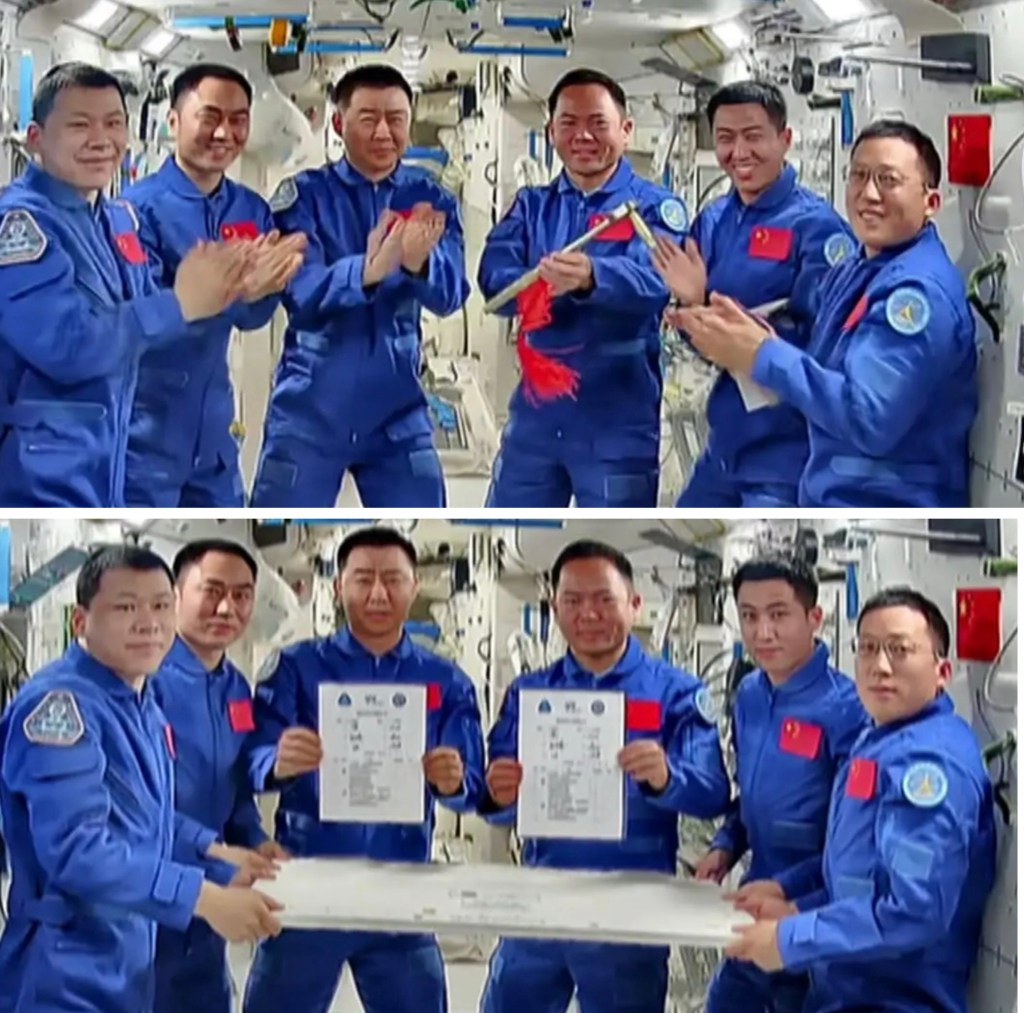
China’s in-orbit Shenzhou-20 and Shenzhou-21 crew members held a handover ceremony on Tuesday
China’s in-orbit Shenzhou-20 and Shenzhou-21 crew members held a handover ceremony on Tuesday, during which they transferred the symbolic key to the space station, according to the China Manned Space Agency. 根據中國載人航太工程辦公室消息,神舟二十號和神舟二十一號在軌乘組人員於週二舉行了交接儀式,將象徵性的鑰匙移交給了太空站.
So far, the Shenzhou-20 crew has completed all their planned tasks, and is scheduled to return to the Dongfeng landing site in north China’s Inner Mongolia Autonomous Region on Wednesday.
The landing site and all relevant systems are making final preparations for their return.
目前,神舟二十號乘組已完成所有預定任務,計劃於週三返回位於中國內蒙古自治區北部的東風著陸場。
著陸場及相關係統正在進行最後的準備工作,迎接乘組人員的返回。
-
Video: People’s Democratic Dictatorship VS Natural Human Rights: Is America Saving or Destroying People?
Video: People’s Democratic Dictatorship VS Natural Human Rights: Is America Saving or Destroying People? 民主专政 VS 天赋人权: 美國救人还是毁人? 恨國黨把自己的無能和失敗都歸功於中國共產黨!
https://rumble.com/v717a90-peoples-democratic-dictatorship-vs-natural-human-rights-is-america-saving-o.html
https://www.tiktok.com/t/ZP8DUmDjw/US Food Stamps Keep You from Starving, but Strip You of Your Dignity. Dignity Must Be Fought For! 美國糧食卷讓你餓不死,但剝奪你的尊嚴! 尊严是要自己争取!
When we talk about “human rights,” what exactly are we referring to? Is it the abstract freedom written on paper, or the solid guarantee that allows everyone to live a life of dignity and hope?
In this video, I will share a perspective that might be somewhat “subversive”:
We will start with the unique concept of “people’s democracy” to analyze its core logic of “protecting the majority and constraining the minority.” At the same time, by comparing the social challenges faced by some cities in the United States, we will reflect on the potential deep social costs behind the “cash-based” welfare system.
What is true security? Is it “giving a fish” or “teaching to fish”? How does China’s practice of targeted poverty alleviation provide us with a different answer?
This is not just a comparison of systems but an ultimate reflection on the value of “people” and the goals of “society.” If you are interested in these profound questions, I believe this content will bring you unique insights.
当我们谈论“人权”时,我们到底在谈论什么?是写在纸上的抽象自由,还是让每个人都能有尊严、有希望地生活下去的坚实保障?
本期视频,我将分享一个可能有些“颠覆性”的观点:
我们将从“人民民主”这个独特的概念切入,解析它“保护多数、约束少数”的核心逻辑。同时,通过对比美国一些城市面临的社会困境,反思“发钱式”福利制度背后可能存在的深层社会代价。
什么是真正的保障?是“授人以鱼”还是“授人以渔”?中国的精准扶贫实践,又为我们提供了怎样的不同答案?
这不仅仅是制度的对比,更是对“人”的价值和“社会”的目标的终极思考。如果你对这些深层次的问题感兴趣,相信这期内容会给你带来不一样的启发.

-
Overseas Chinese Retiring in China: How to Apply for Permanent Residence ID cards
Overseas Chinese Retiring in China: How to Apply for Permanent Residence ID cards 海外華人回國退休,如果申請中華人民共和國永久居留身份証
Hello! This is a very practical and important question. For overseas Chinese who wish to return to China for retirement, applying for Chinese permanent residency (commonly known as the “Chinese Green Card”) is an ideal choice. It facilitates long-term residence in China and access to healthcare and social services.
For overseas Chinese specifically looking to retire in China, the primary application pathway is family reunion. Below is a detailed breakdown of the application requirements, process, and key considerations.
Primary Application Pathway: Family Reunion Permanent Residence
For retirees, the most common reason for application is reuniting with immediate family members who have Chinese household registration (Hukou).
Application Requirements
You must meet one of the following conditions:
- Spouse Reunion
· Your foreign spouse is a Chinese citizen.
· The marital relationship has existed for at least 5 years.
· You have resided continuously in China for 5 years, staying in China for no less than 9 months each year.
· You have stable financial support and a stable residence. - Parent-Child Reunion
· Your foreign child is a Chinese citizen.
· You are 60 years of age or older.
· You have no direct relatives (such as other children) abroad to rely on.
· You have resided continuously in China for 5 years, staying in China for no less than 9 months each year.
· You have stable financial support and a stable residence.
Key Interpretations:
· “Resided continuously for 5 years”: This is crucial. It typically means you first need to enter China with a Q1 visa, then obtain a family reunion-type residence permit, and maintain that permit continuously for 5 years.
· “Stable financial support and residence”: You need to provide proof of your savings, proof of income (such as overseas pension statements), or financial sponsorship from relatives in China, along with property ownership proof or a rental contract.
Application Steps (Detailed Step-by-Step)
Step 1: Enter China with a Q1 Visa
· Apply for a Q1 Visa at the Chinese diplomatic or consular mission abroad (e.g., the Chinese Embassy in the USA).
· You will need to provide an invitation letter from your relative in China and notarized and authenticated originals of proof of family relationship (e.g., birth certificate, marriage certificate).
· The Q1 visa is an entry visa for “long-term residence in China,” usually valid for a single entry within 3 months.Step 2: Apply for a Family Reunion Residence Permit (Crucial Step)
· After entering China with the Q1 visa, you must, within 30 days, apply for a “Family Reunion Residence Permit” at the Exit and Entry Administration of the Public Security Bureau in your place of residence.
· This residence permit is usually valid for 1 to 5 years and can be renewed indefinitely. This marks the starting point for accumulating the “5 years of continuous residence.”Step 3: Apply for Permanent Residence after Meeting the Residency Requirement
· After continuously residing in China for 5 years with the Family Reunion Residence Permit, you can submit an application for “Family Reunion Permanent Residence” to the local Exit-Entry Administration.
· The approval process usually takes 6 months to 1 year.
List of Main Required Documents
When applying for permanent residence, you generally need to prepare, but are not limited to, the following documents:
- “Application Form for Permanent Residence in China for Foreign Nationals”.
- Valid passport, visa, and residence permit(s), both originals and copies.
- Health Certificate, issued by a designated health and quarantine department.
- No Criminal Record Certificate, usually issued by your country of current residence (e.g., the USA) and authenticated by the Chinese embassy or consulate in that country.
- Four recent, 2-inch, front-facing, bareheaded, white-background passport photos.
- Proof of identity of the Chinese relative (e.g., Chinese ID card, household register).
- Proof of family relationship (e.g., marriage certificate, birth certificate), which must be notarized and authenticated.
- Proof of financial support: Personal bank deposit statements, overseas pension payment statements, or a notarized guarantee from a relative along with that relative’s proof of income.
- Proof of residence: Property ownership certificate or a registered rental contract.
- Proof of continuous residence in China for 5 years; the Exit-Entry Administration can usually verify this based on your residence permit history.
Other Possible Pathways (Less Common)
· Special Contributions: If you have made significant and outstanding contributions to China’s economic, scientific, technological, or social development, you might be able to apply directly without being subject to the residency period requirement. However, the threshold for this is extremely high for most retirees.
Important Reminders
- Identity Verification: If you previously held Chinese citizenship and later acquired foreign nationality, you need to clarify your current status as an “overseas Chinese of foreign nationality.” During the application process, you may need to provide proof of the cancellation of your previous Chinese household registration.
- Policy Details: Specific document requirements might vary slightly between local Exit-Entry Administration departments across China. The safest approach is to personally consult, or have a relative consult, the Exit-Entry Administration of the Municipal Public Security Bureau in your intended city of residence before applying, to obtain the most accurate and up-to-date guidelines.
- Plan Ahead: The entire process is lengthy (5-year residency period + approval period), so be sure to plan well in advance and ensure your residence permit does not lapse during this time.
Benefits of Holding the Permanent Residence ID Card
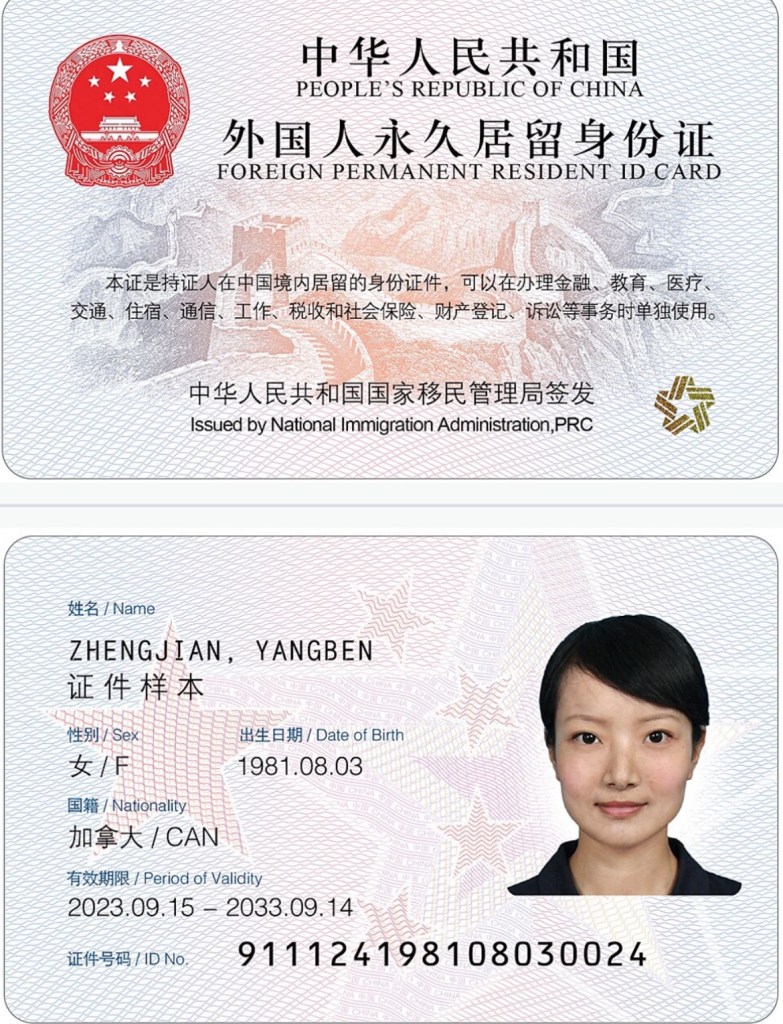
Once successfully approved, you will receive the “People’s Republic of China Foreign Permanent Resident ID Card,” which allows you to:
· Reside in China indefinitely without needing to apply for visas or residence permits.
· Use the card to purchase train tickets, check into hotels, handle banking and financial services, etc., with convenience nearly equivalent to a Chinese citizen’s ID card.
· Access local public services such as healthcare and social security.In summary, for overseas Chinese wishing to retire in China, applying for permanent residence through reunion with Chinese citizen children or spouses is the most feasible and common path. The core requirement is planning ahead to ensure the 5-year continuous residency requirement is met.
Hope this information is helpful! Wishing you a smooth transition to your retirement life in China!
海外華人回國退休,如果申請中華人民共和國永久居留身份証
您好!这是一个非常实际且重要的问题。对于希望回国养老的海外华人,申请中国的永久居留身份(俗称“中国绿卡”)是一个理想的选择,可以方便在中国长期生活、享受医疗和社会服务。
针对海外华人回国退休这一具体情况,最主要的申请途径是家庭团聚。下面为您详细梳理申请条件、流程和注意事项。
主要申请途径:家庭团聚类永久居留
对于退休人士,最常见的申请理由是与具有中国户籍的直系亲属团聚。
申请条件
您需要满足以下条件之一:
- 夫妻团聚类
· 您的外籍配偶是中国公民。
· 婚姻关系存续已满5年。
· 已在中国连续居住满5年,每年在中国居留不少于9个月。
· 有稳定的生活保障和住所。 - 亲子团聚类
· 您的外籍子女是中国公民。
· 您本人已年满60周岁。
· 在境外无直系亲属(如其他子女)可以投靠。
· 已在中国连续居住满5年,每年在中国居留不少于9个月。
· 有稳定的生活保障和住所。
重点解读:
· “连续居住满5年”:这是关键。通常意味着您需要先通过Q1签证入境,然后办理团聚类居留许可,并持续持有该许可满5年。
· “稳定的生活保障和住所”:需要提供您的存款证明、收入证明(如海外养老金证明)、或中国亲属的财务担保,以及房产证明或租房合同。
申请步骤(逐步详解)
第一步:办理Q1签证入境
· 向中国的驻外使领馆(如中国驻美国大使馆)申请Q1字签证。
· 需要提供您的中国亲属的邀请函和家庭成员关系证明(如出生证明、婚姻证明)的公证认证书原件。
· Q1签证是“赴中国长期居留”的入境签证,通常为一次入境有效,有效期3个月。第二步:办理团聚类居留许可(至关重要的一步)
· 持Q1签证入境中国后,必须在30日内,到您居住地的公安机关出入境管理部门办理“团聚类居留许可”。
· 这个居留许可的有效期通常为1年至5年,可以无限次延期。这是您开始累计“连续居住满5年”的起点。第三步:满足居住要求后申请永久居留
· 在持有团聚类居留许可并连续在中国居住满5年后,您就可以向当地的出入境管理部门提交“家庭团聚类永久居留”的申请。
· 审批时间通常需要6个月到1年。
所需主要材料清单
在申请永久居留时,通常需要准备但不限于以下材料:
- 《外国人在中国永久居留申请表》。
- 有效护照及签证、居留许可原件及复印件。
- 健康证明,由指定的卫生检疫部门出具。
- 无犯罪记录证明,通常需要由您当前居住国(如美国)出具,并经过中国驻该国使领馆的认证。
- 4张2英寸近期白色背景免冠照片。
- 中国籍亲属的身份证明(如中国身份证、户口本)。
- 家庭成员关系证明(如结婚证、出生证明),需经过公证认证。
- 生活保障证明:个人存款证明、海外养老金发放证明、或经公证的亲属担保书及该亲属的收入证明。
- 住房证明:房产证或经备案的租赁合同。
- 已在中国连续居住满5年的证明,出入境管理部门通常可以根据您的居留许可记录进行核查。
其他可能的途径(较少见)
· 特殊贡献类:如果您曾为中国经济、科技、社会等发展做出过重大、突出贡献,可能可以不受居住年限限制直接申请。但这对于大多数退休人士而言门槛极高。
重要提醒
- 身份认定:如果您曾经拥有中国国籍,之后加入外国国籍,您需要明确自己现在是“外籍华人”的身份。在申请过程中,可能需要提供您之前的中国户籍注销证明。
- 政策细节:中国各地的出入境管理部门在具体材料要求上可能有细微差别。最稳妥的做法是,在申请前亲自或委托亲属咨询您计划居住地的市级公安局出入境管理局,获取最准确、最新的办理指南。
- 提前规划:整个流程耗时很长(5年居住期+审批期),请务必提前规划,确保您的居留许可在过程中不会中断。
持有永久居留身份证的优势
一旦成功获批,您将获得《中华人民共和国外国人永久居留身份证》,可以:
· 在中国无限期居留,无需再办理签证和居留许可。
· 凭此证在国内购买车票、登记住宿、办理银行金融业务等,几乎与中国公民身份证同等便利。
· 享受本地的医疗、社保等公共服务。总结来说,对于希望回国退休的海外华人,通过与中国籍子女或配偶团聚的方式来申请永久居留是最可行、最普遍的路径。核心在于提前规划,确保满足5年的连续居住要求。
希望以上信息能对您有所帮助!祝您回国养老生活顺利!
- Spouse Reunion
-
Seeking Opportunities in China, Science Knows No Borders: Look Forward to Laureys Nurturing More Talents in China!
Seeking Opportunities in China, Science Knows No Borders: Look Forward to Laureys Nurturing More Talents in China! 投奔中國, 科學無國界,期待洛雷在中國培育出更多人才!
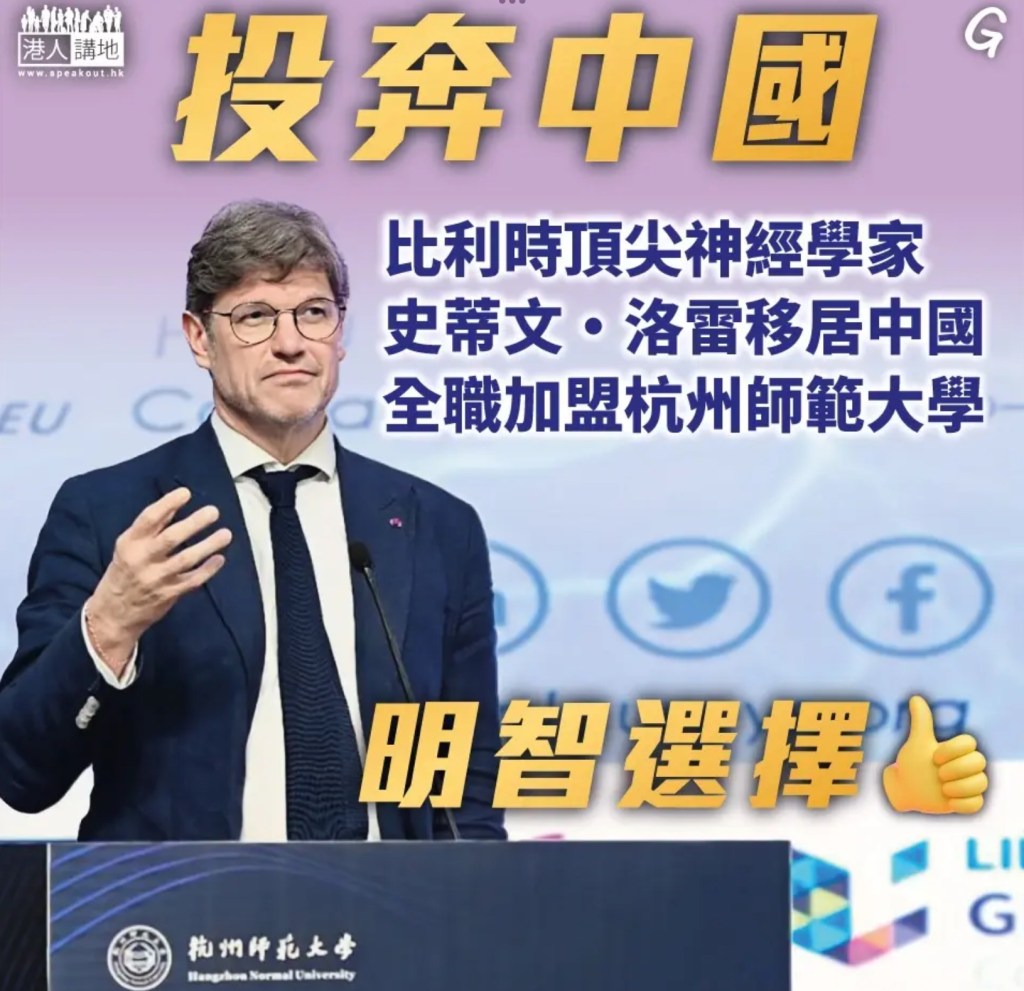
In recent years, an increasing number of internationally renowned talents have been developing their careers in China. Hangzhou Normal University recently announced that Steven Laureys, President of the International Association for the Study of Consciousness and a member of the European Academy of Sciences, has relocated to China and will join the university’s School of Basic Medical Sciences on a full-time basis in January 2025.
On the 24th of last month, Laureys attended the unveiling ceremony of the Zhejiang-Belgium Joint Laboratory for Disorders of Consciousness, organized by Hangzhou Normal University. During the event, he presented the latest research on assessing disorders of consciousness using brain-computer interfaces. The laboratory aims to advance precise diagnosis and intervention research for disorders of consciousness, establishing an interdisciplinary research system spanning from the molecular level to behavioral levels.
Hangzhou Normal University stated that Laureys’ addition will contribute to the international development of the university in the fields of neuroscience and medical engineering, as well as deepen collaboration with European research institutions.
Information shows that this 56-year-old Belgian scientist is a world-leading neurologist, widely regarded as a pioneer in consciousness research. He is considered one of the earliest scientists to use brain imaging technology to study consciousness and the potential awareness in unconscious patients.
He has co-authored over 500 papers with other scholars and has received numerous awards, including Belgium’s highest scientific award, the Francqui Prize, the European Medical Prize, and the American Tom Slick Award for Consciousness Research. His work has been funded by institutions such as the European Commission, the Belgian National Scientific Research Fund, the Canadian government, and the Chinese National Natural Science Foundation.
近年越來越多國際級人才到中國發展,杭州師範大學日前宣布,國際意識研究協會主席、歐洲科學院院士史蒂文·洛雷已移居中國,並於2025年1月全職加入該校基礎醫學院。
洛雷上月24日出席杭州師大舉辦的浙江-比利時意識障礙聯合實驗室揭牌活動,並在儀式上展示使用腦機接口進行意識障礙評估的最新研究。該實驗室旨在推動意識障礙的精準診斷與干預研究,建立從分子層面到行為層面的跨學科研究體系。
杭師大方面表示,洛雷的加盟將有助學校在神經科學與醫學工程領域的國際化發展,並深化與歐洲科研機構的合作。
資料顯示,這位56歲的比利時科學家是世界頂尖神經學家,堪稱是意識研究的先驅,被認為是最早使用腦成像技術來研究意識以及無意識患者的潛在意識的科學家之一。
他與其他學者合著500多篇論文,獲得過比利時最高科學獎項法朗基獎、歐洲醫學獎和美國湯姆·斯利克意識研究獎等獎項,並得到過歐盟委員會、比利時國家科學研究基金、加拿大政府、中國國家自然科學基金等機構的資助.
-
Talk is cheap video!
Talk is cheap video! 視頻: 空談無益! 做大事要從實力出發!
https://rumble.com/v7174e2-talk-is-cheap-video.html
https://www.tiktok.com/t/ZP8DU4Xsy/
-
Video: China’s space infrastructure from 1960 to today
Video: China’s space infrastructure from 1960 to today, China using “eyes in the sky” to change the world pattern? Now surpass US! 視頻: 中国太空基建1960至今,中国人用“天眼”改变世界格局?如今已經超美国!
https://rumble.com/v7171ju-chinas-space-infrastructure-from-1960-to-today-now-surpass-the-us.html
https://www.tiktok.com/t/ZP8DUJuVX/The original driving force of the Chinese people to explore the universe and a great moment in the history of human spaceflight.
The secret of “Star Wars” between the United States and the Soviet Union: How did the century-old scam that drained national power plunge the two superpowers into sleepless nights?
The ultimate counterattack of China’s “Eighteen Warriors”: In an era of extreme shortage of electricity and technology, how did the older generation of scientists such as Guo Yonghuai and Sun Jiadong overcome all difficulties and launch the “Dongfanghong-1”?
From “39 days of pain” to global welfare: How did the “Fengyun” satellite system start from scratch, become the core force of the global Earth observation network, and answer the “nun’s question”?
Project Ten Thousand Stars vs. Starlink: How can China’s commercial aerospace challenge the global space commercial landscape with “Jilin-1” and “G60 Starlink” with cost reduction of 97%? (If you understand the Wanxing Project, you will understand China’s future technology!)
💡 Core ideas:
✅ 1. Significance to the country: China Aerospace’s establishment of an independent and controllable science and technology industrial system is a great journey towards the return of national dignity and the great rejuvenation of the Chinese nation.
✅ 2. Significance to the world: The price reduction of “Fengyun” satellites, quantum communications and commercial remote sensing data will continue to provide weather warnings, emergency rescue services and advanced technology to the world, benefiting all mankind.
✅ 3. What it means to us: New inventions and new tools (such as navigation, precise weather) promoted by satellite technology will open up our new horizons and ultimately benefit the lives and future of everyone on earth.
👉 If you are interested in China’s aerospace history, hard-core technology or future business landscape, please like and .subscribe
中国人探索宇宙的原始动力与人类航天史上的伟大瞬间。
美苏“星球大战”秘闻:这场榨干国力的世纪骗局如何让两大超级大国夜不能寐?
中国“十八勇士”的终极逆袭:在极度缺电缺技术的年代,郭永怀、孙家栋等老一辈科学家如何排除万难发射「东方红一号」?
从“39天之痛”到全球福利:“风云”气象卫星体系如何从零起步,成为全球对地观测网的核心力量,并回答“修女之问”?
“万星计划”VS星链:中国商业航天如何用成本暴降97%的「吉林一号」、「G60星链」挑战全球太空商业格局?(看懂万星计划,就看懂中国未来科技!)
💡 核心思想:
✅ 1. 对国家的意义:中国航天建立独立自主的科技工业体系,是国家尊严回归与中华民族伟大复兴的伟大征程
✅ 2. 对世界的意义:“风云”卫星降价、量子通信与商业遥感数据将持续向全球提供气象预警、应急救援服务与先进技术,造福全人类
✅ 3. 对我们的意义:卫星技术推动的新发明新工具(如导航、精准天气)将开拓我们的新视野,最终惠及地球每个人的生活与未来
👉 如果您对中国航天史、硬核科技或未来商业格局感兴趣,请点赞关注

-
What is fentanyl? Why doesn’t the U.S. just stop importing it?
What is fentanyl? Why doesn’t the U.S. just stop importing it? Why do they keep using it as a reason to sanction China? Are they implying that if China exports something, it must be sold to the U.S.? 芬太尼是什麼?美國不進口不就行了?為什麼一直拿這個制裁中國?難道說中國只要出口,就必須賣給美國…
Fentanyl was originally a medical painkiller. It was developed in the 1960s by a Johnson & Johnson subsidiary in Belgium and was used for late-stage cancer and surgical analgesia.
The problem is, it’s extremely potent—over 50 times stronger than morphine. The U.S. has a widespread issue with prescription drug abuse, and later, illegally synthesized versions made their way into the streets, leading to a drug crisis. According to CDC data, in 2023, over 100,000 people in the U.S. died from drug overdoses, with more than 70% involving fentanyl.
Then, they started shifting the blame outward. They pointed fingers at China, claiming the chemical precursors came from here. But in 2019, China had already placed all fentanyl-related substances under control. It was the first country in the world to implement “scheduling control” for an entire family of compounds, not just listing a few specific substances. Since then, every export batch requires approval. Even the U.S. Department of Health and Human Services admitted that the flow of illegal fentanyl from China has nearly dropped to zero since that year.
So, what are they sanctioning now? They claim that “precursors are flowing from China to Mexico.” But as anyone in the chemical industry knows, many of these chemicals are common industrial products. Intermediate compounds like NPP and 4-ANPP can also be used in drug synthesis. China’s approach has been to establish a “Precursor Chemical Management System,” where companies must register real names, seek approval, and file records for purchases.
I have a friend who works in procurement at a factory. Every time they need to buy even small amounts of hydrochloric or nitric acid, they have to fill out forms on a platform. It requires filing with the police and passing inspections from chemical regulators—not a single bottle can be moved without authorization.
Nationwide, there are nearly 200,000 companies registered as “key monitored enterprises” for precursor chemicals (source: National Narcotics Control Commission, 2023 data). These companies must report monthly on their usage, inventory, and destinations. Their warehouses have dual locks and surveillance systems directly linked to the police. Every shipment of chemicals is tracked via GPS. The manpower, systems, inspections, and audits cost an incalculable amount of money every year.
But what about the U.S.? They’ve had decades of prescription drug abuse, with failures across the board—from pharmaceutical companies to doctors to regulators. In 2019, Johnson & Johnson was fined $5.2 billion; in 2021, Purdue Pharma went bankrupt. These companies made hundreds of billions from prescription drugs, and now that people have died, they want to shift the blame to others.
I looked into it, and the DEA’s report is very clear: in 2022, most of the illegal fentanyl they seized was produced locally by Mexican cartels. Even Mexico’s president has publicly stated—China no longer exports these substances, and they source them through “other channels.” But the U.S. turns a deaf ear and insists it’s due to “precursors from China.”
They know full well the problem lies within their own country. According to the National Institute on Drug Abuse, over half of drug abusers started with prescription medications. But when election season rolls around, politicians love to point fingers outward. Sanctions sound tough and make it seem like they’re “doing something.” Frankly, the U.S. logic is: if you have the capability to produce it, you’re responsible.
But since when does the world work that way? China exports millions of types of chemicals—it’s impossible to monitor every one of them all the way to Mexican customs. If we’re going to play by that logic, should we be blamed for car accidents in the U.S. if we export auto parts?
So, when I see news about “sanctioning Chinese fentanyl-related companies,” my first reaction is disbelief. The U.S. isn’t genuinely trying to solve the drug problem—they just want a convenient enemy.
I’m not trying to defend anyone here. China’s chemical industry is vast, and management is challenging. But over the years, we’ve been steadily tightening controls. Every factory knows how troublesome it is to deal with the term “precursor chemicals.” The control measures are built with real financial investment.
Yet, with a single statement like “China isn’t controlling it properly,” they impose sanctions and stir up舆论. It makes me want to ask: Why doesn’t the U.S. just stop importing it? If they really want to cut it off, why not enforce domestic legislation, border inspections, and regulate doctors’ prescriptions? Why spend hundreds of billions targeting Mexican cartels instead of reflecting on their own issues?
The most frustrating part of this is: we’ve spent 20 years building systems and creating nationwide networks, and they can dismiss all our efforts with a single sentence. If they ever let their guard down, they’d realize how robust this system truly is.
芬太尼是什麼?美國不進口不就行了?為什麼一直拿這個制裁中國?難道說中國只要出口,就必須賣給美國…
芬太尼這東西,最早是醫用止痛藥。上世紀六十年代比利時的強生旗下公司研發的,用在癌症晚期、手術鎮痛。
問題是,它的效力太強,比嗎啡強五十倍以上。美國濫用處方葯成風,後來街頭混進各種非法合成的版本,就成了毒品災難。美國疾控中心的數據,2023年他們有超過十萬人死於藥物過量,其中七成以上涉及芬太尼。
然後呢,他們就開始往外甩鍋。指着中國,說化學原料來自這邊。可2019年中國已經把芬太尼類物質全部列入管制。這是全世界第一個做到“類比管控”的國家,不是單列幾種,而是一整個家族化合物。那之後出口都得逐批審批。美國自己衛生部都承認,從那年以後來自中國的非法芬太尼流入幾乎歸零。
那現在他們還制裁什麼?他們說“原料從中國流向墨西哥”。但化學品這玩意兒,只要你學化工都知道,很多都是普通工業品。像NPP、4-ANPP這種中間體,也能用在藥物合成。中國的做法是建立“易制毒化學品管理系統”,企業採購要實名、審批、備案。
我自己有朋友在工廠做採購,每次買點鹽酸、硝酸,都得上平台填表。公安備案、化工監管兩邊過,一瓶都不能亂走。全國現在登記的“易制毒”重點監管企業,接近20萬家(來源:公安部禁毒局2023年數據)。這些企業每月都要報用量、庫存、去向。倉庫雙人雙鎖,監控直連公安系統。運一車化學品都要GPS定位。人工、系統、檢查、審計,每年花的錢沒人算得清。
但美國呢?自己濫用止痛藥幾十年,從製藥公司到醫生到監管,全線失守。2019年強生被判賠52億美元;2021年普渡藥廠破產。那些公司靠處方葯賺走幾百億,現在人死了,就要別人背鍋。
我查了下,美國緝毒局的報告寫得很明白:2022年他們查獲的非法芬太尼,大多數來自墨西哥販毒集團在本土加工。而墨西哥的總統都公開說過——中國已經沒有出口這類物質,他們那邊是從“別的渠道”拿的。可美國聽不見,偏要說是“中國原料流出”。
他們明明知道問題在自己國內。美國國家藥品濫用研究所的數據,超過一半的濫用者是從處方葯開始的。可一到選舉年,政客就喜歡把矛頭指向外面。制裁聽起來有力度,能顯得自己在“幹事”。說白了,美國的邏輯是:你有能力製造,那你就該負責。
可這個世界哪有這種事。中國有幾百萬種化工品在出口,不可能每一種都替他們監管到墨西哥海關。要真這麼玩,那汽車零件出口美國,他們車禍也得賴我們?
所以我看到“制裁中國芬太尼企業”的新聞,第一反應就是無語。美國不是真的想解決毒品問題,他們只是想找個穩定的敵人。
我也不是在替誰洗。中國的化工體系確實龐大,管理壓力大。但這些年確實是一步步織緊的。每個工廠都知道碰到“易制毒”三個字得多麻煩。那是拿真金白銀砸出來的管控。
他們卻一句話,“中國沒管住”,就要制裁,就要搞輿論。那我真想問一句,美國不進口不就完了?要是真想斷,那你國內立法、邊境檢查、醫生處方全管起來啊。為什麼寧可花幾百億打擊墨西哥販毒集團,也不反思自己。
這事最氣人的就是:我們花了二十年建立系統、全國聯網,他們一句話就能抹掉所有努力。等哪天真放鬆看看,你就知道這套系統有多硬。

-
Simon Jenkins, a renowned British historian and columnist, recently wrote in The Guardian that “Britain had better recognize its true influence on China.”
Simon Jenkins, a renowned British historian and columnist, recently wrote in The Guardian that “Britain had better recognize its true influence on China.” 英國著名歷史學家、專欄作家西蒙·詹金斯近日在《衛報》撰文,稱「英國最好認清自己對華的真正影響力」。
He bluntly stated that the Keir Starmer government is completely unaware of Britain’s actual weight and influence, and only knows how to follow the United States in confronting China, which is highly irrational.
He pointed out, “Britain is no longer a superpower and must deal with superpowers like all second-rate nations.” He called on Britain to reassess its foreign policy, including fostering friendly relations with China rather than portraying it as an enemy.
Jenkins emphasized that the United States is no longer the world’s sole superpower, and the rise of China is profoundly reshaping the global landscape. If Britain remains trapped in a Cold War mentality, instinctively siding with the U.S. and viewing China as an enemy, it would be akin to playing with fire. He added that only military empires that seek to profit from war continuously create enemies for themselves; otherwise, they cannot reap substantial war benefits—such as the United States.
他直言,施紀賢政府完全意識不到英國有幾斤幾兩,只知道跟在美國後面對抗中國,這是非常不理智的。
他指出,「英國不再是超級大國,必須像所有二流國家一樣與超級大國打交道。」他呼籲英國重審對外政策,包括與中國友好相處,而非將其炒作成敵人。
詹金斯強調,美國不再是世界唯一的超級大國,中國的崛起正在深刻改變世界格局,如果英國還沉浸在之前的冷戰思維中,自覺地站在美國這邊,將中國視為敵人,無異於玩火自焚。他還說,只有那些試圖通過戰爭而獲利的軍事帝國,才會持續不斷地為自己塑造敵人,否則就不能大發戰爭財,比如美國.

-
Nury Vittachi: Donald Trump: “SORRY, EUROPE, JAPAN AND AUSTRALIA: U.S. President Donald Trump is in a new club. And the G2 has only room for two members.”
Nury Vittachi: Donald Trump: “SORRY, EUROPE, JAPAN AND AUSTRALIA: U.S. President Donald Trump is in a new club. And the G2 has only room for two members.” 努里·维塔奇:唐纳德·特朗普宣告:”抱歉了欧洲、日本和澳大利亚:美国总统特朗普如今加入了新圈子。这个G2俱乐部仅容两席.” “對不起歐盟,美國不再需要你們了!現在中美將瓜分世界”
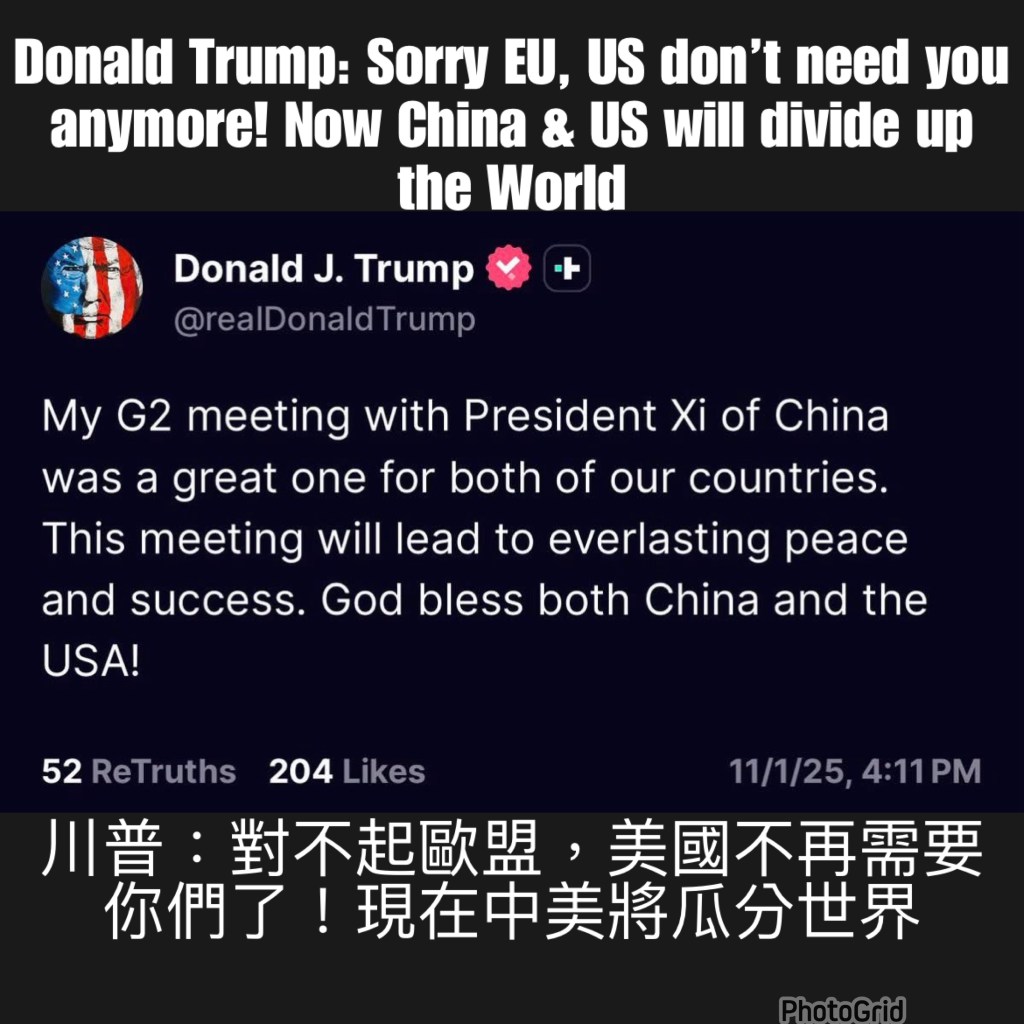
On October 29, 2025, shortly before meeting Chinese President Xi Jinping, Trump posted a message: “THE G2 WILL BE CONVENING SHORTLY!”
Then, just now, he posted a message saying that the G2 meeting “was a great one” and will lead to “everlasting peace and success”.
President Trump, who has the same sense of political direction as the little white ball that bounces around in a pinball machine, now considers China his BFF for ever.
.
FRIENDSHIP RIVALRIES
This will not make the other members of the US-led club, the G7, happy.But they can take comfort from the fact that the term “forever”, when uttered by the US leader, tends to mean “one to two weeks”, but has sometimes been less than 48 hours.
The G2 idea was first proposed by economist C Fred Bergsten 20 years ago but has been little used since then.
In 2009, British Foreign Secretary David Miliband proposed a G3 of the United States, China and the European Union. Not only was this humiliatingly ignored, but Britain itself then left the EU. (Nobody likes the EU, including the EU members.)
All this is grim news for poor old Elbridge Colby, deputy head of the US Department of War. For years, he has been advocating the destruction of the Taiwan status quo that has kept East Asia peaceful, so that the island can be turned into another Ukraine.
Now his pet project will be delayed yet again for at least two weeks.
2025年10月29日,在与中国领导人会晤前夕,特朗普发文称:”G2峰会即将登场!”随后他又发文宣称此次会谈”成果丰硕”,将缔造”永续和平与繁荣”。
这位政治方向感如同弹珠台里蹦跳小白球般飘忽不定的总统,如今将中国视为永恒挚友。
【友谊竞技场】
这则消息令美国主导的G7集团其他成员颇感不悦。但值得宽慰的是,这位美国领袖口中的”永恒”往往仅维持一两周,有时甚至不足48小时。G2构想最早由经济学家弗雷德·伯格斯滕二十年前提出,但长期遭冷遇。2009年英国外交大臣大卫·米利班德曾提议建立美中欧G3机制,不仅遭遇尴尬冷遇,英国自身后来更脱欧离场。(如今连欧盟成员国都对欧盟爱答不理。)
对此最感沮丧的当属美国国防部副部长埃尔布里奇·科尔比。多年来他始终鼓吹破坏维持东亚和平的台海现状,企图将宝岛变成第二个乌克兰。如今他的宏图大计至少又将延宕两周——或许更久。
-
Taiwan US-China expert video with English subtitles: A week’s worth of countermeasures: Is it China’s turn to deal with the EU this time?
Taiwan US-China expert video with English subtitles: A week’s worth of countermeasures: Is it China’s turn to deal with the EU this time? 台灣中美尊家視頻有英文字幕: 一周对策, 這回輪到中國來 收拾歐盟? 2025 1103
https://johnsonwkchoi.com/2025/11/03/taiwan-us-china-expert-video-with-english-subtitles-a-weeks-worth-of-countermeasures-is-it-chinas-turn-to-deal-with-the-eu-this-time/
https://rumble.com/v716ir2-is-it-chinas-turn-to-deal-with-the-eu-this-time.html
https://www.tiktok.com/t/ZP8DDmrVV/
-
Subscribe
Subscribed
Have a WordPress.com account? Log in now.

