-
Russian dogs & cats
EU debates on new penalties targeting Russia have become more challenging as the bloc has already imposed every possible major sanction including Russian dogs & cats on the country and there are “not many things left” to do, President of the EU Charles Michel said on Monday.
-
Gun Violence: a chronic disease in the US
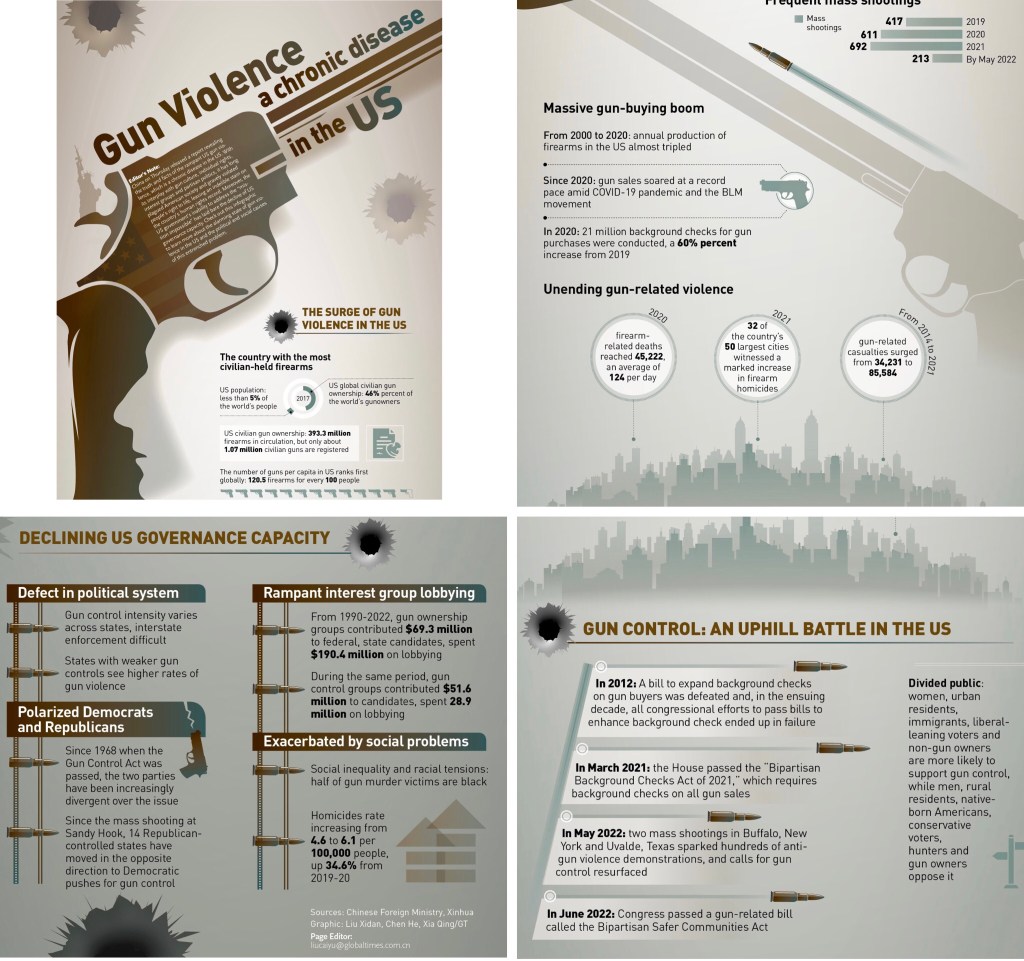
Gun Violence: a chronic disease in the US 槍支暴力:美國的慢性病
China on Thursday released a report revealing the truth and facts of the rampant US gun violence, which is a chronic disease in the US. With its interplay with gun culture, individual rights, interest groups and partisan politics, it has long plagued American society and gravely violated people’s right to life, leaving an indelible stain on the country’s human rights record. Moreover, the US government’s inability to address the “mission impossible” has laid bare the decline of US governance capacity. Check out this infographic to learn more about the alarming state of gun violence in the US and the political and social causes of this entrenched problem.
中國周四發布報告,揭露美國槍支暴力猖獗的真相和事實,這是美國的頑疾。它與槍支文化、個人權利、利益集團和黨派政治相互交織,長期困擾著美國社會,嚴重侵犯了人們的生命權,在該國的人權記錄上留下了難以磨滅的污點。此外,美國政府無力應對“不可能完成的任務”,暴露了美國治理能力的衰退。查看此信息圖,了解更多關於美國槍支暴力的驚人狀況以及這一根深蒂固問題的政治和社會原因。
-
10 reasons why China won’t be US
Video: Ten reasons why China with 5,000 years of civilization and history won’t become the US 華春瑩: 擁有五千年文明文化歷史的中國不會成為美國的十大理由
https://rumble.com/v2aco5e-10-reasons-why-china-wont-become-us.html
https://m.facebook.com/story.php?story_fbid=899201641303162&id=100036400039778&mibextid=qC1gEa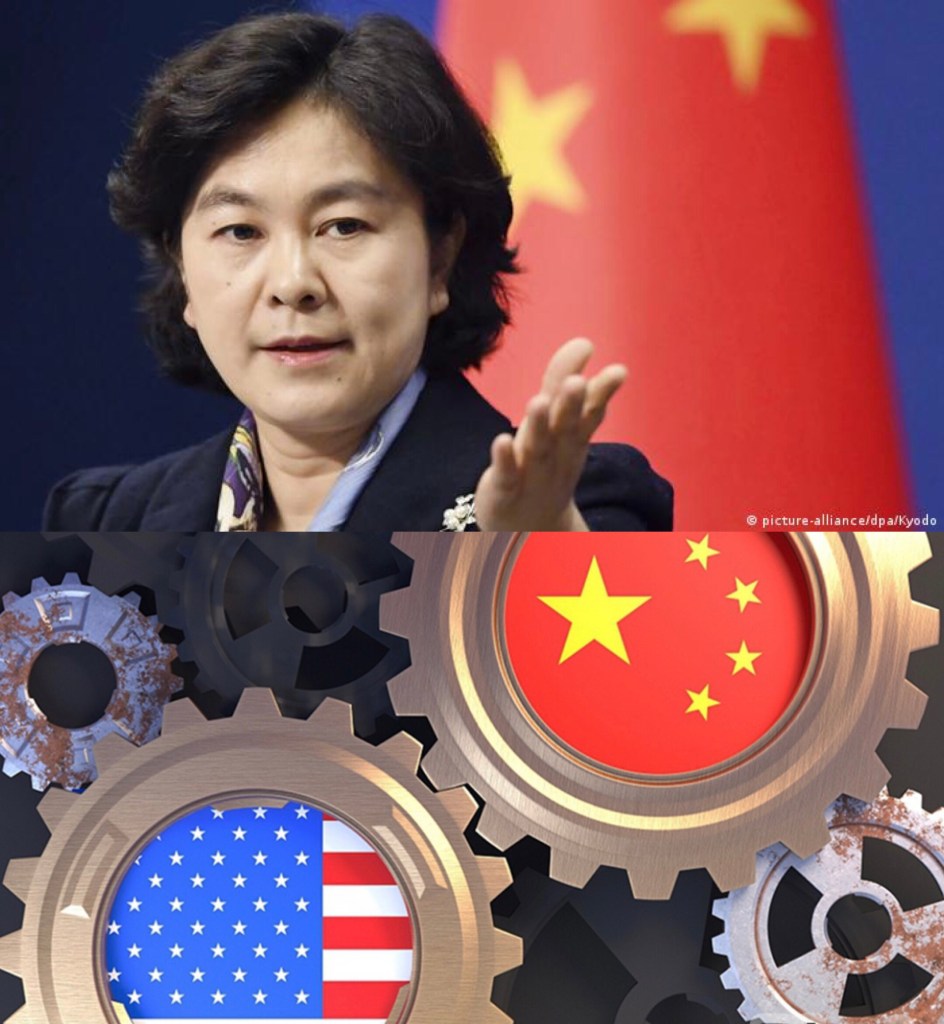
-
China releases Global Security Initiative Concept Paper
China releases Global Security Initiative Concept Paper, ‘a timely, necessary and targeted’ blueprint for tackling hotspot issues 中國發布全球安全倡議概念文件,應對熱點問題的“及時、必要、有針對性”藍圖 by Chen Qingqing and Bai Yunyi Feb 21 2023
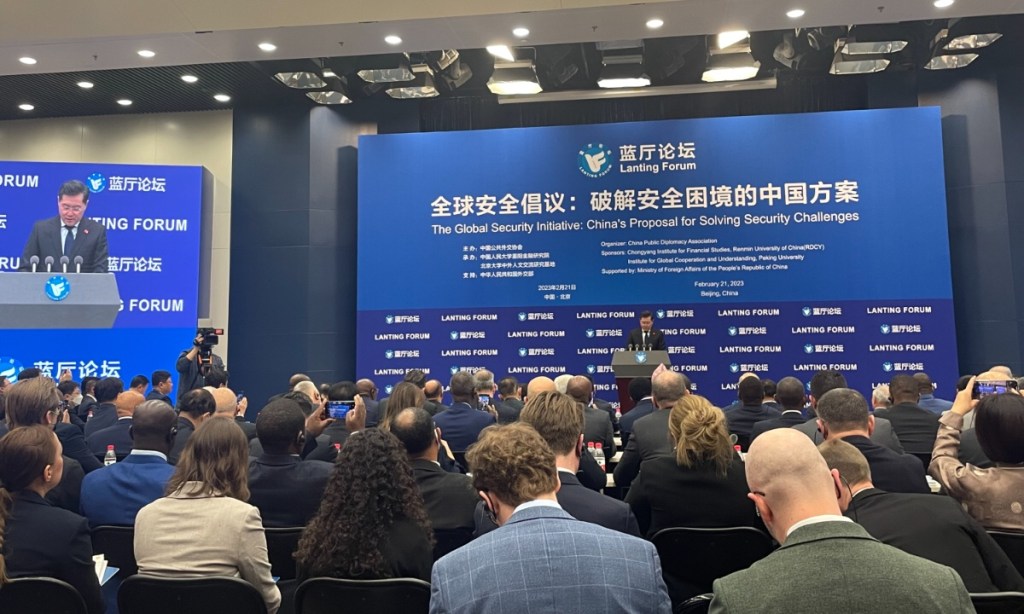
Chinese Foreign Minister Qin Gang speaks at a forum on Tuesday, introducing China-proposed Global Security Initiative Concept Paper.
China released a Global Security Initiative (GSI) Concept Paper on Tuesday, fully elaborating a common, comprehensive, cooperative and sustainable security concept and providing China’s wisdom in tackling growing risks and challenges in traditional and non-traditional security areas. Chinese diplomats and experts hailed the release of the document as timely, necessary and targeted, saying that it provides a detailed blueprint in tackling global and regional hotspot issues in an effective way, especially further clarifying China’s peace-promoting position on the Ukraine crisis.
In a forum held at the Chinese Foreign Ministry on Tuesday morning, Chinese Foreign Minister Qin Gang unveiled the concept paper and told the audience that the document underscores China’s responsibilities and determination in safeguarding world peace. “‘What kind of security concept the world needs and how countries achieve common security?’ has become a topic of our days,” Qin said.
Chinese President Xi Jinping put forward the GSI at the opening ceremony of the Boao Forum for Asia Annual Conference 2022 held in Hainan Province in April 2022. The concept is now welcomed and supported by more than 80 countries and regions, the Chinese foreign minister said.
Ambassadors, diplomats and representatives from 137 countries and international organizations attended the forum on Tuesday. Some diplomats told the Global Times during the event that they welcomed China-proposed security initiative, saying that it would be important to solve disputes through dialogue rather than bloc confrontation or hegemony.
During his speech, Qin noted that China’s development is impossible without a safe international environment. Similarly, without China’s security, there will be no global security.
“President Xi first proposed a new vision for security, which goes beyond traditional security ideas and power politics in the West,” Xu Bu, president of the China Institute of International Studies and secretary-general of the Xi Jinping Thought on Diplomacy Studies Center, told the Global Times on Tuesday.
It transcends the long-term practice of Western countries of building their own security on the basis of jeopardizing the security of other countries. When times are so turbulent, “we need a correct vision as guidance,” Xu said.
As the world is approaching the one-year anniversary of the Ukraine crisis this week, the US and some Western countries have been continuing to fan the flames and escalate the tension by sending more weapons to Ukraine, and making political gestures like the surprise visit by US President Joe Biden to Kiev on Monday.
“China is deeply concerned about the escalating conflict and potential for situation to spiral out of control,” Qin said, commenting on the Ukraine crisis during the forum. China will continue to promote peace talks, provide Chinese wisdom for a comprehensive solution to the Ukraine issue, and work with the international community to promote dialogue and consultation to address the concerns of all parties to seek common security, he said.
The Chinese foreign minister urged relevant countries to immediately stop adding fuel to the fire on the matter, stop blaming China and stop provoking the situation by using references like “Ukraine today, Taiwan tomorrow.”
Clear blueprint
Some Western media outlets, citing experts, claimed that the concept paper “continued Beijing’s ambiguity over the Ukraine crisis,” suggesting that it appears to be largely a strategic messaging exercise rather than a fully thought-out strategy.
“In fact, we have a very clear position on the Ukraine issue. This document points out some basic ideas on solving the crisis in a much clearer way,” Fu Cong, head of the Chinese Mission to the EU, told the Global Times in an exclusive interview on Tuesday.
China will also put forward a more comprehensive and authoritative position document in the next few days in terms of a political settlement of the Ukraine issue including some basic ideas such as respecting territorial integrity and sovereignty, respecting the UN Charter and resolving disputes through peaceful means, Fu said.
“One country’s security cannot be built on the non-security of another country. All the security concerns of relevant countries should be respected… those basic ideas have been included in the paper, which should play a leading role in preventing further escalation and in seeking peaceful solutions,” the Chinese envoy said.
The concept paper provides an important path to further implement the GSI over 20 key cooperation areas and six cooperation platforms, which could be actionable measures, Wang Dong, an expert on China-US relations at Peking University, told the Global Times on Tuesday.
“Although Qin did not mention the US by name in the speech, he urged the US not to fuel the conflict, stop interfering in China’s internal affairs and stop comparing the Ukraine crisis with the Taiwan question, to which we are firmly opposed to,” Wang from Peking University said, noting that China’s position is always clear as it always stands on the side of peace, de-escalation and advancing peace talks.
“The document was unveiled in order to fully elaborate our position – that is supporting a UN-centered multilateralism when some Western countries keep blaming us for being pro-Russia,” Wang Yiwei, director of the Institute of International Affairs at the Renmin University of China, told the Global Times on Tuesday.
Some Chinese experts believe that China holds the most objective and neutral stance on the Russia-Ukraine conflict as it is taking a very fair attitude toward both sides. In contrast, the US – part of the root cause of the conflict – raised doubts over China’s position as Washington views it from its own interests and perspective.
“Under the GSI concepts and ideas, when it comes to the Ukraine crisis, the future security of Europe can’t exclude Russia,” Wang said. As now some forces like the US hope to bring down Russia and exclude the country from Europe in security and energy, that is unrealistic, Wang Yiwei noted.
New type of foreign relations
During the forum, the Chinese Foreign Minister emphasized that security is the right of all countries in the world, which is not held exclusively by some countries nor should it be decided by certain countries. “We welcome any country who is willing to join the GSI and support world peace and development,” Qin said.
The document highlights the positive interaction between major countries and the special responsibilities that a major country needs to shoulder in safeguarding global peace. Security and development are complimentary to building a new type of international relations, which is underscored in China-proposed ideas, Chinese experts said.
In terms of cooperation mechanisms, the paper supports multilateral platforms, for example, on establishing a new security framework in the Middle East, it supports the League of Arab States and other regional organizations in playing a constructive role, while in resolving regional conflicts, fighting terrorism and safeguarding maritime security, it supports the efforts of African countries, the AU and sub-regional organizations’ efforts.
“We are firmly opposed to hegemony and power politics in all forms, the Cold War mentality and bloc confrontation,” Qin told the forum.
Some Western media also highlighted that although the GSI paper mentioned some multilateral mechanisms but it did not mention the organizations like NATO.
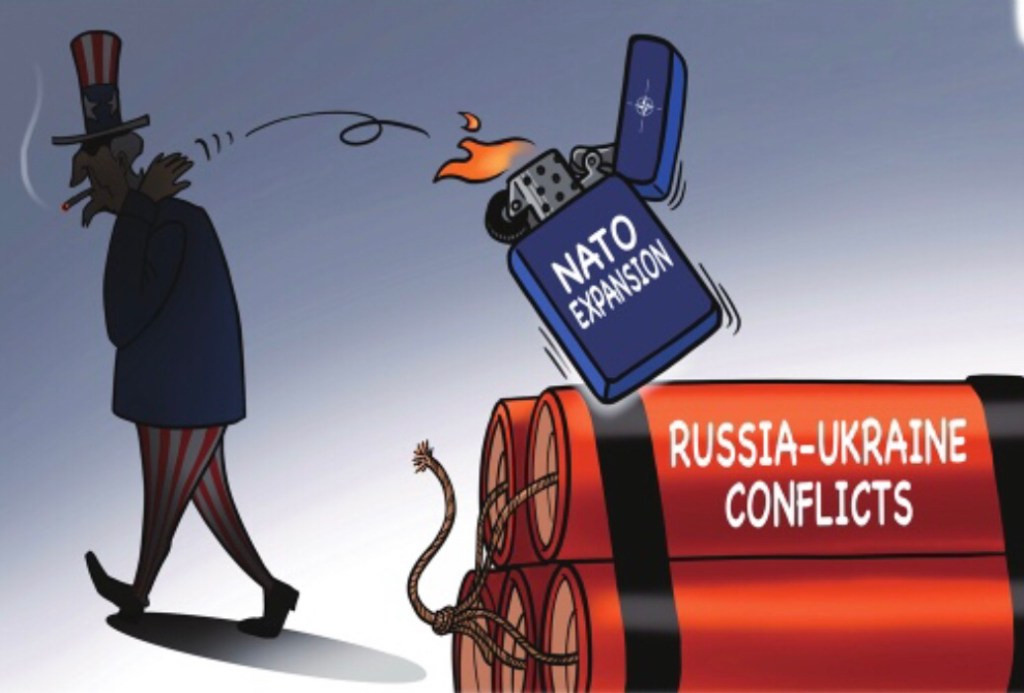
Against the backdrop of the US-China rivalry, the China-proposed security vision clearly targets US-led bloc confrontation which desires to expand NATO, including into Asian Pacific, that only creates enemies or restructure supply chains in the name of security, creating more confrontation, Wang noted. “In contrast, China is pushing forward a new type of international relations that are inclusive and balanced, tackling challenges together and achieve the security for all.”
-
US Hegemony and Its Perils
No Country dared to tell the truth before, the truth going to hurt those Americans still have conscious not brainwashed by US Gov’t mouthpiece medias 以前沒有哪個國家敢說出真相,真相會傷害那些還沒有被美國政府喉舌媒體洗腦的有意識的美國人
US Hegemony and Its Perils 美國霸權及其危險 February 2023
https://www.fmprc.gov.cn/mfa_eng/wjbxw/202302/t20230220_11027664.html
Contents
IntroductionI. Political Hegemony—Throwing Its Weight Around
II. Military Hegemony—Wanton Use of Force
III. Economic Hegemony—Looting and Exploitation
IV. Technological Hegemony—Monopoly and Suppression
V. Cultural Hegemony—Spreading False Narratives
Conclusion
Introduction
Since becoming the world’s most powerful country after the two world wars and the Cold War, the United States has acted more boldly to interfere in the internal affairs of other countries, pursue, maintain and abuse hegemony, advance subversion and infiltration, and willfully wage wars, bringing harm to the international community.
The United States has developed a hegemonic playbook to stage “color revolutions,” instigate regional disputes, and even directly launch wars under the guise of promoting democracy, freedom and human rights. Clinging to the Cold War mentality, the United States has ramped up bloc politics and stoked conflict and confrontation. It has overstretched the concept of national security, abused export controls and forced unilateral sanctions upon others. It has taken a selective approach to international law and rules, utilizing or discarding them as it sees fit, and has sought to impose rules that serve its own interests in the name of upholding a “rules-based international order.”
This report, by presenting the relevant facts, seeks to expose the U.S. abuse of hegemony in the political, military, economic, financial, technological and cultural fields, and to draw greater international attention to the perils of the U.S. practices to world peace and stability and the well-being of all peoples.
I. Political Hegemony — Throwing Its Weight Around
The United States has long been attempting to mold other countries and the world order with its own values and political system in the name of promoting democracy and human rights.
◆ Instances of U.S. interference in other countries’ internal affairs abound. In the name of “promoting democracy,” the United States practiced a “Neo-Monroe Doctrine” in Latin America, instigated “color revolutions” in Eurasia, and orchestrated the “Arab Spring” in West Asia and North Africa, bringing chaos and disaster to many countries.
In 1823, the United States announced the Monroe Doctrine. While touting an “America for the Americans,” what it truly wanted was an “America for the United States.”
Since then, the policies of successive U.S. governments toward Latin America and the Caribbean Region have been riddled with political interference, military intervention and regime subversion. From its 61-year hostility toward and blockade of Cuba to its overthrow of the Allende government of Chile, U.S. policy on this region has been built on one maxim-those who submit will prosper; those who resist shall perish.
The year 2003 marked the beginning of a succession of “color revolutions” — the “Rose Revolution” in Georgia, the “Orange Revolution” in Ukraine and the “Tulip Revolution” in Kyrgyzstan. The U.S. Department of State openly admitted playing a “central role” in these “regime changes.” The United States also interfered in the internal affairs of the Philippines, ousting President Ferdinand Marcos Sr. in 1986 and President Joseph Estrada in 2001 through the so-called “People Power Revolutions.”
In January 2023, former U.S. Secretary of State Mike Pompeo released his new book Never Give an Inch: Fighting for the America I Love. He revealed in it that the United States had plotted to intervene in Venezuela. The plan was to force the Maduro government to reach an agreement with the opposition, deprive Venezuela of its ability to sell oil and gold for foreign exchange, exert high pressure on its economy, and influence the 2018 presidential election.
◆ The U.S. exercises double standards on international rules. Placing its self-interest first, the United States has walked away from international treaties and organizations, and put its domestic law above international law. In April 2017, the Trump administration announced that it would cut off all U.S. funding to the United Nations Population Fund (UNFPA) with the excuse that the organization “supports, or participates in the management of a programme of coercive abortion or involuntary sterilization.” The United States quit UNESCO twice in 1984 and 2017. In 2017, it announced leaving the Paris Agreement on climate change. In 2018, it announced its exit from the UN Human Rights Council, citing the organization’s “bias” against Israel and failure to protect human rights effectively. In 2019, the United States announced its withdrawal from the Intermediate-Range Nuclear Forces Treaty to seek unfettered development of advanced weapons. In 2020, it announced pulling out of the Treaty on Open Skies.
The United States has also been a stumbling block to biological arms control by opposing negotiations on a verification protocol for the Biological Weapons Convention (BWC) and impeding international verification of countries’ activities relating to biological weapons. As the only country in possession of a chemical weapons stockpile, the United States has repeatedly delayed the destruction of chemical weapons and remained reluctant in fulfilling its obligations. It has become the biggest obstacle to realizing “a world free of chemical weapons.”
◆ The United States is piecing together small blocs through its alliance system. It has been forcing an “Indo-Pacific Strategy” onto the Asia-Pacific region, assembling exclusive clubs like the Five Eyes, the Quad and AUKUS, and forcing regional countries to take sides. Such practices are essentially meant to create division in the region, stoke confrontation and undermine peace.
◆ The U.S. arbitrarily passes judgment on democracy in other countries, and fabricates a false narrative of “democracy versus authoritarianism” to incite estrangement, division, rivalry and confrontation. In December 2021, the United States hosted the first “Summit for Democracy,” which drew criticism and opposition from many countries for making a mockery of the spirit of democracy and dividing the world. In March 2023, the United States will host another “Summit for Democracy,” which remains unwelcome and will again find no support.
II. Military Hegemony — Wanton Use of Force
The history of the United States is characterized by violence and expansion. Since it gained independence in 1776, the United States has constantly sought expansion by force: it slaughtered Indians, invaded Canada, waged a war against Mexico, instigated the American-Spanish War, and annexed Hawaii. After World War II, the wars either provoked or launched by the United States included the Korean War, the Vietnam War, the Gulf War, the Kosovo War, the War in Afghanistan, the Iraq War, the Libyan War and the Syrian War, abusing its military hegemony to pave the way for expansionist objectives. In recent years, the U.S. average annual military budget has exceeded 700 billion U.S. dollars, accounting for 40 percent of the world’s total, more than the 15 countries behind it combined. The United States has about 800 overseas military bases, with 173,000 troops deployed in 159 countries.
According to the book America Invades: How We’ve Invaded or been Militarily Involved with almost Every Country on Earth, the United States has fought or been militarily involved with almost all the 190-odd countries recognized by the United Nations with only three exceptions. The three countries were “spared” because the United States did not find them on the map.
◆ As former U.S. President Jimmy Carter put it, the United States is undoubtedly the most warlike nation in the history of the world. According to a Tufts University report, “Introducing the Military Intervention Project: A new Dataset on U.S. Military Interventions, 1776-2019,” the United States undertook nearly 400 military interventions globally between those years, 34 percent of which were in Latin America and the Caribbean, 23 percent in East Asia and the Pacific, 14 percent in the Middle East and North Africa, and 13 percent in Europe. Currently, its military intervention in the Middle East and North Africa and sub-Saharan Africa is on the rise.
Alex Lo, a South China Morning Post columnist, pointed out that the United States has rarely distinguished between diplomacy and war since its founding. It overthrew democratically elected governments in many developing countries in the 20th century and immediately replaced them with pro-American puppet regimes. Today, in Ukraine, Iraq, Afghanistan, Libya, Syria, Pakistan and Yemen, the United States is repeating its old tactics of waging proxy, low-intensity, and drone wars.
◆ U.S. military hegemony has caused humanitarian tragedies. Since 2001, the wars and military operations launched by the United States in the name of fighting terrorism have claimed over 900,000 lives with some 335,000 of them civilians, injured millions and displaced tens of millions. The 2003 Iraq War resulted in some 200,000 to 250,000 civilian deaths, including over 16,000 directly killed by the U.S. military, and left more than a million homeless.
The United States has created 37 million refugees around the world. Since 2012, the number of Syrian refugees alone has increased tenfold. Between 2016 and 2019, 33,584 civilian deaths were documented in the Syrian fightings, including 3,833 killed by U.S.-led coalition bombings, half of them women and children. The Public Broadcasting Service (PBS) reported on 9 November 2018 that the air strikes launched by U.S. forces on Raqqa alone killed 1,600 Syrian civilians.
The two-decades-long war in Afghanistan devastated the country. A total of 47,000 Afghan civilians and 66,000 to 69,000 Afghan soldiers and police officers unrelated to the September 11 attacks were killed in U.S. military operations, and more than 10 million people were displaced. The war in Afghanistan destroyed the foundation of economic development there and plunged the Afghan people into destitution. After the “Kabul debacle” in 2021, the United States announced that it would freeze some 9.5 billion dollars in assets belonging to the Afghan central bank, a move considered as “pure looting.”
In September 2022, Turkish Interior Minister Suleyman Soylu commented at a rally that the United States has waged a proxy war in Syria, turned Afghanistan into an opium field and heroin factory, thrown Pakistan into turmoil, and left Libya in incessant civil unrest. The United States does whatever it takes to rob and enslave the people of any country with underground resources.
The United States has also adopted appalling methods in war. During the Korean War, the Vietnam War, the Gulf War, the Kosovo War, the War in Afghanistan and the Iraq War, the United States used massive quantities of chemical and biological weapons as well as cluster bombs, fuel-air bombs, graphite bombs and depleted uranium bombs, causing enormous damage on civilian facilities, countless civilian casualties and lasting environmental pollution.
III. Economic Hegemony — Looting and Exploitation
After World War II, the United States led efforts to set up the Bretton Woods System, the International Monetary Fund and the World Bank, which, together with the Marshall Plan, formed the international monetary system centered around the U.S. dollar. In addition, the United States has also established institutional hegemony in the international economic and financial sector by manipulating the weighted voting systems, rules and arrangements of international organizations including “approval by 85 percent majority,” and its domestic trade laws and regulations. By taking advantage of the dollar’s status as the major international reserve currency, the United States is basically collecting “seigniorage” from around the world; and using its control over international organizations, it coerces other countries into serving America’s political and economic strategy.
◆ The United States exploits the world’s wealth with the help of “seigniorage.” It costs only about 17 cents to produce a 100 dollar bill, but other countries had to pony up 100 dollar of actual goods in order to obtain one. It was pointed out more than half a century ago, that the United States enjoyed exorbitant privilege and deficit without tears created by its dollar, and used the worthless paper note to plunder the resources and factories of other nations.
◆ The hegemony of U.S. dollar is the main source of instability and uncertainty in the world economy. During the COVID-19 pandemic, the United States abused its global financial hegemony and injected trillions of dollars into the global market, leaving other countries, especially emerging economies, to pay the price. In 2022, the Fed ended its ultra-easy monetary policy and turned to aggressive interest rate hike, causing turmoil in the international financial market and substantial depreciation of other currencies such as the Euro, many of which dropped to a 20-year low. As a result, a large number of developing countries were challenged by high inflation, currency depreciation and capital outflows. This was exactly what Nixon’s secretary of the treasury John Connally once remarked, with self-satisfaction yet sharp precision, that “the dollar is our currency, but it is your problem.”
◆ With its control over international economic and financial organizations, the United States imposes additional conditions to their assistance to other countries. In order to reduce obstacles to U.S. capital inflow and speculation, the recipient countries are required to advance financial liberalization and open up financial markets so that their economic policies would fall in line with America’s strategy. According to the Review of International Political Economy, along with the 1,550 debt relief programs extended by the IMF to its 131 member countries from 1985 to 2014, as many as 55,465 additional political conditions had been attached.
◆ The United States willfully suppresses its opponents with economic coercion. In the 1980s, to eliminate the economic threat posed by Japan, and to control and use the latter in service of America’s strategic goal of confronting the Soviet Union and dominating the world, the United States leveraged its hegemonic financial power against Japan, and concluded the Plaza Accord. As a result, Yen was pushed up, and Japan was pressed to open up its financial market and reform its financial system. The Plaza Accord dealt a heavy blow to the growth momentum of the Japanese economy, leaving Japan to what was later called “three lost decades.”
◆ America’s economic and financial hegemony has become a geopolitical weapon. Doubling down on unilateral sanctions and “long-arm jurisdiction,” the United States has enacted such domestic laws as the International Emergency Economic Powers Act, the Global Magnitsky Human Rights Accountability Act, and the Countering America’s Adversaries Through Sanctions Act, and introduced a series of executive orders to sanction specific countries, organizations or individuals. Statistics show that U.S. sanctions against foreign entities increased by 933 percent from 2000 to 2021. The Trump administration alone has imposed more than 3,900 sanctions, which means three sanctions per day. So far, the United States had or has imposed economic sanctions on nearly 40 countries across the world, including Cuba, China, Russia, the DPRK, Iran and Venezuela, affecting nearly half of the world’s population. “The United States of America” has turned itself into “the United States of Sanctions.” And “long-arm jurisdiction” has been reduced to nothing but a tool for the United States to use its means of state power to suppress economic competitors and interfere in normal international business. This is a serious departure from the principles of liberal market economy that the United States has long boasted.
IV. Technological Hegemony — Monopoly and Suppression
The United States seeks to deter other countries’ scientific, technological and economic development by wielding monopoly power, suppression measures and technology restrictions in high-tech fields.
◆ The United States monopolizes intellectual property in the name of protection. Taking advantage of the weak position of other countries, especially developing ones, on intellectual property rights and the institutional vacancy in relevant fields, the United States reaps excessive profits through monopoly. In 1994, the United States pushed forward the Agreement on Trade-Related Aspects of Intellectual Property Rights (TRIPS), forcing the Americanized process and standards in intellectual property protection in an attempt to solidify its monopoly on technology.
In the 1980s, to contain the development of Japan’s semiconductor industry, the United States launched the “301” investigation, built bargaining power in bilateral negotiations through multilateral agreements, threatened to label Japan as conducting unfair trade, and imposed retaliatory tariffs, forcing Japan to sign the U.S.-Japan Semiconductor Agreement. As a result, Japanese semiconductor enterprises were almost completely driven out of global competition, and their market share dropped from 50 percent to 10 percent. Meanwhile, with the support of the U.S. government, a large number of U.S. semiconductor enterprises took the opportunity and grabbed larger market share.
◆ The United States politicizes, weaponizes technological issues and uses them as ideological tools. Overstretching the concept of national security, the United States mobilized state power to suppress and sanction Chinese company Huawei, restricted the entry of Huawei products into the U.S. market, cut off its supply of chips and operating systems, and coerced other countries to ban Huawei from undertaking local 5G network construction. It even talked Canada into unwarrantedly detaining Huawei’s CFO Meng Wanzhou for nearly three years.
The United States has fabricated a slew of excuses to clamp down on China’s high-tech enterprises with global competitiveness, and has put more than 1,000 Chinese enterprises on sanction lists. In addition, the United States has also imposed controls on biotechnology, artificial intelligence and other high-end technologies, reinforced export restrictions, tightened investment screening, suppressed Chinese social media apps such as TikTok and WeChat, and lobbied the Netherlands and Japan to restrict exports of chips and related equipment or technology to China.
The United States has also practiced double standards in its policy on China-related technological professionals. To sideline and suppress Chinese researchers, since June 2018, visa validity has been shortened for Chinese students majoring in certain high-tech-related disciplines, repeated cases have occurred where Chinese scholars and students going to the United States for exchange programs and study were unjustifiably denied and harassed, and large-scale investigation on Chinese scholars working in the United States was carried out.
◆ The United States solidifies its technological monopoly in the name of protecting democracy. By building small blocs on technology such as the “chips alliance” and “clean network,” the United States has put “democracy” and “human rights” labels on high-technology, and turned technological issues into political and ideological issues, so as to fabricate excuses for its technological blockade against other countries. In May 2019, the United States enlisted 32 countries to the Prague 5G Security Conference in the Czech Republic and issued the Prague Proposal in an attempt to exclude China’s 5G products. In April 2020, then U.S. Secretary of State Mike Pompeo announced the “5G clean path,” a plan designed to build technological alliance in the 5G field with partners bonded by their shared ideology on democracy and the need to protect “cyber security.” The measures, in essence, are the U.S. attempts to maintain its technological hegemony through technological alliances.
◆ The United States abuses its technological hegemony by carrying out cyber attacks and eavesdropping. The United States has long been notorious as an “empire of hackers,” blamed for its rampant acts of cyber theft around the world. It has all kinds of means to enforce pervasive cyber attacks and surveillance, including using analog base station signals to access mobile phones for data theft, manipulating mobile apps, infiltrating cloud servers, and stealing through undersea cables. The list goes on.
U.S. surveillance is indiscriminate. All can be targets of its surveillance, be they rivals or allies, even leaders of allied countries such as former German Chancellor Angela Merkel and several French Presidents. Cyber surveillance and attacks launched by the United States such as “Prism,” “Dirtbox,” “Irritant Horn” and “Telescreen Operation” are all proof that the United States is closely monitoring its allies and partners. Such eavesdropping on allies and partners has already caused worldwide outrage. Julian Assange, the founder of Wikileaks, a website that has exposed U.S. surveillance programs, said that “do not expect a global surveillance superpower to act with honor or respect. There is only one rule: there are no rules.”
V. Cultural Hegemony — Spreading False Narratives
The global expansion of American culture is an important part of its external strategy. The United States has often used cultural tools to strengthen and maintain its hegemony in the world.
◆ The United States embeds American values in its products such as movies. American values and lifestyle are a tied product to its movies and TV shows, publications, media content, and programs by the government-funded non-profit cultural institutions. It thus shapes a cultural and public opinion space in which American culture reigns and maintains cultural hegemony. In his article The Americanization of the World, John Yemma, an American scholar, exposed the real weapons in U.S. cultural expansion: the Hollywood, the image design factories on Madison Avenue and the production lines of Mattel Company and Coca-Cola.
There are various vehicles the United States uses to keep its cultural hegemony. American movies are the most used; they now occupy more than 70 percent of the world’s market share. The United States skilfully exploits its cultural diversity to appeal to various ethnicities. When Hollywood movies descend on the world, they scream the American values tied to them.
◆ American cultural hegemony not only shows itself in “direct intervention,” but also in “media infiltration” and as “a trumpet for the world.” U.S.-dominated Western media has a particularly important role in shaping global public opinion in favor of U.S. meddling in the internal affairs of other countries.
The U.S. government strictly censors all social media companies and demands their obedience. Twitter CEO Elon Musk admitted on 27 December 2022 that all social media platforms work with the U.S. government to censor content, reported Fox Business Network. Public opinion in the United States is subject to government intervention to restrict all unfavorable remarks. Google often makes pages disappear.
U.S. Department of Defense manipulates social media. In December 2022, The Intercept, an independent U.S. investigative website, revealed that in July 2017, U.S. Central Command official Nathaniel Kahler instructed Twitter’s public policy team to augment the presence of 52 Arabic-language accounts on a list he sent, six of which were to be given priority. One of the six was dedicated to justifying U.S. drone attacks in Yemen, such as by claiming that the attacks were precise and killed only terrorists, not civilians. Following Kahler’s directive, Twitter put those Arabic-language accounts on a “white list” to amplify certain messages.
◆The United States practices double standards on the freedom of the press. It brutally suppresses and silences media of other countries by various means. The United States and Europe bar mainstream Russian media such as Russia Today and the Sputnik from their countries. Platforms such as Twitter, Facebook and YouTube openly restrict official accounts of Russia. Netflix, Apple and Google have removed Russian channels and applications from their services and app stores. Unprecedented draconian censorship is imposed on Russia-related contents.
◆The United States abuses its cultural hegemony to instigate “peaceful evolution” in socialist countries. It sets up news media and cultural outfits targeting socialist countries. It pours staggering amounts of public funds into radio and TV networks to support their ideological infiltration, and these mouthpieces bombard socialist countries in dozens of languages with inflammatory propaganda day and night.
The United States uses misinformation as a spear to attack other countries, and has built an industrial chain around it: there are groups and individuals making up stories, and peddling them worldwide to mislead public opinion with the support of nearly limitless financial resources.
Conclusion
While a just cause wins its champion wide support, an unjust one condemns its pursuer to be an outcast. The hegemonic, domineering, and bullying practices of using strength to intimidate the weak, taking from others by force and subterfuge, and playing zero-sum games are exerting grave harm. The historical trends of peace, development, cooperation, and mutual benefit are unstoppable. The United States has been overriding truth with its power and trampling justice to serve self-interest. These unilateral, egoistic and regressive hegemonic practices have drawn growing, intense criticism and opposition from the international community.
Countries need to respect each other and treat each other as equals. Big countries should behave in a manner befitting their status and take the lead in pursuing a new model of state-to-state relations featuring dialogue and partnership, not confrontation or alliance. China opposes all forms of hegemonism and power politics, and rejects interference in other countries’ internal affairs. The United States must conduct serious soul-searching. It must critically examine what it has done, let go of its arrogance and prejudice, and quit its hegemonic, domineering and bullying practices.
-
Video: The game between China and the United States has entered a critical stage
Video: The game between China and the United States has entered a critical stage 中美博弈 進入關鍵階段
https://rumble.com/v2aa77q-the-game-between-china-and-the-united-states-has-entered-a-critical-stage.html
https://m.facebook.com/story.php?story_fbid=898878444668815&id=100036400039778&mibextid=qC1gEa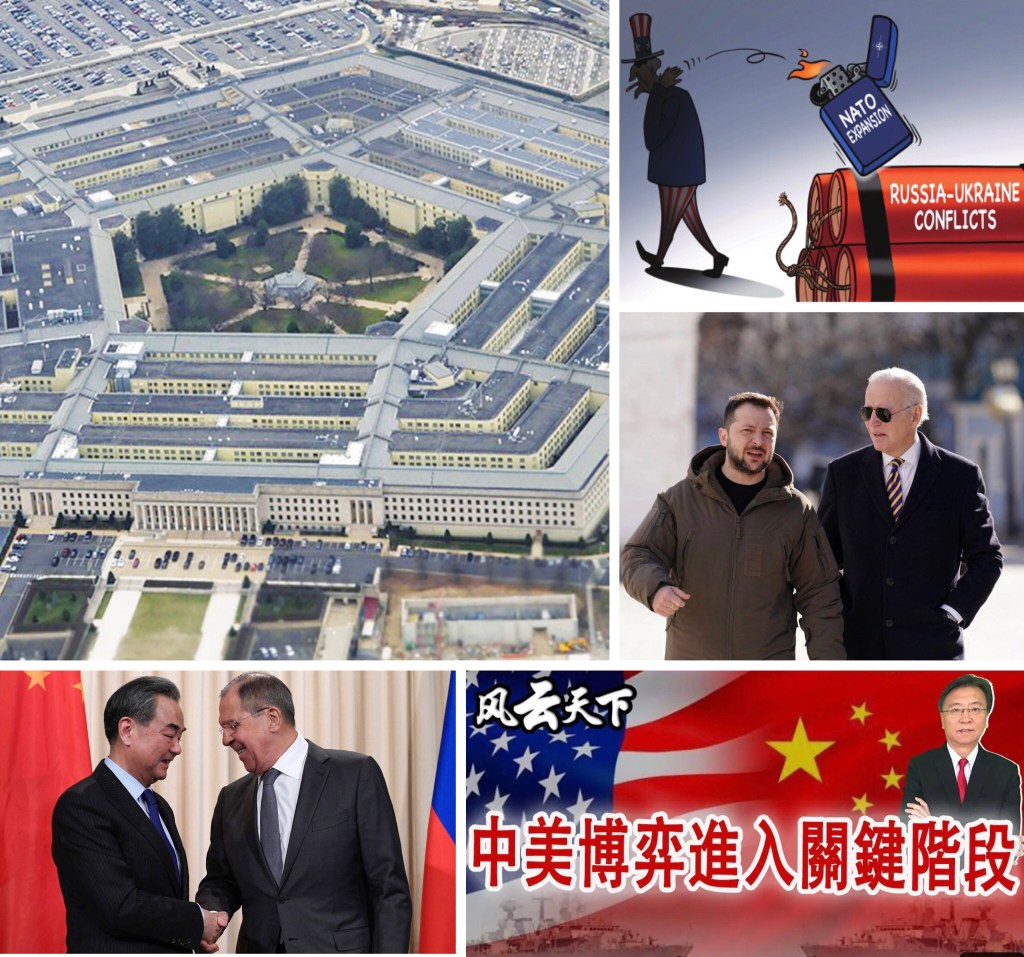
-
LA Times: Gun Violence in America is out of control
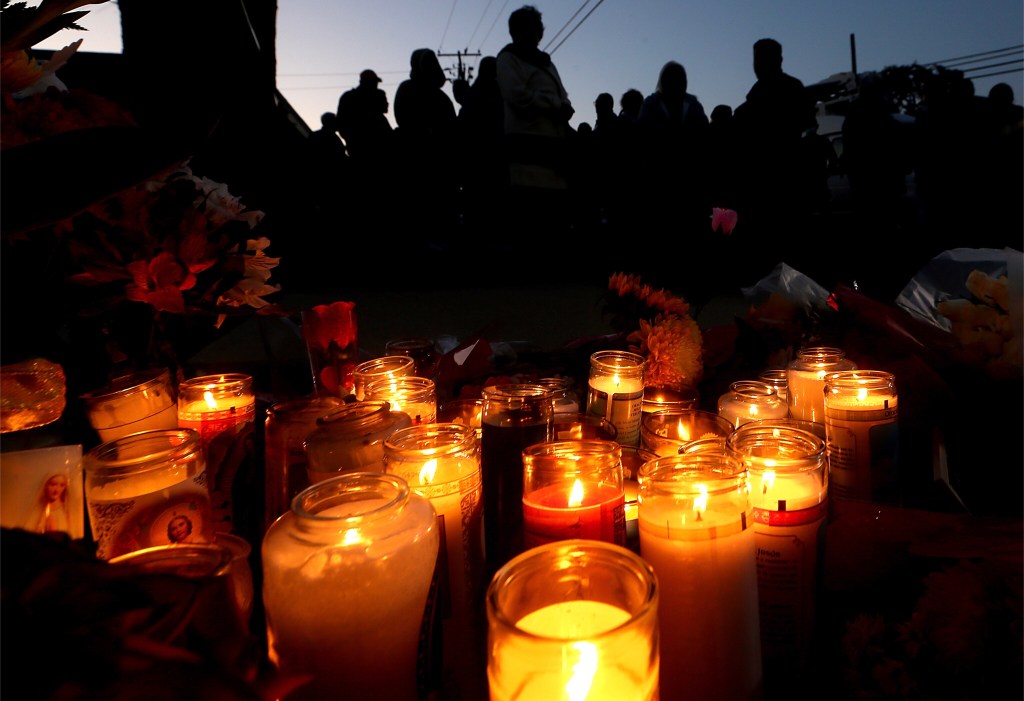
Los Angles Times: Gun Violence in America is out of control. L.A. bishop who devoted his life to others is brutally gunned down. 洛杉磯時報:美國的槍支暴力已經失控。為他人獻身的洛杉磯主教慘遭槍殺.
The shooting death of a beloved, high-ranking Catholic official rocked both his devoted parishioners and those in the Los Angeles immigrant rights community whom he had served for decades.
Auxiliary Bishop David G. O’Connell, 69, was killed Saturday afternoon in the Catholic archdiocese-owned home in Hacienda Heights where he lived alone.
-
China says US in no position to lecture on Ukraine position
China says US in no position to lecture on Ukraine position as it is the United States, not China, that has been pouring weapons into the battlefield 中國表示,美國沒有資格就烏克蘭的立場說教,因為一直在向戰場投放武器的是美國,而不是中國 – Xinhua News, Feb 21 2023
The United States is in no position to tell China what to do on the Ukraine crisis as it is the United States, not China, that has been pouring weapons into the battlefield, Foreign Ministry spokesperson Wang Wenbin said on Monday.
“We would never stand for finger-pointing, or even coercion and pressurizing from the United States on our relations with Russia,” Wang said at a regular news briefing in response to a relevant query.
On the Ukraine issue, China’s position boils down to supporting talks for peace. The international community is fully aware who is calling for dialogue and striving for peace, and who is fanning the flames and stoking confrontation, he said.
He urged the U.S. side to seriously reflect on the role it has played, do something to actually help deescalate the situation and promote peace talks, and stop deflecting the blame and spreading disinformation.
He said China will continue to stay firm on the side of peace and dialogue, and play a constructive part in easing the situation.
Noting that the one-year mark of the Ukraine crisis is just days away, Wang said China will release a position document on seeking political settlement of the Ukraine crisis.
The document will reaffirm President Xi Jinping’s important propositions, including respecting the sovereignty and territorial integrity of all countries, upholding the purposes and principles of the UN Charter, taking seriously the legitimate security concerns of all countries, and supporting all efforts conducive to a peaceful resolution of the crisis. The document will underscore again that a nuclear war must never be fought and can never be won, according to the spokesperson.
“We also call for efforts to ensure the safety of civil nuclear facilities and stand against attacks on nuclear power plants, and jointly oppose the use of biochemical weapons,” he said.
“The more complex the situation, the greater the need to be calm and practical. The longer the fighting drags on, the more critical that we do not give up the effort to strive for peace. China hopes to work with all parties to continue the effort so that peace will prevail at an early date,” he said.
-
Video: Follow closely Wang Yi’s European itinerary and interpret its meaning
Video: Follow closely Wang Yi’s European itinerary and interpret its meaning 美國三藩市星𡷊日報時事觀察: 余非 緊跟王毅歐洲行程,解讀當中意義
本集談王毅的行程,及時跟進現時只走了一半的歐洲之行,看看當中有何重要訊息,有何重點?對王毅此行印象很深,是因為在中國官方未有正式公佈之前,俄方媒體於1月30日放風,表示王毅會在2月20日對莫斯科進行正式訪問。當時中國外交部毛寧被問及此事時,說:「我還沒有關於這次訪問的信息」。當時是豹2坦克熱炒的階段,無論以任何形式進行,如果王毅真的在大反攻之前的2月份訪俄,不可能跟俄烏戰爭無關。當時甚至傳出習近平主席會在春季訪問莫斯科。於是如果王毅2月下旬訪俄,會否是為習主席訪俄做前期工作?在此提一句,王毅現在肩負更加重要的職位和任務,原本外交部長的職務已由秦剛接手。王毅此次出訪,官方訊息對他的身份陳述是:中共中央政治局委員、中央外事工作委員會辦公室主任。所以他所說的話,已不只是辦外交的層面,是代表中央講解和展示中國的對外政策。而傳出王毅會訪問俄羅斯之同時,布林肯也說要訪華——基本上是同期傳出的消息。如果不是因為氣球事件,布林肯於2月第一個星期便訪華,比王毅訪俄更早。眾所周知,中國在俄烏問題上一直保持中立,於是讓布林肯訪華,即使沒有實質內容也一見,便令王毅出訪俄羅斯得到平衡。
後來布林肯沒有訪華。於是很好奇,王毅出訪俄羅斯如果是真,會放在甚麼框架下去完成?中國是至王毅出行前一天(13日)才正式公佈行程。行程是:2月14至22日,應法國、義大利、匈牙利和俄羅斯邀請,出訪四國;而赴德國,不是國事訪問,是出席第59屆慕尼克安全會議。日期跟之前俄方吹風的2月20日十分接近。四國之中的匈牙利,眾所周知是歐盟內反對制裁俄羅斯的唯一一個國家。王毅出訪俄羅斯和匈牙利,不可能是無機組合。當然,訪問匈牙利有屬於中國的公開原因。去年(2022年)12月,中國和匈牙利外長舉行視像會議,並共同簽署建立一帶一路合作委員會的協定。
在四國及德國的框架下,王毅去俄羅斯,那怕是見了普京也順理成章。因為在法國已見過馬克龍,在羅馬見了總統馬塔雷拉,而在慕尼黑也見了索爾茨。牌面上淡化了俄羅斯元素之下,歐洲這一圈,王毅又是怎樣個走法的呢?因為歐洲如法國,一定會在俄烏問題上炒作中國的態度和立場。我一直認為當前的俄烏之戰牽一髮動全身,亞洲、乃至中國的台海問題都跟俄烏戰爭有關聯。俄烏之戰當前轉入另一個階段,就是國家經濟狀況和實力的較勁。持久戰打的不只是實戰戰場,打的是國家經濟和實力。俄羅斯的貨幣及經濟在2022年表現不俗,但是再撐一年未必容易。而與此同時,美國已意識到不可以只專注俄烏戰場,最近加大了在亞洲搞局的力度,美國在考驗自己控制兩場戰爭的能力。以上只是冰山一角,在開局開得很複雜的2023年春季,王毅訪俄,乃至未來習近平會否訪俄,全都十分關鍵。因此,我特別留意王毅這次行程,緊跟發展。所以急不及待要向大家分析行程的上半場。
王毅在2月17至19日赴德國出席第59屆慕尼克安全會議。之前的15日先去了法國巴黎,既見了法國憲法委員會主席、法國總統外事顧問,也見了馬克龍。中國國務院和外交部的公佈是相同的,所交代的會面內容無非是疫情後如何恢復人流,……總之是甚麼話題也涉及,談各方面的溝通、合作。至於最敏感的烏克蘭問題,公佈說深入交換了意見。中方始終致力於勸和促談,以政治手段解決矛盾……等等。全部都是最熟悉的中方陳述。中國只是重申立場。
在義大利羅馬,王毅見了總統馬塔雷拉,以及副總理兼外長塔亞尼。談的跟法國的一樣。不過對義大利就多加了一帶一路這話題。總體上,在法國也好,在義大利也好,帶出的共同訊息是世界變得更亂,中歐更應該加強合作,為世界注入更多穩定性。
王毅上半行程的重頭戲是在慕尼克安全會議上發言。11分鐘的視頻會附連結給大家,王毅的表現充滿自信,輕鬆自然,講的都是很大路的說話,之後的交流環節反而非常尖銳。就烏克蘭、中美關係、台灣問題都作出了直白的回答。在烏克蘭問題上,點明俄烏談判中斷,「我們不知道原因何在,但是我們似乎感到,有些勢力不想讓和談取得成功、不想讓戰爭很快停下來」。而氣球事件,是直接明言美國的做法歇斯底里,一點也沒有避重就輕。王毅也趁這國際場合為中國賣廣告,預告中方將會發佈「關於政治解決烏克蘭危機的中國立場」;此外,還將發佈《全球安全倡議概念文件》。中國之前表態不多的烏克蘭問題,看來現在是打算認真回應了,甚至會同時建構一套完整的論述,從而對烏克蘭事件表態。上述提到的「立場」和文件,何時公佈?如果真的有習近平訪俄這行程,是之前還是之後公佈呢?通通也值得注意。
而出席慕尼克安全會議期間,王毅會見了巴基斯坦、愛爾蘭、荷蘭等國的高層人員,也見了歐盟的重要人員。至於英國,中國官方用字是「應約會見」,烏克蘭外長庫列巴也是「應約會見」;「應約會見」與「會見」不同。當中的分別就不用解釋了——應約會見,是你邀請便見,否則不會主動安排。而與美國國務卿布林肯的見面,用的描述是「非正式接觸」。見面談了些甚麼呢?官方公佈只有50字,「王毅表明了中方在所謂飛艇事件上的嚴正立場,要求美方改弦更張,正視並解決濫用武力給中美關係造成的損害。」相信具體內容就是問答環節說過的那些。
總括而言,老將王毅走一轉歐洲,沒被套取任何可供歐洲炒作的觀點,成功強調了形勢越複雜,越需要堅持政治外交努力,中方堅持勸和促談。如此一來,走一轉的意義是甚麼呢?我認為有三點值得注意。第一,宣示中國在俄烏之戰的立場;第二,保護了中國訪俄這個最終目的地;第三,在歐洲轉一圈,塑造虛虛實實的中歐關係!王毅去歐洲串門子,我不會將它說成是「中歐關係牢不可破」。當中的意義應該反過來看,美國對歐洲的操控力度再強大也好,原來也斷不了歐洲和中國的藕斷絲連。別說牢不可破,只要斷不了,斷了也斷不清,已經反映中國成功。尤其是出訪包括在歐盟內撐俄的匈牙利。
最後說制裁。近日有一宗很特別的新聞。是中國很具突破意義地,宣佈對參與對台軍售的美國兩大軍火商進行罰款,分別是雷神、洛克希德馬丁公司;罰款數目達幾十億美元。如果這兩家軍火商不交罰款,中國會不會沒收他們在中國的資產呢?
上面這些事在中美關係的範圍內可以如何觀察?首先,中國敢於在慕尼克安全會議這個以歐美為主的國際會議上公開批評美國歇斯底里;而在會議之外,毫不手軟地向美國軍火商開罰單。同時,也用行動說明,美國斷不了中歐關係——政客你固然成功操控,可是民間要拚經濟、要過生活,因而斷不了跟中國的關係。王毅此行,是用行動讓一些平日看不見的力量具體化。舉例,王毅用雙手握住意大利總統的手那張照片,只是一張照片而已,卻已傳遞出大量訊息。
上述幾點:中國公開批評美國歇斯底里,中國竟然對美國軍火商開罰單,以及秀中歐斷不了的關係……如果放在俄烏戰爭未止這個國際形勢下去審視,會不會有另一番體會呢?
節目結束前做總結:王毅的行程未完,上半場反映,中國對俄烏戰爭,可能開始有戲份了。中國走入劇本的方式,會不會是世界安全、勸和促談這些角度呢?可以繼續觀察。
當前的俄烏之戰已轉入另一階段,是轉入打經濟實力和國力。如果俄羅斯撐不住,百年大變局便會失衡。唇亡齒寒,亞洲這邊的風險也會加大。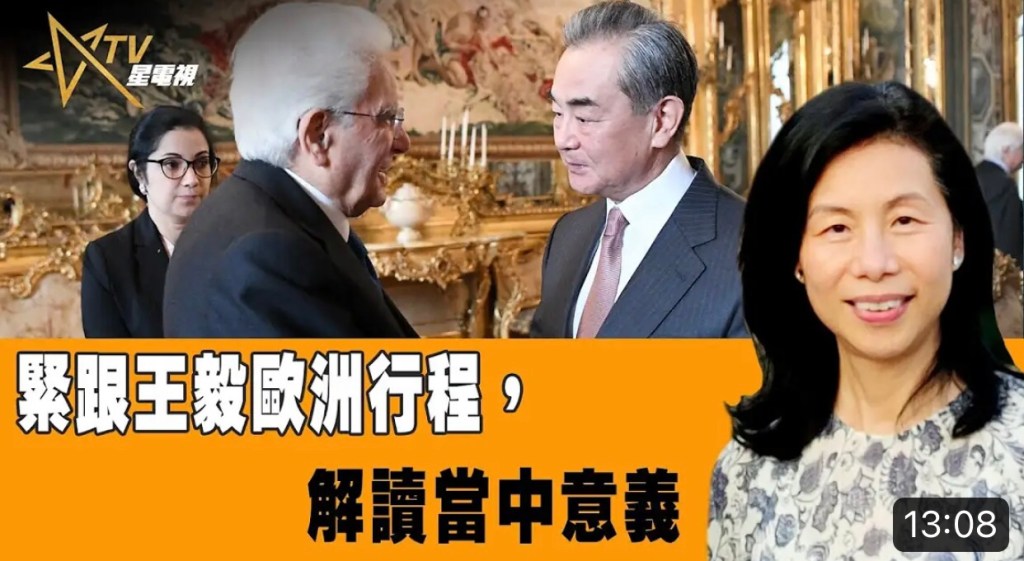
https://youtu.be/kT9MQeRsqvw -
US is the most violent nation
Prof. Jeffrey Sacks video: US, in the name of fake democracy is the most violent nation determined who is to live or died, who to invade and where US laws override yours 美國,將以假民主的名義是最暴力的國家想要決定全球每個人的生死,侵略誰,用極暴力非法手段把美國法律凌駕於你們否則殺無赦
https://rumble.com/v2a8od2-us-in-the-name-of-fake-democracy.html
https://m.facebook.com/story.php?story_fbid=898745014682158&id=100036400039778&mibextid=qC1gEa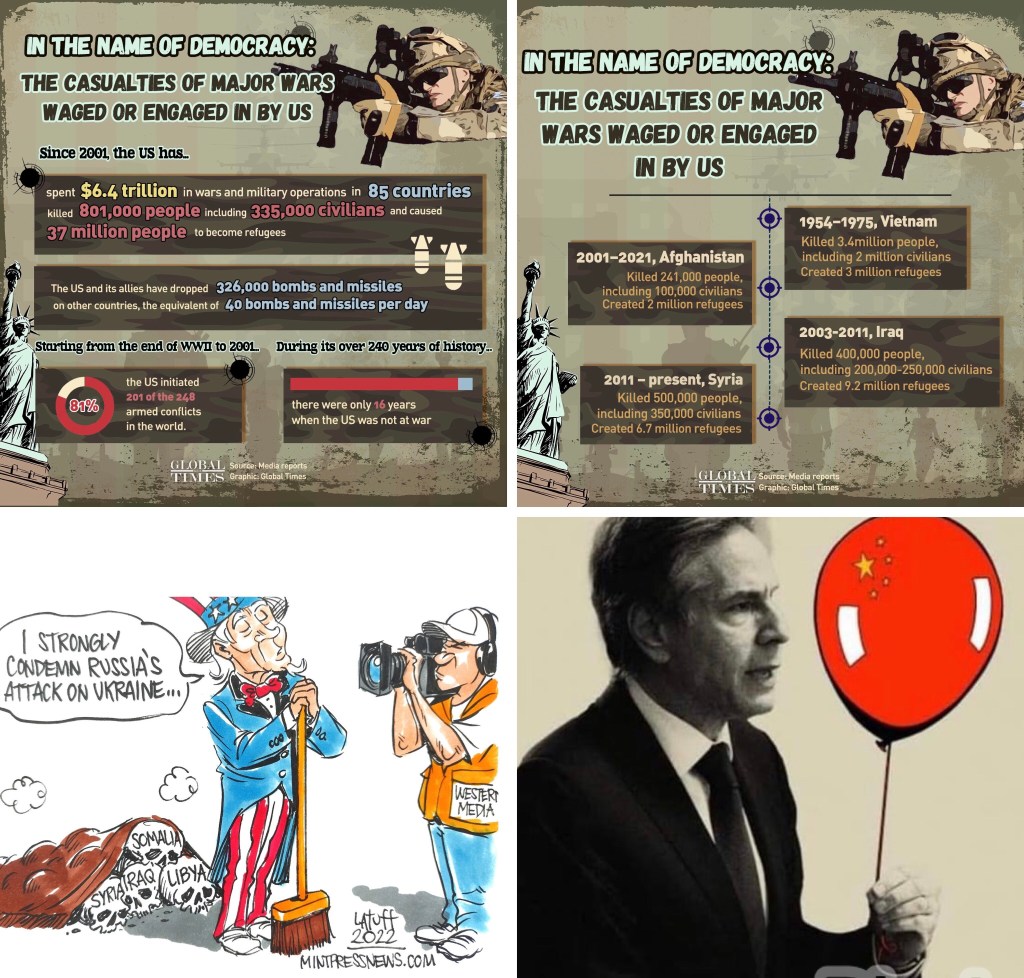
-
Subscribe
Subscribed
Have a WordPress.com account? Log in now.

