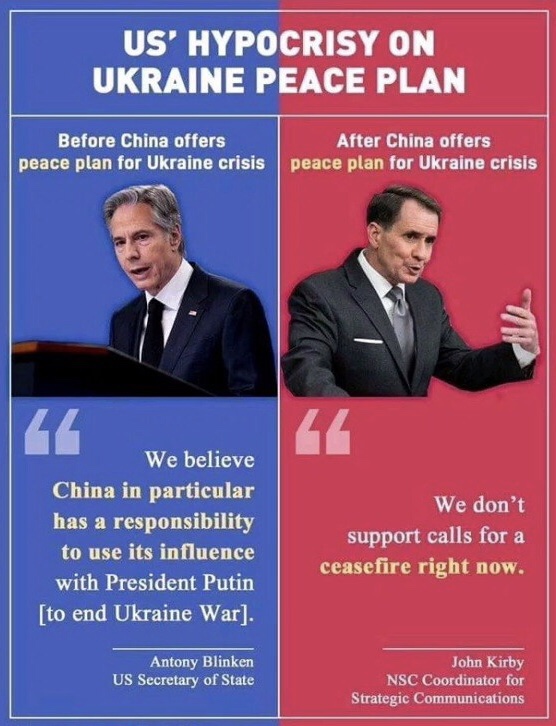
Bloomberg: The US and its allies have rejected the Chinese initiative as biased toward Russia. However, US officials worry that dismissing China’s proposal outright could send a message that Washington isn’t interested in peace.
Spain’s Prime Minister, Pedro Sanchez, announced he would travel next week to China to speak to Xi about the proposal to negotiate a peace agreement between Russia and Ukraine. Brazilian President Luiz Inacio Lula da Silva will begin a five-day visit to China on Sunday, and French President Emmanuel Macron said he would visit in early April to push Beijing to help end Russia’s war in Ukraine.
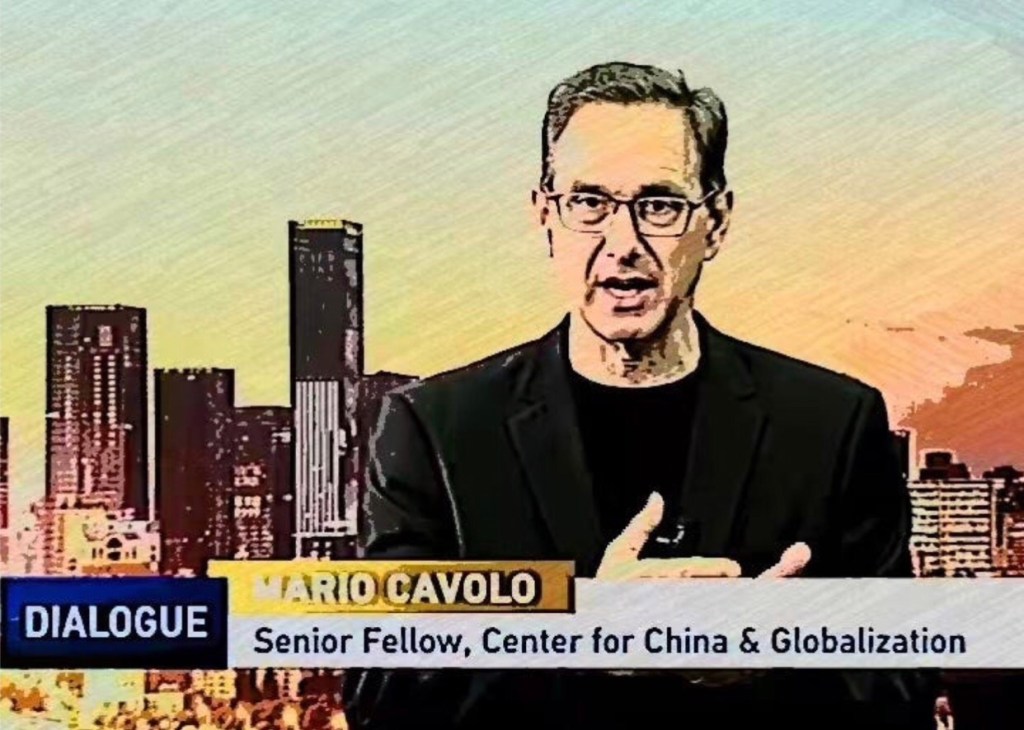
My Silence Was Heard…WSJ, Surprises…TikTok Hearings Farce by MARIO CAVOLO Mar 24 2023
Hi Friends, On Twitter and in other social media, I have had a very interesting and satisfying experience this week.
I sent out a tweet with a twist where I said we need to discuss all the countries that China had attacked, bombed, started war with over the past four decades and then silently walked along until the end of the one minute video tweet and said “That’s it. Have a great day.” Its gratifying people got the message I used the silence as a way to illustrate China’s peaceful rise and it caught fire a bit on a Twitter.
The tweet is now over 2000 likes, 700 retweets and 150,000 views. Relative to my account the tweet went viral because as you may know I don’t have a massive following as a voice. My Twitter acct gains a few each day and will finally hit 10,000 followers within a few more days. That’s tiny compared to much larger accounts.
China Daily picked it up and posted it yesterday on their acct on the Kuaishou app here in China with Chinese subtitles and text all over it, that was cool.
The point is clear. China is clearly committed to rising, developing, expanding in peace while the U.S. has war, regime changes, covert operations, as primary pieces on its chessboard every since WWII. Its really a contrast becoming increasingly stark each day. Here is the link to the original tweet.
Related, I was very impressed with a pivotal piece on China in the Wall Street Journal by Jonathan Cheng. China Is Starting To Act Like a Global Power This article presented China today properly, was very well written and worth reading, skipping the common political propaganda.
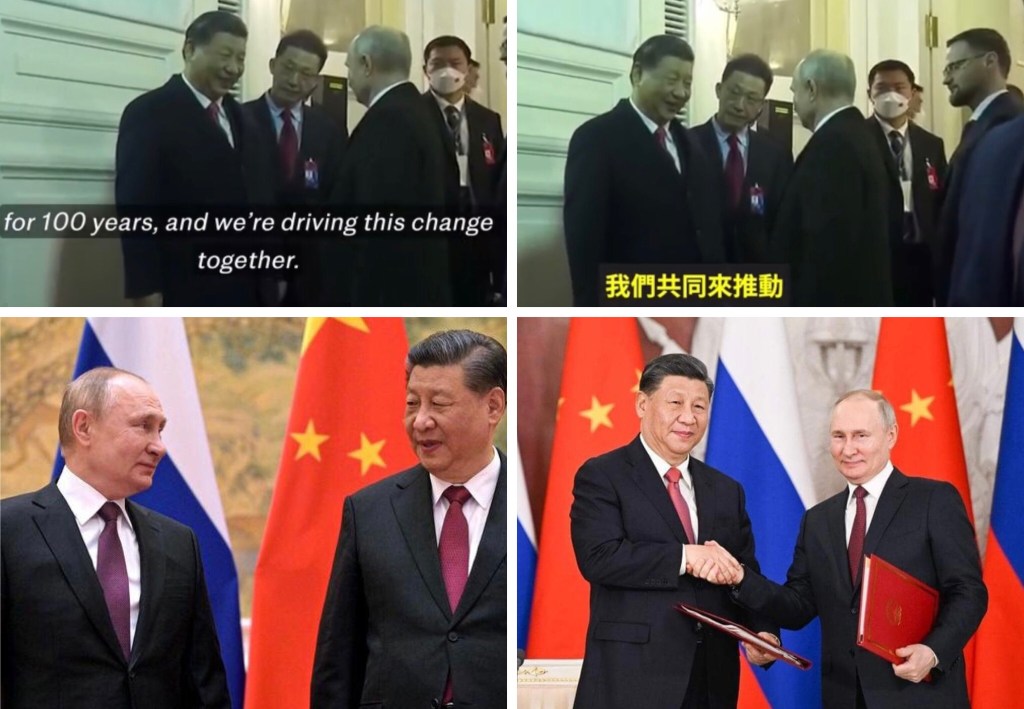
Xi’s efforts to broker a historic Saudi Iran deal and visit to Putin to push for peace through negotiations and diplomacy are what world leaders are supposed to be doing, not promoting war & death. Duh. I would be thrilled if this WSJ article marked a more permanent change in tone in Sino U.S. relations. Soon, I will be doing a livestream video reading and discussing through the article.
Last item…the TikTok hearings are as expected, a McCarthyist farce. Everyone knows that every social media platform in the U.S. follows the same set of TOS that TikTok has…the hearing is high on rhetoric and devoid of any substantial evidence against TikTok…but we’ve known all this from the beginning, just more political circus. Just don’t forget they did the same thing to Huawei, making false accusations with zero evidence when the truth is that the reason they were pissed at Huawei is because refused to agree to allow backdoors to be installed into their software/hardware for the NSA to access, which the United States requires of all its tech companies. The opposite of what they say is the actual truth… Here’s a quick clip of CEO Shou Zi Chew explaining the kid’s related policies.
Its amazing to me how the govt tries to shift the blame a software for the content the govt allows. They really think people are that stupid….
THE COVER-UP, The Biden Administration continues to conceal its responsibility for the destruction of the Nord Stream pipelines by Seymour Hersh Mar 22 2023
President Joe Biden meeting with German Chancellor Olaf Scholz in the Oval Office, March 3, 2023. (Official White House Photo by Adam Schultz) It’s been six weeks since I published a report, based on anonymous sourcing, naming President Joe Biden as the official who ordered the mysterious destruction last September of Nord Stream 2, a new $11-billion pipeline that was scheduled to double the volume of natural gas delivered from Russia to Germany. The story gained traction in Germany and Western Europe, but was subject to a near media blackout in the US. Two weeks ago, after a visit by German Chancellor Olaf Scholz to Washington, US and German intelligence agencies attempted to add to the blackout by feeding the New York Times and the German weekly Die Zeit false cover stories to counter the report that Biden and US operatives were responsible for the pipelines’ destruction.
Press aides for the White House and Central Intelligence Agency have consistently denied that America was responsible for exploding the pipelines, and those pro forma denials were more than enough for the White House press corps. There is no evidence that any reporter assigned there has yet to ask the White House press secretary whether Biden had done what any serious leader would do: formally “task” the American intelligence community to conduct a deep investigation, with all of its assets, and find out just who had done the deed in the Baltic Sea. According to a source within the intelligence community, the president has not done so, nor will he. Why not? Because he knows the answer.
Sarah Miller—an energy expert and an editor at Energy Intelligence, which publishes leading trade journals—explained to me in an interview why the pipeline story has been big news in Germany and Western Europe. “The destruction of the Nord Stream pipelines in September led to a further surge of natural gas prices that were already six or more times pre-crisis levels,” she said. “Nord Stream was blown up in late September. German gas imports peaked a month later, in October, at 10 times pre-crisis levels. Electricity prices across Europe were pulled up, and governments spent as much as 800 billion euros, by some estimates, shielding households and businesses from the impact. Gas prices, reflecting the mild winter in Europe, have now fallen back to roughly a quarter of the October peak, but they are still between two and three times pre-crisis levels and are more than three times current US rates. Over the last year, German and other European manufacturers closed their most energy-intensive operations, such as fertilizer and glass production, and it’s unclear when, if ever, those plants will reopen. Europe is scrambling to get solar and wind capacity in place, but it may not come soon enough to save large chunks of German industry.” (Miller writes a blog on Medium.)
In early March, President Biden hosted German Chancellor Olaf Scholz in Washington. The trip included only two public events—a brief pro forma exchange of compliments between Biden and Scholz before the White House press corps, with no questions allowed; and a CNN interview with Scholz by Fareed Zakaria, who did not touch on the pipeline allegations. The chancellor had flown to Washington with no members of the German press on board, no formal dinner scheduled, and the two world leaders were not slated to conduct a press conference, as routinely happens at such high-profile meetings. Instead, it was later reported that Biden and Scholz had an 80-minute meeting, with no aides present for much of the time. There have been no statements or written understandings made public since then by either government, but I was told by someone with access to diplomatic intelligence that there was a discussion of the pipeline exposé and, as a result, certain elements in the Central Intelligence Agency were asked to prepare a cover story in collaboration with German intelligence that would provide the American and German press with an alternative version for the destruction of Nord Stream 2. In the words of the intelligence community, the agency was “to pulse the system” in an effort to discount the claim that Biden had ordered the pipelines’ destruction.
International capitals likely to seek ‘safe haven’ in China amid Western bank crisis March 21 2023
The unfolding bank crisis in the US and Europe as well as the highly controversial handling of the crisis has hit international investors’ confidence in the Western financial system and shaken US’ financial hegemony, experts said on Tuesday, noting that more international capital is likely to flee from Western markets and to Asia, including the Hong Kong Special Administrative Region (HKSAR).
Since the bank meltdowns in the US and Europe, there have already been growing discussions of international capital rushing to the HKSAR and Singapore. A Bloomberg report on Tuesday said as “some of the ultra-high-net-worth individuals and their family offices will look beyond the default option of using its rescuer UBS Group AG for all their wealth management needs… Asia is an obvious destination,” specifically pointing to Singapore and the HKSAR.
The HKSAR is also set to host the Wealth for Good summit on Friday, which, according to media reports, is aimed at attracting global billionaires.
While Switzerland aims to halt its banking crisis through UBS’ rescue merger of the embattled Credit Suisse, it is causing turmoil in the bond market after Additional Tier 1 (AT1) debt worth 16 billion Swiss francs ($17 billion) become worthless as part of the deal.
AT1, also known as “contingent convertibles,” are relatively risky investments that can be converted into equity or written down completely if a bank gets into trouble.
However, equity investments are usually classed as secondary to AT1 bonds, and the surprising move has angered such bondholders.
The Swiss authorities’ brutal move sparked concerns about AT1 bond investment and the larger credit market as a whole, which will make it increasingly hard for lenders to increase capital by issuing AT1 bonds, Dong Dengxin, director of the Finance and Securities Institute of the Wuhan University of Science and Technology, told the Global Times on Tuesday.
It also represents the biggest loss inflicted on AT1 bondholders since these instruments were developed after the 2008 financial crisis, according to media reports. The decision by Swiss authorities to wipe out Credit Suisse’s AT1 bonds could reduce demand for this type of bond in the long term, Reuters reported on Tuesday, citing a Goldman Sachs strategist.
The UBS buyout of Credit Suisse only temporarily quells the banking crisis in Europe, but it’s a wake-up call for the financial system in the continent, Zhao Yongsheng, a professor at the Institute of Regional and International Studies at the University of International Business and Economics in Beijing, told the Global Times.
Risks persist in Europe’s banking sector amid loosened restrictions, the growing emphasis on profits and other problems, Zhao said.
In sign of lingering fears, Credit Suisse shares plunged 53 percent to less than $1 on Monday. The woes of First Republic Bank in the US continue to mount as a $30 billion infusion by a group of large US banks failed to rescue the beleaguered bank.
First Republic stock fell 47 percent to a record low on Monday, and trading in its shares was halted several times for volatility on the same day.
A recent study revealed that nearly 200 banks in the US could fail on the heels of Silicon Valley Bank due to increasing interest rates and potential depositors’ withdrawals.
A larger financial crisis will be inevitable if Switzerland and the European continent don’t change their profit- and market-oriented American-style finance to restore Europe-style finance that is more focused on regulation and prudence, Zhao noted.
“The operations of Chinese banks are stable and such a crisis is unlikely to occur in China,” Dong said, noting that China has strict regulations of its banks, while the entry threshold in the banking sector is very high and the total number of banks is under strict control.
“The bank crisis triggered by Silicon Valley Bank’s collapse, along with US’ weaponization of the US dollar since outbreak of the Russia-Ukraine conflict, has dealt a blow to international investors’ confidence in the dollar, dollar-denominated bonds as well as the US Federal Reserve, and has shaken US financial hegemony,” he said.
More international capital will flee from the US to buy gold and yuan-denominated assets, Dong said. “China’s financial market will become a ‘safe haven’ for investors who seek security amid the growing global bank crisis, as the Chinese financial market is increasingly open and the country’s strong economic rebound will bring more certainty.”
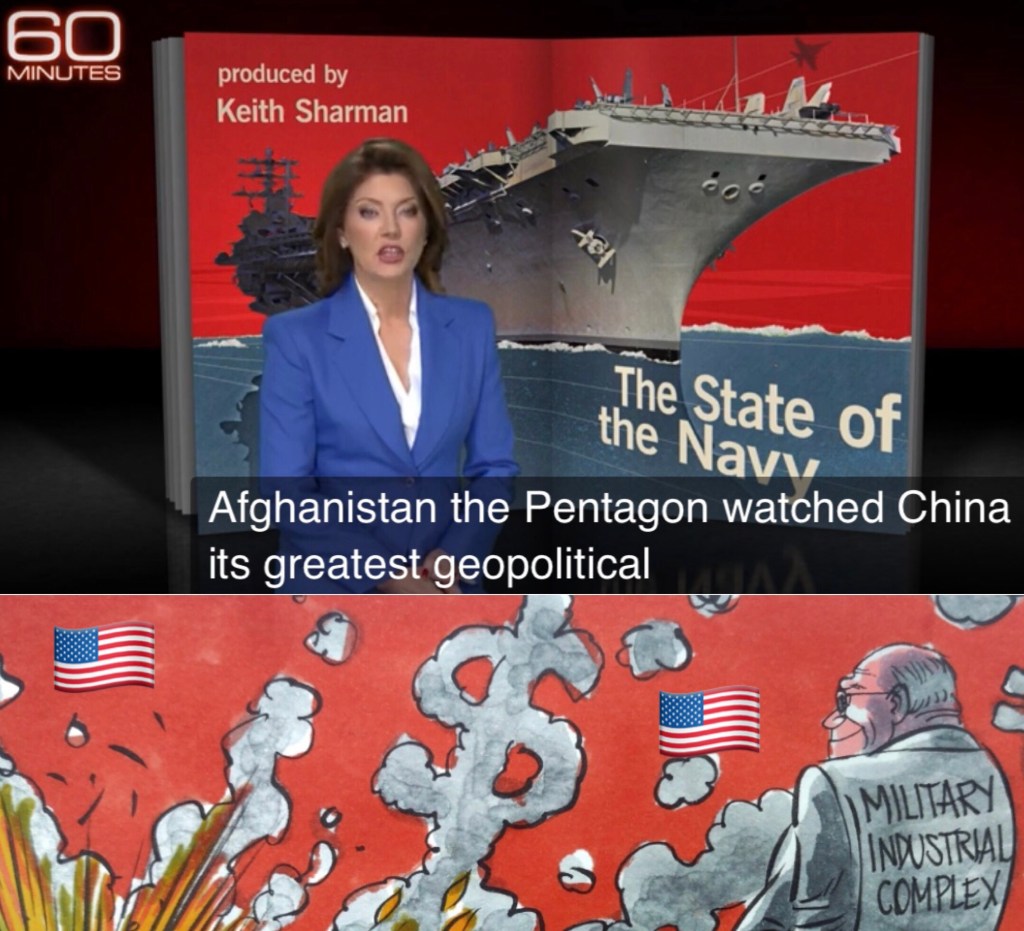
CBS 60 minutes War propaganda video: Is the Navy ready? How the U.S. is preparing amid a naval buildup in China 美國政府喉舌新聞網CBS 60 分鐘戰爭宣傳視頻:海軍準備好了嗎?美國如何在中國海軍建設中做好準備
Less than one minute into the program, the show already has two factual errors:
CBS claims China has largest navy in the world and threatened to use it to invade Taiwan.
1st, China has never threatened to invade Taiwan. (Taiwan province is officially recognized as part of China by the UN, by the US, and by the Taiwanese constitution itself).
2nd, “largest navy” is a deliberate misrepresentation based on counting China’s light coastal vessels, which count for little in a military conflict.
The US actually has about 2.5-3.5x more total tonnage in vessels than China. It has many more larger ships (11+2 ACC) and far more blue water ships.
If you go just by total vessels, which CBS is doing here for the purposes of threat inflation, then the US navy is behind North Korea’s, which has about 20% more vessels. This is absurd. It’s like saying that because I have three tricycles and a skateboard, I have more transportation capacity than my neighbor with their 18 wheel diesel truck.
Plus, in a war, the US is counting on Japanese, ROC, Korean, Australian, NATO vessels. SK’s navy is the US’s to use at will in war, and Japan will do US bidding. Aukus ensures the same.
What the US refers to as “deterrence” is actually provocation.
CBS is shilling for war. Be very skeptical about MSM claims.
KJ Noh debunk these claims in these two recent interviews:
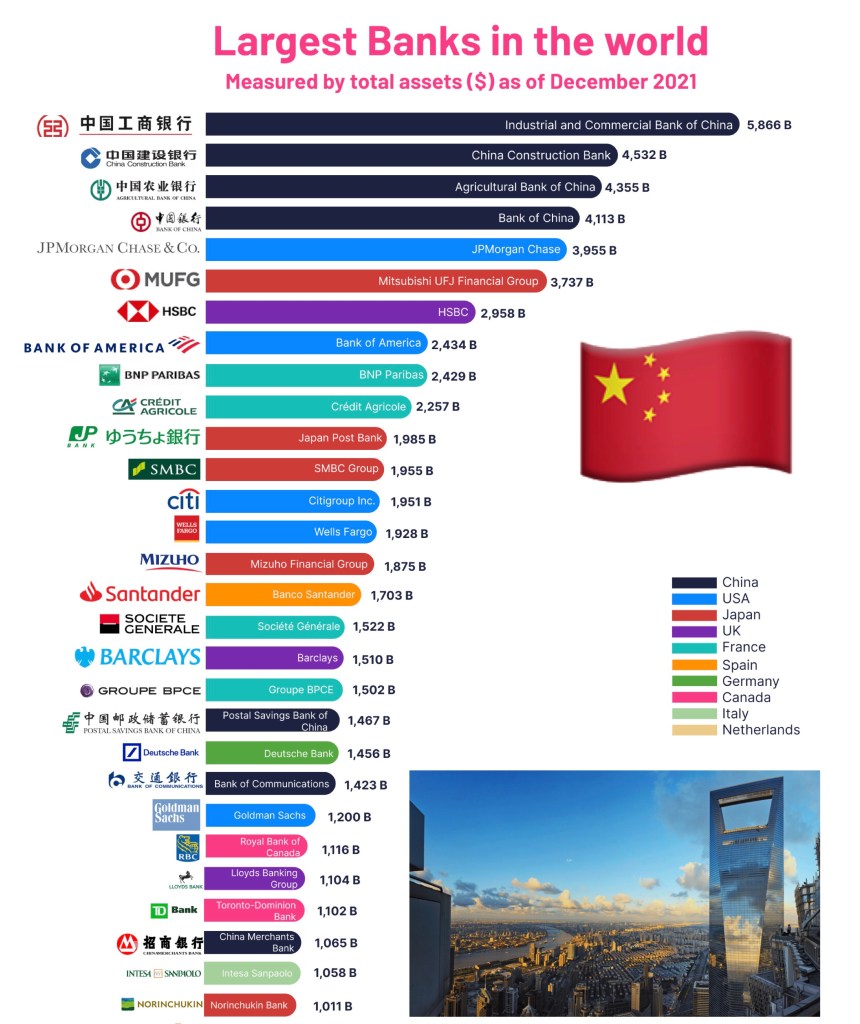
If you have a gun, you can rob a bank. But if you have a bank, you can rob anyone. Best for 🇺🇸 who print US$ can rob the world 如果你有槍, 你可以搶劫銀行. 但是如果你有一家銀行, 你可以搶劫任何人. 但🇺🇸印美元可以搶劫全世界.


 Business Blog