British Justice conducts another farcical, staged trial. Ann Sacoolas killed a British teenager on his bike by driving recklessly (on the wrong side of the road). 英國司法部進行了另一場鬧劇式的分階段審判。 安·薩庫拉斯魯莽駕駛殺死了一名騎自行車的英國少年 By KJ, SF Bay Area China Group, Dec 14, 2022
She then escaped from the UK to avoid trial. The British government allowed her to leave.
The US government claimed she had diplomatic immunity. She was not a diplomat. She refused to come back to face trial.
Eventually, due to the tremendous outcry, the British government had to do something.
So they tried her in absentia, and then sentenced her to a sentence with no jail time.
She pleaded “guilty” by video to this nullity, this farce, after the slap on the wrist was decided, in order to give the semblance of “justice being done”.
This is how Western Jurisprudence works: Go to the ends of the earth to prosecute the innocent (Julian Assange, MWZ); create vapid spectacles of “justice” to protect the guilty.
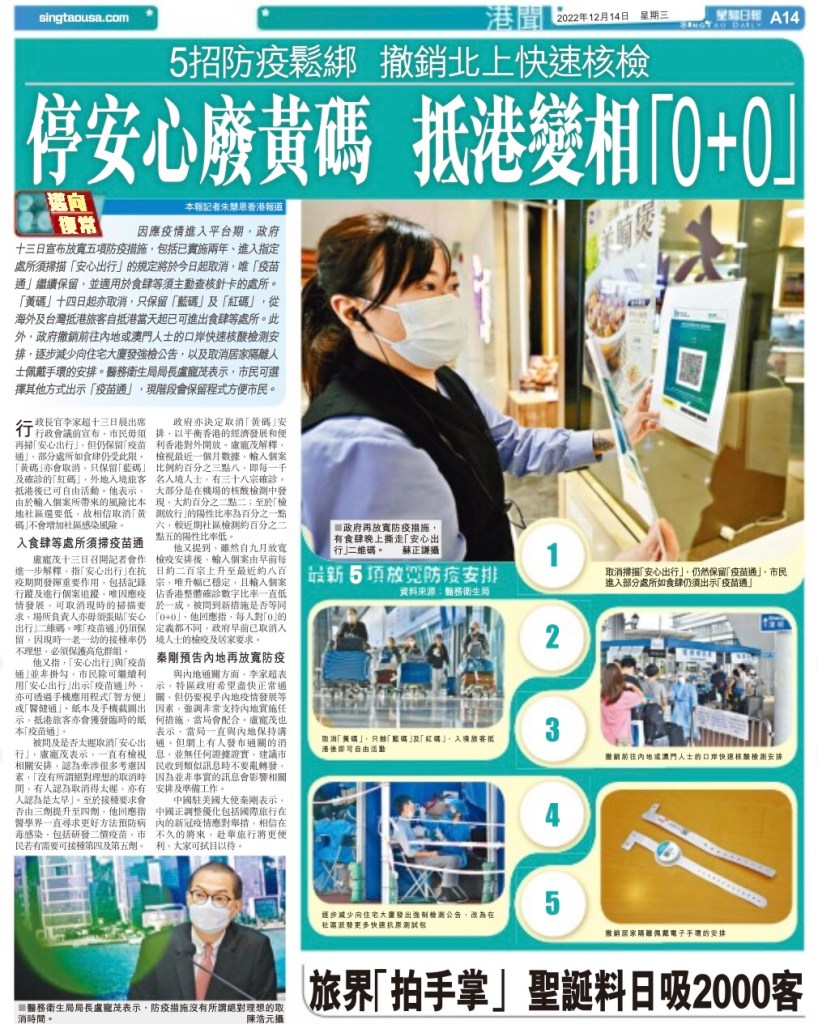
Smart move by HKG to open HK for biz, most fully vaccinated are safe, most fatalities from people REFUSED to get vaccinated put themselves and others at risk 香港政府開放商業活動是明智之舉,完全接種疫苗的人都是安全的,大多數因拒絕接種疫苗而死亡的人將自己和他人置於危險之中不應善待
HK scraps requirement for COVID test at airport; quarantine-free travel to mainland ‘still needs time’ by GT staff reporters Dec 13 2022
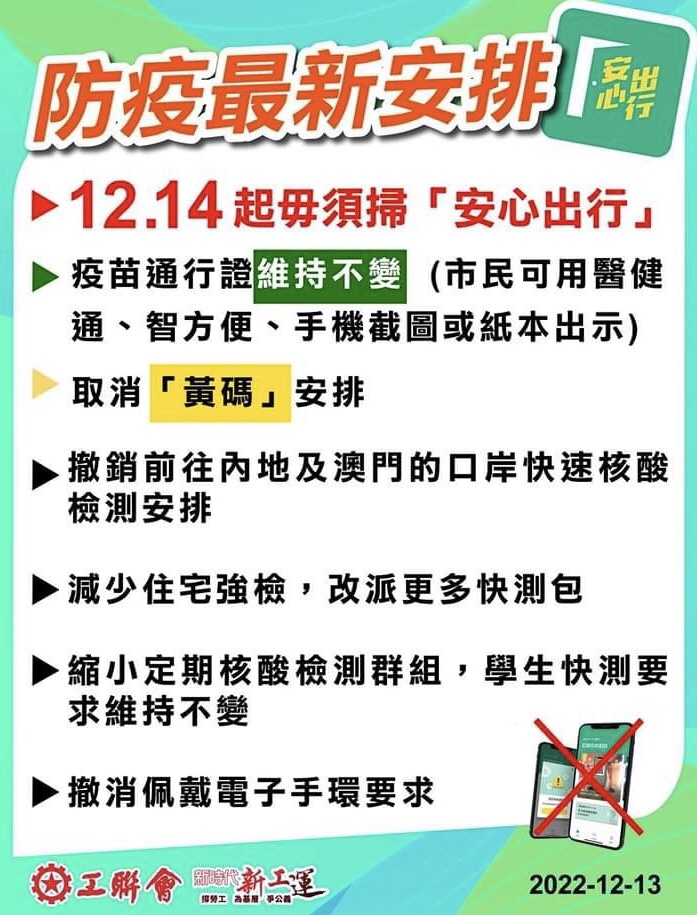
Hong Kong on Tuesday December 13th said the city was scrapping the requirement for nucleic acid testing at airport and border control points before visiting the Chinese mainland and Macao. The same day, the city also announced to scrap its amber health code from Wednesday, effectively lifting all travel restrictions for arrivals into the city who test negative.
Hong Kong’s epidemiologists predicted it will still take some time before quarantine-free travel is implemented between the mainland and Hong Kong, as the mainland’s epidemic situation is not certain yet, and such progress takes time.
Health Secretary Lo Chung-mau announced that COVID-19 test points at ports to the mainland and Macao will be scrapped on Tuesday, which means travelers to the mainland and Macao will be exempted from pre-departure testing at immigration control points, and only need to present a negative result of a nucleic acid test taken within 48 hours before the travel.
However, travelers from overseas to Hong Kong will still need to undergo PCR tests on arrival and on day two, Lo said.
The decision was announced at the same day when Chief Executive John Lee Ka-chiu announced that Hong Kong will abandon its amber health code arrangement on all incoming travelers, while the residents will no longer need to use the LeaveHomeSafe app to scan QR codes before entering various premises starting Wednesday.
Currently, Hong Kong has a “0+3” arrangement under which all arrivals need to self-monitor for possible COVID-19 infection for three days upon entering the city. The scrapping of the amber code, which currently requires all arrivals to undergo three days of health observation and nucleic tests, means they will be subject to almost no restrictions while moving about in the city after landing.
According to travel platform Qunar, as of 4 pm Tuesday, air ticket searches for Hong Kong increased by 30 percent from Monday after Hong Kong rolled out the new measures.
The chief executive stressed that “the risk of imported cases in Hong Kong is even lower than that of getting infected in the community. Therefore, canceling the amber code will not increase the risk of residents getting infected in the city.”
Talking about reopening of the border with the mainland, Lee said we must be aware that “decisions made are similarly based on actual situation, and also data and risk assessment in cities on the mainland.” The government was pushing ahead with the issues concerned, he added.
Jin Dongyan, a virologist and professor at the School of Biomedical Sciences at the University of Hong Kong, told the Global Times that it is yet to be seen how the infection will develop in the mainland after it released 10 new measures for its COVID-19 response last week. Quarantine-free travel between Hong Kong and the mainland has been pushed forward, but it should be done step by step, not swiftly.
The epidemiologist said Hong Kong also needs to adjust its COVID-19 control measures after it scrapped off the amber code, and the result needs time to be observed.
Lee announced on Sunday that freight drivers could drive directly to destinations in the mainland without being stopped at borders, as the Shenzhen government relaxed logistics restrictions.
Under the previous policies, Hong Kong’s cross-border drivers travelling to Shenzhen needed to hand over their goods to mainland drivers at the border to let them finish driving to cargo sites for loading and discharging.
At a press conference on Saturday, Lee claimed there is a “great realistic chance” for quarantine-free travel between Hong Kong and the Chinese mainland next year.
Everyone’s getting so sick & tired of Conflicts Everywhere .. and no one really knows if the CIA-NED would focus & engineer them & their gov being overthrown next..
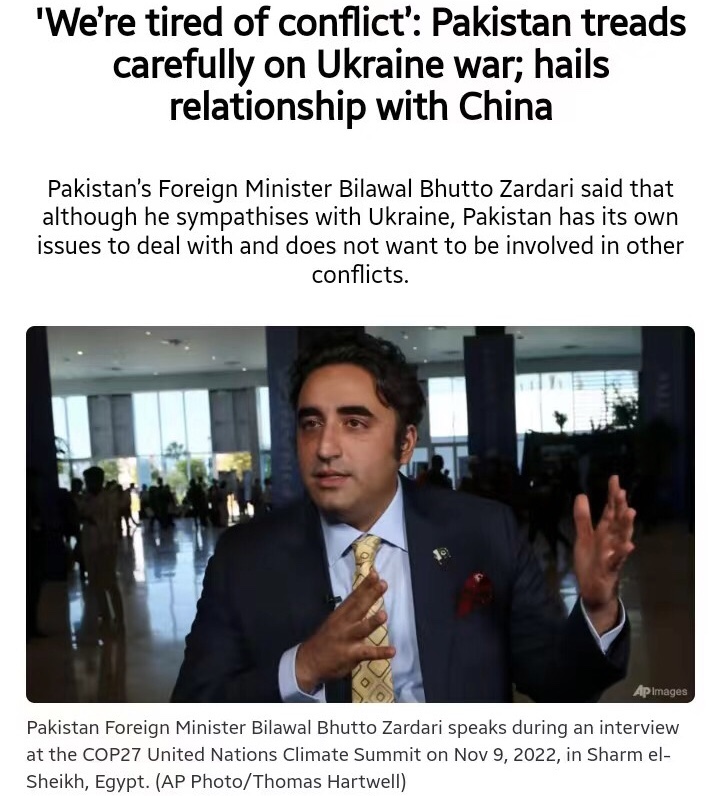
13 Dec 2022 ‘We’re tired of conflict’: Pakistan treads carefully on Ukraine war; hails relationship with China
Pakistan’s Foreign Minister Bilawal Bhutto Zardari said that although he sympathises with Ukraine, Pakistan has its own issues to deal with and does not want to be involved in other conflicts.
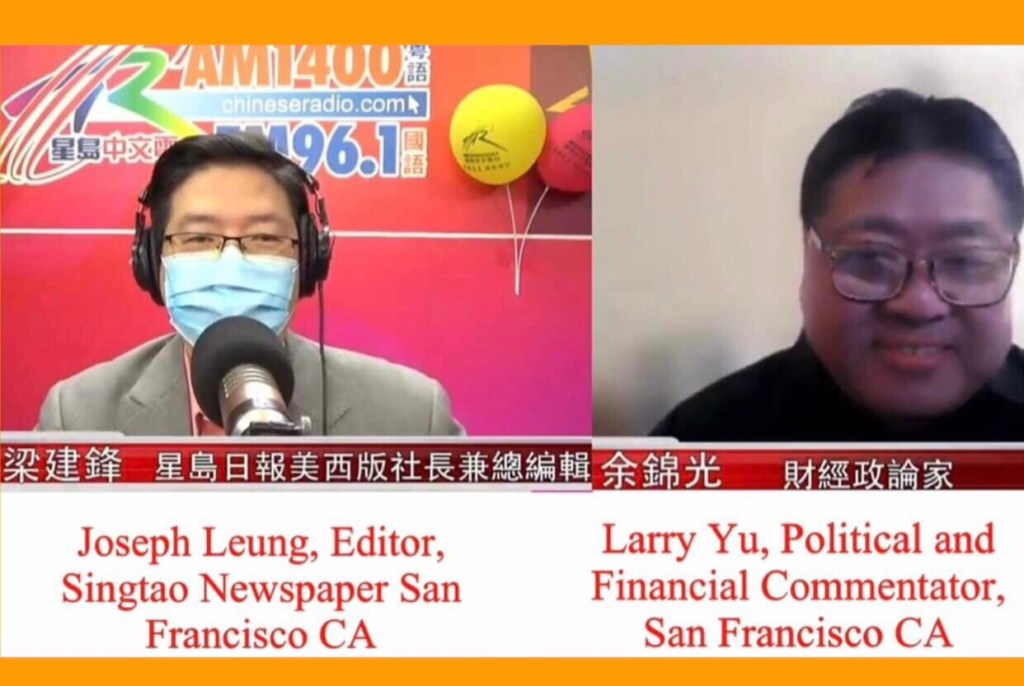
Singtao SF TV Video: American’s dream is only for AngloSaxon, Chinese dream is for the world. By Larry Yu Dec 13 22 https://youtu.be/39PcuYB2_Ew 時事觀察集結號:美國夢是西人夢, 有色人種無份, 要全球七十億人口支持他們十億人口. 中國夢開始變成全球夢, 人類命運共同體. 嘉賓:財經政論家余錦光 主持:星島日報美西版社長兼總編輯梁建鋒
Asia Times: World sees contrasting styles in diplomacy – Neither the SCO nor BRICS encompass military alliances but are in solidarity against hegemony and unilateralism – meaning the US 亞洲時報: 世界看到截然不同的外交風格-上海合作組織和金磚國家都不包含軍事聯盟,但團結一致反對霸權和單邊主義-這意味著美國 By GEORGE KOO DEC 12, 2022
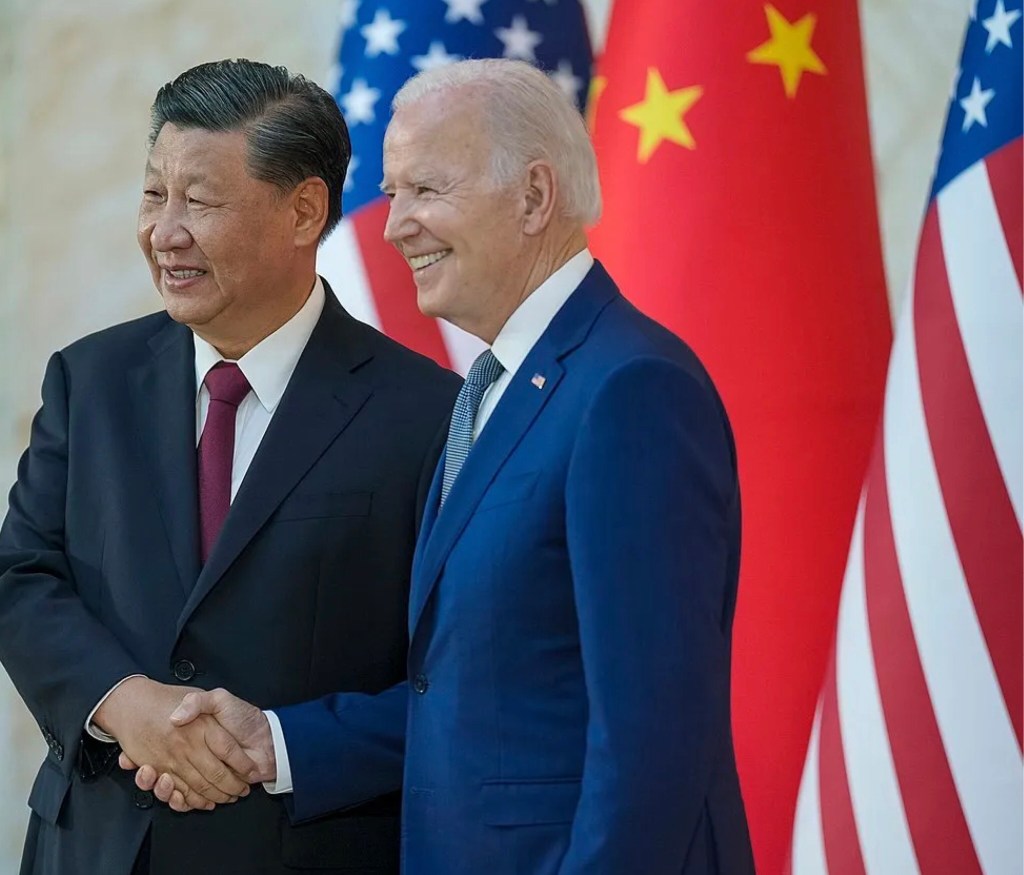
President Joe Biden met with President Xi Jinping before the 2020 G20 Bali summit. Photo: Wikimedia Commons After the US midterm election last month, I suggested that voters have yet to pass judgment on the current administration’s dismal foreign policy. Recent developments indicate that President Joe Biden’s policy will continue to assert the rights that belong to the hegemon of the world.
After the election, Biden met with Chinese president Xi Jinping on the sidelines of Group of Twenty summit in Bali, a major international event. There the two leaders enjoyed a more than three-hour heart-to-heart chat and exchange of views.
The Chinese side took careful minutes of the meeting and posted a summary of what Biden had said. The American side weren’t such careful note-takers but posted no disagreements to the Chinese summary.
Biden basically doubled down on the US commitment not to interfere with China’s governing structure, not to wage a new cold war with China, not to recruit allies to align against China, not to promote or support Taiwan independence, nor reject the principle of one China.
In addition, he said, the US does not intend to initiate military conflict, wage economic warfare, decouple the two economies or hinder China’s economic development.
Spirit of Bali did not last long
Xi expressed satisfaction with the American position, with the added hope that Biden’s lieutenants would act in accordance and consistent with the commitments expressed at this meeting by President Biden.
Alas, the white man again spoke with a forked tongue. No sooner had Biden hurried back to attend his granddaughter’s White House wedding that his team began anew to tear China down.
Defense Secretary Lloyd Austin, albeit not a white man, is a recent example picking up the cudgel to bash China. His plea to Congress to justify mega-billion-dollar allocations for defense is that such massive spending was needed to mount effective deterrence to China.
Deterrence for what? China does not have military bases around the world like Uncle Sam has. China does not have naval flotillas sailing around every sea and ocean; Uncle Sam has. China does have a marine fighting force, but about one-hundredth the size of Uncle Sam’s. Who’s threatening whom, anyway?
An example of the upside-down logic is Austin’s quote the Russian President Vladimir Putin’s “war is not the result of NATO expansion, it is the cause of NATO expansion.” Most readers know well, as should the American people, that the North Atlantic Treaty Organization has been pushing eastward toward Russia for decades, and Russia’s Ukrainian invasion only began in February.
By way of the same (il)logic, the US must deter the threat of China because we Americans have decided that China is a threat. How dare China develop countermeasures to our advance weaponry and deprive our right to shock and awe? Their action is a threat to our security. Our only alternative is to keep ramping up our defense budget.
Consequentially, the bipartisan House of Representaives just enacted an allocation of $858 billion for the military. That’s $45 billion more than Biden even asked for. What’s a few more billions here and there? Washington wants to make sure that America feels secure enough to sleep at night.
World lines up to be China’s friends
In the meantime, the rest of the world has been watching Biden’s fumbling diplomacy and concluded that when the Americans draw a line in the sand, it doesn’t mean anything. But if Biden can profess to make nice with China, as he did in Bali, so can the rest of the world.
Thus Qatar has just entered a 27-year contract to supply liquefied natural gas to China, which means that from now on Qatar can only offer occasional spot-market sales, if any, to the energy-hungry European Union.
Xi Jinping has just concluded a full-scale, three-day state visit to Saudi Arabia. He was accorded all the pomp and circumstance heretofore reserved for Riyadh’s most important ally, the US. But when Biden flew all the way to Saudi recently, he was greeted with a cursory fist bump.
More important, Biden was humiliated when OPEC+, led by Saudi, ignored his request to increase oil output in order to cut the price of oil and ease inflationary pressure in the US. Instead, Saudi did just the opposite and cut production.
Saudi provides China energy security
While in Riyadh, Xi concluded a comprehensive strategic partnership cooperation agreement with Saudi Arabia. Part of the agreement included reaffirmation that Taiwan is part of China and that both parties pledge non-interference in the domestic affairs of the other. These provisions were for the benefit of the US watching on the sidelines.
Bilateral trade, in rough balance between China and Saudi Arabia, was worth $87.3 billion in 2021, nearly 34% up from the previous year. Xi noted that China’s Belt and Road Initiative is a perfect complement to help the Saudis realize their Vision 2030 goals. One immediate effect is Saudi’s engagement with Huawei to help build a smart city.
Xi also finalized a $25 billion deal for oil, and suggested the replacement of the petrodollar with the renminbi for payment. The demotion of the dollar would be explosive news, and both Beijing and Riyadh may have elected to keep quiet on what would be the beginning of the end of the dollar as the world’s reserve currency.
The best face The Wall Street Journal could put on the Riyadh summit was to say, “China hasn’t yet demonstrated interest or ability in supplanting the US’s broad role in the Middle East, and the Saudis don’t really want to replace the US as their main security guarantor, analysts say.” I would say that’s a classic attempt to put lipstick on the pig.
Riyadh also hosted a summit meeting of the Gulf state leaders, with Xi on expanding cooperation on not just energy but trade and infrastructure building. As the World Cup in Qatar has amply shown, the world-class venues for that soccer tournament and supporting infrastructure were built by Chinese companies.
The Arab Gulf states have plenty of money but need the infrastructure to help them turn to other avenues of economic development and diversify from oil. China is more than happy to supply that need. And China does not require geopolitical allegiances nor demand access to military bases.
In addition to the Gulf states, leaders of Egypt, Tunisia, Iraq, Morocco, Algeria and others were at the Riyadh summit. Coupled with China’s existing 25-year strategic partnership agreement with Iran, China can count on the 1.8 billion people of the Islamic world as friends.
The West alleging debt traps from Belt and Road financing by China is increasingly ringing hollow and is ignored by most of the world longing for the mutually beneficial relationships that China offers.
Aligned with China through BRICS, SCO
Other large countries that than Group of Seven allies of the US are lining up to join BRICS and the Shanghai Cooperation Organization (SCO). All it takes to join is an invitation, and there are no dues for membership.
BRICS stands for Brazil, Russia, India, China and South Africa. The purpose of the organization is to promote peace, security, development and cooperation. A long list of nations has express interest in joining or have formally applied to become members.
Among them, Saudi Arabia sees the group as important customers for its oil. Turkey, as a member of NATO, sees BRICS as a geopolitical hedge between the West and the rest of the world while addinc another tie with China.
The SCO was organized to counter the West. Its membership included China, Russia, Kazakhstan, Kyrgyzstan, Tajikistan and Uzbekistan. Later, India and Pakistan were added. Iran has become the latest member.
Neither the SCO nor BRICS encompass military alliances but are in solidarity against hegemony and unilateralism – meaning the US. The fact that adversarial states, such as India and Pakistan and Iran and Saudi, can share common ground and belong to the same organizations is a hopeful vector for world peace.
Much of the world outside the West does not see any benefit from being aligned with the US, just living with the fear that goes with sleeping with a tiger. Even some allies are seeing the downside of having to face the whims of American hegemony.
Unilateralism and Biden
ASML, based in the Netherlands, is openly challenging the White House sanction against selling photolithographic machines to China. ASML is the world’s leading maker of the multimillion-dollar etching machines necessary for making semiconductor chips. China is its most important customer, and not selling to China is to commit corporate suicide.
Samsung has invested heavily on semiconductor plants in China making chips for customers inside China. Samsung, possibly with the help of the South Korean government, is also trying find some dispensation to wriggle out from under Washington’s ban.
Taiwan Semiconductor Manufacturing Company (TSMC) is the most hapless victim of the undeclared chips war. It is known to have the most advanced fabrication process and is recognized as the leader in making the most advanced chips for the world.
For this reason, Washington considers TSMC being located in Taiwan as a risk to US national security.
Consequently, TSMC has been coerced into disassembling its fab processing line from Taiwan and shipping it to Arizona along with a technical and management team.
In addition, if Taiwan should face imminent invasion by the mainland’s People’s Liberation Army (PLA), the US with the tacit acceptance of the Taipei government would likely plant explosives to destroy the TSMC facilities remaining in Taiwan.
Overlooked in this revelation are several noteworthy conclusions. The US government does not own any part of TSMC but has no compunction about blowing its facilities into smithereens in the name of guarding national security – of America, of course.
Moving to Arizona and planning the destruction of TSMC properties remaining in Taiwan is to admit that the US cannot defend Taiwan against the PLA. Obviously, the fate of 24 million people living in Taiwan is of no concern to Washington.
Furthermore, moving technicians and management lock, stock and barrel from Taiwan is admission that the US no longer has the skillset and capability to run state-of-the-art semiconductor fabs.
Morris Chang, the retired founder of TSMC, was mostly on the mark on another occasion when he said that production costs in the US would be at least 50% higher than in Taiwan. Certainly not good news for tamping down inflationary pressure.
But at the ribbon-cutting ceremony in Arizona to mark the arrival of TSMC equipment, Chang backed off somewhat by saying the 50%-higher operating cost was when TSMC first tried to operate a fab in Oregon more than 20 years ago.
Oregon never became an economically appealing base to expand the company’s presence in the US. Now, he seemed to imply, Phoenix will be different because of past lessons learned.
Biden celebrates return of US manufacturing
Biden spoke at the ceremony and declared the “return of American manufacturing.” Perhaps he was thinking of Chang being an American citizen, or he was thinking of the first group of 300 from Taiwan who will be given instant green cards (permanent resident certificants) and become bona fide Americans. Or, maybe he was simply delighted with the success of the “grab and go” caper.
And consistent with Biden’s claim, somebody had better brief the Federal Bureau of Imvestigation in full, so as not to trigger arrests of suspicious-looking Asian faces walking around Phoenix. These are newly arrived “Americans” and not spies from China.
Joining the celebration were other luminaries such as Apple chief executive officer Robin Cook, Nvidia CEO Jensen Huang and AMD CEO Lisa Su. To the surprise of no one, they all gushed about the prospects of having a first-class fab as their supplier in their back yard.
Time will tell if the transformation of TSMC into “USSMC” will become a real success or simply be another lip gloss on the pig.
We can see that Taiwanese President Tsai Ing-wen is no Volodymyr Zelensky. The president of Ukraine constantly asks Biden for more billions to stay in the fight against Russia. Tsai doesn’t ask for any funds, she just lies down and willingly gives away Taiwan’s crown jewel to please her American master.
China builds friendship around the world. The US gets along by strong-arming those considered to be its allies on the unilateral principle that it’s all for the good of America. To no one’s surprise, the number of friends is dwindling.
Perhaps it’s time that the Biden administration listens to a commentator at The Harvard Crimson who is no fan of China: “It’s time Americans stop throwing pity parties and give up on trying to regain bygone dominance. Instead, we should chart a new course of bilateral cooperation between the US and China, one founded on cultural exchange and the free flow of information.”
George Koo retired from a global advisory services firm where he advised clients on their China strategies and business operations. Educated at MIT, Stevens Institute and Santa Clara University, he is the founder and former managing director of International Strategic Alliances. He is currently a board member of Freschfield’s, a novel green building platform.
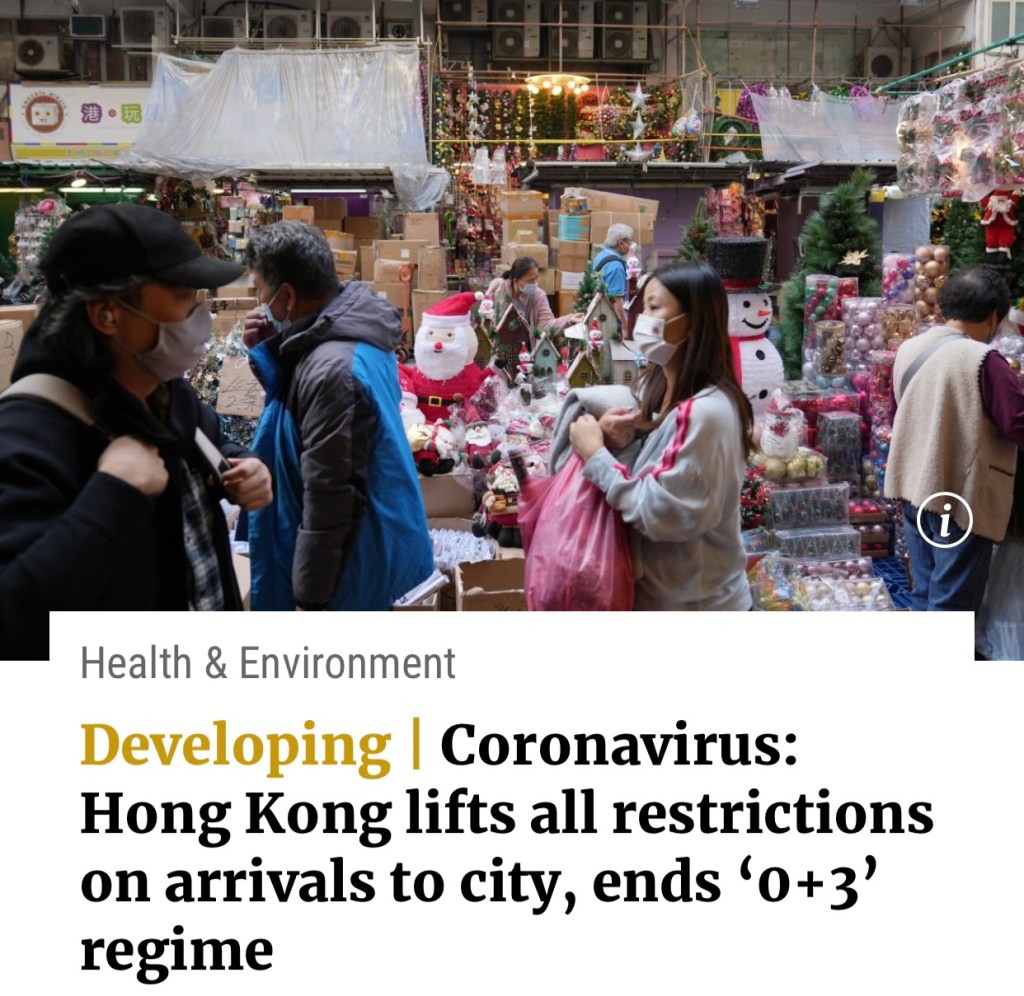
My bets paid off! I can return home, HK here I come! SCMP: Hong Kong lifts all restrictions on arrivals to city, ends ‘0+3’ regime. Arrivals from Wednesday Dec 14 2022 who test negative will no longer need an amber health code and can enter restaurants and other premises previously off limits to them 我的賭注得到了回報! 可以回家了! 南華早報:香港取消所有入境限制,結束“0+3”制度。從 2022 年 12 月 14 日星期三起抵達的測試呈陰性的人將不再需要安珀健康碼,並且可以進入以前禁止他們進入的餐廳和其他場所
New rules will also do away with scanning of QR code on app to enter citywide premises, but restaurant patrons and entrants to certain venues will still need to show jabs record 新規定還將取消掃描應用程序上的二維碼進入全市場所,但餐廳顧客和某些場所的進入者仍需要出示注射記錄
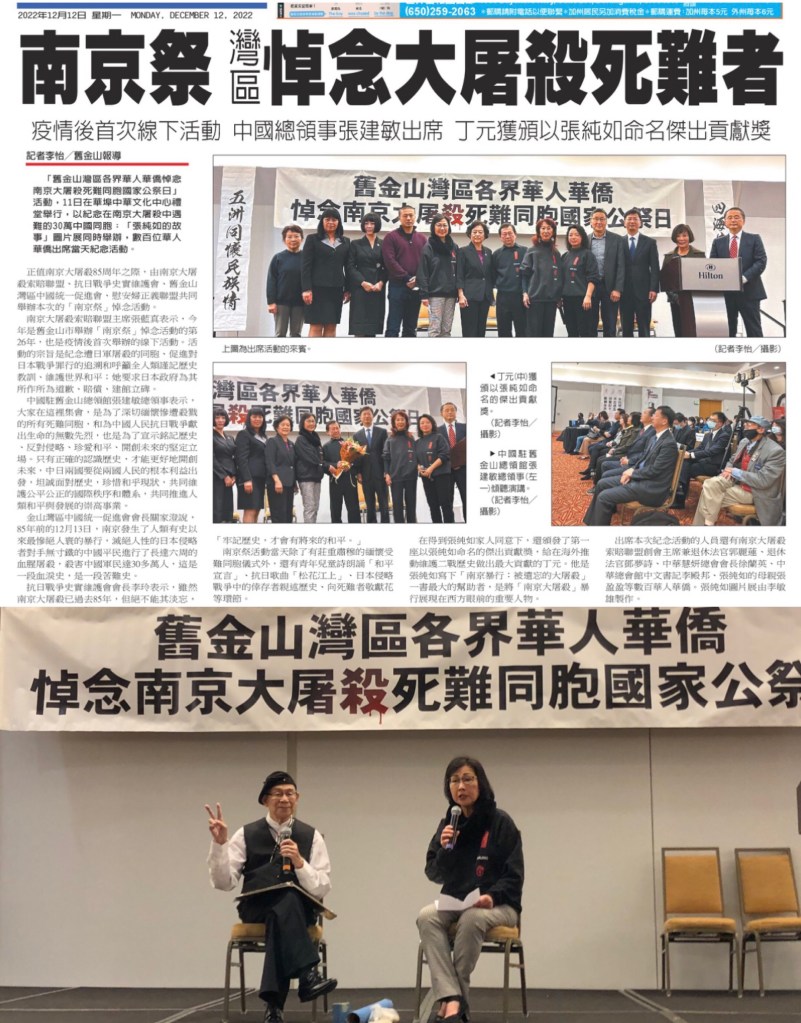
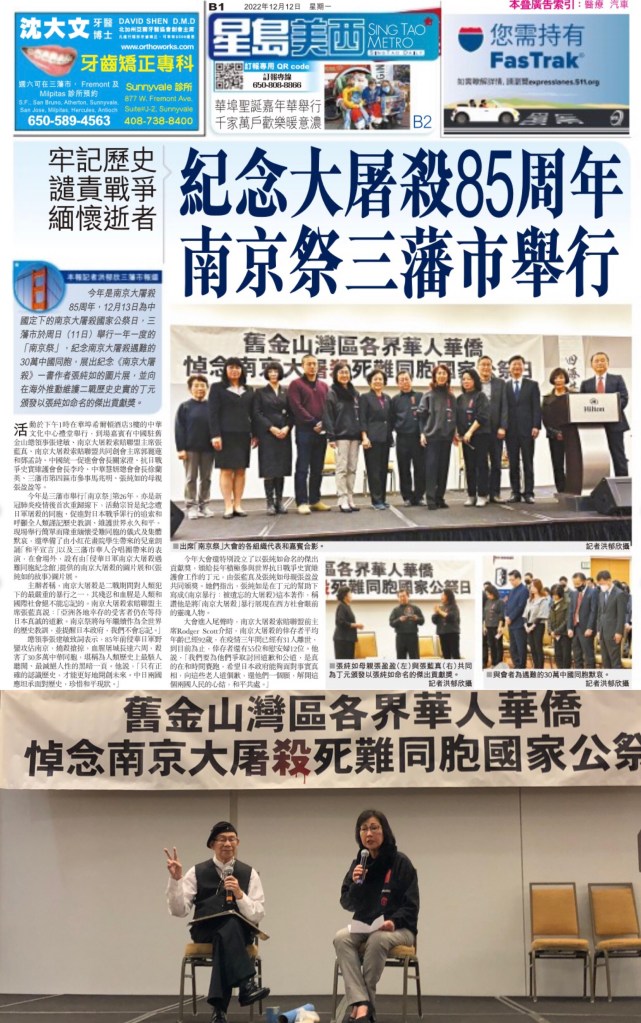
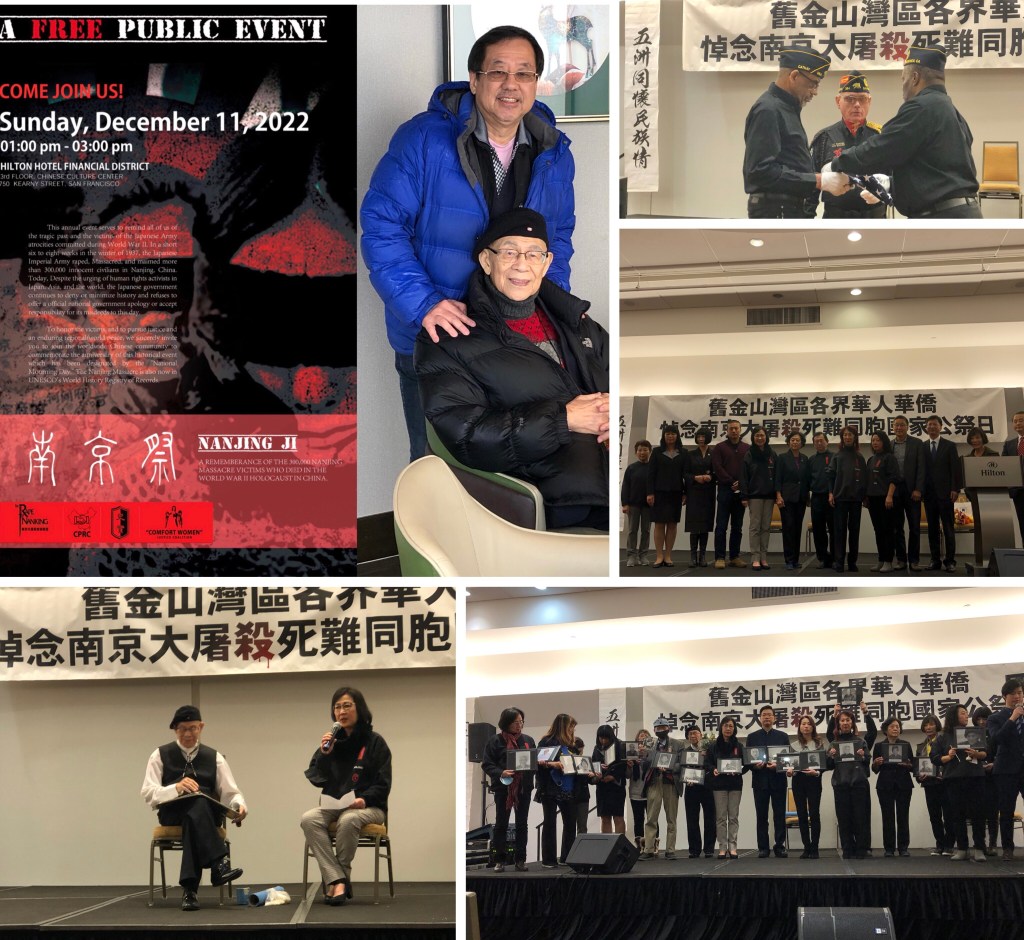
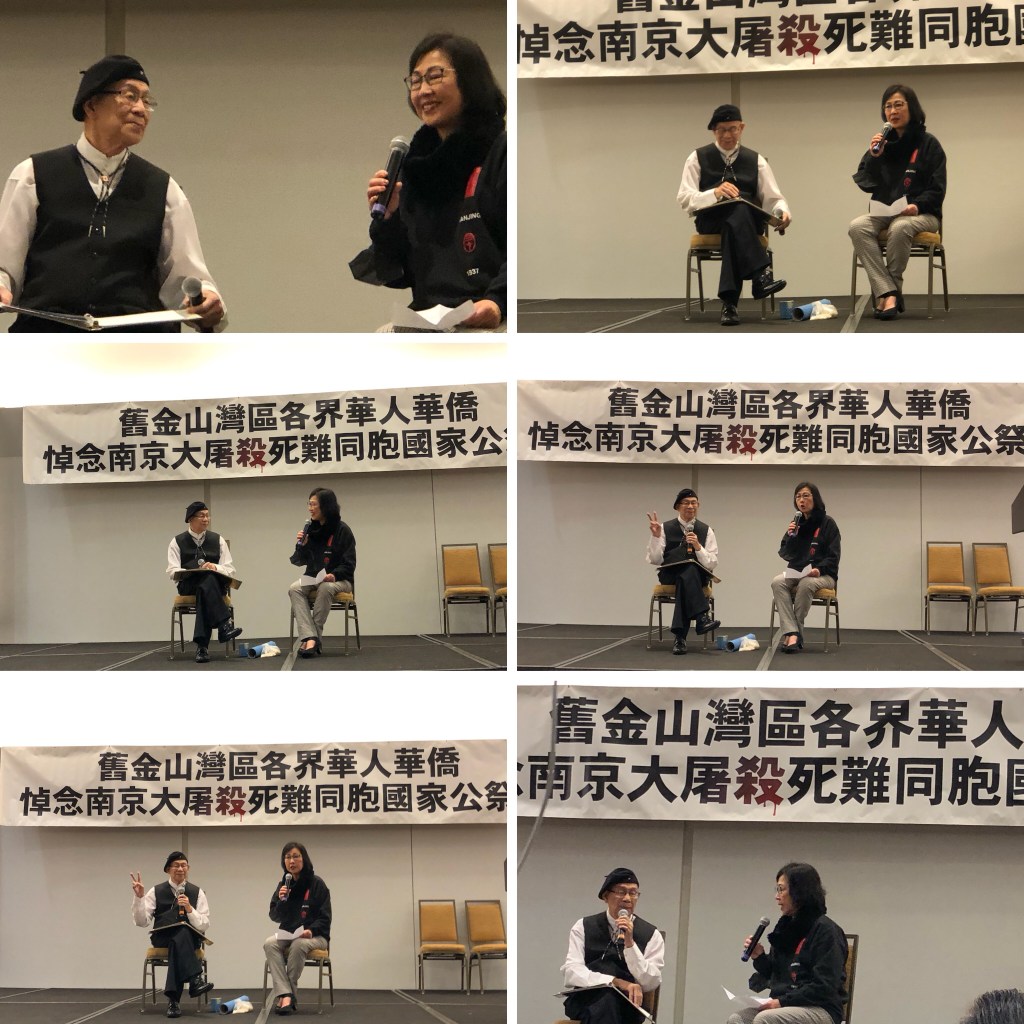
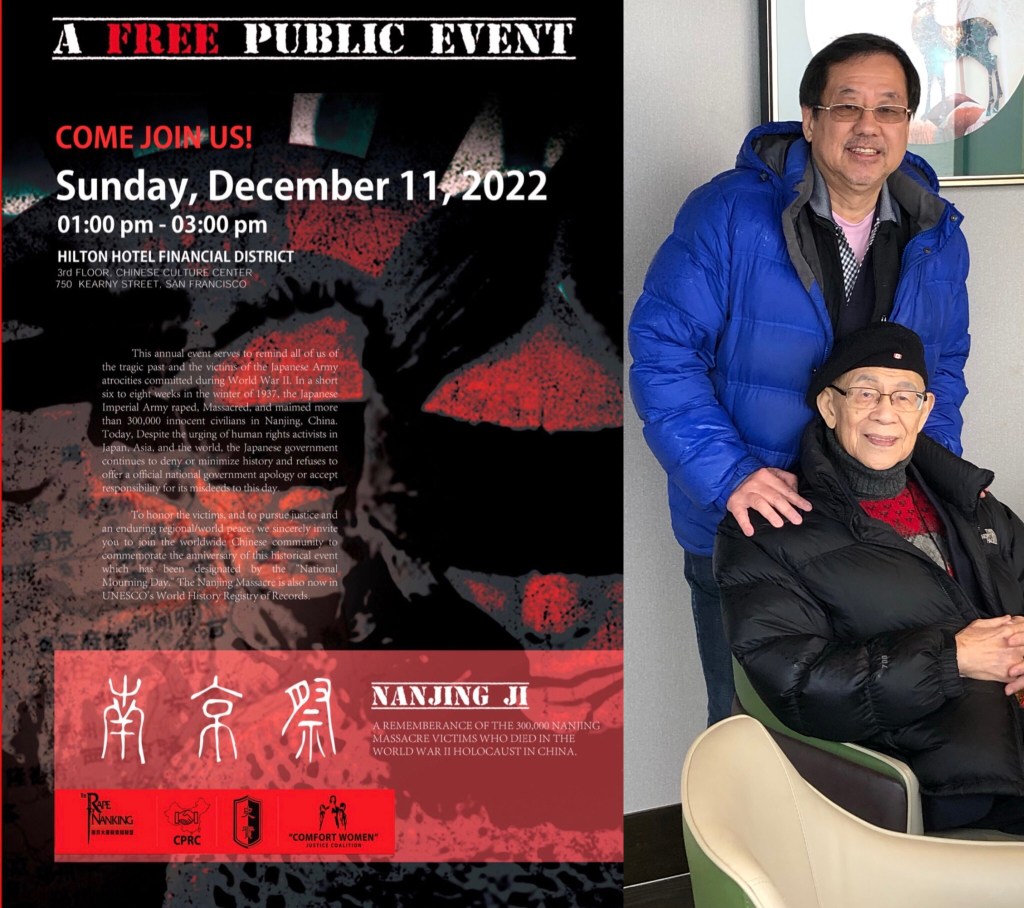
Sunday, Dec 11 2022 • 1:00–3:00pm (San Francisco time) Hilton Hotel • 750 Kearny Street • 3rd Floor, San Francisco 星期日 三藩市唐人街希爾頓酒店 3樓 下午 1:00 a 3:00pm 星期日 三藩市唐人街希爾頓酒店 3樓 下午 1:00 a 3:00pm
Please join us in support and prayers for the victims of the Nanjing Massacre at this year’s Nanjing Ji. 請與我們一起在今年的南京祭上為南京大屠殺遇難者祈禱.
My 93 years old brother Albert Choi will be flying in from Vancouver Canada to speak about his personal experiences about the WWII Japanese occupation in Hong Kong 我 93 歲的哥哥蔡永祥將從加拿大溫哥華飛來,講述他在二戰期間日本佔領香港的個人經歷

 Business Blog