The following are comments by a friend in high technology in San Francisco:
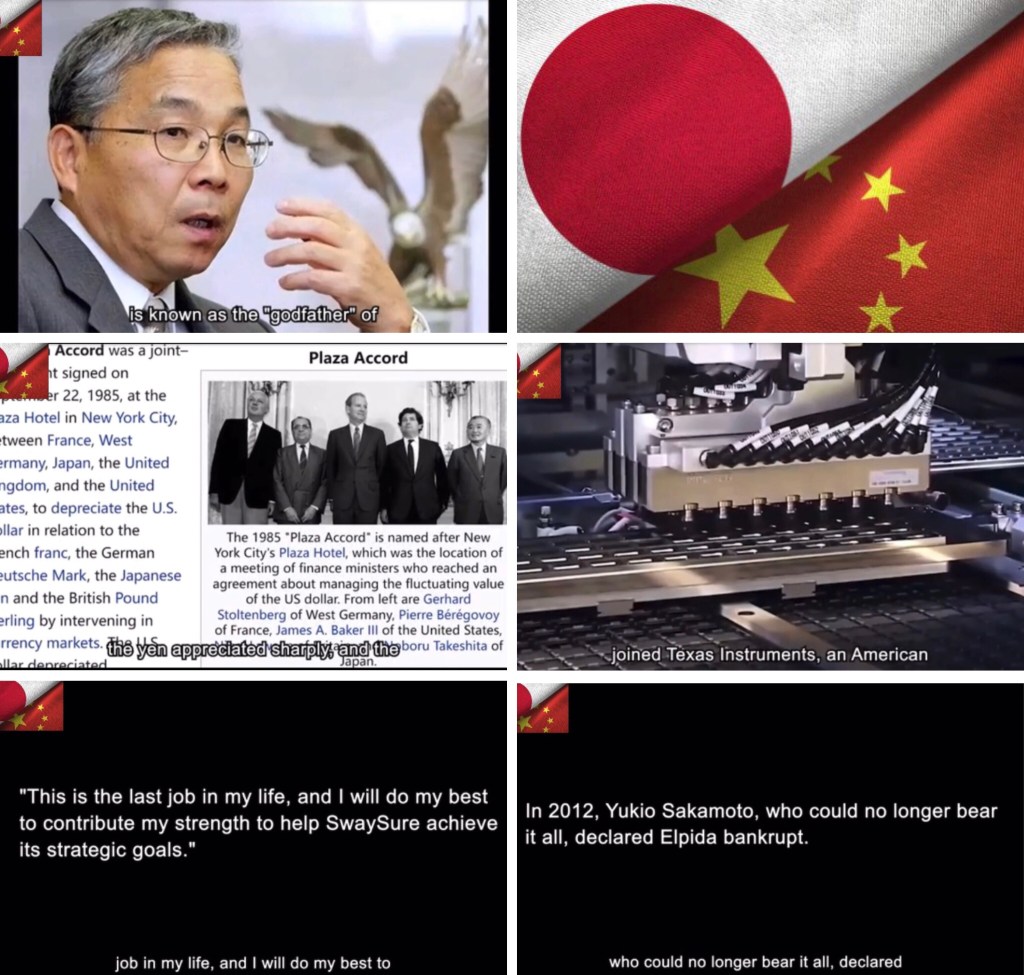
This destroy of Japan’s Elpida and Japan’s semiconductor industry in the late 1980’s and early 1990’s is the same as the France Alstrom and others. The United $nakes Capitalist Regime Moda Operandi is to use the U.S. regime power (government, military, $) to destroy any economic power entities and then have the American companies ($capital) to swoop in to buy off damaged entities (Alstrom, Elpida) like a vulture for pennies on the dollar to become monopolies. The capitalists use the tax-payer supported U.S. Regime to expand capital and rob wealth. This is Capitalism.
I used Micron’s small capacity memory chips in the 90’s. Then, almost overnight, I was using large capacity Micron DRAM memory chips. I had always wondered how a U.S. memory company in Utah or Idaho could literally overnight started producing advance chips. Now I know why. Basically, the U.S. stole the Japanese DRAM technology.
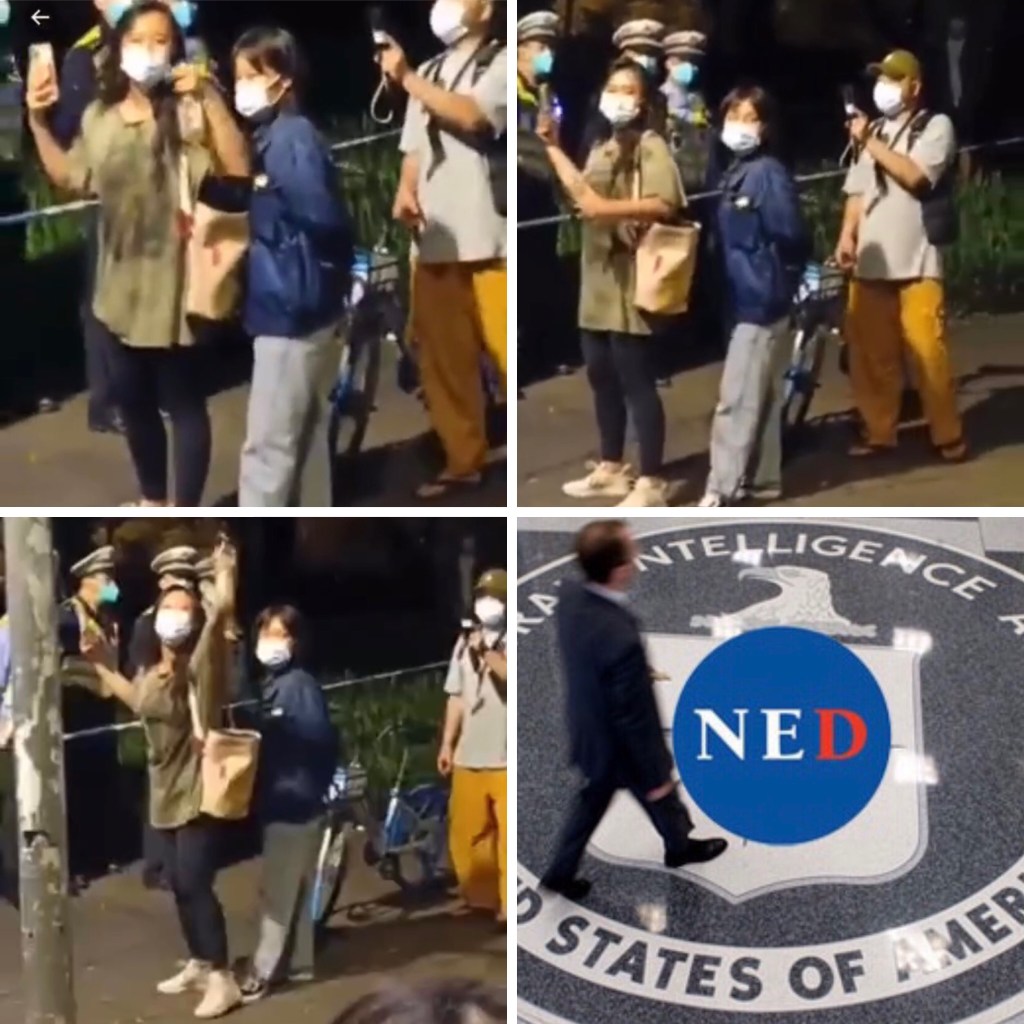
Three troublemakers (the most prominent NED agent having a strong Taiwan accent…) showed up in Guangzhou trying to stir up trouble. 三個搗蛋鬼(最出位的美國民主基金會特工,操著濃重的台灣口音) 出現在廣州試圖挑起事端
US NED agents terrible body odor you could smell 100 feet away in HK, Thailand, Myanmar, China Universities Campus… stink like hell, no place to hide美國民主基金會代理人可怕的體味,你可以在 100 英尺外聞到, 在香港、泰國、緬甸、中國大學校園.. 臭死人了, 無處可藏.
Video: US CIA & NED are the black hands behind the protest in China universities campuses, US & UK agents disguised as foreign press & many entered China through HK
Today is November 28, 2022. The shocking news from different cities in the mainland last night kept coming from my mobile phone. At first I watched it and thought it was an old video from Hong Kong in 2019. After communicating with netizens, I learned that it was the latest mainland video. Major cities live. When everyone was still spreading the news that Taiwan Province Tsai Ing-wen resigned as the chairman of the Democratic Progressive Party, it turned out that foreign forces had already deployed in the mainland.
Netizens who love the country and love Hong Kong immediately use the power of the Internet to investigate and track down these black violence promoters. It turned out that one of them was an extreme anti-China element. He was originally the leader of the Hong Kong gangsters. Because of the relaxation of the epidemic prevention policy in Hong Kong, he quietly fled to Guangdong. Announced that color revolutions were launched in Beijing, Tianjin, Shanghai, Urumqi, Zhengzhou, Chongqing, Chengdu, Wuhan and other places last night, inciting mainland citizens to gather and protest against the mainland’s epidemic prevention policies. He also said that the Weibo account certified by the mainland publicly threatened and slandered him.
On the other hand, netizens in Shanghai have found out the WeChat accounts, names, and occupations of important contacts at the protest rally. They are all reporters from foreign media organizations, including the New York Times and CNN. Many of them, as journalists, took advantage of the relaxed anti-epidemic policies between Hong Kong and Shenzhen to enter various provinces and cities in the mainland. Mainland netizens have sent relevant information to the National Security Agency.
Based on my recent experience in Hong Kong, these reporters are very young. They were sent by these media organizations to different think tanks and mainland organizations to inquire about news. At first, most of them used the interview method to extract information and pretend to report for you, but after many months, not a single report has been published, and you are required to provide more information on the structure and deployment of the mainland’s official agencies. All discerning patriots know that these reporters are collecting information on behalf of foreign forces. In addition, if you invite these journalists to participate in some patriotic activities, most of them will keep their distance and refuse, saying that they are media organizations, so they must be neutral, and it is inconvenient to participate in related activities.
Today, as long as everyone opens the news of these foreign media organizations, the headlines will all say that many places in China have erupted in protests due to epidemic prevention policies or social accidents. Please everyone, when distributing news on the Internet, you must first objectively analyze whether the news is true, or whether someone is deliberately acting to challenge and incite public dissatisfaction with the epidemic prevention policy. Secondly, please be more careful about the initiative and enthusiasm of journalists from foreign media organizations. Their superficial ignorance and stupidity are just to get your news and use your network to obtain more information.
Now is the troubled time, all patriots must be mentally prepared, another struggle has quietly begun. Please unite and send the information of the person in charge of the protest rally to the National Security Agency and other law enforcement agencies, so that they can have first-hand information and stabilize the overall situation of the country.
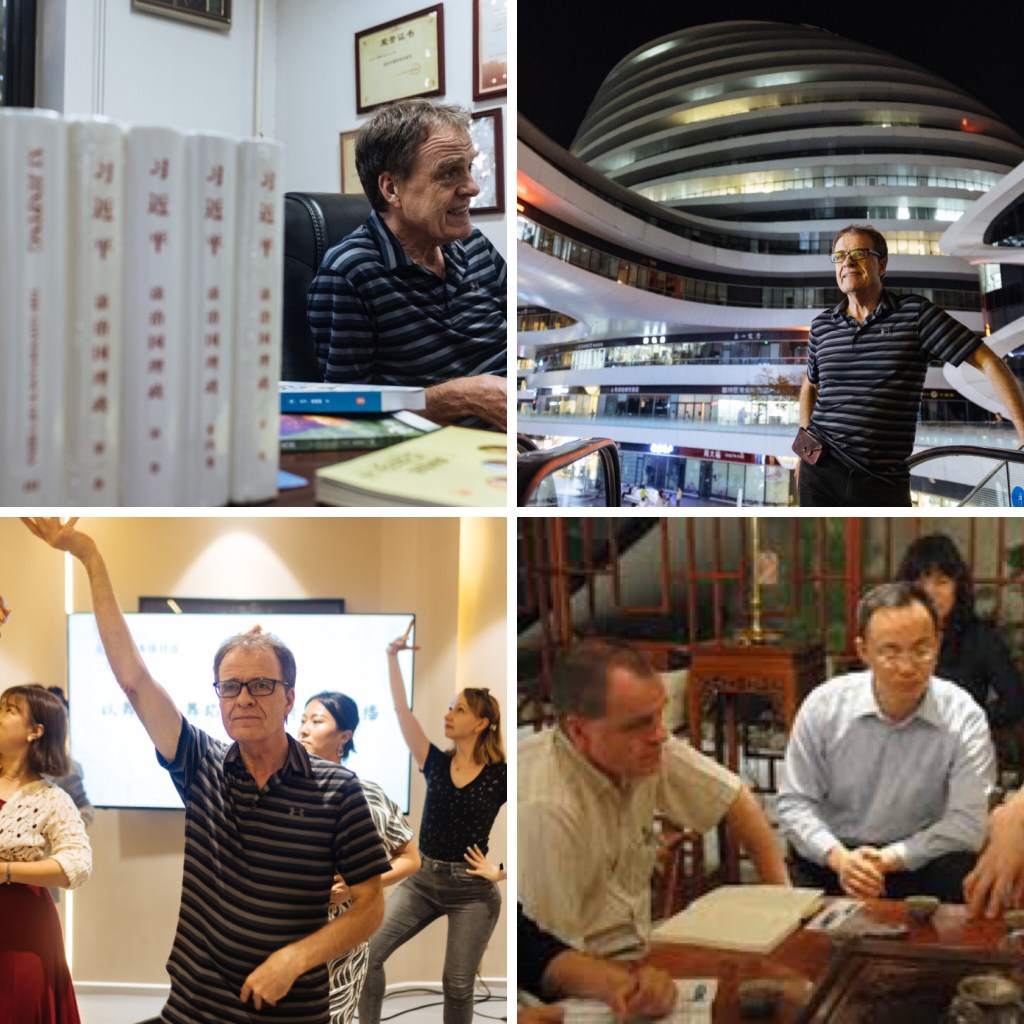
He will never be hired by US Gov’t mouthpiece medias – he also kissed goodbye to the US$300 millions per year propaganda campaign prize money to demonize China / China worthy of trust, friendship, and respect. David Ferguson in his office with books of President Xi at Foreign Languages Press in Beijing by Cao Siqi Nov 29 2022
Some 16 years ago, when David Ferguson first came to China from Scotland, he was struck by what he saw.
“I thought China, other than some cities like Beijing and Shanghai, would be mostly poor peasants in the fields, but when I arrived in Jilin [in Northwest China’s Jilin Province], I found that although it was very ordinary city, people enjoyed a reasonable life – for example the clothes and brands in the stores were no different from those in the UK. At that moment, I realized that my impression of China was not accurate,” David said. This growing realization made him decide to tell the story of the real China to the world.
Since then, he has worked as a reporter and writer, covering the Wenchuan earthquake, the 2008 Beijing Summer Olympic Games, and the Shanghai World Expo. He has visited landmark Chinese cities and recorded the great changes happening in Chinese society in a series of books. He is also engaged in online debates on social media, exposing the prejudice and ignorance of some Westerners toward China, while relentlessly trying to reduce the estrangement and misunderstandings between different cultures.
As a journalist, a writer, and an English editor, an icebreaker in China-UK relations, an observer of both the Chinese and Western civilizations, and a witness to China’s rapid development, David says China is his second home, a home where every citizen can dare to dream, and hope to fulfill their dreams.
His explorations, experiences, and observations over the last 16 years have made him realize that the biggest difference between the American and Chinese dreams is that the former is the dream of a few, and the gap between the haves and have-nots will never be bridged, while the latter gives everyone the belief that their children’s generation will live a better life than their own.
Secrets behind China’s development When the Global Times reporters met David in his office at the Foreign Languages Press – part of China International Communications Group – he was quick to show his Chinese “green card.” A permanent residence permit for foreigners living in China, it is dubbed the world’s hardest-to-get “green card,” only issued to foreigners of outstanding ability.
“It feels like a huge recognition of my contribution during the last decade,” he told the Global Times.
Looking back on the important stages of his life in China, he said that even as a foreigner, he can understand why the country has witnessed seismic changes and achievements that other countries, especially those in the West, cannot imagine. The secret lies in the firm leadership of the Communist Party of China (CPC) and in the Chinese people with their diligence, creativity, and perseverance.
It has been 14 years since the devastating earthquake which rocked Sichuan, killing nearly 70,000 people, and leaving 18,000 missing and more than 370,000 injured. David still solemnly looks at the precious pictures he took in Wenchuan that are saved on his computer, testament to his work as a journalist.
“This is the one that left the deepest impression on me – a moment at which I was astonished by the resilience of the Chinese people.” David points to a picture showing the bright smiles of several children and adults standing in front of shabby tents – their makeshift homes.
Over the years, David has witnessed the changing face of China by traveling to several key cities, where he has seen, heard, felt, and measured China’s development for himself.
In Nantong, Jiangsu Province, David was impressed by resolute Chinese entrepreneurs, who started with nothing and built themselves into successful calling cards for China’s business abroad; in Suzhou, a city that blends the very ancient and the very modern, he was amazed by the creativity of craftspeople ensuring the legacy of China’s intangible cultural heritage; in Gansu, he was astonished by the industriousness of Chinese villagers working to eliminate poverty and revitalize rural areas.
Mission to improve China’s voice
In 2010, David began his career as an English editor at Foreign Languages Press. He has participated in the translation and publication of all four volumes of the English versions of Xi Jinping: The Governance of China, which present to English readers all over the world Chinese ideas, proposals, and wisdom, and represent the contribution of the CPC to addressing the problems facing humanity.
This experience gave David a great sense of honor and satisfaction, indicating that his work and abilities are highly recognized in China. Of equal importance is that it provided him with a channel through which to understand China’s development and convinced him that China should speak out even louder to the world about its system and explain why it works, to counter the hostile and negative narratives delivered by many Western media sources.
“The whole point of China’s democracy is that it involves people in a much more active way than Western style democracy. China’s democracy is about consultation, cooperation, and consensus. Ordinary people are invited to be actively involved in the process of creating legislation, for example, which is one of the fundamental purposes of governance. In China, democracy is a way of involving people actively and on an ongoing basis, whereas in the West, people participate in direct elections and there isn’t much opportunity to get involved apart from that.”
One of the biggest Western misunderstandings about China’s democracy is an ignorance of the structure of the system. For example, very few people know anything about the direct elections that take place in communities at the grassroots, and how they function.
“They don’t trouble themselves to inform themselves about this kind of thing because they’re too busy criticizing China and too busy working from a position of intellectual and moral superiority to ever bother to find out what really happens in China,” David said.
Having lived in China for many years, the things that have impressed David the most are the elimination of absolute poverty and the profound commitment to environmental improvements.
“Some 10 years ago, there were still one hundred100 million people living in absolute poverty – only about a dozen countries in the world have a population of more than 100 million. China has raised them all from absolute poverty. Poverty alleviation is a good example of what China does well, how it rolls strategies down through the different levels and then mobilizes everybody.”
According to David, once China decides on a strategy, the implementation of the plans is supported by everyone. In contrast, the Western system revolves around conflict and confrontation, in which everything works itself out into opposing parties that divide opinions across society. China’s model is about mobilizing vast amounts of resource and working toward common goals.
In response to some Western media complaints that China doesn’t welcome foreigners, David gives a vivid example. “I invite myself into your home. Then I spend the afternoon smearing dog excrement on your walls. And then I want to start in your kitchen. You throw me out and I start to complain…. That’s how the Western media behave in China. They never have anything positive to say about China, and then when China says all right, that’s enough, they start complaining.”
After receiving several honors – the Friendship Award from the Chinese government, the Special Contribution Award for Chinese Books (the highest award given to foreign experts in China’s publishing industry), and the 8th Huilin Award – David said he has a Chinese dream: to improve China’s voice in the international arena and continue to tell China’s real story.



 Business Blog