Putin counterattacks the hard-to-return America by Shui Binghe 普京逆襲積重難返的美國 作者:水秉和 5/28/2022
Foreword : This article is put forward after sorting out some thoughts I wrote about the Russian-Ukrainian war in the past six months. It is somewhat repetitive, but it is relatively complete, and some new observations have been added. I pointed out in particular that the Russian-Ukrainian war was a war in which almost all the white nations of the world participated, including the permanently neutral Switzerland and Sweden. This is cannibalism between them, no more slaughter, looting of non-white nations. This is important because in addition to causing the destruction of Ukraine, it will inevitably consume and weaken the national power of Europe, Russia and the United States, and European consumption is likely to be difficult to restore. Attrition in Russia and the United States will also see them gradually fall behind the Asian powers. This is a five-hundred-year change, no trivial matter.
At the same time, the national strength of China and India, which are not involved in the war, will move forward. Because of its refusal to sanction Russia, India bought Russian oil at a price of $30 a barrel cheaper than the market price, and vigorously developed its economy, so that it can not only recover from the disaster of the new crown pneumonia, but also grow faster than China. What about China? Not only will it benefit from the massive acceptance of resources that Russia cannot sell to Europe, but also the huge Russian consumer market that has been abandoned by Europe and the United States.
Europeans have many advantages, but their history tells us that they fought very cruelly, and they did not know how to stop. Diffusion, the vitality is lost, so I have to stop. From the Crusades against Islam in the eleventh century, to the endless Hundred Years War, Eighty Years War and Thirty Years War between Catholics and Protestants, as well as the first and second world wars in modern times. This Russian-Ukrainian war may not escape the same fate. That is to say, after controlling the fate of the world for 500 years, white people are likely to voluntarily withdraw from the position of leading the world.
An interesting question is: will they suddenly become conscious, alert, and awakened, and then pull back from the precipice and shake hands to make peace?
This seems to be a capability they sorely lack.
For China and India, as well as other developing countries, this is a very rare period of strategic opportunity, especially for China, if it can grasp the opportunity well, then the future should be quite bright.
America has many unsolved problems
Many old and Chinese people have a special love for the United States, and believe that no matter what the United States does, it is, or the vast majority are, right; at the same time, they believe that the United States is strong and sustainable, and it is a treasure land where we and our descendants can live and live. . This used to be my belief too. More and more, however, I feel that the United States has a number of big, unresolved problems that undermine my original belief in it. For example, the struggle between gun owners and those who prohibit guns: Because of the Second Amendment to the Constitution, which allows people to own guns, and it is extremely difficult to amend the Constitution, gun prohibition is a long-term unsolved problem, and shooting cases continue to increase . In addition, the battle between those who believe life begins in the embryo and supporters of legalized abortion involves religious beliefs, and the Supreme Court’s impending overturn of its historic early decision to allow abortion will create further divisions in the United States .
Others, such as the racial issue between black and white, involve the history of slavery; the immigration issue involves the fate of the hundreds of thousands of people of color waiting to enter the southern border; the 30 trillion national debt, and the impending stagflation, involve …Etc., etc. For too long, as the rivalry between the two parties has grown sharper, these issues will only continue to ossify with no prospect of resolution.
A more fundamental problem exists in parallel with these difficult problems, that is, the United States has transformed from the largest manufacturing country to a post-industrial country, with manufacturing accounting for less than 20% of US GDP. Its current economic dependence has been transferred to financial operations, consumption, medical, military-industrial enterprises, as well as high-tech product innovation, design and high-end product manufacturing. Among them, financial hegemony supported by military hegemony, including the control of SWIFT, the settlement mechanism of international trade, has always been the means by which the United States can sanction and suppress other countries. All of this is now in crisis, because….
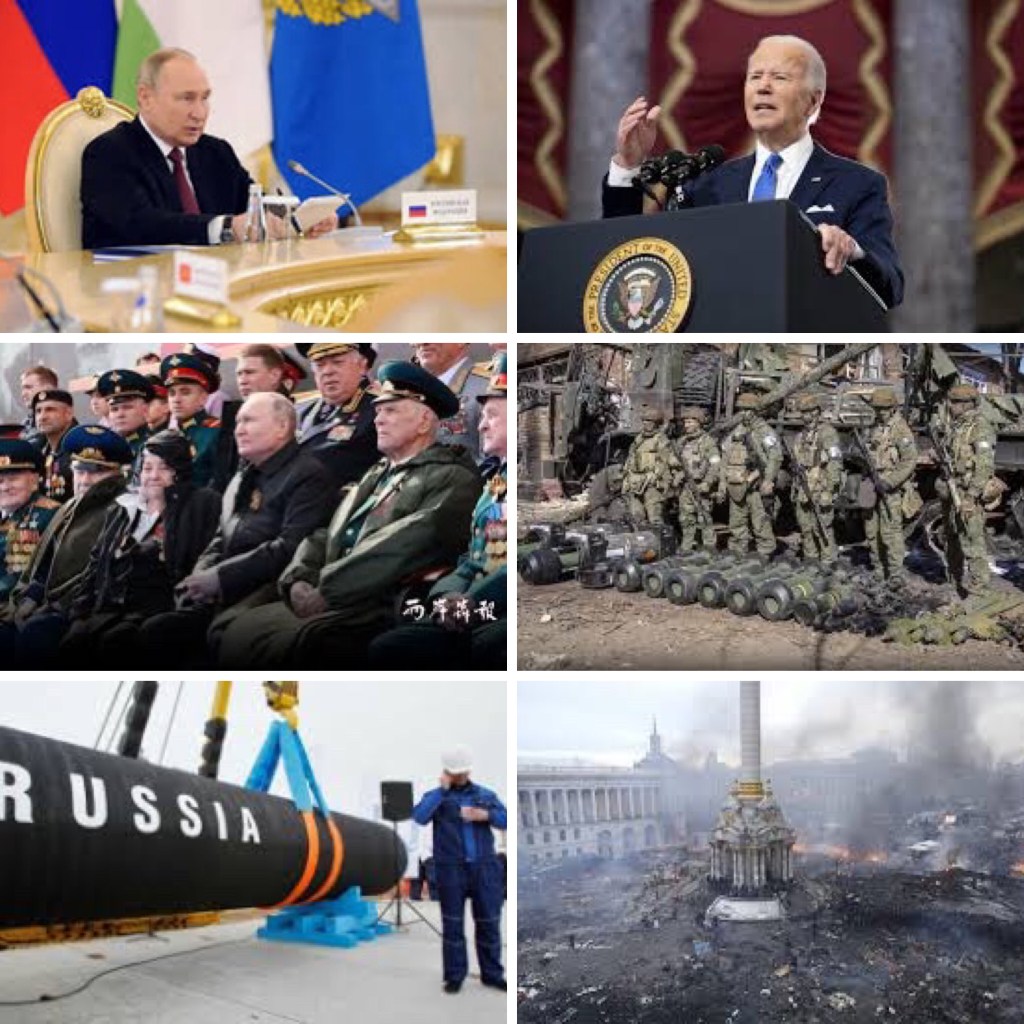
Biden’s involvement in the Russian-Ukrainian war
The Russian-Ukrainian war has had an even worse effect on the above-mentioned difficult problems. Although it is not as intricate and deep-rooted as the above problems, its influence is more immediate, and its subversion is imminent. This is directly related to Biden’s use of financial sanctions as a weapon against Putin. In this regard, we might as well start from 2014.
There was a mass movement in Ukraine in 2014, and a coup d’état was triggered by the mass movement. The reason why the peaceful mass movement turned into a violent conflict is because of the intervention of external forces, that is, the color revolution led by the United States, the purpose of which is to drive out the legally elected pro-Russian government and replace it with a pro-American government. The coup succeeded, and Putin fought back, taking Crimea.
Subsequently, in 2015, under the coordination of Germany and France (without the participation of the United States), Russia and Ukraine signed the Minsk Agreement, in which the Ukrainian side promised to respect the two states in eastern Ukraine – Luhansk and Donetsk – autonomy. However, Ukraine’s pro-U.S. government subsequently refused to implement the agreement, leaving the two eastern states, mainly of Russian descent, under constant attack by the Ukrainian army, shrinking the territory, and the local war is estimated to have killed about 14,000 people in the eastern region. The reason Putin attacked Ukraine in the name of a special military operation was to protect the residents of these two states, which was the most direct trigger of the Russian-Ukrainian war.
Neoconservatism
I have pointed out that the coup in Ukraine was a task that Vice President Biden personally took charge of, following orders from President Obama. In his 2017 autobiography “Promise Me, Dad”, he mentioned his active involvement in Ukraine’s affairs (of course he did not say that he led the coup). Biden therefore has deep ties with Ukraine. Victoria Nuland, the then assistant secretary of state for European affairs, was an American official directly involved in the Square Movement, and Nuland’s husband was a think tank boss named Robert Kagan, who was called Newland. The Godfather of Conservatism. The boss is the national teacher of Bush’s team through Vice President Chaney, Secretary of Defense Rosefield and a group of other believers in the Department of Defense, State Department and think tanks, including his wife Newland, and Hillary and now. Biden, who established the neoconservative policy that the United States has implemented since 2001.
The neo-conservative policy, simply put, is that the United States should take advantage of being the only superpower after the victory of the Cold War, using force, such as in Afghanistan and Iraq, or using mass movements, commonly called color revolutions, such as in Libya, Syria, Georgia, Ukraine, etc., to overthrow non-democratic regimes in the world and promote their democratization and pro-beautification. The eastward expansion of NATO is a major element of neoconservatism.
It is precisely because Biden is in charge of Ukraine’s democratic transition and pro-American transition that Ukraine is very important to him personally and even to his son Hunter, who later made a lot of money in Ukraine. That is to say, the fundamental reason for the Russian-Ukrainian war is that it is supported by neoconservative theories behind it, coupled with Biden’s personal sense of mission, so it is destined to be an unavoidable war.
The evil that Trump and Biden planted
In 2016, Trump unexpectedly defeated Hillary Clinton and entered the White House. After he came to power, he planted several more causes. First, he withdrew from the Iran nuclear ban agreement; second, he fought a trade war with China; third, he tried to subvert the legitimately elected government of Nicolas Maduro in Venezuela, but he failed, but he admitted the opposition. The leader, Juan Guaido, is the country’s legitimate president.
In 2020, Biden defeated Trump to become the 46th President of the United States. During his campaign, he began to criticize Saudi Arabia’s involvement in Yemen’s civil war, despite the U.S. tradition of close ties with Saudi Arabia since Kissinger. And, because the Saudi crown prince (allegedly) sent a killer to Turkey to kill, dismember and dismember Jamal Khashoggi, an American media personality of Saudi nationality, inside the Saudi consulate in Turkey, Biden said, the Saudi government It is a “barbaric government” (pariah state). He was on the moral high ground, but he angered Crown Prince Mohammed.
Saudi Arabia is definitely the leader of the oil-producing countries in the Middle East, and Biden, because of his firm belief in American values, did not hesitate to insult Saudi Arabia, who is likely to be the leader of the next half century, even though Saudi Arabia is an important ally of the United States in the Middle East. The cornerstone of the petrodollar. He has been in the American diplomatic circle for decades to do such a stupid thing, we don’t know what he thinks.
Biden: America is not as strong as you think
When a burly man is strutting down the street, he won’t make way for other passersby – he trusts others to let him. A person who is accustomed to being the boss will naturally believe that as long as he shouts from the top, other people will respond positively, either in fear of his prestige or in order to please him. If such a boss offends someone, he doesn’t care, because when he appeals to someone he offends, he still thinks that person should support him. This is the mentality of the strongman, and it is also the posture of Biden. After he came to power, he claimed: the United States is back, and clearly declared that the opponents of the United States are Russia and China, and he will unite allies to compete and confront these two countries. His self-confidence is amazing. The Jews have a proper term to describe this kind of self-confidence, called chutzpah (the Chinese may be translated as arrogant and thick-skinned).
Looking back, everyone will find that Nixon was not so arrogant. In order to fight the Cold War with the Soviet Union, he accepted Kissinger’s suggestion and united China to control the Soviet Union. Carter was not so arrogant either. He accepted Bresinsky’s suggestion and united with bin Laden’s al-Qaeda, China, Iran, Pakistan and other countries to drive the Soviet Union out of Afghanistan, which became an important factor leading to the disintegration of the Soviet Union. Please note that these are countries and organizations that are outside of NATO allies and are not friendly or even hostile to the United States in the first place. Now, Biden is different. He wants to start with strength and deal with the two nuclear powers, China and Russia, at the same time. Not only that, but he also put on a lofty attitude towards countries other than NATO, Japan, South Korea and other allies! It means, you must follow me obediently, or I will punish you! You say, is this too arrogant?
As soon as Biden came up, he said that during his tenure, the task of the United States was to confront and compete with China and Russia. This was his most fundamental strategic mistake. Not only did he make this strategic mistake, he also rejected many countries that were originally on the side of the United States.
Ukraine War: The Graveyard of Hegemony
In 2008, at the NATO summit, the issue of Ukraine and Georgia joining NATO was raised again. The United States strongly supported it, but it was opposed by Germany and France. Therefore, the then NATO Secretary General The compromise is that the two countries become candidate NATO members and will eventually join in the future.
During his tenure as vice president, Biden firmly supported Ukraine’s entry into NATO. After becoming president, he naturally pushed hard for it. It can be seen that, in his strategic vision, Ukraine is the front line of his ideological struggle—the struggle between democracy and authoritarian politics—a direct challenge to Putin’s red line and a focus for crushing Russia. Beginning in October last year, Putin assembled a large number of troops on the border of Ukraine, and then in mid-December submitted a note to NATO not to allow Ukraine to join NATO, requesting an answer as soon as possible. Biden did not hesitate to reject Putin’s request.
Many people say that Putin’s attack on Ukraine is in Biden’s favor, saying that Putin fell into Biden’s trap, because Biden wants to use Putin’s aggression and the turmoil in Europe to return the dollar and solve the serious inflation and high debt in the United States. difficulty. However, the most realistic statement should be that Biden is too aggressive, and extremes will reverse. There is a good term in English called blowback. You can say that Putin fell into Biden’s trap, or that Putin has already planned to launch a counterattack against NATO’s eastward expansion. In short, the Russian-Ukrainian war started on February 24. There is no turning back when the bow is opened, and the world pattern will change from now on.
Biden clearly overestimated the influence of the United States and underestimated his opponents. He did not expect that most of the world’s 88% of the population did not follow him, but instead participated in Putin’s counterattack – albeit passively.
This is a bad cause, and the bad result is that
Biden is not willing to fight a nuclear war with Russia. Therefore, when Putin launched a special military operation against Ukraine, he used extreme financial sanctions as a countermeasure. This extreme sanction also hurts the vast majority of countries in the world, forcing them to pay the price. It seems that Biden simply fails to consider a fundamental question: Will these countries be willing to pay such a price for a power struggle among white people?
Just imagine, if Putin does not have Xi Jinping behind him now, will he still be able to resist Biden’s extreme financial sanctions while fighting the Russian-Ukrainian war? of course not. So, may I ask why, after Biden took office, he clearly knew that Trump’s trade war with China was a failure, because the burden on the United States was 90%, and the burden on China was less than 10%, and the trade war aggravated the inflation pressure in the United States. Why hasn’t Trump’s increased tariffs on China been lifted to improve relations with China?
Not only did he not cancel the tariffs, he continued to increase the price! Because he wants to challenge Russia and China at the same time! This is really insane. this is one.
Second, Obama spent his best efforts to unite European allies and China and Russia to reach a nuclear ban agreement with Iran. As the second-in-command of Obama’s team, this is also his achievement. But Trump abolished it! So, after Biden takes office, shouldn’t he immediately slap Trump in the face and rejoin the agreement immediately? However, he didn’t. He also wanted to reap some benefits from Iran. The results of it? Iran ignored it and instead signed a 25-year long-term cooperation agreement with China.
After the Russian-Ukrainian war broke out, Biden suddenly found that even his European allies would not stop buying Russian oil and gas. You know, cutting off Russia’s overseas financial resources is the key to the success of the sanctions. But, even for European countries, the United States cannot dissuade them from sending money to Russia! In other words, the sanctions are actually in the hands of their own people! This is another example of reckless behavior after Biden took office, and it is also a deadly example. At this time, he began to look around for alternative energy producers to Russia, and he thought of Iran, Saudi Arabia, and Venezuela. Unfortunately, he and Trump have all these countries offended. Naturally, these countries have closed the door for Biden!
Why didn’t he think that if he wanted to sanction Russia, he should win over oil-producing countries early on? Biden seems to think that all he has to do is win over the white world, his European and Asian allies, to defeat Putin. He does not need countries with different skin colors, countries with different religious beliefs, and countries with different political systems to sanction Russia with him. Does he think that these countries will automatically follow up? Too much wishful thinking! This is three.
The most interesting is Venezuela. The United States sent its deputy secretary of state to negotiate with Maduro about buying oil from Venezuela. However, the United States does not even recognize the Maduro government, so how can we start? The United States must first give up recognizing the non-existent Guaido government, then re-recognize Maduro’s government, and lift all sanctions on Maduro’s government before Venezuela can increase oil production. In other words, the United States is stuck with its own past hegemony.
It is worth noting, and extremely important, that almost all countries of color, including regional powers such as Mexico, Brazil, Argentina, Turkey, Iran, Saudi Arabia, Egypt, India, Indonesia, Malaysia, Vietnam, and South Africa, refuse to sanction Russia. We can clearly see that the vast world, once enslaved, colonized and exploited by the West, does not support Biden’s sanctions. Although they do not actively support Russia, their passive resistance to sanctions is not trivial. Whether they are consciously protesting against the violence against them in the West for five hundred years, or whether they are just taking advantage of the self-killing among white people to protect themselves and benefit from it, we have no idea. In short, they passively participated in Putin’s counterattack.
Protracted war = war of attrition
Although the Western media is still whitewashing the peace, as if Russia has been miserable under sanctions, Biden and his team know that his ultimate sanctions have failed. When Putin’s ruble settlement order was issued, the value of the ruble retraced, the EU was in conflict, and some countries began to use the ruble to buy natural gas, and the sanctions collapsed. Sanctions are ineffective when several major oil-producing countries refuse to increase production. When China’s UnionPay credit cards replaced VISA and MASTER cards, the sanctions became self-harm. When the vast majority of non-white countries do not sanction Russia, sanctions are doomed to fail.
Sanctions failed, what to do? Biden hurriedly increased aid to Ukraine, hoping that Ukraine would defeat Russia on the battlefield, so he joined NATO countries to greatly expand military aid to Ukraine.
With a large amount of aid, Zelensky’s tone has also changed. He is no longer seeking peace, and he wants to recover the lost ground. So, from May, the protracted war began.
There is a lot of discussion on the Internet, and there is no consensus, but most of them believe that Russia wants a quick solution, and the United States wants to fight a protracted war, so that Russia will be mired in the mire and give it a second Afghanistan. However, there is an argument on the Internet that does not think so. The name of the argument cannot be examined, but it is quite insightful. I will introduce it as follows.
Putin’s plan, it said, was to fight a protracted war by crippling Ukraine and putting Europe and the United States in charge of the lives of Ukraine’s internally displaced people and the five million refugees in exile in Europe, while maintaining Ukrainian society as a whole. (Zelensky’s price is $600 billion a year; the IMF estimates that the Ukrainian government needs $5 billion a month to function properly), plus an endless supply of arms that are constantly being depleted on the battlefield , which is a very heavy burden. One or two months is fine, but in one, two years or more, Europe will inevitably be overwhelmed and fall into a quagmire deeper and bigger than Russia. Don’t just listen to the US media’s propaganda about how the EU is united. NATO continues to expand. Over time, when the general public starts to protest collectively, the upper-level elites in Europe will also have infighting and split with the United States. Only by completely depleting the EU to negative growth, and until NATO is divided, can Putin achieve the goal of overthrowing the US hegemony.
Russia is a country with large resources. It can be self-sufficient in food and energy, and other consumer goods in life can be supplied by China, India, Turkey and other countries. On May 13, Putin held a video conference in Moscow. He announced that Russia produced 130 million tons of grain, a record, with a budget surplus of 2.6 trillion rubles (about 37.1 billion U.S. dollars), and foreign trade revenue increased significantly. While sanctions will certainly hurt Russia’s economy, in three years or more, it will be Europe that will be ruined by a protracted war. Russia’s economy is strong enough to support it for several years of war – it can support the division of the European Union and the collapse of NATO.
All Putin needs to do is to continue to crippling Ukraine and make European countries fall into a bottomless pit of consumption. History tells us that Europeans have always fought to the point of exhaustion, because they only overweight and don’t know how to stop.
Counterattack the United States
As mentioned above, Putin has launched a counterattack against the United States, and he has received passive support from the vast majority of countries of color. These countries, because they need to import products such as energy, food and fertilizers from Russia, should be willing to join a settlement system that Russia is discussing through the Eurasian Economic Union dominated by it and the SCO countries dominated by China to establish a settlement system that is completely independent of SWIFT. It is entirely possible for this system to be joined by oil-producing countries in the Middle East and ten ASEAN countries, and possibly all or most of the more than 130 countries participating in the Belt and Road Initiative. In this way, the influence of SWIFT will be cut in half, and the ability of the United States to sanction countries will also be greatly reduced.
What Biden did not expect was that in the white world, although he isolated Russia, the wider world, behind Russia, China, India, Saudi Arabia, Brazil and other countries, launched a counterattack against the United States and the dollar system.
The EU has 27 member states and NATO has 30 member states. They each have their own interests and historical grievances. Once the Russian-Ukrainian war drags on for two or three years, they will continue to endure Zelensky’s inaction. Endless demands and accusations? Can they still be united under the American baton? Especially after Biden himself said goodbye to the White House? Therefore, when Russia can survive, the split of Europe will be a high probability.
Europe collapsed and America became an island. Don’t forget that at home, the United States is facing many difficult problems, and the Republican Party will inevitably launch a counterattack against the Democratic Party on these problems. International counterattacks, coupled with domestic counterattacks, the collapse of the US hegemony should also be a high probability.
Therefore, if a nuclear war does not break out, when the white world is killing each other, the Asian powers will usher in a period of huge strategic opportunity. If we can make good use of it, then the new world order will beckon us. It can be guessed that the most important thing for Asian powers to do is to ensure that Russia’s economy will not collapse before NATO splits. This is of course also for self-preservation, because if NATO is not dissolved, it will flood Asia like a flood. This is absolutely unwilling to see in Asia.
普京逆襲積重難返的美國 作者:水秉和 5/22/22
這一篇文章是把我半年來寫的關於俄烏戰爭的一些想法整理之後提出的,有些重複,但比較完整,并且加了一些新的觀察。我曾特別指出,俄烏戰爭幾乎是全世界白人國家都參加的戰爭,包括永久中立國瑞士和瑞典。這是他們之間的自相殘殺,不再是屠殺,劫掠非白人國家。這很重要,因爲它除了導致烏克蘭的毀滅之外,必然會消耗和削弱歐洲,俄羅斯和美國的國力,歐洲的消耗很可能是難以恢復的。俄國和美國的消耗也將使它們逐漸落後於亞洲大國。這是五百年的變局,非同小可。
同時,沒有參與戰爭的中國和印度的國力將會向前邁進。由於拒絕制裁俄國,印度以每桶比市價便宜30美元的價格大買俄國石油,猛力發展經濟,使它不但能夠從新冠肺炎的災難中復原,并且增長率會高於中國。中國呢?不但受惠於大量接受俄國不能賣到歐洲的資源,并且還獲得被歐洲和美國摒棄的龐大俄國消費市場。
歐洲人擁有非常多的優點,但是,他們的歷史告訴我們,他們打起仗來非常殘酷,不懂得適可而止,每次都要打到屍橫遍野,孤兒寡婦四處流浪,農田荒蕪,飢餓與疫情四處擴散,元氣盡失,才不得不停手。從十一世紀開始對付伊斯蘭教的十字軍東征,到天主教與新教之間無休無止的百年戰爭,八十年戰爭和三十年戰爭,以至於近代的一戰,二戰,都是如此。這次的俄烏戰爭可能也難逃同樣的命運。也就是説,在掌控世界命運五百年之後,白人很可能要就此主動退出領導世界的地位了。
一個有意思的問題是:他們會不會突然產生自覺,警覺,驚醒,而懸崖勒馬,握手談和呢?
這似乎是他們非常缺乏的能力。
對中國與印度,以至於其他發展中國家而言,這是非常難得的戰略機遇期,尤其是中國,如果能好好掌握時機,那麽,前途應當相當光明。
美國有諸多無解的難題
許多老中對美國深情獨鍾,相信美國不論幹什麽事,都是,或者絕大多數都是,對的;同時相信,美國的强大是永續的,是我們和我們的後代可以安身立命的寶地。這也曾經是我的信念。不過,我越來越感覺到,美國有許多積重難返的大問題,使我原先對它的信念大打折扣。例如,擁槍者與禁槍者之間的鬥爭:由於有憲法修正案第二條規定,准許百姓擁有槍支,且修改憲法極其困難,所以禁槍是長期無解的問題,而槍殺案件不斷增加。此外,相信生命自胚胎開始的人與人工流產合法化支持者之間的鬥爭,牽涉到宗教信仰,而最高法院即將推翻它早年容許人工墮胎的歷史性決定,將會在美國製造更嚴重的分裂。
其他,如黑白之間的種族問題,牽涉到蓄奴歷史;移民問題,牽涉到南部邊境上等待入境的十幾萬有色人種的命運;30萬億的國債,與即將到來的滯脹,牽涉到…等等等等。長期以來,由於兩黨之間的對立越來越尖銳,這些問題衹會繼續僵化,沒有獲得解決的前景。
跟這些積重難返的問題平行存在的就是一個更根本的問題,那就是美國已經從最大的製造國轉變成後工業國,製造業在美國GDP的占比不到20%。它現在的經濟主要依靠的已經轉移到金融操作,消費,醫療,軍工企業,以及高科技產品的創新,設計和高端產品製造等。其中,在軍事霸權支持下的金融霸權,包括對國際貿易的結算機制的SWIFT的控制,一直是美國所以能制裁與壓制其他國家的手段。這一切,現在出現了危機,因爲….
拜登惹上了俄烏戰爭
俄烏戰爭對上述積重難返的各個問題更產生了雪上加霜的效果。雖然它沒有上述問題那麽盤根錯節,根深蒂固,可是其影響力卻更爲直接,而且它的顛覆性近在眉睫。這跟拜登以金融制裁爲武器來對付普京有直接關係。對此,我們不妨從2014年説起。
烏克蘭在2014年發生了群衆運動,并且由群衆運動引發了政變。和平的群衆運動之所以演變成暴力衝突,那是因爲有外力介入,也就是美國主導的顔色革命,其目的是把合法選出的親俄政府趕走,換上了親美的政府。政變成功了,普京反擊,奪取了克里米亞。
隨後,2015年,俄烏兩方在德法兩國的撮合下(沒有美國參與),簽訂了明斯克協議,其中烏方答應尊重烏克蘭東部兩州——盧甘斯克與頓涅斯克——的自主權。但是,烏克蘭的親美政府隨後拒絕落實這項協議,使主要是俄國人後裔居住的東部兩州不斷受到烏軍的襲擊,地盤縮小,據估計,局部戰爭導致東區約14,000人死亡。普京以特別軍事行動的名義進攻烏克蘭所持理由就是保護這兩州居民,這是俄烏戰爭最直接的導火綫。
新保守主義
我曾經指出,烏克蘭政變是副總統拜登,在接受了總統奧巴馬的命令後,親自負責執行的任務。在2017年的自傳《答應我,爸爸》一書中,他就提到積極參與烏克蘭事務的經過(當然沒有說他主導了政變)。拜登因此跟烏克蘭有深厚的關係。紐蘭(Victoria Nuland),當時主管歐洲事務的助理國務卿,是直接參與廣場運動的美國官員,而紐蘭的老公是一位名叫凱根(Robert Kagan)的智庫大佬,被人稱之爲新保守主義教父。這位大佬是小布什團隊的國師,他通過副總統錢尼,國防部長羅斯菲爾德和其他一批在國防部,國務院和智庫中的信徒,包括他的夫人紐蘭,和希拉莉以及現在的拜登,確立了美國自2001年以來實行的新保守主義政策。
新保守主義政策,簡單說,就是美國應當利用冷戰結束勝利後成爲唯一超强的優勢,利用武力,如在阿富汗和伊拉克,或者利用群衆運動,一般稱之爲顔色革命,如在利比亞,敘利亞,格魯吉亞,烏克蘭等國,推翻世界上非民主政權,促進它們的民主化和親美化。北約的東擴是新保守主義的一個主要内容。
正是因爲拜登負責烏克蘭的民主轉型和親美轉型,所以對他個人,甚至對後來在烏克蘭賺大錢的兒子亨特,烏克蘭都非常重要。也就是説,俄烏戰爭的根本原因是它背後有新保守主義理論的支持,加上拜登個人的使命感,所以它注定是一場無法避免的戰爭。
川普與拜登種下的惡因
2016年,川普意外地擊敗了希萊莉,進入白宮。他上臺後又種下了幾個因。第一,他退出了伊朗禁核協議;第二,他跟中國打貿易戰;第三,他試圖顛覆委内瑞拉合法選出的馬杜羅(Nicolas Maduro)政府,未遂,但是他卻徑自承認了反對派領袖瓜伊多(Juan Guaido)爲該國的合法總統。
2020年,拜登擊敗川普,成爲美國第四十六任總統。在他競選期間,他不顧美國自基辛格以來對沙特保持緊密關係的傳統,開始批評沙特介入也門内戰。并且,因爲沙特王儲(被指控)派遣殺手到土耳其,在沙特駐土耳其領事館内殺死,肢解并毀尸滅跡一名沙特籍的美國媒體人卡舒吉(Jamal Khashoggi),拜登說,沙特政府是“野蠻政府”(pariah state)。他是站在道德高地,但是他因此惹怒了王儲默罕默德。
沙特絕對是中東產油國的老大,而拜登,由於對美國價值觀的堅定信仰,他毫不猶豫地侮辱了很可能是沙特今後半世紀的領袖,儘管沙特是美國在中東的重要盟邦,也是石油美元的基石。在美國外交界混了幾十年的他,會做出這麽愚蠢的事,我們不知道他到底是怎麽想的。
拜登:美國沒有你想象的那麽强大
當一名彪型大漢在街上大搖大擺地行走時,他是不會爲其他路人讓路的——他相信別人會讓他。一名習慣於做老大的人很自然地會相信,衹要他登高一呼,其他人等,或懼其威,或爲了討好他,都會積極響應。如果這種老大得罪了人,他也不在乎,因爲當他有求於他得罪的人時,他仍然認爲該人應當支持他。這就是强人的心態,也是拜登擺出的姿態。他上臺之後,聲稱:美國回來了,并明白宣告,美國的對手是俄羅斯和中國,他會聯合盟友與這兩國競爭和對抗。他的自信心可謂驚人。猶太人有一個形容這種自信心的專有名詞,稱之爲chutzpah(中文或許應譯爲狂妄加厚臉皮)。
回顧一下,大家就會發現,尼克森沒有這麽狂妄,爲了跟蘇聯打冷戰,他接受基辛格的建議,聯中制蘇。卡特也沒有這麽狂妄,他接受布列辛斯基的建議,聯合了本拉登的基地組織,中國,伊朗,巴基斯坦等國,合力把蘇聯趕出了阿富汗,成爲導致蘇聯解體的一個重要因素。請注意,這些都是在北約盟國之外的,并且本來跟美國并不友好,甚至敵對的國家和組織。現在,拜登不同。他要用實力出發,同時對付中俄兩個核子大國。不但如此,他還對北約,日本,韓國等盟國以外的國家,擺出了一付高高在上的姿態!意思是,你們必須乖乖地跟著我走,不然我就制裁你們!你説,這是不是太狂妄了?
拜登一上來就說,在他任内,美國的任務是跟中俄兩國對抗和競爭,這就是他最根本的戰略錯誤。他不但犯了這個戰略錯誤,他還排斥了許多本來跟美國站在一邊的國家。
烏克蘭戰爭:霸權的墳場
2008年,在北約的峰會上,烏克蘭與格魯吉亞兩國加入北約的議題又被提出,美國極力支持,可是遭到德法兩國的反對,因此,當時的北約秘書長的折衷提法是,這兩國成爲備選北約成員,日後終究會加入。
在他副總統任内,拜登就堅決支持烏克蘭加入北約。當了總統之後,他自然極力推動此事。可以看出,在他的戰略構想中,烏克蘭是他的意識形態鬥爭——民主與威權政治鬥爭——的前綫,是對普京的紅綫的直接挑戰,也是壓垮俄羅斯的著力點。去年10月開始,普京烏克蘭邊境集結大批軍隊,然後於12月中向北約提出了不准烏克蘭加入北約的照會,要求盡速作答。拜登毫不猶豫地拒絕了普京的要求。
許多人說,普京 進攻烏克蘭是正中拜登下懷,說是普京落入了拜登的圈套,因爲拜登想借普京的侵略和歐洲的動亂使美元回流,解決美國内部嚴重的通脹和高企的債務困難。可是,最現實的説法應當是,拜登逼人太甚,物極必反。英文有一個很好的名詞,叫作逆襲(blowback)。你可以說普京陷入拜登的圈套,也可以說普京早已計劃對北約的東擴發動逆襲。總之,俄烏戰爭於2月24日開打了。開弓沒有回頭箭,世界格局將從此改變。
拜登顯然高估了美國的影響力,低估了對手。他沒有想到,世界上占了88%的人口的大多數國家都沒有跟著他走,反而都參與了普京的逆襲——儘管是消極地參與。
種惡因,得惡果
拜登并不願意跟俄羅斯打核戰,所以,當普京發動了對烏克蘭的特別軍事行動之後,他采用極限金融制裁作爲對抗手段。這個極限制裁同時也傷害到世界上絕大多數國家,使它們被迫付出代價。拜登似乎根本沒有考慮到一個根本問題:這些國家會心甘情願地爲白人之間的權力鬥爭付出這樣的代價嗎?
試想,如果普京現在的背後沒有習近平,那麽,在進行俄烏戰爭的同時,他還有能力抵禦拜登的極限金融制裁嗎?當然沒有。那麽,請問,爲什麽拜登上臺之後,明明知道川普對中國的貿易戰是失敗的,因爲美國的負擔是90%,中國的負擔不到10%,并且貿易戰加重了美國的通脹壓力,他爲什麽沒有取消川普對中國增加的關稅,改善跟中國的關係?
他不但沒有取消關稅,他還繼續加碼!因爲他要同時挑戰俄羅斯和中國!這實在很狂妄。這是一。
第二,奧巴馬花了九牛二虎之力,聯合了歐洲盟友和中俄兩國,跟伊朗達成了禁核協議。作爲奧巴馬團隊的二把手,這也是他的政績。可是,川普把它廢了!那麽,拜登上臺之後,難道不應當立刻打臉川普,立刻重新加入協議嗎?但是,他沒有。他還想從伊朗哪多撈一些好處。結果呢?伊朗不予理會,反而跟中國簽訂了25年的長期合作協議。
俄烏戰爭爆發後,拜登突然發現,連他的歐洲盟友都不肯停止購買俄羅斯的石油與天然氣。要知道,切斷俄國的海外財源是制裁成功的關鍵。但是,甚至對歐洲各國, 美國都無法勸阻它們向俄國送錢!也就是説,制裁實際上栽在自己人手裏!這是拜登上臺之後做事莽撞的又一個例子,也是致命的例子。這時候,他開始四處尋找替代俄國的能源生產國,他想到了伊朗,沙特,委内瑞拉。不幸的是,他和川普把這些國家得罪光了。很自然的,這些國家都給拜登喫了閉門羹!
爲什麽他沒有想到,如果要制裁俄羅斯,他一早就應當拉攏產油國呢?拜登似乎以爲,他衹需要拉攏白人世界,他的歐洲和亞洲的盟友,就足以打敗普京了。他不需要膚色不同的國家,宗教信仰不同的國家,政治制度不同的國家,跟他一起制裁俄羅斯。難道他認爲,這些國家會自動跟進?未免太一廂情願了吧!這是三。
最有意思的就是委内瑞拉了。美國派遣了副國務卿去跟馬杜羅談判,討論向委購買石油。可是,美國連馬杜羅政府都不承認,從何談起呢?美國必須先放棄承認根本不存在的瓜伊多政府,然後重新承認馬杜羅政府,并且取消對馬杜羅政府的所有制裁,委内瑞拉才肯增產石油。也就是説,美國被自己過去的霸道行爲卡死了。
值得注意的是,也極端重要的是:幾乎所有有色人種國家,包括墨西哥,巴西,阿根廷,土耳其,伊朗,沙特,埃及,印度,印尼,馬來西亞,越南以及南非等區域大國,都不肯制裁俄羅斯。我們清楚看到,曾經被西方奴役,殖民,剝削的廣大世界,都不支持拜登的制裁。雖然它們不主動支持俄羅斯,但是它們消極抵制制裁的威力非同小可。到底它們是有意識地抗議西方五百年來對它們的暴力行爲,還是僅僅趁白人之間的自我殘殺保護自己,從中獲益,我們不得而。總之,它們消極地參加了普京發動的逆襲。
持久戰=消耗戰
儘管西方媒體還在粉飾太平,好像俄羅斯已經被制裁地苦不堪言了,可是,拜登和他的團隊知道,他的極限制裁已經失敗了。當普京的盧布結算令一下,盧布價值回調,歐盟内訌,有些國家開始用盧布買天然氣,制裁就崩了。當幾個產油大國都不肯增加產量,制裁就失效了。當中國的銀聯信用卡取代了VISA和MASTER 卡,制裁就變成了自殘。當絕大多數的非白人國家都不制裁俄羅斯,制裁就注定失敗了。
制裁失敗了,怎麽辦?拜登急急忙忙增加對烏克蘭的援助,寄望於烏克蘭在戰場上戰勝俄國,於是,他聯合北約諸國,大幅度擴大對烏克蘭的軍事援助。
有了大批援助,澤連斯基的口氣也變了,他不再求和,他要收回失土。於是乎,從5月開始,持久戰開打了。
網上議論紛紛,莫衷一是,但是大部分都認爲,俄國想要速戰速決,而美國想打持久戰,讓俄國陷入泥潭,給它第二個阿富汗。但是,網上有一個論點不認爲如此,論者的姓名無從考察,但是頗有見地,兹介紹如下。
它說,普京的計劃就是打持久戰,他要把烏克蘭打殘,讓歐洲和美國負責烏克蘭在其國内流離失所的人民和流亡在歐洲的五百萬難民的生活,同時還要維持烏克蘭整個社會的正常運作( 澤連斯基提出的價碼是一年6000億美元;國際貨幣基金會估計,烏克蘭政府的正常運作每月需要50億美元),加上無止境地提供戰場上不斷消耗掉的軍火,這是非常沉重的負擔。一,兩個月可以,可是一,兩年或者更久的話,歐洲必然不勝負荷,掉進了比俄國更深更大的泥潭。不要光聽美國媒體宣傳歐盟如何如何團結,北約繼續擴大,時間一長,在一般民衆不勝負荷而開始集體抗議時,歐洲的上層精英也會鬧内訌,并且也會跟美國鬧分裂。衹有把歐盟徹底消耗到負增長,直到北約内部鬧分裂,普京才能夠達到推倒美國霸權的目的。
俄國是資源大國,糧食,能源等可以自給自足,生活上的其他消費品可以得到中國,印度,土耳其等國的供應。5月13日,普京在莫斯科舉行了視頻會議,他宣佈,俄羅斯生產了1.3億噸糧食,創歷史記錄,預算盈餘2.6兆盧布(約合371億美元),外貿收入大增。雖然制裁肯定會對俄羅斯的經濟造成傷害,可是,弄個三年或更久,被持久戰搞崩的將是歐洲。俄國經濟足以支撐它進行好幾年的戰爭——它能夠支持到歐盟的分裂和北約的崩潰。
普京需要做的就是繼續打殘烏克蘭,讓歐洲各國陷入消耗的無底洞。歷史告訴我們,歐洲人打仗從來就是要打到筋疲力盡的,因爲他們衹會加碼,不知道如何收手。
逆襲美國
如上述,普京向美國發動了逆襲,他并且得到絕大多數有色人種國家的消極支持。這些國家,由於需要進口俄國的能源,糧食與化肥等產品,應該會樂意加入俄國通過它主導的歐亞經濟聯盟和中國主導的上合組織國家正在討論建立的一個完全獨立於SWIFT的結算系統。這個系統完全有可能獲得中東產油國和東盟十國的加入,并且可能得到所有或大多數參加一帶一路的130多個國家的加入。如此,SWIFT的影響力將被腰斬,美國以此制裁各國的能力也會大幅度縮小。
拜登沒有想到的是,在白人世界,他雖然孤立了俄國,但是,廣大世界卻在俄國,中國,印度,沙特巴西等國的後面,對美國和美元體系發動了逆襲。
歐盟有27個成員國,北約有30個成員國,它們各有各的利益,各有各的歷史恩怨,俄烏戰爭一旦拖上個兩,三年,它們還肯繼續忍受澤連斯基無止境的需索和苛責嗎?它們還能團結在美國的指揮棒下嗎?尤其是,拜登自己都向白宮說再見之後?所以,在俄羅斯還能夠撐下去的時候,歐洲分裂將是大概率的事。
歐洲崩塌了,美國就變成了一個孤島。不要忘記,在國内,美國正面對著積重難返的諸多問題,共和黨也必然會就這些問題向民主黨發動逆襲。國際上的逆襲,加上國内的逆襲,美國的霸權崩塌應當也是大概率的事。
所以説,如果不爆發核戰,在這個白人世界自相殘殺的時候,亞洲大國迎來了巨大的戰略機遇期。如果能夠善加利用,那麽,新的世界秩序就會向我們招手了。可以猜想,亞洲大國最需要做的一件事,無他,就是悶聲不響地用實際行動保證,在北約分裂之前,俄國的經濟不會崩盤。這當然也是爲了自保,因爲,如果北約不解散,它就會像洪水汎濫一般,侵入亞洲。這是亞洲絕對不願意看到的。


 Business Blog