-
Japan’s former Prime Minister Shigeru Ishiba: The Meiji Restoration was not a miracle—it survived by plundering 230 million taels of silver from China
Japan’s former Prime Minister Shigeru Ishiba: The Meiji Restoration was not a miracle—it survived by plundering 230 million taels of silver from China…日本前首相石破茂:明治維新不是奇迹,是靠搶中國2.3億兩白銀續命…
In October 2025, Shigeru Ishiba slipped a seven-page A4 document into the hands of journalists, his calm tone dropping like a bombshell: “The Meiji Restoration survived entirely thanks to the 230 million taels of silver plundered from China in 1895. Without this money, the reformists would have been torn apart by inflation.” As soon as his words landed, the LDP headquarters scrambled to contain the fallout overnight, with right-wing lawmakers denouncing him as a “traitor.”
But the numbers don’t lie: Japan’s annual budget at the time was only 53 million taels, and this indemnity directly swelled the national treasury by four times. A staggering 84.7% was poured into military spending—Yawata Steel Works, Yokosuka Shipyard, and the Matsushima-class warships were all fed with this blood-stained silver. Even more brutally, to scrape together the funds, the Qing government pledged customs and salt taxes to foreign powers, only to turn around and double down on taxing farmland. That year, over three million people in the North China Plain became refugees due to tax hikes. Meanwhile, Japan shipped cheap cotton cloth back to Shanghai, crushing the budding local textile mills—machines were sold as scrap metal, and workers packed their bags and leaped into the Huangpu River.
Why did Ishiba overturn the table? On the surface, it’s about “reflecting on history,” but at its core, it’s sounding the death knell for present-day Japan: The defense budget for the 2025 fiscal year has risen to 9.9 trillion yen, accounting for 1.8% of GDP, with plans to reach 2% by 2027. Yet, Japan relies on China for 90% of its oil and 70% of its heavy rare earths. If maritime routes were blocked, Self-Defense Force aircraft would be grounded within half an hour. Ishiba slammed the table during an internal LDP meeting: “If we keep fantasizing about seizing resources through war, Japan will face starvation and fuel shortages!” The discussion was cut short when Sanae Takaichi declared, “No new statements are needed,” forcing Ishiba to issue a statement in his personal capacity. The next day, he was trending on social media, attacked by right-wing media.
Here’s how the story is likely to unfold: The Ministry of Defense has already drafted the 2026 budget, with missile procurement increasing by 12% compared to this year. Yet, domestic shipyards lack even skilled welders—Mitsubishi Heavy Industries’ Nagasaki Shipyard recruited for three months and only eight fresh graduates showed up. No matter how high the wages, they can’t overcome young people’s reluctance to “work for militarism.” The Ministry of Finance has even bigger headaches: the national debt has soared to 250% of GDP, and even major banks are hesitant about further bond issuance. Nomura Securities’ internal models show that if interest rates rise by just 0.5 percentage points, annual interest payments would devour the entire education and healthcare budgets.
On the other side, China’s General Administration of Customs just released October data, further tightening the export control list for rare earths to Japan. Exports of high-precision neodymium iron boron magnets fell by 38% year-on-year. The Japan Chamber of Commerce and Industry privately estimates that if supplies were completely cut off, the motor costs for Toyota and Honda would double, and their global market share in new energy vehicles would shrink by another three percentage points. In other words, Japan lacks even the “props” to replicate the post-Sino-Japanese War script of “striking it rich and turning the tables.”
In my view, Ishiba hasn’t suddenly developed a conscience—he’s just done the math: If a real conflict breaks out, Japan would run out of missiles in the first wave and have to buy crude oil on the black market. With inflated oil prices, convenience store rice balls would cost 200 yen each, and voters would immediately take to the streets to oust the prime minister. History is never an “inspirational blockbuster” seen through a filter—it only recognizes cold, hard costs. A century ago, Japan survived by sucking China’s blood. Today, the transfusion lines have been disconnected. Any attempt to find a new “blood bag” will only rupture its own arteries first.
日本前首相石破茂:明治維新不是奇迹,是靠搶中國2.3億兩白銀續命…
2025年10月,石破茂把一份7頁A4紙塞進媒體手裡,語氣平靜卻像扔炸彈:“明治維新能活,全靠1895年從中國搶來的2.3億兩白銀,沒有這筆錢,維新派早被通脹撕成碎片。”話音落地,自民黨總部連夜滅火,右翼議員罵他“賣國”。
可數字不會撒謊:當時日本全年預算才5300萬兩,這筆賠款直接把國庫撐大四倍,84.7%砸進軍費,八幡制鐵所、橫須賀船塢、三景艦全是用這批沾血銀子喂出來的。更狠的是,清政府為湊錢,把海關、鹽稅押給列強,回頭只能加倍刮田賦,華北平原當年因為加稅流民超三百萬,而日本轉身把廉價紗布拉回上海,把剛萌芽的民族紗廠擠垮,機器當廢鐵賣,工人捲鋪蓋跳黃浦江。
石破茂為啥掀桌?表面看是“歷史反思”,骨子裡是給當下的日本敲喪鐘:2025財年防衛預算漲到9.9萬億日元,GDP佔比1.8%,2027年還要衝2%,可石油九成、重稀土七成靠中國,海上通道一旦被卡,自衛隊飛機飛不了半小時就得趴窩。他在自民黨內部會上拍了桌子:“再幻想靠打仗搶資源,日本就等着斷糧斷油!” 結果高市早苗一句“無需新表態”把話頭堵死,石破只能以個人名義發聲明,隔天就被右翼媒體罵上熱搜。
接下來劇情大概率這麼走:防衛省已經排好2026年預算草案,導彈採購單比今年又加12%,可國內造船廠連熟練焊工都缺,三菱重工長崎船塢招了三個月只來了八個應屆生,工資開再高也抵不過年輕人“不想給軍國主義打工”的抵觸;財務省更頭疼,債務餘額已飆到GDP的250%,再發債連大銀行都搖頭,野村證券內部模型顯示,只要利率再升0.5個百分點,年度利息支出就能把教育醫療預算一起吃光。
對岸這邊,海關總署10月剛發布數據,對日稀土出口管制清單再縮一圈,高精度釹鐵硼磁體出口量同比下降38%,日本商工會議所私下測算,若全面斷供,豐田、本田的電機成本得翻一倍,新能源汽車全球份額還得再讓出三個點。換句話說,日本想複製甲午那種“搶一票就翻身”的劇本,連道具都沒湊齊。
在我看來,石破茂不是突然良心發現,而是算明白賬:真打起來,日本連第一波導彈都沒打完就得上黑市買原油,高價油一灌,通脹能把便利店飯糰漲到200日元一個,選民立馬上街讓首相下台。歷史從來不是濾鏡里的“勵志大片”,它只認冷冰成本 —— 百年前靠吸中國血續命,如今血管早被拔管,再想找“血包”,只會先爆自己的動脈。

-
Video with English subtitles: After the birth of the Lynx, China no longer had light infantry, but KO any Western infantry not a problem!
Video with English subtitles: After the birth of the Lynx, China no longer had light infantry, but KO any Western infantry not a problem! 影片有英文字幕: 山貓坦克問世後,中國雖然失去了輕步兵,但擊敗美國地面部隊卻不成問題!
https://rumble.com/v71kx5m-china-no-longer-had-light-infantry-but-ko-any-western-infantry-not-a-proble.html
https://www.tiktok.com/t/ZP8DbnvjS/With the world’s best light infantry, we created tactical myths on the Korean battlefield.
But today, the Chinese Army is facing a profound “end”.
✅ Significance to the country: The most intuitive manifestation of China’s rise in national power and industrial take-off! From “not wearing a helmet just to carry an extra kilogram of supplies” to today’s “Cat Cat Car Family” fully armed, we have completely said goodbye to the “fear of insufficient firepower”. The infantry is no longer flesh and blood light infantry, but “superhuman” tactical units equipped with heavy artillery firepower.
✅ Significance to the world: “If you are poor, you will intersect; if you are rich, you will cover!” The Chinese army uses “wheeled exoskeletons” such as the “Lynx all-terrain vehicle” to provide a lower-cost, more efficient mechanized/informationized infantry solution, even surpassing the exoskeleton technology in the West that is still in the conceptual stage, leading the direction of change in the future infantry battlefield.
✅ What it means to us: From “Xiaomi plus rifle” to “first interspersed and then covered”, behind this tactical change is the continued strength of China’s comprehensive national strength. It allows us to see a more prosperous and powerful motherland with more confidence to defend peace. The People’s Liberation Army of the future will be a steel division that is intelligent, unmanned, and heavy on firepower!
憑藉天下第一的輕步兵,我們在朝鮮戰場締造了戰術神話。
但如今,中國陸軍正面臨著深刻的「終結」
✅ 於國之意義:國力崛起工業騰飛最直觀的體現!從「為多背一公斤物資寧可不戴鋼盔」到如今「貓貓車家族」全副武裝,我們徹底告別了「火力不足恐懼症」。步兵不再是血肉之軀的輕步兵,而是配備重炮火力的「超人化」戰術單元。
✅ 於世之意義:「窮則穿插,富則覆蓋!」中國軍隊用「山貓全地形車」等車載外骨骼,提供了成本更低、效能更高的機械化/信息化步兵方案,甚至超越了仍處概念階段的西方外骨骼技術,引領著未來步兵戰場的變革方向。
✅ 於我之意義:從「小米加步槍」到「先穿插後覆蓋」,這場戰術蜕變的背後是中國綜合國力的持續強盛。讓我們得以眺見更加繁榮強盛的祖國,更有底氣守護和平。未來的人民軍隊,必將是智能化、無人化、火力重裝化的鋼鐵雄師!

-
Why are you not in China selling?
Why are you not in China selling? 為什麼你們不在中國銷售?
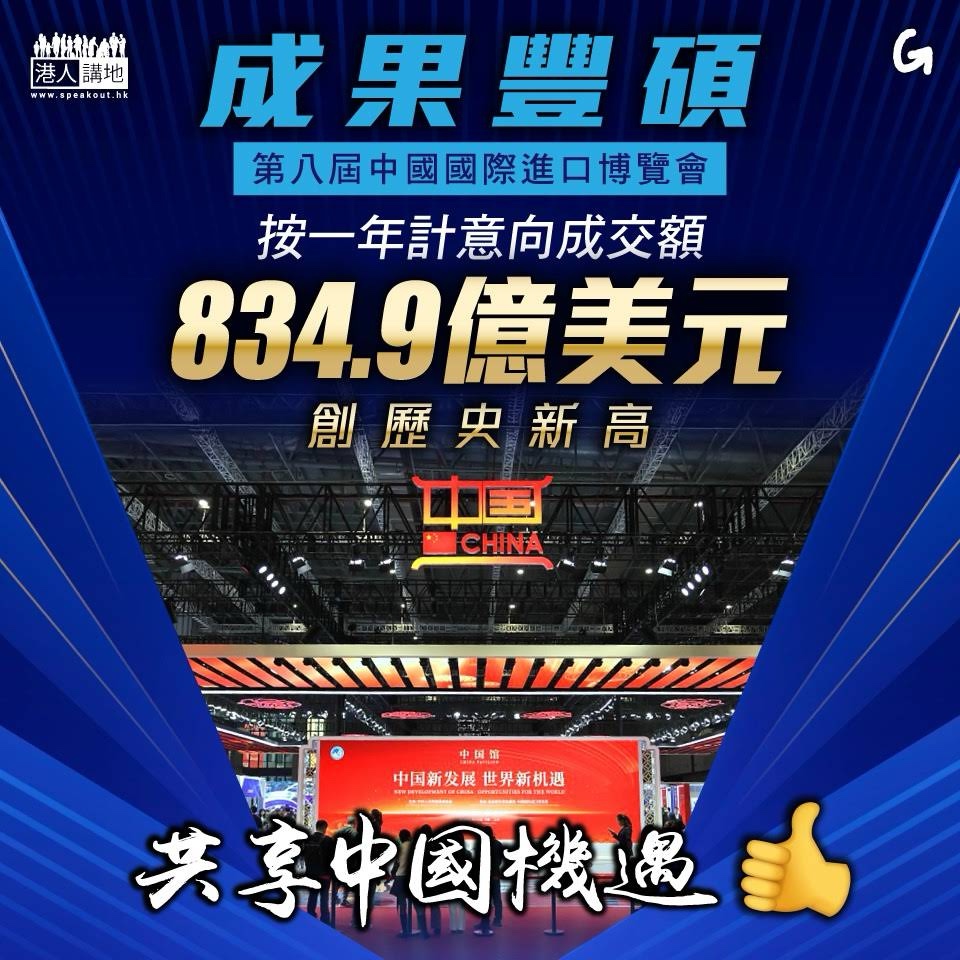
The 8th China International Import Expo (CIIE) concluded yesterday (10th) in Shanghai, China bought $83.49 billion, a 4.4% increase from the previous session. 第八屆中國國際進口博覽會昨日(10日)在上海閉幕, 中國買進834.9億美元,比前交易會成長4.4%
據中國國際進口博覽局黨委書記、副局長吳政平在進博會閉幕發布會上表示,本屆進博會創下多項歷史新高:按一年計意向成交額834.9億美元,比上屆增長4.4%,創歷史新高;企業展面積超過36.7萬平方米,共有來自138個國家和地區的4108家企業參展,展覽面積和企業數量均創歷史新高。
吳政平又指,在參展企業中,世界500強和行業龍頭企業達290家,180家企業成為八屆全勤生,充分體現中國超大市場、超大規模市場的強大持續率。
今年共計有380家港商參展,佔到全部參展商的近一成,數量和規模再創歷史紀錄。香港貿發局表示,安排超過1000場商貿對接活動,讓參展港商面對面與採購商等交流,今年亦在食品館設立直播間,為他們帶來曝光率,促使多間展商都成功達成合作成果。
According to Wu Zhengping, Deputy Secretary of the Party Committee and Deputy Director of the China International Import Expo Bureau, speaking at the closing press conference, this year’s expo set multiple historical records: the intended transaction value, calculated on a one-year basis, reached $83.49 billion, a 4.4% increase from the previous session, setting a new historical high. The enterprise exhibition area exceeded 367,000 square meters, with 4,108 companies participating from 138 countries and regions, both setting new records in exhibition area and number of participating enterprises.
Wu also noted that among the exhibitors, 290 were Fortune 500 companies and industry leaders, while 180 companies have participated in all eight sessions, fully demonstrating the strong and sustained appeal of China’s vast market and large-scale economy.
This year, a total of 380 Hong Kong businesses participated, accounting for nearly 10% of all exhibitors, with the number and scale reaching a new historical record. The Hong Kong Trade Development Council stated that it arranged over 1,000 business matching events, allowing Hong Kong exhibitors to engage face-to-face with buyers and others. This year, a live broadcast room was also set up in the food hall to increase their exposure, leading to successful cooperation outcomes for multiple exhibitors.
-
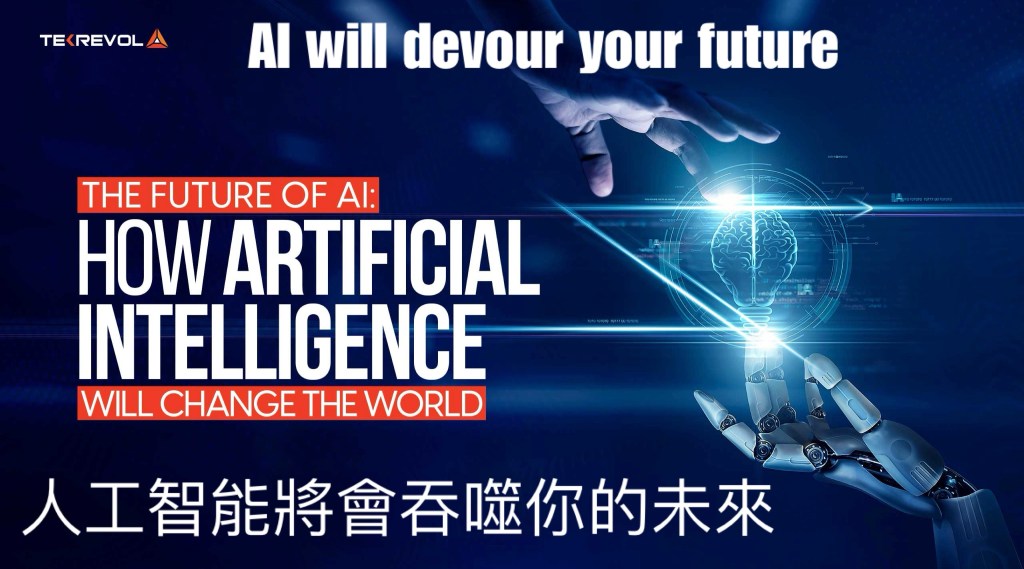
Video: AI will devour your future
Video: AI will devour your future 視訊: 人工智能將會吞噬你的未來
https://rumble.com/v71kahc-ai-will-devour-your-future.html
https://www.tiktok.com/t/ZP8DbeRkK/Artificial intelligence is not here to take your job, but to devour your future! Do you possess the qualities of “wisdom, trustworthiness, compassion, courage, and discipline”? Can you achieve them? Are you capable of being molded into a talent? Do you truly desire success? 人工智慧不是要搶走你的工作, 而是要吞噬你的未來! 你有 “智,信,仁,勇、嚴” 的條件嗎?你能做到嗎?你是可造之才嗎?你真的想成功?
-
Video with English subtitles: AI Isn’t Here to Take Your Job – It’s Here to Kill Your Future
Video with English subtitles: AI Isn’t Here to Take Your Job – It’s Here to Kill Your Future 影片有英文字幕: 人工智慧不是要搶走你的工作, 而是要吞噬你的未來
https://rumble.com/v71k1cc-ai-isnt-here-to-take-your-job-its-here-to-kill-your-future.html
https://www.tiktok.com/t/ZP8DqK2Pc/A few hundred thousand people control 10% of global wealth. What happens to the other 8 billion?
This video reveals a brutal truth: AI’s real threat isn’t stealing your job, it’s destroying your only path to becoming skilled.
The rules have changed. From pyramid to inverted pyramid, from factories to tech giants, everything is different. When companies stop hiring juniors and AI replaces entry-level roles, how do young people grow?
Deep dive into:
Why Buffett recommends S&P 500 but won’t touch tech stocks
Wealth concentration worse than Louis XVI’s France
The brutal truth: each new barrier eliminates half the competitionHow AI steals your training opportunities
Two paths for regular people in the inverted pyramid era
The easier survival gets, the harder success becomes. Will you swim like a tuna, or accept the new reality?
數十萬人掌控著全球10%的財富。其他80億人將何去何從?
本片揭示一個殘酷真相:AI真正的威脅不是取代你的工作,而是摧毀你成為專業人才的唯一途徑。
遊戲規則已改變。從金字塔到倒金字塔,從工廠到科技巨頭,一切都不同了。當企業停止招聘初階員工,AI取代入門級職位,年輕人該如何成長?
深度剖析:
為何巴菲特推薦標普500指數卻不碰科技股
財富集中程度比路易十六時期的法國更嚴重
殘酷現實:每道新門檻都會淘汰半數競爭者
AI如何竊取你的成長機會
倒金字塔時代普通人的兩條出路生存越容易,成功越艱難。你會像鮪魚般奮力洄游,還是接受這個新現實?

-
Large numbers of Japanese experts are abandoning Japan and flocking to China. Superficially for money, but is there another purpose?
Large numbers of Japanese experts are abandoning Japan and flocking to China. Superficially for money, but is there another purpose? 大批日本專家拋棄日本湧入中國,表面為了賺錢,實則另有目的?
I’ve previously come across stories about several highly capable Japanese researchers switching jobs to China. What’s more notable is that when they move, Japanese media pays close attention! A profound reshaping of the scientific research talent landscape is unfolding in East Asia.
While outside attention remains focused on superficial factors like salary and benefits, the reality behind the migration of large numbers of Japanese scientists to China is actually two vastly different definitions of talent value within two distinct research ecosystems — one constantly misallocating talent within a rigid system, the other reactivating it amidst dynamic growth.
Japan’s research system is exhibiting a structural imbalance that spans entire careers. For young people just starting out, the “seniority-based” culture is like an invisible wall.
Nobel laureate Syukuro Manabe’s lament that “doing research in Japan requires reading the air” and the historic low of 23.4% for university faculty under 40 paint the same reality: seniority rules, and it’s hard for newcomers to get ahead.
And when scientists finally endure to achieve fame and success, the system’s rigidity awaits them on the other end. An invisible ceiling around age sixty pushes almost all senior experts to the margins of their academic careers.
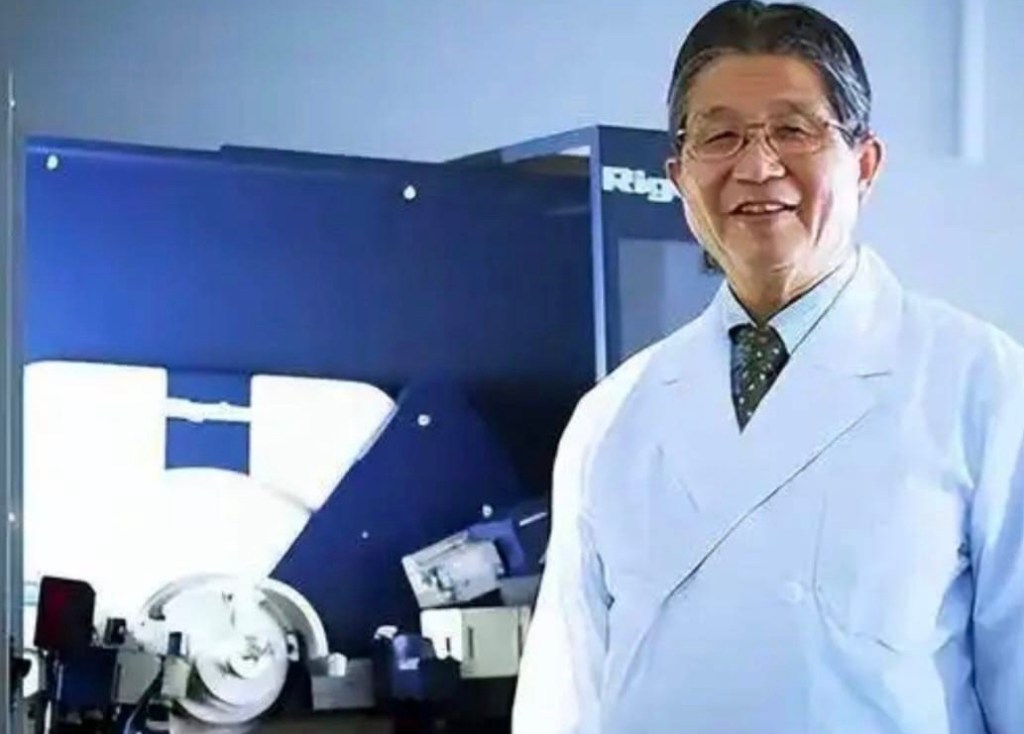
Many labs have aging equipment, project approval processes are frustratingly long, and even a towering figure like Akira Fujishima, who holds over 300 patents, could worry about funding in Japan.
From repression in youth to marginalization in old age—this is a complete cycle of talent value misallocation!
In contrast, what China offers is far more than just money!
It’s more like a “value reactivation” platform covering the entire career lifecycle of a scientist. Motoyuki Hattori, who moved from Tokyo University to Fudan University, discovered that young people here can lead projects independently much earlier, and evaluation criteria are based on ability, not seniority.
For mid-career technical backbone personnel like Tsunehiro Endo, China’s vast industrial demand is a perfect stage. The core algorithm for variable-frequency motors he brought found immediate application facing China’s 90% share of global air conditioning production capacity, narrowing the technological gap by three to five years at once.
And for senior scholars facing “retirement” in Japan, like one old expert researching concrete durability, coming to China actually felt like “starting a new venture.” He not only got his own independent research group but could continue to contribute meaningfully. This respect for continued output made old professors like Kamon Ueda feel a long-lost sense of being “needed.”
Behind all this are advanced laboratory instruments, ample R&D investment, and one-stop logistical support from visas to children’s schooling. The entire system strives to let scientists focus without distraction, charging full speed ahead.
The ripples from this talent flow have long exceeded the realm of individual choice; it’s more like an ecological niche competition forcing Japan to engage in self-reflection!
👉 For China, the arrival of these experts is an “accelerator” for industrial upgrading, bringing not only key technologies but also mature methodologies, allowing “Japanese precision” to combine with “Chinese scale,” creating astonishing efficiency.
👉 In contrast, Japan’s global intellectual property ranking has fallen from the top spot to 13th place and has missed out on Nobel Prizes in natural sciences for several consecutive years. Facing reality, the Japanese government has also launched an “Elite University” strategy and a new trillion-yen talent policy, trying to retain people with high salaries.
👉 But Nature magazine pointed out sharply that without fundamental reform of the rigid system, merely throwing money at the problem will likely fail to reverse the overall situation.
👉 Ultimately, this isn’t a “talent war” at all, but a global optimization of scientific research resources. Scientists are voting with their feet, choosing the soil where their knowledge and passion can shine, and where their students’ “eyes light up.”
👉 This trend clearly shows that an open, efficient research ecosystem that respects the value of talent across all age groups is the core attraction in the future competition for innovation.
大批日本專家拋棄日本湧入中國,表面為了賺錢,實則另有目的?
之前看過幾個日本比較厲害的科研人跳槽中國的經歷。比較厲害的是他們跳槽,日本媒體也很關注!一場深刻的科研人才版圖重塑,正在東亞上演。
當外界目光還停留在薪酬待遇的表面時,大批日本科學家奔赴中國的背後,其實是兩種科研生態對人才價值截然不同的定義 —— 一個在僵化的體系里不斷錯配,另一個則在蓬勃的動態中重新激活。
日本的科研體系,正呈現出一種覆蓋整個職業生涯的結構性失衡。對於剛起步的年輕人,“年功序列”文化就像一堵看不見的牆。
諾貝爾獎得主真鍋淑郎那句“在日本搞科研需要察言觀色”的感慨,與40歲以下大學教師佔比僅23.4%的歷史新低數據,描繪出同一個現實:論資排輩,新人出頭難。
而當科學家們熬到功成名就,體系的僵化又在另一頭等着他們。一道六十歲左右的“隱形天花板”,幾乎將所有資深專家推向學術生涯的邊緣。
許多實驗室設備老化,項目審批流程漫長得讓人失去耐心,就連手握三百多項專利的泰斗級人物藤島昭,在日本都可能為經費發愁。
從青年時的壓抑到暮年時的邊緣化,這是一個完整的人才價值錯配閉環!
相比之下,中國提供的遠不止是錢!
它更像一個覆蓋科學家職業全生命周期的“價值再激活”平台。從東京大學跑到復旦的服部素之就發現,這裡的年輕人能更早地獨立帶項目,評價標準只看能力,不問資歷。
對於像遠藤常博這樣的中年技術骨幹,中國龐大的產業需求簡直是絕佳舞台。他帶來的變頻電機核心算法,在中國佔全球九成的空調產能面前,迅速轉化為生產力,一下子將技術差距縮短了三五年。
而那些在日本面臨“養老”的資深學者,比如一位研究混凝土耐久性的老專家,來到中國后竟然感覺像“再創業”,不僅有了自己的獨立課題組,還能繼續發光發熱。這種對持續產出的尊重,讓上田多門這樣的老教授感受到了久違的“被需要”。
這一切的背後,是先進的實驗儀器、充足的研發投入,以及從簽證到子女入學的一站式後勤服務。整個系統都在努力讓科學家們心無旁騖,只管向前沖。
這場人才流動激起的漣漪,早已超出了個人選擇的範疇,更像是一場倒逼日本進行自我審視的生態位競爭!
👉對中國來說,這些專家的到來是產業升級的“加速器”,不僅帶來了關鍵技術,更引入了成熟方法論,讓“日本的精細”與“中國的規模”結合,創造出驚人的效率。
👉反觀日本,全球知識產權排名已從榜首跌至第13位,並連續幾年與諾貝爾自然科學獎無緣。面對現實,日本政府也推出了“精英大學”戰略和千億日元的人才新政,試圖用高薪留人。
👉但《Nature》雜誌一針見血地指出,若不從根本上改革僵化體系,僅靠砸錢,恐怕很難扭轉大局。
👉說到底,這根本不是一場“人才爭奪戰”,而是一次科研資源的全球性優化配置。科學家們正用腳投票,選擇那片能讓自己的知識和熱情發光,能讓學生們“眼睛亮晶晶”的土壤。
👉這股浪潮清晰地表明,一個開放、高效、且尊重全年齡段人才價值的科研生態,才是未來創新競爭中最核心的吸引力。
-
Taiwanese financial expert Guo Zhengliang’s video: US AI stock market value surges, but US stocks may struggle to sustain it.
Taiwanese financial expert Guo Zhengliang’s video: US AI stock market value surges, but US stocks may struggle to sustain it. 台灣財經尊家郭正亮視頻: 美國AI股市值飆漲 美股恐難支持 https://youtu.be/jYIzeR4M7NE?si=lEUEb4UZiRUULlzD

-
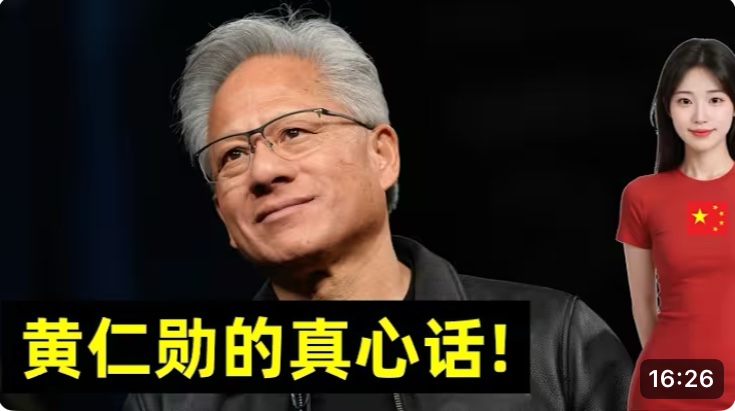
Video: Shocking! Leaked Remarks from Jensen Huang’s ‘Private Dinner’ Puncture the $5 Trillion AI Bubble: The U.S. Is Losing!
Video: Shocking! Leaked Remarks from Jensen Huang’s ‘Private Dinner’ Puncture the $5 Trillion AI Bubble: The U.S. Is Losing! 視訊: 震惊!黄仁勋『私密饭局』讲话泄露,戳破5万亿AI泡沫:美国要输了!
https://rumble.com/v71jlso-leaked-remarks-from-jensen-huangs-private-dinner-puncture-the-5-trillion-ai.html
https://www.tiktok.com/t/ZP8DqhpK4/This video provides an in-depth analysis of recent remarks made by Nvidia CEO Jensen Huang and the industry dynamics behind them. The content begins with rumors of a highly anticipated “private dinner,” exploring the discussed “ten advantages” in the context of the AI competition landscape between China and the United States.
We will cross-verify and interpret these rumors from multiple angles, incorporating Huang’s recent public statements, stock trading records of company executives, and the real-world challenges faced by industry giants like Microsoft and OpenAI (such as power shortages).
At its core, this video aims to explore the following key questions:
Does the U.S. AI industry have an “Achilles’ heel” in terms of insufficient application scenarios?
What strategic impact have U.S. export control policies had on tech companies like Nvidia?
How is the rise of competitors like Huawei reshaping the future of the global AI chip market?
This is a serious commentary on business and tech trends, intended to offer viewers a fresh perspective on understanding the current global AI race.
本期视频深入分析了近期围绕Nvidia CEO黄仁勋的一系列言论及其背后的产业动态。内容从一场备受关注的“私密晚宴”传闻切入,探讨了其中关于中美AI竞争格局“十大优势”的观点。
我们将结合黄仁勋近期的公开表态、公司高管的股票交易记录、以及微软、OpenAI等行业巨头面临的现实困境(如电力短缺),对这些传闻进行多角度的交叉验证和解读。
视频的核心,旨在探讨以下几个关键问题:
美国AI产业是否存在应用场景不足的“阿克琉斯之踵”?
美国的出口管制政策对Nvidia等科技公司造成了何种战略影响?
华为等竞争对手的崛起,如何改变全球AI芯片市场的未来?
这是一期严肃的商业和科技趋势评论,旨在为观众提供一个理解当前全球AI竞赛的全新视角。
-
Video: This is what the new US Dept of War has been telling us being played by Hollywood actors
Video: This is what the new US Dept of War has been telling us being played by Hollywood actors 這就是美國新戰爭部告訴我們的,現在由好萊塢演員們演繹給我們看見眞相.
https://rumble.com/v71ini2-this-is-what-the-new-us-dept-of-war-has-been-telling-us-being-played-by-hol.html
-
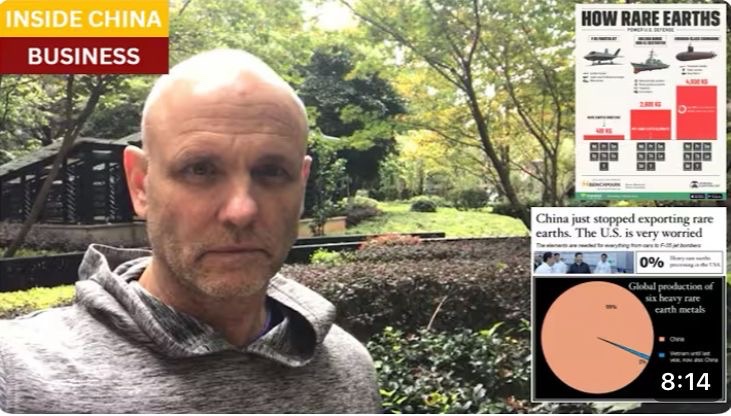
American logistic expert report from China with Chinese subtitles: The Rare Earths trade war just got complicated: Chinese industries need them here
American logistic expert report from China with Chinese subtitles: The Rare Earths trade war just got complicated: Chinese industries need them here 影片有中文字幕: 稀土贸易战局势日趋复杂:中国工业需优先保障本土供应
https://rumble.com/v71i8ay-the-rare-earths-trade-war-just-got-complicated-chinese-industries-need-them.html
https://www.tiktok.com/t/ZP8D4f1Ly/China’s factory sectors require massive volumes of Rare Earth materials and magnets to fuel their domestic needs.
Some industry insiders now insist that Chinese demand has caught up to supply, and export restrictions are necessary to keep domestic industries well supplied.
There are obvious national security issues involved, if Chinese officials allow the export of materials that eventually end up in foreign weapons systems.
But it also represents a huge opportunity cost to Chinese factories and households, if those minerals and magnets are sent elsewhere. Low-cost vehicles, electricity, and consumer products in China’s domestic economy also are dependent on the same inputs as Pentagon weapons makers and foreign factories.
中国制造业需要消耗巨量的稀土原料与磁材来满足国内需求。有业内专家指出,当前国内稀土供需已趋于平衡,必须通过出口管制才能确保本土产业获得稳定供给。
若放任可用于外国武器系统的稀土材料流出,显然将涉及国家安全问题。但将这些矿产与磁材输往海外,同样意味着中国工厂与家庭要承担巨大的机会成本——无论是中国本土经济中的低价汽车、电力与消费品,还是五角大楼的武器制造商与外国工厂,都依赖着相同的稀土资源。
-
Subscribe
Subscribed
Have a WordPress.com account? Log in now.

