-
Video with English subtitles: Why are Chinese students attended American & European universities unable to find jobs in China
Video with English subtitles: Why are Chinese students attended American & European universities unable to find jobs in China? 60% of Chinese spies caught in China graduated from Western universities! 視頻有英文字幕: 為什麼就讀美國和歐洲大學的中國學生無法在中國找到工作. 在中國被捕的中國間諜60%畢業於西方大學.
https://www.tiktok.com/t/ZP8SY2bT1/
https://youtu.be/JP8uIMMiiK4?si=EWzIaTV2WbqilwPC
https://rumble.com/v6yqs2u-why-are-chinese-students-attended-american-and-european-universities-unable.htmlIn this episode, we will conduct an in-depth analysis of:
✅ 1. Significance to major powers: Why have China-Europe relations undergone subtle changes? Behind a shuttle bus lies China’s confidence and attitude of no longer accommodating. This is not just a diplomatic game, but also the redefinition of world rules after the rise of a major power.
✅ 2. Significance to the world: As the old rules of globalization collapse, the United States turns its back, Europe is divided, and the world is moving from an era of “knowledge transfer” to an era of “knowledge creation”. With new three things and new opportunities, China is uniting countries along the “Belt and Road” in its own way, contributing new development plans to the world.
✅ 3. Significance to us: When “returnees from overseas studies” are no longer a golden sign, and when the job market is becoming increasingly cautious about international students, how should we make the right choices for ourselves and the next generation? From studying abroad to career planning, from worshipping foreign things and fawning on foreign countries to cultural confidence, every decision you make will affect your future destiny.
本集節目,我們將深入分析:
✅ 1. 對大國意義:中歐關係為何發生微妙變化?一輛接駁車的背後,隱藏著中國不再遷就的自信與姿態。這不僅是一場外交博弈,更是大國崛起後世界規則的重新定義。
✅ 2. 對世界意義:隨著全球化舊規則的崩塌,美國背棄,歐洲分裂,世界正從「知識轉移」時代走向「知識創造」時代。中國正以「新三板」和「新機會」的姿態,以自己的方式團結「一帶一路」沿線國家,為世界貢獻新的發展方案。
✅ 3. 對我們的意義:當「留學歸國」不再是金字招牌,當就業市場對留學生日益謹慎時,我們該如何為自己和下一代做出正確的選擇?從出國留學到職涯規劃,從崇洋媚外到文化自信,你的每一個決定都會影響你未來的命運.

-
SCMP: Hong Kong lawmakers vote down bill recognising same-sex partnerships
SCMP: Hong Kong lawmakers vote down bill recognising same-sex partnerships not to destroy the fabric of the Chinese society! Look at the sorry state of US Legalizing everything that is immoral and illegal! Law are made by mortals! HK lawmakers are elected by the people through democratic elections! HK people have spoken! 《南華早報》:香港議員否決承認同性伴侶關係的法案,為了不要破壞中國社會的基石!看看美國把所有不道德和非法的事情合法化的悲慘現狀!法律是凡人制定的!香港議員是人民透過民主選舉產生的!香港人民已經發聲了
https://www.scmp.com/news/hong-kong/politics/article/3325049/hong-kong-lawmakers-vote-down-bill-recognising-same-sex-partnerships?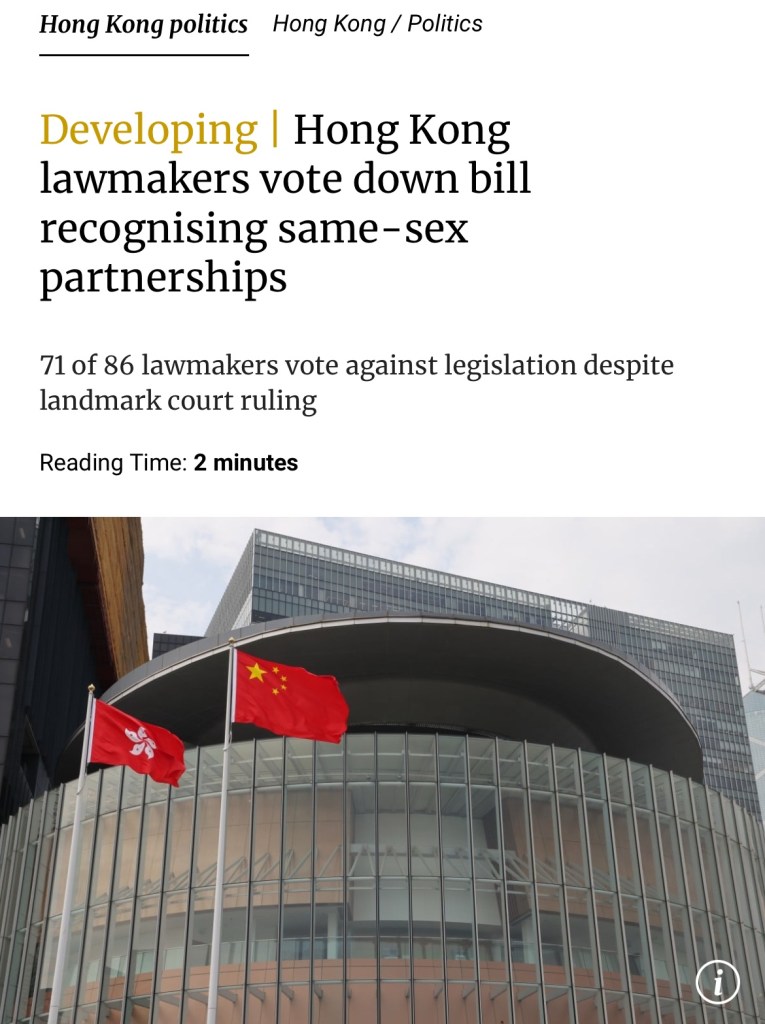
-
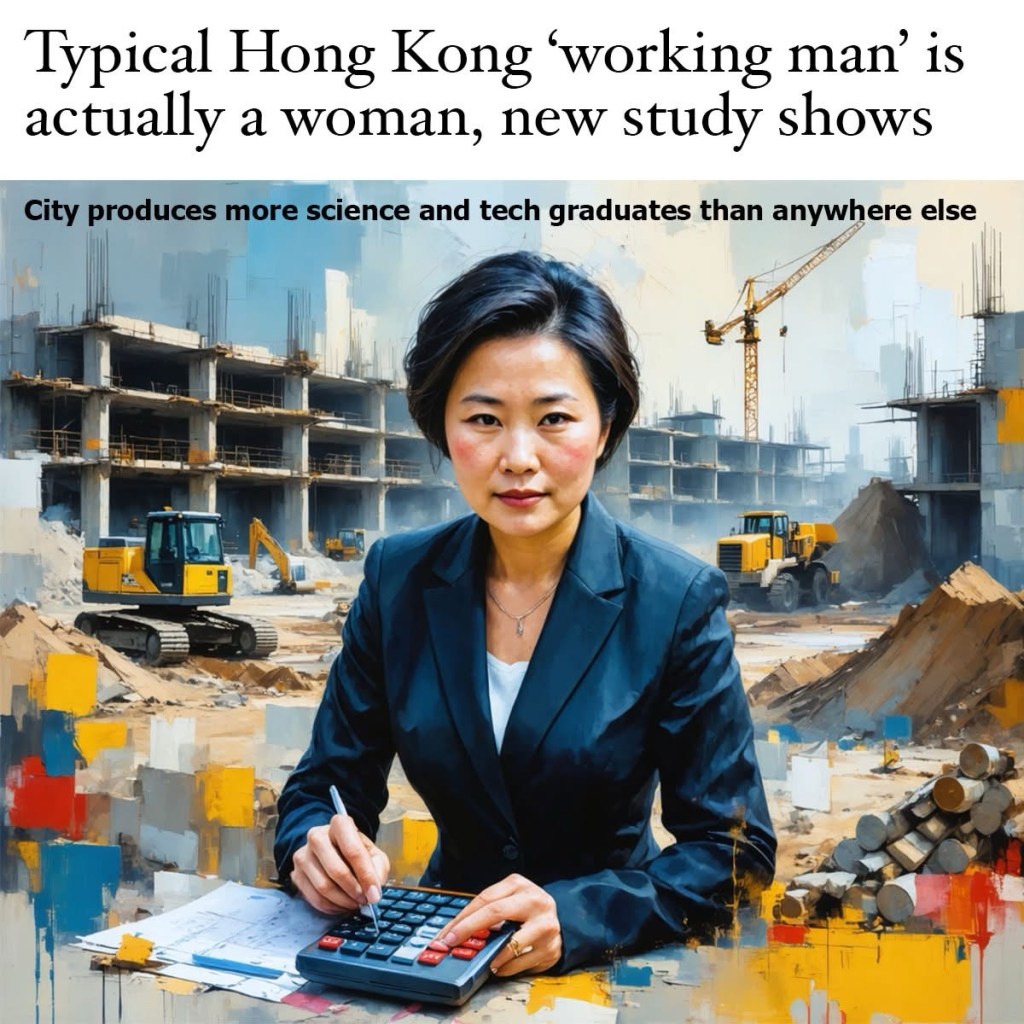
Nury Vittachi: Hong Kong produces more science and technology graduates than any other place on earth, a new study showed today.
Nury Vittachi: Hong Kong produces more science and technology graduates than any other place on earth, a new study showed today.
And the typical Hong Kong “working man” is a woman.
WORLD RECORD
More than 42.4 per cent of everyone leaving higher education in the city have STEM qualifications, the 2025 IMD World Talent Ranking revealed today—a world high.The city also has one of the largest availability of people with finance skills in the world, said researchers.
Hong Kong also had an unusually high number of women at work, with slightly more females (50.79 per cent) in the labor force than males.
Pay rates for people in business were high, too, with base salary and bonuses for senior managers adding up to US$285,857 a year.
DOWNSIDES TOO
But there were downsides, too. The cost of living in Hong Kong was unusually high, and the workforce had shrunk slightly, giving employers fewer choices.Data from 69 countries and territories worldwide were examined by the International Institute for Management Development, Zurich.
The study concluded that Hong Kong has the world’s most skilled workforce outside the west. The only places to score higher overall on the talent index were Switzerland, Luxembourg, and Iceland. Hong Kong’s perennial rival, Singapore, came 7th overall.
HARDWORKING SCHOOLS
An interesting side point the researchers discovered concerned education.Hong Kong scores in fundamental subjects like reading and mathematics were unusually high – but education spending, at 3.9 per cent of GDP, was low.
This suggests students and teachers were working hard to achieve high grades in an under-funded system.
-
English video with Chinese subtitles: Don’t go to China! US Government is right, if you are American, you won’t be able to handle it mentally in China
English video with Chinese subtitles: Don’t go to China! US Government is right, if you are American, you won’t be able to handle it mentally in China. 視頻有中文字幕: 別去中國!美國政府說得對,尤其是如果你是美國人,你在中國根本承受不了這種心理壓力,你返回美國後你還可以活下去嗎?
https://www.tiktok.com/t/ZP8SFBnse/
https://rumble.com/v6yq64y-dont-go-to-china-us-government-is-right-if-you-are-american-you-wont-be-abl.html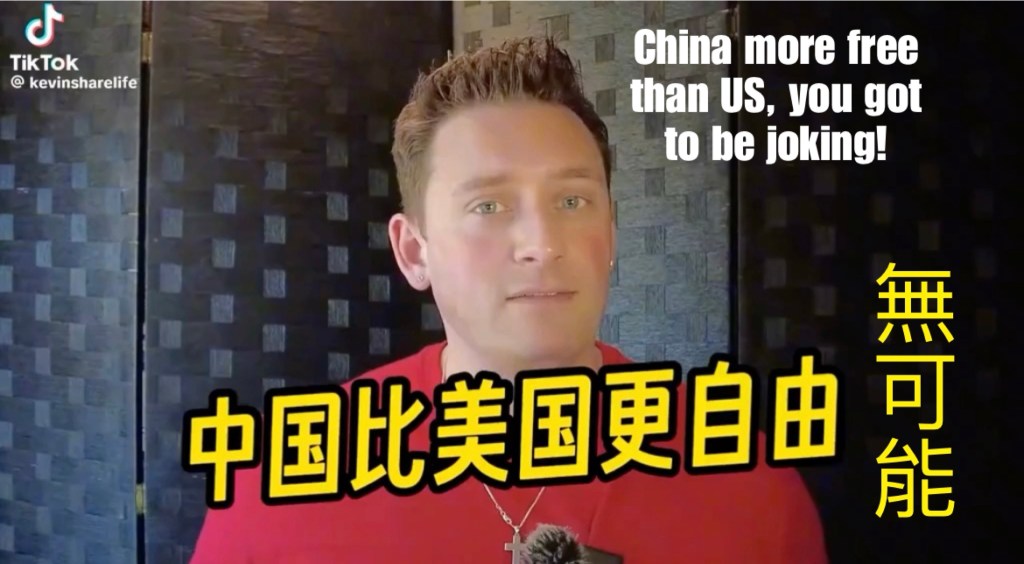
-
China will do a live demonstration of star war defense
China will do a live demonstration of star war defense! China’s military parade stunned the world, but just a few days later, China released even more explosive news…中國將進行星際大戰防禦實彈演示! 中國閱兵驚艷全球,不料幾天之後,中國就釋放了更勁爆的消息……
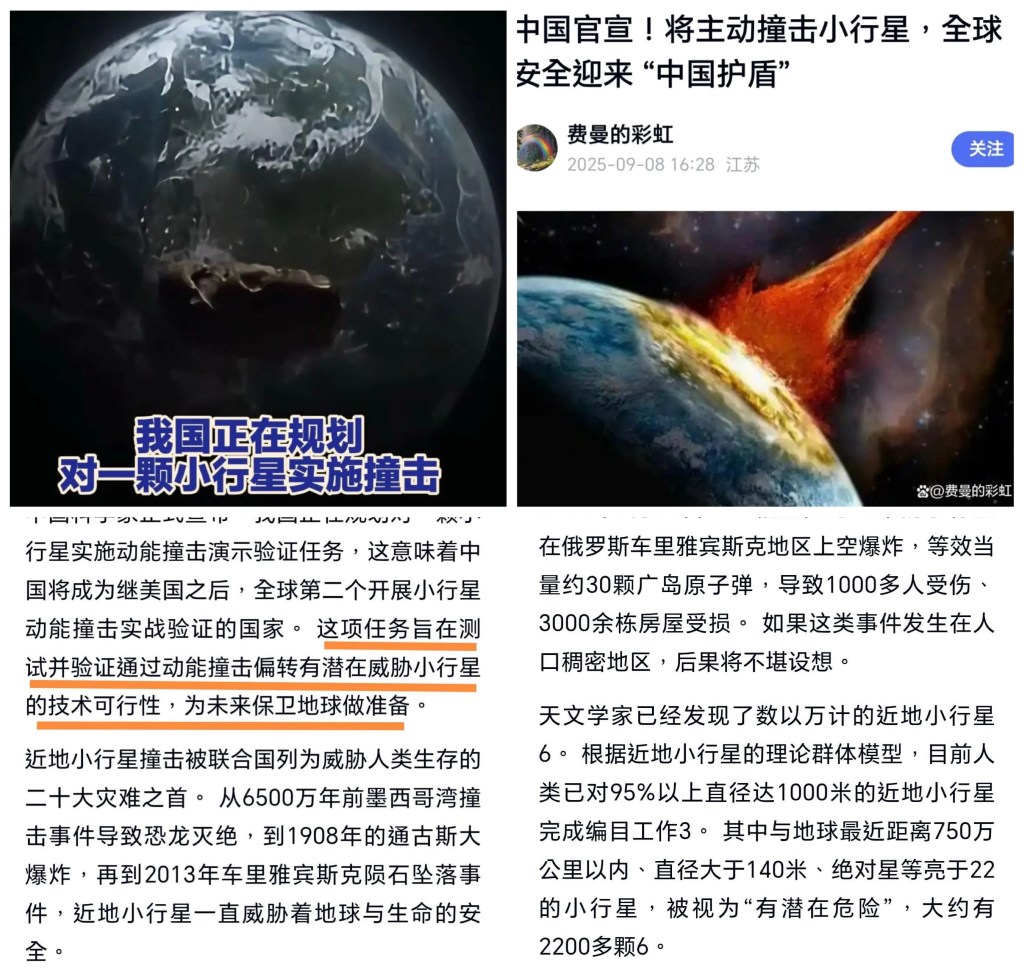
Chinese scientists officially announced to the world: China is going to impact an asteroid!
Don’t think this is just a firecracker. This time, we’re moving the test range 10 million kilometers into space, targeting a 50-meter-class asteroid with a currently undisclosed designation.
Before 2030, a Long March rocket will send a pair of “twins” into space: first, an observer will be placed close to the asteroid for photos, and then the impactor will slam into it at a speed of 6.5 kilometers per second, with an error margin of no more than an embroidery needle.
Why such a push? Tang Zhenghong of the Shanghai Astronomical Observatory offered a poignant statement: “In space, you don’t get a second chance. You either deflect once or come back a hundred years later.”
The story behind the scenes is even more outrageous than a science fiction film. NASA’s 2022 DART mission will impact a near-Earth asteroid, just 11 million kilometers away and at an impact velocity of 6.6 kilometers per second.
This time, China is extending its range to 26 times the distance between the Earth and the Moon, and shifting its orbit by at least 3 to 5 centimeters—which sounds like a tickle, but translated into a trajectory a century from now, it’s enough for Earth to avoid a kiss that could destroy an entire province.
To achieve these 3 centimeters, engineers have reduced the navigation radar to the size of a fingernail and folded the fuel tank into a “space fan.” Even the dust at the moment of impact must be captured by a companion spacecraft, which will complete a 360-degree orbit within 3 seconds. A delay of 0.1 second will mean it’s missed forever.
Even more challenging, the entire mission will require breaking the second cosmic velocity of 11.2 kilometers per second, equivalent to accelerating a 40-ton truck to 40,000 kilometers per hour. Currently, only China and the United States can achieve this.
Some worry, “What if it breaks into pieces?” Purple Mountain Observatory has calculated that if the target is a “rubble pile” structure, the fragments will be pulled away by the sun’s gravity, and the probability of them falling to Earth is lower than winning the lottery three times in a row.
What’s truly daunting is the price tag: a single impact mission costs 3 billion RMB, which sounds painful, but compare that to the 2013 Russian asteroid, with the equivalent of 30 Hiroshima bombs, which only injured 1,500 people. Had it landed in Shanghai, the economic losses would have been in the trillions. In other words, this money buys humanity’s “space traffic insurance.”
A deeper calculation was laid out at the recently concluded Tiandu International Conference in Hefei: China issued a global initiative for cooperation, promoting the sharing of data, payloads, and ground-based telescopes. Satellites from other countries want a ride? Welcome. ESA wants joint observations? No problem.
While some countries treat space as their private backyard, China has elevated it to a “global group purchase,” allowing anyone to participate. By 2035, we will deploy 25 “Chinese Compound Eyes” with 30-meter apertures, forming a radar network spanning tens of millions of kilometers. Theoretically, this radar network could lock onto a 140-meter-diameter “city killer” ten years in advance.
In short: In the future, any asteroid aiming to provoke Earth will first have to ask China for permission. So, stop calling this “Star Wars 2.0”; the real name is “Community of Shared Future for Mankind” with a hack.
The next time you see a shooting star streak by at night, remember that it might not be a wish, but someone taking a bullet for you.
Do you think this 3 billion yuan “insurance premium” is worth it? Leave a comment in the comments section, give a like, and let the Earth hear our voice.
中國的科學家正式通告全球:中國要撞擊小行星了!
別以為這只是“放炮仗”,這回咱們把靶場搬到1000萬公裡外的太空,目標是一顆50米級、編號暫保密的小行星。
2030年前,長征火箭會把一對“雙胞胎”送上去:先放觀測器貼臉拍照,再讓撞擊器以每秒6.5公里的速度一頭撞上去,誤差不能超過一根繡花針。
為啥這麼拼?上海天文台唐正宏一句話扎心:太空里沒人給你第二次補考,要麼一次偏轉,要麼百年後再來。
幕後故事比科幻片還離譜。2022年美NASA的DART任務撞的是近地小行星,距離僅1100萬公里,撞擊速度6.6公里/秒;
中國這回把射程拉到地月距離的26倍,還要讓軌道至少偏移3到5厘米——聽起來像撓痒痒,可換算成百年後的軌跡,足夠讓地球躲開一場可能毀滅一座省份的親吻。
為了這3厘米,工程師把導航雷達做成指甲蓋大小,把燃料箱摺疊成“太空摺扇”,連撞擊瞬間的塵埃都得靠伴飛器在3秒內完成360度環繞拍攝,晚0.1秒就永遠錯過。
更狠的是,整個任務要突破第二宇宙速度11.2公里/秒,相當於把一輛40噸重卡加速到4萬公里/小時,全球目前只有中美能辦到。
有人擔心“撞碎怎麼辦”?紫金山天文台算過,目標若是“碎石堆”結構,碎片也會被太陽引力拉走,落在地球的概率比你連中三次大樂透還低。
真正讓人頭皮發麻的是價格:一次撞擊任務燒掉30億人民幣,聽着肉疼,可對比2013年俄羅斯那顆30顆廣島原子彈當量的小行星,只傷了1500人,要是落在上海,經濟損失得用萬億計。換句話說,這筆錢買的是人類文明的“太空交強險”。
更深層的算盤在合肥剛閉幕的天都國際會議上已經攤開:中國向全球發出合作倡議,數據、載荷、地面望遠鏡一起共享。別國衛星想搭車?歡迎。歐空局想聯合觀測?沒問題。
對比某些國家把太空當私家後院,中國直接把這活兒升級成“全球團購”,誰都能上車。2035年前,咱們還要布25部30米孔徑“中國複眼”,組成千萬公里級雷達網,理論上能提前10年鎖定一顆直徑140米的“城市殺手”。
一句話:以後誰的小行星要惹地球,得先問問中國答不答應。所以,別再說這是“星球大戰2.0”,真正的名字是“人類命運共同體”外掛。
下次夜裡有流星劃過,記住那可能不是許願,是有人在替你擋子彈。
你覺得這筆30億的“保費”值不值?評論區聊兩句,點個贊,讓地球聽見我們的聲音。
-
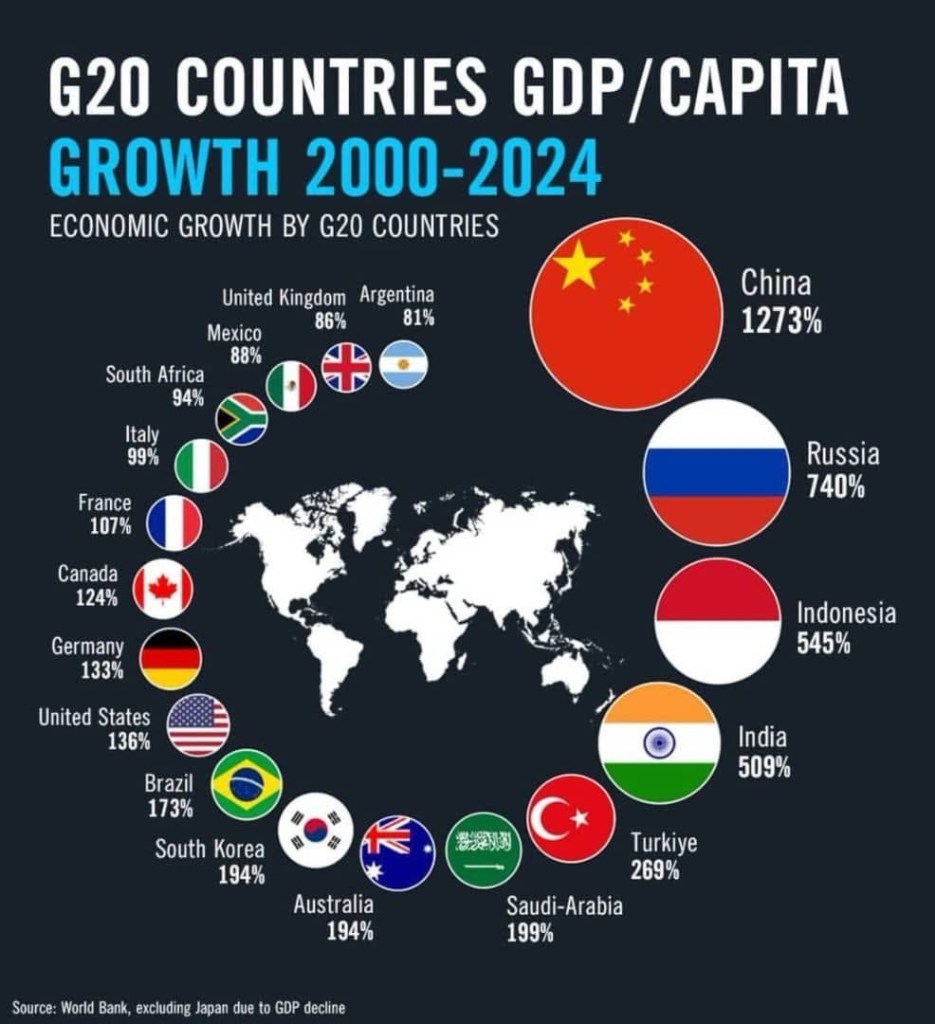
From 2000 to 2024, China’s per capita GDP has grown by 1273% — the highest among all G20 members
From 2000 to 2024, China’s per capita GDP has grown by 1273% — the highest among all G20 members. Cr: Globalstats11
-
Video with English subtitles: The American Dream, which has been touted in China for four decades, has been shattered!
Video with English subtitles: The American Dream, which has been touted in China for four decades, has been shattered! Today, it has become a nightmare! Exposing America’s “ideological colonization” tactics! Public intellectuals have become local colonizers! 視頻有英文字幕: 在中国吹了四十年的美国梦, 被戳破! 今天已經變成惡夢! 曝光美國「思想殖民」手段! 許多有智識的華人高科技人才已經陷入了美國的惡夢! 窮人例外! 公知变土殖!
https://www.tiktok.com/t/ZP8SNngtx/
https://youtu.be/eCWeQIz29cI?si=fkcd5CD4LuiOHnLg
https://rumble.com/v6ypbr6-the-american-dream-which-has-been-touted-in-china-for-four-decades-has-been.html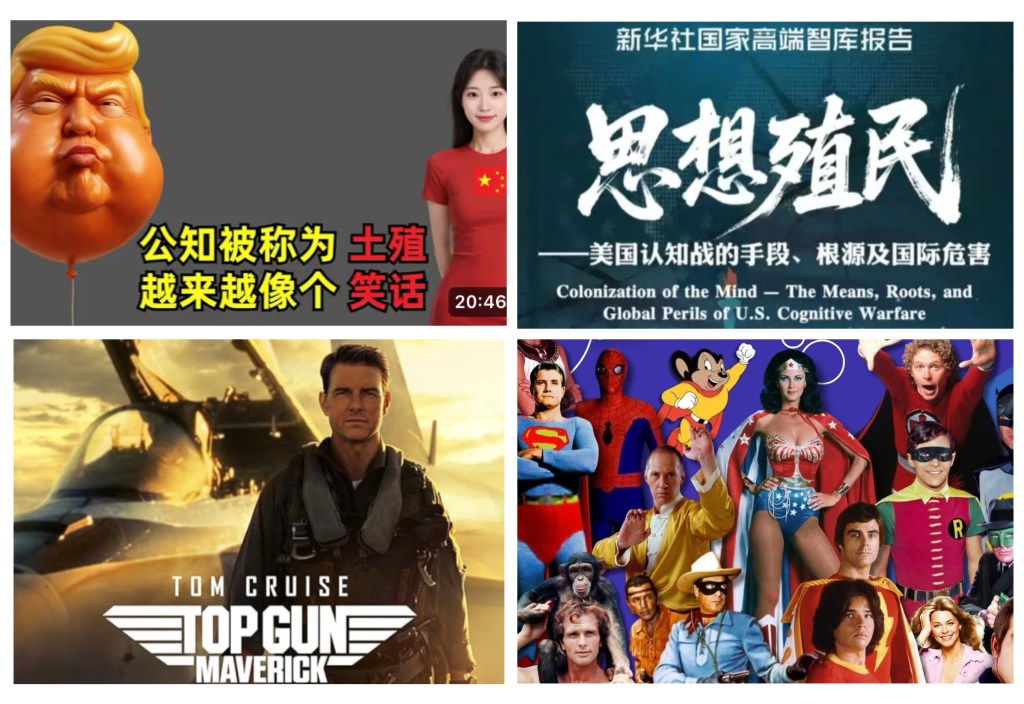
-
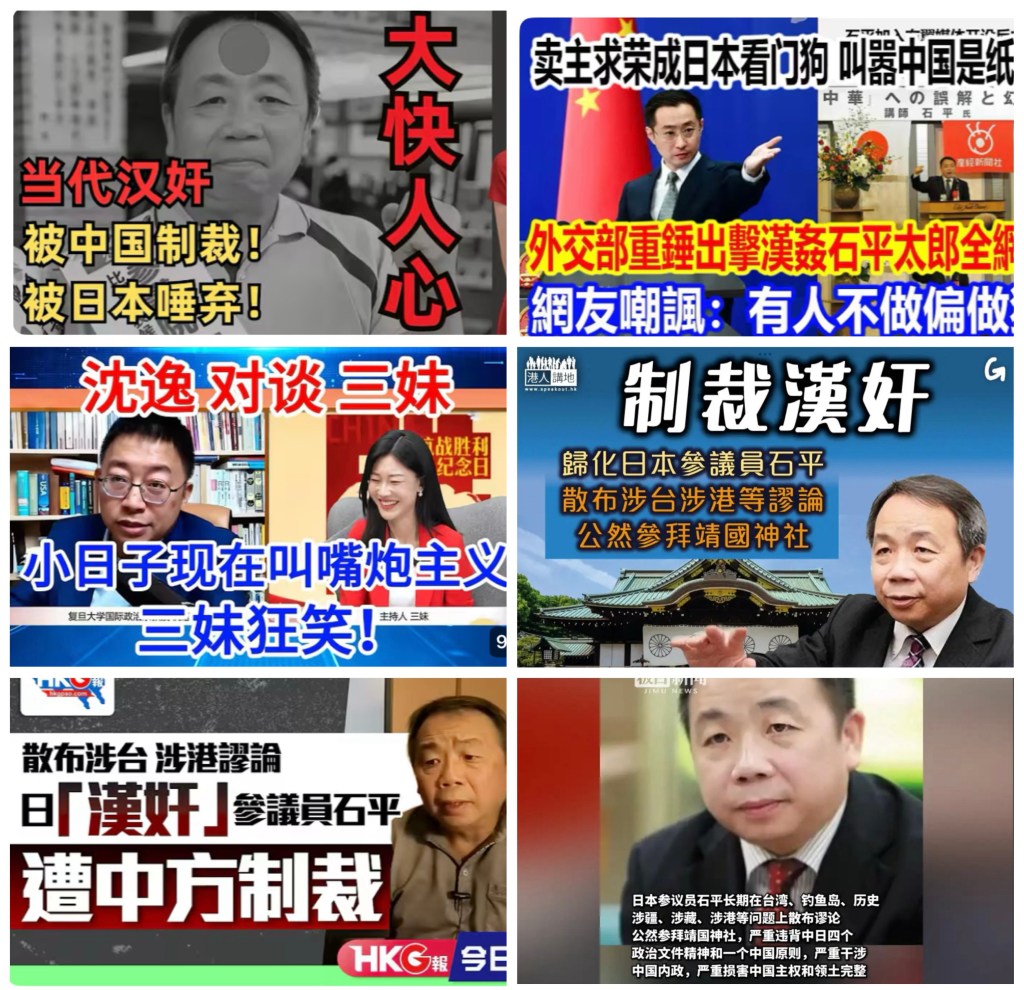
Video with English subtitles: A modern-day Chinese traitor, selling out his country for personal gain
Video with English subtitles: A modern-day Chinese traitor, selling out his country for personal gain! Ishihira Taro “asks for a hammer and gets it”: a clown purged by China and despised by Japan! 視頻有英文字幕: 當代漢姦,賣國求榮!石平太郎「求錘得錘」:一個被中國清除,也被日本嫌棄的小丑!
https://youtu.be/XaOdpNGN0AA?si=49i4czIVEYO67Q3u
https://www.tiktok.com/t/ZP8SLqdbu/
https://rumble.com/v6yp0by-a-modern-day-chinese-traitor-selling-out-his-country-for-personal-gain.htmlChina has taken action! A Japanese lawmaker has been sanctioned, and he’s asking for punishment, having once regretted being born in the “Land of Abundance”…
On the morning of September 8th, a notice of less than 300 words on the Ministry of Foreign Affairs website propelled 63-year-old Japanese Senator Ishihira to the top of trending searches in both China and Japan.
The notice contained three main points: 1. All of his assets in China are frozen; 2. No Chinese institutions or individuals are allowed to do business with him; 3. He and his immediate family members will never be able to obtain visas to mainland China, Hong Kong, or Macau. There was no buffer or advance notice; the sanctions took effect the moment they were announced.
This isn’t the first time Ishihira has been the subject of scrutiny on the Chinese internet. Two months ago, he was elected to the Senate as a proportional representative of the Restoration Party, becoming one of the very few Chinese-born members of the Japanese Diet.
At the time, public opinion dismissed him as simply “another anti-China commentator who had come ashore.” It wasn’t until late August, when he compiled several GIFs of Emperor Hirohito parodies posted on Chinese social media platforms into an “investigation report” and submitted it to the Japanese Ministry of Foreign Affairs, demanding official representations to Beijing regarding the “insult to the symbolic emperor.” The matter then escalated from the keyboard to the diplomatic level. The Ministry of Foreign Affairs subsequently raised the matter during a bilateral meeting, which the Chinese delegation rejected on the spot. However, Shi Ping’s name was subsequently placed on the sanctions list by the relevant authorities.
Compared to his recent actions, his trajectory over the past three decades reads more like a manual on “How to Lose Your Homeland.” Born in Chengdu in 1962, he entered the Department of Philosophy at Peking University in 1980 and was sent to Kobe University in 1988 for a doctorate. Since then, he has relied on scholarships and commissioned writing for Chinese media outlets to make a living.
Unable to find a stable teaching position during the 1990s economic downturn in Japan, he began using extreme rhetoric to gain publicity: first, he denied the number of victims of the Nanjing Massacre, then he called “Chinese people a human virus.” In 2007, he finally obtained Japanese citizenship and immediately changed his name to “Ishihira Taro,” describing his birthplace as “the stain he most wanted to erase.”
In 2013, he registered the “Ishihira Taro” account on Twitter, introducing himself as “a former Chinese.” Leveraging this persona, he published twelve books over the next decade, with similar titles like “Why I Abandoned China” and “Countdown to China’s Collapse.” Total sales were less than 80,000 copies, but they were enough to secure him a regular column in the Sankei Shimbun.
What truly made him a “must-have” for the Japanese right was the 2012 Diaoyu/Senkaku Islands nationalization incident. In seven consecutive live broadcasts, Ishihira used his experiences as a student in Chengdu, asserting that “there’s not even fresh water on the islands, making it impossible for Chinese people to live there permanently.” After the broadcast, right-wing groups hailed him as evidence of his pro-China credentials.
From then on, whenever Sino-Japanese friction arose and a TV station needed a “Chinese-born commentator” to speak, they would call him. With this 500,000 yen daily “announcement fee,” he bought a 70-square-meter apartment in central Tokyo, registered under his Japanese wife’s name.
After the sanctions were implemented, he posted on platform X, claiming to have been “honored by the Chinese government,” with a photo of a self-Photoshopped “medal.” But the numbers don’t tell the whole story: According to the Japanese Senate’s public asset declaration, Ishihira’s only verifiable domestic real estate is a 90-square-meter old house in his hometown in Yamagata Prefecture. His bank deposits in China, the earliest of which was 32,000 RMB in royalties from a Sankei Shimbun column in 2009, have been regularly transferred in monthly since then, totaling approximately 2.8 million RMB over ten years. All of this has now been frozen.
A more pressing issue is that he was originally scheduled to attend the East Asia Economic Forum in Osaka at the end of September, sponsored by a Chinese company. After his visa was revoked, the organizers simply scrapped his speaking slot, citing a “scheduling conflict.”
A source within the Peking University Alumni Association revealed that the university quietly removed him from its “Overseas Alumni Directory” as early as 2010, “but it simply didn’t announce it publicly.” Zhang Shiying, the retired philosophy professor who recommended him to study in Japan, was asked about Shi Ping by a student at a small lecture last week. The professor simply replied, “If a person treats his hometown as an enemy, his hometown will have no choice but to treat him as a passerby.”
The story doesn’t end there. At a regular press conference on the afternoon of the 8th, Foreign Ministry spokesman Lin Jian, when asked if there would be a subsequent list, replied, “Any individual or entity that undermines China’s sovereignty and territorial integrity will be severely punished according to law.” The on-site interpreter emphasized the words “according to law.”
中方出手了!日本議員被制裁,求錘得錘的他,曾為出生在“天府之國”而遺憾……
9月8日清晨,外交部網站上一則不到三百字的通報,把63歲的日本參議員石平推上中日兩國熱搜。
通報只有三件事:1.他在中國境內的所有資產被凍結;2.任何中國機構和個人不得再與他做生意;3.本人及直系親屬永遠拿不到前往中國內地和港澳的簽證。沒有緩衝、沒有預告,生效時間就是發布那一刻。
石平並不是第一次被中文互聯網圍觀。兩個月前,他以“維新會”比例代表身份當選參議員,成為日本國會裡極少數出生在中國的議員。
輿論當時只把他當作“又一個反華評論員上岸”,直到8月底,他把中文社交平台上幾幅網友惡搞的裕仁天皇動圖整理成“調查報告”遞交給日本外務省,要求官方就“侮辱象徵天皇”向北京交涉,事情才從鍵盤走向外交層面。外務省隨後果然在雙邊會晤中提及此事,中方代表團當場駁回,但石平的名字由此進入主管部門的制裁清單程序。
相比近期的操作,他過去三十年的軌跡更像一部“如何失去祖國”的說明書。1962年生於成都,1980年考上北大哲學系,1988年公派到神戶大學讀博,此後一路靠獎學金和中文媒體約稿生活。
1990年代日本經濟斷崖,他找不到穩定教職,開始用極端言論換版面:先是否認南京大屠殺人數,再稱“中國人是人類病毒”,2007年終於拿到日本國籍,當場改名“石平太郎”,並把出生地說成“一生最想刪除的污點”。
2013年他在推特註冊“石平太郎”賬號,自我介紹直接寫“前中國人”,靠着這套人設,十年裡出書十二本,題目大同小異——《我為什麼拋棄中國》《中國崩潰倒計時》,銷量總計不到八萬冊,卻足夠讓他在《產經新聞》拿到固定專欄。
真正讓他成為日本右翼“剛需”的是2012年釣魚島國有化事件。石平在電視台連做七場直播,拿出自己當年在成都上學的經歷,斷言“島上連淡水都沒有,中國人不可能長期居住”,節目播出后右翼團體把他奉為“知華派”證據。
此後每逢中日摩擦,電視台需要“中國出身評論家”站台,就撥通他的電話。靠着這份日薪50萬日元的“通告費”,他在東京都心買了套70平方米公寓,登記在自己日本妻子的名下。
制裁落地后,他在X平台發文稱“被中國政府授勛”,配圖是一枚自己P上去的“勳章”。不過數字不會陪演戲:根據日本參議院公開的資產申報,石平目前名下可查的境內不動產只剩山形縣老家一間90平方米的老屋;他在中國境內的銀行存款,最早一筆是2009年《產經新聞》專欄的稿費人民幣3.2萬元,此後每月定時轉入,十年累計約280萬元,今天已全部凍結。
更現實的問題是,他原定9月底到大阪出席一個中國企業贊助的“東亞經濟論壇”,簽證取消后,主辦方直接把他的演講時段劃掉,對外只說“檔期衝突”。
北京大學校友會內部人士透露,學校早在2010年就把他從“海外校友名錄”悄悄剔除,“只是沒對外宣布”。當年推薦他赴日留學的導師、哲學系退休教授張世英,上周在一場小型講座被學生問起石平,老人只回了一句:“一個人把故鄉當敵人,故鄉只好把他當路人。”
故事到這裡並沒有結束。外交部發言人林劍在8日下午的例行記者會上被問及“是否還有後續名單”,他回了一句:“任何損害中國主權和領土完整的個人或實體,都將依法受到嚴懲。”現場翻譯把“依法”兩個字咬得格外清楚。
-
Video with English subtitles: All you need to know about Belt and Road is here, Why do 80% of countries choose China’s Belt and Road Initiative?
Video with English subtitles: All you need to know about Belt and Road is here, Why do 80% of countries choose China’s Belt and Road Initiative? 視頻有英文字幕: 關於「一帶一路」你需要知道的一切在這𥚃,為什麼80%的國家選擇中國的「一帶一路」倡議?
https://youtu.be/FV8WgMWvjQY?si=eB0iRN1Uz_keI06Z
https://www.tiktok.com/t/ZP8SL5Lmp/https://rumble.com/v6yp0rc-all-you-need-to-know-about-belt-and-road-is-here.html
“The Belt and Road Initiative” is not just about building roads and bridges; it is China’s top-level design for the world pattern.
From the 1997 financial crisis to 9/11, from U.S. dollar hegemony to the lifeline of oil, from 5G and Beidou to 6G standards — this is a great chess game that concerns the next century.
「一帶一路」倡議不僅是修路架橋,更是中國對世界格局的頂層設計.
從1997年金融危機到9·11事件,從美元霸權到石油命脈,從5G、北斗到6G標準,這是一盤關乎百年大計的大棋.

-
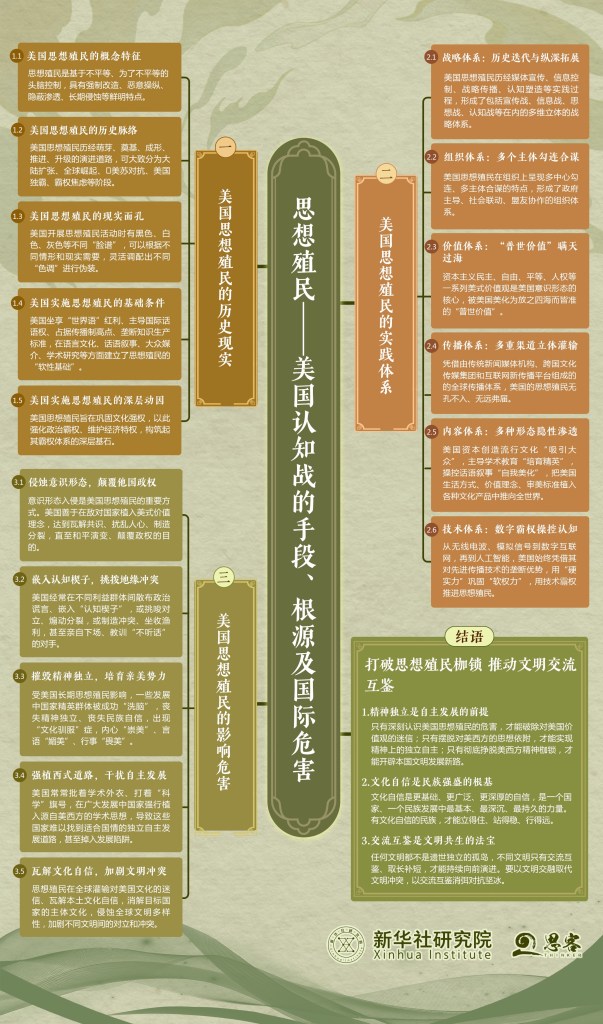
Exposing US “ideological colonization” tactics.
Exposing US “ideological colonization” tactics. Xinhua News Agency Research Institute releases a major report. Here’s a mind map! Explore the think tank report “Ideological Colonization: The Means, Roots, and International Dangers of US Cognitive Warfare.” 曝光美國「思想殖民」手段. 新華社研究院發布重磅報告. 思維導圖來了!一圖了解《思想殖民——美國認知戰的手段、根源及國際危害》智庫報告.
HK Ta Kung Pao Wen Wei Net reported that the Xinhua News Agency Research Institute released a research report on September 7 titled “Ideological Colonization: The Means, Roots, and International Dangers of the United States’ Cognitive Warfare.” The report states that the United States has long relied on “ideological colonization” to maintain its global hegemony. The report emphasizes that the United States does not expand solely through military or economic means, but rather through the export of values, public opinion manipulation, and cognitive warfare infiltration to reshape the social cognition of other countries and cultivate pro-American forces. The report aims to expose the United States’ covert tactics at the cultural and discourse levels and to warn the international community to be highly vigilant.
Overt, Covert, and “Civilian” Communication Methods
The report states that analysis suggests that the United States’ ideological infiltration primarily utilizes three methods: first, “white communication,” which involves overtly packaging values, such as through film, media, publishing, and education to promote so-called “freedom and democracy”; second, “black communication,” which operates covertly, including financial infiltration, cyberattacks, and public opinion manipulation, attempting to directly sow division and confrontation; and third, “gray communication,” which operates under the guise of “non-governmental” and “civilian exchanges,” using foundations, think tanks, and NGOs to covertly intervene and blur the lines between official and civilian sectors. These three methods complement each other, forming a comprehensive system of ideological manipulation.
Building cultural power through language and discourse monopoly
The report points out that the United States’ ability to exert influence over the long term is inseparable from its advantages in language and discourse. Leveraging the global currency of English and its monopoly in international media and academic publishing, the United States holds the commanding heights of discourse. This often leads to coercion in the promotion of its values, thereby forming a cultural power that supports its political hegemony and economic privilege.
New technologies facilitate more subtle infiltration
The report also emphasizes that with the application of emerging technologies such as artificial intelligence and big data, the United States’ ideological infiltration methods have become more sophisticated and covert. Leveraging algorithms and data analysis, the United States can more accurately target audiences, deliver targeted public opinion, and achieve precise influence. This change makes it more difficult for the outside world to identify and prevent this, further increasing the risk of ideological colonization.
With the decline of hegemony, its hypocrisy and harmfulness are becoming increasingly apparent.
The report points out that against the backdrop of the rise of power in the “Global South” and the decline of overall US hegemony, the hypocrisy of US “ideological colonization” is becoming increasingly difficult to conceal. Many countries are gradually realizing that the “freedom and democracy” advocated by the United States are often merely tools to serve its own interests, failing to truly bring about social stability or improvements in people’s livelihoods. Experts believe that US cognitive manipulation has become a significant factor in destabilizing the international order.
The report concludes by urging countries to remain vigilant in the face of subtle and volatile “ideological colonization,” strengthen information security and cultural sovereignty, and enhance their ability to create their own narratives. Promoting mutual learning and shared prosperity among civilizations based on cultural diversity and equal exchange can effectively weaken the influence of hegemonic thinking and build a more equitable and stable international order.
香港大公文匯網報道,新華社研究院9月7日發布研究報告《思想殖民——美國認知戰的手段、根源及國際危害》。報告指出,美國長期依靠「思想殖民」維持其全球霸權地位。報告強調,美國並非僅以軍事或經濟手段擴張,而是通過價值觀輸出、輿論操控和認知戰滲透,重塑他國社會認知,培植親美力量。報告旨在揭示美國在文化與話語層面的隱蔽手法,提醒國際社會高度警惕。
公開、秘密與「民間」的三重傳播手法
報告指出,分析認為,美國的思想滲透主要採取三種方式:一是公開進行價值包裝的「白色傳播」,例如透過電影、媒體、出版和教育,輸出所謂「自由與民主」;二是暗中操作的「黑色傳播」,包括資金滲透、網絡攻擊和輿論操縱,試圖直接製造分裂與對立;三是打着「非政府」「民間交流」旗號的「灰色傳播」,利用基金會、智庫和NGO隱蔽介入,模糊官方與民間界限。三種方式相互呼應,構成完整的思想操控體系。依託語言與話語壟斷,構築文化強權
報告指出,美國能夠長期輸出影響,離不開語言與話語的優勢。憑藉英語的全球通行地位,以及在國際傳媒、學術出版等領域的壟斷,美國掌握了話語制高點。這使其在推行價值觀時往往帶有強制性,進而形成文化層面的強權,為政治霸權和經濟特權提供支撐。新技術助推滲透更隱蔽
報告同時強調,隨着人工智能、大數據等新興技術的應用,美國的思想滲透手段更加精細和隱蔽。藉助演算法和數據分析,其可以更準確地鎖定受眾群體,定向投放輿論信息,實現精準影響。這種變化使外部社會更難識別與防範,思想殖民的風險進一步擴大。霸權衰落,虛偽性與危害性日益顯露
報告指出,在「全球南方」力量崛起以及美國整體霸權式微的背景下,美國「思想殖民」的虛偽性越來越難以掩蓋。許多國家逐漸認識到,美國鼓吹的「自由與民主」往往只是服務其自身利益的工具,並未真正帶來社會穩定與民生改善。專家認為,美國的認知操控已成為國際秩序不穩定的重要因素。報告最後呼籲,面對隱蔽而多變的「思想殖民」,各國需要保持警惕,強化信息安全與文化主權建設,提升自主敘事能力。在文明多樣性與平等交流的基礎上,推動不同文明的互鑑共榮,方能有效削弱霸權思維的影響,構建更加公平與穩定的國際秩序。
-
Subscribe
Subscribed
Have a WordPress.com account? Log in now.

