Chinese Community Self-hynosis that Sherry Chen cash settlement to shut us up equals Justice was being served when no one got fired, replempented nor attorney fees and court cost reimbursed is a joke and slap on our face! 美國華人社區自我催眠,陳霞芬現金和解讓我們閉嘴等於正義得到伸張,但黑手沒有受到懲罰,沒有人被解僱,沒有支付陳霞芬律師費和法庭費用真的是一個笑話,打了我們一記耳光後我們還有心情去興祝, 阿Q精神十足, 可悲.
Video: When Americans accused China without Freedom, Democracy and Human Rights, just walk away because the gift from US China refused, the gift belongs to the American. 當美國人指責中國沒有自由、民主和人權時,中國轉身就走開,因為美國人的禮物中國拒絕了,禮物是屬於美國人的。
US asked China what do you see in me? China says Freedom, Democracy and Human Rights. China asked US what do you see in me? US said China is a piece of shit. US was so happy went to Church and spoken to God on what happened. God said you lose because you accused China based on the reflection of yourself. China is the country with true humanity to their people and the world. 美國問中國,你在我身上看到了什麼?中國說自由、民主和人權。中國問美國你在我身上看到了什麼?美國說中國是一坨屎。美國很高興去教堂並就發生的事情與上帝交談。上帝說你輸了,因為你根據自己的反思指責中國。中國是一個對本國人民和世界具有真正人性的國家。
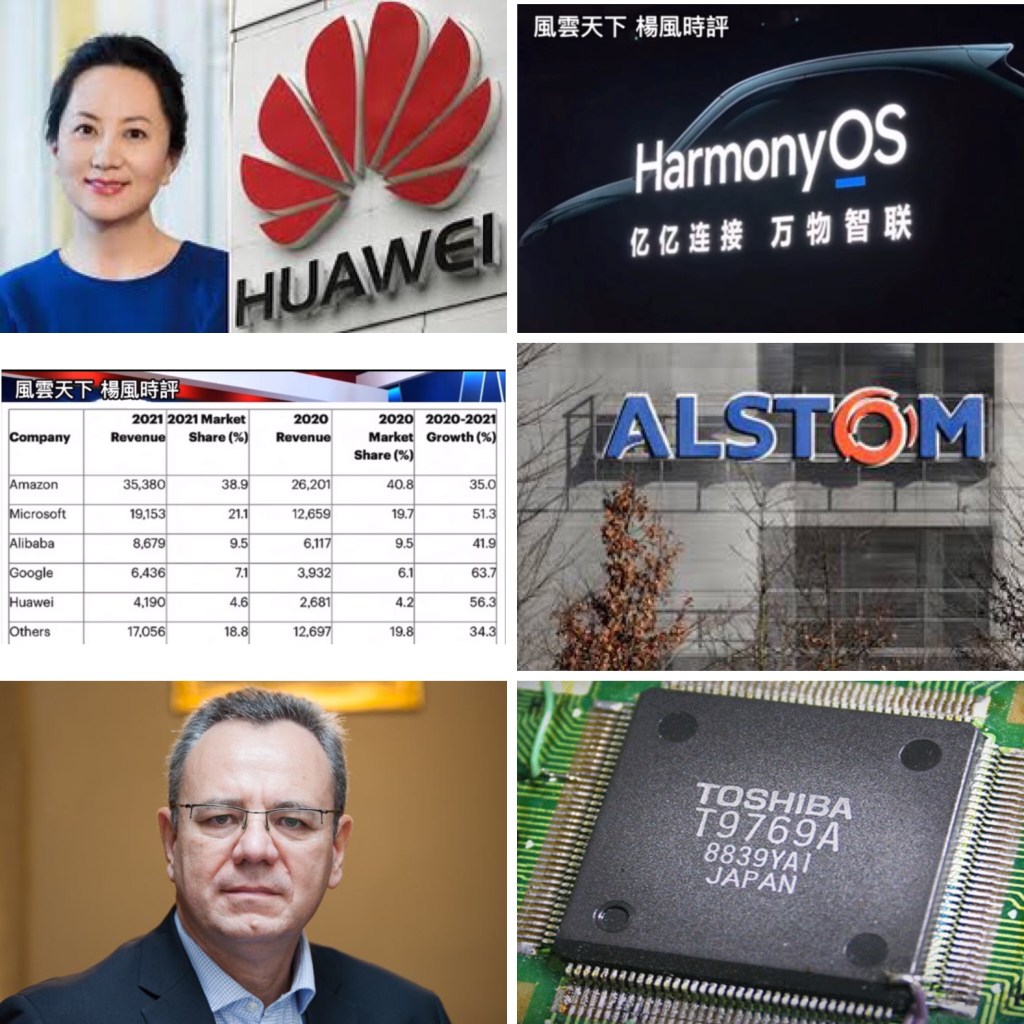
The US charges against Chinese officials for allegedly tampering with a Huawei investigation were just the tip of the iceberg. The US has also arrested and/or deported scores of Chinese nationals who are scientists, academics, and professionals in recent years. Peace activist K.J. Noh, also a scholar on the geopolitics of Asia & an organizer with Pivot to Peace, explains the alarming trend.
No Justice at all for Sherry Chen – US Gov’t to Pay Over $1.5 Million in Damages to Wrongly Prosecuted Chinese American Scientist Sherry Chen. But no US Gov’t Official lost their job nor they pay for Sherry’s attorneys fee and court cost. You could be next! Let’s NOT white wash it as victory or Justice! 美國政府不向被錯誤起訴的華裔科學家支付超過 150 萬美元的賠償金。但沒有美國政府官員失去工作,也沒有支付律師費和法庭費用。如果你是中國人, 你可能是下一個!不要讓我們把它洗白為勝利或正義!
Asia Times: Biden’s next two years look bleak. The Democratic Party has survived, but the White House remains mired in a failed foreign policy By GEORGE KOO, Nov 11 2022
Despite going into the midterm elections with under 40% popular approval, US President Joe Biden appears to have survived the outcome, avoiding the mortal wound historically associated with a lame duck in the White House.
Bill Clinton, a rare US president who presided over a budget surplus, once embraced an adviser’s mantra “It’s the economy, stupid.” Biden does not seem be graded by his grasp of the economy.
Fortunately for Biden, foreign policy does not normally figure in American voters’ thinking. The Biden team has run around the world busily trying to shore up the American position as the hegemon of the world. Drawing from the lessons of the ignominious retreat from Afghanistan after a 20-year debacle, Biden’s new strategy was to assert authority by initiating proxy wars – in other words, getting somebody else to do the fighting.
He was successful in provoking Russia into invading Ukraine and supplying more than $40 billion worth of arms to Kiev to fight to the last Ukrainian standing. Uncle Sam’s EU allies dutifully supported Washington and castigated Russian President Vladimir Putin for his aggression.
EU suffers as Russia sanctions backfired
Initially, the European Union supported the sanctions imposed by the Biden administration. Then Putin changed the rules of the game by demanding payment in rubles for Russia’s oil and natural gas. The net effect was a ruble that strengthened against the euro and dollar. And the EU countries got to pay through the nose for their energy.
Then the Nord Stream 1 and 2 pipelines from Russia were “mysteriously” blown up by a blatant act of sabotage. Severing the pipelines supplying Russian gas to Germany and others in Europe erases any basis of reconciliation with Russia, so Washington thought.
Rather than letting European allies face a freezing winter, the US rushed to the rescue by selling Texas crude and liquefied natural gas (LNG) at high prices. Yes, very profitable for the US but not so good for the Europeans, feeding their mounting resentment toward Uncle Sam.
Leaders of Germany and France are beginning to question the wisdom of blindly following Washington. They are beginning to see that the so-called “rule-based international order” is nothing more than rules for placing orders for American oil.
German Chancellor Olaf Scholz quickly led a delegation to Beijing shortly after the adjournment of the 20th People’s Congress. One significant outcome of his one-day visit was a joint declaration with President Xi Jinping that the two countries will promote a multipolar world and disavow any attempt at decoupling – a clear rejection of Biden’s foreign policy.
Scholz was also handed a $17 billion order for Airbus passenger jets and acceptance of BioNTech Covid vaccines for use in China. The business leaders in the German delegation also announced intentions to increase their investments in China. These are clear indications that both countries recognize the importance of their economic partnership.
Germany is just the latest American ally to realize that dutifully lining up behind Uncle Sam merely exposes them to a full dose of flatulence and not much else.
Saudi Arabia says get lost
To help tamp down inflation, Biden asked Saudi Arabia to increase oil output so as to reduce the prices at America’s gasoline pumps and lessen the pain of taxpayers. Saudi promptly did the opposite by cutting oil production. In less polite circles, we would call that a middle-finger salute.
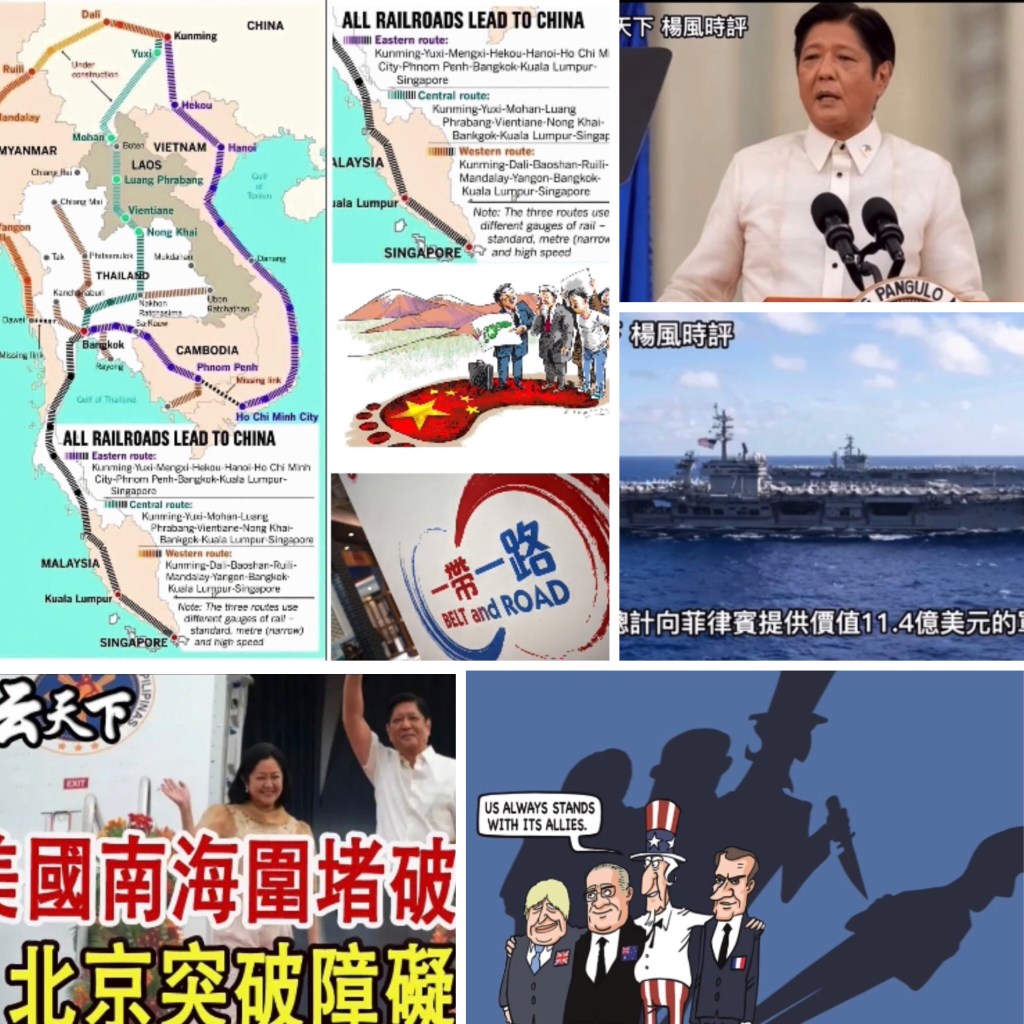
In fact, Saudi Arabia shows no fealty to the US but is applying to join BRICS and the Shanghai Cooperation Organization (SCO), in both of which China plays a leading role. Riyadh is also finalizing arrangements to sell oil to China for yuan instead of petrodollars.
Iran along with India and Pakistan are already members of the SCO. Others including Turkey, Belarus and Egypt are waiting to join. The organization promotes cooperation and collaboration for mutual benefit and geopolitical tension and rivalry is left outside the door.
Military alliances and confrontations are specifically excluded in the charter of the organization. That India and Pakistan can belong in the same organization is proof. That Saudi Arabia would join with Iran perhaps presages a more amicable future between those two states.
Unlike being aligned with the US, collaborating with China has no downside. No need to host bases for the American troops, and the resultant indignities that, for example, civilians in South Korea and Okinawa have to endure.
Turning his attention to China, Biden has his double-talk down pat. According to the one-China principle, Taiwan is part of China, and the US stands by that. On the other hand, it will train the Taiwanese people how to fight, give them more and better weapons and a promise to send American troops to defend Taiwan. For now, let us defer the ramifications of this issue for another day.
Biden turns to China
In the meantime, despite protestations that the US and China can collaborate in important issues, Biden has gone all-in to wage a full-blown chips war against China. His edicts are intended to effect a total shutdown of trade, exchanges and any sort of transactions involving semiconductor products and technology between the West and China.
The desired outcome is to kneecap China’s semiconductor development. However, the Silicon Valley giants such as Applied Materials and Lam Research are among the first companies to be kneecapped. More than 30% their sales go to China only 8% in the US. Their American employees in China are put on hold and layoffs are beginning in the US.
Nvidia and Advanced Micro Devices (AMD) can no longer sell their most advanced chips to China for artificial-intelligence development. These advanced chips represent these companies’ most important comparative advantage and will mean lost sales in the hundreds of millions. Lost sales are opportunity costs that do not return. The total drop in market cap for the entire industry worldwide is around US$1.5 trillion.
ASML of the Netherlands has virtually a world monopoly on lithographic machines necessary to transfer chip design into actual chips. The company is struggling with not being able to sell not only the most advanced generation but even the older-generation machines to China. These machines go for hundreds of million dollars, and the Biden White House is asking the Dutch company to sit on its hands.
Taiwan Semiconductor Manufacturing Company (TSMC), Korean companies and Japanese companies are similarly requested by Biden to kneecap themselves for the greater good of keeping China’s chip industry stunted. Apparently, American companies are forced to comply by law, but the non-American companies are stalling in their compliance.
As Asia Times has pointed out, “the [US] Commerce Department’s specifications show ignorance about the technologies involved and confusion – if not duplicity – about the ban’s implications for China’s military. The experts’ group concluded that the new policy was rushed into effect in panic mode, without weighing its civilian or military implications.”
In other words, the embargo order was hastily and sloppily written and leaves plenty of holes and ambiguity for further arguments and negotiations for exceptions. The chips clampdown is supposedly based on security grounds, but American commercial interests will take a major hit as a consequence.
The semiconductor embargo has forced China to work around the American chokeholds. Contrary to Washington’s perception, the Chinese won’t catch up by just copying and replicating silicon-based American technology.
For example, they have been working on gallium arsenide as the substrate for photonic chips that will operate 1,000 times as fast at 1% of the power consumption – which is important for military uses and does not rely on economies of scale essential in commercial applications.
What will be the eventual outcome? Companies in the West will be crippled by the decoupling and play in a market smaller than the formerly globalized market. New companies in China will dominate in a market centered on China. The sum of both markets is likely to be less than the total market today. This is a classic lose-lose outcome.
The joke is on Washington
It is hard for us Americans to know if our political leaders are just joshing or are seriously misinformed about China. Washington seems to see China as a mere copycat that depends on intellectual-property (IP) theft to compete with America.
In certain technologies, China has at least caught up to the US, if not already surpassing it. To name a few: fifth generation to 6G in telecommunications, superior accuracy of Beidou over America’s Global Positioning System (GPS), exploration missions to Mars and the dark side of the moon, Tiangong soon to be the only space station circling Earth, quantum computing and hypersonic glide missiles.
And oh yes, China has a network of thousands of kilometers of high-speed rail. The US? Zero.
Readers might be amused to know that former US congressman Frank Wolf, who had control of annual funding for the National Aeronautics and Space Administration (NASA), specifically demanded the exclusion of China from participating in the International Space Station that was jointly operated with the Soviet Union. Now the US is complaining that all the writing in Tiangong is in Chinese, even though NASA has yet to be invited to visit.
According a recent joint report from Harvard, Princeton and the Massachusetts Institute of Technology (MIT), at least 1,400 US-based ethnic Chinese scientists and academicians have left the US in direct response to the notorious “China Initiative,” and the departures continue to increase.
They have been intimidated and terrorized by random arrests and prosecution that leaves them traumatized, reputation destroyed and financially ruined. Our Department of (in)Justice does not apologize for wrongful prosecution nor offer compensation for damages. This self-inflicted injury will be America’s loss and China’s gain.
The good news is that some Chinese are coming to the US. According to Bloomberg News, Tesla is sending production personnel, automation and control engineers from China to its plant in Fremont, California, in order to “reproduce the success of the Tesla factory in Shanghai.”
Another way of saying “be careful of what you wish for” is to quote Rafael Reif, outgoing president of MIT: “If all we do in response to China’s ambition is to try to double-lock all our doors, I believe we will lock ourselves into mediocrity.”
George Koo retired from a global advisory services firm where he advised clients on their China strategies and business operations. Educated at MIT, Stevens Institute and Santa Clara University, he is the founder and former managing director of International Strategic Alliances. He is currently a board member of Freschfield’s, a novel green building platform. Follow him on Twitter @george_koo.