Video: My good friend’s thoughts (who is an engineer & major contractor) before leaving Hong Kong and returning to the United States by plane
“It’s been three years since my last visit to Hong Kong. I was looking forward to and cherishing the trip to Hong Kong. The joy is that the taste has finally returned. The wonton noodles and beef porridge are better than the abalone in America. Sadness is the complexity and I was caught off guard by the epidemic prevention test. The climax is that Hong Kong finally has a world-class museum M+, both in architecture and design. 香港的 0-3 必須取消, 否則沒有遊客願意返回. 好友離開香港坐飛機返美國前的感想: “濶别三年,香港之行好期望和珍惜。喜是味覺終於回來的云吞面和牛肉粥,比飽魚还好味!哀的是繁覆的防疫檢測,有点措手不拾。高潮是香港終於有了一間世界級的博物館M+,無論建築和設計都是超凡,是訪港節目首選。香港点滴趁後生还有腳骨力留下回憶!”
I think Americans are OK because US buying Russian gas and sell it to EU for profits. For natural gas we sell to EU at 4x what Russia used to sell them. We give subsidies to US industries for high gas price to drive EU companies out of business or pay EU companies to leave EU to come to America. When you have friends like US, who need enemies? 英國廣播公司: 英國人正在吃狗糧。 我認為美國人還可以不會受到影響, 因為美國購買平價俄羅斯石油並將其出售給歐盟以獲取利潤。 對於天然氣,美國以 4 倍於俄羅斯過去出售給歐盟的價格出售給歐盟。 我們為美國工業提供高油價補貼,以迫使歐盟公司倒閉或支付歐盟公司離開歐盟來到美國。 當你有美國這樣的朋友時,誰還需要敵人?
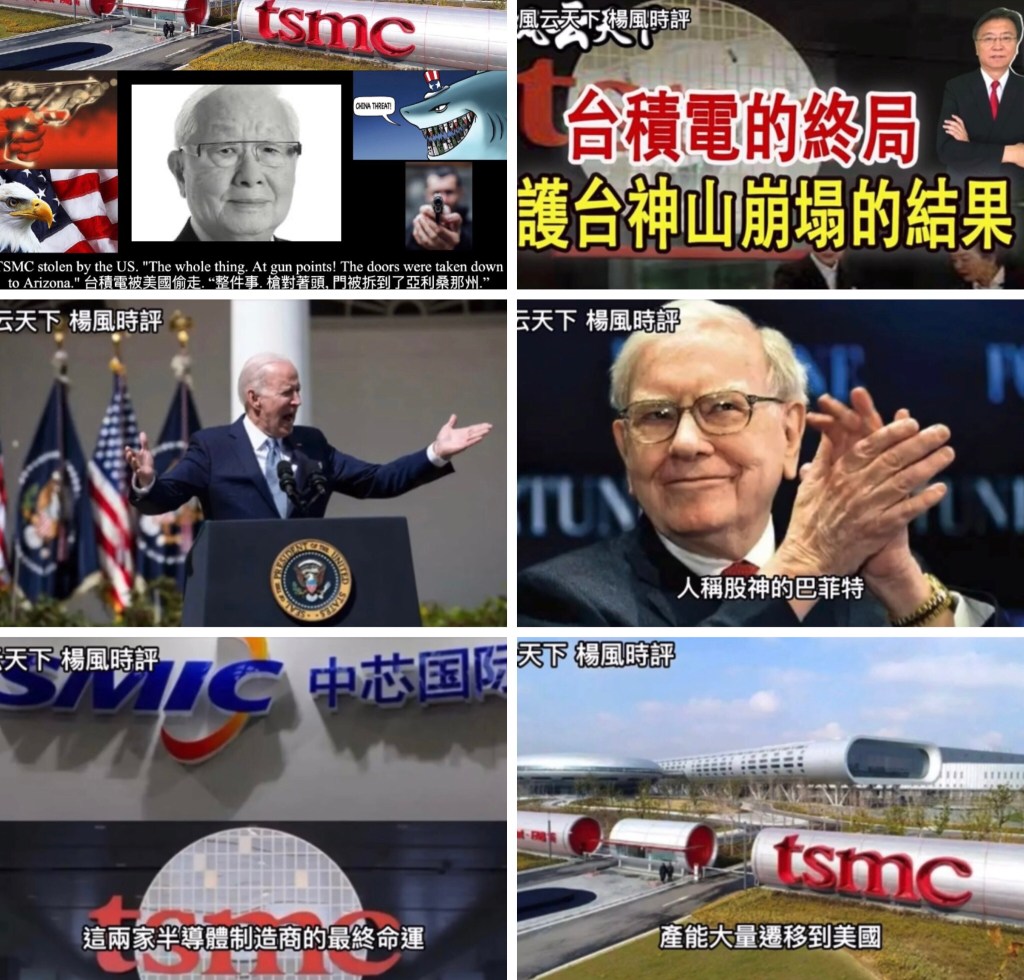
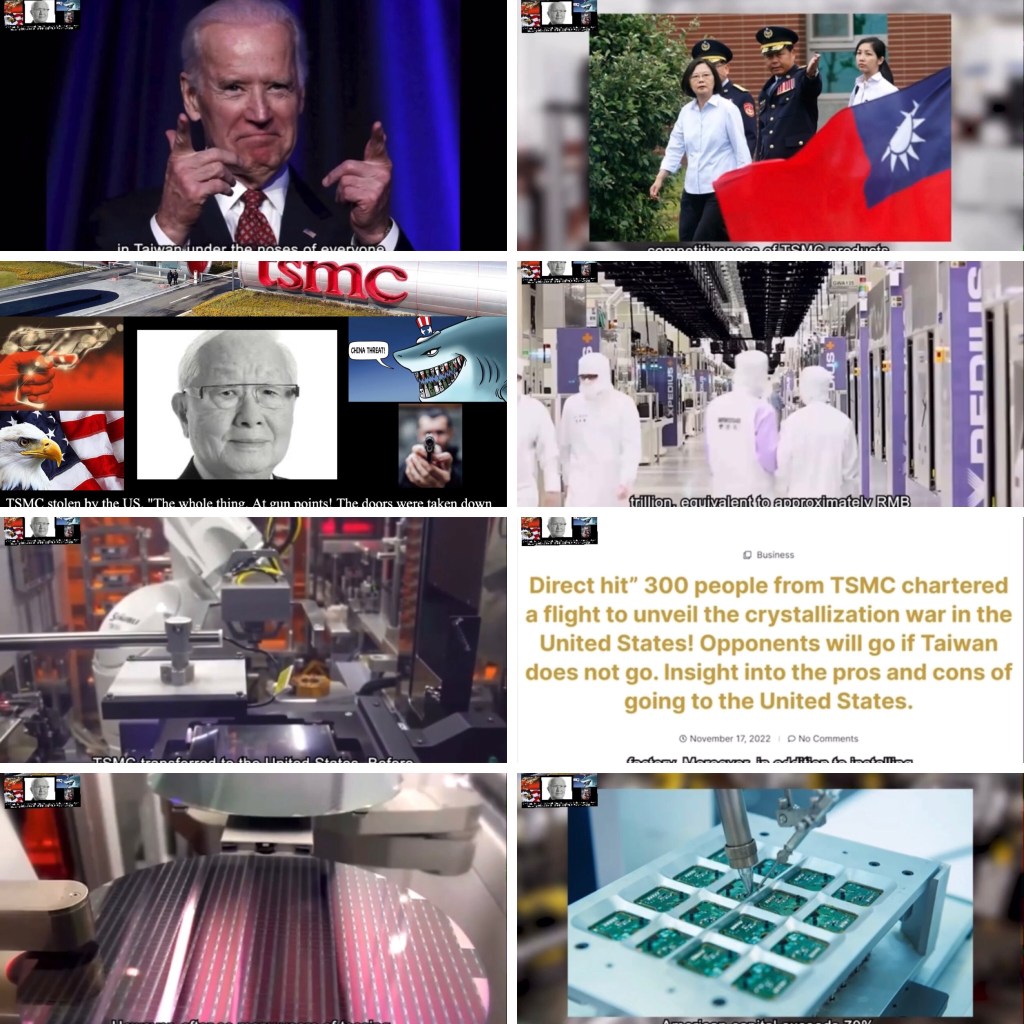
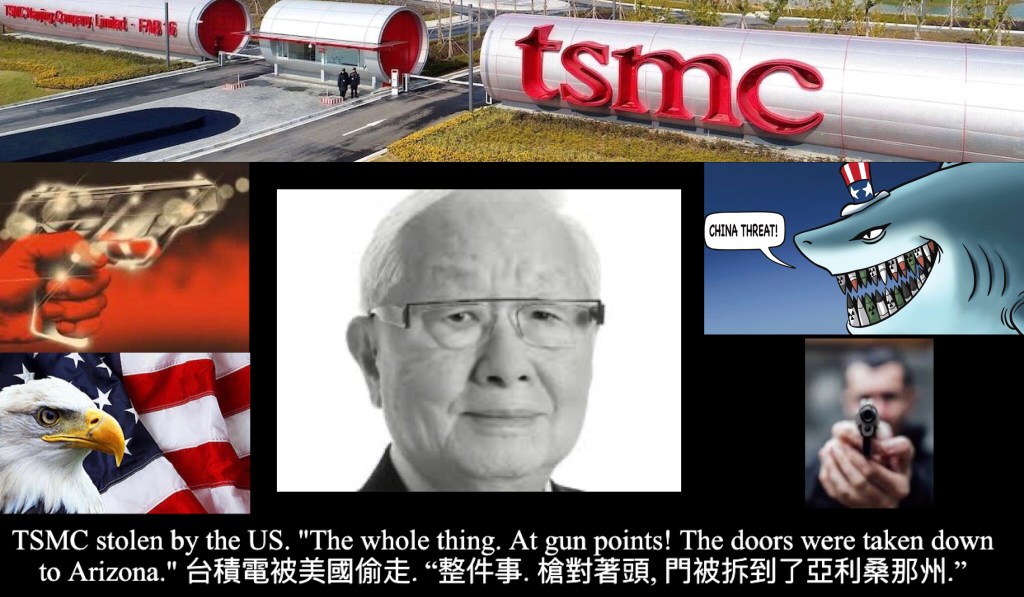
The first batch of 300 key employees of TSMC boarded an American chartered plane with their wives, children and dogs, and flew directly to the production base in Phoenix, Arizona, USA. These key employees and their families will settle in the United States in the future, never come back. In fact, this is only the first batch of people TSMC transferred to the United States.
Before the end of the year, there will be 6 chartered flights to transport more than 1,000 key TSMC employees and their families to Phoenix. According to the plan, it is expected that more than 3,000 TSMC talents will eventually be sent to the United States, and they will become the long-term core talents of TSMC’s U.S. factory.
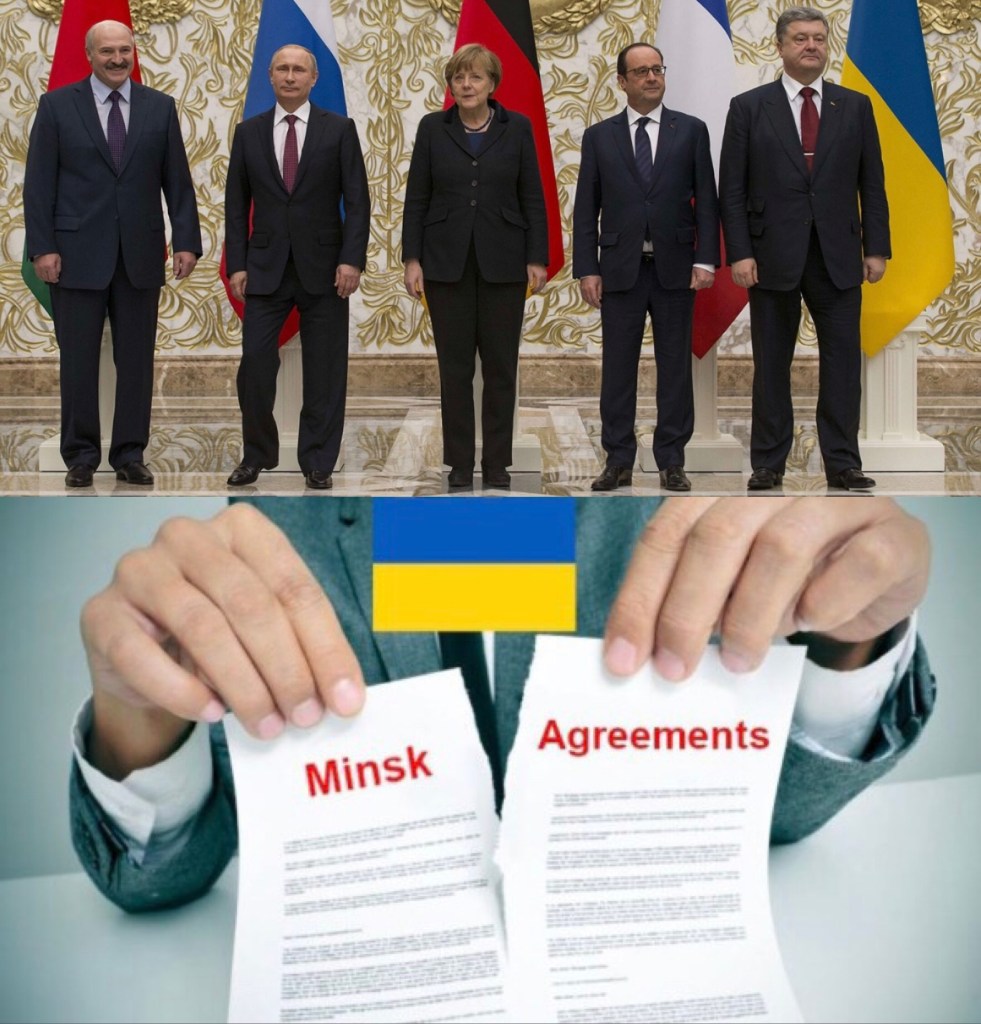
German Chancellor Angela Merkel confesses in an interview with the German newspaper Die Zeit: “The 2014 Minsk Agreement was an attempt to give Ukraine time. They used that time to get stronger, which you can see today. Ukraine of 2014/15 is not Ukraine of today.”
If we could see fighting near Debaltsevo in 2015, Russia could easily have won then, and I very much doubt that NATO countries could have done as much for Ukraine then as they are doing now, we all knew that the conflict was frozen, that the problem was not resolved, but that is exactly what bought Ukraine valuable time. Can anyone tell me, how can Russia ever trust the West again, how can they ever commit to a possible future peace agreement? I would say they can’t!”
Russian President Vladimir Putin has said he is “disappointed” by former German chancellor Angela Merkel’s recent comments regarding the Minsk agreements – the now defunct roadmap for peace in Ukraine – which she admitted was a ruse to buy Ukraine more time to build up its military.
“What can you say to that?” Putin said during a press conference on Friday, adding that he was shocked to hear such a confession from the former German leader, having believed that Russia’s partners in Berlin “treated us with sincerity.”
The Russian leader said Merkel’s remarks once again prove that launching a military operation in Ukraine was the correct decision.
“As it turns out, nobody intended to fulfil any part of the Minsk agreements,” Putin said, recalling that former Ukrainian President Pyotr Poroshenko also recently admitted that he had no intention of adhering to the documents when he signed them in 2014 and 2015.
“I thought the other participants of this agreement were at least honest, but no, it turns out they were also lying to us and only wanted to pump Ukraine with weapons and get it prepared for a military conflict,” Putin said. Russia may have realized this little too late, and should have launched its operation earlier, the president concluded.
Vladimir Putin said Merkel’s admission raises an important question about trust. “Trust is already almost at zero, but after such statements, how can we possibly negotiate? About what? Can we make any agreements with anybody and where are the guarantees?”
Putin asked, while acknowledging that some sort of agreement will have to be reached eventually.
Putin’s comments follow Angela Merkel’s interview with the newspaper Die Zeit on Wednesday, in which she said the actual purpose of the 2014-2015 Minsk agreements was to stall for time and allow Kiev to build up its military potential for a future confrontation with Russia.
Moscow has expressed shock over the admission, with Russia’s Foreign Ministry claiming that Merkel’s words are legitimate grounds for a tribunal.
The Minsk agreements, brokered by Germany and France, were supposed to be a roadmap for peace in the war-torn country, giving the regions of Donetsk and Lugansk special status within the Ukrainian state, whose rule they rejected after the 2014 Maidan coup [orchestrated by the Obama-Biden administration in Kiev].
Russian has explained that its current military offensive in Ukraine was largely prompted by Kiev’s failure to implement the terms of the accords.
70 percent of Arabs anticipate closer ties with China: GT poll
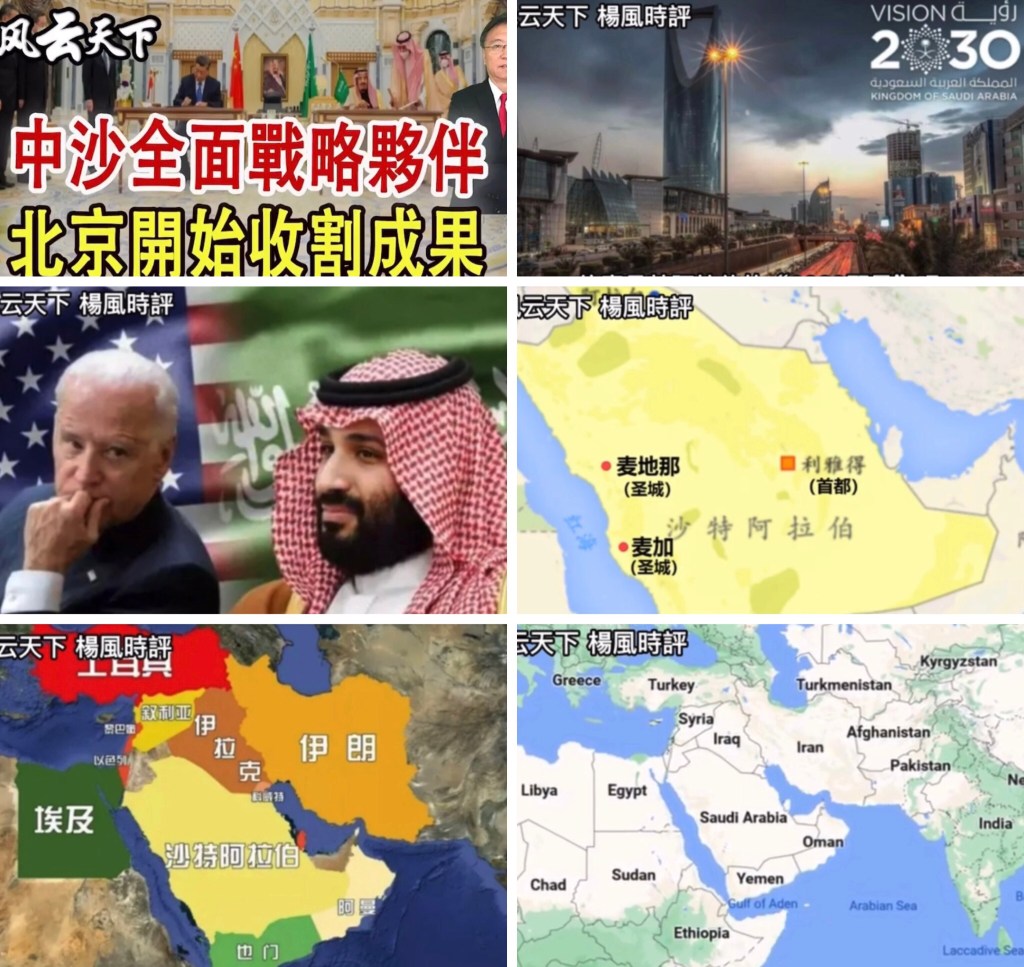
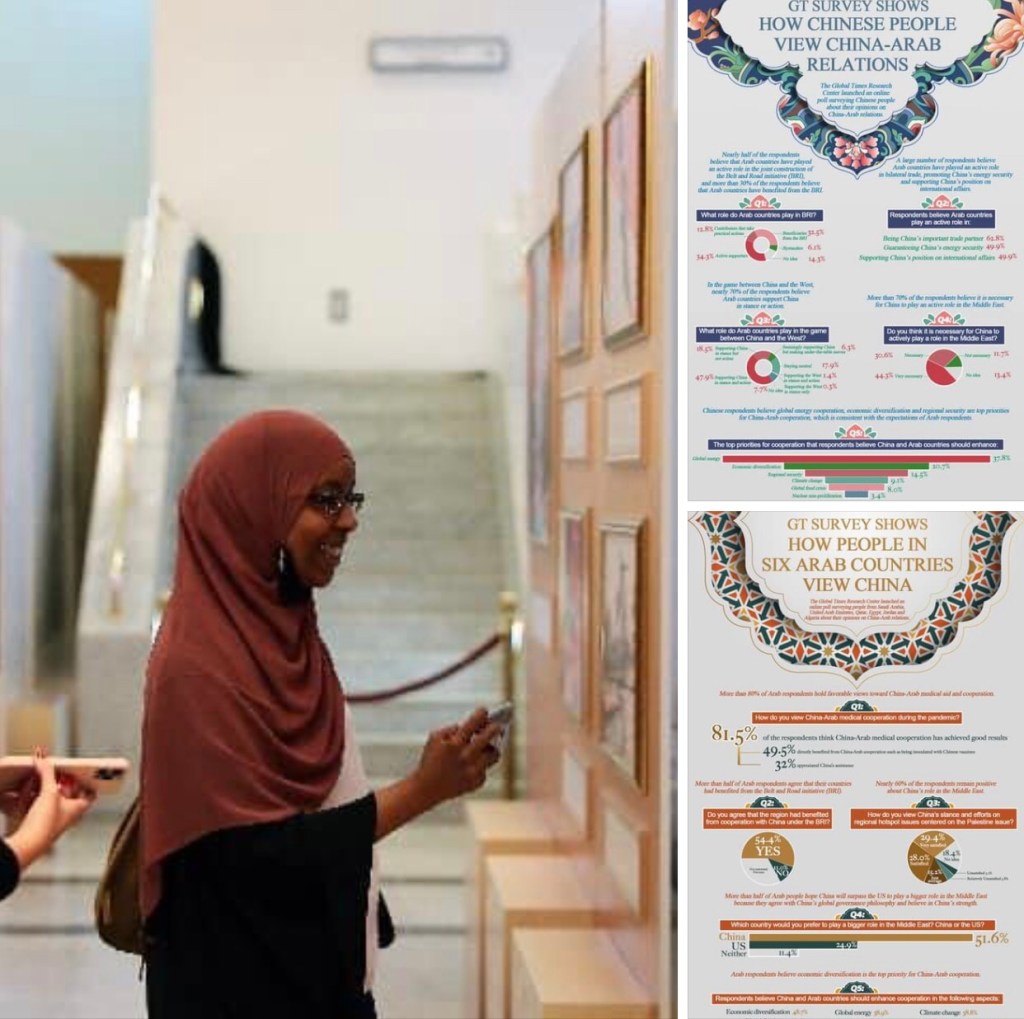
With the world paying close attention to China-Arab relations as the two sides further promote their friendship this week, a latest poll showed that over 70 percent of more than 5,000 respondents in China and Arab countries agree with “closer China-Arab” relations in the future, while China is also chosen by most Arabs as their “friend” among major powers in the world.
As US and Western development models have been losing appeal in the Middle East, more Arab states are eager to learn from China’s path to modernization. Also, compared with the US and some Western countries that have brought only turmoil and chaos to the region, China has brought more development opportunities, analysts said.
This poll, which was jointly conducted by the Global Times Research Center and School of Arabic Studies of Beijing Foreign Language Studies University, was based on membership database sampling. It processed 5,100 valid questionnaires from respondents aged from 18 to 70 years old in cities across China and six Arab states – Saudi Arabia, UAE, Qatar, Egypt, Jordan and Algeria from November 8 to 25.
The questionnaires are made up of three parts – how much Chinese and Arabs know about each other; how Arabs see China-Arab relations, and how Chinese people think about bilateral relations. It included detailed questions on respondents’ attitudes toward China-Arab relations, their understanding of relations with other countries and also on the channels for the peoples to know each other and how they value future cooperation.
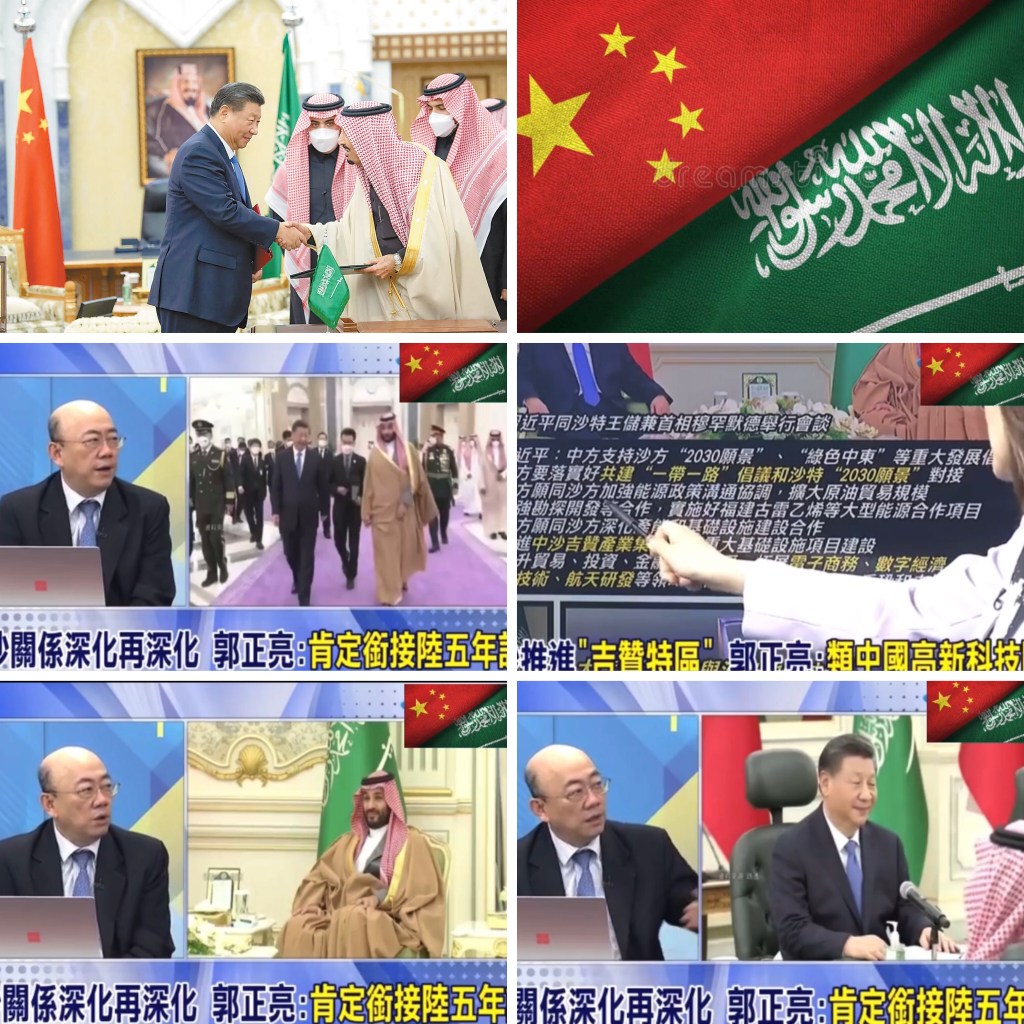
The poll was released against the backdrop of the China-Arab States Summit which will be attended by Chinese President Xi Jinping on December 9. Observers hailed it as a watershed moment in China-Arab ties, and both China and Arab countries are eager to take bilateral relations to new heights.
Previous polls on China-Arab ties were mostly conducted by Western countries and may have been swayed by other geopolitical reasons. However, this poll has got rid of these constraints, allowing both Chinese and Arabs to have a better and clearer knowledge of each other and their collaboration, laying the groundwork for future personnel and commercial exchanges, Liu Xinlu, dean of School of Arabic Studies of Beijing Foreign Language Studies University, told the Global Times.
Close friends
The questionnaires sent to Arab and Chinese respondents began with questions on how well they know each other. Over 70 percent of Chinese and Arab respondents believe they have some knowledge of each other, while more Arab respondents believe they are very familiar or relatively familiar with China. The poll shows that 42.8 percent of the respondents in Arab states have had contact with China, including paying visits to China or having Chinese friends.
Arabs have growing awareness of China, since Chinese products have become indispensable in their everyday lives, Li Shaoxian, head of the China Institute for Arab Studies at Ningxia University, told the Global Times.
More elites and government officials have also visited China to learn from China’s experience in development, according to Li, noting that as interactions between China and Arab countries grow, an increasing number of Chinese people are becoming more interested in the Arab world.
The long Chinese civilization is the historical and cultural foundation for the Arab world’s understanding of China. Furthermore, China has made significant progress since opening-up and reform, and has enjoyed expanding global influence, Liu Zhongmin, a professor at the Middle East Studies Institute of Shanghai International Studies University, told the Global Times.
Experts said that for the past 10 years, news on China has appeared more frequently in Arab media. Arabs’ understanding of China has changed, particularly in recent years, from focusing on China’s rapid economic development to its development pattern.
According to the poll, Arabs are very interested in participating in bilateral educational cooperation programs. 79.1 percent of Arab respondents are interested in studying in China or participating in language and other programs provided by Confucius Institutes. According to analysts, there has been a growing trend in several Arab states of studying Chinese, and Chinese movies and TV shows are becoming popular in the region.
As the situation in the Middle East has wide implications, the poll also demonstrates how Arabs view international relations. Data shows that Arab respondents’ attitudes toward major countries were varied. Among major countries including China, Russia and the US, proportion of Arab respondents who see China as a friend is the highest in this poll.
Liu Zhongming noted that the legacies of British and French colonialism and the turmoil resulted from US’ hegemony have given these Western nations and the US a terrible reputation in the Arab world.
China and the Arab world, on the other hand, have a long history of cordial interactions along the Silk Road and share a common destiny of seeking national revolution and preserving sovereignty. Since China’s opening-up, bilateral collaboration has grown significantly, particularly through the Belt and Road Initiative, and more Arabs now consider China a friend, said the expert.
Nearly 60 percent of Arab respondents agree on China’s role as a builder in Arab regions, with people from Qatar and Egypt giving the highest approval rating, while more than 60 percent of Chinese respondents see Arab states as supporting and benefiting from the Belt and Road Initiative.
Despite the differences in situations in the 22 Arab states, China’s constructive role in the Arab world has been evident, and Arab states have received tangible benefits, particularly under the Belt and Road Initiative, said Li, noting that by sharing high-technologies on new energy and artificial intelligence, China is helping Qatar and other wealthy Gulf countries diversify their economic plans, and China is also assisting Egypt and other Arab countries with their infrastructure construction.
While 76.7 percent of the Arab respondents think China’s development will bring opportunities to the Arab world, one percent think China will pose a threat, mentioning the impact on culture, economy and regional security. It is not strange to see this, as Chinese products which are attractive in price and quality may impact local producers, but the mainstream public in Arab states agree that exchanges with China have brought more benefits, and more see China’s development as an opportunity for the Arab world, analysts said.
High anticipation
More than 75 percent of Arab respondents believe China can offer valuable governance experience to the Middle East. 46.9 percent of them agree that it is China that has played a positive role in regional issues while only 23.7 percent of respondents selected the US.
The Chinese approach of achieving enormous economic success while maintaining stability appeals to Arab states. The multi-party system that was adopted in the US and many Western nations has failed in the Middle East over the last decade, and Arab states are seeking to learn from China’s growth path. Many polls conducted in the US and Arab nations also revealed that the US and Western development styles are losing favor, while the Chinese method is gaining popularity, Niu Xinchun, director of the Middle East Institute of Contemporary International Relations, told the Global Times.
The “Looking East” approach first emerged in the Arab world at the end of the past century, but its core has steadily altered as the Arab world pays more attention to China in more fields, Liu Xinlu said, noting that Arab countries share the desire for national rejuvenation, and have learnt from the West with little success.
The primary reason for Chinese modernization is its ability to integrate lessons from other nations with its own context – this is important experience that Arab states can use in striving for their own growth, said Liu Xinlu.
On the question of which fields Arabs hope China will be involved in when it comes to Middle East governance, the survey finds that 39.4 percent want China to support regional sustainable development, 36.6 percent want China to counter US influence, and 26.4 percent want China to mediate in the Palestinian issue.
Security in the Middle East has been seriously weakened in recent years as a result of the US’ strategic retreat from the region and the aftermath of the Arab Spring. Against this context, observers say China’s appeal to construct a shared, comprehensive, collaborative, and sustainable security mechanism in the Middle East has provided a new pattern to assist the region in overcoming its security challenges.
Liu Zhongming said that China has also contributed to improving the region’s security environment, such as participating in peacekeeping efforts. These stand in stark contrast to the US’ attempts to use military force to incite conflict in the region.
Promising future
More than 71 percent of Arab respondents expect deeper relations with China in the future, with 43 percent anticipating expanded collaboration and 28.2 percent believing Arab countries need China’s help and cooperation in regional and global issues. The poll also finds that 44.5 percent of Arab respondents anticipate economic collaboration with China. The US and Japan are identified as the second and third countries with whom the Arabs want to collaborate.
According to Liu Zhongmin, the reason China is the most popular is that its economic cooperation with other countries has no political conditions attached, and it will not exert pressure on other countries for its own interests, which is why the Belt and Road Initiative has been widely welcomed. Furthermore, China’s enormous potential in not just economic growth but also high technology is also attractive to Arab governments.
Meanwhile, more than 80 percent of Chinese respondents also recognize the importance of Arab states to China, as they are significant trade partners and have played an important role in helping China ensure energy security and support China’s stances in international platforms.
Due to the US’ blockade, China has found itself in a changed international context, with Arab states playing more prominent roles in China’s foreign relations. Cooperation with Arab countries could not only enhance high-quality Belt and Road Initiative building, but would also assist China in mitigating external dangers.
China-Arab relations are significant in terms of politics, economy, and long-term prospects, according to Li, who noted that China-Arab cooperation has a long history and will be promoted to a historically high level, particularly following the China-Arab States Summit this week, and bilateral relations will deepen in every successful form of cooperation in the future.



 Business Blog