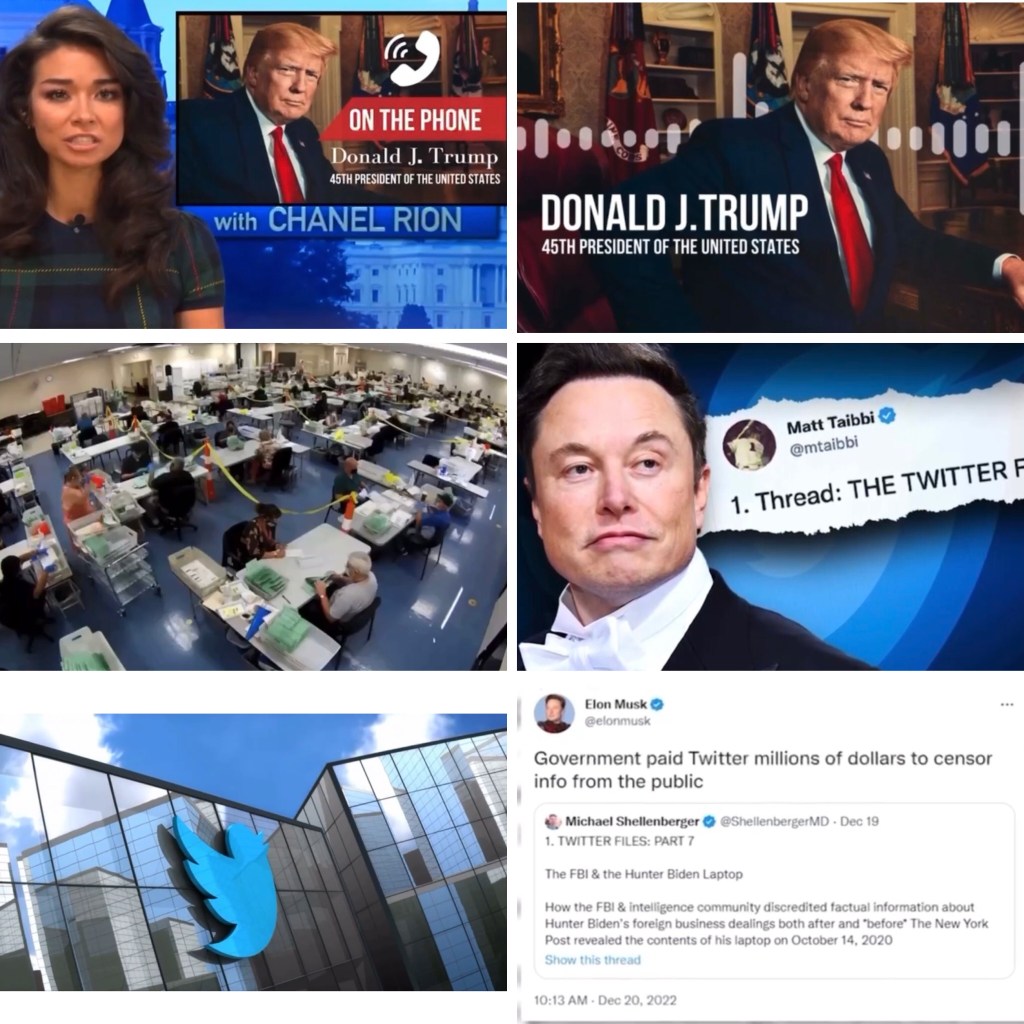
News video: Elon Musk and Matt Taibi revealed today that the FBI paid Twitter millions dollars to censor information from the public 今天透露,FBI 向 Twitter 支付了數百萬美元來審查來自公眾的信息.
The main difference between the Chinese and American the government :
the Chinese government is comfortable with censoring its media to protect its population from Western MSM lies such as the fake Uyghur genocide, the fake massacre of Tiananmen, etc. It is honest with the people. You can use a VPN if you really want to read Western news and media, at your own peril
the US government lies to its people. It falsely pretends to champion freedom of speech while secretly censoring information. Unlike the Chinese government, it is tirelessly criticising the freedom of speech in other countries
Have you noticed that almost all Western MSM are silent about the Twitter files ?
Elon Musk 和 Matt Taibi 今天透露,FBI 向 Twitter 支付了數百萬美元來審查來自公眾的信息。
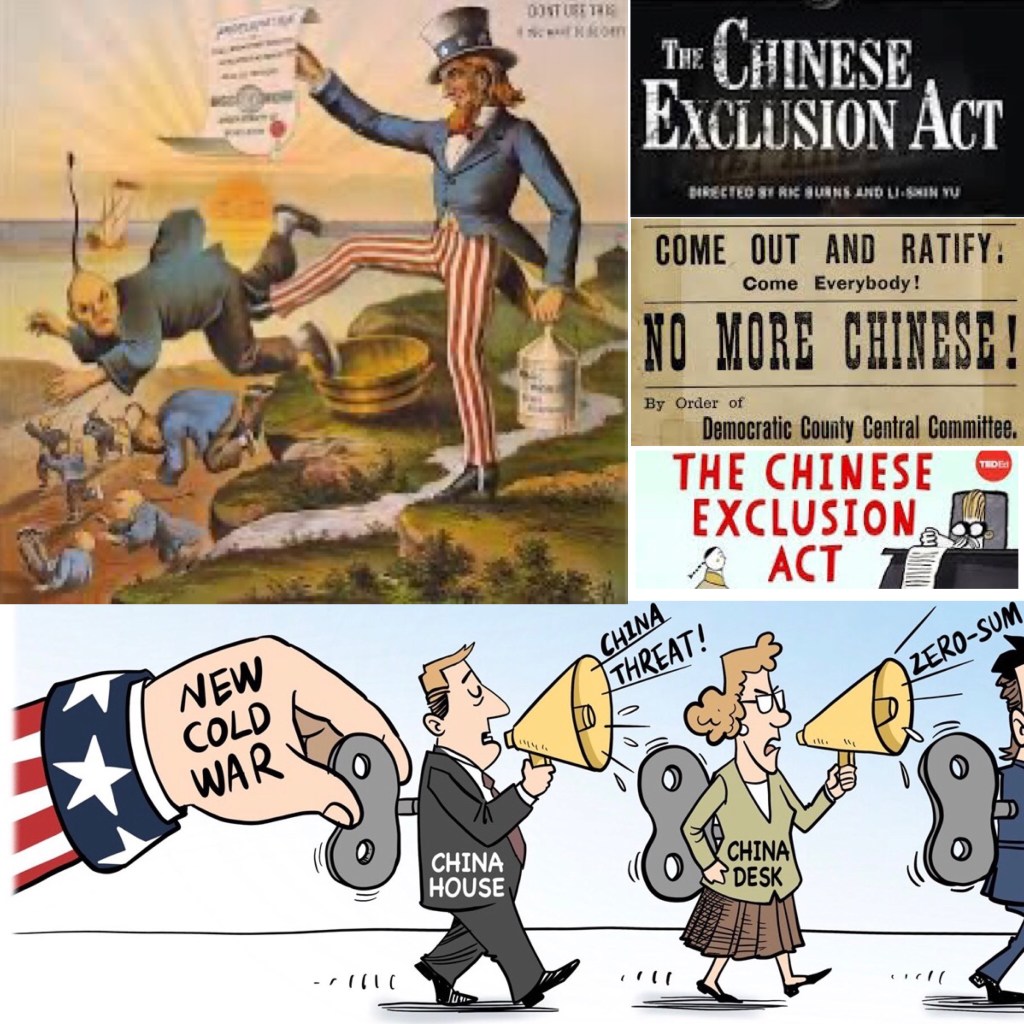
When China was weak. AngloSaxon racists steamrolled over Chinese like garbage with absolutely no consequences, US even passing the 1882 Chinese Exclusion Act to impressed the world still inforce today disguised under various fancy names.
Now China is much stronger, the same AngloSaxon racists hide behind homeland security lies. It is the same bottle just different wines. Chinese in US has overstayed their welcome in this foster home. 1000s of smart educated with special technical skills and dignity are leaving America every month.
Live cast: 12-20-2022 9-10am San Francisco, topic China’s Middle East strategy after World Cup 時事觀察集結號: 世界杯後中國的中東佈局 https://youtu.be/u6YrxCCcn4w 主講嘉賓:香港作家、專業時事評論員 余 非 主持:星島日報美西版社長兼總編輯 梁建鋒
Video: UK’s secret betrayal, never acknowledge 1,000 of Chinese helped with war efforts with little pay, forced repatriation of Chinese sailors after WWII, disappeared overnight breaking up families 英國的秘密背叛,從不承認 1000 名中國人以微薄的報酬幫助戰爭,二戰後中國水手被迫遣返,一夜之間失踪導致家庭破裂
CGTN digs into a dark chapter of the #UK’s wartime history, where racial prejudice in some of the highest echelons of government resulted in broken families, lost heritage and a fight to make British authorities apologize for a shameful past. The Chinese sailors, who once braved the stormy seas and battlefronts of the North Atlantic to keep Allied forces supplied during the Second World War, were forcibly repatriated when the war ended. Hundreds of men vanished overnight, leaving behind wives, partners and children without any explanation of where they had gone and why. CGTN speaks to sons, daughters and grandchildren of the sailors about the tragedy in the documentary “The Secret Betrayal.” CGTN 深入探討了#UK 戰時歷史的黑暗篇章,政府一些最高層的種族偏見導致家庭破裂、遺失遺產以及為讓英國當局為可恥的過去道歉而進行的鬥爭。 第二次世界大戰期間,曾冒著波濤洶湧的大海和北大西洋前線為盟軍提供補給的中國水手,在戰爭結束時被強行遣返。 成百上千的男人一夜之間消失了,留下了妻子、伴侶和孩子,沒有任何關於他們去哪里和為什麼的解釋。 CGTN 就紀錄片《秘密的背叛》中的悲劇向水手的兒子、女兒和孫輩講述
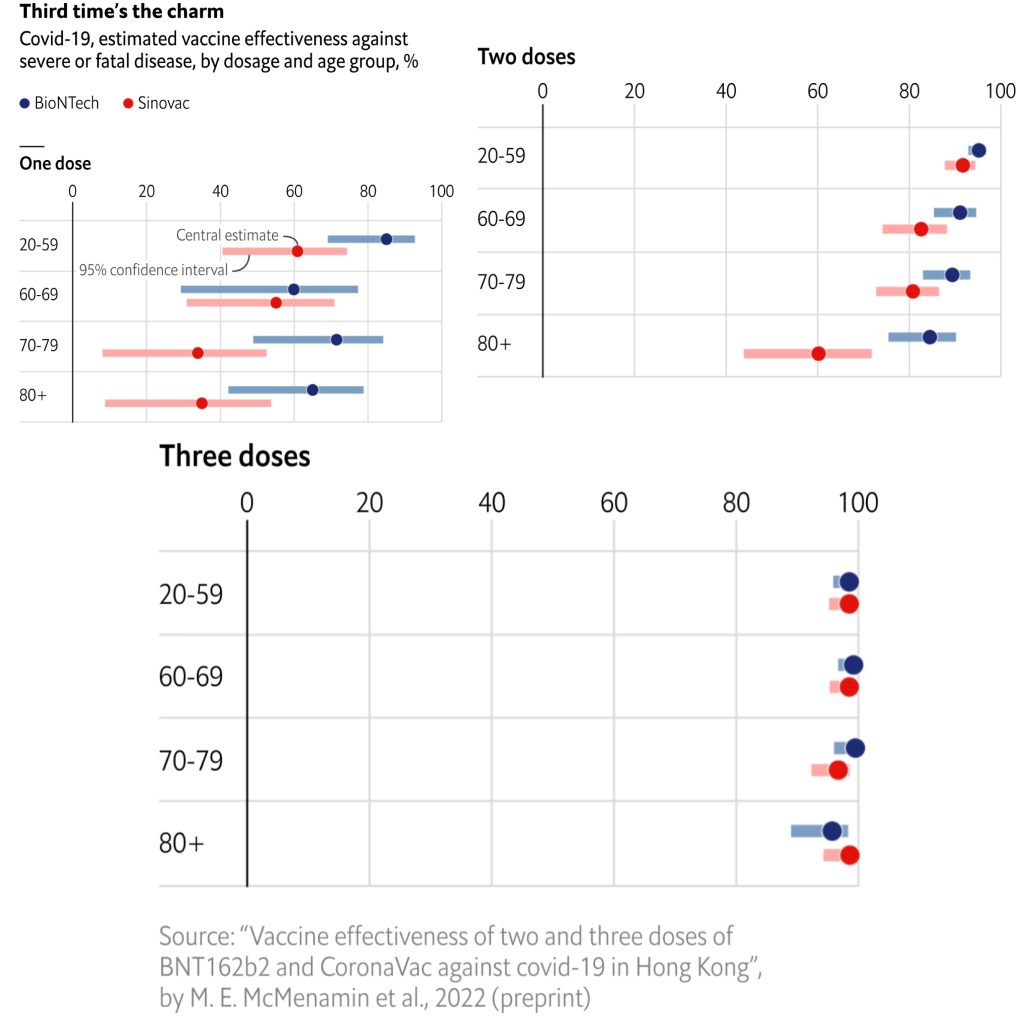
Economist: How China’s Sinovac compares with BioNTech’s mRNA vaccine. Here’s a recent study. China’s Sinovac at 3 jabs is as good as anything out there. by KJ of SF Bay Area China Group 12/19/23
The inactivated virus includes the spike. However, the M-RNA vaccines only had the spike, resulting in vaccine-evading variants. The variations can then be re-programmed into the m-RNA vaccine, but it’s a much slower process with inactivated variants.
Also, I believe the m-RNA vaccines are more harmful and shocking to the body. They create more side-effects, but they also create higher levels of T cells.
Professor John Wash, MD in SF: Sinovac vaccines and especially the account in the Economist where the graphic presentation is superb, much better than what I saw in a quick look at the paper referred to.
Also it makes clear why there has been a hard push to get the population boostered. It is strange to me that for those who have received the first shot, there is more hesitation about the second and more still with the third, etc. I would have thought that once someone saw the first shot was benign that the second would come easier etc. In terms of the politics, I am most concerned that the West will now try to sell the Zero Covid policy as a failure. It was not. Not only did it save lives and keep the economy going but it bought time for vaccines and antivirals to be developed. Now they are in hand and let us hope that they can be deployed quickly enough.
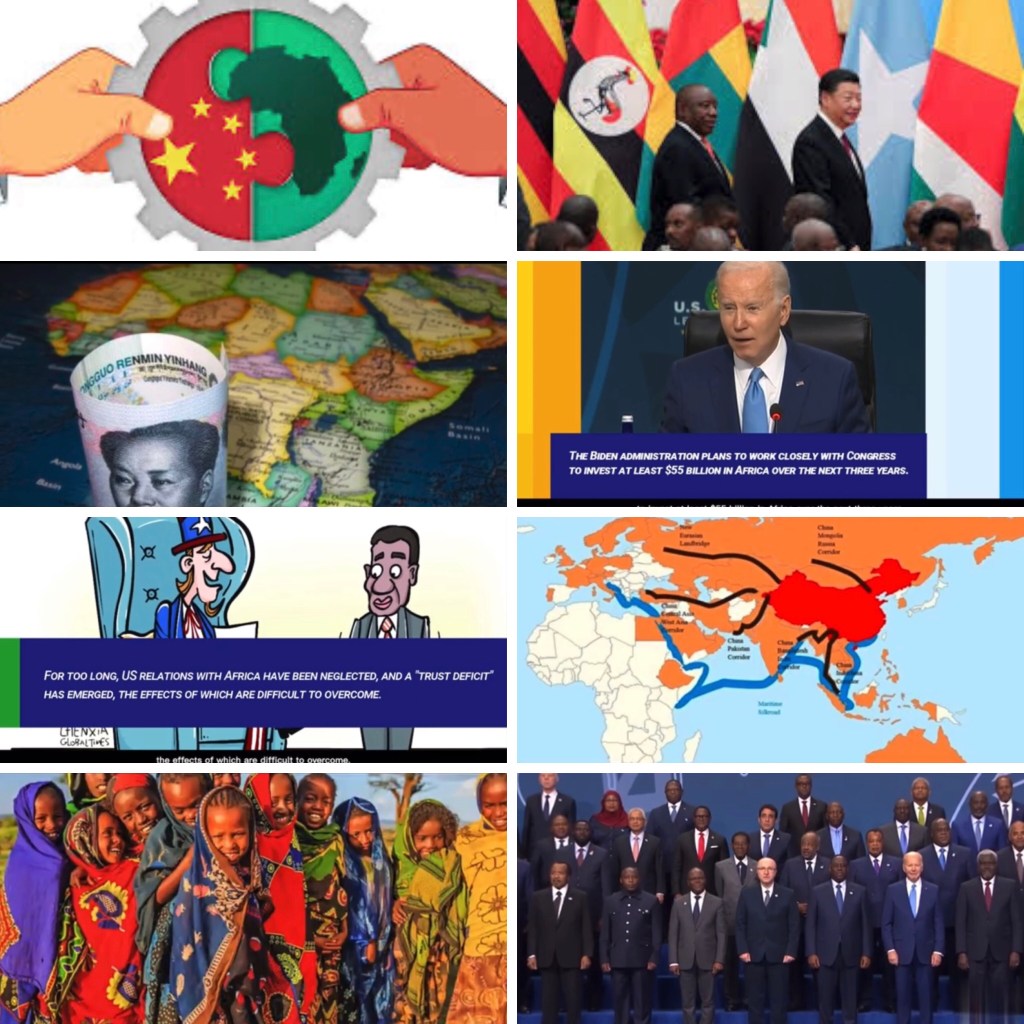
A three-day U.S.-Africa summit came to a close on Dec. 15. A White House statement said the U.S.-Africa Summit in Washington underscored the U.S. commitment to broaden and deepen its partnership with African countries, institutions and people. The Biden administration plans to work closely with Congress to invest at least $55 billion in Africa over the next three years. The United States will also appoint a new special representative of the president to follow through on the summit’s commitments.
President Joe Biden did not mention China in his speech at the U.S.-Africa summit, and a White House spokesman refused to acknowledge that the summit was intended to “counter Chinese influence in Africa. However, international public opinion is not optimistic about the U.S.-Africa summit, believing that the U.S. has suddenly changed its previously neglected attitude and started to pay attention to Africa, with the real intention of turning Africa into an arena for great power games and pointing the finger at China.
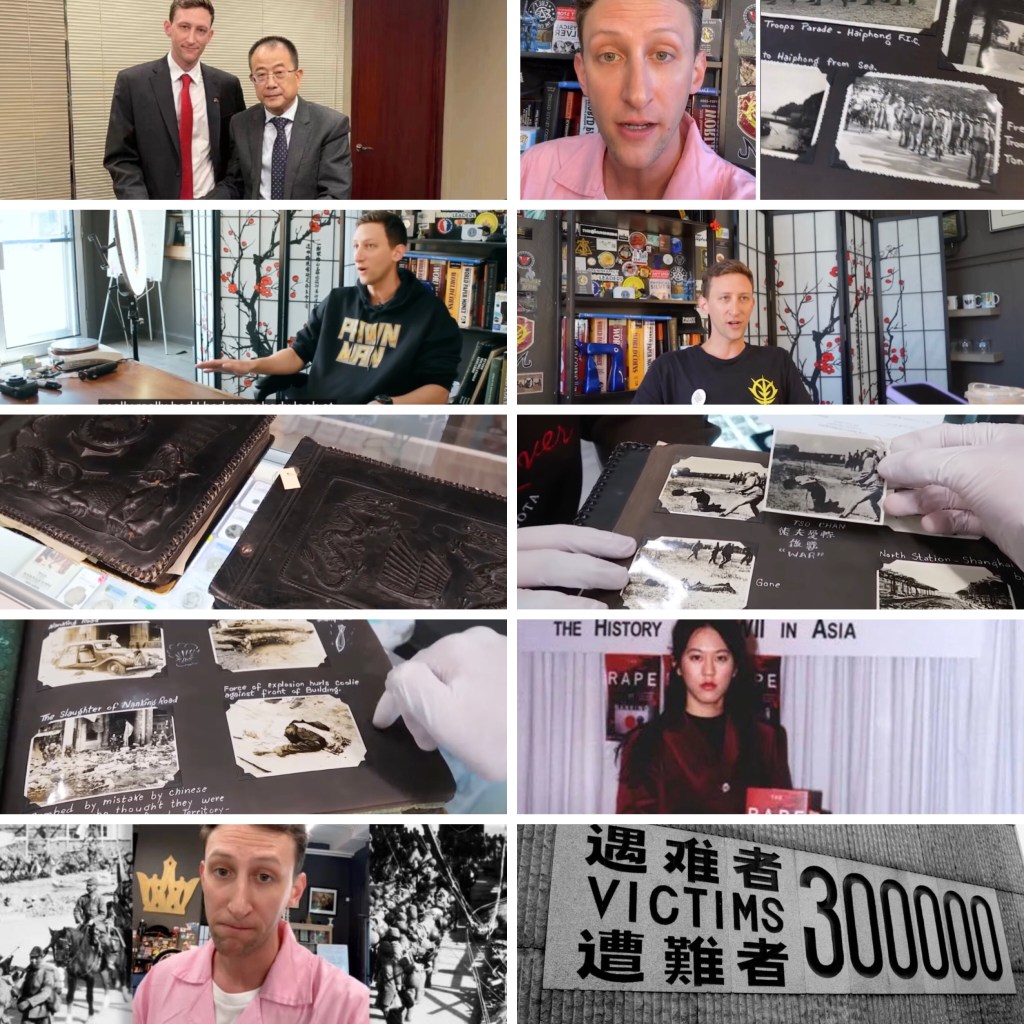
American Kail donated the photo album of the Nanjing Massacre to China received death threats, he withstood the pressure of suffocation: I will do the right thing 美国小哥将南京大屠杀相册捐给中国!遭死亡威胁和监控,他顶住窒息压力:我要做对的事
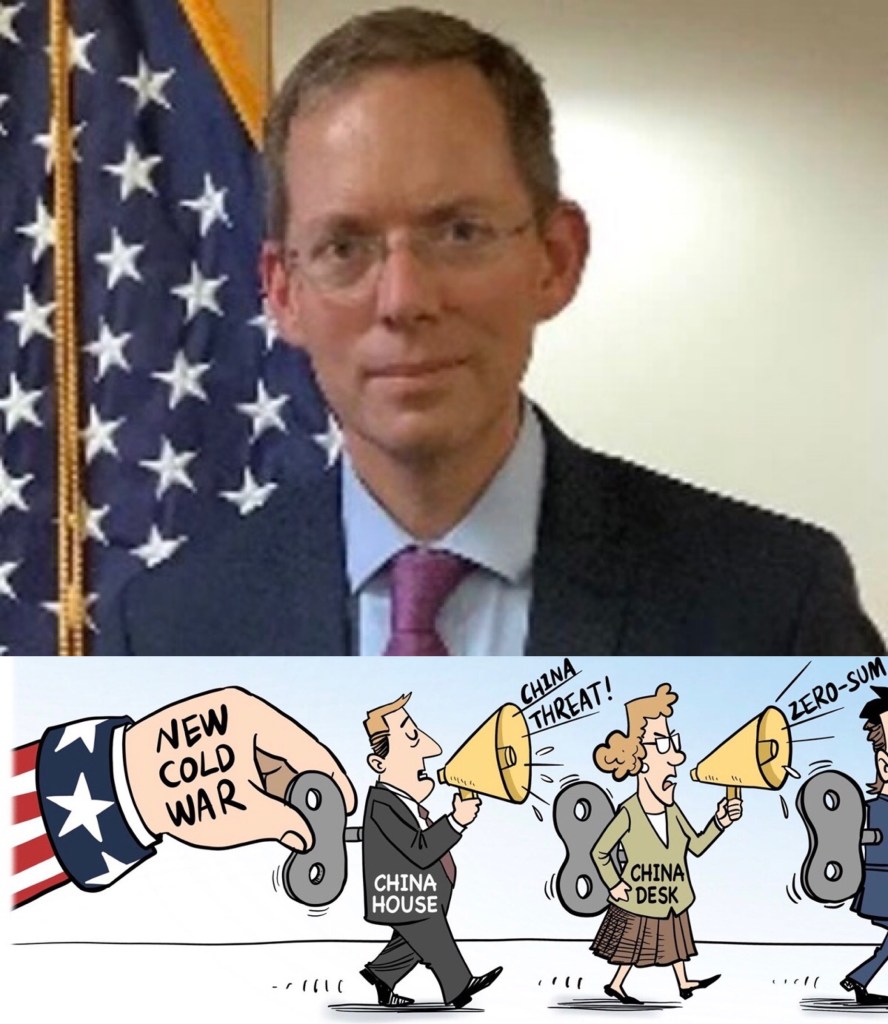
This individual (Rick Waters) will be heading the newly created “China House” within the State department. This is a newly created division to coordinate strategy against China. By KJ of SF Bay Area China Group 12/19/23
This is a 4 min video of him speaking. Your candid impressions and observations would be appreciated.
The language, for me, was pretty standard boilerplate from the SD.
However, I watched it carefully, and his body language and expressions caught my eye: they are chilling to watch and listen to.
He is the Deputy Assistant Secretary of State for East Asia and the Pacific (notice, it is not “indo-pacific” at SD despite their constantly going on about the Indo-pacific).
Despite just reciting SD boilerplate, there is an air of menace about him.
It seems to me like he is auditioning to be an understudy for Anthony Hopkins (“Hannibal Lecter”) in “The silence of the lambs”.
I was trying to figure out why.
First, he seems to have no ventral vagal innervation (the vagal nerve facilitates human-to-human engagement by animating the voice, the eyes, the facial muscles, giving energy, warmth, and human expressions. He, on the contrary, is like a lizard.
Second, I counted his blink rate. A normal human blink rate is once 3-5 secs. There is a period where he goes 30 seconds without blinking.
He also says: “The US welcomes legitimate students and scholars from China…” (i.e. some of you are not legitimate).
Disturbing.
Anyway, here’s more about the new division in the SD and the response from China.
China House will ensure the U.S. government is able to responsibly manage our competition with the People’s Republic of China (PRC) and advance our vision for an open, inclusive international system. Our goal in creating China House is to help deliver on elements of the Administration’s approach to the PRC.
The Biden administration on Friday launched “China House,” the centerpiece of its effort to strengthen its diplomatic heft in its global rivalry with Beijing.
The State Department-based unit is designed to eliminate silos among sometimes redundant government bodies, giving U.S. officials from within State and beyond a central clearinghouse to share information and shape policy on China, State officials told POLITICO in an exclusive preview.
The establishment of China House reflects the sense inside President Joe Biden’s team that the existing U.S. bureaucracy isn’t nimble enough to combat the multitude of challenges from communist-led China — ranging from trade to military power.
While it is essentially an internal reorganization, the creation of the unit has faced hurdles. Sen. Jim Risch of Idaho, the ranking Republican on the Senate Foreign Relations Committee, refused to sign off on the proposal for months, with his spokesperson saying it was structured as a “bureaucratic power grab.”
China House — formally known as the Office of China Coordination — replaces the China Desk in the State Department’s East Asian and Pacific Affairs bureau. The new entity will employ roughly 60 to 70 personnel, including liaisons from other parts of the department such as the Africa and Latin America bureaus, as well as people detailed from other U.S. departments and agencies who may focus on topics such as technology or economic policy.
“The sheer scale, scope, complexity and stakes of the China challenge required us to think, collaborate, organize and act differently,” a senior State Department official said. “It could not be managed alone through the bilateral desk approach.” The official spoke on condition of anonymity because the discussion involved sensitive diplomatic matters.
“China House will deepen our capacity to share information, sharpen our messaging, and adjust to breaking developments in real-time,” Deputy Secretary of State Wendy Sherman is due to tell State Department staffers on Friday, according to a draft note.
China is already investing heavily in its own diplomatic machine. It now has more diplomatic facilities overseas than the United States, according to one survey. Beijing’s spending on diplomacy has also soared in recent years and analysts say that has helped boost the quality and assertiveness of its diplomats.
U.S. spending on diplomacy, meanwhile, has remained effectively flat, as has the size of the U.S. Foreign Service, while funding, security and other factors have stymied America’s diplomatic presence.
The State Department plans won’t require new funding. Officials building it said they hope it will allow them to overcome bureaucratic hurdles that have excluded key personnel from policymaking processes and prevented information and analysis from reaching relevant diplomatic outposts and government agencies.
“The fact that we’re going to have a single, secure facility where the vast majority of people can be in at one time and participate in one conversation — I can’t overestimate to you how important that is,” the senior State Department official said. “We have not traditionally brought up our teams across the department in this way to do this kind of work.”
China House will be physically located inside the State Department’s headquarters in Foggy Bottom. It will have three main teams: one focused on traditional bilateral affairs; one that deals with strategic communications; and one dubbed a “global” team, which focuses on Chinese activity beyond China. A deputy assistant secretary, Rick Waters, will oversee China House as its inaugural coordinator, reporting to Assistant Secretary of State Dan Kritenbrink as well as Sherman, who oversees a high-level strategy group on China.
Former State Department officials, though broadly supportive of the need for greater resources targeting China, have warned that the China House may create a new layer of bureaucracy that will impede rather than improve efficient and timely State Department monitoring and analysis of Beijing’s activities.
Risch, at least, has been convinced otherwise. This month he announced that the State Department had made changes or pledges that allayed his concerns about its structure or who was in charge. For instance, the department agreed it would not give certain China House-related authorities to people who were not confirmed by the Senate, according to Risch.
Although they were eager to promote their plans for China House, State Department officials stressed that the overall U.S. strategy toward Beijing was about more than one unit. China House is “not the solution to upping the State Department’s game on China … it’s just part of a broader effort,” the official said.
Other steps being taken by the United States include promising to focus more on the economic side of diplomacy, an area the Chinese government prioritizes. They also include posting “regional China officers” throughout the world to monitor Chinese activity.
A test of China House’s success will be if “ambassadors in the field say, ‘I can plug in, access and benefit from the work of China House in my day to day work ‘ [whether they’re] in Riyadh, [United Arab Emirates], or South Africa,” the senior State Department official said.
This is evidently a step forward of the US government in an attempt to have more intense competition with China rather than cooperation, embodying that the Biden administration has pushed its China policy to a more dangerous zone.
A unit like the “China House” is not new. In October 2021, the CIA created a China Mission Center. And US President Joe Biden in February 2021 announced the formation of a Department of Defense China Task Force. Despite having different names, in essence, their functions are almost the same – to promote internal coordination and hype the so-called China threat theory, in a bid to contain China.
The creation of a unit focused on China by multiple departments in the US demonstrates that the US positioning of its relations with China is confrontation, instead of win-win cooperation that China has underlined. The US will go further on the road in antagonizing China.
Today, when the US holds summits with ASEAN, the EU, or African leaders, it will directly or indirectly involve the theme of confronting China. With the creation of units focusing on China, experts anticipate that US promotion of competition with China on bilateral, regional and global basis will become even more worrying. Notably, it may continue to demonize China in public opinion, distort China’s contribution to the international community, and further rope in its allies to contain China.
The launch of units focusing on China will be a big blow to China-US relations. In this context, current anti-China hysteria may become the mainstream of these departments of the US government. This will prevent all walks of life in the US from having an accurate understanding of China, and will not be conducive to the stability of China-US ties.
Blinken announced the creation of China House in May. And he called China the “most serious long-term threat” to the world order. How has China threatened the world order? What has triggered the US to use such rhetoric is its belief that China has challenged its global hegemony. In light of this, Washington intends to do everything possible to hinder China’s development and curb China’s influence. The international community should not have illusions that the US will sincerely seek cooperation with China.




 Business Blog